You Haven’t Read Enough!

“Reading is not an amusement filling the languid pauses between the hours of action; it is the one pursuit engrossing all the hours and the whole mind.”

Mark Pattison

I never went to graduate school, and yet it happens that I am badly afflicted with grad student syndrome – the compulsion to read more before putting anything of my own down on paper. Perhaps the best literary exemplar of this tendency is the figure of Casaubon in George Eliot’s Middlemarch, whose Key to All Mythologies remained until his death in the note-taking phase, despite its having been his entire life’s work. I have read a reasonable amount in my life, but there is something about the authorial voice which dupes me like the most naïve of tyros every time. I always believe that the author is in full command of everything at once, despite the fact that I know full well from experience that all long form written work is assembled piecemeal – a process which the stately linear progression of a finished book does much to disguise.

Since the publication of Middlemarch, debate has raged about whether the Casaubon of the book was modeled on Mark Pattison, the Rector of Lincoln College, whose chief production was his biography Isaac Casaubon. Pattison’s biography of Casaubon paints the picture of a morose and tortured scholar who wanted nothing more than to be left alone with his books:

But over and above Casaubon’s constitutional fretfulness, we must make allowance for the irritability engendered by a life of hard reading against time. Casaubon thought every moment lost in which he was not acquiring knowledge. He resented intrusion as a cruel injury. To take up his time was to rob him of his only property. Casaubon’s imagination was impressed in a painful degree with the truth of the dictum ‘ars longa, vita brevis.’ [Isaac Casaubon, pp.28-29]

Casaubon was in many ways the perfect subject for Pattison, given his own approach to reading and study. Pattison’s Memoirs abound in the type of reflections observed in Casaubon’s diary about the need for systematic reading, and the race against death to master it all. One anecdote about Pattison reveals that he scared a young scholar away from a chosen project by revealing his own method of work:

He suggested that I should edit Selden’s Table Talk. The preparation was to be, first to get the contents practically by heart, then to read the whole printed literature of Selden’s day, and of the generation before him. In twenty years he promised me that I should be prepared for the work. He put the thing before me in so unattractive a way that I never did it or anything else worth doing. I consider the ruin of my misspent life very largely due to that conversation. [Tollemarche, Recollections of Pattison]

Surely, dear readers, any of you who write can feel a certain inner Pattisonian voice making the same claim against your starting to write today: first you must read more! I have countless little essays and other written projects which I would love to pen, but alas, that hateful little voice springs forth and says, “Stay! You have not read enough!”

This same impulse seems to underlie the projects of systematic reading which, if Johnson and Gibbon may be taken as exemplars of their age, were so fashionable in the 18th century. Each of them, at least once in their lives, drew up programs of systematic chronological reading of ancient authors. Gibbon had far more success with this (as his Decline and Fall shows), but although Johnson would joke about his aversion to reading books all the way through, it does appear to have caused him some distress that he was unable to follow through on his plans to read systematically for intellectual gain. Occasionally I will feel like drafting an essay on ancient philosophy, but then (and here comes Pattison), I feel that I must start by reading all of the fragments of Presocratic philosophers, then read all of Plato, then all of Aristotle, and proceed thus through Plotinus. This is of course such an appalling prospect that the project has never gotten off the ground.

This kind of rabid study-oriented bibliomania seems to have affected people in antiquity, too. Who can forget how Pliny the Elder felt compelled to read against the clock like Casaubon:

Once he returned home, he gave the rest of his time up to study. Often, after eating (which, in the ancient way, was always light and sparing) he would lie in the summer sun if he had the leisure, and read a book which he annotated and excerpted from. He never read anything without at least making some notes: he was in the habit of saying that no book was so bad that it was not useful in at least some way. After the sun, he would wash in cold water, then eat and sleep a little bit; soon, as if it were a new day already, he would study again until dinnertime. While eating dinner, he would read and take notes in a cursory fashion. I remember that he was once reading out loud, and was asked by one of his friends to repeat what he had just recited; to this man, my uncle said, ‘Surely, you understood the meaning?’ When the friend said that he had, my uncle responded, ‘Why then did you ask me to repeat it? I have lost the time for reading ten more verses because of your interruption.’ Such was his parsimony of his time. [Pliny the Younger, Letters 3.5]

When I was younger, reading was just a simple pleasure. I remember devouring the Goosebumps books in 2nd grade with such ungentlemanly haste that the excitement of a Saturday morning purchase at the bookstore quickly turned into a bored perception of the emptiness of life by Saturday night. Back then, I appreciated each book as a clear end in itself – reading them gave me a kind of uncomplicated joy. When I was about 15, I began reading “serious” books: philosophy, science, and capital L Literature. In those early days, it was still an uncomplicated process, but something happened after I went to college. If nothing else, college teaches you how little you know. Every fresh accession of knowledge comes with the realization that there are vast frontiers of untrodden territory, each of which would take you a lifetime to master. It is in college, too, that you really begin to pay attention to bibliography, and learn that the process of reading is exponentially expansive. Every time I read a really good book, I find that it suggests at least five others to my mind, and though it is a good problem to have, books can be purchased far faster than they can be read.

But the most insidious part about college is the way in which reading gets reframed as a kind of professional and moral obligation. When I was twenty, a professor referenced John Updike, and when I was naïve enough to confess that I had not read any of his books, I was asked, “What do they even teach you in school now?” Twelve years later, I still haven’t read any Updike, but I do feel a sense of dread that I will find myself in a conversation which hinges upon some piece of important or ‘canonical’ reading, and be brought up short as a fraud or an intellectual poser. This has given to my reading a sense of frenzied, greedy acquisitiveness. To be sure, I still love the act of reading, and if I had my way, I would devote a solid ten hours a day to it. But it is no longer a simple, entirely unadulterated pleasure. When I read, I read with a kind of vain and pretentious instrumentality in the back of my mind. The literary canon, as a concept, can be weaponized as an instrument of exclusion, but in an even more trivial way, it ruins reading by turning it into another one of our many dreary extra-professional chores, like exercise. Sure, I enjoy activity, but I only exercise every day because I know that I’m supposed to.

Over the past few years, I have begun to keep track of what I have read through the course of each year by placing every finished book onto a separate “completed” bookshelf. Some years are better than others, but I have been averaging about 100 books a year. Compared to the prodigious rate at which some people read, this may not be impressive; compared to my aspirations for reading when I buy five books on Friday night and dream that I could finish them all by Sunday, it falls far short. And yet, even at the rate of 100 a year, I will look at the shelf and realize that I don’t even remember reading some of the books on there.

Maybe this is sheer careless reading or inattentiveness, but maybe it is true of life more generally. Some reading has stayed with me through years, but I have forgotten the great bulk of everything I have ever read. It is a sad reflection, made sadder when I realize that the same is true of my life more generally. Most of my experiences and feelings have also slipped away from my memory, but at least I can go back and re-read a book – those parts of my life are lost forever.

Reading is a way of accessing a kind of permanent collective memory available to everyone. Ancient authors were conscious of achieving a kind of immortality through their written works, which would be transmitted through ages long after physical monuments had decayed. Reading can help us to cope with and even defy mortality by expanding our temporal horizons. While it has been complicated by a kind of deontological creep which ruins everything you enjoyed in childhood, reading remains my favorite activity, and one which I wish that I could spend my whole life on. And yet, if I knew that I would die tomorrow, I would not spend a second of today reading. Most likely, I would go on a frenzied quest for various sorts of sensual pleasure, which I suspect would be less enjoyable with the prospect of death looming so near. There is a curious paradox in wanting to spend one’s life on an activity which would suddenly seem so pointless at the very end of that life, when carpe librum becomes carpe diem with all of its pressing force. Such sad reflections can only drive me to one place: back to my books.

nondumlegisti
“Traveler, you have not yet read enough!”

December Debates on Gifts: Some Classical Warnings

Epigonoi Fr. 4 (From Clement of Alexandria)

“Many evils come to men from gifts”

ἐκ γὰρ δώρων πολλὰ κάκ’ ἀνθρώποισι πέλονται.

Ovid, Ars Amatoria 2.275

“Poems are certainly praised, but great gifts are what is sought.”

carmina laudantur sed munera magna petuntur.

Sophocles, Ajax, 664-5

“But the old saying is true: the gifts of enemies are no gifts, and sure to yield no profit.”

ἀλλ᾽ ἔστ᾽ ἀληθὴς ἡ βροτῶν παροιμία,
ἐχθρῶν ἄδωρα δῶρα κοὐκ ὀνήσιμα

Image result for medieval manuscript gift-giving

Aeschylus, fr. 279a2

“Alone of the gods, Death doesn’t long for gifts.”

μόνος θεῶν γὰρ Θάνατος οὐ δώρων ἐρᾶι·

Solon, 13.64

“The gifts of the gods must not be rejected”

δῶρα δ᾿ ἄφυκτα θεῶν γίγνεται ἀθανάτων

Nostoi, fr. 8.1

“Gifts debase the minds and actions of men”

δῶρα γὰρ ἀνθρώπων νόον ἤπαφεν ἠδὲ καὶ ἔργα

Lucretius, De Rerum Natura 5.1430-1439

“The race of man, then, labors uselessly and in vain
as we always consume our time in empty concerns
because we don’t understand that there’s a limit to having—
and there’s an end to how far true pleasure can grow.
This has dragged life bit by bit into the deep sea
and has stirred at its bottom great blasts of war.
But the guardian of the earth turns around the great sky
and teaches men truly that the year’s seasons come full circle
and that all must be endured with a sure reason and order.”

Ergo hominum genus in cassum frustraque laborat
semper et [in] curis consumit inanibus aevom,
ni mirum quia non cognovit quae sit habendi
finis et omnino quoad crescat vera voluptas;
idque minutatim vitam provexit in altum
et belli magnos commovit funditus aestus.
at vigiles mundi magnum versatile templum
sol et luna suo lustrantes lumine circum
perdocuere homines annorum tempora verti
et certa ratione geri rem atque ordine certo.


Vacation: Putting the Skholê back into Scholarship

Dio Chrysostom, On Retirement 3

“No, these guys are obviously running away and going AWOL. They have no excuse and could expect no pardon for this kind of vacation and desertion.”

ἀλλ᾿ οὗτοι μὲν δῆλον ὅτι φεύγουσί τε καὶ δραπετεύουσι, καὶ οὐκ ἂν εἴη πρόφασις αὐτοῖς οὐδὲ συγγνώμη τῆς τοιαύτης σχολῆς τε καὶ ἀποδράσεως.

scholar 2

As many people know, the word scholarship is somewhere in the past derived from the Ancient Greek skholê for “leisure” (since literary and linguistic studies were both the sorts of things people did in their leisure time and you had to be a person with leisure time to do them). This also happens to be the word that Woodhouse’s English-Greek Dictionary provides as the translation for English “vacation”.

(also, just ruminate on the Latin etymology of vacation for a minute, the implied emptiness…)

Vacation

One of the popular—and politically expedient—myths about people who teach (both at the college level and lower) is that we are people of leisure—we have too much idle time to engage in (1) not doing ‘real’ work or (2) brainwashing those naïve children society entrusts to us. The truth—especially for college faculty on contract or in contingent positions, for those early in their career or looking for jobs, or for anyone who teaches elementary through high school—is that the past generation has seen the slow but steady erosion of the boundary between leisure and work.

Seneca, De Brevitate Vitae 7

“When will this year end?” One man gives games and even though he set a great worth on being able to do so, now says, “When will I flee them?” Another lawyer is praised over the whole forum and attracts a great crowd extending farther than they can hear, yet he complains, “When will I get a break?”

Everyone hurries life on and suffers a desire for the future and a weariness from the present. But the one who dedicates all his time to his own use, who orders every day as if it is the last one, neither desires nor fears tomorrow.”

“Quando hic annus praeteribit?” Facit ille ludos, quorum sortem sibi optingere magno aestimavit: “Quando,” inquit, “istos effugiam?” Diripitur ille toto foro patronus et magno concursu omnia ultra, quam audiri potest, complet: “Quando,” inquit, “res proferentur?” Praecipitat quisque vitam suam et futuri desiderio laborat, praesentium taedio. At ille qui nullum non tempus in usus suos confert, qui omnem diem tamquam ultimum ordinat, nec optat crastinum nec timet.

This boundary has moved not in our favor but in the direction of creating an environment in which teachers and academics never stop working. This is true for many fields where technology and the unholy god of efficiency has extended work hours and expected employees to take work home and to answer work communication at all hours. But it is especially damaging for mental health in higher ed and high school where we buy in to the idea of the life of the mind and willingly submit to the elision between our personal and professional selves.

This means that high school teachers grade until 9 or 10 at night (on an early night) because they are with students until almost dinner time. This means that professors teaching adjunct courses still feel compelled to answer emails at 1 AM because they don’t want lower teaching evaluations. This means that early career professors in the tenure track put off having children or being in relationships for decades because they don’t have the time. This means that life passes us by because we are trying so hard to make the most out our lives.

A few years back in Facebook, Dr. S. Culpepper Stroup (a fantastic name of which I am very jealous) makes a great point about the difference between otium (leisure) and negotium (business) in Latin. The long-and-short of it is that the Roman lexicon reflects an inverse relationship between our work and vacation. But, here are her finer words (quoted with permission):

Speaking of *otium* (as I always do) and its centrality to the Roman intellectual sphere, consider its opposite: *negotium*. Latin instructors often team *otium* as “leisure” and *negotium* as “business,” both of which absolutely miss the train in terms of semantic designation.

(Leisure comes from the Latin *licet*, so it indicates a time when one is *allowed* to do a specific activity, which absolutely lacks the strong autonomous sense of *otium*.)

Anyway, *negotium* is—obviously—the privative of *otium* (early on we see it in Plautus as “nec otium mihi”). *Negotium* is the time when you are deprived of *otium*.

The English “vacation” completely reverses that, making work the “full” thing (full of work, that is), and vacation the privative.

I far prefer the Roman sense of *otium*, as a self-owned time that needed no apologies.

Euripides, Hippolytus 383-384

“Life has many pleasures
Long talks and leisure, a pleasant evil…”

… εἰσὶ δ’ ἡδοναὶ πολλαὶ βίου,
μακραὶ δὲ λέσχαι καὶ σχολὴ τερπνὸν κακόν.

Smarter and more well-informed people than I can make the argument about the evils of neo-liberal capitalism and the commodification of everything. They can point out the insidious culture that insists us to see our online persona as our actual selves and to envision the ‘life’ we pursue there as a never ending process of branding and re-branding to ensure that we will never be less than fully commodifiable. I can merely confess that the anxiety, workload, and self-identification has shaped me in such a way that it is really, really hard to take any time off.

I was grading exams the days both of my children were born (and I got reprimanded by my chair for not entering grades soon enough after). When my daughter was learning to walk, I cheered her on as I furiously finished a book and a few articles to ensure I received tenure. I took one week off when my father died suddenly. I have brought sick kids to class repeatedly. I took one day off when my grandmother died.. None of this is necessary, admirable, or worthy of praise; all of it is from guilt, pressure, and our toxic work culture. And I know I don’t have it particularly bad. I have tenure. I have a place in the world, job security, and safety.

But at this point, I am what I do and I do what I am. I take articles to read at the playground. I proof articles while my kids are at swimming lessons. I have dragged work to Italy, India, France, Germany. Somehow I have not totally ruined my relationship with my spouse by slinking out of bed regularly at 5 am or answering emails after the children are asleep. I have lived through my work and despite my work. And I worry about the long-term consequences.

But I keep going because I love my material, because I love my students and my institution, and because of the fear and guilt: I know there are many others who are smarter, who have worked harder, but who have not had some of the dumb luck I have (or the privilege to which I was born) to end up where I am.

Cicero, Pro Murena 28

“No one can be famous for being wise if it is concerning the type of knowledge which is worthless anywhere beyond Rome and even at Rome too during a vacation. No one can be an expert on something which everyone knows because there can’t be any disagreement on the matter. A subject cannot be considered difficult just because it exists in a very few and rather obscure documents.”

Sapiens existimari nemo potest in ea prudentia quae neque extra Romam usquam neque Romae rebus prolatis quicquam valet. Peritus ideo haberi nemo potest quod in eo quod sciunt omnes nullo modo possunt inter se discrepare. Difficilis autem res ideo non putatur quod et perpaucis et minime obscuris litteris continetur.

At the end of the day (and a life!), I cannot be sure that work that I do is worth the emotion I have put into it. But, of course, this does not mean I can or will stop. I can, however, try to reset definitions a bit and remember to enjoy life a little more and take time off.

So, I am not going to go all memento mori and carpe diem today. (My students already think I have some sort of death-obsessed insanity.) And I won’t claim to be especially unlucky when I know the opposite is true. But I will say that we have a problem in education, especially: we spend a lot of time claiming that we can teach about the value of human life even as we fail so terribly at honoring the worth of our own.

So, the next week of posts will be repeats, cleverly repackaged along with a few retrospective posts I threw together earlier. I am going to try not to do work for a week. Again.

Ok, wait, Screw it. We are ALL GOING TO DIE. Here’s some advice from Ashurbanipal:

“Know well that you are mortal: fill your heart
By delighting in the feasts: nothing is useful to you when you’re dead.
I am ash, though I ruled great Ninevah as king.
I keep whatever I ate, the insults I made, and the joy
I took from sex. My wealth and many blessings are gone.
[This is wise advice for life: I will never forget it.
Let anyone who wants to accumulate limitless gold.]

εὖ εἰδὼς ὅτι θνητὸς ἔφυς σὸν θυμὸν ἄεξε,
τερπόμενος θαλίῃσι· θανόντι σοι οὔτις ὄνησις.
καὶ γὰρ ἐγὼ σποδός εἰμι, Νίνου μεγάλης βασιλεύσας·
κεῖν’ ἔχω ὅσσ’ ἔφαγον καὶ ἐφύβρισα καὶ σὺν ἔρωτι
τέρπν’ ἔπαθον· τὰ δὲ πολλὰ καὶ ὄλβια πάντα λέλυνται.
[ἥδε σοφὴ βιότοιο παραίνεσις, οὐδέ ποτ’ αὐτῆς
λήσομαι· ἐκτήσθω δ’ ὁ θέλων τὸν ἀπείρονα χρυσόν.]

Image result for Ancient Greek Leisure
It is a race, but we all know where it ends.

Pity the Cruel

Boethius, Consolation 3.140-150

“Evil people themselves, too, if they were allowed to catch some sight of the virtue they left through a small imperfection, and they could note that they would put down the filth of their vices thanks to the tortures of their punishments, once they weighed them against the value of acquiring goodness, they would not consider them torturous at all, but they would refuse the aid of defense attorneys and surrender themselves fully to their accusers and judges.

If this happened, there would be no place among wise men any longer for hatred. For who hates good people except for complete fools? But hating the wicked lacks reason too. For if, just as feeling faint is a sickness of the body, in the same way vice is a kind of sickness of minds. And since we should think those sick in body worthy less of hatred than of pity, so much more should those who are sick in mind not be attacked but be pitied, those whose minds are afflicted by a wickedness more cruel than any frailty.”

Ipsi quoque improbi, si eis aliqua rimula virtutem relictam fas esset aspicere vitiorumque sordes poenarum cruciatibus se deposituros viderent, compensatione adipiscendae probitatis nec hos cruciatus esse ducerent defensorumque operam repudiarent ac se totos accusatoribus iudicibusque permitterent. Quo fit ut apud sapientes nullus prorsus odio locus relinquatur. Nam bonos quis nisi stultissimus oderit? Malos vero odisse ratione caret. Nam si, uti corporum languor, ita vitiositas quidam est quasi morbus animorum, cum aegros corpore minime dignos odio sed potius miseratione iudicemus, multo magis non insequendi sed miserandi sunt quorum mentes omni languore atrocior urget improbitas.

Image result for boethius

Travel Plans for the Holidays: On to Bethlehem with the Protoevangelium of James

This is a continuation of the Christmas Story in the apocryphal Gospel of James [also sometimes called the “Infancy” Gospel” or the Protoevangelium of James].

The Gospel According to James 17–18

17. “Then there was a summons from Herod the King [or Augustus] to record how many people there were in Bethlehem of Judea. And Joseph was compelled to return from Nazareth to Bethlehem. So Joseph said, “I will record my sons, but what should I do about the girl? How will I record her? As my wife? I am ashamed to do that. But as my daughter? The sons of Israel know that she is not my daughter. This day of the Lord will accomplish as it wishes.

And he prepared a donkey and put the girl on it and his son led it as [Samuel and] he followed after. Once they came about three miles from the city, Joseph turned and say her looking despondent and said to himself, “Perhaps what is in her is causing her pain.” And then Joseph turned back again and say her laughing and said, “Mary, what is this that I see your face now in laughter and then suddenly in pain?” And she said, “Joseph, I see two people with my eyes, one weeping and mourning and one rejoicing and feeling glory.”

Then they arrived near the middle of the journey, and Mary said to him: “take me down from the donkey, for that which is within me is pressing me to come out.” And he took her down and said to her, “Where will I take you and hide your impropriety, since this place is empty?”

18. Then he found nearby a cave and took her into it and stationed his sons near her as he left to seek a Hebrew midwife in the area near Bethlehem. “Now I, Joseph, was walking and I was not walking. I looked up into the curve of heaven and I saw it stop still. And I looked into the sky and I saw it still, all the birds of the sky had deserted it. And I looked toward the earth and I saw a dish lying there and workmen were placing it there. Their hands were in the vessel. Those who were chewing were not showing and those who were lifting food were not lifting it and those who were pressing something to their mouth were not pressing it. But everyone had their faces looking upward. I saw flocks which were being driven, but the sheep stood still. And The shepherd raised his hand to strike them, but his hand did not come down again. And I looked at the flowing of the river and I saw kids there and even though they had their mouths right next to the water, they did not drink. And then, all of a sudden, everything returned to its normal course.

17.1 Κέλευσις δὲ ἐγένετο ἀπὸ (τοῦ Ἀόστου) Ἡρώδου τοῦ βασιλέως ἀπογράψασθαι, ὅσοι εἰσὶν ἐν Βηθλεὲμ τῆς Ἰουδαίας. (ἠναγκάζετο δὲ Ἰωσὴφ ἀπελθεῖν ἐκ Ναζαρὲτ εἰς τὴν Βηθλεὲμ καὶ εἶπεν) καὶ εἶπεν Ἰωσήφ: ἐγὼ ἀπογράψομαι τοὺς υἱούς μου. ταύτην δὲ τὴν παῖδα τί ποιήσω; πῶς αὐτὴν ἀπογράψομαι; γυναῖκα ἐμήν; ἐπαισχύνομαι. ἀλλὰ θυγατέρα; οἶδαν οἱ υἱοὶ Ἰσραήλ, ὅτι οὐκ ἔστιν θυγάτηρ μου. αὐτὴ ἡ ἡμέρα Κυρίου ποιήσει, ὡς βούλεται. 2 καὶ ἔστρωσεν τὸν ὄνον, καὶ ἐκάθισεν αὐτὴν καὶ ἧλκεν ὁ υἱὸς αὐτοῦ καὶ ἠκολούθησεν Σαμουήλ (αὐτός). καὶ ἤγγισαν ἐπὶ μίλιον τρίτον, καὶ ἐστράφη Ἰωσὴφ καὶ εἶδεν αὐτὴν στυγνὴν καὶ ἔλεγεν: ἴσως τὸ ἐν αὐτῇ χειμάζει αὐτήν. καὶ πάλιν ἐστράφη Ἰωσὴφ καὶ εἶδεν αὐτὴν γελοῦσαν καὶ εἶπεν: Μαριάμμη, τί ἐστίν σοι τοῦτο, ὅτι τὸ πρόσωπόν σου βλέπω ποτὲ μὲν γελοῦντα ποτὲ δὲ στυγνάζον; καὶ εἶπεν αὐτῷ: Ἰωσήφ, ὅτι δύο λαοὺς βλέπω ἐν τοῖς ὀφθαλμοῖς μου, ἔνα κλαίοντα καὶ κοπτόμενον καὶ ἔνα χαίροντα καὶ ἀγαλλιῶντα. 3 καὶ ἤλθωσεν ἀνὰ μέσον τῆς ὁδοῦ, καὶ εἶπεν αὐτῷ Μαριάμμη: κατάγαγέ με ἀπὸ τοῦ ὄνου, ὅτι (τ)ὸ ἐν ἐμοὶ ἐπείγει με προελθεῖν. καὶ κατήγαγεν αὐτὴν ἐκεῖ καὶ εἶπεν αὐτῇ: ποῦ σε ἀπάξω καὶ σκεπάσω σου τὴν ἀσχημοσύνην, ὅτι ὁ τόπος ἔρημός ἐστιν;

181 Καὶ εὗρεν ἐκεῖ σπήλαιον καὶ εἰσήγαγεν αὐτὴν καὶ παρέστησεν αὐτῇ τοὺς υἱοὺς αὐτοῦ καὶ ἐξῆλθεν ζητῆσαι μαῖαν ( Ἑβραίαν) ἐν χώρᾳ Βηθλεέμ. 2 ἐγὼ δὲ Ἰωσὴφ περιεπάτουν καὶ οὐ περιεπάτουν. καὶ ἀνέβλεψα εἰς τὸν πόλον τοῦ οὐρανοῦ καὶ εἶδον αὐτὸν ἑστῶτα, καὶ εἰς τὸν ἀέρα καὶ εἶδον αὐτὸν ἔκθαμβον, καὶ τὰ πετεινὰ τοῦ οὐρανοῦ ἠρεμοῦντα. καὶ ἐπέβλεψα ἐπὶ τὴν γῆν καὶ εἶδον σκάφην κειμένην καὶ ἐργάτας ἀνακειμένους, καὶ ἦσαν αἱ χεῖρες αὐτῶν ἐν τῇ σκάφῃ. καὶ οἱ μασόμενοι οὐκ ἐμασῶντο, καὶ οἱ αἴροντες οὐκ ἀνέφερον, καὶ οἱ προσφέροντες τῷ στόματι αὐτῶν οὐ προσέφερον. ἀλλὰ πάντων ἦν τὰ πρόσωπα ἄνω βλέποντα. 3 καὶ εἶδον ἐλαυνόμενα πρόβατα, καὶ τὰ πρόβατα ἑστήκει: καὶ ἐπῆρεν ὁ ποιμὴν τὴν χεῖρα αὐτοῦ τοῦ πατάξαι αὐτά, καὶ ἡ χεὶρ αὐτοῦ ἔστη ἄνω. καὶ ἀνέβλεψα ἐπὶ τὸν χείμαρρον τοῦ ποταμοῦ καὶ εἶδον ἐρίφους καὶ τὰ στόματα αὐτῶν ἐπικείμενα τῷ ὕδατι καὶ μὴ πίνοντα. καὶ πάντα ὑπὸ θῆξιν (θήζει, θίζει, θρίζιν, ἔκπληξιν) τῷ δρόμῳ ἀπηλαύνοντο.

Image result for joseph and midwife in bethlehem

Bonding Over Greek; Scholarship Before Breakfast

Lord Macaulay, Letter to Thomas Flower Ellis (1834):

“He and my sister will live with me during my stay here. I have a house about as large as Lord Dudley’s in Park Lane, or rather larger, so that I shall accommodate them without the smallest difficulty. This arrangement is acceptable to me, because it saves me from the misery of parting with my sister in this strange land; and is, I believe, equally gratifying to Trevelyan, whose education, like that of other Indian servants, was huddled up hastily at home; who has an insatiable thirst for knowledge of every sort ; and who looks on me as little less than an oracle of wisdom. He came to me the other morning to know whether I would advise him to keep up his Greek, which he feared he had nearly lost I gave him Homer, and asked him to read a page; and I found that, like most boys of any talent who had been at the Charterhouse, he was very well grounded in that language. He read with perfect rapture, and has marched off with the book, declaring that he shall never be content, till he has finished the whole. This, you will think, is not a bad brother-in-law for a man to pick up in 22 degrees of North latitude, and 100 degrees of East longitude.

I read much, and particularly Greek; and I find that I am, in all essentials, still not a bad scholar. I could, I think, with a year’s hard study, qualify myself to fight a good battle for a Craven’s scholarship. I read, however, not as I read at College, but like a man of the world. If I do not know a word, I pass it by unless it is important to the sense. If I find, as I have of late often found, a passage which refuses to give up its meaning at the second reading, I let it alone. I have read during the last fortnight, before breakfast, three books of Herodotus, and four plays of Aeschylus. My admiration of Aeschylus has been prodigiously increased by this re-perusal. I cannot conceive how any person of the smallest pretension to taste should doubt about his immeasurable superiority to every poet of antiquity, Homer only excepted. Even Milton, I think, must yield to him. It is quite unintelligible to me that the ancient critics should have placed him so low. Horace’s notice of him in the Ars Poetica is quite ridiculous. There is, to be sure, the “magnum loqui” but the great topic insisted on is the skill of Aeschylus as a manager, as a property-man; the judicious way in which he boarded the stage; the masks, the buskins, and the dresses. And, after all, the “magnum loqui,” though the most obvious characteristic of Aeschylus, is by no means his highest or his best. Nor can I explain this by saying that Horace had too tame and unimaginative a mind to appreciate Aeschylus. Horace knew what he could himself do, and, with admirable wisdom, he confined himself to that; but he seems to have had a perfectly clear comprehension of the merit of those great masters whom he never attempted to rival. He praised Pindar most enthusiastically. It seems incomprehensible to me that a critic, who admired Pindar, should not admire Aeschylus far more.”

Image result for thomas b macaulay

F**k Shakespeare and Homer!

George Bernard Shaw, Blaming the Bard:

“With the single exception of Homer, there is no eminent writer, not even Sir Walter Scott, whom I can despise so entirely as I despise Shakespeare when I measure my mind against his. The intensity of my impatience with him occasionally reaches such a pitch, that it would positively be a relief to me to dig him up and throw stones at him, knowing as I do how incapable he and his worshippers are of understanding any less obvious form of indignity. To read “Cymbeline ” and to think of Goethe, of Wagner, of Ibsen, is, for me, to imperil the habit of studied moderation of statement which years of public responsibility as a journalist have made almost second nature in me.”Image result for george bernard shaw

For the Solstice: Which Season is Sweetest?

Bion, fr. 2 (preserved in Stobaeus 1.8.39)

Kleodamos

Myrsôn, what do you find sweet in the spring,
The winter, fall, or summer? Which do you pray for the most?
Is it summer when everything we have worked for is done,
Or is fall sweeter, when hunger is light for men,
Or is it winter, bad for work, when because of the season
Many warm themselves delighting in laziness and relaxation—
Or, surely, is it noble spring which pleases you more?
Tell me what’s on your mind, since leisure has allowed us to chat.

Myrsos

It is not right for mortals to judge divine deeds—
For all these things are sacred and sweet. But for you, Kleodamos,
I will confess what seems sweeter to me than the rest.
I do not wish for the summer, since the sun cooks me then.
I do not wish for the Fall, since that season brings disease.
The Winter brings ruinous snow—and I have chilling fear.
I long for  Spring three times as much for the whole year,
When neither the cold nor the heat weigh upon me.
Everything is pregnant in the spring, everything grows sweet in springtime
When humans have nights and days as equal, nearly the same.”

ΚΛΕΟΔΑΜΟΣ
Εἴαρος, ὦ Μύρσων, ἢ χείματος ἢ φθινοπώρω
ἢ θέρεος τί τοι ἁδύ; τί δὲ πλέον εὔχεαι ἐλθεῖν;
ἦ θέρος, ἁνίκα πάντα τελείεται ὅσσα μογεῦμες,
ἢ γλυκερὸν φθινόπωρον, ὅκ’ ἀνδράσι λιμὸς ἐλαφρά,
ἢ καὶ χεῖμα δύσεργον—ἐπεὶ καὶ χείματι πολλοί
θαλπόμενοι θέλγονται ἀεργίᾳ τε καὶ ὄκνῳ—
ἤ τοι καλὸν ἔαρ πλέον εὔαδεν; εἰπὲ τί τοι φρήν
αἱρεῖται, λαλέειν γὰρ ἐπέτραπεν ἁ σχολὰ ἄμμιν.

ΜΥΡΣΩΝ
κρίνειν οὐκ ἐπέοικε θεήια ἔργα βροτοῖσι,
πάντα γὰρ ἱερὰ ταῦτα καὶ ἁδέα· σεῦ δὲ ἕκατι
ἐξερέω, Κλεόδαμε, τό μοι πέλεν ἅδιον ἄλλων.
οὐκ ἐθέλω θέρος ἦμεν, ἐπεὶ τόκα μ’ ἅλιος ὀπτῇ·
οὐκ ἐθέλω φθινόπωρον, ἐπεὶ νόσον ὥρια τίκτει.
οὖλον χεῖμα φέρει νιφετόν, κρυμὼς δὲ φοβεῦμαι.
εἶαρ ἐμοὶ τριπόθητον ὅλῳ λυκάβαντι παρείη,
ἁνίκα μήτε κρύος μήθ’ ἅλιος ἄμμε βαρύνει.
εἴαρι πάντα κύει, πάντ’ εἴαρος ἁδέα βλαστεῖ,
χἀ νὺξ ἀνθρώποισιν ἴσα καὶ ὁμοίιος ἀώς.

Season Words

Spring: ἔαρ, τὸ: from IE *ves-r, cf. vernal.

Summer: θέρος, τὸ: from a root meaning “warm, heat”

Winter: χεῖμα, τὸ (ancient word for winter)

Fall: φθινόπωρον, τό:  from φθιν (φθίω “decay, waste, dwindle”)+ ὀπώρα (“end of summer, harvest”)

Ecclesiastes, 3 Latin Vulgate

omnia tempus habent et suis spatiis transeunt universa sub caelo
tempus nascendi et tempus moriendi tempus plantandi
et tempus evellendi quod plantatum est


London, British Library, MS Sloane 2435, f. 23r.

Gifts of Chicks and Shells: The Fragment of the Poet Hedyle

Antiquity has left us only one fragment of the iambic poet Hedyle. It is not iambic!

Athenaeus 7.297b

“Hêdulos, the Samian or Athenian, says that Glaukos threw himself in the sea after he fell in love with Melicertes. Hêdulê, his mother and the daughter of the Athenian Moskhinê, was a composer of iambic lines. In her poem called “Skylla”, she records that Glaukos went into his own cave after he fell in love with Skylla

“Either carrying shells as gifts
From the Erythaian cliff
Or halcyon chicks still unwinged
Presents for the girl from an anxious man.
His Siren girl neighbor felt pity
For he was swimming toward that beach
And the regions close to Aitna.”

Ἡδύλος δ᾿ ὁ Σάμιος ἢ Ἀθηναῖος Μελικέρτου φησὶν ἐρασθέντα τὸν Γλαῦκον ἑαυτὸν ῥῖψαι εἰς τὴν | θάλατταν. Ἡδύλη δ᾿ ἡ τοῦ ποιητοῦ τούτου μήτηρ, Μοσχίνης δὲ θυγάτηρ τῆς Ἀττικῆς ἰάμβων ποιητρίας, ἐν τῇ ἐπιγραφομένῃ Σκύλλῃ ἱστορεῖ τὸν Γλαῦκον ἐρασθέντα Σκύλλης ἐλθεῖν αὐτῆς εἰς τὸ ἄντρον

Σκύλλα
ἢ κόγχους δωρήματ’ ᾿Ερυθραίης ἀπὸ πέτρης
ἢ τοὺς ἀλκυόνων παῖδας ἔτ’ ἀπτερύγους
τῇ νύμφῃ δύσπιστος ἀθύρματα. δάκρυ δ’ ἐκείνου
καὶ Σειρὴν γείτων παρθένος ᾠκτίσατο·
ἀκτὴν γὰρ κείνην ἀπενήχετο καὶ τὰ σύνεγγυς
Αἴτνης.

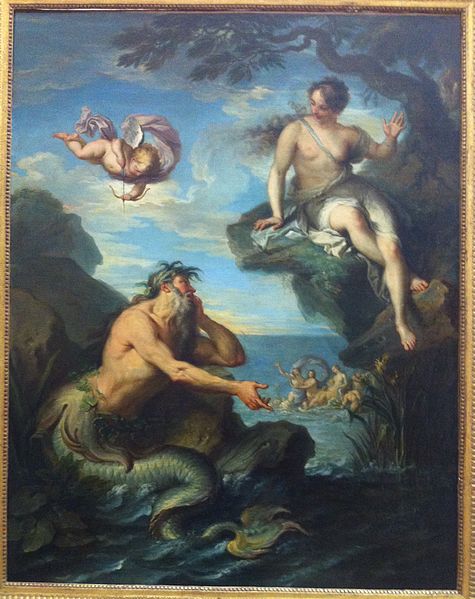
File:Glaucus et Scylla.jpg
Scylla and Glaucus

Harry Potter and Narrative’s Numberless Worlds

This post is a slightly edited version of a thread I posted on twitter yesterday #WorldsNotAuthors

Strabo, 1.2.7

“Humans love to learn; loving stories is a prelude to this. This is why children start by listening and making a common ground in stories.”

φιλειδήμων γὰρ ἅνθρωπος, προοίμιον δὲ τούτου τὸ φιλόμυθον. ἐντεῦθεν οὖν ἄρχεται τὰ παιδία ἀκροᾶσθαι καὶ κοινωνεῖν λόγων ἐπὶ πλεῖον.

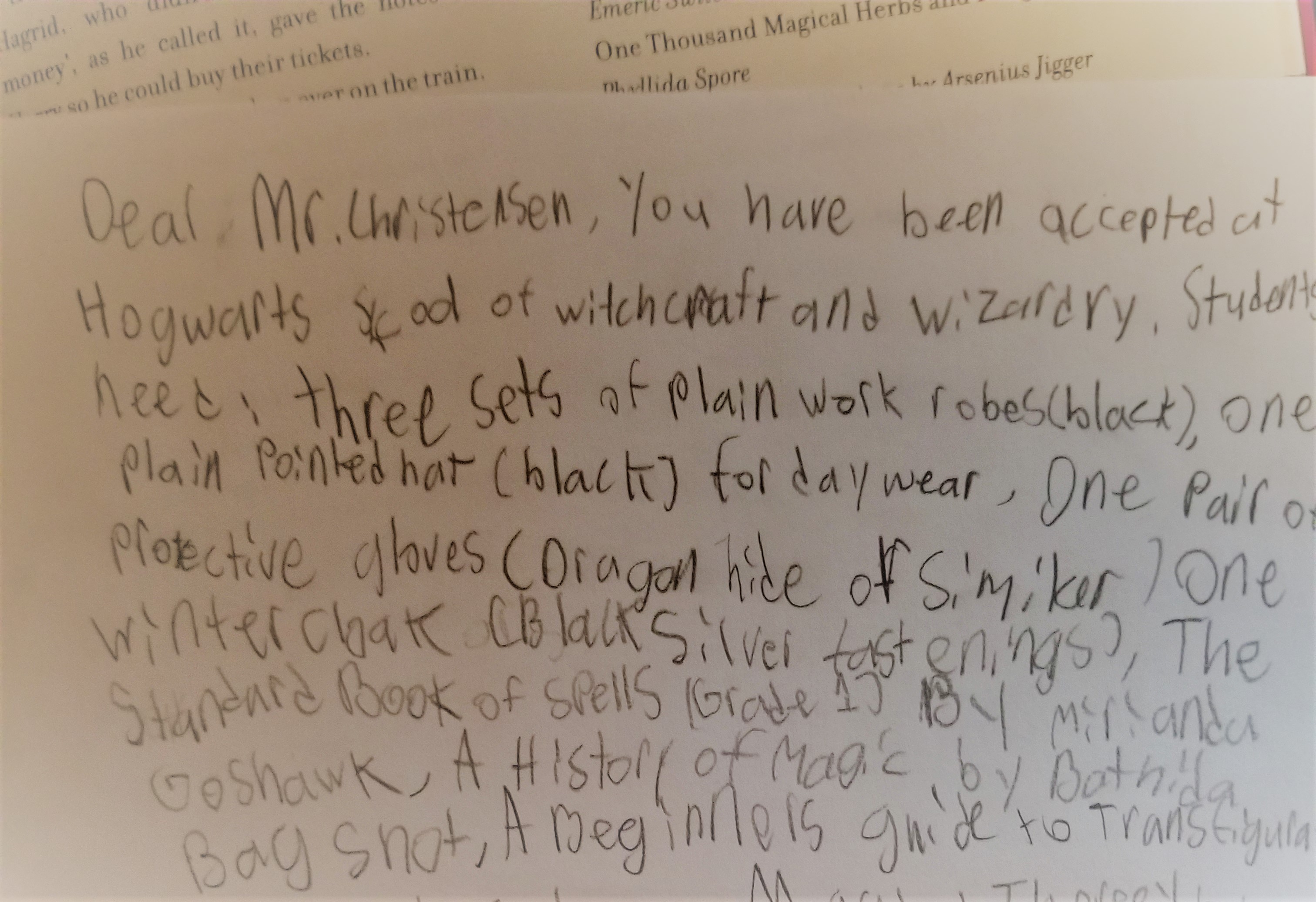
This week, I discovered that my children were secretly making holiday gifts for each other. I walked into the office and found my daughter writing a Hogwarts acceptance letter for her brother, because he wants magic to be real.

Image
The starting address killed me here. But then the level of detail!

Let’s just say that after witnessing this I left the room and had a sudden, prolonged attack of itchy eyes.

I was crying in part because the moment was just so sweet and emerged from a year of the children learning to love the world of Harry Potter. But this was the same day J. K. Rowling was in the news for supporting bigotry, for showing public support of a transphobic UK Academic. (And a lot of analysis online has made it clear that this is not a casual mistake, that she has a pattern of antagonism towards transgender people.) There was a lot of justifiable anger and disappointment online, as several communities wrangled with how to wrangle with this.

This is not, of course, the first time the author of the Harry Potter series has courted controversy. At times she has expressed offensive or poorly nuanced political views; at others, she has seemed to hastily adapt her fictional world to the realities of the contemporary one, claiming, for example, that Dumbledore was always gay.

Euripides, Suppliant Women, 913-917

“For even an infant learns to speak
And listen to things he has no understanding of.
Whatever someone learns, he wants to save
For old age. So, teach your children well.”

..εἴπερ καὶ βρέφος διδάσκεται
λέγειν ἀκούειν θ᾿ ὧν μάθησιν οὐκ ἔχει.
ἃ δ᾿ ἂν μάθῃ τις, ταῦτα σῴζεσθαι φιλεῖ
ἐς γῆρας. οὕτω παῖδας εὖ παιδεύετε.

As many of my former and current students know, I resisted the whole Harry Potter phenomenon for years because I was already teaching when it started (and was thus too cool for the narrative), because, like others, I was weaned on other narratives which had seemed forgotten, like Lloyd Alexander’s cycle, Susan Cooper’s Dark is Rising Sequence, or the unending Wheel of Time. But I was mostly frustrated that at its core, the Harry Potter books are just the same old heroic narrative recycled

As I have written about before the heroic pattern has a great potential to cause harm. The basic heroic narrative is regressive, heteronormative, male-centered, and often, when realized in a western context, racist. It limits roles, sets people up for severe disappointment, and can also eventuate in violence

I was worried about some of these influences when my kids started reading the books because narratives can have such powerful impact on how we view ourselves in the world. My children are young, already shaped by social expectations for gender. The Potter books don’t really give much space to women, they cast good and evil in a rather stark divide (until near the end), and they tokenize non-white characters. My children are bi-racial and are not Christian.

I was worried they would not see themselves in the books or would simply see themselves as peripheral. When it comes to people who look like them or have names closer to theirs, things get a little bleak: The Indian characters in the book are mere UK colonial props, like chicken curry in a pub.

But oh, whatever my reservations, how they fell in love! My daughter, who had read eagerly for a bit but then got overwhelmed by longer books, started listening to the audiobooks while we were driving and then would immediately go to the book when we got home. Before long, she would listen while reading and made a huge leap in her confidence and comprehension. My son, precocious in the way only younger brothers can be, tore through the books in a few months. And then started again a second time.

Seneca, EM 3.3

“What you see happen to children happens to us, too, who are but slightly greater children.”

quod vides accidere pueris, hoc nobis quoque maiusculis pueris evenit.

Experiencing the books together was something something I will cherish until I die. We all listened together in the car and I cried uncontrollably at their smiles when Gryffindor won the house cup at the end of the first book. I heard the stories through their eyes and listened as they debated who was good and bad, cringed at the burgeoning Romances, and wept when their favorite characters died.

Over six months we listened to all the books together, they read them separately, and they watched the movies. Relatives gave them Harry Potter Legos. A babysitter introduced them to the online House quiz. My daughter has a Ravenclaw Scarf; her brother, like Harry himself, is sometimes Slytherin, sometimes Gryffindor. They are now re-listening to the books any time we drive.

In many ways this is different from the way I experienced narratives with my parents: my father was deaf and we would sometimes talk about what we read, but we rarely ever watched movies together (until closed caption was common) and my mother’s genre interests rarely overlapped with mine. My siblings were almost always a little young for what I was reading. Such a deep, shared experience was new to me.

But as a parent, it was also not free of certain burdens. As someone who studies narrative and myth, moreover, I have been really cautious about the stories we tell them from the beginning. Because I was swept away with them to Wizarding world, I don’t know what they have absorbed and what they haven’t, so the world is theirs now. But when the creator of this series makes pronouncements in public, I hear it, but they do not. They don’t know who JK Rowling is. They know the story and they love it. They remake the stories in their play and they find their own lives within it.

I know from the comments in response to the twitter thread that there is a little too much naivete at work here, that the extent of the damage a story can do is unacknowledged, and that the fame and money our love of narrative bestows on authors gives them outsize power in the world. A boycott makes sense, from this perspective.

Yet, there is some wisdom in the child’s eye view here. As adults, we lionize authors/creators/artists mistakenly, partly because of the author/god metaphor but also because of capitalism and individualism. But this is a backwards way of seeing human creativity and creation. We need to change the way we see what artists do in the world; we need to change the way we talk about it.

As a Homerist I fight the tendency to worship authors and essentialize the relationship between them and their work all the time. I am always asserting that (1) there was no Homer and, at best, the name is a metonym and (2) more importantly, even if there were a Homer or if we could isolate a single singer who put together the Iliad and the Odyssey, Epic and literature are a product of interaction between audiences and performers over time. Everyone always wants to talk about the performer but not the audience. Everyone wants to talk about the author, but it is the reader who matters more.

Languages, story-worlds, plot conventions, and all the other things that make narratives possible are products of groups and multiple creators: even individual poets do what they do by contrasting with what is already there. We have a modern collective insanity when it comes to valuing the contribution of individuals and rewarding them. Let me be clear: I don’t think it is a problem if someone creates something people love and gets rich. I just think it is a problem that they see getting rich as valorizing whatever they do and say apart from the work of art.

Sometimes bad people make good things; other times good people make bad things. But people always change and the work changes too. We face particular problems in our society when someone like Orson Scott Card gets rich from creative work and then uses it to hurt people. Let’s be clear here: the problem is not narrative or even Orson Scott Card, the problem is the cancerous effect that money has on human relationships and identity.

I have two responses to this, one a coward’s and one impractical. First, I don’t believe you can buy your way to or from virtue. Capitalism is so deeply thievery and exploitation that to refuse to spend on one corruption is merely to spend on another one. The choice is illusory agency. Of course, it is probably prevarication to say that how we spend does not matter. So, second, for the bold, infringe on copyright; for the more law-abiding, public libraries weaken the advantages that our passions confer.

Our passions are so often unpredictable. Works that move people, that change their lives, don’t necessarily have to be great pieces of art. As others have said, the Potter books are not terribly well-written and much of it is silly, retrograde, or derivative. But it works as story because young people are so willing to fall deeply, and madly in love with a world with rules, magic, and endings.

This inspiration comes from countless other readers, writers, storytellers, and singers. I think that ‘great’ authors just end up being in the right place and right time and have the privilege and luck to tell their stories and have them heard. They also need the cultural prestige and position to do so.

Because I have read the Homeric epics without author for so long and have spent so many years thinking about orality, authorship, and reader reception, it is easy for me to dismiss all authors. I extend this to musicians all the time and have often found myself arguing with my brother about whether or not it matters what a songwriter says a song is about. When artists release their work into the world it becomes something else. But it was already something different before it left them because our languages, images, and narrative patterns are in every part compressed potentials of meaning we don’t fully comprehend at any given moment.

My favorite metaphor to help me understand this comes from Plato’s dialogue, the Ion. Plato has Socrates provide a simile to the rhapsode Ion in about a magnet: he argues that a singer is like a metal ring which is endowed with magnetic power because from another magnetic ring (poet) touching a magnet (the muse/god). He makes it very clear that the audience is part of this process.

535e-536a

“Do you understand that the audience is the last of the rings which I was describing as transmitting through one another the power from the Herakleian stone and that you are the middle as the rhapsode and interpreter—that the poet himself is the first ring? The god moves the soul of all of these people wherever he wants, stringing the power from one into another.”

οἶσθα οὖν ὅτι οὗτός ἐστιν ὁ θεατὴς τῶν δακτυλίων ὁ ἔσχατος, ὧν ἐγὼ ἔλεγον ὑπὸ τῆς Ἡρακλειώτιδος λίθου ἀπ᾽ ἀλλήλων τὴν δύναμιν λαμβάνειν; ὁ δὲ μέσος σὺ ὁ ῥαψῳδὸς καὶ ὑποκριτής, ὁ δὲ πρῶτος αὐτὸς ὁ ποιητής ὁ δὲ θεὸς διὰ πάντων τούτων ἕλκει τὴν ψυχὴν ὅποι ἂν βούληται τῶν ἀνθρώπων, ἀνακρεμαννὺς ἐξ ἀλλήλων τὴν δύναμιν.

This is my favorite way of thinking about artistic creation: imagine if the first ring is not god, but instead human culture in its messiness, in its synchronic and diachronic forms. Authors convey this power and direct it, and audiences transmit it on. I would even argue that magnetism is a good starting metaphor, but it fails to explain the multidirectional network of creative acts, how some nodes can weaken or strengthen their force, how feedback loops from recipient back to speaker can change the force, and how none of us can fully understand the scope of narrative creation because we are inside of not outside of time.

Seneca, De Tranquillitate Animi 8

“Quoting the good words of a bad author will never shame me.”

Numquam me in voce bona mali pudebit auctoris

So, when it comes to the importance of authors, I usually take a pretty hard stance. If JKR wasn’t going to write Harry Potter someone like her would have eventually. Our world was ready for it and the audience was willing to make it real.

When authors turn out to disappoint us—and they always will because they are human and not heroes in their own stories—we can ignore them and detach them from their narratives with no guilt. Perhaps we need to defund them or deplatform them at times, but the story lives beyond the storyteller before the tale is ever told. There’s a larger question here we need to have about loving or praising ‘good’ art from ‘bad’ people.

This doesn’t mean that their stories themselves are innocent. The HP universe has deep body image problems, is certainly ableist, racist and heteronormative. But it is not any of these things because of the author in particular: these stories reflect our world. They reflect us. More progressive authors like Ursula Le Guin or even Robert Heinlein pushed us to rethink our assumptions about gender and sex; and more recently N. K. Jemesin, Ann Leckie, or Ada Palmer help us to see how we are by depicting how we aren’t. And as we grow older and wiser as audiences, we can see these things and make new, better stories.

And I hope to read many of these stories with my children. Unfortunately, many of them also depict sexual acts and I am not ready for that just yet. For now, I am going to just wait to see the look on my son’s face when he gets his acceptance letter. It will destroy me. But, that’s probably because I’m a Hufflepuff, which is something my children, not JKR, taught me.

Strabo 1.8

“Whenever you also consider the amazing and the disturbing, you amplify the pleasure which is a magic charm for learning. In the early years, we must use this sort of thing to entice children, but as their age increases we must lead them to a knowledge of reality as soon as their perception has gotten stronger and they no longer need much cajoling. Every illiterate and ignorant person is in some way a child and loves stories like a child.”

ὅταν δὲ προσῇ καὶ τὸ θαυμαστὸν καὶ τὸ τερατῶδες, ἐπιτείνει τὴν ἡδονήν, ἥπερ ἐστὶ τοῦ μανθάνειν φίλτρον. κατ᾿ ἀρχὰς μὲν οὖν ἀνάγκη τοιούτοις δελέασι χρῆσθαι, προϊούσης δὲ τῆς ἡλικίας ἐπὶ τὴν τῶν ὄντων μάθησιν ἄγειν, ἤδη τῆς διανοίας ἐρρωμένης καὶ μηκέτι δεομένης κολάκων. καὶ ἰδιώτης δὲ πᾶς καὶ ἀπαίδευτος τρόπον τινὰ παῖς ἐστι φιλομυθεῖ τε ὡσαύτως·