The Trial of an Unexpected Pregnancy: The Protoevangelium of James

This is a continuation of the Christmas Story in the apocryphal Gospel of James [also sometimes called the “Infancy” Gospel” or the Protoevangelium of James].

The Gospel According to James 15-16.

“Then the Scribe Annas came to him and said to him, “Why didn’t you appear at our assembly?” And Joseph said to him, “Because I was completely worn out from my travel and I had rested only a day.” Then Annas turned and saw the pregnant virgin. Then he left the house quickly and told the top-priest, “Joseph, whom you will witness, has broken the law severely.” And the Priest said, “What is this?” and Annas responded, “The virgin whom he took from the temple of the Lord, he has defiled her. And the priest said to him in response, “Joseph, Joseph did this?” And Annas said, “Send your attendants and you will discover a pregnant virgin.

So the attendants left and they found her, just as he said, and they led her with Joseph to judgment. The priest said, “Mary, why did you do this and lay low your soul and forget the Lord, your God, when you were raised up in the Holiest of Holies and took food from an angel’s hand—you even heard their hymn and you danced among them? Why did you do this?” She wept bitterly, saying, “As the Lord God lives, I am clean before him and I have known no man.”

So then the priest said, “Joseph, why did you do this?” And Joseph responded, “As the Lord, my God lives, I am innocent concerning her.” Then the priest said, “Do not bear false witness, but speak the truth. You hid your marriage and you did not declare it openly to the sons of Israel, and you did not bow your head under the powerful hand so that your seed would be blessed.” Then Joseph was silent.

Then the priest spoke, “Give the virgin whom you took from the temple of the Lord back. And, as he cried, Joseph stood still. Then the Priest said, “I will make you drink the Lord’s water of testing and it will make your sins clear in your eyes.” Then the priest had Joseph drink the water and sent him to the hills. And he came back, whole. He also made the virgin drink and sent her into the hills. She came back too. The whole people wondered at this, that there was no sin revealed among them. And the priest said, “If the Lord God does not make their sin manifest, then I do not judge them and he has freed them.” Then Joseph took Mary and returned to his own home, feeling joy and glorying the god of Israel.”

151 Ἠλθεν δὲ Ἄννας ὁ γραμματεὺς πρὸς αὐτὸν καὶ εἶπεν αὐτῷ: διὰ τί οὐκ ἐφάνης ἐν τῇ συναγωγῇ (συνόδῳ) ἡμῶν; καὶ εἶπεν αὐτῷ Ἰωσήφ: ὅτι κεκμηκὼς ἤμην ἐκ τῆς ὁδοῦ καὶ ἀνεπαυσάμην ἡμέραν μίαν . καὶ ἐστράφη Ἄννας καὶ εἶδεν τὴν παρθένον ὀγκωμένην. 2 καὶ ἀπελθὼν δρομαίως πρὸς τὸν (ἀρχ-)ἱερέα εἶπεν αὐτῷ: Ἰωσήφ, ὅν σὺ μαρτυρεῖς, ἠνόμησε σφόδρα. καὶ εἶπεν ὁ ἱερεύς: τί τοῦτο; καὶ εἶπεν Ἄννας: τὴν παρθένον, ἥν παρέλαβεν ἐκ ναοῦ κυρίου, ἐμίανεν αὐτήν. καὶ ἀποκριθεὶς ὁ ἱερεὺς εἶπεν αὐτῷ: Ἰωσὴφ; Ἰωσὴφ τοῦτο ἐποίησεν; καὶ εἶπεν Ἄννας: ἀπόστειλον ὑπηρέτας καὶ εὑρέσεις τὴν παρθένον ὀγκωμένην. καὶ ἀπῆλθον οἱ ὑπηρέται καὶ εὗρον αὐτήν, καθὼς εἶπεν, καὶ ἀπήγαγον ἅμα τῷ Ἰωσὴφ εἰς τὸ κριτήριον. 3 καὶ εἶπεν ὁ ἱερεύς: Μαριάμ, τί τοῦτο ἐποίησας καὶ ἐταπείνωσας τὴν ψυχήν σου καὶ ἐπελάθου κυρίου τοῦ θεοῦ σου, ἡ ἀνατραφεῖσα εἰς τὰ ἅγια τῶν ἁγίων καὶ λαβοῦσα τροφὴν ἐκ χειρὸς ἀγγέλων, σὺ ἡ ἀκούσασα τὸν ὕμνον αὐτῶν καὶ χορεύσασα ἐνώπιον αὐτῶν; τί τοῦτο ἐποίησας; ἡ δὲ ἔκλαυσε πικρῶς λέγουσα: ζῇ κύριος ὁ θεός, ὅτι καθαρά εἰμι ἐγὼ ἐνώπιον αὐτοῦ καὶ ἄνδρα οὐ γινώσκω. 4 καὶ εἶπεν ὁ ἀρχιερεύς: Ἰωσήφ, τί τοῦτο ἐποίησας; καὶ εἶπεν Ἰωσήφ: ζῇ κύριος ὁ θεός μου, ὅτι καθαρός εἰμι ἐξ αὐτῆς. καὶ εἶπεν ὁ ἀρχιερεύς: μὴ ψευδομαρτύρει, ἀλλὰ λέγε τὸ ἀληθές: ἔκλεψας τοὺς γάμους καὶ οὐκ ἐφανέρωσας τοῖς υἱοῖς Ἰσραήλ, καὶ οὐκ ἔκλινας τὴν κεφαλήν σου ὑπὸ τὴν κραταιὰν χεῖρα, ὅπως εὐλογηθῇ τὸ σπέρμα σου. καὶ Ἰωσὴφ ἐσίγησεν.

16.1 Καὶ εἶπεν ὁ ἱερεύς: ἀπόδος τὴν παρθένον, ἥν παρέλαβες ἐκ ναοῦ κυρίου. καὶ περίδακρυς γενόμενος ὁ Ἰωσὴφ ἔστη. καὶ εἶπεν ὁ ἱερεύς: ποτιῶ ὑμᾶς τὸ ὕδωρ τῆς ἐλέγξεως κυρίου καὶ φανερώσει τὰ ἁμαρτήματα ὑμῶν ἐν ὀφθαλμοῖς ὑμῶν. 2 καὶ λαβὼν ὁ ἱερεὺς ἐπότισε τὸν Ἰωσὴφ καὶ ἔπεμψεν αὐτὸν εἰς τὴν ὀρεινήν: καὶ ἦλθεν ὁλόκληρος. ἐπότισεν δὲ καὶ τὴν παρθένον καὶ ἔπεμψεν καὶ αὐτὴν εἰς τὴν ὀρεινήν: καὶ ἦλθεν ὁλόκληρος, καὶ ἐθαύμασε πᾶς ὁ λαός, ὅτι ἁμαρτία οὐχ εὑρέθη ἐν αὐτοῖς. 3 καὶ εἶπεν ὁ ἱερεύς: εἰ κύριος ὁ θεὸς οὐκ ἐφανέρωσεν τὴν ἁμαρτίαν ὑμῶν, οὐδὲ ἐγὼ κρίνω ὑμᾶς καὶ ἀπέλυσεν αὐτούς. καὶ παρέλαβεν Ἰωσὴφ τὴν Μαριὰμ καὶ ἀπίει εἰς τὸν οἶκον αὐτοῦ χαίρων καὶ δοξάζων τὸν θεὸν τοῦ Ἰσραήλ.

Image result for pregnant mary and joseph ancient

December Debates: Should We Accept Gifts from Bad People?

Seneca, De Beneficiis 1.14

“Indeed, I think that we should not look for an advantage from any person whose public esteem is low. Why? Shouldn’t what Claudius offered have been accepted? It should have been, but just as something given by chance which you know might immediately turn bad.

Why do we distinguish between these two instances just combined? A gift is not beneficial when its best part is missing—when it is given because of high esteem. A lot of money, if it is not given rightly or freely, is no more beneficial than a warehouse. There are many gifts which should be accepted but create no obligations.”

Ego vero nullius puto expetendum esse beneficium, cuius vile iudicium est. Quid ergo? Non erat accipiendum a Claudio, quod dabatur? Erat, sed sicut a fortuna, quam scires posse statim malam fieri. Quid ista inter se mixta dividimus? Non est beneficium, cui deest pars optima, datum esse iudicio: alioqui pecunia ingens, si non ratione nec recta voluntate donata est, non magis beneficium est quam thesaurus. Multa sunt autem, quae oportet accipere nec debere.


Image result for Medieval manuscripts gift giving
Bishop Engilmar Celebrating Mass, benedictional, Regensburg, about 1030-40

The Effect of the Classics on Young and Old

John Henry Newman, An Essay in Aid of a Grammar of Assent:

“Let us consider, too, how differently young and old are affected by the words of some classic author, such as Homer or Horace. Passages, which to a boy are but rhetorical common-places, neither better nor worse than a hundred others which any clever writer might supply, which he gets by heart and thinks very fine, and imitates, as he thinks, successfully, in his own flowing versification, at length come home to him, when long years have passed, and he has had experience of life, and pierce him, as if he had never before known them, with their sad earnestness and vivid exactness. Then he comes to understand how it is that lines, the birth of some chance morning or evening at an Ionian festival, or among the Sabine hills, have lasted generation after generation, for thousands of years, with a power over the mind, and a charm, which the current literature of his own day, with all its obvious advantages, is utterly unable to rival.”

Image result for j.h. newman

Spiritual Exercise: Consider How Much You Suck

Ignatius of Loyola, Spiritual Exercises (Week 1, Second Exercise)

“Third, I should consider who I am by diminishing myself with examples. First, how small I am in comparison with all people; second, what people are in comparison with all of the Angels and Saints of Paradise; third, to consider what are all created things in comparison with God: now, what could I alone amount to? In the fourth place, to consider all of my corruption and bodily hideousness; fifth, to consider that I am like an ulcer or an abscess, from which shoot forth so many sins, so much vileness, and such disgusting poison.”

ignatius

“Tertium, inspicere [considerare] quis sim ego, minuendo me ipsum per exempla: primo, quantus sim ego in comparatione omnium hominum: secundo quid sint homines in comparatione omnium Angelorum et Sanctorum Paradisi: tertio, inspicere [considerare] quid sint omnia creata, in comparatione Dei: jam ego solus quid esse possim? Quarto inspicere [considerare] omnem meam corruptionem et foeditatem corpoream: quinto, inspicere [considerare] me quasi ulcus quoddam et apostema, unde pullularunt tot peccata et tot nequitiae, ac venenum tam turpissimum.”

Customary Triviality and the Second Most Beautiful Danaan

Demetrius, On Style 60-61

“First, anthypallage, as when Homer has “the two rocks, one reaches to the broad sky”. This is far more impressive than if the typical genitive had been used and he had said, two of the rocks, one reaches the broad sky. It is customarily said like that. But everything customary is trivial, and for this reason brings no amazement.

Conider, in turn, Nireus, who is minor himself and whose affairs are minor since he has three ships and a small number of people. The poet makes him great and his group lareger using the double and combined figures of anaphora and asyndeton. He says “Nireus led three ships / Nirieus the son of Aglaiê, Nireus, who was the prettiest man. The anaphora—repetition of the same word, here Nireus—and the asyndeton makes the matter described seem larger, even though it is only two or three ships.”

(60) πρῶτον μὲν τὴν ἀνθυπαλλαγήν, ὡς Ὅμηρος, “οἱ δὲ δύο σκόπελοι ὁ μὲν οὐρανὸν εὐρὺν ἱκάνει”· πολὺ γὰρ οὕτω μεγαλειότερον ἐναλλαγείσης <τῆς> πτώσεως, ἢ εἴπερ οὕτως ἔφη, “τῶν δὲ δύο σκοπέλων ὁ μὲν οὐρανὸν εὐρύν”· συνήθως γὰρ ἐλέγετο. πᾶν δὲ τὸ σύνηθες μικροπρεπές, διὸ καὶ ἀθαύμαστον.

(61) Τὸν δὲ Νιρέα, αὐτόν τε ὄντα μικρὸν καὶ τὰ πράγματα αὐτοῦ μικρότερα, τρεῖς ναῦς καὶ ὀλίγους ἄνδρας, μέγαν καὶ μεγάλα ἐποίησεν καὶ πολλὰ ἀντ᾿ ὀλίγων, τῷ σχήματι διπλῷ καὶ μικτῷ χρησάμενος ἐξ ἐπαναφορᾶς τε καὶ διαλύσεως. “Νιρεὺς γάρ,” φησι, “τρεῖς νῆας ἄγεν, Νιρεὺς Ἀγλαΐης υἱός, Νιρεύς, ὃς κάλλιστος ἀνήρ”· ἥ τε γὰρ ἐπαναφορὰ τῆς λέξεως ἐπὶ τὸ αὐτὸ ὄνομα τὸν Νιρέα καὶ ἡ διάλυσις πλῆθός τι ἐμφαίνει πραγμάτων, καίτοι δύο ἢ τριῶν ὄντων.

The lines in the Iliad are slightly different (2.671–675)

“Then Nireus came from Symê with three beautiful ships,
Nireus the son of Aglaiê and lord Kharops,
Nireus, the most beautiful man who came to Troy
Of all the Danaans after the blameless son of Peleus.
But he was weak and a meager army followed him.”

Νιρεὺς αὖ Σύμηθεν ἄγε τρεῖς νῆας ἐΐσας
Νιρεὺς ᾿Αγλαΐης υἱὸς Χαρόποιό τ’ ἄνακτος
Νιρεύς, ὃς κάλλιστος ἀνὴρ ὑπὸ ῎Ιλιον ἦλθε
τῶν ἄλλων Δαναῶν μετ’ ἀμύμονα Πηλεΐωνα·
ἀλλ’ ἀλαπαδνὸς ἔην, παῦρος δέ οἱ εἵπετο λαός.

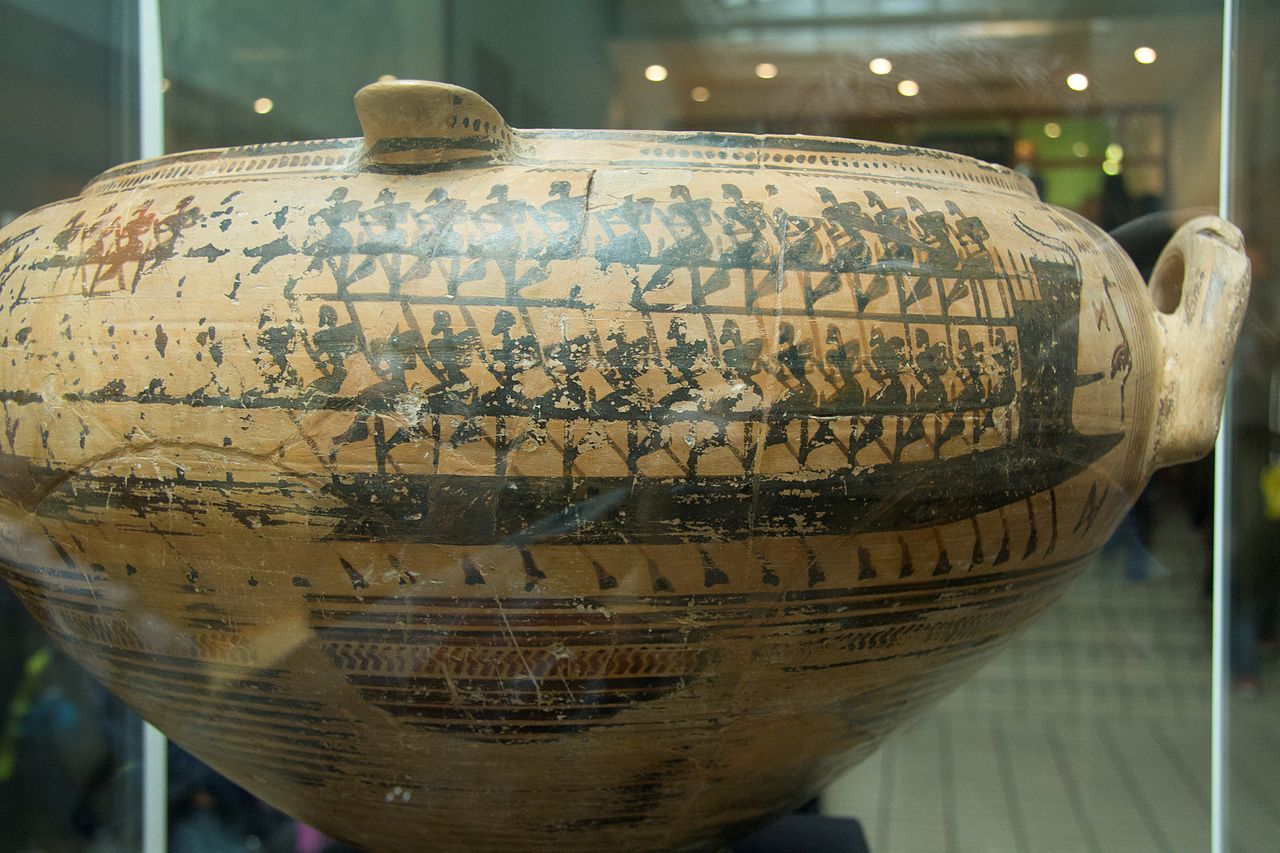
Thebes Vase from this site

“The Criminal We Selected”: A Fable for Our Time

Phaedrus 1.31 Kite and doves

“Whoever trusts a dishonest man to keep him safe,
Discovers ruin where he thought he would find aid.

When the doves were often fleeing from the kite
And were avoiding death by wings’ rapid flight
The kite turned his plans toward deceit
And tricked the silly race with this conceit:
“Why do you live a live with so much worrying,
When with a simple oath, you could make me king?
I would keep you safe from every harm?”
Believing him, they put their safety in his arms.

Once he gained the realm he ate them one by one
And exercised his power with the harshest talons.
Then one of the remaining doves reflected,
“We deserve this: we gave our life to a criminal we selected.”

kite

I.31 Milvus et Columbae

Qui se committit homini tutandum improbo,
auxilia dum requirit, exitium invenit.
Columbae saepe cum fugissent milvum,
et celeritate pinnae vitassent necem,
consilium raptor vertit ad fallaciam,
et genus inerme tali decepit dolo:
“Quare sollicitum potius aevum ducitis
quam regem me creatis icto foedere,
qui vos ab omni tutas praestem iniuria?”
Illae credentes tradunt sese milvo.
Qui regnum adeptus coepit vesci singulas,
et exercere imperium saevis unguibus.
Tunc de reliquis una “Merito plectimur,
huic spiritum praedoni quae commisimus”.


Philostratus, Apollonius of Tyana VII

“The king, swelling up with rage because of what was said, responded, “You think that I am lying about them, when I have discovered that they are the most disgusting of people who are plotting against me?

And you are saying that they are good people, and serious? Well, I suppose if they were asked about you that they wouldn’t say that you’re a wizard, a madman, a braggart who is greedy and breaks the laws? That’s how evil your conspiracy is, you filthy criminals.

The trial will prove everything. I know how much you all swore under oath, why you did it, when you did it, and what you sacrificed, as if I were there and joined in with you!”

Ἀνοιδήσας δ᾿ ὁ βασιλεὺς ὑφ᾿ ὧν ἤκουσε “συκοφάντην με οὖν” εἶπεν “ἐπ᾿ αὐτοῖς εἴληφας, ἵν᾿ οὓς ἐγὼ μιαρωτάτους ἀνθρώπων καὶ τοῖς ἐμοῖς ἐπιπηδῶντας εὗρον, σὺ δ᾿, ὡς χρηστοί τέ εἰσι λέγεις καὶ νωθροί; καὶ γὰρ ἂν κἀκείνους ἡγοῦμαι ὑπὲρ σοῦ ἐρωτωμένους μήθ᾿ ὡς γόης εἶ, φάναι, μήθ᾿ ὡς ἴτης, μήθ᾿ ὡς ἀλαζών, μήθ᾿ ὡς φιλοχρήματος, μήθ᾿ ὡς φρονῶν ὑπὲρ τοὺς νόμους, οὕτως, ὦ μιαραὶ κεφαλαί, κακῶς ξυντέταχθε. ἐλέγξει δ᾿ ἡ κατηγορία πάντα· καὶ γὰρ ὁπόσα ὀμώμοται ὑμῖν, καὶ ὑπὲρ ὧν καὶ ὁπότε καὶ τί θύσασιν, οὐδὲν μεῖον οἶδα, ἢ εἰ παρετύγχανόν τε καὶ ἐκοινώνουν.”

Stop the Presses! The Character of an Oligarch

Theophrastus, Characters: Authoritarianism

1. Authoritarianism [oligarchy] would appear to be a certain lust for power that is greedy for power and profit. An oligarch is the sort who:

2. When the people are debating who should be selected to assist leading a parade, steps right up and declares that absolute control is required. If others propose ten people to do a job, he declares that “one is enough, provided he is a real man”. He can recall only that one Homeric verse—“the rule of many is not good, there should be one ruler’—and he understands nothing of the rest.

3. Don’t miss out that he uses these kinds of statements: “We should get together and deliberate about this on our own and avoid the democrat mob and the assembly. Stop being insulted or honored by them when we hold public offices” or “They should run the state or we should.”

4. In the middle of the day he goes out finely dressed with his hair hanging at mid-length and his fingernails finely done, peacocking around, laying about with words like this:

5. “Thanks to all these whistleblowers, this country is unlivable!” “We are being treated the worst in the courts because of their corruption!” “I can’t imagine what these people pursuing politics even want!” “The people are completely ungrateful—all they want is a handout!” He says he is ashamed in the assembly whenever some skinny person sits next to him.”

Letter (2)
There may be a universe in which this is real

(1) δόξειεν δ᾿ ἂν εἶναι ἡ ὀλιγαρχία φιλαρχία τις ἰσχύος καὶ κέρδους γλιχομένη, ὁ δὲ ὀλιγαρχικὸς τοιοῦτος,

(2) οἷος τοῦ δήμου βουλευομένου, τίνας τῷ ἄρχοντι προσαιρήσονταιτῆς πομπῆς τοὺς συνεπιμελησομένους, παρελθὼν ἀποφήνασθαι ὡς δεῖ αὐτοκράτορας τούτους εἶναι, κἂν ἄλλοι προβάλλωνται δέκα, λέγειν “ἱκανὸς εἷς ἐστι, τοῦτον δὲ” ὅτι “δεῖ ἄνδρα εἶναι·” καὶ τῶν Ὁμήρου ἐπῶν τοῦτο ἓν μόνον κατέχειν, ὅτι “οὐκ ἀγαθὸν πολυκοιρανίη, εἷς κοίρανος ἔστω,” τῶν δὲ ἄλλων μηδὲν ἐπίστασθαι·

(3) ἀμέλει δὲ δεινὸς τοῖς τοιούτοις τῶν λόγων χρήσασθαι, ὅτι “δεῖ αὐτοὺς ἡμᾶς συνελθόντας περὶ τούτων βουλεύσασθαι, καὶ ἐκ τοῦ ὄχλου καὶ τῆς ἀγορᾶς ἀπαλλαγῆναι, καὶ παύσασθαι ἀρχαῖς πλησιάζοντας καὶ ὑπὸ τούτων οὕτως ὑβριζομένους ἢ τιμωμένους,” <καὶ> ὅτι “ἢ τούτους δεῖ ἢ ἡμᾶς οἰκεῖν τὴν πόλιν.”

(4) καὶ τὸ μέσον δὲ τῆς ἡμέρας ἐξιὼν καὶ τὸ ἱμάτιον ἀναβεβλημένος καὶ μέσην κουρὰν κεκαρμένος καὶ ἀκριβῶς ἀπωνυχισμένος σοβεῖν τοὺς τοιούτους λόγους τραγῳδῶν·

(5) “διὰ τοὺς συκοφάντας οὐκ οἰκητόν ἐστιν ἐν τῇ πόλει,” καὶ ὡς “ἐν τοῖς δικαστηρίοις δεινὰ πάσχομεν ὑπὸ τῶν δεκαζομένων,” καὶ ὡς “θαυμάζω τῶν πρὸς τὰ κοινὰ προσιόντων τί βούλονται,” καὶ ὡς “ἀχάριστόν ἐστι <τὸ πλῆθος καὶ ἀεὶ>τοῦ νέμοντος καὶ διδόντος,” καὶ ὡς αἰσχύνεται ἐν τῇ ἐκκλησίᾳ, ὅταν παρακάθηταί τις αὐτῷ λεπτὸς

arrogant finger

Naked Graces and Noble Foxes: Some Proverbs on Gifts

Zenobius 1.71

“A Fox can’t be bribed” this is applied to those who are not easily captured by gifts

᾿Αλώπηξ οὐ δωροδοκεῖται: ἐπὶ τῶν οὐ ῥᾳδίως δώροις ἁλισκομένων.

Zenobius 3.42

“Praise any gift someone gives you.”

Δῶρον δ’ ὅ τι δῷ τις ἐπαίνει

Zenobius, 4.4

“An enemy’s gifts are not gifts, and bring no benefit.” This proverb is mentioned by Sophokles in his Ajax. Euripides also says something similar in the Medea: “the gift of a wicked man brings no benefit”.

᾿Εχθρῶν ἄδωρα δῶρα κοὐκ ὀνήσιμα [=Soph. Ajax 665] μέμνηται τῆς παροιμίας ταύτης Σοφοκλῆς ἐν Αἴαντι μαστιγοφόρῳ. Λέγει δὲ καὶ Εὐριπίδης ἐν τῇ Μηδείᾳ,K Κακοῦ ἀνδρὸς δῶρον ὄνησιν οὐκ ἔχει.

Diogenianus, 4.21

“Gifts persuade the gods and reverent kings. This is applied to those who twist judgments because of bribes.”

Δῶρα θεοὺς πείθει, καὶ αἰδοίους βασιλῆας: ἐπὶ τῶν διὰ δῶρα τὰς δίκας ἀντιστρεφόντων.

Michael Apostolios 1.82

“The Graces are Naked”: [a phrase asserting that] it is right to give thanks for a gift without envy or vanity.”

Αἱ Χάριτες γυμναί: ὅτι δεῖ τὴν δωρεὰν ἀφειδῶς ἢ ἀκενοδόξως χαρίζεσθαι.

gifts

Michael Apostolios, 7.65

“You come, bearing sleepover gifts.” This proverb is applied to those who give many things. That are called sleepover gifts from the practice where on the day after a wedding gifts are carried from the bride’s father to the bridegroom and the bride in procession. A child leads, bearing a white cloak and a burning lamp and a basket-bearer follows him. After them come the rest of the women in order carrying golden items, basins, perfumes, litters, combs, alabaster jars, sandals, chests. Sometimes they take the dowry at the same time.”

᾿Επαύλια δῶρα φέρειν ἥκεις: ἐπὶ τῶν πολλὰ δωρουμένων. ᾿Επαύλια δὲ καλεῖται τὰ μετὰ τὴν ἐχομένην ἡμέραν τῶν γάμων παρὰ τοῦ τῆς νύμφης πατρὸς δῶρα φερόμενα τῷ νυμφίῳ καὶ τῇ νύμφῃ ἐν πομπῆς σχήματι· παῖς γὰρ ἡγεῖται χλανίδα λευκὴν ἔχων καὶ λαμπάδα καιομένην, ἔπειτα μετὰ τοῦτον κανηφόρος· εἶθ’ αἱ λοιπαὶ ἀκολουθοῦσιν ἐφεξῆς, φέρουσαι χρυσία, λεκανίδας, σμήγματα, φορεῖα, κτένας, κοίτας, ἀλαβάστρους, σανδάλια, μυράλιτρα. ἐνίοτε δὲ καὶ τὴν προῖκα ἅμα τῶν νυμφίων φέρουσιν.

Michael Apostolios, 8.66

“Heraklean bath.” This is applied to people who take gifts. For Hephaistos gave a bath to Herakles as a gift.”

῾Ηράκλεια λουτρά: ἐπὶ τῶν δῶρα λαμβανόντων. κατὰ δωρεὰν γὰρ ὁ ῞Ηφαιστος ἀνέδωκε λουτρὰ τῷ ῾Ηρακλεῖ.

Arsenius, 13.151

“I, a poor man, don’t want to give a wealthy man a gift.”

Οὐ βούλομαι πλουτοῦντι δωρεῖσθαι πένης·

Arsenius, 15.95a

“Great gifts bring fear of chance.”

Τὰ μεγάλα δῶρα τῆς τύχης ἔχει φόβον,

Lacedaemon? More Like LaceDUMBon!

Aelian, Historia Varia 3.50:

The Spartans kept themselves wholly ignorant of the arts, for they cared about exercise and arms. If they ever needed something derived from the Muses, either because they were sick or ailing in the mind or suffering some other public problem, they would send for foreigners – either doctors, or exorcists in accordance with an oracle. They sent for Terpander, and Thales, and Tyrtaeus, and Nymphaeus of Cydonia, and Alcman. Thucydides agrees that they had no enthusiasm for education in the part of his book where he talks about Brasidas, and says that he was unable to speak, just like a Spartan.

Image result for spartan painting

Λακεδαιμόνιοι μουσικῆς ἀπείρως εἶχον· ἔμελε γὰρ αὐτοῖς γυμνασίων καὶ ὅπλων. εἰ δέ ποτε ἐδεήθησαν τῆς ἐκ Μουσῶν ἐπικουρίας ἢ νοσήσαντες ἢ παραφρονήσαντες ἢ ἄλλο τι τοιοῦτον δημοσίᾳ παθόντες, μετεπέμποντο ξένους ἄνδρας οἷον ἰατροὺς ἢ καθαρτὰς κατὰ πυθόχρηστον. μετεπέμψαντό γε μὴν Τέρπανδρον καὶ Θάλητα καὶ Τυρταῖον καὶ τὸν Κυδωνιάτην Νυμφαῖον καὶ ᾿Αλκμᾶνα. καὶ Θουκυδίδης δὲ ὁμολογεῖ ὅτι μὴ ἐσπουδασμένως περὶ παιδείαν εἶχον, ἐν οἷς λέγει περὶ Βρασίδου. λέγει γοῦν ὅτι ἦν οὐ δὲ ἀδύνατος εἰπεῖν, ὡς Λακεδαιμόνιος.

“It was all so unimaginably different…”

From Louis MacNeice’s Autumn Journal Part IX:

The Glory that was Greece: put it in a syllabus, grade it
Page by page
To train the mind or even to point a moral
For the present age:
Models of logic and lucidity, dignity, sanity,
The golden mean between opposing ills
Though there were exceptions of course but
only exceptions
The bloody Bacchanals on the Thracian hills.
So the humanist in his room with Jacobean panels
Chewing his pipe and looking on a lazy quad
Chops the Ancient World to turn a sermon
To the greater glory of God.
But I can do nothing so useful or so simple;
These dead are dead
And when I should remember the paragons of Hellas
I think instead
Of the crooks, the adventurers, the opportunists,
The careless athletes and the fancy boys,
The hair-splitters, the pedants, the hard-boiled sceptics
And the Agora and the noise
Of the demagogues and the quacks; and the women pouring
Libations over graves
And the trimmers at Delphi and the dummies at Sparta
and lastly
I think of the slaves.
And how one can imagine oneself among them
I do not know;
It was all so unimaginably different
And all so long ago.

Hubert Robert, ‘Ruins of a Doric Temple’