The same thought is put forth by others: Ῥεχθὲν δε τε νήπιος ἔγνω, that is, ‘The fool understands the matter once it’s done.’ It has, however, been taken from Homer, who has taken up this thought in many places, as in Μήτε ἀντίος ἵστασ᾽ ἐμοῖο, Πρίν τι κακὸν παθέειν· ῥεχθὲν δέ τε νήπιος ἔγνω, that is, Beware of coming up against me, before you take up some harm; for even the stupid person understands the deed once it’s done. Euripides has alluded to this in his Bacchae: Κακοῦ γὰρ ἐγγὺς ὢν ἐμάνθανεν, that is, For he learned, being close to the misfortune; this was said of Pentheus, who learned too late and not without danger to himself to revere Bacchus. Not entirely dissimilar to this is that senarius renowned among the Greek sententiae: Ἡ δὲ μετάνοια γίγνετ᾽ ἀνθρώποις κρίσης, that is, Then people judge, when they already have regret. This expression of Vergil has the same bearing: Having been warned, learn justice and not to spurn the gods. Similarly, the thought of Demosthenes: I do not purchase regret at such a price. And so, in the most elegant way, Fabius (in Livy) calls the outcome the teacher of the fool, saying, Nor would the outcome, which is the teacher of the fool, teach this. Pliny, in his Panegyric which he spoke to Trajan, calls prudence of this sort fruitless and wretched, saying Terror, and fear, and that wretched prudence made out of dangers warned us to turn our eyes, our ears, our minds away from the republic (though there was, however, no republic at all).
FACTVM STVLTVS COGNOSCIT
Idem aliter effertur ab aliis: Ῥεχθὲν δε τε νήπιος ἔγνω, id est• Rem peractam stultus intellexit•. Sumptum est autem ex Homero, qui pluribus locis hanc vsurpauit sententiam. Vt in Iliados Μήτε ἀντίος ἵστασ᾽ ἐμοῖο, Πρίν τι κακὸν παθέειν· ῥεχθὲν δέ τε νήπιος ἔγνω, id est Mihi obuius ire caueto, prius quam Noxae aliquid capias; nam factum nouit et excors. Huc allusit Euripides in Bacchis: Κακοῦ γὰρ ἐγγὺς ὢν ἐμάνθανεν, id est Nam didicit affinis malo, de Pentheo, qui sero nec nisi sua pernicie doctus coepit reuereri Bacchum. Neque huic diuersum est, quod admonet senarius ille inter Graecanicas sententias celebris: Ἡ δὲ μετάνοια γίγνετ᾽ ἀνθρώποις κρίσης, id est Tum iudicant homines, vbi iam poenitet. Eodem pertinet Vergilianum illud: Discite iustitiam moniti et non temnere diuos. Item illud Demosthenicum: Non emo tanti poenitere. Vnde perquam eleganter Fabius apud Titum Liuium euentum stultorum magistrum appellat Nec euentus doceat hoc, inquiens, qui stultorum magister est, sed ratio. Plinius in Panegyrico, quem Traiano dixit, huiusmodi seram et infrugiferam prudentiam miseram vocat. Terror, inquit, et metus et misera illa ex periculis facta prudentia monebat, vt a republica (erat autem omnino nulla respublica) oculos, aures, animos auerteremus.
This period of our confusion and isolation is exhausting and and we have found the opportunity to have this blog and its audiences to engage with and to be responsible to. Having something to do each day makes a big difference.
The way that I often cope with the world is through reading, through retreating to books and poetry. I imagine that many people do the same and would like to invite anyone who comes across this blog to submit something to post for others.
We don’t want to create work, stress, or unwanted distraction for anyone, but we do want to afford the opportunity to reach out, to speak, to share something important to them.
Send us a translation of a passage that brings you comfort, rage, hope, confusion. Really, send us anything that makes you feel and we will try to get it posted in a reasonable amount of time.
Rules: for passages (1) it needs to be your translation (2) if there are serious problems, we will try to edit; (3) we can’t guarantee posting.
If you want to send a short essay or commentary, please: under 2000 words; nothing that targets other people and does others harm.
Plutarch, Table-Talk 9, (736e)
“Then he included an argument about the apt quotation of poetry, that the one which was most potent was not only charming but also useful.”
We especially welcome short reflections on teaching or reading the classics in isolation. In the past, people have also posted Latin and Greek prose compositions or satire. Reflections on teaching, our disciplines, or anything else are acceptable. We have many different examples on the essay list.
Don’t feel bad if you can’t send anything! We hope everyone stays safe, well, and kind for the duration.
Be there for each other, and that, our friends, is enough.
Boethius, On the Consolation of Philosophy 3.35
“The most sacred thing of all is friends, something not recorded as luck but as virtue, since the rest of the goods are embraced with a view toward power or pleasure.”
amicorum vero quod sanctissimum quidem genus est, non in fortuna sed in virtute numeratur, reliquum vero vel potentiae causa vel delectationis assumitur
Herodotus 5.24.2
“An intelligent and well-disposed friend is the finest of all possessions.”
“A sick man doesn’t look for a an eloquent doctor, but if he finds one who is able to heal him and can speak articulately about what needs to be done, he will accept it well. Yet he still will not praise luck for finding so well-spoken a doctor.
This is the same kind of a thing as a knowledgeable ship captain who is good-looking! Why do you caress my ears? Why do you amuse me? There is different work to be done! I need to be cauterized, stitched, or forced to a diet. You were called for these things! You need to treat an ancient disease, a serious and common one. You have as much responsibility as a doctor does in a plague.
Are you worrying about words? Rejoice if you can merely handle things. When will you learn much? When will you plant in your mind what you have learned so it cannot escape? When will you practice it? It is not enough to commit these things to memory: they need to be attempted in deeds. The happy person is not the one who knows but who acts.”
Non quaerit aeger medicum eloquentem, sed, si ita conpetit, ut idem ille, qui sanare potest, compte de iis, quae facienda sunt, disserat, boni consulet. Non tamen erit, quare gratuletur sibi, quod inciderit in medicum etiam disertum. Hoc enim tale est, quale si peritus gubernator etiam formosus est. Quid aures meas scabis? Quid oblectas? Aliud agitur; urendus, secandus, abstinendus sum. Ad haec adhibitus es.
Curare debes morbum veterem, gravem, publicum. Tantum negotii habes, quantum in pestilentia medicus. Circa verba occupatus es? Iamdudum gaude, si sufficis rebus. Quando, quae multa disces? Quando, quae didiceris, adfiges tibi ita, ut excidere non possint? Quando illa experieris? Non enim ut cetera, memoriae tradidisse satis est; in opere temptanda sunt. Non est beatus, qui scit illa, sed qui facit.
“When there was once that worst of plagues, civil conflict, on Khios, one man who was a politician among them said to some of his companions who were hurrying to exile all their opponents, “Don’t! Now that we’ve won, let’s keep some of them around so that we won’t start to fight one another in the future because we don’t have any enemies.”
He persuaded them when he said this since it seemed to all that he spoke well in saying so.”
“This work is about that disease which people call “sacred”. It does not seem to me to be more divine or more sacred than any of the rest of the diseases, but it also has a natural cause and people have assumed it is sacred because of their own inexperience and their considerable wonder over how different it seems to them.”
“Those who first claimed that the disease is divinely caused seem to me to be something like the wizards, snake-oil salesmen, faith-healers, and quacks of today, those kinds of men who pretend to great piety and superior knowledge. These kinds of healers shelter themselves and use superstition as a shield against their own helplessness when they have nothing they can do to help. They claim that this affliction is sacred so it won’t be clear that they don’t know anything. They add a ready-made story and throw in a treatment in order to keep their own position strong.”
As Vivian Nutton makes clear in the overview of Mental Illness in the Ancient World (available in Brill’s New Pauly), Hippocrates Breaks from Ancient Near Eastern and Early Greek tradition here in offering physical explanations for mental illness of all kinds instead of divine explanations. Platonic and Aristotelian traditions follow with variations on somatism (the body as the cause), adding in addition to the humors, bile, and disharmony among the organs, habits (excessive consumption, actions) and environments. These approaches were refined by Hellenistic doctors and the work of Rufus and Galen where treatments also came to include psychotherapeutic as well as the physical treatments. The swing towards demonic possession as an explanation during Late Antiquity and the Christian middle ages took mental health approaches back towards the ‘sacred’ explanations of pre-rational antiquity.
Some other posts about mental health from antiquity. Oftentimes translators keep the ancient Greek term melancholy (“black bile”)
Epictetus, Treatises Collected by Arrian, 2.15: To those who cling tenaciously to any judgments they have made
“Whenever some people hear these words—that it is right to be consistent, that the moral person is free by nature and never compelled, while everything else may be hindered, forced, enslaved, subjected to others—they imagine that it is right that they maintain every judgment they have made without compromising at all.
But the first issue is that the judgment should be a good one. For, if I wish to maintain the state of my body, it should be when it is healthy, well-exercised. If you show me that you have the tones of a fevered mind and brag about it, I will say ‘Dude, look for a therapist. This is not health, but sickness.’ “
This proverb is taken in term from the oldest tragedy of Livius Andronicus, which is called The Trojan Horse: ‘The Trojans understand too late.’ This is taken up by Cicero in his Familiar Letters. He says, ‘You know that in The Trojan Horse there is this line: “the Trojans understand too late.”’ This is an apt expression for those who foolishly regret their deeds when it is too late. Since indeed, the Trojans, after suffering so many disasters, only began to discuss returning Helen in the tenth year of the war. If they had immediately given her back to Menelaus when he had asked at the beginning, they would have exempted themselves from innumerable calamities. Euripides writes in his Orestes:
Ὀψέ γε φρονεῖς εὖ, τότε λιποῦσ᾽ αἰσχρῶς δόμους,
that is, But now surely you understand too late, since you then left the home shamefully.
For these are the words of Electra to Helen. It is also recalled by Festus Pompeius in the inscription of a proverb. According to Plutarch, Demades was accustomed to say that the Athenians never decided on peace unless they had already put on their mourning clothes, hinting to the fact that they were more desirous of waging war than was appropriate, and did not wish to think of peace unless they had first been warned by the loss of their own. But how much more foolish than the Athenians are we, who after learving from the sufferings of so many years even now do not hate war, and do not even finally begin to think of the peace which should always exist among Christians.
SERO SAPIVNT PHRYGES
Hoc prouerbium ex vetustissima tragoedia Liuii Andronici mutuo sumptum est, quae inscribitur Equus Troianus: Sero sapiunt Phryges. Vsurpatur a Cicerone in Epistolis familiaribus: In equo, inquit, Troiano scis esse: sero sapiunt Phryges. Conuenit in eos, quos stulte factorum sero poenitet. Siquidem Troiani tot iam acceptis cladibus vix decimo demum anno de restituenda Helena consultare coeperunt; quam si statim initio reposcenti Menelao reddidissent, innumerabilibus sese calamitatibus subduxissent. Euripides in Oreste:
Ὀψέ γε φρονεῖς εὖ, τότε λιποῦσ᾽ αἰσχρῶς δόμους,
id est. At nunc profecto serius sapis bene,
Cum tunc penates turpiter reliqueris.
Nam verba sunt ad Helenam Electrae. Refertur et a Festo Pompeio prouerbii titulo. Demades autore Plutarcho dicere solebat Athenienses nunquam decernere pacem nisi pullis vestibus indutos, innuens eos bellandi cupidiores quam sat esset, nec nisi clade suorum admonitos de pace cogitare. At nos quanto sumus Atheniensibus vecordiores, qui ne tot quidem annorum malis docti bellum odimus nec de pace, quam inter Christianos perpetuam esse oportebat, tandem incipimus cogitare.
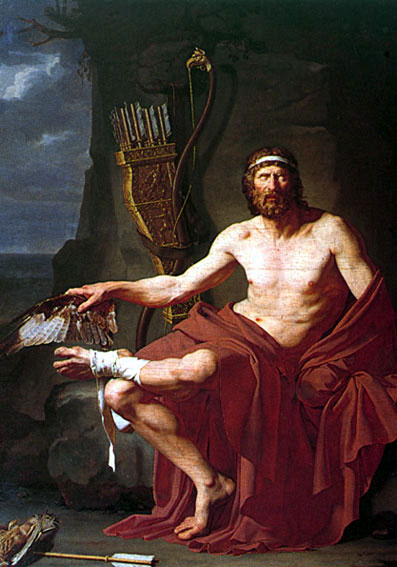
Over the past few weeks we have presented readings of Euripides’ Helen and Sophocles’ Philoktetes (in partnership with the Center for Hellenic Studies and the Kosmos Society and Out of Chaos Theatre). This week we turn to Euripides’ Herakles, a play which contemplates just how much one person should be alone and the cruel machinations of divine will. So, uplifting reading for everyone!
Euripides, Herakles 772-780
“The [gods] heed the unjust and
Hear the pious too.
Gold and good luck
Drive mortals out of their minds,
And pull unjust power together.
No one dares to glance back at time:
They pass by law to honor lawlessness
And break the dark chariot of wealth.”
Tim Delap – Tim has performed several times in leading roles at the National Theatre and in the West End. He recently played Rochester in the critically-acclaimed Jane Eyre
Evelyn Miller – just finished playing Bianca in The Taming of the Shrew at Shakespeare’s Globe. Other recent credits include leading roles at the National Theatre and RSC. Evvy is an associate director of Actors From The London Stage.
Richard Neale – associate director of Actor From The London Stage with whom he has toured the US playing leading roles in The Tempest, King Lear and Othello. A director and teacher, Richard has almost 20 years’ experience of performing in the UK.
Paul O’Mahony – artistic director of Out of Chaos with whom he created the award winning Unmythable. He recently toured the US in their production of Macbeth and is currently working on two productions inspired by ancient culture. He has twice been a visiting artist at the CHS.
Euripides, Herakles 1425-1426
“Whoever wishes to have honor or strength instead of
Good friends reckons badly.”
Long before the plague hit us, economic reports were concerned that we are hitting a tipping point for student loans. It is telling (and damning) that certain sectors consider student loans a crisis only when delinquent payments reach a certain point. It was totally fine when two generations of students had their entire lives shaped by the cost of education….
This charming detail from Valerius Maximus might be the perfect rider for an education bill right about now…
Valerius Maximus, Wondrous Deeds and Sayings 2.6.10
“This ancient custom of the Gauls returns to my mind as I leave their walls: The story goes that they used to loan money which was scheduled to be repaid in the underworld, because they considered human souls to be immortal. I would call them fools if they didn’t believe the same thing wearing pants as Pythagoras did wrapped in his cloak.”
Horum moenia egresso vetus ille mos Gallorum occurrit,quo[s] memoria proditum est pecunias mutuas, quae iis apud inferos redderentur, da<ri soli>tas, quia persuasum habuerint animas hominum immortales esse. dicerem stultos, nisi idem bracati sensissent quod palliatus Pythagoras credidit.
“Philoktetes lies there on the island suffering harsh pains
In holy Lemnos where the sons of the Achaeans left him
suffering with an evil wound from a murderous watersnake.”
“He lies there on the island suffering harsh pains
In the halls of Calypso the nymph who holds him
under compulsion. He is not capable of returning to his paternal land.”
The figure of the isolated hero in ancient Greek myth and poetry is one who is set apart, on an island, separated from other humans and, by extension, from human culture. The impact of isolation is often communicated through the heroic body, even if it is offered in some way as a cause: Philoktetes’ dehumanization is reflected in the wound whose antisocial attributes cause him to be abandoned (described like a disease in Sophocles’ play). Odysseus seems arguably less human insofar as he is stripped of agency and, until Hermes comes to move him, clearly more an object of interest than a subject of his own.
Indeed, the Odyssey has deep ethnographic concerns, focusing on how people make their livings and how they live their lives. When Odysseus describes the island of the Cyclopes, he remarks on how it might be a good place to live, but the Cyclopes themselves are “arrogant and lawless” (ὑπερφιάλων ἀθεμίστων, 9.106). They aren’t human because of the way they live (they do not cultivate the land, 108-111). And they are less than human because of how they organize their lives (Odyssey 9.112–115):
“They don’t have council-bearing assemblies or laws,
But instead they inhabit homes on high hills
In hollow caves, and each one makes laws
For his children and wives—they do not have concern for one another.”
In a way, Odysseus anticipates here the later Greek use of the term idiotês for the person who fails to understand that the commonwealth directly impacts individual possessions—indeed, it makes possible the existence of individual goods. The ancient idiot, in this political sense, is a kind of naïve libertarian who is incapable of conceiving of shared human society as the very thing that makes life possible and also worth living.
* * * *
Current events are forcing us to explore some of the same tensions: inasmuch as some are aghast that we are not willing to die to preserve the economy, the rest of us remain horror stricken at how much our public health and collective good have been sacrificed to prop up the wealth of a very few. Even though my training directs my thoughts consistently to the past for parallels to cope with the present, my own reading history and proclivity for speculative fiction keep taking me to narrative futures. In my impatience to be done with the now, I am busy manufacturing anxieties about what will become of us later.
In Isaac Asimov’s Robot novelThe Naked Sun(1957), the detective Elijah Bailey is dispatched to one of the “spacer” worlds to investigate a murder. In Asimov’s world, humankind lives in a mixed future where billions are crowded into cities on earth while a select elite escape to fifty “Spacer” worlds. Over time, the antagonism between Spacer and Earther expands as the former use their greater resources and technology to dominate the latter. And Earthers suffer from a fear of the outside, a reluctance to leave the comfort of their cities.
The Spacers, those libertarian techno-overlords, fear contagion and disease and contact with the human rabble left on earth. When Baily meets with the widow of the murdered scientist on her planet Solaria, Gladia, she will at first only see him through “viewing” (a video screen). Eventually she breaks Solarian taboo and comes to him in person and to help solve the crime. (No spoiler, but it wasn’t a robot.)
Many years later (in our world) Asimov returns to Solaria generations later in his Foundation and Earth(1986). In the intervening years, the Spacer planets were eclipsed by the rapid expansion of the population of Earth into the galaxy, fading quickly into obsolescence and obscurity. The Solaria found here is populated by a few human beings who intentionally developed hermaphroditic qualities so they would never have to encounter other human beings in person again. The Solarian world is expansive—each person lives on massive estates, engaging with others only through mediated viewing and using technology to ritualize isolation.
E. M. Forster in his short story “The Machine Stops” (1909, 1928) puts humankind in a sub-terrestrial, dystopic future. People must live in isolation, in basic rooms from which they engage in the world only through video conferencing. One of the main characters, Vashti, spends a great deal of her time broadcasting her ideas over this ersatz internet, recycling and repackaging ideas for consumption and replacing most human relationship with a distanced presentation of the ‘self’. The main plot of this tale, of course, is about the “machine” which supports all of this life collapsing, but the lingering sense it leaves is one of the panopticon in which the ability to broadcast, to send a message, is traded for being watched and people live separate from one another both out of fear and out of habit.
I have been thinking about both of these speculative narratives over the past few weeks as my work has converted online completely and my social life has blended into it. I “zoom” with colleagues, skype with friends, and merely text-message with my extended family. I watch as my children are habituated to the same kind of mediated existence. There is an hour each day when three of us are on zoom simultaneously, in the same house but in separate rooms, sometimes irked that the sound of another intrudes on our distanced engagement.
We have been living with some of the rapid consequences of these kinds of mediated communication networks for years. Is something as bizarre as pizza-gate possible without facebook or other online fora? Do these media ever produce anything but the strangest and saddest common denominator?
Modern science fiction is no stranger to this too. In his post-apocalpytic Seveneves, Neal Stephenson—an author a bit too libertarian and soft on techo-capitalists generally—puts a surviving remnant of humanity in space, isolated in a network of space capsules connected by a communication network dubbed “spacebook”. In order to survive, these clutches of life have to preserve resources and follow a very basic plan. But paranoia explodes in the social network: one week, a thought leader proposes that in space humans do not need legs, so they should cut them off and eat them to preserve the protein. Soon, a critical number of people depart with precious resources to try to make it to Mars because they convinced themselves in their echo chamber of madness that this was a good plan, despite every bit of evidence to the contrary.
(they all die. A mere handful of people survive their stupidity.)
Of the many ways in which COVID-19 will change our lives, one is how it will accelerate our embrace of life online. Children are having playdates online: ours have had dance classes, piano lessons, and speech therapy in just the last week to go along with 2-3 ‘Montessori’ zoom lessons a day. Although I am deeply grateful to these teachers and instructors for bringing some sense of normalcy to our children’s days, I worry that this will be their baseline: no playgrounds, no playmates, but video-streamed encounters and mediated experiences. They will be open to the supercharged pathways of disinformation that propagate quack cures for plagues and easy arguments for denying collective action against global warming.
Asimov’s Solarians are independent-minded elitists whose fear of disease and love of long lives pushes them further and further apart; Forster’s subterraneans are addicted to the comfort of their regulated lives and distracted by the ability to be ‘experts’ and temporary celebrities in the global machine. Stephenson’s human race barely survives an apocalypse followed by human caused ruin thanks to individual heroics and fantastic evolutionary science. The Coronavirus won’t suddenly turn us into any of these groups, but it may make us just that much less human.
* * * *
Modern studies in narrative emphasize how our identity develops from social relationships and studies in cognitive psychology show how isolation can have damaging effects on us emotionally and mentally. When separated from others we can experience an increase in fear and paranoia (See Andersen et al. 2000, 19.); studies in the impact of solitary confinement on prisoners demonstrate a marked increase in the development of psychopathology under the influence of isolation which can eventuate in neurobiological transformations. The brain of an isolated human being may demonstrate fewer neural connections and correlate with distortions in memory and a deterioration of language abilities. Isolation, to put it simply, can break down those very things that make people who they are. (see Ravindran 2014, Gilmore and Nanon 2014; Kaba et al. 2014)
Ancient Greek myth and poetry seems to communicate this through figures like Philoktetes—who languishes for a decade after being marooned on the island of Lemnos—and Odysseus, who suffers in quasi-isolation for seven years, weeping on the edge of the sea (but having sex with Calypso at night). Odysseus cannot return home directly from this. His journey home requires him to repeatedly tell stories about himself and to reaffirm his identity step-by-step through reunions with the important people in his life. It is Odysseus too who brings Philoktetes back into society in Sophocles’ play.
I think ancient audiences saw the sufferings of both figures as a result from their isolation, from their separation from communion with other human beings. Both Homer’s epic and Sophocles’ play emphasize political themes and social consequences: Odysseus and Philoktetes are at times calculating and full of rage, leaving characters in the poems (and audiences outside them) unsure of if or when they will lash out.
What each narrative emphasizes, however, is that the isolated figure needs fellowship and partnership to return to human society. Odysseus’ return home is not complete until he is recognized—and recognizes himself—in his son, spouse, and father. Philoktetes needs to be persuaded to return, to be cajoled and guided and distracted from the fact he is being used.
This is, perhaps, cold comfort for those of us isolated now. But it does remind us that having other people around us is important and that, when the time comes to reintegrate, it won’t be simple or easy. We will have to tell each other our stories and listen to who we confirm in each other we are.
And perhaps it will force us to think about the world we create for ourselves. The plot which drives Asimov’s Foundation and Earth is a choice about the future of life in the galaxy: whether it will continue on as it has, with everyone charting separate courses of self interest or it will change radically, adopting the life-form model of a planet called Gaia where all inhabitants shared consciousness and fate, yielding some sense of free will.
When I read this choice to its conclusion in the late 80s, I was horrified because it seemed (spoiler alert) that the protagonist was choosing communism! But it did not take many years for the wisdom of this choice to make a little more sense. At the end of the Odyssey, Odysseus returns home and murders 108 suitors. The epic almost ends with a civil war but for the intervention of Athena and Zeus who declare an amnesty, insisting that the Ithakans and Odysseus need to live together (24.486, πλοῦτος δὲ καὶ εἰρήνη ἅλις ἔστω). In this, the individual leader is forced to change his ways; but the people have to submit to forgetting and forgetting the violence and malice which brought a generation to ruin.
What choices will we face? Which ones will we be able to make?
Some things to read
Andersen, H. S., Sestoft, D. D., Lillebæk, T. T., Gabrielsen, G. G., Hemmingsen, R. R., & Kramp, P. P. 2000. “A Longitudinal Study of Prisoners on Remand: Psychiatric Prevalence, Incidence and Psychopathology in Solitary vs. Non-Solitary Confinement.” Acta Psychiatrica Scandinavica, 102:19.
Barker, E.T.E. and Christensen J. P. Homer’s Thebes. Washington, D.C. 2019.
Gilmore, Betty and Williams, Nanon M. 2014. The Darkest Hour: Shedding Light on the Impact of Isolation and Death Row in Texas Prisons. Dallas.
Kaba, Fatos et al. 2014. “Solitary Confinement and Risk of Self-Harm Among Jail Inmates.” American Journal of Public Health: March 2014, Vol. 104, No. 3, pp. 442–447.
Ravindran, Shruti 2014. “Twilight in the Box.” Aeon 27.
Shay, Jonathan. 2002. Odysseus in America: Combat Trauma and the Trials of Homecoming. New York.
Thiher, Allen. 1999. Revels in Madness: Insanity in Medicine and Literature. Ann Arbor.
Underwood, Charles. 2018. Mythos and Voice: Displacement, Learning, and Agency in Odysseus’ World. Lanham: Lexington Books
I will come to dinner, but I am making request beforehand: it must be quick and sparse and it should only overflow in Socratic discussions. Let this be moderate too. There will be visitors early tomorrow, people not even Cato would be allowed to reject, even though Caesar praised him as much as he criticized him. For he describes the people Cato met were flushed with embarrassment when they realized who was drunk: “you would have imagined they were caught by Cato not that Cato was caught by them!”
Is it possible to pay a better tribute to Cato than to say he was still so venerable when drunk? But our meal needs a limit for preparation and cost as well as time. We are certainly not the types of people our enemies can’t fail to blame without praising us too!
Plinius Catilio Severo Suo S.
Veniam ad cenam, sed iam nunc paciscor, sit expedita sit parca, Socraticis tantum sermonibus abundet, in his quoque teneat modum. Erunt officia antelucana, in quae incidere impune ne Catoni quidem licuit, quem tamen C. Caesar ita reprehendit ut laudet. Describit enim eos, quibus obvius fuerit,
cum caput ebrii retexissent, erubuisse; deinde adicit: “Putares non ab illis Catonem, sed illos a Catone deprehensos.” Potuitne plus auctoritatis tribui Catoni, quam si ebrius quoque tam venerabilis erat? 4Nostrae tamen cenae, ut adparatus et impendii, sic temporis modus constet. Neque enim ii sumus quos vituperare ne inimici quidem possint, nisi ut simul laudent. Vale.




.png)


