(Don’t) judge a book by its cover

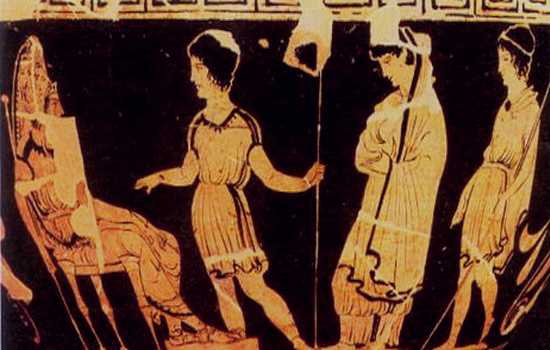
As some of you may have seen from our Twitter announcement over the summer, Joel and I are publishing our second book together, under the title Homer’s Thebes: Epic Rivalries and the Appropriation of Mythical Pasts. In our earlier announcement, we tweeted a picture of what its front cover will look like; and, given the interest in it, Joel invited me to write this guest post on his blog. I am delighted to take him up on the offer, even though I know that his blog is more accustomed to dealing with weightier matters than what appears on a book’s cover…

With the possible exception of writing acknowledgements, I find choosing a cover image for a book arguably the most pleasurable, and most difficult, of the final tasks that needs accomplishing before I can happily pack off my manuscript on its merry way to the press. Even if we are told otherwise (in the famous axiom not to judge a book by its cover), how a book looks can play a decisive role in its purchase; after the subject matter and author, it’s the one thing that may determine whether I buy book a book or not. If I look on my bookshelves, for example, the dust jackets that stand out for me are: the famous image (from the so-called François vase) of Ajax carrying the dead body of Achilles that emblazons Greg Nagy’s 1979 classic The Best of the Achaeans (and Michael Lynn-George’s equally ground-breaking Homeric criticism Epos: Word, Narrative and the Iliad); the contemplative Regarding Penelope by Nancy Felson; the highly wrought, yet seductive, Medea of James Clauss and Sarah Iles Johnston; the satirical depiction of famous classicists playing characters from Aristophanes (!) on Martin Revermann’s Comic Business; and the striking pose of Gertrude Eysoldt captured in the role of Electra that advertises Simon Goldhill’s Who Needs Greek?. The arresting contemporary nature of this image (though the photograph dates back to 1903) hints at Goldhill’s thesis of the continuing legacy of Victorian attitudes to, and contests over, the Classics that shape and inform our own implicated relationship with the subject.


As these examples suggest, aesthetic looks isn’t the only desideratum when it comes to choosing a book cover. For sure we want something that looks good; but it’s equally, if not more, important for that image to say something about the book itself (a picture is worth a thousand words, right?), though perhaps not in an obvious or straightforward way. Let me explore this issue by reflecting on my own choice of three covers that I’ve had the pleasure to be able to choose.

The image I chose for my first book—Entering the Agon: Dissent and authority in Homer, Historiography and Tragedy (Oxford, 2009)—is in many ways very traditional. It’s the famous image (on the black-figure amphora by Exekias) of Achilles and Ajax playing dice. But it’s an image that worked for me not only because of its beauty—though hats off here to the team at OUP who extended the pot’s gleaming background (which sets off the black figures) to cover the entirety of the book’s cover in a fiery golden afterglow. Figure4This image also spoke to my book’s subject matter: namely, the idea of contest (agōn) and its representation in ancient Greek literature. In truth, I had a hard time finding an image that worked for me. I wanted some kind of ancient Greek artistic representation; perhaps because it was my first book (the “book of the thesis”), I felt it needed to be unambiguously classical. It should have been easy, right, to find an image from the whole corpus of ancient Greek ceramics, right? Wrong. I could find none of the scenes of debate in epic, history and tragedy, which were the core focus of my argument, that had been illustrated, not even—as one may have expected—the quarrel between Achilles and Agamemnon that starts off the Iliad with such a bang. There is a fresco, highly fragmented, from Pompeii’s House of the Dioscuri (on exhibition at the National Archaeological museum in Naples), which shows Achilles going for his sword; and of course there are later Renaissance paintings depicting the quarrel (such as Giovanni Battista Gaulli’s baroque rendering). But I could find none from the world of ancient Greek ceramics or friezes—perhaps because, as Robin Osborne pointed out to me, Greek artists simply were less interested in illustrating literary stories than in creating their own. (It is striking that the wall paintings from Pompeii *do* look like illustrations of early Greek literary narratives, including the moment Euripides’s Medea ponders killing her children.) What Exekias’s scene of gaming heroes gave me was a hint not only of the formalisation of contest, but also of the prominence of Achilles (who in my argument institutionalises contest in the arena of debate) and, moreover, of his pairing with Ajax (whose story in Sophocles’s tragedy formed one of my chapters).


The second book I needed to choose an image for presented a rather different challenge. This was for an edited volume entitled: New Worlds out of Old Texts: Revisiting Ancient Space and Place (Oxford, 2016). Figure7The book derived from an interdisciplinary project that I had led called Hestia, which investigated representations of space and place in Herodotus, as well as the spatial construction underpinning his Histories. At the heart of the book was a discussion of the different disciplinary approaches that we undertook, spread over three chapters (which I co-authored with different team members), exploring: digital annotation and mapping (with Leif Isaksen and Jessica Ogden), geographical spatial theory (with Stefan Bouzarvoski), and philological close reading (with Chris Pelling). Our resulting book included other contributors working in this space (pardon the pun), who had presented at our conference in Oxford, and who, like our team, represented an array of disciplines—not only Classical Studies, but also archaeology, digital humanities, and the history of thought. The image I wanted, then, needed to respect these different disciplinary approaches while at the same time hinting at ways in which they might be combined and intertwined (for interdisciplinary research). And, of course, it needed to be in some way spatial, to suggest the complexity of trying to represent and unpick spatial entities and relations. A web-designer friend (a shout-out here to Richard Rowley of Agile Collective) put me on to London-based artist Emma McNally, whose work attempts to “portray essence not as substance… but rather as the result of a process of reciprocal determination, where individual lines, markings, and trajectories are brought to significance through their interrelations with those around them” (https://www.flickr.com/people/emmamcnally/). After getting her approval (she was very happy for us to use her work provided that she got a copy of our book: gold armour for bronze, as Homer would say!), I chose her scratches, traces, spaces. This work on graphite (“a medium that lends itself perfectly to [a] sort of rhythmic making and unmaking. It is a material for palimpsest”: ibid) seemed to me to perfectly capture the spatial palimpsests that many of us were striving to reveal and more closely examine in our texts, while also being provocatively new and overtly relational. Emma later informed me that the very same artwork was used by Ridley Scott as a navigation map in his latest Alien prequel Convenant. If it’s good enough for Ridley…!

Figure8

All this brings me to the last image—the one that Joel had invited me to write about in the first place… Our book, Homer’s Thebes, sets out to argue that the Iliad and Odyssey (mis)represent heroes and themes from the Theban tradition to set out and realise the unique superiority of these texts in performance. In arguing this, we are attempting to view the Homeric poems in a new light, by emphasizing a non-hierarchical model of “reading” them and the Epic Cycle together within the framework of oral-formulaic poetics and artistic rivalry. With this in mind, we wanted an image that suggested Homer in some way (epic poetry, heroes, etc.) but that wasn’t a straightforward classical take on that. From a very early stage I was convinced that a cubist painting of some kind would work, with that central idea of taking something familiar (for us, reading Homer; for Homer’s audience, the Troy story and the siege of Thebes) and, by viewing it from different perspectives, producing a radically different picture (a Troy story that emphasises internal conflict among the Achaeans, for instance). For me, cubist works echo the type of violent reception and adaptation that our book is about. But here we ran into a significant problem that meets anyone looking to reuse a contemporary image, whether that is a museum photograph of an ancient artefact or a modern painting in a gallery’s collection: copyright. For all the cubist paintings that I could find that seemed to dialogue with our approach, the answer kept coming back from our publishers that we couldn’t use them because of the copyright and/or the costs involved. Out went The Thebaid by Wyndham Lewis, along with his Composition; we fared no better with Barbara Hepworth’s Two Heroes; we couldn’t even use Le Poète by Picasso, even though I had sourced it from Wikipedia.

Just as I was beginning to despair, and I thought that we would have to give up on this idea of a cubist-style makeover for our Homer, I had the inspiration to look for works by modern Greek artists. I knew that ever since the twentieth century, Greek writers and painters alike have been grappling with the problem of their country’s complicated (and often times suffocating) classical legacy. And thus I had the fortune to come across the work of Nikos Engonopoulos. He’s the painter most famous in Greece for revisiting classical themes in a distinct modern style (tending towards surrealism). Having found a number of post-classical images that I thought that we could use, I contacted the person responsible for his website and who owns the copyright to his works, his daughter Errietti Engonopoulou. Like Emma, Errietti could not have been more accommodating, and immediately allowed us to use a high-resolution image of the image that we decided on.

I present to you Engonopoulou’s 1939 oil on canvas The poet and the muse. We hope that you like it as much as we do.

Figure9

The Liar’s Memory

Plautus, The Ghost 181

“I love the truth, I want someone to tell me the truth. I hate a liar.”

ego uerum amo, uerum uolo dici mi: mendacem odi.

Quintilian Orator’s Education 4.2 90-92

“For fictions which are developed entirely from matters outside of the situation betray our license to lie. We must take most special care—which often escapes those who lie—not to contradict ourselves, since some stories are flattering in bits but do not contribute to a coherent whole; that we then say nothing which countermands what is accepted as true; and, in academic exercises, not to seek ornamentation beyond the themes.

Both in training and in the court, the orator ought to remember the what he has claimed falsely during the whole action since false things often escape the mind. That common saying is proved true, that the liar requires a good memory. Let us see, moreover, that if we are questioned about our own deed, we must say one thing only; if it is about somebody else’s we can cast doubt in many directions.”

nam quae tota extra rem petita sunt mentiendi licentiam produnt. Curandum praecipue, quod fingentibus frequenter excidit, ne qua inter se pugnent; quaedam enim partibus blandiuntur, sed in summam non consentiunt: praeterea ne iis quae vera esse constabit adversa sint: in schola etiam ne color extra themata quaeratur. Utrubique autem orator meminisse debebit actione tota quid finxerit, quoniam solent excidere quae falsa sunt: verumque est illud quod vulgo dicitur, mendacem memorem esse oportere.  Sciamus autem, si de nostro facto quaeratur, unum nobis aliquid esse dicendum: si de alieno, mittere in plura suspiciones licere.

Image result for medieval manuscript punishing a liar
The Infernal Torments of the Damned, illuminated French manuscript of Augustine’s City of God by an unknown artist (15th century).

More Than Particles

C.M. Bowra, John Dewar Denniston

[Proceedings of the British Academy, Vol. XXXV]

“In Denniston’s approach to classical studies composition had a central place. He believed that you cannot claim to know a language unless you can write it, and insisted that a proper understanding of classical literature is impossible without the exact discipline provided by composition. He was not, however, an uncritical advocate of composition as it was taught at schools and universities in his early years. Indeed he felt that its practitioners tended to move away from the study of classical texts and actual usage to that of modern versions and to produce inbred, artificial results, which might look elegant but were fundamentally unsound. Even so respected a book as Cambridge Compositions received his strictures on the ground that too often its contributors shirked real difficulties by a showy brilliance. Much though he admired the work of H. A. J. Munro and R. C. Jebb, he thought that even they did not fully satisfy the highest standards of accuracy and faithfulness to actual usage. He believed that the first duty of anyone who translates from English into Latin or Greek is to reproduce as exactly as possible the meaning of the English as a Roman or a Greek would have expressed it. His first aim was scientific. Once this demand was met, he was more than ready to give a place to elegance, but he would never allow it to be a substitute for exactness.”

Image result for J.D. DENNISTON

Seneca’s Hiring Advice

Seneca, De Ira 8. 4-6

“There are many people who will do the same for different reasons. An arrogant man offends you with his scorn, a bitter man uses an insult, the petulant causes an injury; a spiteful man is malicious while a pugnacious man is contentious and the windbag liar is vain. You will not tolerate being feared by a suspicious man, beaten by a stubborn one, or looked own upon by a delicate man.

Choose honest, easy-going, even-tempered people who do not inspire rage and yet endure it if it comes. More advantageous than these are those who are submissive, kind, and even sweet-tempered—but not so bad that they fawn on you since too much toadying upsets temperamental men. There was a friend of mine, who was a good man, but easy to anger, whom it was no safer to praise than to mock”

Multi ex variis causis idem facturi: offendet te superbus contemptu, dicax contumelia, petulans iniuria. lividus malignitate, pugnax contentione, ventosus et mendax vanitate; non feres a suspicioso timeri, a pertinace vinci, a delicato fastidiri. Elige simplices, faciles, moderatos, qui iram tuam nec evocent et ferant. Magis adhuc proderunt summissi et humani et dulces, non tamen usque in adulationem, nam iracundos nimia assentatio offendit. Erat certe amicus noster vir bonus, sed irae paratioris, cui non magis tutum erat blandiri quam male dicere.


Image result for medieval manuscript anger
Book of Hours, MS M.1001 fol. 88r

Cicero Delayed Publishing a Book of Poetry Because the Acknowledgements Would Be Too Long

Cicero, Letters to Friends  30 Lentulus Spinther 1.9. 29

“I have also composed a three book poem On My Times which I ought to have send you previously if I thought it right to publish it. For these books are truly an eternal testament of your efforts for me and my duty to you. But I was reluctant not because of those who might judge themselves wounded by it—I have done this rarely and gently—but because of those who had helped me, if I had named them at all I would have gone on for ever.

But you will still see these books if I can find anyone I can rightly trust to bring them to you. I will entrust this for your preservation. I pass to you for judgment this part of my life and my practice, however much I am able to accomplish in literature, in research and in our old pleasures, I send to you who have always loved these things.”

scripsi etiam versibus tris libros De temporibus meis, quos iam pridem ad te misissem si esse edendos putassem; sunt enim testes et erunt sempiterni meritorum erga me tuorum meaeque pietatis. sed quia verebar, non eos qui se laesos arbitrarentur (etenim id feci parce et molliter), sed eos quos erat infinitum bene de <me> meritos omnis nominare ∗ ∗ ∗quos tamen ipsos libros, si quem cui recte committam invenero, curabo ad te perferendos. atque istam quidem partem vitae consuetudinisque nostrae totam ad te defero; quantum litteris, quantum studiis, veteribus nostris delectationibus, consequi poterimus, id omne <ad> arbitrium tuum, qui haec semper amasti, libentissime conferemus.


Harley MS 4329, f 130r. 

Wild Etymology of the Night

Giovanni Boccaccio, The Genealogy of the Pagan Gods, 1.9:

“The fact that Night is clothed in a painted coat clearly indicates that she is the very decoration of the sky, by which the sky is covered. Night (nox) however, as Papias says, is so called ‘because she harms (noceat) the eyes’; for she takes away their power of sight, since we see nothing at night. Night is harmful, further, in that she is well-suited to evil-doers, since we say ‘one who does evil hates the light’ – from this it follows that the evil-doer loves the shadows because they are more suited to the evil work. Even Juvenal says, ‘Thieves rise at night to cut the throats of others.’ Furthermore, Homer calls her the subduer of the gods in the Iliad, by which we may understand that since great-spirited people turn over important matters in their hearts at night, nevertheless night (not being suited to such things at all) oppresses their overflowing spirits, and overpowers them, subdued, all the way until the light.”

Image result for boccaccio

Quod autem picta palla amicta sit, facile videri potest illam celi ornatum significare quo tegitur. Nox autem, ut ait Papias, ideo dicitur quia noceat oculis; aufert enim illis videndi officium, cum nil nocte cernamus. Nocet insuper quia male agentibus apta est, cum legamus: Qui male agit odit lucem; exquo sequitur ut tenebras amet tanquam malo operi aptiores. Et dicit etiam Iuvenalis: Ut iugulent homines surgunt de nocte latrones. Omerus preterea in Yliade eam domitricem deorum vocitat, ut sentiamus quoniam nocte magnanimes ingentia pectoribus versant, tamen nox minime talibus apta ebullientes opprimit spiritus, eosque tanquam domitos in lucem usque coercet.

The Preservation of Ancient Studies

Hugh Lloyd-Jones, Introduction to Wilamowitz-Moellendorff’s History of Classical Scholarship:

“The monuments of ancient literature and art are such as to appeal powerfully to some people in every generation, whatever the prevailing fashion; and so long as historical studies of any kind continue, the history of the world of classical antiquity, the direct ancestor of our own, can hardly suffer a complete neglect. Scholars cannot give up the noble conception of the study of the ancient world as a whole. They must guard perpetually against the danger of dryness, both the dryness that comes from an excessive concentration on technique and the dryness that comes from the adoption of too narrowly historical a standpoint. They do not maintain that the classics offer an ideal pattern for imitation. Nor indeed can the classicists of the Renaissance or the age of Goethe justly be reproached with this; the idea of imitation of an ideal pattern hardly suffices to explain the relation of a Michelangelo or of a Goethe to the ancient artists from whom they drew inspiration. The study of ancient civilization presents us not with patterns to be copied but with working models of possible beliefs and methods, which if intelligently and unsentimentally presented can save us from the provincialism of those who only know their own period. The ancients saw no reason to suppose that human nature was likely to change much, whatever social and historical circumstances might prevail; their art and literature dealt with what is constant rather than what is ephemeral; and that makes their literature, art and history particularly likely to provide experiences that may be useful, together with other experiences, in our own practice. The value of that experience, over and above whatever value may be assigned to the maintenance of the tradition that links us with antiquity, must be held to justify the continuance of these studies, so long as any historical and literary studies are thought to be justified.”

Image result for hugh lloyd jones

Meme Police: A Collection of things Aristotle Did Not Say

This is likely to be an ongoing list. If you have any additions, explanations, or counterclaims, leave a comment and we will integrate it. The Kiwi Hellenist has started a blog for some other authors.

1. “It is the mark of an educated mind to entertain a thought without accepting it”

This is probably a willful twisting of something from the Nicomachean Ethics

Aristotle, Nicomachean Ethics, 1, 1094a24-1095a

“It is right that we ask [people] to accept each of the things which are said in the same way: for it is the mark of an educated person to search for the same kind of clarity in each topic to the extent that the nature of the matter accepts it. For it is similar to expect a mathematician to speak persuasively or for an orator to furnish clear proofs!

Each person judges well what they know and is thus a good critic of those things. For each thing in specific, someone must be educated [to be a critic]; to [be a critic in general] one must be educated about everything.”

τὸν αὐτὸν δὴ τρόπον καὶ ἀποδέχεσθαι χρεὼν ἕκαστα τῶν λεγομένων· πεπαιδευομένου γάρ ἐστιν ἐπὶ τοσοῦτον τἀκριβὲς ἐπιζητεῖν καθ’ ἕκαστον γένος, ἐφ’ ὅσον ἡ τοῦ πράγματος φύσις ἐπιδέχεται· παραπλήσιον γὰρ φαίνεται μαθηματικοῦ τε πιθανολογοῦντος ἀποδέχεσθαι καὶ ῥητορικὸν ἀποδείξεις ἀπαιτεῖν. ἕκαστος δὲ κρίνει καλῶς ἃ γινώσκει, καὶ τούτων ἐστὶν ἀγαθὸς κριτής. καθ’ ἕκαστον μὲν ἄρα ὁ πεπαιδευμένος, ἁπλῶς δ’ ὁ περὶ πᾶν πεπαιδευμένος.

2. “A Whole is greater than the sum of its parts”

This really popular misattribution may be a poor translation of the Metaphysics

Aristotle, Metaphysics 8.6 [=1045a]

“For however many things have a plurality of parts and are not merely a complete aggregate but instead some kind of a whole beyond its parts, there is some cause of it since even in bodies, for some the fact that the there is contact is the cause of a unity/oneness while for others there is viscosity or some other characteristic of this sort.

πάντων γὰρ ὅσα πλείω μέρη ἔχει καὶ μή ἐστιν οἷον σωρὸς τὸ πᾶν ἀλλ᾿ ἔστι τι τὸ ὅλον παρὰ τὰ μόρια, ἔστι τι αἴτιον, ἐπεὶ καὶ ἐν τοῖς σώμασι τοῖς μὲν ἁφὴ αἰτία τοῦ ἓν εἶναι, τοῖς δὲ γλισχρότης ἤ τι πάθος ἕτερον τοιοῦτον.

3. “Educating the mind without educating the heart is no education at all.” [and many variations thereof]

This one has absolutely no basis. Aristotle says many things about education, this just ain’t one of them.

4. “We are What we repeatedly do. Excellence is an act, not a habit.”

This one is has likely slipped into the Internet Aristotle Quotarium from Will Durant’s misconstruing of the Nicomachean Ethics. Indeed, this has been debunked more than a few times. Here’s another version: “Excellence is not a singular act but a habit. You are what you do repeatedly.” there are many variants

Here’s the closest Aristotle actually gets:

Aristotle, Nicomachean Ethics, 1105b

“It is therefore well said that a person becomes just by doing just things and prudent from practicing wisdom. And, no one could ever approach being good without doing these things. But many who do not practice them flee to argument and believe that they are practicing philosophy and that they will become serious men in this way. They act the way sick people do who listen to their doctors seriously and then do nothing of what they were prescribed. Just as these patients will not end up healthy from treating their body in this way, so most people won’t change their soul with such philosophy.”

εὖ οὖν λέγεται ὅτι ἐκ τοῦ τὰ δίκαια πράττειν ὁ δίκαιος γίνεται καὶ ἐκ τοῦ τὰ σώφρονα ὁ σώφρων· ἐκ δὲ τοῦ μὴ πράττειν ταῦτα οὐδεὶς ἂν οὐδὲ μελλήσειε γίνεσθαι ἀγαθός. ἀλλ’ οἱ πολλοὶ ταῦτα μὲν οὐ πράττουσιν, ἐπὶ δὲ τὸν λόγον καταφεύγοντες οἴονται φιλοσοφεῖν καὶ οὕτως ἔσεσθαι σπουδαῖοι, ὅμοιόν τι ποιοῦντες τοῖς κάμνουσιν, οἳ τῶν ἰατρῶν ἀκούουσι μὲν ἐπιμελῶς, ποιοῦσι δ’ οὐδὲν τῶν προσταττομένων. ὥσπερ οὖν οὐδ’ ἐκεῖνοι εὖ ἕξουσι τὸ σῶμα οὕτω θεραπευόμενοι, οὐδ’ οὗτοι τὴν ψυχὴν οὕτω φιλοσοφοῦντες.

5. “Knowing Yourself is the Beginning of all Wisdom”

No. I don’t even need to look this up. No. No. No. This is a version of the Delphic Oracles “know thyself” Γνῶθι σαυτόν. At least attribute it to Plato or Aristotle something. Or do what Diogenes Laertius does at give it to Pittakos (1.79.10)

6. “Whosoever is delighted in solitude, is either a wild beast or a god.”

This is almost Aristotle. It is mostly Francis Bacon (‘Essays’, XXVII “On Friendship” (1612, rewritten 1625). Aristotle said something not to far off, but still not this

Aristotle, Politics 1.2 1253a25–30

“It is clear that the state is naturally prior to each individual person. If each person when separated is not sufficient on his own, just as other parts are to the whole while a person who is incapable of joining commonwealth or does not need any part of a state because of self-sufficiency is either a beast or a god.”

ὅτι μὲν οὖν ἡ πόλις καὶ φύσει πρότερον ἢ ἕκαστος, δῆλον. εἰ γὰρ μὴ αὐτάρκης ἕκαστος χωρισθείς, ὁμοίως τοῖς ἄλλοις μέρεσιν ἕξει πρὸς τὸ ὅλον, ὁ δὲ μὴ δυνάμενος κοινωνεῖν ἢ μηθὲν δεόμενος δι᾿ αὐτάρκειαν οὐθὲν μέρος πόλεως, ὥστε ἢ θηρίον ἢ θεός.

7. “Where the needs of the world and your talents cross, there lies your vocation.”

This is totally super-capitalist, corporate double-speak nonsense. It does not even remotely sound like Aristotle. I am not sure where it comes from and I cannot find it debunked, but I will keep looking.

8. “Pleasure in the job puts perfection in the work.”

This one is likely a mistranslation or an attribution of a lost saying by Seneca in On Tranquility of mind. But I can’t really justify that by what I have found in the Seneca. Regardless, this is more neo-capitalist nonsense. I have a hard time believing this is anywhere in Aristotle.

A few twitter correspondents responded that this sounds a little bit like the end of the Nicomachean Ethics where Aristotle writes “pleasure brings completion to an activity” ( τελειοῖ δὲ τὴν ἐνέργειαν ἡδονή, 1174b). I will not claim that this sounds nothing like the apocryphal translation above, but I will insist that in its context, Aristotle’s comment has nothing to do with “work” in the way it is construed, but instead this is about aesthetic pleasure. The worst version of this meme is this terrible, no-good, evil version:

Note the double emphasis on work? This is the kind of poster a middle manager puts up to ‘motivate’ his underpaid minions before he drives home in his Porsche….

9. “Well-begun is half done”

This is not really Aristotle. The idea is proverbial even when it is kind of quoted by Aristotle. But these words belong to someone else. Here is as close as Aristotle gets:

Aristotle, Politics 5, 1303b

“For the mistake happens in the beginning and the beginning is said to be half of the whole, so that even a minor mistake at the beginning is equal to those made at different stages.”

ἐν ἀρχῇ γὰρ γίγνεται τὸ ἁμάρτημα, ἡ δ᾿ ἀρχὴ λέγεται ἥμισυ εἶναι παντός, ὥστε καὶ τὸ ἐν αὐτῇ μικρὸν ἁμάρτημα ἀνάλογόν ἐστι πρὸς τὰ ἐν τοῖς ἄλλοις μέρεσιν.

This particular quotation comes from the Benjamin Jowett translation and is replicated on the wikiquote site. Aristotle in phrasing this as “it is said” (λέγεται) is marking the line as a proverb. Horace’s “The one who has begun has completed half the task.” dimidium facti, qui coepit, habet (Epistle 1.2) is closer to the popular version. Hesiod has “fool does not know that half is greater than the whole” ( Νήπιοι οὐδ’ ἴσασιν ὅσῳ πλέον ἥμισυ παντός)

10. “The more you know the more you know you don’t know”

(yes, Pinterest). This is clearly a retread of Plato’s Apology 21d: “I think that I am wiser by this very small bit: I don’t pretend to know what I don’t know.” ἔοικα γοῦν τούτου γε σμικρῷ τινι αὐτῷ τούτῳ σοφώτερος εἶναι, ὅτι ἃ μὴ οἶδα οὐδὲ οἴομαι εἰδέναι.

11. “To write well, express yourself like common people, but think like a wise man. Or, think as wise men do, but speak as the common people do.” 

This shows up a lot in business oriented and inspirational self-help tomes. This does not sound like Aristotle at all. I can’t find anything remotely close to this. Any challengers? (see also the shortened “Think like a wise man, Talk like the common people.”

Image result for To write well, express yourself like common people, but think like a wise man. Or, think as wise men do, but speak as the common people do." ~ Aristotle

12. “No great mind has ever existed without a touch of madness”

This is another indirect attribution that probably comes from Seneca De Tranquilitate Animi 10 (“or [believe] Aristotle that there was never any great genius without a tincture of insanity”. sive Aristoteli nullum magnum ingenium sine mixtura dementiae fuit). So, it is almost Aristotle, except that we do not have it in any of Aristotle’s extant works (and ancient authors like Seneca, Plutarch and Diogenes Laertius are not beyond making quotes up or misattributing them).

Aristotle does talk about poetry and madness in the Poetics and in his Problems.

Image result for "No great mind has ever existed without a touch of madness. aristotle

  1. “Memory is the scribe of the soul”

Ugh. “scribe”? Soul? This one sounds like it a misunderstanding or a fabrication made to sound old-fashioned.

This seems to become really popular at the end of the 19th century where it makes its way into quotation books (Pearls of Thought by Martin Ballou, 1892; Pensnylvania School Journal 42; James Wood, Dictionary of Quotations 1899). This seems off to me and I cannot find a passage to match it. Since there is no work or passage attached to any version of this quotation and there is not even a discussion of it on places like wikiquote, I feel pretty confident calling this one false until someone tells me otherwise.

14. “It is during our darkest moments that we must focus to see the light.”

I really did not need to look this one up. The tone of self-help encouragement motivating this quote is really not Aristotelian. I think this might be one of the clearest offenders. But, its essential badness made me google it. This line is often misattributed to Buddha–but it is often attributed to Aristotle…Onassis. So this meme is a new variation on an old virus. I fear we might already be too late

15“Tolerance and apathy are the last virtues of a dying society”

The character of this quotation is alien to Aristotle and ancient Greek ideas including using “tolerance” in this way and “dying society” (see the quora discussion). I poked around a bit through Aristotle, changing some of the ideas (an ancient Greek might think of “sick” or “corrupt” society”) but there is nothing close to this.

While searching, I found the variation “Tolerance is the last virtue of a depraved society” attributed to Dr. James Kennedy (an Evangelical preacher) and then Hutton Gibson (father of Mel Gibson and Holocaust Denier). Some of the mis-translations and fake translations can be found in quote books from the 19th century. This one does not appear in any books older than a decade or so and mostly in self-published racist texts whose titles and authors I will not print.

16“There is only one way to avoid criticism: do nothing, say nothing, and be nothing.”

This one is easy. Wikiquote has already debunked it. But the content of the quote as well as its form should be a warning anyway. The final triplet is not really Aristotelian, but it is almost imaginably Greek. This is alleged to come from Elbert Hubbard’s Little Journeys to the Houses of American Statesmen, but that provides only the second half.

17. “The end of labor is to gain leisure.”

This shows up in Tyron Edwards’ A Dictionary of Thoughts in 1909, Century Illustrated Magazine, also from 1909. And then it just keeps on keeping on. This may be Aristotelian, but as far as I can find, it is not really Aristotle.

There are ideas that seem akin to this in Aristotle: in Nicomachean Ethics, for example, he says “[because], happiness seems to reside in leisure, we labor [sacrifice leisure] so that we may have leisure” δοκεῖ τε ἡ εὐδαιμονία ἐν τῇ σχολῇ εἶναι, ἀσχολούμεθα γὰρ ἵνα σχολάζωμεν (1177b). And Aristotle talks a lot about leisure as being desirable and “although leisure and business are both necessary, leisure is more fully an end than business” (εἰ γὰρ ἄμφω μὲν δεῖ, μᾶλλον δὲ αἱρετὸν τὸ σχολάζειν τῆς ἀσχολίας καὶ τέλος, 1337b33-35). Earlier, he repeats the phrase that “business is for the sake of leisure” (ἀσχολίαν δὲ σχολῆς), in a series of nearly Orwellian paradoxes: “war is for the sake of peace, business for the sake of leisure, and necessary and useful things are for the sake of the good.” (πόλεμον μὲν εἰρήνης χάριν, ἀσχολίαν δὲ σχολῆς, τὰ δ᾿ ἀναγκαῖα καὶ χρήσιμα τῶν καλῶν ἕνεκεν,1333c35-37).

So, for this one, I think we have a bit of an elaborated translation of an essentially Aristotelian idea. But, still, he didn’t really say this—Aristotle is perfectly capable of saying that the telos (“end, Goal”) of a thing is another thing. Where he mentions telos in conjunction with leisure, he writes that leisure itself is an end on its own more than business [read: ‘labor’] is. This is a rather different notion than saying that one is the end of the other.

18. “It is unbecoming for a young man to use maxims.”

Eh, yeah. He kind of said this. But what he meant was…ugh.

Image result for aristotle sad bust
Why? Why?

19. “To appreciate the beauty of a snowflake it is necessary to stand out in the cold.”

This is another one of those lines that is so clearly Un-Aristolelian to anyone who has read a little bit of Aristotle that it seems absurd someone would attribute it to the Stagirite. But, spend a little time lurking on pinterest and inspirational meme-o-ramas, and you’ll find Aristotle and Plato carrying a lot of weight.

This one was attributed to ‘anonymous’ only as recently as last year. Let’s all work together to try to make it stop. Right. Now.

20. “I count him braver who overcomes his desires than him who conquers his enemies; for the hardest victory is over self

There is some actual Greek for this one (“Aνδρειότερος εἶναι μοί δοκεῖ ὂ τῶν ἐπιθυμῶν ἢ τῶν πολεμίων κρατῶν καὶ γὰρ χαλεπώτατόν ἐστι τὸ ἑαυτόν νικῆσαι) but the manuscript tradition is a little crazy. Basically, this is from multiple levels of quotebook traditions and is probably not Aristotle. It is, also, not really Aristotelian. The short story? It was added to one edition of Stobaeus’ Florilegium because it sounded a little like a quotation from Democritus. I have the story here.

21. “The worst form of inequality is to try to make unequal things equal”

This popular meme has its roots in the deep past…of the 1970s (that’s CE, just to clear up any confusion). Wikiquote suggests it is a mistaken summary or expansion of a section of the Politics but I think it is just modern partisan posturing.

22. “Happiness is the meaning and purpose of life, the whole aim of human existence.”

I mean, this is kind of the whole aim and purpose of the Nicomachean Ethics, but this is not a quotation of a translation of it. It is just the kind of vanilla summary that an English Professor might give of the text in some lecture just before the world ends on the SyFy network. This is Helen-Cylon level fake.

23. “The antidote for fifty enemies is one friend.

So, this sounds nice, but would you really want to go against 50 people with one ally? This is motivational poster fake. Its earliest appearance is in self-help quotation books in the 1980s. Figures.

24. “Those that know do, those that understand, teach.” 

This variation on the put down “those who can, do, those who can’t, teach” does not seem to appear before the last decade or so. But there may be something to its sense. In the Eudemian Ethics, Aristotle explores how some people are good at things without understanding them and that “those people will succeed even though they are witless and without reason, just as some people sing well enough even though they cannot teach others how to sing” (οὗτοι κατορθώσουσι κἂν τύχωσιν ἄφρονες ὄντες καὶ ἄλογοι, ὥσπερ καὶ εὖ ᾄσονται οὐ διδασκαλικοὶ ὄντες, 1247b). Peisistratos Level Fake.

25. “Character is made by many acts: it may be lost by a single one

This is a misattribution made only rather recently online from a Methodist Minister’s writings in the 1800s. It is a very Christian and rather un-Aristotelian notion. This is all about sin. It may be riffing on Aristotelian notions of practice and character, but it is Peisistratos Level Fake.

character

Sophoclean Sententiae Saturday II

Sophocles, Antigone:

“There is no sense in doing things beyond the usual measure.”

τὸ γὰρ περισσὰ πράσσειν οὐκ ἔχει νοῦν οὐδένα. [67-68]


“Zeus hates the boasts of an overweening tongue.”

Ζεὺς γὰρ μεγάλης γλώσσης κόμπους ὑπερεχθαίρει [127-128]


“It is impossible to know the spirit, thought, and mind of any man before he be versed in sovereignty and the laws.”

ἀμήχανον δὲ παντὸς ἀνδρὸς ἐκμαθεῖν ψυχήν τε καὶ φρόνημα καὶ γνώμην πρὶν ἂν

ἀρχαῖς τε καὶ νόμοισιν ἐντριβὴς φανῇ. [175-7]


“No one is so foolish that they wish to die.”

οὔκ ἔστιν οὕτω μῶρος ὃς θανεῖν ἐρᾷ. [220]


“But the profit-motive has destroyed many people in their hope for gain.”

ἀλλ᾽ ὑπ᾽ ἐλπίδων ἄνδρας τὸ κέρδος πολλάκις διώλεσεν. [221-2]


“No one loves the bearer of bad news.”

στέργει γὰρ οὐδεὶς ἄγγελον κακῶν ἐπῶν. [277]


“Nothing has harmed humans more than the evil of money – money it is which destroys cities, money it is which drives people from their homes.”

οὐδὲν γὰρ ἀνθρώποισιν οἷον ἄργυρος κακὸν νόμισμ᾽ ἔβλαστε. τοῦτο καὶ πόλεις πορθεῖ, τόδ᾽ ἄνδρας ἐξανίστησιν δόμων [295-297]


“There are many wondrous things in this world, but none more wondrous than humans.”

πολλὰ τὰ δεινὰ κοὐδὲν ἀνθρώπου δεινότερον πέλει. [332-3]


“A second thought proves one’s first thought false.”

ψεύδει γὰρ ἡ ‘πίνοια τὴν γνώμην [389]


“For one who lives amidst such evils as I do, how could it not be best to die?”

ὅστις γὰρ ἐν πολλοῖσιν ὡς ἐγὼ κακοῖς ζῇ, πῶς ὅδ᾽ Οὐχὶ κατθανὼν κέρδος φέρει;[464- 5]


“You don’t know how to yield to your misfortunes.”

εἴκειν δ᾽ οὐκ ἐπίσταται κακοῖς. [472]


“I hate it when someone is caught in the midst of their evil deeds and tries to gloss over them.”

μισῶ γε μέντοι χὤταν ἐν κακοῖσί τις ἁλοὺς ἔπειτα τοῦτο καλλύνειν θέλῃ. [495-496]


“But tyranny is a happy state in many ways, and the tyrant has the power to act and speak as they wish.”

ἀλλ᾽ ἡ τυραννὶς πολλά τ᾽ ἄλλ᾽ εὐδαιμονεῖ κἄξεστιν αὐτῇ δρᾶν λέγειν θ᾽ ἃ βούλεται. [506-507]


“One’s enemy does not become one’s friend when they die.”

οὔτοι ποθ᾽ οὑχθρός, οὐδ᾽ ὅταν θάνῃ, φίλος. [522]


“I do not care for the friend who loves in word alone.”

λόγοις δ᾽ ἐγὼ φιλοῦσαν οὐ στέργω φίλην. [543]


“My soul died long ago so that I could give some help to the dead.”

ἡ δ᾽ ἐμὴ ψυχὴ πάλαι τέθνηκεν, ὥστε τοῖς θανοῦσιν ὠφελεῖν. [559-60]


“Blessed are those whose lives have no taste of suffering.”

εὐδαίμονες οἷσι κακῶν ἄγευστος αἰών. [583]


“What wound is greater than a false friend?”

τί γὰρ γένοιτ᾽ ἂν ἕλκος μεῖζον ἢ φίλος κακός; [651-2]


“It is a fine thing to learn from those who speak well.”

καὶ τῶν λεγόντων εὖ καλὸν τὸ μανθάνειν. [722]


“The state which belongs to one man is no state at all.”

πόλις γὰρ οὐκ ἔσθ᾽ ἥτις ἀνδρός ἐσθ᾽ ἑνός. [737]


“I will become the bride of Acheron.”

ἀλλ᾽ Ἀχέροντι νυμφεύσω. [816]


“See, you leaders of Thebes, what sorts of things I, its last princess, suffer at the hands of such men.”

λεύσσετε, Θήβης οἱ κοιρανίδαι τὴν βασιλειδᾶν μούνην λοιπήν, οἷα πρὸς οἵων ἀνδρῶν πάσχω [940-942]


“It is common to all of humanity to make mistakes.”

ἀνθρώποισι γὰρ τοῖς πᾶσι κοινόν ἐστι τοὐξαμαρτάνειν [1023-4]


“It is the sweetest thing to learn from one speaking well, if they speak profitably.”

τὸ μανθάνειν δ᾽ ἥδιστον εὖ λέγοντος, εἰ κέρδος λέγοι. [1031-2]


“The race of tyrants loves shameful profit.”

τὸ δ᾽ ἐκ τυράννων αἰσχροκέρδειαν φιλεῖ. [1056]


“But when people lose their pleasures, I do not consider this life – rather, it is just a corpse with a soul.”

τὰς γὰρ ἡδονὰς ὅταν προδῶσιν ἄνδρες, οὐ τίθημ᾽ ἐγὼ ζῆν τοῦτον, ἀλλ᾽ ἔμψυχον ἡγοῦμαι νεκρόν. [1165-7]


“The great words of the arrogant pay the penalty by suffering great blows, and teach one to reason in old age.”

μεγάλοι δὲ λόγοι μεγάλας πληγὰς τῶν ὑπεραύχων ἀποτίσαντες γήρᾳ τὸ φρονεῖν ἐδίδαξαν. [1350-1353]


Related image

Nope, Aristotle Did Not Say, “It Is the Mark of an Educated Mind to Entertain a Thought Without….”

Oh, Internet, why do you abuse Aristotle so?

This has been bouncing around lately with the hashtag #Aristotle

Like many of the fake-istotle quotes, this one can be googled out of existence in about 5 seconds. According to wikiquote, this was first attributed to Aristotle by Lowell L. Bennion in his Religion and the Pursuit of Truth 1989, 52). They suggest that it is a misunderstanding of Nicomachean Ethics 1094b24. The density of the passage provides some grounds for why it may have been (over)simplified. But since it stands so early at the beginning of the Ethics, I suspect that there was a kind of smash and run search for an authoritative sounding quotation. As a side note, there is an interesting–by which I mean crazy–discussion of what this fake quote might mean on Quora. Some of the content there is interesting and accurate (about the idea of the fake quotation, not the actual bit); other parts are like Ancient Aliens crazy.

Aristotle, Nicomachean Ethics, 1 1094a24-1095a

“It is right that we ask [people] to accept each of the things which are said in the same way: for it is the mark of an educated person to search for the same kind of clarity in each topic to the extent that the nature of the matter accepts it. For it is similar to expect a mathematician to speak persuasively or for an orator to furnish clear proofs!

Each person judges well what they know and is thus a good critic of those things. For each thing in specific, someone must be educated [to be a critic]; to [be a critic in general] one must be educated about everything.”

τὸν αὐτὸν δὴ τρόπον καὶ ἀποδέχεσθαι χρεὼν ἕκαστα τῶν λεγομένων· πεπαιδευομένου γάρ ἐστιν ἐπὶ τοσοῦτον τἀκριβὲς ἐπιζητεῖν καθ’ ἕκαστον γένος, ἐφ’ ὅσον ἡ τοῦ πράγματος φύσις ἐπιδέχεται· παραπλήσιον γὰρ φαίνεται μαθηματικοῦ τε πιθανολογοῦντος ἀποδέχεσθαι καὶ ῥητορικὸν ἀποδείξεις ἀπαιτεῖν. ἕκαστος δὲ κρίνει καλῶς ἃ γινώσκει, καὶ τούτων ἐστὶν ἀγαθὸς κριτής. καθ’ ἕκαστον μὲν ἄρα ὁ πεπαιδευμένος, ἁπλῶς δ’ ὁ περὶ πᾶν πεπαιδευμένος.