The Antidote for Fake Quotes Is….

This is fake. What is it about fake quotes and numbers?

Image result for Never Forget You're A Man, The Odds Are Always Against You Aristotle

The quote above is so fake that it made me create an eighth category: Motivational Poster Fake. It ain’t real; it also ain’t deep. It shows up in print inspiration books in the 1980s. Somehow we can blame this on boomers, I think

Here’s the updated rating list.. And here’s a list of fake Aristotle quotes.

  1. The Real Deal: A quotation from an ancient text which is extant.
  2. Aegis Real: Like the head of the Gorgon Medusa, these quotations have been decontextualized and passed down embedded in some other ancient author. They have been attributed to the same author for a long time, but who really knows.
  3. Delphian Graffiti: A quote of real antiquity, but whose attribution has been shifted for different valence in modern contexts (e.g., “know thyself” has been attributed to almost everyone)
  4. Rhetorica ad Fictum Fake: (with thanks to Hannah Čulík-Baird) Aristotle and Quintilian think it is just fine to make up quotations for persuasive reasons. This actually undermines many of the attributions we have from antiquity. So, this is the kind of fake that is really old and may just be too good to be true.
  5. Cylon-Helen: Just as Herodotus and Stesichorus report that ‘real’ Helen was replaced with a near-exact copy for the ten years of the Trojan War, so too some quotations are transformed through translation (Latin into Greek, Greek into Latin; or into Modern languages). The intervention of an outside force changes the cultural status of the words.
  6. Peisistratos Fake: A quote that is not misattributed or transformed, but merely just dressed up and falsely claimed as antique for political reasons (the tyrant Peisistratos pulled some pretty crazy stunts to get into power). These quotations have no sources in antiquity and are used to enforce modern points of view.
  7. Racist Fake: Quotations of the Peisistratus type but with the particular intention of enforcing a racist world view.
  8. Motivational Poster Fake: This kind of quote sounds good, but has nothing to it. It is anti-Philosophical in its gooey sententiousness which values seeming over being to such an extent that it makes us all dumber. Also, it is fake without any roots in antiquity

Some real quotations;

Aristotle, Rhetoric 2 1381 a

“A friend is someone who loves and is loved back. Friends believe they are friends and see their relationship to one another in this way. Because of this, a friend is someone who is a partner in our happiness and a partner in our sorrow not for any other reason but for friendship.”

φίλος δ᾿ ἐστὶν ὁ φιλῶν καὶ ἀντιφιλούμενος. οἴονται δὲ φίλοι εἶναι οἱ οὕτως ἔχειν οἰόμενοι πρὸς ἀλλήλους. 3τούτων δὲ ὑποκειμένων ἀνάγκη φίλον εἶναι τὸν συνηδόμενον τοῖς ἀγαθοῖς καὶ συναλγοῦντα τοῖς λυπηροῖς μὴ διά τι ἕτερον ἀλλὰ δι᾿ ἐκεῖνον.


Aristotle*, Nicomachean Ethics 8.5 (1157b11)

“Disengagement destroys many friendships”

πολλὰς δὴ φιλίας ἀπροσηγορία διέλυσεν.

*This is Aristotle quoting an unknown source!


Plutarch, On Having Many Friends 1

“Shouldn’t we also face up to mockery because, although we have not even made one real friend, we are afraid we might have too many?”

ἆρ᾿ οὖν οὐχὶ καὶ ἡμῖν ἄν τις ἐπιχλευάσειεν ὅτι μηδέπω μίαν φιλίαν κεκτημένοι βεβαίως φοβούμεθα μὴ λάθωμεν εἰς πολυφιλίαν ἐμπεσόντες;
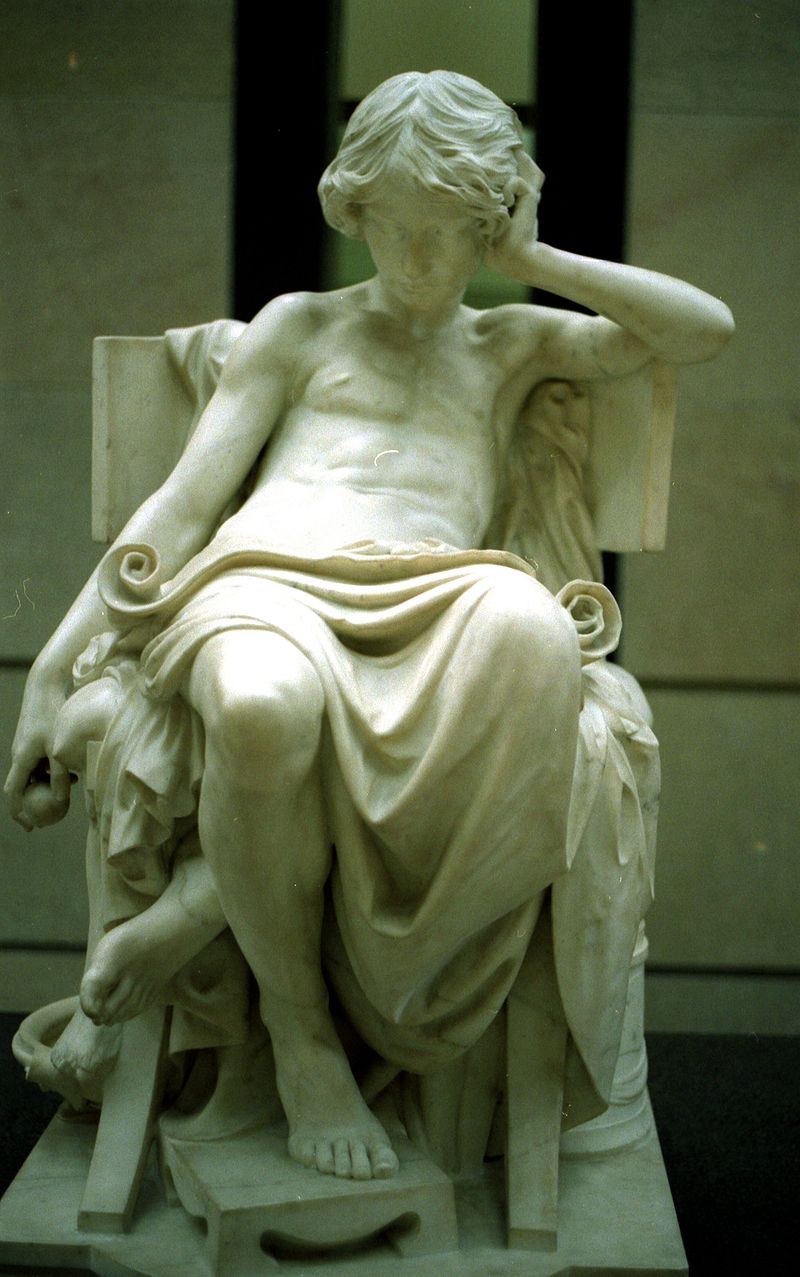
Le Jeunesse d’Aristote by Charles Degeorge


No Gain! Or, How To Defend Against A Charge of Conspiracy

Gorgias, Defense of Palamedes

“Someone claims that we made a promise to each other with money, he gave it and I took it. Was it only a little? Is it not likely that I took only a little money in exchange for tremendous efforts on my part? Or, was it a lot? How did I get it? How could he have brought it to me? Or did many people do it? If many people had done it, there would have been many witnesses of the conspiracy. But if one person did it, then he could not have carried much. Did they bring during the day or the night? There were many guards close together—it would have been hard to evade them. So it was at day? Well, daylight is hostile to these kinds of things.

Ok, let’s imagine this. Did I come out and take the money or did the man who brought it come inside? Both have their challenges. If I took it, how did I hide the fact from people inside and outside? Where could I have placed it? How would I have guarded it? If I used it, it would have been clear as day! If I didn’t use it, than what would I have gained from it?”

φήσει τις ὡς χρήμασι τὴν πίστιν ἐποιούμεθα, ἐκεῖνος μὲν διδούς, ἐγὼ δὲ λαμβάνων. πότερον οὖν ὀλίγοις; ἀλλ’ οὐκ εἰκὸς ἀντὶ μεγάλων ὑπουργημάτων ὀλίγα χρήματα λαμβάνειν. ἀλλὰ πολλοῖς; τίς οὖν ἦν ἡ κομιδή; πῶς δ’ ἂν ἐκόμισεν; ἢ πολλοί; πολλῶν γὰρ κομιζόντων πολλοὶ ἂν ἦσαν μάρτυρες τῆς ἐπιβουλῆς, ἑνὸς δὲ κομίζοντος οὐκ ἂν πολύ τι τὸ φερόμενον ἦν. [10] πότερα δὲ ἐκόμισαν ἡμέρας ἢ νυκτός; ἀλλὰ πολλαὶ καὶ πυκναὶ φυλακαί, δι’ ὧν οὐκ ἔστι λαθεῖν. ἀλλ’ ἡμέρας; ἀλλά γε τὸ φῶς πολεμεῖ τοῖς τοιούτοις. εἶεν. ἐγὼ δ’ ἐξελθὼν ἐδεξάμην, ἢ ἐκεῖνος ὁ φέρων εἰσῆλθεν; ἀμφότερα γὰρ ἄπορα. λαβὼν δὲ δὴ πῶς ἂν ἔκρυψα καὶ τοὺς ἔνδον καὶ τοὺς ἔξω; ποῦ δ’ ἂν ἔθηκα; πῶς δ’ ἂν ἐφύλαξα; χρώμενος δ’ ἂν φανερὸς ἐγενόμην, μὴ χρώμενος δὲ τί ἂν ὠφελούμην ἀπ’ αὐτῶν;

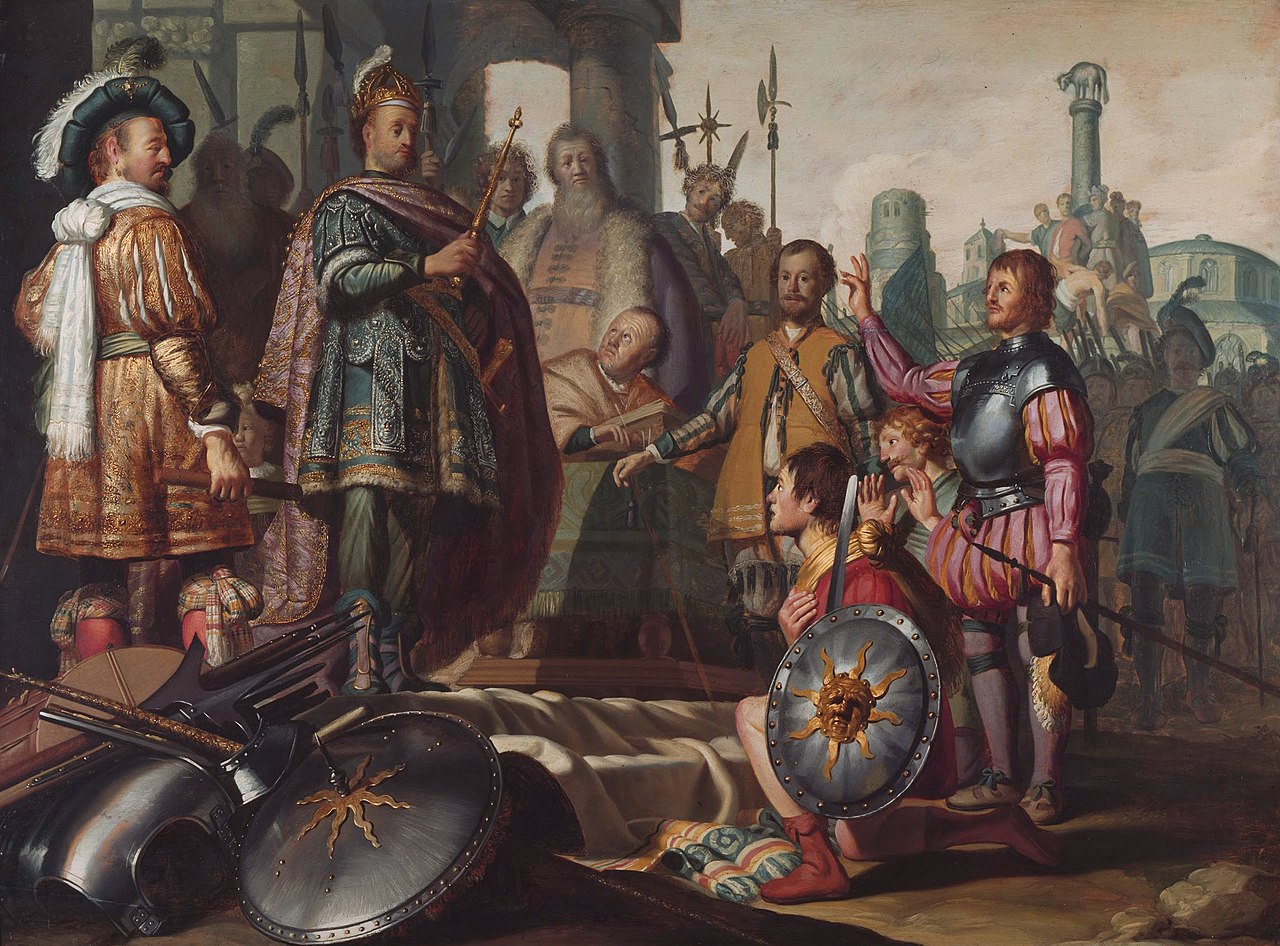
Rembrandt Historical Painting 1626.jpg
Rembrandt

The Odyssey is Still News

Ezra Pound, ABC of Reading:

Years ago a musician said to me: ‘But isn’t there a place where you can get it all [meaning all of poetry] as in Bach?’

There isn’t. I believe if a man will really learn Greek he can get nearly ‘all of it’ in Homer.

I have never read half a page of Homer without finding melodic invention, I mean melodic invention that I didn’t already know. I have, on the other hand, found also in Homer the imaginary spectator, which in 1918 I still thought was Henry James’ particular property.

Homer says, ‘an experienced soldier would have noticed ‘. The sheer literary qualities in Homer are such that a physician has written a book to prove that Homer must have been an army doctor. (When he describes cer­tain blows and their effect, the wounds are said to be accurate, and the description fit for coroner’s inquest.) Another French scholar has more or less shown that the geography of the Odyssey is correct geography; not as you would find it if you had a geography book and a map, but as it would be in a ‘periplum’, that is, as a coasting sailor would find it.

The news in the Odyssey is still news. Odysseus is still ‘very human’, by no means a stuffed shirt, or a pretty figure taken down from a tapestry. It is very hard to describe some of the homeric conversation, the irony, etc., without neologisms, which my publishers have suggested I eschew. The only readable translation of this part of Homer known to me was made by Amadis Jamyn, secre­taire et lecteur ordinaire du Roy (Henry III of France). He refers to Odysseus as ‘ce rusé personnage’.

You can’t tuck Odysseus away with Virgil’s Aeneas. Odysseus is emphatically ‘the wise guy’, the downy, the hard-boiled Odysseus. His companions have most of them something that must have been the Greek equivalent of shell-shock.

And the language of the conversations is just as alive as when one of Edgar Wallace’s characters says, ‘We have lost a client’.

W. B. Yeats is sufficiently venerated to be cited now in a school book. The gulf between Homer and Virgil can be illustrated profanely by one of Yeats’ favourite anecdotes.

A plain sailor man took a notion to study Latin, and his teacher tried him with Virgil; after many lessons he asked him something about the hero.

Said the sailor: ‘What hero?’

Said the teacher: ‘What hero, why, Aeneas, the hero. ‘

Said the sailor: ‘Ach, a hero, him a hero? Bigob, I t’ought he waz a priest.’

Image result for homer odyssey woodcut

The Annoying Liberal Arts

Seneca, Moral Epistle 88

“But, truly, the knowledge of many disciplines is pleasurable”. Ok, then, let’s keep only what is necessary from these arts. Do you think that the person who considers superficial matters equal to useful ones and for this reason makes his home a museum of expensive products is reprehensible but not the man who is obsessed with the superfluous aspects of academia? To want to know more than is enough is a kind of excessive delusion.

Why? Well, this extreme pursuit of the liberal arts makes people annoying, wordy, bad-mannered, and overly self-satisfied, even though they have not learned the basics because they pursue the useless.

The scholar Didymus wrote four thousand books. I would pity him if had only read that many useless works. In these books he searched for Homer’s homeland, the real mother of Aeneas, whether Anacreon is more licentious or just drunk, whether Sappho was promiscuous and other various questions which, if you learned them, would have been necessarily forgotten. Go on, don’t say life is long. No, when you turn to your own people too, I will show you many things which should be pruned back with an ax.”

“At enim delectat artium notitia multarum.” Tantum itaque ex illis retineamus, quantum necessarium est. An tu existimas reprendendum, qui supervacua usibus conparat et pretiosarum rerum pompam in domo explicat, non putas eum, qui occupatus est in supervacua litterarum supellectile? Plus scire velle quam sit satis, intemperantiae genus est.

Quid? Quod ista liberalium artium consectatio molestos, verbosos, intempestivos, sibi placentes facit et ideo non discentes necessaria, quia supervacua didicerunt. Quattuor milia librorum Didymus grammaticus scripsit. Misererer, si tam multa supervacua legisset. In his libris de patria Homeri quaeritur, in his de Aeneae matre vera, in his libidinosior Anacreon an ebriosior vixerit, in his an Sappho publica fuerit, et alia, quae erant dediscenda, si scires. I nunc et longam esse vitam nega. Sed ad nostros quoque cum perveneris, ostendam multa securibus recidenda.

These are themes close to the old man’s heart, elsewhere too:

Seneca, De Brevitate Vitae 13

“This sickness used to just afflict the Greeks, to discover the number of oars Odysseus possessed, whether the Iliad was written before the Odyssey, whether the poems belong to the same author, and other matters like this which, if you keep them to yourself, cannot please your private mind; but if you publish them, you seem less learned than annoying.”

Graecorum iste morbus fuit quaerere, quem numerum Ulixes remigum habuisset, prior scripta esset Ilias an Odyssia, praeterea an eiusdem essent auctoris, alia deinceps huius notae, quae sive contineas, nihil tacitam conscientiam iuvant sive proferas, non doctior videaris sed molestior.

Seneca, Moral Epistle 108

“But some error comes thanks to our teachers who instruct us how to argue but not how to live; some error too comes from students, who bring themselves to teachers not for the nourishing of the soul, but the cultivation of our wit. Thus what was philosophy has been turned into philology.”

Sed aliquid praecipientium vitio peccatur, qui nos docent disputare, non vivere, aliquid discentium, qui propositum adferunt ad praeceptores suos non animum excolendi, sed ingenium. Itaque quae philosophia fuit, facta philologia est.

Image result for medieval manuscript animal teacher
ca. 1350 | The Morgan Library & Museum

J.E. Sandys, A History of Classical Scholarship (Ausonius)

“It is difficult to imagine that a man capable of writing such trifles as these (not to mention his lines on the Caesars and on celebrated cities) had some ten years previously (in 378 a.d.) filled the splendid position of praetorian praefect of the provinces of Gaul (an official whose sway extended even over Spain and the opposite coast of Africa, and over the southern part of Britain), and, in the four years between 376 and 380, had seen his father honorary praefect of lllyricum, his son and son-in-law proconsuls of Africa, and his nephew praefect of Rome. It seems as if, on his return to the scenes of his early work as a professor at Bordeaux, the praefect relapsed into the ‘ grammarian ‘, spending his time on learned trifles, which are among the least important products of scholarship, and consoling himself in his tedious task by recalling Virgil’s famous phrase: — ‘in tenui labor, at tenuis non gloria’. We may regret that Ausonius does not appear to have used his great opportunities for reforming the educational system which prevailed in the schools of the Western Empire, and thus rendering a lasting service to the cause of learning; but we may allow him the credit of having possibly inspired the memorable decree promulgated by Gratian in 376, which improved the status of public instructors by providing for the appointment of teachers of rhetoric and of Greek and Latin ‘ grammar ‘ in the principal cities of Gaul, and fixing the amount of their stipends ‘. “

Vergil Was a Sycophantic Hack

Rovert Graves, The Virgil Cult:

“Why Virgil’s poems have for the last two thousand years exercised so great an influence on our Western culture is, paradoxically, because he was a renegade to the true Muse. His pliability; his subservience; his narrowness; his denial of that stubborn imaginative freedom which the true poets who preceded him had prized; his perfect lack of originality, courage, humour, or even animal spirits: these were the negative qualities which first commended him to government circles, and have kept him in favour ever since.”

Image result for robert graves

I Made Your Poems Worse: You’re Welcome!

Pliny, Letters, 4.18

“To Arrius Antonius, My friend:

Is there any way I can prove myself to you beyond the work I have put in to your Greek epigrams, which I have tried to match in Latin translation? It’s still a turn for the worse: the cause is the weakness of my own genius followed by the inadequacy of what Lucretius calls the “poverty of our country’s language.” But, if these Latin translations of mine seem to you to possess any bit of charm, then you know how much pleasure I have in the originals you made in Greek. Farewell.”

Plinius Arrio Antonino Suo S.

Quemadmodum magis adprobare tibi possum, quanto opere mirer epigrammata tua Graeca, quam quod quaedam Latine aemulari et exprimere temptavi? in deterius tamen. Accidit hoc primum imbecillitate ingenii mei, deinde inopia ac potius, ut Lucretius ait, egestate patrii sermonis. Quodsi haec, quae sunt et Latina et mea, habere tibi aliquid venustatis videbuntur, quantum putas inesse iis gratiae, quae et a te et Graece proferuntur! Vale.

Greek Epigram by Sopater

“Don’t Know Grammar, Don’t Give a F**k”

Gregory of Tours, The History of the Franks (Preface):

On the verge of writing the wars of kings with enemy nations, of martyrs with pagans, of the churches with heretics, I would first like to bring forth a display of my faith, so that one who reads me will not doubt that I am a Catholic. That plan has pleased me because of those, who despair of the approaching end of the world, so that the chief points of preceding times collected through chronicles and histories, and how many years there have been since the beginning of the world, may be clearly explained. But first I entreat the pardon of my readers, if I have run off the rails of grammatical art in my letters or my syllables, because I was not really educated with that skill, instead pursuing only that I may retain what is preached in the church without any recoiling or hesitation of my heart, because I know that one who is corrupted by sings is nevertheless able to obtain God’s pardon through a pure credulity.

Scribturus bella regum cum gentibus adversis, martyrum cum paganis, eclesiarum cum hereticis, prius fidem meam proferre cupio, ut qui legerit me non dubitet esse catholicum. Illud etiam placuit propter eos, qui adpropinquantem finem mundi disperant, ut, collectam per chronicas vel historias anteriorum summa, explanetur aperte, quanti ab exordio mundi sint anni. Sed prius veniam legentibus praecor, si aut in litteris aut in syllabis grammaticam artem excessero, de qua adpaene non sum inbutus; illud tantum studens, ut quod in eclesia credi praedicatur sine aliquo fugo aut cordis haesitatione reteneam, quia scio peccatis obnoxium per credulitatem puram obtinere posse veniam apud Deum.

Achilles’ Other Son, a Dream

Eustathius, on Homer, Odyssey, 11.538, 1696.40

“You should know that while Homer and many other authors say that the only child of Achilles and Deidameia was Neoptolemos, Demetrios of Ilion records that here were two, Oneiros [“dream”] and Neoptolemos.

They say that Orestes killed him in Phôkis accidentally and when he recognized that he did, he built him a tomb near Daulis. He dedicated the sword he killed him with there and then went to the “White Island”, which Lykophron calls the “foaming cliff”, and propitiated Achilles.”

ἰστέον δὲ ὅτι ῾Ομήρου καὶ τῶν πλειόνων ἕνα παῖδα λεγόντων Δηιδαμείας καὶ ᾽Αχιλλέως τὸν Νεοπτόλεμον, Δημήτριος ὁ ᾽Ιλιεὺς δύο ἱστορεῖ, ῎Ονειρόν τε καὶ Νεοπτόλεμον· ὃν ἀνελών φησιν ἐν Φωκίδι ᾽Ορέστης ἀγνοίαι, ὕστερον δὲ γνούς, τάφον αὐτῶι ἐποίησε περὶ Δαυλίδα, καὶ ἀναθεὶς τὸ ξίφος ὧι ἀνεῖλεν αὐτὸν ἀπῆλθεν εἰς τὴν Λευκὴν νῆσον, ἣν ὁ Λυκόφρων (Al. 188) ῾φαληριῶσαν σπῖλον᾽ καλεῖ, καὶ τὸν ᾽Αχιλλέα ἐξιλεώσατο.


BNJ 59 F 1b Ptolemy ChennosNovel History, Book 3 = Photios, Bibliotheca 190, 148b21

“And [he says] that there were two children of Achilles and Deidamia, Neoptolemos and Oneiros. Oneiros was killed accidentally by Orestes in Phôkis while they fighting over erecting a tent.”

καὶ ὡς ᾽Αχιλλέως καὶ Δηιδαμίας δύο ἐγενέσθην παῖδες Νεοπτόλεμος καὶ ῎Ονειρος· καὶ ἀναιρεῖται κατ᾽ ἄγνοιαν ὑπὸ ᾽Ορέστου ἐν Φωκίδι ὁ ῎Ονειρος, περὶ σκηνοπηγίας αὐτῶι μαχεσάμενος.

Achilles fathered these children when he was sheltered at Skyros. Bion wrote a poem about the romance.Achilles also had a sister…

Fresco from the House of the Dioscuri in Pompei depicting Achilles between Diomedes and Odysseus at Scyros

ΕΥ ΓΕ ΒΟΥΜΕΡ: Further Adventures in Sketchy Papyrology

P. Dorchester 19.11.6 Verso [2.5 by 3 Centimeters; Paper]

Recto is a receipt which seems to be for Domitian’s hair tonic. The provenance of the fragment is unknown. It was procured in South Quincy in exchange for a Dunkin’ Donuts gift certificate. Clearly written in the center are three words in a juvenile script:

…] εὖ γε, Βοῦμερ [..

…] ok, Boomer (?) […

The top and bottom are severely burnt. The word in the vocative seems to be a chrononym which likely declines following third declension kinship names.

Βούμηρ           Βουμέρες

Βουμρός          Βουμέρων

Βουμρί            Βουμράσι(ν)

Βουμέρα         Βουμέρας


Ok, this is not an image of the item described above

Butcherly Feare in Making Latines

John Brinsley, Ludus Literarius (Preface)

There is a way (saith Mr. Askame) touched in the first booke of Cicero de Oratore,which wisely brought into Schooles, truly taught, & constantly vsed would not onely take wholly away that butcherly feare in making Latines, but would also with ease and pleasure, and in short time as I know by good experience, worke a true choise and placing of words, a right ordering of sentences, an easie vnderstanding of the tongues, a readinesseto speake, a facilitie to write, a true iudgement both of his owne, and other mens doings, what tongue so euer he doth vse.

This way, as he sheweth, is by causing the Schollar first to vnderstand the matter which he learneth: secondly, to construe truely: thirdly, to parse exactly: fourthly, to translate into English plainely: fiftly, to translate out of the English into the Latine of the Author againe: and so after to compare with the  Author how neere he came vnto it. Finally, by much translating both wayes, chiefely out of the English into Latine, as hee setteth downe in the beginning of his second booke; and hereby hee saw those strange experiments of the increase of learning, which hee reporteth of Mr. Iohn Whitney, and others.

Now, whereas these things are very hard to bee performed in the common schooles; especially for lacke of time to trie and compare euery schollars translation, and euer giuing them new peeces to translate, and those such as are meete for euery forme; by the meanes of these translations of our first schoole Authors, all these things may bee performed in euery Author and forme, most certainely and constantly, and with much ease and delight both to Maister and Schollars; as I trust will be found.

Image result for latin grammar woodcut