All I Ever Do Is Read Read Read (Maybe Write)

Leon Battista Alberti,
On the Advantages and Disadvantages of Literature (Part I):

“Lorenzo Alberti, our father, a man who was in his time easily the best in many things, including in the education of his family (as you yourself know, Carolus), was accustomed to wish us so educated as to appear both at home and outside never to be entirely idle. Having been educated and imbued with this ingenuous and shining discipline of our father, you have always been involved either in the management of business or in the study of literature; I, however, who have applied myself entirely to literature by setting other things at naught, can probably do anything in the world more willingly than to pass a day without either reading or composing something.

For that reason, I am glad that we have brought it about that we can in some part bear moderately, and in some part prudently avoid the adversity and sufferings which have long pressed upon us by resorting to the consultation of literature. Indeed, it seems to me that we should strive with our studies not only to render them beneficial to ourselves, but even more so to make them satisfy the expectation of our friends. Every day all of our friends, to whom my dignity and reputation are dear, beg me to draw forth some fruit of my late nights, so that they can be sure that I have actually achieved something in the labor and assiduity of my studies.”

Laurentius Albertus parens noster, vir cum multis in rebus, tum in educanda familia temporibus suis facile nostrorum omnium princeps, ut meministi, Carole, solitus erat nos ita instructos velle et domi et foris videri, ut nunquam essemus otiosi. Qua quidem ingenua et preclara patris nostri disciplina instituti atque imbuti, tu semper aut gerendis negotiis aut in litterarum cognitione versaris; ego autem, qui me totum tradidi litteris, ceteris posthabitis rebus, omnia posse libentius debeo quam diem aliquam nihil aut lectitando aut commentando preterire.

Qua ex re illud quidem nos assecutos gaudeo, ut adversas quibus diutius premimur erumnas partim ferre moderate, partim vitare prudenter licuerit documentis litterarum. Ac mihi quidem studiis nostris non modo ut nobis tantum prosint, sed magis etiam ut amicorum expectationi satisfaciant enitendum videtur. Namque in dies nostri, quibus et dignitas mea cara est et fama, omnes exposcunt ut fructum aliquem depromam vigiliarum mearum, quo intelligant me meo studiorum labore et assiduitate aliquid profecisse.

Forget the Fountain of Youth–We Need the Stone of Relief

Pseudo-Plutarch, On Rivers, 11.1-2

“The Strymon is a Thracian River by the city Edonis. Previously, it was called Palaistinos after the son of Poseidon, Palaistinos. That one, when he was warring with his neighbors and got sick, sent his son Haliakmôn as general. But he was rather impetuous and was killed while fighting.

Once Palaistinos heard this and escaped his bodyguards, he hurled himself into the river Konozos because of his extreme grief. Then Strymon, the child of Ares and Helike, once he heard about the death of Rhesus and was overcome by sorrow, hurled himself into the river Palaistinos whose name was changed to Strymon because of this.

A stone created by this river is called the pausilypos [“grief-stopper”]. Anyone grieving who finds this stone is immediately relieved of the pain which holds him.  That’s the story Jason of Byzantion tells in his Tragika.”

Στρυμὼν ποταμός ἐστι τῆς Θρᾴκης κατὰ πόλιν Ἠδωνίδα· προσηγορεύετο δὲπρότερον Παλαιστῖνος ἀπὸ Παλαιστίνου τοῦ Ποσειδῶνος. οὗτος γὰρ πρὸς τοὺς ἀστυγείτονας ἔχων πόλεμον καὶ εἰς ἀσθένειαν ἐμπεσὼν τὸν υἱὸν Ἁλιάκμονα στρατηγὸν ἔπεμψεν· ὁ δὲ προπετέστερον μαχόμενος ἀνῃρέθη. περὶ δὲ τῶν συμβεβηκότων ἀκούσας Παλαιστῖνος καὶ λαθὼν τοὺς δορυφόρους, διὰ λύπης ὑπερβολὴν ἑαυτὸν ἔρριψεν εἰς ποταμὸν Κόνοζον, ὃς ἀπ’ αὐτοῦ Παλαιστῖνος ὠνομάσθη. Στρυμὼν δὲ, Ἄρεως παῖς καὶ Ἡλίκης, ἀκούσας περὶ τῆς Ῥήσου τελευτῆς καὶ ἀθυμίᾳ συσχεθεὶς ἑαυτὸν ἔρριψεν εἰς ποταμὸν Παλαιστῖνον, ὃς ἀπ’ αὐτοῦ Στρυμὼν μετωνομάσθη. γεννᾶται δ’ ἐν αὐτῷ λίθος παυσίλυπος καλούμενος· ὃν ἐὰν εὕρῃ τις πενθῶν, παύεται παραχρῆμα τῆς κατεχούσης αὐτὸν συμφορᾶς, καθὼς ἱστορεῖ Ἰάσων Βυζάντιος ἐν τοῖς Τραγικοῖς.

This is a different type of relief from Grief

There’s always drugs too. Morphine, “Cure for Pain”

“Someday there’ll be a cure for pain
That’s the day I throw my drugs away”


Apollo = The Devil; Medicine = Murder

Robert Burton, The Anatomy of Melancholy (2.4.1.1):

“The country people use kitchen physic, and common experience tells us, that they live freest from all manner of infirmities, that make least use of apothecaries’ physic. Many are overthrown by preposterous use of it, and thereby get their bane, that might otherwise have escaped: some think physicians kill as many as they save, and who can tell, Quot Themison aegros autumno occiderit uno? How many murders they make in a year, quibus impune licet hominem occidere, that may freely kill folks, and have a reward for it, and according to the Dutch proverb, a new physician must have a new churchyard; and who daily observes it not?

Many that did ill under physicians’ hands, have happily escaped, when they have been given over by them, left to God and nature, and themselves; ’twas Pliny’s dilemma of old, every disease is either curable or incurable, a man recovers of it or is killed by it; both ways physic is to be rejected. If it be deadly, it cannot be cured; if it may be helped, it requires no physician, nature will expel it of itself. Plato made it a great sign of an intemperate and corrupt commonwealth, where lawyers and physicians did abound; and the Romans distasted them so much that they were often banished out of their city, as Pliny and Celsus relate, for 600 years not admitted.

It is no art at all, as some hold, no not worthy the name of a liberal science (nor law neither), as Pet. And. Canonherius a patrician of Rome and a great doctor himself, one of their own tribe, proves by sixteen arguments, because it is mercenary as now used, base, and as fiddlers play for a reward. Juridicis, medicis, fisco, fas vivere rapto, ’tis a corrupt trade, no science, art, no profession; the beginning, practice, and progress of it, all is naught, full of imposture, uncertainty, and doth generally more harm than good.

The devil himself was the first inventor of it: Inventum est medicina meum, said Apollo, and what was Apollo, but the devil? The Greeks first made an art of it, and they were all deluded by Apollo’s sons, priests, oracles. If we may believe Varro, Pliny, Columella, most of their best medicines were derived from his oracles. Aesculapius his son had his temples erected to his deity, and did many famous cures; but, as Lactantius holds, he was a magician, a mere impostor, and as his successors, Phaon, Podalirius, Melampius, Menecrates, (another God), by charms, spells, and ministry of bad spirits, performed most of their cures.”

Scars, Stories, and Identity

Former Brandeis student and future Rabbi Emily Dana has a great post about how our bodies tell our stories, inspired by and engaged with Odysseus’ scar. I know she read some of Auerbach’s Mimesis recently, but she gets a bit proustian too:

Trauma leaves scars whether we like it or not. Sometimes those scars are visible, but other times we hardly know that they exist until the exact moment that they decide to present themselves to us–the word that reminds us of our scariest memory or a dispute with a friend that jerks us back into childhood, or even a certain smell that is connected to a memory.

What I deeply appreciate about the way Emily puts this is that it draws upon the powerful ambiguity of the traumatic. The Greek word trauma can mean “wound” but it also means “hurt” or “damage”. In modern English usage, trauma can denote a physical ailment (think “blunt force trauma”), but it more often refers to the invisible marks physical suffering can leaving behind.

The Etymology of the word is disputed by modern linguists, but Byzantine scholars presented a folk etymology that it is “from trô (titrôskô [“to pierce, wound”]) [with both spellings] trôma and trauma. It is etymologized from blood flowing [to rheein] through it.” (Τραῦμα: Παρὰ τὸ τρῶ, τὸ τιτρώσκω, τρῶμα καὶ τραῦμα· ἐτυμολογεῖται δὲ παρὰ τὸ ῥέειν δι’ αὐτοῦ τὸ αἷμα, Etymologicum Magnum).

I have spent some time obsessed with this scene over the past few years, seeing the word for scar in versions of Odysseus’ name and finding both wonder and horror in how Eurykleia is instrumentalized to be witness to Odysseus’ history. The scar-scene is one of several moments of recognition in the epic, opportunities for Odysseus’ identity to be confirmed and re-performed. Each one depends on an external sign that carries a story with it. A bed for Odysseus and Penelope; a grove of trees for father and son.

But I also think that beneath this is the recognition that bodies which do not tell stories–perfect, unmarked, even fictional or fictionalized bodies–present a problem in the Odyssey‘s world. The unblemished beauty of the suitors and the young princes among the Phaeacians stand almost in monstrous contrast to Odysseus. The age of his body and the scar from his youth tell his story and represent the promise of kleos to come. An unmarked body is one without a story–or one from which story has been erased.

Emily’s deeply felt post made me think of a twitter thread from last year when I talked about the Odyssey with my daughter:


Update: She kept going to swimming lessons…but still hesitates to wear shorts. And, thanks Emily, for reminding me.

Dancing With the Heroes

Schol ad Pind. Pyth 2:

 “He used the word Kastorian because of the account of some that the Dioskouri invented the dance in armor. For some say that the Dioskouroi are dancers. Epicharmus, however, says that Athena played the martial song for the Dioskouri on an Aulos and for this reason the Lakonians march against the enemy to the same sound. But others claim that he Kastorean is a certain rhythm and that the Laconians use it when attacking the enemy.

There is also a distinction between the dance of the pyrrikhê for which the hyporkhêmata were composed. For some say that the Kouretes invented dancing in armor and performed this dance, or that Pyrrikhos of Krete or Thaletas first created them. But Sosibios argues that all hyporkhêmata are Cretan.

Still, some say that the pyrrhic dance is not named from Pyrrikhos of Crete but from Achilles’ son Pyrrhos who danced in his arms over his victory over Telephos, which the Kyprians call the prulis, making the name pyrrikhê from the pyre.”

Καστόρειον εἶπε διὰ τὸ τὴν ἔνοπλον ὄρχησιν κατ᾽ ἐνίους τοὺς Διοσκούρους εὑρεῖν· ὀρχηστικοὶ γάρ τινες οἱ Διόσκουροι. ὁ δὲ Ἐπίχαρμος τὴν Ἀθηνᾶν φησι τοῖς Διοσκούροις τὸν ἐνόπλιον νόμον ἐπαυλῆσαι, ἐξ ἐκείνου δὲ τοὺς Λάκωνας μετ᾽ αὐλοῦ τοῖς πολεμίοις προσιέναι. τινὲς δὲ ῥυθμόν τινά φασι τὸ Καστόρειον, χρῆσθαι δὲ αὐτῶι τοὺς Λάκωνας ἐν ταῖς πρὸς τοὺς πολεμίους συμβολαῖς. διέλκεται δὲ ἡ τῆς πυρρίχης ὄρχησις, πρὸς ἣν τὰ ὑπορχήματα ἐγράφησαν. ἔνιοι μὲν οὖν φασι τὴν ἔνοπλον ὄρχησιν πρῶτον Κούρητας εὑρηκέναι, καὶ ὑπορχήσασθαι, αὖθις δὲ Πύρριχον Κρῆτα συντάξασθαι, Θαλήταν δὲ πρῶτον τὰ εἰς αὐτὴν ὑπορχήματα. Σωσίβιος δὲ τὰ ὑπορχηματικὰ πάντα μέλη Κρηταικὰ λέγεσθαι. ἔνιοι δὲ οὐκ ἀπὸ Πυρρίχου τοῦ Κρητὸς τὴν πυρρίχην ὠνομάσθαι ἀλλὰ ἀπὸ τοῦ παιδὸς τοῦ Ἀχιλλέως Πύρρου ἐν τοῖς ὅπλοις ὀρχησαμένου ἐπὶ τῆι κατὰ Εὐρυπύλου τοῦ Τηλέφου νίκηι. ᾽Αριστοτέλης δὲ πρῶτον Ἀχιλλέα ἐπὶ τῆι τοῦ Πατρόκλου πυρᾶι τῆι πυρρίχηι κεχρῆσθαι, ἣν παρὰ Κυπρίοις φησὶ πρύλιν λέγεσθαι, ὥστε παρὰ τὴν πυρὰν τῆς πυρρίχης τὸ ὄνομα θέσθαι.

Paradoxographus Vaticanus 58

58 “First of the Greeks, the Cretans were possessing the laws which Minos set down. Minos claimed to have learned them from Zeus after he wandered for nine years over a certain month which is called the “cave of Zeus”. The children of the Cretans are raised in common and brought up hardy with one another. They learn the arts of war, and hunts, and they also practice uphill runs without shoes and they work hard on the pyrrhic dance which Purrikhos invented first.”

Κρῆτες πρῶτοι ῾Ελλήνων νόμους ἔσχον Μίνωος θεμένου· προσεποιεῖτο δὲ Μίνως παρὰ τοῦ Διὸς αὐτοὺς μεμαθηκέναι ἐννέα ἔτη εἴς τι ὄρος φοιτήσας, ὃ Διὸς ἄντρον ἐλέγετο. Οἱ Κρητῶν παῖδες ἀγελάζονται κοινῇ μετ’ ἀλλήλων σκληραγωγούμενοι καὶ τὰ πολέμια διδασκόμενοι καὶ θήρας δρόμους τε ἀνάντεις ἀνυπόδετοι ἀνύοντες καὶ τὴν ἐνόπλιον πυρρίχην ἐκπονοῦντες, ἥντινα πρῶτος εὗρε Πύρριχος.

Zenobius 3.71

“To dance in darkness”: A proverb applied to those who toil over unwitnessed things—their work is invisible.”

᾿Εν σκότῳ ὀρχεῖσθαι: ἐπὶ τῶν ἀμάρτυρα μοχθούντων, ὧν τὸ ἔργον ἀφανές.

 A war-dance was performed in honor of Athena’s birth in full-armor at the Panathenain festival (pyrrhiche). See Walter Burkert, Greek Religion 1985, 102.

Image result for hero dancing vase

A Plague of Caspian Rats

Aelian, On the Nature of Animals 17.17

“Amyntas in his work which he named Stages writes that in the Caspian land there are many herds of cattle and horses almost beyond counting. He adds this as well, that in some seasons an unconquerable plague of rats blights the land. He continues with evidence, saying that even though the rivers flow at that of year with a huge surge, the rats swim fearlessly and they even hold on to each other’s tales, biting down on one another, to form a bridge and they they cross the strait in this way.

After swimming into the farmland, he says, they grind down the roots of crops and swarm over trees and once they use their fruits for their meals they sever the branches too just because they are not able to eat them. For this reason, the Caspians—in order to ward off this invasion of rats and the ruin they bring—do not kill the predatory birds which come in turn, flying down from the clouds, and fulfill their nature by freeing the Caspians of this plague.

Caspian foxes are so numerous that they frequent both the sheepfolds in the country and they also appear in cities. By Zeus, a fox will show up in a house not to steal something or ruin it, but like some kind of pet. The Caspian foxes wag their tails just like pet dogs in our land.

The rats of the terrible plague afflicting the Caspians are almost the same in size when you look a them as the ikhneumenos of Egypt, but they are wild, and terrible, and they have teeth strong enough to cut and even eat metal. The rats in Teridon, Babylonia are like this too—and traders bring their skins to sell among the Persians. Indeed, these skins are soft and can be sewn together as a tunic to warm people. And they call them kandutanes, because it is dear to them.

Here is something amazing about these rats: if a pregnant female is caught and her fetus is removed, when the female fetus is dissected and examined, it also has a baby.”

᾽Αμύντας ἐν τοῖς ἐπιγραφομένοις οὕτως ὑπ᾽ αὐτοῦ Σταθμοῖς κατὰ τὴν γῆν τὴν Κασπίαν καὶ βοῶν ἀγέλας λέγει πολλὰς καὶ κρείττονας ἀριθμοῦ εἶναι καὶ ἵππων. ἐπιλέγει δὲ ἄρα καὶ ἐκεῖνο, ἐν ὡρῶν τισι περιτροπαῖς μυῶν ἐπιδημίας γίνεσθαι πλῆθος ἄμαχον· καὶ τὸ μαρτύριον ἐπάγει λέγων, τῶν ποταμῶν τῶν ἀεννάων σὺν πολλῶι τῶι ῥοίζωι φερομένων, τοὺς δὲ καὶ μάλα ἀτρέπτως ἐπινήχεσθαί τε αὐτοῖς καὶ τὰς οὐρὰς ἀλλήλων ἐνδακόντας ἕρμα τοῦτο ἴσχειν, καὶ τοῦ διαβάλλειν τὸν πόρον σύνδεσμόν σφισιν ἰσχυρότατον ἀποφαίνει τόνδε.

ἐς τὰς ἀρούρας δὲ ἀπονηξάμενοι, φησί, καὶ τὰ λήια ὑποκείρουσι καὶ διὰ τῶν δένδρων ἀνέρπουσι καὶ τὰ ὡραῖα δεῖπνον ἔχουσι καὶ τοὺς κλάδους δὲ διακόπτουσιν, οὐδὲ ἐκείνους κατατραγεῖν ἀδυνατοῦντες. οὐκοῦν ἀμυνόμενοι οἱ Κάσπιοι τὴν ἐκ τῶν μυῶν ἐπιδρομήν τε ἅμα καὶ λύμην φείδονται τῶν γαμψωνύχων, οἵπερ οὖν καὶ αὐτοὶ κατὰ νέφη πετόμενοι εἶτα αὐτοὺς ἀνασπῶσιν, καὶ ἰδίαι τινὶ φύσει τοῖς Κασπίοις ἀναστέλλουσι τὸν λιμόν. ἀλώπηκες δὲ αἱ Κάσπιαι, τὸ πλῆθος αὐτῶν τοσοῦτόν ἐστιν ὡς καὶ ἐπιφοιτᾶν οὐ μόνον τοῖς αὐλίοις τοῖς κατὰ τοὺς ἀγρούς, ἤδη γε μὴν καὶ ἐς τὰς πόλεις παριέναι. καὶ ἐν οἰκίαι ἀλώπηξ φανεῖται οὐ μὰ Δία ἐπὶ λύμηι οὐδὲ ἁρπαγῆι, ἀλλὰ οἷα τιθασός· καὶ ὑποσαίνουσί τε αἱ Κάσπιοι καὶ ὑπαικάλλουσι τῶν παρ᾽ ἡμῖν κυνιδίων <δίκην>.

οἱ δὲ μύες οἱ τοῖς Κασπίοις ἐπίδημον ὄντες κακόν, μέγεθος αὐτῶν ὅσον κατά γε τοὺς Αἰγυπτίων ἰχνεύμονας ὁρᾶσθαι, ἄγριοι δὲ καὶ δεινοὶ καὶ καρτεροὶ τοὺς ὀδόντας, καὶ διακόψαι τε καὶ διατραγεῖν οἷοί τε εἰσὶ καὶ σίδηρον. τοιοῦτοι δὲ ἄρα καὶ οἱ μύες οἱ ἐν τῆι Τερηδόνι τῆς Βαβυλωνίας (F 7) εἰσίν, ὧνπερ οὖν καὶ τὰς δορὰς οἱ τούτων κάπηλοι ἐς Πέρσας ἄγουσι φόρτον. εἰσὶ δὲ ἁπαλαί, καὶ συνερραμέναι χιτῶνές τε ἅμα γίνονται καὶ ἀλεαίνουσιν αὐτούς. καλοῦνται δὲ ἄρα οὗτοι κανδυτᾶνες, ὡς ἐκείνοις φίλον.

θαυμάσαι δὲ τῶν μυῶν τῶνδε ἄξιον ἄρα καὶ τοῦτο· ἐὰν ἁλῶι μῦς κύουσα, κἆιτα ἐξαιρεθῆι τὸ ἔμβρυον, αὐτῆς δὲ διατμηθείσης ἐκείνης εἶτα μέντοι καὶ αὐτὸ διανοιχθῆι, καὶ ἐκεῖνο ἔχει βρέφος.

Image result for medieval manuscript rats
Ste-Genevieve, MS 143 (Taken from Pinterest)

There are not  independent words for rat mouse in Ancient Greek.

μυόβρωτος: “mouse-eaten”

μυοδόχος: “containing mice”

μυοθήρας: “mouse-catcher”

μυοκτόνος: “mouse-killer”

μυομαχία: “a battle of mice”

μυοπάρων: “a small pirate boat”

μυόχοδον: “mouse dung”

Utilitatis Aliquid: A Literary Syllabus for Eloquence and Erudition

Quintilian 1.8

“For comedy—which can provide a great deal to eloquence since it works through every character and feeling—I will explain soon what purpose I think it serves for students in its own place. For, once characters are safely formed, comedy is among the most important things to read. I am speaking of Menander, but I will not bar the others, for the Latin authors also provide some utility.

Students must first read texts which especially nourish the intelligence and strengthen the character. A long life will give them time for the rest of the works which are good mainly for intellectual reasons. The older Latin poets, moreover, who are mostly effective for their innate ability rather than their skill, can offer a lot—especially for building a great vocabulary. One can find a seriousness in their tragedies and in their comedies an elegance and a certain Attic nature. Their compositions are more considered, too, than modern authors who think that the only virtue of writing is its “quotability”. A high register and, if I may say, a kind of power must be found in these authors since we have now stumbled into the vices of pleasure in our manner of speaking too. And, finally, we should lean on the best orators who take from the poems of the ancients to strengthen their claims or decorate their speaking”

Comoediae, quae plurimum conferre ad eloquentiam potest, cum per omnis et personas et adfectus eat, quem usum in pueris putem paulo post suo loco dicam: nam cum mores in tuto fuerint, inter praecipua legenda erit. De Menandro loquor, nec tamen excluserim alios, nam Latini quoque auctores adferent utilitatis aliquid; sed pueris quae maxime ingenium alant atque animum augeant praelegenda: ceteris, quae ad eruditionem modo pertinent, longa aetas spatium dabit. Multum autem veteres etiam Latini conferunt, quamquam plerique plus ingenio quam arte valuerunt, in primis copiam verborum: quorum in tragoediis gravitas, in comoediis elegantia et quidam velut atticismos inveniri potest. Oeconomia quoque in iis diligentior quam in plerisque novorum erit, qui omnium operum solam virtutem sententias putaverunt. Sanctitas certe et, ut sic dicam, virilitas ab iis petenda est, quando nos in omnia deliciarum vitia dicendi quoque ratione defluximus. Denique credamus summis oratoribus, qui veterum poemata vel ad fidem causarum vel ad ornamentum eloquentiae adsumunt.

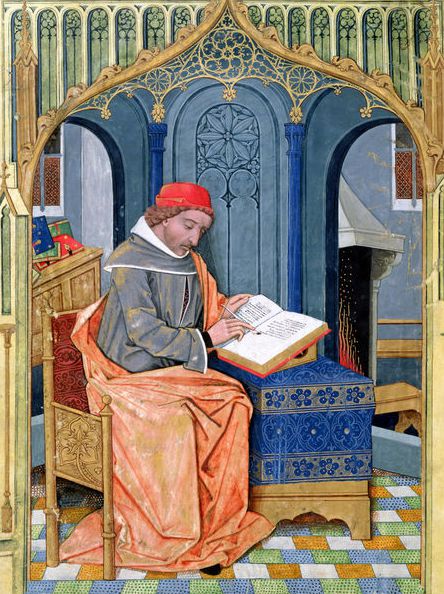
File:Robinet Testard32.jpg
Portrait of Matthaeus Platearius d.c.1161 writing “The Book of Simple Medicines”, c.1470 (Wikimedia Commons)

A Mere Scholar, A Mere Ass

Robert Burton, The Anatomy of Melancholy 1.2.3:

“Hear Tully pro Archia Poeta: whilst others loitered, and took their pleasures, he was continually at his book, so they do that will be scholars, and that to the hazard (I say) of their healths, fortunes, wits, and lives. How much did Aristotle and Ptolemy spend? unius regni precium they say, more than a king’s ransom; how many crowns per annum, to perfect arts, the one about his History of Creatures, the other on his Almagest? How much time did Thebet Benchorat employ, to find out the motion of the eighth sphere? forty years and more, some write: how many poor scholars have lost their wits, or become dizzards, neglecting all worldly affairs and their own health, wealth, esse and bene esse, to gain knowledge for which, after all their pains, in this world’s esteem they are accounted ridiculous and silly fools, idiots, asses, and (as oft they are) rejected, contemned, derided, doting, and mad. Look for examples in Hildesheim spicel. 2, de mania et delirio: read Trincavellius, l. 3. consil. 36, et c. 17. Montanus, consil. 233. Garceus de Judic. genit. cap. 33. Mercurialis, consil. 86, cap. 25. Prosper Calenius in his Book de atra bile; Go to Bedlam and ask. Or if they keep their wits, yet they are esteemed scrubs and fools by reason of their carriage: after seven years’ study

———statua, taciturnius exit,
Plerumque et risum populi quatit.———

He becomes more silent than a statue, and generally excites people’s laughter. Because they cannot ride a horse, which every clown can do; salute and court a gentlewoman, carve at table, cringe and make conges, which every common swasher can do, hos populus ridet, &c., they are laughed to scorn, and accounted silly fools by our gallants. Yea, many times, such is their misery, they deserve it: a mere scholar, a mere ass.”

Image result for medieval manuscript reading

“Phoenician Letters”: Greeks on Where Writing Game From

Photios, Lexikon s.v. Φοινικήια γράμματα Ν.

“The Lydians and Ionans [report] that letters came from Phoinix the son of Agênor who invented them. But the Cretans report differently that they were developed from writing on the leaves of palm trees [phoinikes].

Skamôn, in the second book of his Inventions, says that they were named for Aktaion’s daughter Phoinikê. The story goes that he had no male children, but that he had daughters Aglauros, Ersê, and Pandrosos. Phoinikê died still a virgin. For this reason, Aktaion named the letters “Phoenician” for her, because he wished to give some honor to his daughter.”

Λυδοὶ καὶ ῎Ιωνες τὰ γράμματα ἀπὸ Φοίνικος τοῦ ᾽Λγήνορος τοῦ εὑρόντος· τούτοις δὲ ἀντιλέγουσι Κρῆτες, ὡς εὑρέθη ἀπὸ τοῦ γράφειν ἐν φοινίκων πετάλοις. Σκάμων δ᾽ ἐν τῆι δευτέραι τῶν Εὑρημάτων ἀπὸ Φοινίκης τῆς ᾽Ακταίωνος ὀνομασθῆναι. μυθεύεται δὲ οὗτος ἀρσένων μὲν παίδων ἄπαις, γενέσθαι δὲ αὐτῶι θυγατέρας ῎Αγλαυρον, ῎Ερσην, Πάνδροσον· τὴν δὲ Φοινίκην ἔτι παρθένον οὖσαν τελευτῆσαι· διὸ καὶ Φοινικήια τὰ γράμματα τὸν ᾽Ακταίωνα, βουλόμενόν τινος τιμῆς ἀπονεῖμαι τῆι θυγατρί.

Suda, s.v grammata

“Letters: Know that Phoenicians were the first to invent letters. For this reason, letters are also called Phoinikeia. People also say that Kadmos first brought them to Greece. And Apis, the Egyptian, brought medicine. Asklepios improved the art itself. Look also in the entry on Phoenician Letters.” [reference is the same as reported in Photios’ Lexicon.]

Γράμματα: ὅτι τὰ γράμματα Φοίνικες ἐφεῦρον πρῶτοι. ἔνθεν καὶ Φοινίκεια ἐκλήθησαν. καὶ τὸν Κάδμον φασὶ πρῶτον ἐς τὴν ῾Ελλάδα κομίσαι· ἰατρικὴν δὲ ὁ ῎Απις ὁ Αἰγύπτιος· ὁ δὲ ᾿Ασκληπιὸς ηὔξησε τὴν τέχνην. καὶ ζήτει ἐν τῷ Φοινικήϊα γράμματα.

Image result for phoenician alphabet ancient
8th Century BCE Nora Stone (from biblicalarchaeology.org)

Suffering for a Lack of the Latin Language

Seneca the Elder, Controversiae 7.72

“I used to tell you that Cestius, because he was Greek, suffered because of a lack of Latin words though he had an abundance of ideas. Thus, whenever he dared to describe something more broadly, he often stalled especially when he attempted to imitate some great genius.

This is the issue in this controversy. For, in his story, when he was telling about how his brother was given to him, he was pleased by this lonely and sad description: “night was laid out, and everything, judges, was singing under silent stars.” Julius Montanus, who was a companion of Tiberius and an exceptional poet, was claiming that he wanted to imitate Vergil’s line: ‘it was night and all the tired animals over the earth, the races of birds and beasts, were held by a deep sleep.’ “

Soleo dicere vobis Cestium Latinorum verborum inopia hominem Graecum laborasse, sensibus abundasse; itaque, quotiens latius aliquid describere ausus est, totiens substitit, utique cum se ad imitationem magni alicuius ingeni derexerat, sicut in hac controversia fecit. Nam in narratione, cum fratrem traditum sibi describeret, placuit sibi in hac explicatione una et infelici: nox erat concubia, et omnia, iudices, canentia sideribus muta erant. Montanus Iulius, qui comes fuit , egregius poeta, aiebat illum imitari voluisse Vergili descriptionem:

nox erat et terras animalia fessa per omnis,alituum pecudumque genus, sopor altus habebat

Cats doing cat things: sleep, play with mice, and take an unhealthy interest in caged birds from a medieval bestiary
Oxford University: Bodleian Library