Why Doesn’t Remembering Sadness Make Me Sad?

Augustine, Confessions X. 21-22

“The same memory holds my mind’s affections too—not in that manner in which the mind has them when it is experiencing them, but in a very different manner, just as the power of memory conducts itself. For I remember that I was once happy even when I am not happy; and I may recall that I was previously said without being said; I can recollect that I once feared something without fear and also remember ancient desire without feeling desire. But sometimes it is the opposite: I remember previous sadness when I am happy and happiness when I am sad.

This fact is not remarkable for the body: the soul is a different thing from the body. So if I take pleasure in remembering prior pain, this is not surprising. Here, honestly, the mind may also be like memory itself. For when we command that something be recalled, we say “look, keep that in mind.” And when we forget, we said “it’s not in my mind” and “it slipped from my mind”, calling memory itself our mind—although were this the case, why is it that when I recall my past sadness while I am happy, my soul keeps its happiness and my memory its sadness and my mind is happy because of the happiness within it even though the memory which is within it is sad?

Perhaps this is because the memory isn’t integral to the mind? Who could say this? It is not unlikely that the memory is something like the mind’s stomach and happiness and sadness are like its sweet or bitter food. When they are contained within memory, they are unable to be tasted like food taken into the stomach. It is absurd to think that this things are comparable—but still, they are not completely different.”


  1. (21) Affectiones quoque animi mei eadem memoria continet, non illo modo quo eas habet ipse animus cum patitur eas, sed alio multum diverso, sicut sese habet vis memoriae. nam et laetatum me fuisse reminiscor non laetus, et tristitiam meam praeteritam recordor non tristis, et me aliquando timuisse recolo sine timore et pristinae cupiditatis sine cupiditate sum memor. aliquando et e contrario tristitiam meam transactam laetus reminiscor et tristis laetitiam. quod mirandum non est de corpore: aliud enim animus, aliud corpus. itaque si praeteritum dolorem corporis gaudens memini, non ita mirum est. hic vero, cum animus sit etiam ipsa memoria—nam et cum mandamus aliquid ut memoriter habeatur, dicimus, “vide ut illud in animo habeas,” et cum obliviscimur, dicimus, “non fuit in animo” et “elapsum est animo,” ipsam memoriam vocantes animum—cum ergo ita sit, quid est hoc, quod cum tristitiam meam praeteritam laetus memini, animus habet laetitiam et memoria tristitiam laetusque est animus ex eo quod inest ei laetitia, memoria vero ex eo quod inest ei tristitia tristis non est? num forte non pertinet ad animum? quis hoc dixerit? nimirum ergo memoria quasi venter est animi, laetitia vero atque tristitia quasi cibus dulcis et amarus: cum memoriae commendantur, quasi traiecta in ventrem recondi illic possunt, sapere non possunt. ridiculum est haec illis similia putare, nec tamen sunt omni modo dissimilia.
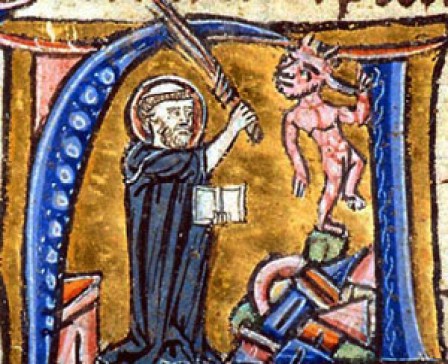
  2. Image result for St. Augustine Medieval

Roman Religion & Roman War

Montesquieu, Dissertation on Politics in Roman Religion (Part 6):

As the magistrates found themselves masters of presages, they had a sure means for turning the people from a war which was disastrous or to make them undertake one which could be profitable.The priests, who always followed the armies, and who were interpreters more of the general than of the gods, inspired confidence in the soldiers. If by chance some evil presage terrified the army, an able general would convert its sense and render it favorable. Thus Scipio, who fell in disembarking from his vessel on the shore of Africa, grabbed the earth with his hands and said, “I have you now, Africa!” And with these words he rendered happy an omen which had appeared so disastrous.

Comme les magistrats se trouvaient maîtres des présages, ils avaient un moyen sur pour détourner le peuple d’une guerre qui aurait été funeste, ou pour lui en faire entreprendre une qui aurait pu être utile. Les devins, qui suivaient toujours les armées, et qui étaient plutôt les interprètes du général que des dieux, inspiraient de la confiance aux soldats. Si par hasard quelque mauvais présage avait épouvanté l’armée, un habile général en convertissait le sens et se le rendait favorable ; ainsi Scipion, qui tomba en sautant de son vaisseau sur le rivage d’Afrique, prit de la terre dans ses mains : « Je te tiens, dit-il, ô terre d’Afrique ! » Et par ces mots il rendit heureux un présage qui avait paru si funeste.

Tawdry Tuesday: Sidedishes for [Obscenity] (NSFW)

sidedish

Plato the Comic Poet, fr. 43 [=Athenaeus 9. 367c-d]

[1] A woman who is asleep is boring
[2] I am learning this.
[1] But there are, uh, side-dishes when she is awake
And these alone are much more useful for pleasure than anything else
[2] What are fucking’s sidedishes, may I ask you?

Α. γυνὴ καθεύδουσ’ ἐστὶν ἀργόν. Β. μανθάνω.
Α. ἐγρηγορυίας δ’ εἰσὶν αἱ παροψίδες,
αὗται μόνον κρείττους πολὺ χρῆμ’ εἰς ἡδονὴν
ἠταλλαβεῖν. οὐ γάρ τινες παροψίδες
εἴσ’, ἀντιβολῶ σε;

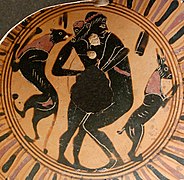
File:Pederastic erotic scene Louvre F85bis.jpg
Pederastic erotic scene: intercrural sex between a teenager (on the left, with long hair) and a young man (on the right, with short hair). Fragment of a black-figure Attic cup, 550 BC–525 BC.

Master of Pleasure and Master of Pain: Three Anecdotes about Sophokles and Euripides

These are from the Gnomologium Vaticanum

404

“When Menander was asked what the difference was between Sophokles and Euripides he said that Sophokles makes people feel pleasure while Euripides makes his audience feel anger.”

Μένανδρος ἐρωτηθεὶς τί διαφέρουσιν ἀλλήλων Σοφοκλῆς καὶ Εὐριπίδης εἶπεν ὅτι Σοφοκλῆς μὲν τέρπεσθαι ποιεῖ τοὺς ἀνθρώπους, Εὐριπίδης δὲ σκυθρωπάζειν τοὺς ἀκροατάς.


518

“Sophokles the tragic poet, after he heard that Euripides died in Macedonia, said “The whetstone of my poems is gone.”

Σοφοκλῆς, ὁ τῶν τραγῳδιῶν ποιητής, ἀκούσας Εὐριπίδην ἐν Μακεδονίᾳ τεθνηκέναι εἶπεν· „ἀπώλετο ἡ τῶν ἐμῶν ποιημάτων ἀκόνη.”


519

“When he was asked why he made people with noble characters and Euripides made those of base ones, Sophokles answered “Because I make people how they should be and he makes people as they are.”

῾Ο αὐτὸς ἐρωτηθεὶς διὰ τί αὐτὸς μὲν ποιεῖ τὰ ἤθη τῶν ἀνθρώπων χρηστά, Εὐριπίδης δὲ φαῦλα „ὅτι” ἔφη „ἐγὼ μέν, οἵους ἔδει εἶναι, τοὺς ἀνθρώπους ποιῶ, ἐκεῖνος δέ, ὁποῖοί εἰσιν.”

Image result for Sophocles and euripides

Quipping with Diogenes

These sayings come from the Gnomologium Vaticanum


168 “Diogenes, after he saw a small city with big gates, said “Lock the gates so that the city can’t escape!”

Διογένης θεασάμενος μικρὰν πόλιν μεγάλας πύλας ἔχουσαν ἔφη· „κλείσατε τὰς πύλας, μὴ ἡ πόλις ἐξέλθῃ”.


189 “When [Diogenes] was asked what is evil in life, he said “A pretty woman.”

῾Ο αὐτὸς ἐρωτηθεὶς τί κακὸν ἐν βίῳ ἔφη· „γυνὴ καλὴ τῷ εἴδει”.


201 “[Diogenes] to say that he had everything that happened in the tragedies: for he was a beggar, a wanderer, and he had an ephemeral life.”

῾Ο αὐτὸς ἔφη πάντα ἔχειν τὰ ἐν ταῖς τραγῳδίαις· εἶναί τε γὰρ πτωχός, πλανήτης, βίον ἔχων ἐφήμερον·

Image result for ancient greek sleep Diogenes the Cynic

Sleep, Death, and Dying: Some Anecdotes for a Monday

These sayings come from the Gnomologium Vaticanum

128 “When Aesop was asked what the greatest trouble might be for people he responded “If the dead return and ask for their stuff back.”

῾Ο αὐτὸς ἐρωτώμενος ὑπό τινος πῶς ἂν μεγίστη ταραχὴ γένοιτο ἐν ἀνθρώποις ἔφη· „εἰ οἱ τετελευτηκότες ἀναστάντες ἀπαιτοῖεν τὰ ἴδια.”


160 “Biôn used to say that [we have] two teachers for death: the time before we were born and sleep.”

Βίων ἔλεγε δύο διδασκαλίας θανάτου εἶναι, τόν τε πρὸ τοῦ γενέσθαι χρόνον καὶ τὸν ὕπνον.


446 “Plato said that sleep was a short-lived death but death was a long-lived sleep.”

῾Ο αὐτὸς ἔφησε τὸν μὲν ὕπνον ὀλιγοχρόνιον θάνατον, τὸν δὲ θάνατον πολυχρόνιον ὕπνον.


64 “Anaxarkhos, the natural philosopher, when king Alexander said to him “I will hang you” responded: “Threaten others. It is no difference to me whether I rot above or below the earth.”

᾿Ανάξαρχος, ὁ φυσικὸς φιλόσοφος, ᾿Αλεξάνδρου τοῦ βασιλέως εἰπόντος αὐτῷ· „κρεμῶ σε”, „ἄλλοις”, ἔφη, „ἀπείλει· ἐμοὶ δὲ οὐδὲν διαφέρει ὑπὲρ γῆς ἢ κατὰ γῆς σήπεσθαι.”

Image result for ancient greek sleep and death vase
Sleep and Death on the Euphronios Krater

Magical Monday: A Homeric Simile and Puppy Sacrifice

Odyssey 9.287-293

“So I was speaking, but [the Kyklops] did not answer me because of his pitiless heart.
But then he leapt up, shot out his hands at my companions,
Grabbed two together, and struck them against the ground
Like puppies. Brains were flowing out from them and they dyed the ground.
After tearing them limb from limb, he prepared himself a meal.
He ate them like a mountain-born lion and left nothing behind,
The innards, the meat, and the marrow-filled bones.”

Image result for Ancient Greek dog

ὣς ἐφάμην, ὁ δέ μ’ οὐδὲν ἀμείβετο νηλέϊ θυμῷ,
ἀλλ’ ὅ γ’ ἀναΐξας ἑτάροισ’ ἐπὶ χεῖρας ἴαλλε,
σὺν δὲ δύω μάρψας ὥς τε σκύλακας ποτὶ γαίῃ
κόπτ’· ἐκ δ’ ἐγκέφαλος χαμάδις ῥέε, δεῦε δὲ γαῖαν.
τοὺς δὲ διὰ μελεϊστὶ ταμὼν ὁπλίσσατο δόρπον·
ἤσθιε δ’ ὥς τε λέων ὀρεσίτροφος, οὐδ’ ἀπέλειπεν,
ἔγκατά τε σάρκας τε καὶ ὀστέα μυελόεντα.

My perplexity over this passage provides a good example of how Twitter can be used for good. Last year, I asked a question about killing puppies got some great responses. One found a later passage that deals with puppies and has some interesting thematic resonance with Odysseus’ development:

https://twitter.com/TCleveland4Real/status/856587459827838976

Several mentioned that this is a typical way to deal with unwanted puppies:

https://twitter.com/Jen_Dodgson/status/856583596416548864

And several respondents also made nice points about the helplessness of the puppies in the image.

I think that all of these ideas are essential to a full interpretation of this passage. But, I do wonder if, in addition, we should consider ancient Greek practices of puppy sacrifice. I know that the following accounts are later, but what if we imagine the simile used here as evoking ideas of purification through sacrifice?

https://twitter.com/matthewlloyd85/status/936247021433905152

Plutarch, Roman Questions 280 c

“Nearly all the Greeks made use of the dog in sacrifice and some still do today, for cleansing rituals. They also bring puppies for Hekate along with other purification materials; and they rub down people who need cleansing with the puppies.”

τῷ δὲ κυνὶ πάντες ὡς ἔπος εἰπεῖν Ἕλληνες ἐχρῶντο καὶ χρῶνταί γε μέχρι νῦν ἔνιοι σφαγίῳ πρὸς τοὺς καθαρμούς· καὶ τῇ Ἑκάτῃ σκυλάκια μετὰ τῶν ἄλλων καθαρσίων ἐκφέρουσι καὶ περιμάττουσι σκυλακίοις τοὺς ἁγνισμοῦ δεομένους 

Plutarch, Romulus 21.10

“The Greeks in their purification bring out the puppies and in many places use them in the practice called periskulakismos [‘carrying puppies around’]”

καὶ γὰρ ῞Ελληνες ἔν τε τοῖς καθαρσίοις σκύλακας ἐκφέρουσι καὶ πολλαχοῦ χρῶνται τοῖς λεγομένοις περισκυλακισμοῖς·

Pausanias, Laconica 15

“Here, each of these groups of youths sacrifice a puppy to Enyalius, god of war, because they believe that it is best to make this most valiant of the domesticated animals to the bravest of the gods. I don’t know any other Greeks who believe it is right to sacrifice puppies to the gods except for the Kolophonians. For the Kolophonians sacrifice a black female puppy to the goddess of the Crossroad. The sacrifices of both the Kolophonians and the Spartan youths take place at night.”

ἐνταῦθα ἑκατέρα μοῖρα τῶν ἐφήβων σκύλακα κυνὸς τῷ Ἐνυαλίῳ θύουσι, θεῶν τῷ ἀλκιμωτάτῳ κρίνοντες ἱερεῖον κατὰ γνώμην εἶναι τὸ ἀλκιμώτατον ζῷον τῶν ἡμέρων. κυνὸς δὲ σκύλακας οὐδένας ἄλλους οἶδα Ἑλλήνων νομίζοντας θύειν ὅτι μὴ Κολοφωνίους· θύουσι γὰρ καὶ Κολοφώνιοι μέλαιναν τῇ Ἐνοδίῳ σκύλακα. νυκτεριναὶ δὲ ἥ τε Κολοφωνίων θυσία καὶ τῶν ἐν Λακεδαίμονι ἐφήβων καθεστήκασιν.

Plutarch, Roman Questions 290 d

“Indeed, the ancients did not consider this animal to be clean either: it was never sacrificed to one of the Olympian goes, but when it is given to Hekate at the cross-roads, it functions as part of the sacrifices that turn away and cleanse evil. In Sparta, they sacrifice dogs to the bloodiest of the gods, Enyalios. In Boiotia, it is the public cleansing ritual to walk between the parts of a dog that has been cut in half. The Romans themselves, during the Wolf-Festival which they call the Lupercalia, they sacrifice a dog in the month of purification.”

Οὐ μὴν οὐδὲ καθαρεύειν ᾤοντο παντάπασιν οἱ παλαιοὶ τὸ ζῷον· καὶ γὰρ Ὀλυμπίων μὲν οὐδενὶ θεῶν καθιέρωται, χθονίᾳ δὲ δεῖπνον Ἑκάτῃ πεμπόμενος εἰς τριόδους ἀποτροπαίων καὶ καθαρσίων ἐπέχει μοῖραν. ἐν δὲ Λακεδαίμονι τῷ φονικωτάτῳ θεῶν Ἐνυαλίῳ σκύλακας ἐντέμνουσι· Βοιωτοῖς δὲ δημοσίᾳ καθαρμός ἐστι κυνὸς διχοτομηθέντος τῶν μερῶν διεξελθεῖν· αὐτοὶ δὲ Ῥωμαῖοι τοῖς Λυκαίοις, ἃ Λουπερκάλια καλοῦσιν, ἐν τῷ καθαρσίῳ μηνὶ κύνα θύουσιν.

Twitter brought another example from Festus

https://twitter.com/CorpusCynicum/status/1024017651788640256

https://twitter.com/CorpusCynicum/status/1024017739529302016

Alexander the Great on Homer, Amazons, and Diogenes

These sayings come from the Gnomologium Vaticanum


78 “When Alexander arrived in Troy and gazed upon the tomb of Achilles he stopped and said “Achilles, how lucky you were to have Homer as your great herald!” Anaximenes, who was present, said, “but I, lord, will tell your tale.” “By the gods”, Alexander responded, “I’d rather be Homer’s Thersites’ than your Achilles.”

῾Ο αὐτὸς ἐλθὼν εἰς ῎Ιλιον καὶ θεασάμενος τὸν ᾿Αχιλλέως τάφον στὰς εἶπεν· „ὦ ᾿Αχιλλεῦ· ὡς [οὐ] μέγας ὢν μεγάλου κήρυκος ἔτυχες ῾Ομήρου!” παρόντος δὲ ᾿Αναξιμένους καὶ εἰπόντος· „καὶ ἡμεῖς σέ, ὦ βανιλεῦ, ἔνδοξον ποιήσομεν”, „ἀλλὰ νὴ τοὺς θεοὺς”, ἔφη, „παρ’ ῾Ομήρῳ ἐβουλόμην ἂν εἶναι Θερσίτης ἢ παρὰ σοὶ ᾿Αχιλλεύς.”


94 “When some of his friends were encouraging him to wage war against the Amazons, Alexander said “it will not bring me honor to conquer women, but it will bring me dishonor if I lose to them”

῾Ο αὐτὸς παραινούντων αὐτῷ τῶν φίλων στρατεύειν ἐπὶ τὰς ᾿Αμαζόνας εἶπε· „τὸ μὲν νικῆσαι γυναῖκας οὐκ ἔνδοξον τὸ δὲ νικηθῆναι ὑπ’ αὐτῶν ἄδοξον.”


104 “When Diogenes the Cynic was asking Alexander for a drachma he said “this is not a kingly gift.” When he then said, “give me a talent”, Alexander responded “That’s not a Cynic request.”

῾Ο αὐτὸς αἰτήσαντος αὐτὸν Διογένους δραχμὴν ἔφη· „οὐ βασιλικὸν τὸ δῶρον·” τοῦ δὲ εἰπόντος· „καὶ δὸς τάλαντον” εἶπεν· „ἀλλ’ οὐ κυνικὸν τὸ αἴτημα.”

Image result for ancient greek alexander the Great

Learning by the Example of Ulysses: Some Romans on Odysseus

Cicero, Academica II 28 (fragment from an unknown Latin tragedy)

“I see you, I see you. Live, Ulysses, while you can”

video, video te. vive, Ulixes, dum licet


Cicero, Letters to Friends 10.13 (To Plancus, 11 May 43)

“You must weave an end fit to the beginning. Whoever defeats Marcus Antonius will win the war. That’s why Homer called Ulysses the “city-sacker” instead of Ajax or Achilles”

tu contexes extrema cum primis. qui enim M. Antonium oppresserit, is bellum confecerit. itaque Homerus non Aiacem nec Achillem sed Ulixem appellavit πτολιπόρρθιον.


Tacitus, Germania 3

“But, I digress. Some people believe that Ulysses was taken by that long and fantastic journey and arrived in the German lands. Asciburgium, which is still inhabited on the banks of the Rhine, was founded by Ulysses and named by him. They add too that an altar was built and given the name of his father Laertes, which was found in the same place once. There were also monuments and certain mounds inscribed with Greek letters—these can be found still on the boundary between Germany and Raetia. I do not intend to confirm or refute these things with evidence—let everyone diminish or increase belief from his own inclination.”

ceterum et Ulixen quidam opinantur longo illo et fabuloso errore in hunc Oceanum delatum adisse Germaniae terras, Asciburgiumque, quod in ripa Rheni situm hodieque incolitur, ab illo constitutum nominatumque; aram quin etiam Ulixi consecratam, adiecto Laërtae patris nomine, eodem loco olim repertam, monumentaque et tumulos quosdam Graecis litteris inscriptos in confinio Germaniae Raetiaeque adhuc extare. quae neque confirmare argumentis neque refellere in animo est: ex ingenio suo quisque demat vel addat fidem.


Seneca, Epistulae Morales 88

“You ask, ‘where did Ulysses wander?’ rather than trying to ensure that we are not always wandering? We don’t have the time to listen to whether he was tossed between Italy and Sicily or beyond the world we know—indeed, so long a journey could not happen in such constraint—storms of the spirit toss us daily even as our madness compels us towards Ulysses’ sufferings. We never lack beauty to distract our eyes, nor an enemy; from this side wild monsters delight in human flesh too and from that side evil charms our ears. From another quarter still expect shipwrecks and every kind of evil. Teach me this instead: how I might love my country, my wife, my father, and how I may find my way to these true ports even when shipwrecked?”

Quaeris, Vlixes ubi erraverit, potius quam efficias, ne nos semper erremus? Non vacat audire, utrum inter Italiam et Siciliam iactatus sit an extra notum nobis orbem, neque enim potuit in tam angusto error esse tam longus; tempestates nos animi cotidie iactant et nequitia in omnia Vlixis mala inpellit. Non deest forma, quae sollicitet oculos, non hostis; hinc monstra effera et humano cruore gaudentia, hinc insidiosa blandimenta aurium, hinc naufragia et tot varietates malorum. Hoc me doce, quomodo patriam amem, quomodo uxorem, quomodo patrem, quomodo ad haec tam honesta vel naufragus navigem.


Image result for Roman Odysseus

Roman Britain: Maybe Not Worth the Trouble?

Appian Roman History Preface, 5

“When you cross the Northern ocean you come to the island of Britain which is bigger than a continent [The Romans] possess the greatest half of it and aren’t really missing the rest. For even the part they do hold doesn’t bring them a good profit.”

καὶ τὸν βόρειον ὠκεανὸν ἐς τὴν Βρεττανίδα νῆσον περάσαντες, ἠπείρου μεγάλης μείζονα, τὸ κράτιστον αὐτῆς ἔχουσιν ὑπὲρ ἥμισυ, οὐδὲν τῆς ἄλλης δεόμενοι· οὐ γὰρ εὔφορος αὐτοῖς ἐστὶν οὐδ᾿ ἣν ἔχουσιν.

Suetonius, Divus Julius 47


“They say that [Julius Caesar] attacked Britain because of a hope for pearls and that in comparing their mass he used to check their weight with his own hand. For he was extremely eager to collect gems, carvings, statues, and images by ancient artists. He was also fond of rather good looking slaves with better training for a huge price—this also caused him enough shame that he did not allow them to be entered into his expenditures.”


XLVII. Britanniam petisse spe margaritarum, quarum amplitudinem conferentem interdum sua manu exegisse pondus; gemmas, toreumata, signa, tabulas operis antiqui semper animosissime comparasse; servitia rectiora politioraque inmenso pretio, et cuius ipsum etiam puderet, sic ut rationibus vetaret inferri.


Tacitus, Agricola, 13


“The people of Britain themselves respond eagerly to drafts, tributes, and obligations set by the government, if abuses are absent. They endure these poorly since, although they are conquered enough to obey, they are not yet slaves [to us].  


As a matter of fact, the divine Julius of all the Romans first attacked Britain with an army, and, although he terrified the inhabitants with a hasty battle and was master of the coast, he seems to have exposed Britain for his successors rather than handed it down. The Civil Wars followed soon after and while the arms of Rome’s first men were turned against the state, there was a prolonged forgetfulness of Britain, which the divine Augustus used to call a “plan” and Tiberius called a “precedent”.


13. Ipsi Britanni dilectum ac tributa et iniuncta imperii munera impigre obeunt, si iniuriae absint: has aegre tolerant, iam domiti ut pareant, nondum ut serviant. igitur primus omnium Romanorum divus Iulius cum exercitu Britanniam ingressus, quamquam prospera pugna terruerit incolas ac litore potitus sit, potest videri ostendisse posteris, non tradidisse; mox bella civilia et in rem publicam versa principum arma, ac longa oblivio Britanniae etiam in pace: consilium id divus Augustus vocabat, Tiberius praeceptum.


Image result for roman britain
Hadrian Built a Wall. Who paid for it?

Some words;

σφαιριστής: “ball-player”

σφαιριστικός: “skilled at ball-playing”

σφαιρομαχία: “ball-match”

σφαιροπαίκτης: “ball-player”