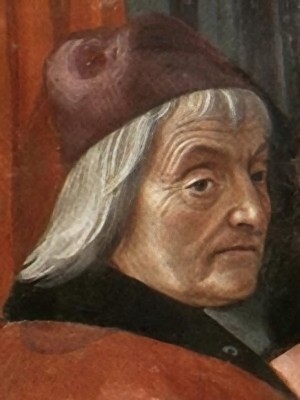
M. I do understand that I have been promising this work for a long time now, Atticus. It is something I would not refuse if any bit of open and free time were allotted to me. A work as momentous as this cannot be taken up when one’s efforts are occupied and his mind is elsewhere. It is really necessary to be free from worry and business.
A. What about the other things you have written more of than any of our people? What free time did you have set aside then?
M. These ‘leftover moments’ occur and I will not suffer wasting them—as when there are some days set aside for going to the country, I write something equal to what the number of days allow. But a history cannot be begun unless there is dedicated time and it can’t be completed in a short time. I habitually weigh down my thought when, once I have started, I am distracted by something else. And once a project is interrupted, I do not finish what was started easily.”
M. Intellego equidem a me istum laborem iam diu postulari, Attice; quem non recusarem, si mihi ullum tribueretur vacuum tempus et liberum; neque enim occupata opera neque inpedito animo res tanta suscipi potest; utrumque opus est, et cura vacare et negotio.
A. Quid ad cetera. quae scripsisti plura quam quisquam e nostris? quod tibi tandem tempus vacuum fuit concessum?
M. Subsiciva quaedam tempora incurrunt, quae ego perire non patior, ut, si qui dies ad rusticandum dati sint, ad eorum numerum adcommodentur quae scribimus. historia vero nec institui potest nisi praeparato otio nec exiguo tempore absolvi, et ego animi pendere soleo, cum semel quid orsus sum,1 si traducor alio, neque tam facile interrupta contexo quam absolvo instituta.
I encourage everyone to copy “Intellego equidem a me istum laborem iam diu postulari” and paste it liberally into emails explaining why you have yet to complete that review, abstract, etc. etc. Take a break for a day or a nap for an hour. Let Cicero speak for you!
Cristoforo Landino, Preface to Vergil in a Florentine Gymnasium (Part 2)
But there are many who, if they can do anything with the modulations of their voice, think straightaway that they have completed a task perfectly. These, however, are entirely condemned by Plato as trifling and common musicians, especially those who, even though they provide a sweet sensation for the ears, are able to offer up nothing magnificent besides. Others however, and these are indeed more rare (for all noble things are uncommon), who, imitating the divine harmony with a graver and firmer sense of judgment express the lofty and intimate senses of the mind in an elegant song, and blown up by that divine madness, they often produce things so miraculous and so far beyond human strength with a certain rather grand spirit that, when that spirit relaxes a little later, they marvel at and are struck dumb by themselves.
For this reason, they are not just fawned upon by the ears of their listeners, but even soak their minds with the sweetest nectar and divine ambrosia. These are therefore divine poets and the sacred priests of the Muses, these are called “sanctified” by Ennius with just cause; it has been divinely granted to these alone to mix in their songs the deepest gravity with the highest delight, not without the stupor of the listeners; these, finally, are able not just to express and narrate, but even with a certain miraculous art to polish and illuminate all of the disciplines of all the good arts, which have been found and developed in various ages.
On that account, and from a certain rather violent activation of their minds, they are called ‘vates’ by the Latins. The Greeks have however called them poets, for in their language they say poiein for “to make.” For although other writers are considered poets of (that is, creators of) their own volumes, nevertheless, since these alone far surpass others with a certain marvelous artifice in speech and even an almost unlimited supply of material, have appropriated for themselves the name which could have been common to all.
Sed sunt plerique qui, si vocum solummodo modulationibus quicquam valeant, negocium se statim absolutissime perfecisse putent: sed hi a Platone tanquam leviores vulgaresque musici omnino contemnuntur, quippe qui, etsi aurium sensum demulceant, nihil praeterea magnificum praestare possunt. Alii autem, et hi quidem rariores (omnia enim praeclara rara), qui graviori ac firmiori iudicio divinam harmoniam imitati, altos intimosque mentis sensus eleganti carmine exprimunt atque, divino ipso furore afflati, res saepe adeo mirabiles adeoque supra humanas vires constitutas grandiori quodam spiritu proferunt, ut paulo post cum iam furor ille resederit, ipsi se ipsos admirentur atque obstupescant: quapropter non auribus solum auditorum adulantur, sed suavissimo nectare atque divina ambrosia mentes perfundunt. Hi igitur divini vates sunt et sacri Musarum sacerdotes, hi iure optimo «sancti» ab Ennio appellantur, his solum divinitus concessum est, ut suis carminibus summae iocunditati summam gravitatem, non sine auditorum stupore, permisceant, hi denique omnes omnium bonarum artium disciplinas, quae variis aetatibus ab hominibus inventae absolutaeque sunt, non solum exprimere atque enarrare, verum etiam miro quodam artificio expolire atque illustrare valent. Quapropter a Latinis ex vehementiori quadam mentis concitatione vates appellantur. Graeci autem eos poetas nominarunt: poiein enim facere illi dicunt. Nam quanvis reliqui quoque scriptores suorum voluminum poetae, idest effectores, iure habeantur, nihilominus, quoniam hi soli cum mirifico quodam dicendi artificio tum infinita pene rerum copia ceteros longe superant, nomen id quod omnibus comune esse poterat, tanquam proprium sibique addictum vendicaverunt.
I have a beautiful child: much-loved Cleis.
Her appearance brings to mind golden flowers.
Not for all of Lydia would I “<part with> her.
Greek Anthology 7.647
So, Gorgo spoke these final words to her dear mother,
Weeping, clinging to her neck:
“Stay here with father and have another child,
One with a better destiny than mine,
A helpmate in your grey old age.”
Montesquieu, Dissertation on Politics in Roman Religion (Part 7)
The Sicilians, having embarked to make an expedition in Africa, were so terrified by a solar eclipse that they were on the point of abandoning their enterprise; but their general demonstrated to them that ‘In truth, this eclipse would have been a bad omen if it had appeared before their embarkation, but since it didn’t appear until afterward, it could portend ill for none but the Africans.’ With this, he caused their fright to cease and found, in a subject of fear, the means of augmenting their courage.
Caesar was warned several times by the priests not to go to Africa before the winter. He didn’t listen to them, and thus headed off his enemies who, without this diligence, would have had the time to regroup their forces.
Crassus, during a sacrifice, having let a knife fall from his hands, took it as a bad omen; but he reassured the people in saying to them, ‘Take heart! At least my sword has never fallen from my hands!’
Lucullus was prepared to give battle to Tigranes, and someone came to him to tell him that it was an unlucky day. ‘So much the better,’ he said, ‘will we make it a good one through our victory.’
Tarquinius Superbus, wishing to establish some games in honor of the goddess Fury, consulted the oracle of Apollo, who responded obscurely that he needed to sacrifice heads for heads, capitibus pro capitibus supplicandum. This prince, more cruel than superstitious, preformed a sacrifice of children; but Junius Brutus changed this horrible sacrifice: for he made it happen with the heads of garlic and poppy, and by that either fulfilled or deceived the oracle.
One could cut the Gordian knot when one was unable to untie it. Thus Claudius Pulcher, wishing to engage in a naval combat, had the sacred chickens thrown into the sea, saying, ‘Well, let them drink, since they don’t wish to eat!’
Les Siciliens, s’étant embarqués pour faire quelque expédition en Afrique, furent si épouvantés d’une éclipse de soleil, qu’ils étaient sur le point d’abandonner leur entreprise ; mais le général leur représenta « qu’à la vérité cette éclipse eût été de mauvais augure si elle eût paru avant leur embarquement, mais que, puisqu’elle n’avait paru qu’après, elle ne pouvait menacer que les Africains ». Par là il fit cesser leur frayeur, et trouva, dans un sujet de crainte, le moyen d’augmenter leur courage.
César fut averti plusieurs fois par les devins de ne point passer en Afrique avant l’hiver. Il ne les écouta pas, et prévint par là ses ennemis, qui, sans cette diligence, auraient eu le temps de réunir leurs forces.
Crassus, pendant un sacrifice, ayant laissé tomber son couteau des mains, on en prit un mauvais augure ; mais il rassura le peuple en lui disant : « Bon courage ! au moins mon épée ne m’est jamais tombée des mains. »
Lucullus étant près de donner bataille à Tigrane, on vint lui dire que c’était un jour malheureux : « Tant mieux, dit-il, nous le rendrons heureux par notre victoire. »
Tarquin le Superbe, voulant établir des jeux en hon-neur de la déesse Mania, consulta l’oracle d’Apollon, qui répondit obscurément, et dit qu’il fallait sacrifier têtes pour têtes, capitibus pro capitibus supplicandum. Ce prince, plus cruel encore que superstitieux, fit immoler des enfants ; mais Junius Brutus changea ce sacrifice horrible ; car il le fit faire avec des têtes d’ail et de pavot, et par là remplit ou éluda l’oracle.
On coupait le nœud gordien quand on ne pouvait pas le délier ; ainsi Claudius Pulcher, voulant donner un combat naval, fit jeter les poulets sacrés à la mer, afin de les faire boire, disait-il, puisqu’ils ne voulaient pas manger.
Apollonios the Paradoxographer is credited with a text of 51 anecdotes usually dated to the 3rd or 2nd century BCE. Some of these translations are pretty rough, so suggestions and corrections are welcome.
46 “In the fifth book of his Natural Causes, Theophrastos says that the covering of beans when they are placed near the roots of trees dry out the things that are growing. He also adds that native birds who eat these things constantly become barren. Therefore, for this reason and eventually because of many others the Pythagoreans prohibited the use of the bean. For it makes someone flatulent, and dyspeptic, and brings us bad dreams.
50 “In his work On Plants, in the last part of the material, Theophrastos says that Eunomos, the Khian and purveyor of drugs, did not [cleanse himself/die] while drinking many doses of hellebore. Once, even, when together with his fellow craftsmen he took over 22 drinks in one day as he sat in the agora and he did not return from his implements. Then he left to wash and eat, as he was accustomed, and did not vomit. He accomplished this after being in this custom for a long time, because he started from small amounts until he got to so many large ones. The powers of all drugs are less severe for those used to them and for some they are even useless.”
51 “This is a matter worth knowing which Aristotle mentions in his Natural Problems. He says that a person who has eaten and drunk weighs the same as when he is fasting. He tries to provide a reason for this occurrence.”
“You complain that there’s a lack of books where you are. It is not how many books, but how many good ones you have that makes a difference. A short reading list has advantages; variety brings entertainment. One who reaches his desired place should follow one path and not go roam over many. This is not to travel, but to wander.”
Librorum istic inopiam esse quereris. Non refert, quam multos, sed quam bonos habeas; lectio certa prodest, varia delectat. Qui, quo destinavit, pervenire vult, unam sequatur viam, non per multas vagetur. Non ire istuc, sed errare est.
Moral Epistle 83
“Today has been whole: no one has stolen any part at all from me. The whole day was spent in reading and rest. There was a little bit given to exercise. For this nominal amount, I give thanks to old age. It is not a big deal for me: as soon as I have moved, I am tired.”
Hodiernus dies solidus est; nemo ex illo quicquam mihi eripuit. Totus inter stratum lectionemque divisus est. Minimum exercitationi corporis datum, et hoc nomine ago gratias senectuti: non magno mihi constat; cum me movi, lassus sum
Moral Epistle 65
“Yesterday I spent the day in poor health: it occupied me until noon. After noon, it gave in to me. So, first, I tested my mind with reading. Then, when I handled this, I dared to push myself, or perhaps indulge myself, more: I wrote something…”
Hesternum diem divisi cum mala valetudine; antemeridianum illa sibi vindicavit, postmeridiano mihi cessit. Itaque lectione primum temptavi animum. Deinde cum hanc recepisset, plus illi imperare ausus sum, immo permittere; aliquid scripsi
Hybrid eagle, holding open book | Book of Hours | France, Paris | ca. 1420-1425 | The Morgan Library & Museum
Cristoforo Landino, Preface to Vergil in a Florentine Gymnasium (Part 1)
Since I am about to bring into the middle, in this annual event of ours, that poet who, of all the regions whose inhabitants are known to history or of all the times which have come down to our own recollection thanks to the good offices of writers, is either the first poet or at any rate entirely equal to the first, I have judged it neither alien to my duty nor unpleasing to your ears if, before we approach the interpretation of Vergil himself, I bring to your notice in the briefest manner not only on what poetry is, and from where it drew its origins and where the name of the poet stems from, but also expatiate on what venerable fame and what ample honor it has been held from the earliest ages of humanity and among various nations. I will add finally that it did not only confer dignity and glory upon individual and private people, but also that it has always stood out in well-ordered republics and the most successful peoples, and has always been a not trifling use, and even a great ornament.
Poetry is not, I would say, one of those arts which our ancestors called liberal, but one which, embracing them all, bound by certain meters and distinguished by various lights and blossoms, ornaments whatever it is that people have done or known with wonderful contrivances and translates them into other forms. As the divine Plato shows in his Phaedrus, and the Platonic Cicero demonstrates in his Tusculan Disputations, no mortal was ever able to attain to poetry without some divine madness. For, when that philosopher whom I just mentioned describes the three other types of divine madness, he expresses, unless I am mistaken, the fourth, which he wishes to be the poetic, in this idea. For he says that our minds, while they were still in their celestial seats, were participants in that harmony which consists in the eternal mind of God, and in that harmony which is made by the motions of the heavens. Then, weighed down by the contagion of mortal affairs and on that account devolving to lower things, enclosed in bodies, impeded by terrestrial limbs and bodies bound to fail, they were barely able to perceive with their ears those sounds which were made by mortal industry. Which, nevertheless, even if they are far from those heavenly sounds, nonetheless, since they are simulacra or images of them, draw us on to a silent recollection of the first music and inflame us with the most burning desire of flying back to our ancient fatherland so that we can experience that true music, whose shadowy image this is. But meanwhile, as much as one can in this most vexatious prison of the body, we strive to imitate that heavenly music with these sounds of ours.
Cum eum vobis poetam hoc annuo cursu in medium allaturus essem, qui vel ex omnibus regionibus <quarum habitatores> historia cognoscantur vel ex omnibus saeculis quae ad nostram usque memoriam scriptorum beneficio pervenerint, aut primus sit aut primo omnino par atque aequalis, neque ab officio nostro alienum neque auribus vestris iniocundum futurum existimavi si, antea quam ipsius Maronis interpretationem aggredimur, brevissimis quidem verbis non solum quid ars poetica sit atque unde originem traxerit unde<que> poetae nomen deducatur in medium afferam, verum etiam quam vetustissima a priscis hominum saeculis apud multas variasque nationes maxima celebritate amplissimisque honoribus fuerit disseram. Addam postremo illam non solum singulis privatisque hominibus dignitatem gloriamque attulisse, verum bene institutis rebus publicis florentissimisque populis et usui non mediocri et ornamento maximo semper extitisse.
Est igitur poetica disciplina non dicam unam ex iis artibus quas nostri maiores liberales appellarunt, sed quae illas universas complectens, certis quibusdam numeris astricta variisque luminibus ac floribus distincta, quaecunque homines egerint, quaecunque norint miris figmentis exornet atque in alias quasdam speties traducat. Quam quidem rem, ut et divinus ille Plato in Phaedro et Platonicus Cicero in Tusculanis disputationibus ostendit, nemo unquam mortalium sine divino quodam furore attingere potuit. Nam cum is quem paulo ante dixi philosophus et tria alia divini furoris genera describat, quartum quem poeticum esse vult hac, nisi fallor, sententia exprimit. Ait enim animos nostros, dum in caelestibus sedibus versarentur, et eius harmoniae, quae in aeterna Dei mente consistit, et eius, quae caelorum motibus conficitur, participes fuisse; deinde, cum mortalium rerum contagione degravati et propterea ad inferiora iam devoluti corporibus includantur, iam terrenis arctubus et moribundis membris impeditos, vix eos concentus, qui mortalium industria conficiuntur, auribus percipere posse. Qui tamen, quicunque ii sint, etsi a caelestibus longe absint, nihilominus cum simulachra quaedam ac imagines illorum existant, nos in tacitam quandam primorum recordationem inducunt ardentissimaque cupiditate ad antiquam patriam revolandi inflamant, ut veram ipsam musicam, cuius adumbrata quaedam haec imago est, pernoscamus. Interim vero, quoad per molestissimum nobis corporis carcerem licet, hac nostra illam imitari contendimus.
Everyone has heard about Leda and the swan. But have you heard about Amphilokhos and his gift-giving goose?
Aelian, De Natura Animalium 5.29
“In Aigion, in Akhaia, a goose was in love with a handsome boy, an Ôlenian named Amphilokhos. Theophrastus tells this story. The boy was under guard with the Olenian exiles in Aigion—there, the goose used to bring him gifts. In Khios, too, there was an especially beautiful woman named Glaukê, a harp player, and many men lusted after her—which is nothing big. But a ram and a goose loved her too, as I have heard.”
The scholia present some debates about what exactly a Cyclops looks like.
Schol. ad Od. 9.106
“Aristotle examines how the Cyclops Polyphemos came to be a cyclops when neither his father nor his mother was a cyclops. He resolved the issue with a different myth. For, he asserted, horses came from Boreas but Pegasos was born from Poseidon and Medousa. Why, then, would it be strange that this wild beast be born from Poseidon? Similarly, other wild beasts were born from him in the sea, as well as marvels and unusual things.
Hesiod laughably etymologizes [the Kyklopes], saying “They were given the nickname Kyklopes / because they have one single circle eye in the middle of their forehead.” But Homer clearly describes their nature.
For, if it was of that sort, just as he described the other particular features of the Cyclops, like his size, his cruelty, he would have also described his eye! Philoxenos says that he diverged from Hesiod in that the fact he could not see because he was blinded in one eye. For Homer does not say this about all the other Cyclopes. It is likely that Polyphemos lost his other eye for some other reason before Odysseus’ arrival.
Others oppose this, claiming that if he had two eyes and Odysseus blinded one, how would he say what is attributed to him, “Cyclops, if any mortal man asks you who is the blinder of your eye…” He does not say eyes. And in return the Cyclops says “My father is able to heal my eye.” For if he had another eye, properly, and Odysseus were speaking to him in this way, how would he not have taken care of the other eye? But he said “the earth-shaker will not heal [my] eye.” For this very reason people argue about his eye being completely pierced, because of what is said here, if he did not take care of the eye when it was first compromised, he would never be able to heal it.”
From the MFA in Boston, taken artfully on my phone.
These are, of course, the types of investigations for which Seneca would have the most disdain:
Seneca, De Brevitate Vitae 13
“It would be annoying to list all the people who spent their lives pursuing board games, ball games, or sunbathing. Men whose pleasures are so busy are not at leisure. For example, no one will be surprised that those occupied by useless literary studies work strenuously—and there is great band of these in Rome now too. This sickness used to just afflict the Greeks, to discover the number of oars Odysseus possessed, whether the Iliad was written before the Odyssey, whether the poems belong to the same author, and other matters like this which, if you keep them to yourself, cannot please your private mind; but if you publish them, you seem less learned than annoying.”
Persequi singulos longum est, quorum aut latrunculi aut pila aut excoquendi in sole corporis cura consumpsere vitam. Non sunt otiosi, quorum voluptates multum negotii habent. Nam de illis nemo dubitabit, quin operose nihil agant, qui litterarum inutilium studiis detinentur, quae iam apud Romanos quoque magna manus est. Graecorum iste morbus fuit quaerere, quem numerum Ulixes remigum habuisset, prior scripta esset Ilias an Odyssia, praeterea an eiusdem essent auctoris, alia deinceps huius notae, quae sive contineas, nihil tacitam conscientiam iuvant sive proferas, non doctior videaris sed molestior.
Mocking the quibbles of scholars is where the pejorative use of the term ‘academic’ comes. This is an ancient tradition!
Athenaeus, Deipnosophistae 1.22
“You know that somewhere Timo the Philasian calls the Museum a birdcage as he mocks the scholars who are supported there because they were fed like the priciest birds in a big cage:
Many are fed in many-peopled Egypt,
The paper-pushers closed up waging endless war
in the bird-cage of the Muses.
“Live mercifully with your slave, even in a friendly way. Invite him to a conversation, to share your plans and to live with you. At this suggestion the whole band of elites will shout at me: “Nothing is baser or fouler than this”. These very same men I often catch kissing on the hands of other men’s slaves.
Don’t you see this, at least, how our forebears tried to erase everything insidious and every kind of insult from slaveholding? They called the master a “father of the family” and slaves “family members”, a fact that endures today in mimes. They started a festival day one which it was custom and obligation for masters to eat with their servants. They also permitted slaves to earn honors in the home and to pronounce judgments so that the home was a microcosm of the state.”
Vive cum servo clementer, comiter quoque, et in sermonem illum admitte et in consilium et in convictum. Hoc loco adclamabit mihi tota manus delicatorum: “Nihil hac re humilius, nihil turpius.” Hos ego eosdem deprehendam alienorum servorum osculantes manum. Ne illud quidem videtis, quam omnem invidiam maiores nostri dominis, omnem contumeliam servis detraxerint? Dominum patrem familiae appellaverunt, servos, quod etiam in mimis adhuc durat, familiares. Instituerunt diem festum, non quo solo cum servis domini vescerentur, sed quo utique; honores illis in domo gerere, ius dicere permiserunt et domum pusillam rem publicam esse iudicaverunt.
Just before this passage, he writes to try to encourage people to treat slaves better. Unfortunately, Seneca seems to accept slavery as a condition of human life. This is part of the point of Macrobius’ post too, that we are all ‘slaves’ to something and therefore never truly free. Yet this certainly overlooks the very real difference in agency and liberty between those who are ‘slaves’ to desire and those who are literally enslaved to another human being (or to a state).
Seneca, Moral Epistles 47.10-12
“Please remember that the person you call your slave rose from the same seeds, enjoys the same sky and equally breathes, lives and dies! You could see him just as much as a free man as a slave. Because of the slaughter in the time of Marius, fortune struck down many born to high station, taking the trail to the senate through the army—one of these it made a shepherd, another an overseer of a cottage. Despise now the fortune of a person whose place you may take even as you look down on them!
I don’t want to get involved in a big controversy and argue about the treatment of slaves toward whom we are most arrogant, cruel, and offensive. But this is the sum of my guidance: deal with your inferior the way you wish your superior would deal with you. However many times it pops in your mind to consider how much is right for you regarding your slave, let it also occur that this is permitted to your master regarding you. “But I have no master” you say. Your age is still good. Don’t you know how old Hecuba was when she began to serve, or Croesus, or Darius’ mother, or Plato and Diogenes?”
Vis tu cogitare istum, quem servum tuum vocas, ex isdem seminibus ortum eodem frui caelo, aeque spirare, aeque vivere, aeque mori! tam tu illum videre ingenuum potes quam ille te servum. Mariana clade multos splendidissime natos, senatorium per militiam auspicantes gradum, fortuna depressit, alium ex illis pastorem, alium custodem casae fecit; contemne nunc eius fortunae hominem, in quam transire, dum contemnis, potes.
Nolo in ingentem me locum inmittere et de usu servorum disputare, in quos superbissimi, crudelissimi, contumeliosissimi sumus. Haec tamen praecepti mei summa est: sic cum inferiore vivas, quemadmodum tecum superiorem velis vivere. Quotiens in mentem venerit, quantum tibi in servum liceat, veniat in mentem tantundem in te domino tuo licere. “At ego,” inquis, “nullum habeo dominum.” Bona aetas est; forsitan habebis. Nescis, qua aetate Hecuba servire coeperit, qua Croesus, qua Darei mater, qua Platon, qua Diogenes?
Macrobius, Saturnalia 1.11
“You see how much care comes from a slave to the highest of the gods. From whence comes such a great and vain loathing for slaves, as though they did not stem from and receive their nourishment from the same elements as you, and as though they did not draw the same breath from the same source? Would you think about those whom you call slaves – that they, born from the same seed, enjoy the same sky, and live and die just as you? They are slaves, you say? No, they are people! They are slaves, you say? No, they are fellow slaves, if you would but consider that Fortune may employ the same license against you as it does against them. You can see him free just as soon as he might see you a slave. Do you not know at what age Hecuba, Croesus, the mother of Darius, Diogenes, and even Plato himself all began to be slaves? Finally, why do we fear the name of slavery?
Sure, he’s a slave – but by compulsion, and perhaps he is a slave with a free soul. This will harm him, if you can show who is not a slave. One person may serve desire, another avarice, another ambition – all of us are slaves to hope, all of us are slaves to fear. And to be sure, there is no slavery more abject than slavery which we have chosen for ourselves. But here we trample underfoot a man lying under the yoke which Fortune has thrown upon him as though he were wretched and worthless, yet we do not allow the yoke which we have accepted for ourselves to be criticized.”
Vides, quanta de servo ad deorum summum cura pervenerit. Tibi autem unde in servos tantum et tam inane fastidium, quasi non ex isdem tibi et constent et alantur elementis eundemque spiritum ab eodem principio carpant? Vis tu cogitare eos quos ius tuum vocas isdem seminibus ortos eodem frui caelo, aeque vivere aeque mori? Servi sunt? immo homines. Servi sunt? immo conservi, si cogitaveris tantundem in utrosque licere fortunae. Tam tu illum videre liberum potes, quam ille te servum. Nescis, qua aetate Hecuba servire coeperit, qua Croesus, qua Darei mater, qua Diogenes, qua Plato ipse? Postremo quid ita nomen servitutis horremus? Servus est quidem: sed necessitate, sed fortasse libero animo servus est. Hoc illi nocebit, si ostenderis quis non sit. Alius libidini servit, alius avaritiae, alius ambitioni, omnes spei, omnes timori. Et certe nulla servitus turpior quam voluntaria. At nos iugo a fortuna inposito subiacentem tamquam miserum vilemque calcamus: quod vero nos nostris cervicibus inserimus non patimur reprehendi.