Roman Britain: Maybe Not Worth the Trouble?

Appian Roman History Preface, 5

“When you cross the Northern ocean you come to the island of Britain which is bigger than a continent [The Romans] possess the greatest half of it and aren’t really missing the rest. For even the part they do hold doesn’t bring them a good profit.”

καὶ τὸν βόρειον ὠκεανὸν ἐς τὴν Βρεττανίδα νῆσον περάσαντες, ἠπείρου μεγάλης μείζονα, τὸ κράτιστον αὐτῆς ἔχουσιν ὑπὲρ ἥμισυ, οὐδὲν τῆς ἄλλης δεόμενοι· οὐ γὰρ εὔφορος αὐτοῖς ἐστὶν οὐδ᾿ ἣν ἔχουσιν.

Suetonius, Divus Julius 47


“They say that [Julius Caesar] attacked Britain because of a hope for pearls and that in comparing their mass he used to check their weight with his own hand. For he was extremely eager to collect gems, carvings, statues, and images by ancient artists. He was also fond of rather good looking slaves with better training for a huge price—this also caused him enough shame that he did not allow them to be entered into his expenditures.”


XLVII. Britanniam petisse spe margaritarum, quarum amplitudinem conferentem interdum sua manu exegisse pondus; gemmas, toreumata, signa, tabulas operis antiqui semper animosissime comparasse; servitia rectiora politioraque inmenso pretio, et cuius ipsum etiam puderet, sic ut rationibus vetaret inferri.


Tacitus, Agricola, 13


“The people of Britain themselves respond eagerly to drafts, tributes, and obligations set by the government, if abuses are absent. They endure these poorly since, although they are conquered enough to obey, they are not yet slaves [to us].  


As a matter of fact, the divine Julius of all the Romans first attacked Britain with an army, and, although he terrified the inhabitants with a hasty battle and was master of the coast, he seems to have exposed Britain for his successors rather than handed it down. The Civil Wars followed soon after and while the arms of Rome’s first men were turned against the state, there was a prolonged forgetfulness of Britain, which the divine Augustus used to call a “plan” and Tiberius called a “precedent”.


13. Ipsi Britanni dilectum ac tributa et iniuncta imperii munera impigre obeunt, si iniuriae absint: has aegre tolerant, iam domiti ut pareant, nondum ut serviant. igitur primus omnium Romanorum divus Iulius cum exercitu Britanniam ingressus, quamquam prospera pugna terruerit incolas ac litore potitus sit, potest videri ostendisse posteris, non tradidisse; mox bella civilia et in rem publicam versa principum arma, ac longa oblivio Britanniae etiam in pace: consilium id divus Augustus vocabat, Tiberius praeceptum.


Image result for roman britain
Hadrian Built a Wall. Who paid for it?

Some words;

σφαιριστής: “ball-player”

σφαιριστικός: “skilled at ball-playing”

σφαιρομαχία: “ball-match”

σφαιροπαίκτης: “ball-player”

Conquering Britain From Afar: Caligula and the Best Triumph

Cassius Dio, Roman History 59.25

“Once he arrived at the ocean—as if he were about to mount a campaign against Britain—[Gaius Caligula Caesar] stationed all his soldiers on the shore and climbed on a trireme. After sailing a little from the land, he sailed back again. Then, after that, he perched on a high platform and gave the soldiers a sign for battle, even urging the trumpeters to help them. Then, suddenly, he ordered them to collect seashells.

Once he acquired all of this booty—for he obviously needed spoils for his triumphal procession—he was deeply impressed with himself, as if he had made a slave of the ocean itself. Then he gave many gifts to his soldiers. He took the seashells back to Rome so he could display his war booty to them too.

The senate had no plan for how it could take these things calmly—because it understood that he was acting as if this were a big deal, nor could it praise him in any way. For if someone showers lavish praise or weighty honors for some middling or minor accomplishment, there is a lingering suspicion of hissing or mockery for it.

And yet, once he entered the city, Caligula nearly asked for the whole senate to be killed because it did not vote him immortal honors for this…”

     ἐς δὲ τὸν ὠκεανὸν ἐλθὼν ὡς καὶ ἐν τῇ Βρεττανίᾳ στρατεύσων, καὶ πάντας τοὺς στρατιώτας ἐν τῇ ᾐόνι παρατάξας, τριήρους τε ἐπέβη καὶ ὀλίγον ἀπὸ τῆς γῆς ἀπάρας ἀνέπλευσε, καὶ μετὰ τοῦτο ἐπὶ βήματος ὑψηλοῦ ἱζήσας καὶ σύνθημα τοῖς στρατιώταις ὡς ἐς μάχην δούς, τοῖς τε σαλπικταῖς ἐξοτρύνας αὐτούς, εἶτ’ ἐξαίφνης ἐκέλευσέ σφισι τὰ κογχύλια συλλέξασθαι. λαβών τε τὰ σκῦλα ταῦτα (καὶ γὰρ λαφύρων δῆλον ὅτι πρὸς τὴν τῶν ἐπινικίων πομπὴν ἐδεῖτο) μέγα τε ἐφρόνησεν ὡς καὶ τὸν ὠκεανὸν αὐτὸν δεδουλωμένος, καὶ τοῖς στρατιώταις πολλὰ ἐδωρήσατο. καὶ ὁ μὲν ἐς τὴν ῾Ρώμην τὰ κογχύλια ἀνεκόμισεν, ἵνα καὶ ἐκεί-νοις τὰ λάφυρα δείξῃ· ἡ δὲ βουλὴ οὔθ’ ὅπως ἐπὶ τούτοις ἡσυχάζοι εἶχεν, ὅτι μεγαλοφρονούμενον αὐτὸν ἐπυνθάνετο, οὔθ’ ὅπως αὐτὸν ἐπαινέσειεν· ἂν γάρ τις ἐπὶ μηδεμιᾷ ἢ μικρᾷ τινι ἀνδραγαθίᾳ ἤτοι ἐπαίνους μεγάλους ἢ καὶ τιμὰς ἐξαισίους ποιῆται, διαμωκᾶσθαί τε καὶ διασιλλοῦν αὐτὴν ὑποπτεύεται. ὅμως ἐσελθὼν ἐς τὴν πόλιν τὴν μὲν βουλὴν ὀλίγου ἐδέησεν ἀπολέσαι πᾶσαν, ὅτι μὴ τὰ ὑπὲρ ἄνθρωπον αὐτῷ ἐψηφίσατο…

Suetonius, Gaius Caligula 46

“At last, as if he was about to finish the war, he had the battle line stretched out along the shore along with the ballistas and siege engines. When no one understood or had any idea what he was going to do, he suddenly ordered them to gather shells and fill their helmets and clothes, announcing that there were “the Ocean’s spoils, owed to the Capitoline and Palatine.”

He also had erected as a monument to his victory a really tall tower from which fires were meant to shine for the purpose of guiding the course of ships at night just like the lighthouse of Pharos. Once he promised to each soldier a bonus of one hundred denarii—as if this were a sign of extreme generosity—he said “Go happily away; leave here rich.”

Postremo quasi perpetraturus bellum, derecta acie in litore Oceani ac ballistis machinisque dispositis, nemine gnaro aut opinante quidnam coepturus esset, repente ut conchas legerent galeasque et sinus replerent imperavit, “spolia Oceani” vocans “Capitolio Palatioque debita,” et in indicium victoriae altissimam turrem excitavit, ex qua ut Pharo noctibus ad regendos navium cursus ignes emicarent; pronuntiatoque militi donativo centenis viritim denariis, quasi omne exemplum liberalitatis supergressus: “Abite,” inquit, “laeti, abite locupletes.”


bronze sculpture of Caligula’s head, dated 37-41 CE, in the collection of the Museum of Fine Arts, Houston.

Ignoring Women and Magic Stones: Diomedes after Troy

Juba, BNJ 275 F 5 (=Pseudo-Plutarch, Parallel Stories 23 p. 311b-c)

“After the destruction of Troy, Diomedes was shipwrecked in Libya where the king was Lykos. He had the custom of sacrificing foreigners to his father Ares. But Kallirhoe, his daughter, betrayed her father because she was infatuated with Diomedes.

She saved Diomedes by releasing him from his chains. But he sailed away without any concern for the woman who helped him and she killed herself by hanging. That is the story of Juba in the third book of his Libyan Tales.”

Μετὰ τὴν ᾽Ιλίου πόρθησιν ἐξεράσθη Διομήδης εἰς Λιβύην, ἔνθα Λύκος ἦν βασιλεύς, ἔθος ἔχων τοὺς ξένους ῎Αρει τῶι πατρὶ θύειν. Καλλιρρόη δὲ ἡ θυγάτηρ ἐρασθεῖσα Διομήδους τὸν πατέρα προύδωκε, καὶ τὸν Διομήδην ἔσωσε λύσασα τῶν δεσμῶν. ὁ δὲ ἀμελήσας τῆς εὐεργέτιδος ἀπέπλευσεν, ἡ δὲ βρόχωι ἐτελεύτησεν, ὡς ᾽Ιόβας ἐν τρίτηι Λιβυκῶν.

Scholia to Lykophron Alexandra 615

“After Troy was sacked, Diomedes threw stones from the walls of Troy into his ship for ballast. When he arrived in Argos and went unnoticed by Aigialeia, his wife, he went to Italy. When he found a Skythia dragon laying waste to Phaiacia, he killed it as he held Glaukos’ golden shield (and the dragon thought the shield was the golden skin of the ram).

Diomedes was especially honored for this act and he made a statue, shaping it from the stones taken from Troy. Timaios tells this story and Lykos does too in his third book. Later on, Daunos killed Diomedes and threw the statues into the sea. But they returned again over the waves and proceeded back to their bases. That’s the story, at least.”

ἁλούσης τῆς ᾽Ιλίου, Διομήδης ἀντὶ τοῦ ἕρματος ἐκ τοῦ τείχους τῶν Τρώων λίθους εἰς τὴν ναῦν ἐβάλετο. παραγενόμενος δὲ εἰς τὸ ῎Αργος καὶ ἐλαθεὶς ὑπὸ Αἰγιαλείας τῆς γαμετῆς παρεγένετο εἰς ᾽Ιταλίαν. εὑρὼν δὲ τηνικαῦτα τὸν ἐν τῆι Σκυθίαι δράκοντα λυμαινόμενον τὴν Φαιακίδα, διέφθειρε τοῦτον, τὴν τοῦ Γλαύκου χρυσῆν ἀσπίδα κατέχων, νομίσαντος τοῦ δράκοντος τὸ χρυσοῦν δέρας εἶναι τοῦ κριοῦ. τιμηθεὶς δὲ ἐπὶ τούτωι σφόδρα, ἀνδριάντα κατασκευάσας, ἱδρύσατο ἐκ τῶν λίθων τῶν ἐκ τῆς ᾽Ιλίου. ἱστορεῖ δὲ τοῦτο Τίμαιος καὶ Λύκος ἐν τῶι τρίτωι. ὕστερον δὲ ἀνελὼν ὁ Δαῦνος αὐτόν, ἔρριψε καὶ τοὺς ἀνδριάντας εἰς θάλασσαν· οὗτοι δὲ ἀνεχόμενοι τὰ κύματα, πάλιν ἐξήρχοντο πρὸς τὰς βάσεις αὐτῶν. καὶ ἡ μὲν ἱστορία τοιαύτη.

Some other tales: Odysseus tried to kill Diomedes

Image result for diomedes vase
Diomedes and Odysseus, Black Figure Vase

Insanity and the Rules of Grammar

Sextus Empiricus, Against the Professors 179

“Just as when there is a certain local currency which is accepted in a city, the person who uses this is able to complete whatever his business obligations are in that city without too much bother, but the one who refuses to use it but creates for himself some new strange currency and tries to use that as currency instead is a feel, so too in life the person who does not want to use customary modes of discourse, like the currency, and tries to coin some particular kind of his own, is nearly insane.

And so, if the grammarians agree to give us some skill which they call analogy by which they compel us to speak with one another in accordance with some “Hellenism” then we must show that this skill has no support and that those who want to speak correctly must speak in a non-technical way, using a simple style in life and following the rules which are used by the majority of people.”

ὥσπερ γὰρ ἐν πόλει νομίσματός τινος προχωροῦντος κατὰ τὸ ἐγχώριον ὁ μὲν τούτῳ στοιχῶν δύναται καὶ τὰς ἐν ἐκείνῃ τῇ πόλει διεξαγωγὰς ἀπαραποδίστως ποιεῖσθαι, ὁ δὲ τοῦτο μὲν μὴ παραδεχόμενος ἄλλο δέ τι καινὸν χαράσσων ἑαυτῷ καὶ τούτῳ νομιστεύεσθαι θέλων μάταιος καθέστηκεν, οὕτω κἀν τῷ βίῳ ὁ μὴ βουλόμενος τῇ συνήθως παραδεχθείσῃ, καθάπερ νομίσματι, ὁμιλίᾳ κατακολουθεῖν ἀλλ᾿ ἰδίαν αὑτῷ τέμνειν μανίας ἐγγὺς ἐστίν. διόπερ εἰ οἱ γραμματικοὶ ὑπισχνοῦνται τέχνην τινὰ τὴν καλουμένην ἀναλογίαν παραδώσειν, δι᾿ ἧς κατ᾿ ἐκεῖνον ἡμᾶς τὸν ἑλληνισμὸν ἀναγκάζουσι διαλέγεσθαι, ὑποδεικτέον ὅτι ἀσύστατός ἐστιν αὕτη ἡ τέχνη, δεῖ δὲ τοὺς ὀρθῶς βουλομένους διαλέγεσθαι τῇ ἀτέχνῳ καὶ ἀφελεῖ κατὰ τὸν βίον καὶ τῇ κατὰ τὴν κοινὴν τῶν πολλῶν συνήθειαν παρατηρήσει προσανέχειν.

Image result for medieval manuscript grammarian
British Library Royal 16 G V f.

The Most Musical and Bellicose Men

Pindar, Fragments from Uncertain Places, 199

“Where the plans of the old
And the spears of young men are the best,
Along with the choruses and the Mouse and Aglaia…”

ἔνθα βουλαὶ γερόντων
καὶ νέων ἀνδρῶν ἀριστεύοισιν αἰχμαί,
καὶ χοροὶ καὶ Μοῖσα καὶ ᾿Αγλαΐα

This is quoted by Plutarchin the Life of Lycurgus (21.3) where he says

“For he has composed this about the Spartans, “where the spear of the young flourishes along with the clear-voiced Muse, and wide-wayed justice”

Pindar also says, “where the councils of the old and the spears of the young are the best along with the choruses and the Muse and Aglaia…”

For these lines demonstrate that they are the most musical and the most bellicose people at the same time.”

ὁ μὲν γὰρ οὕτως πεποίηκε περὶ τῶν Λακεδαιμονίων·

῎Ενθ’ αἰχμά τε νέων θάλλει καὶ μοῦσα λίγεια
καὶ δίκα εὐρυάγυια— —

Πίνδαρος δέ φησιν·

῎Ενθα βουλαὶ γερόντων
καὶ νέων ἀνδρῶν ἀριστεύοντι αἰχμαὶ
καὶ χοροὶ καὶ Μοῦσα καὶ ἀγλαΐα.

Μουσικωτάτους γὰρ ἅμα καὶ πολεμικωτάτους ἀποφαίνουσιν αὐτούς

JordanImage from:

Jordan, Borimir. “The Honors for Themistocles after Salamis.” The American Journal of Philology, vol. 109, no. 4, 1988, pp. 547–571. JSTOR, http://www.jstor.org/stable/295081.


Who knows what Pindar poem this may have come from or what the context was–chances are it cannot be taken too seriously considering the on-again-off-again relationship between Sparta and Thebes and the fact that everything Pindar composed has to be understood from the perspective of the goal of the overall poem, to praise someone in particular by praising their country, their family, and their patron gods. (See Elroy Bundy’s Studia Pindarica for the clearest explanation of this.)

Knowing When to Bow Out

Sappho Fr. 121

Since you’re a friend to us,
find a younger wife.
I won’t countenance marriage,
being older than you.

Philodemus 5.112

I loved—who hasn’t? And partied—who’s a stranger to that?
But my loss of all control, what was the cause? A god, no?
To hell with it! Grey hair is fast closing in on black ones,
Harbinger of the sober stage of life.
When it was the season to play, I played.
Now that’s over, I’m turning to more suitable concerns.

Sappho Fr. 121

ἀλλ’ ἔων φίλος ἄμμι
λέχος ἄρνυσο νεώτερον·
οὐ γὰρ τλάσομ’ ἔγω συνοί-
κην ἔοισα γεραιτέρα

Philodemus 5.112

ἠράσθην τίς δ᾽ οὐχί; κεκώμακα: τίς δ᾽ ἀμύητος
κώμων; ἀλλ᾽ ἐμάνην ἐκ τίνος; οὐχὶ θεοῦ;
ἐρρίφθω: πολιὴ γὰρ ἐπείγεται ἀντὶ μελαίνης
θρὶξ ἤδη, συνετῆς ἄγγελος ἡλικίης.
καὶ παίζειν ὅτε καιρός, ἐπαίξαμεν ἡνίκα καὶ νῦν
οὐκέτι, λωϊτέρης φροντίδος ἁψόμεθα.

Larry Benn has a B.A. in English Literature from Harvard College, an M.Phil in English Literature from Oxford University, and a J.D. from Yale Law School. Making amends for a working life misspent in finance, he’s now a hobbyist in ancient languages and blogs at featsofgreek.blogspot.com.

What Audience Are You Writing For? Cicero on the Middle-Ground

[Marcus Varro is the speaker in this excerpt]

Cicero, Academica 1.4

“Because I recognized that philosophy had been most expertly explored in the Greek language, I believed that anyone from Rome who was inclined toward the subject would prefer to read it in Greek, if they were educated in Greek doctrines. If they shuddered at Greek arts and learning, they would not be interested in those very matters which could not be understood without Greek. So, I did not want to write what the unlearned could not understand or what the learned would not care to.”

Nam cum philosophiam viderem diligentissime Graecis litteris explicatam, existimavi si qui de nostris eius studio tenerentur, si essent Graecis doctrinis eruditi, Graeca potius quam nostra lecturos; sin a Graecorum artibus et disciplinis abhorrerent, ne haec quidem curaturos quae sine eruditione Graeca intellegi non possunt; itaque ea nolui scribere quae nec indocti intellegere possent nec docti legere curarent.

Image result for Ancient Roman philosopher

Reputable Tales about Ariadne; And Strange Ones

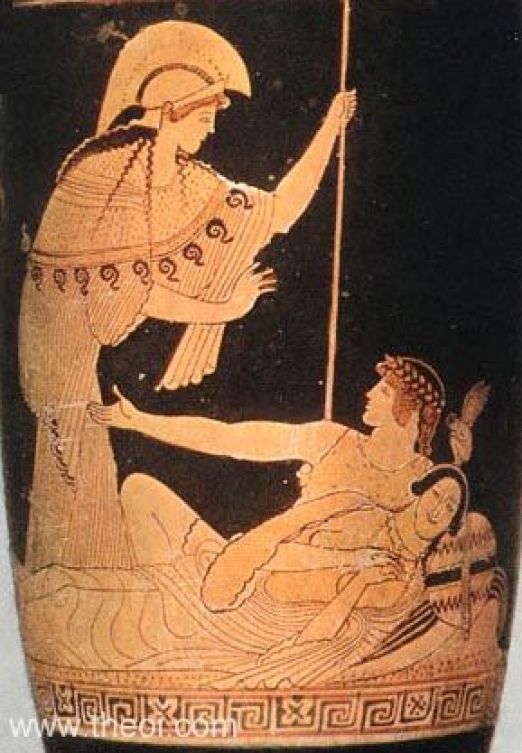
The following account is interesting for the variations in the story of Ariadne and Theseus but also for the strange detail of the ritual where young men imitate a woman in childbirth. Also, the counterfeit letters bit is precious. What would they say?.

Other tales about Ariadne, According to Plutarch (Theseus 20)

“There are many other versions circulated about these matters still and also about Ariadne, none of which agree. For some say that she hanged herself after she was abandoned by Theseus. Others claim that after she was taken to Naxos by sailors she lived with Oinaros a priest of Dionysus and that she was abandoned by Theseus because he loved another.

“A terrible lust for Aiglê the daughter of Panopeus ate at him” [fr. 105]—this is a line Hereas the Megarean claims Peisistratus deleted from the poems of Hesiod, just as again he says that he inserted into the Homeric catalogue of dead “Theseus and Perithoos, famous children of the gods” [Od. 11.631] to please the Athenans. There are some who say that Ariadne gave birth to Oinipiôn and Staphulos with Theseus. One of these is Ion of  Khios who has sung about his own city “Oinopiôn, Theseus’ son, founded this city once.” [fr. 4D]

The most reputable of the myths told are those which, as the saying goes, all people have in their mouths. But Paiôn the Amathousian has handed down a particular tale about these events. For he says that Theseus was driven by a storm, to Cyprus and that he had Ariadne with him, who was pregnant and doing quite badly because of the sea and the rough sailing. So he set her out alone and he was carried back into the sea from the land while he was tending to the ship. The native women, then, received Ariadne and they tried to ease her depression because of her loneliness by offering her a counterfeit letter written to her by Theseus and helping her and supporting her during childbirth. They buried her when she died before giving birth.

Paiôn claims that when Theseus returned he was overcome with grief and he left money to the island’s inhabitants, charging them to sacrifice to Ariadne and to have two small statues made for her—one of silver and one of bronze. During the second day of the month of Gorpiaon at the sacrifice, one of the young men lies down and mouns and acts as women do during childbirth. They call the grove in which they claim her tomb is that of Ariadne Aphrodite.

Some of the Naxians claim peculiarly that there were two Minoses and two Ariadnes. They claim one was married to Dionysus on Naxos and bore the child Staphulos, and the young one was taken by Theseus and left when he came to Naxos with a nurse named Korkunê—whose tomb they put on display. They claim that Ariadne died there and has honors unequal to those of the earlier one. The first has a festival of singing and play; the second has one where sacrifices are performed with grief and mourning.”

Πολλοὶ δὲ λόγοι καὶ περὶ τούτων ἔτι λέγονται καὶ περὶ τῆς Ἀριάδνης, οὐδὲν ὁμολογούμενον ἔχοντες. οἱ μὲν γὰρ ἀπάγξασθαί φασιν αὐτὴν ἀπολειφθεῖσαν ὑπὸ τοῦ Θησέως, οἱ δὲ εἰς Νάξον ὑπὸ ναυτῶν κομισθεῖσαν Οἰνάρῳ τῷ ἱερεῖ τοῦ Διονύσου συνοικεῖν, ἀπολειφθῆναι δὲ τοῦ Θησέως ἐρῶντος ἑτέρας· Δεινὸς γάρ μιν ἔτειρεν ἔρως Πανοπηΐδος Αἴγλης. τοῦτο γὰρ τὸ ἔπος ἐκ τῶν Ἡσιόδου Πεισίστρατον ἐξελεῖν φησιν Ἡρέας ὁ Μεγαρεύς, ὥσπερ αὖ πάλιν ἐμβαλεῖν εἰς τὴν Ὁμήρου νέκυιαν τὸ Θησέα Πειρίθοόν τε θεῶν ἀριδείκετα τέκνα,χαριζόμενον Ἀθηναίοις· ἔνιοι δὲ καὶ τεκεῖν ἐκ Θησέως Ἀριάδνην Οἰνοπίωνα καὶ Στάφυλον· ὧν καὶ ὁ Χῖος Ἴων ἐστὶ περὶ τῆς ἑαυτοῦ πατρίδος λέγων· Τήν ποτε Θησείδης ἔκτισεν Οἰνοπίων.

Ἃ δ᾿ ἐστὶν εὐφημότατα τῶν μυθολογουμένων, πάντες ὡς ἔπος εἰπεῖν διὰ στόματος ἔχουσιν. ἴδιον δέ τινα περὶ τούτων λόγον ἐκδέδωκε Παίων ὁ Ἀμαθούσιος. τὸν γὰρ Θησέα φησὶν ὑπὸ χειμῶνος εἰς Κύπρον ἐξενεχθέντα καὶ τὴν Ἀριάδνην ἔγκυον ἔχοντα, φαύλως δὲ διακειμένην ὑπὸ τοῦ σάλου καὶ δυσφοροῦσαν, ἐκβιβάσαι μόνην, αὐτὸν δὲ τῷ πλοίῳ βοηθοῦντα πάλιν εἰς τὸ πέλαγος ἀπὸ τῆς γῆς φέρεσθαι. τὰς οὖν ἐγχωρίους γυναῖκας τὴν Ἀριάδνην ἀναλαβεῖν καὶ περιέπειν ἀθυμοῦσαν ἐπὶ τῇ μονώσει, καὶ γράμματα πλαστὰ προσφέρειν, ὡς τοῦ Θησέως γράφοντος αὐτῇ, καὶ περὶ τὴν ὠδῖνα συμπονεῖν καὶ βοηθεῖν· ἀποθανοῦσαν δὲ θάψαι μὴ τεκοῦσαν. ἐπελθόντα δὲ τὸν Θησέα καὶ περίλυπον γενόμενον τοῖς μὲν ἐγχωρίοις ἀπολιπεῖν χρήματα, συντάξαντα θύειν τῇ Ἀριάδνῃ, δύο δὲ μικροὺς ἀνδριαντίσκους ἱδρύσασθαι, τὸν μὲν ἀργυροῦν, τὸν δὲ χαλκοῦν. ἐν δὲ τῇ θυσίᾳ τοῦ Γορπιαίου μηνὸς ἱσταμένου δευτέρᾳ κατακλινόμενόν τινα τῶν νεανίσκων φθέγγεσθαι καὶ ποιεῖν ἅπερ ὠδίνουσαι γυναῖκες· καλεῖν δὲ τὸ ἄλσος Ἀμαθουσίους, ἐν ᾧ τὸν τάφον δεικνύουσιν, Ἀριάδνης Ἀφροδίτης.

Καὶ Ναξίων δέ τινες ἰδίως ἱστοροῦσι δύο Μίνωας γενέσθαι καὶ δύο Ἀριάδνας, ὧν τὴν μὲν Διονύσῳ γαμηθῆναί φασιν ἐν Νάξῳ καὶ τοὺς περὶ Στάφυλον τεκεῖν, τὴν δὲ νεωτέραν ἁρπασθεῖσαν ὑπὸ τοῦ Θησέως καὶ ἀπολειφθεῖσαν εἰς Νάξον ἐλθεῖν, καὶ τροφὸν μετ᾿ αὐτῆς ὄνομα Κορκύνην, ἧς δείκνυσθαι τάφον. ἀποθανεῖν δὲ καὶ τὴν Ἀριάδνην αὐτόθι καὶ τιμὰς ἔχειν οὐχ ὁμοίας τῇ προτέρᾳ. τῇ μὲν γὰρ ἡδομένους καὶ παίζοντας ἑορτάζειν, τὰς δὲ ταύτῃ δρωμένας θυσίας εἶναι πένθει τινὶ καὶ στυγνότητι μεμιγμένας.

Image result for Ariadne and Theseus ancient
Athena, Ariadne, and Theseus: IL MUSEO ARCHEOLOGICO NAZIONALE DI TARANTO

Destroyer, Born on the Ground, Pitiable: Etymologies for Helen

In a choral ode from Aeschylus’ Agamemnon, we find a folk etymology implied for Helen’s name. Where I have translated “killer”, the Greek has versions of the aorist of αἵρεω (εἶλον) which, without its augment looks like the beginning of Helen’s name (ἑλ-).

 Aeschylus, Agamemnon 684-696

“Whoever pronounced a name
So thoroughly true?
Wasn’t it someone we’d not see
Guiding the tongue with luck
From a foreknowledge of fate?
Who named the spear-bride,
Struggled-over woman
Helen?
For, appropriately,
That ship-killer [hele-nas], man-killer [hel-andros]
City-killer [hele-ptolis], sailed
From her fine-spun, curtains
On the breath of great Zephyr
and many-manned bands
Of shield-bearers followed
The vanished journey struck
By the oars to the banks
Of leafy Simois
For a bloody strife.”

Χο. τίς ποτ’ ὠνόμαξεν ὧδ’
ἐς τὸ πᾶν ἐτητύμως—
μή τις ὅντιν’ οὐχ ὁρῶ-
μεν προνοί-
αισι τοῦ πεπρωμένου
γλῶσσαν ἐν τύχᾳ νέμων; —τὰν
δορίγαμβρον ἀμφινεικῆ
θ’ ῾Ελέναν; ἐπεὶ πρεπόντως
ἑλένας, ἕλανδρος, ἑλέ-
πτολις, ἐκ τῶν ἁβροπήνων
προκαλυμμάτων ἔπλευσε
Ζεφύρου γίγαντος αὔρᾳ,
πολύανδροί
τε φεράσπιδες κυναγοὶ
κατ’ ἴχνος πλατᾶν ἄφαντον
κελσάντων Σιμόεντος
ἀκτὰς ἐπ’ ἀεξιφύλλους
δι’ ἔριν αἱματόεσσαν.

Ancient etymologies do not follow this Aeschylean play.

Etym. Gudianum

“Helenê. From attracting [helkein] many to her beauty. Or it is from helô, helkuô, she is the one who drags young men to her personal beauty. Or it comes from Hellas [Greece]. Or it comes from being born on the ground [helos].”

     ῾Ελένη· … ἀπὸ τοῦ πολλοὺς ἕλκειν ἐν τῷ κάλλει αὐτῆς· ἢ παρὰ τὸ ἕλω, τὸ ἑλκύω, ἡ πρὸς τὸ ἴδιον κάλλος ἑλκύουσα τοὺς νέους ἀνθρώπους· ἢ παρὰ τὸ ῾Ελλάς· ἢ παρὰ τὸ ἐν ἕλει γεγεννῆσθαι.

Etym.  Magnum

“Helenê: A heroine. From helô, helkuô, she is the one who drags young men to her personal beauty. Or it comes from Hellas [Greece]. Or it comes from being born on the ground [helos]. Or because she was thrown in a marshy [helôdei] place by Tyndareus once she obtained some divine prescience and she was taken back up by Leda. Helenê was named from pity [heleos].”

     ῾Ελένη: ῾Η ἡρωΐς· παρὰ τὸ ἕλω, τὸ ἑλκύω, ἡ πρὸς τὸ ἴδιον κάλλος ἕλκουσα τοὺς ἀνθρώπους· διὰ τὸ πολλοὺς ἑλεῖν τῷ κάλλει· ἢ παρὰ τὸ ῾Ελλάς· ἢ παρὰ τὸ ἐν ἕλει γεγενῆσθαι, ἡ ὑπὸ τοῦ Τυνδάρεω ἐν ἑλώδει τόπῳ ῥιφθεῖσα, θείας δέ τινος προνοίας τυχοῦσα, καὶ ἀναληφθεῖσα ὑπὸ Λήδας. ᾿Εκ τοῦ ἕλους οὖν ῾Ελένη ὠνομάσθη.

Modern linguistics show that Helen’s name is just really hard to figure out.

Some Modern Material

In Lakonia, Helen was original spelled with a digamma. (And this may have extended to Corinth and Chalcidice too Cf. R. Wachter Non-Attic Vase Inscriptions 2001, §251).

74 Von Kamptz 1958, 136 suggests that her name is a “cognate of σέλας” to evoke a sense of “shining”, as in her beauty. Cf. Kanavou 2015, 72

Vedic Saranyu: Skutsch 1987, 189; Puhvel 1987, 141–143 (The initial breathing in Greek often points to a lost initial *s but the digamma in certain dialects confuses this) The Vedic name means swift. The PIE root suggested here is *suel-.

Helen has variously been suggested as coming from a vegetation goddess (see Helena Dendritis, Paus. 3.19.9–10; Herodotus 6.61; cf. Skutsch 1987) or a goddess of light.


Image result for Ancient Greek Helen

“If Wine Could Tell A Story”

Plautus, Truculentus 829-833

“This is no good. You are blaming the silent who cannot speak.
If wine could tell a story it would defend itself.
Wine doesn’t control men—men usually control wine!
Well, that’s how it is when men are fit for anything—certain fools
When they drink a little or not at all remain fools by nature.”

non placet: in mutum culpam confers quit loqui.
nam uinum si fabulari possit se defenderet.
non uinum moderari, sed uiri uino solent,
qui quidem probi sunt; uerum qui improbust si quasi Bibit
siue adeo caret temeto, tamen ab ingenio improbust.


Image result for Ancient Roman Drinking