Grumpy and Irritable: An Encyclopedia Entry on Euripides

Suda, s.v. Euripides, Εὐριπίδης, Epsilon 3695

“Euripides was the son of Mnêsarkhos or Mnêsarkhidês and Kleitô, who settled in Boiotia as exiles and then in Attica. It is not true that his mother was a vegetable vendor. For she was actually of real highborn lineage as Philokhoros demonstrates.

His mother became pregnant when Xerxes was crossing the Hellespont and gave birth the day the Greeks routed the Persians. At first, he was a painter and then a student of Prodikos among the orators and Socrates for ethics and philosophy. He also learned from Anaxagoras the Klazomenian. But he tried his hand at tragedy after he observed the dangers Anaxagoras faced because of the beliefs he introduced.

Euripides had a grumpy character and was irritable and avoided people. For this reason, he was also believed to be a misogynist. Still, first he married Mnêsilokhos’ daughter Khoirine. With her he fathered Mnesilokhos and Mnesikhardê as well as little Euripidês. He divorced her and remarried another woman whom he also discovered to be unfaithful

He left Athens and when to the court of Arkhelaos, king of the Macedonians, where he lived enjoying the highest honors. But he died thanks to the plot of Arribaios the Macedonian and Krateuas of Thessaly, two poets who were jealous of him and who used 10 minai to convince one of the king’s servants, Lysimakhos, to set the king’s dogs—animals he had trained himself—on Euripides.

But some people record that he was torn apart at night by women instead of dogs when he was sneaking out for a late night meeting with Krateros, Archelaus’ lover [since he was enamored with him too and had a lot of these kinds of lovers]. But there are those who say he was on his way to meet the wife of Nikodikos of Arethousa.

Euripides lived until he was 75 years old and the king had his bones interred at Pella. He wrote 75 plays—although some claim 92—but there are 77 attributed to him. He was victorious 5 times, 4 while alive and once after his death when his nephew, also named Euripides, staged his play. He staged plays for 22 years in a row and performed his last in the 93rd Olympiad.”

Εὐριπίδης, Μνησάρχου ἢ Μνησαρχίδου καὶ Κλειτοῦς, οἳ φεύγοντες εἰς Βοιωτίαν μετῴκησαν, εἶτα ἐν τῇ Ἀττικῇ. οὐκ ἀληθὲς δέ, ὡς λαχανόπωλις ἦν ἡ μήτηρ αὐτοῦ: καὶ γὰρ τῶν σφόδρα εὐγενῶν ἐτύγχανεν, ὡς ἀποδείκνυσι Φιλόχορος.

ἐν δὲ τῇ διαβάσει Ξέρξου ἐκυοφορεῖτο ὑπὸ τῆς μητρὸς καὶ ἐτέχθη καθ’ ἣν ἡμέραν Ἕλληνες ἐτρέψαντο τοὺς Πέρσας. γέγονε δὲ τὰ πρῶτα ζωγράφος, εἶτα μαθητὴς Προδίκου μὲν ἐν τοῖς ῥητορικοῖς, Σωκράτους δὲ ἐν τοῖς ἠθικοῖς καὶ φιλοσόφοις. διήκουσε δὲ καὶ Ἀναξαγόρου τοῦ Κλαζομενίου.

ἐπὶ τραγῳδίαν δὲ ἐτράπη τὸν Ἀναξαγόραν ἰδὼν ὑποστάντα κινδύνους δι’ ἅπερ εἰσῆξε δόγματα. σκυθρωπὸς δὲ ἦν τὸ ἦθος καὶ ἀμειδὴς καὶ φεύγων τὰς συνουσίας: ὅθεν καὶ μισογύνης ἐδοξάσθη. ἔγημε δὲ ὅμως πρώτην μὲν Χοιρίνην, θυγατέρα Μνησιλόχου: ἐξ ἧς ἔσχε Μνησίλοχον καὶ Μνησαρχίδην καὶ Εὐριπίδην. ἀπωσάμενος δὲ ταύτην ἔσχε καὶ δευτέραν, καὶ ταύτης ὁμοίως ἀκολάστου πειραθείς. ἀπάρας δὲ ἀπ’ Ἀθηνῶν ἦλθε πρὸς Ἀρχέλαον τὸν βασιλέα τῶν Μακεδόνων, παρ’ ᾧ διῆγε τῆς ἄκρας ἀπολαύων τιμῆς.

ἐτελεύτησε δὲ ὑπὸ ἐπιβουλῆς Ἀρριβαίου τοῦ Μακεδόνος καὶ Κρατεύα τοῦ Θετταλοῦ, ποιητῶν ὄντων καὶ φθονησάντων αὐτῷ πεισάντων τε τὸν βασιλέως οἰκέτην τοὔνομα Λυσίμαχον, δέκα μνῶν ἀγορασθέντα, τοὺς βασιλέως, οὓς αὐτὸς ἔτρεφε, κύνας ἐπαφεῖναι αὐτῷ. οἱ δὲ ἱστόρησαν οὐχ ὑπὸ κυνῶν, ἀλλ’ ὑπὸ γυναικῶν νύκτωρ διασπασθῆναι, πορευόμενον ἀωρὶ πρὸς Κρατερὸν τὸν ἐρώμενον Ἀρχελάου [καὶ γὰρ σχεῖν αὐτὸν καὶ περὶ τοὺς τοιούτους ἔρωτας], οἱ δέ, πρὸς τὴν γαμετὴν Νικοδίκου τοῦ Ἀρεθουσίου. ἔτη δὲ βιῶναι αὐτὸν οε#, καὶ τὰ ὀστᾶ αὐτοῦ ἐν Πέλλῃ μετακομίσαι τὸν βασιλέα. δράματα δὲ αὐτοῦ κατὰ μέν τινας οε#, κατὰ δὲ ἄλλους #4β#: σῴζονται δὲ οζ#. νίκας δὲ ἀνείλετο ε#, τὰς μὲν δ# περιών, τὴν δὲ μίαν μετὰ τὴν τελευτήν, ἐπιδειξαμένου τὸ δρᾶμα τοῦ ἀδελφιδοῦ αὐτοῦ Εὐριπίδου. ἐπεδείξατο δὲ ὅλους ἐνιαυτοὺς κβ#, καὶ τελευτᾷ ἐπὶ τῆς #4γ# Ὀλυμπιάδος.
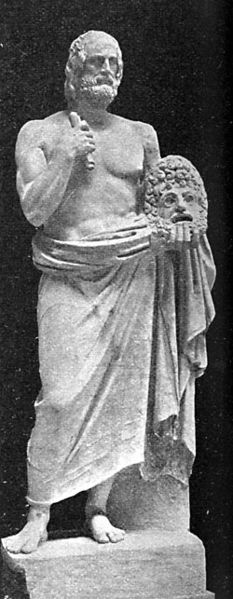
File:Euripides Statue.jpg

How Many Pieces Has a Soul?

Epicurus, Letter to Herodotus [=Diogenes Laertius 10.65]

“For this reason, because the soul is embodied, it never loses perception even if some part of it is removed. So, even if parts of the soul perish along with the container when it is destroyed completely or partially, should the soul in fact persist it retains perception. But the rest of the body that remains either whole or in parts does not have perception when this thing has been removed, that number of atoms requisite for the nature of the soul.

So, really, when the whole mass is destroyed, the soul scatters and no longer has the same abilities and can no longer move, just as if it never even obtained perception.”

“Διὸ δὴ καὶ ἐνυπάρχουσα ἡ ψυχὴ οὐδέποτε ἄλλου τινὸς μέρους ἀπηλλαγμένου ἀναισθητεῖ· ἀλλ᾿ ἃ ἂν καὶ ταύτης ξυναπόληται τοῦ στεγάζοντος λυθέντος εἴθ᾿ ὅλου εἴτε καὶ μέρους τινός, ἐάν περ διαμένῃ, ἕξει τὴν αἴσθησιν. τὸ δὲ λοιπὸν ἄθροισμα διαμένον καὶ ὅλον καὶ κατὰ μέρος οὐκ ἔχει τὴν αἴσθησιν κείνου ἀπηλλαγμένου, ὅσον ποτέ ἐστι τὸ συντεῖνον τῶν ἀτόμων πλῆθος εἰς τὴν τῆς ψυχῆς φύσιν. καὶ μὴν καὶ λυομένου τοῦ ὅλου ἀθροίσματος ἡ ψυχὴ διασπείρεται καὶ οὐκέτι ἔχει τὰς αὐτὰς δυνάμεις οὐδὲ κινεῖται, ὥσπερ οὐδ᾿ αἴσθησιν κέκτηται.

Monty Python and the Holy Grail | Return to the 80s

Roman Royal Remnants

Montesquieu, Dissertation on Politics in Roman Religion (Part 13)

The duumvirs had the direction of sacred affairs: the quindecemvirs had the care of the religious ceremonies and preserved the Sibylline Books, which the decemvirs and the duumvirs did before them. The consulted the oracles when the senate ordered it, and they made reports on them, adding their opinions. They were also commissioned to perform what was prescribed in the Sibylline Books, and to make sure that the Secular Games were celebrated, so that all religious ceremonies passed through the hands of the magistrates.

The kings of Rome had a sort of priesthood: there were certain ceremonies which could not be performed except by them. When the Tarquins were expelled, it was feared that the people might perceive some change in the religion. So there was established a magistrate called the rex sacrorum, who performed the functions of the ancient kings in sacrifices, and whose wife was called the regina sacrorum. This was the only vestige of royalty which the Romans preserved among them.

Botticelli, The Story of Lucretia

Les duumvirs avaient la direction des choses sacrées ; les quindécemvirs avaient soin des cérémonies de la religion, gardaient les livres des sibylles ; ce que faisaient auparavant les décemvirs et les duumvirs. Ils consultaient les oracles lorsque le sénat l’avait ordonné, et en faisaient le rapport, y ajoutant leur avis ; ils étaient aussi commis pour exécuter tout ce qui était prescrit dans les livres des sibylles, et pour faire célébrer les jeux séculaires : de manière que toutes les cérémonies religieuses passaient par les mains des magistrats.

Les rois de Rome avaient une espèce de sacerdoce : il y avait de certaines cérémonies qui ne pouvaient être faites que par eux. Lorsque les Tarquins furent chassés, on craignait que le peuple ne s’aperçût de quelque changement dans la religion ; cela fit établir un magistrat appelé rex sacrorum, qui, dans les sacrifices, faisait les fonctions des anciens rois, et dont la femme était appelée regina sacrorum. Ce fut le seul vestige de royauté que les Romains conservèrent parmi eux.

Insults Cannot Hurt the Wise

Seneca, De Constantia 5

“Serenus, if it seems apt to you, we need to distinguish injury from insult. The first is more serious by its nature and the other is lighter and an issue only for the overly sensitive because people are not wounded but offended. Some spirits are nevertheless so fragile and vain that they believe nothing is more bitter. For this reason you will find an enslaved person who would prefer lashes to fists and believes death and beatings more tolerable than insulting words.

The situation has gone to such a point of ridiculousness that we are harmed not just by pain but by opinion about pain like children whom dark shadows and the appearance of masks or changed appearances terrify! We are people moved to tears by somewhat painful words touching our ears, by rude signs with fingers, and other things which the ignorant rush from in panicked error.

Injury means to do someone evil; but wisdom allows no space for evil because the only evil it recognizes is debasement, which is incapable of entering anywhere virtue and truth already live.”

Dividamus, si tibi videtur, Serene, iniuriam a contumelia. Prior illa natura gravior est, haec levior et tantum delicatis gravis, qua non laeduntur homines sed offenduntur. Tanta est tamen animorum dissolutio et vanitas, ut quidam nihil acerbius putent. Sic invenies servum qui flagellis quam colaphis caedi malit et qui mortem ac verbera tolerabiliora credat quam contumeliosa verba. Ad tantas ineptias perventum est, ut non dolore tantum sed doloris opinione vexemur more puerorum, quibus metum incutit umbra et personarum deformitas et depravata facies, lacrimas vero evocant nomina parum grata auribus et digitorum motus et alia quae impetu quodam erroris improvidi refugiunt. Iniuria propositum hoc habet aliquem malo adficere; malo autem sapientia non relinquit locum, unum enim illi malum est turpitudo, quae intrare eo ubi iam virtus honestumque est non potest.

File:Bust of Seneca, Italian c.1700, Albertinum, Dresden.jpg
Bust of Seneca, Italian c.1700, Albertinum, Dresden

Don’t Worry, Everything Turns Out Awful in the End!

Euripides, Hecuba 956-961

“Shit.
Nothing is credible, not a good reputation
Nor that one who is lucky will not do badly in the end.
The gods churn these waters up back and forth
Mixing in confusion so that we worship them
In our ignorance. But why mourn at all?
It has no effect on our sufferings to come.”

φεῦ·
οὐκ ἔστιν οὐδὲν πιστόν, οὔτ᾿ εὐδοξία
οὔτ᾿ αὖ καλῶς πράσσοντα μὴ πράξειν κακῶς.
φύρουσι δ᾿ αὐτὰ θεοὶ πάλιν τε καὶ πρόσω
ταραγμὸν ἐντιθέντες, ὡς ἀγνωσίᾳ
σέβωμεν αὐτούς. ἀλλὰ ταῦτα μὲν τί δεῖ
θρηνεῖν, προκόπτοντ᾿ οὐδὲν ἐς πρόσθεν κακῶν;

1023-31

“You haven’t paid up, but perhaps you’ll pay soon.
Like a man who has fallen into water with no harbor
You’ll fall far from your heart’s desire
And lose your life. The meeting place
Of debt to Justice and to the gods
Is a terrible, terrible place.”

οὔπω δέδωκας, ἀλλ᾿ ἴσως δώσεις δίκην·
ἀλίμενόν τις ὡς ἐς ἄντλον πεσὼν
λεχριος ἐκπεσῇ φίλας καρδίας,
ἀμέρσας βίον. τὸ γὰρ ὑπέγγυον
Δίκᾳ καὶ θεοῖσιν οὗ ξυμπίτνει,
ὀλέθριον ὀλέθριον κακόν.

1187-1194

“Agamemnon, it’s not right for people
To possess tongues stronger than deeds.

If someone has done good things, then they ought to speak well
If they do evil things, well, their words are rotten too,
And they are incapable of ever speaking of injustice well.

Wise are those who have become masters of precise speech!
But even they cannot be wise all the way to the end.
They all die terribly. There’s no escape from that.”

Ἀγάμεμνον, ἀνθρώποισιν οὐκ ἐχρῆν ποτε
τῶν πραγμάτων τὴν γλῶσσαν ἰσχύειν πλέον·
ἀλλ᾿ εἴτε χρήστ᾿ ἔδρασε, χρήστ᾿ ἔδει λέγειν,
εἴτ᾿ αὖ πονηρά, τοὺς λόγους εἶναι σαθρούς,
καὶ μὴ δύνασθαι τἄδικ᾿ εὖ λέγειν ποτέ.
σοφοὶ μὲν οὖν εἰσ᾿ οἱ τάδ᾿ ἠκριβωκότες,
ἀλλ᾿ οὐ δύνανται διὰ τέλους εἶναι σοφοί,
κακῶς δ᾿ ἀπώλοντ᾿· οὔτις ἐξήλυξέ πω.


Achilles and Agamemnon, Roman Mosaic from Pompeii

Check out these readings from Hecuba

Forget Plagues, Running Can Kill You!

Hippocrates of Cos, Epidemics 48

“A young man who had run on a rough road developed pain in his heel, especially close to the bottom. The area did not permit any draining of liquid because it was still producing moisture. On the fourth day, after his run, the whole area started turning dark right up to the joint of the ankle and below to the arch of the foot. It did not break out completely, instead he died first. He lived twenty full days after his run.”

Νεηνίσκος ὁδὸν τρηχείην τροχάσας ἤλγει τὴν πτέρνην, μάλιστα τὸ κάτω μέρος, ἀπόστασιν δὲ ὁ τόπος οὐκ ἐλάμβανεν οὐδεμίαν ὡς ξυνάγων ὑγρόν. ἀλλὰ τεταρταίῳ τε ἐόντι αὐτῷ ἐμελαίνετο πᾶς ὁ τόπος ἄχρι τοῦ ἀστραγάλου καλεομένου καὶ τοῦ κοίλου τοῦ κατὰ τὸ στῆθος τοῦ ποδός, καὶ τὸ μελανθὲν οὐ περιερράγη, ἀλλὰ πρότερον ἐτελεύτα· τὰς πάσας δὲ ἐβίου ἡμέρας εἴκοσιν ἀπὸ τοῦ δρόμου.

File:Greek vase with runners at the panathenaic games 530 bC.jpg
These men are running to their doom. A vase for the Panathenaic games

The Old Debate on Church & State

Montesquieu, Dissertation on Politics in Roman Religion (Part 12)

Among the Egyptians, the priests formed a separate body, which was maintained at the public expense. From this sprang many disadvantages. All of the riches of the state were found to be swallowed up in a society of people who, always receiving and never providing, insensibly drew everything to themselves. The priests of Egypt, being thus likely to do nothing, all languished in an idleness from which they never departed except with the vices which it produced. They were disorganized, disturbed, and excessively forward; these qualities made them extremely dangerous. Finally, a body whose interests were violently separated from those of the state was a monster. And those who established it tossed into society the seed of discord and civil wars. It was not the same in Rome, where the priesthood had a civil charge. The dignities of the augurs, of the pontifex Maximus, were those of magistracies; those who took them on were members of the senate, and as a consequence, they did not have interests differing from those of the senatorial body. Far from preserving the superstition for oppressing the republic, they employed it usefully to sustain it. ‘In our city,’ says Cicero, ‘the kings and the magistrates who succeeded them have always had a double character, and have governed the state under the auspices of religion.’

Chez les Égyptiens, les prêtres faisaient un corps à part, qui était entretenu aux dépens du public ; de là naissaient plusieurs inconvénients : toutes les richesses de l’État se trouvaient englouties dans une société de gens qui, recevant toujours et ne rendant jamais, attiraient insensiblement tout à eux. Les prêtres d’Égypte, ainsi gagés pour ne rien faire, languissaient tous dans une oisiveté dont ils ne sortaient qu’avec les vices qu’elle produit : ils étaient brouillons, inquiets, entreprenants ; et ces qualités les rendaient extrêmement dangereux. Enfin, un corps dont les intérêts avaient été violemment séparés de ceux de l’État était un monstre ; et ceux qui l’avaient établi avaient jeté dans la société une semence de discorde et de guerres civiles. Il n’en était pas de même à Rome : on y avait fait de la prêtrise une charge civile ; les dignités d’augure, de grand pontife, étaient des magistratures : ceux qui en étaient revêtus étaient membres du sénat, et par conséquent n’avaient pas des intérêts différents de ceux de ce corps. Bien loin de se servir de la superstition pour opprimer la république, ils l’employaient utilement à la soutenir. « Dans notre ville, dit Cicéron, les rois et les magistrats qui leur ont succédé ont toujours eu un double caractère, et ont gouverné l’État sous les auspices de la religion. »

Graves, Signs, and Glory

Homer, Iliad 7.89-91

“…They will heap up a mound [sêma] on the broad Hellespont
And someone of the men who are born in the future may say
As he says over the wine-faced sea in his many-benched ship:
This is the marker [sêma] of a man who died long ago,
A man whom shining Hektor killed when he was at his best”
So someone someday will say. And my glory will never perish”

σῆμά τέ οἱ χεύωσιν ἐπὶ πλατεῖ ῾Ελλησπόντῳ.
καί ποτέ τις εἴπῃσι καὶ ὀψιγόνων ἀνθρώπων
νηῒ πολυκλήϊδι πλέων ἐπὶ οἴνοπα πόντον·
ἀνδρὸς μὲν τόδε σῆμα πάλαι κατατεθνηῶτος,
ὅν ποτ’ ἀριστεύοντα κατέκτανε φαίδιμος ῞Εκτωρ.
ὥς ποτέ τις ἐρέει· τὸ δ’ ἐμὸν κλέος οὔ ποτ’ ὀλεῖται.

Iliad 24.801–804

“After heaping up the mound [sêma] they returned. Then
Once they were well gathered they shared a fine feast
In the halls of the god-nourished king, Priam.
Thus they were completing the burial of horse-taming Hektor.”

χεύαντες δὲ τὸ σῆμα πάλιν κίον· αὐτὰρ ἔπειτα
εὖ συναγειρόμενοι δαίνυντ’ ἐρικυδέα δαῖτα
δώμασιν ἐν Πριάμοιο διοτρεφέος βασιλῆος.
῝Ως οἵ γ’ ἀμφίεπον τάφον ῞Εκτορος ἱπποδάμοιο.

Hektor’s grave is described a little differently earlier. (I explain the “emptiness” of the tomb in another post)

Homer, Il. 24.797–800

“They quickly placed the bones in an empty trench and then
They covered it with great, well-fitted stones.
They rushed to heap up a marker [sêma], around which they set guards
In case the well-greaved Achaeans should attack too soon.”

αἶψα δ’ ἄρ’ ἐς κοίλην κάπετον θέσαν, αὐτὰρ ὕπερθε
πυκνοῖσιν λάεσσι κατεστόρεσαν μεγάλοισι·
ῥίμφα δὲ σῆμ’ ἔχεαν, περὶ δὲ σκοποὶ ἥατο πάντῃ,
μὴ πρὶν ἐφορμηθεῖεν ἐϋκνήμιδες ᾿Αχαιοί.

Odyssey 11.72-78 (Elpenor asking to be buried)

“Don’t leave me unmourned, unburied when you turn around
And go back—so that I might not be a reason for the gods to rage—
But burn me with my weapons and everything which is mind
Then build a mound [sêma] for me on the shore of the grey sea,
For a pitiful man, and for those to come to learn of me.
Finish these things for me and then affix an oar onto my tomb,
The one I was rowing with when I was alive and with my companions”

μή μ’ ἄκλαυτον ἄθαπτον ἰὼν ὄπιθεν καταλείπειν
νοσφισθείς, μή τοί τι θεῶν μήνιμα γένωμαι,
ἀλλά με κακκῆαι σὺν τεύχεσιν, ἅσσα μοί ἐστι,
σῆμά τέ μοι χεῦαι πολιῆς ἐπὶ θινὶ θαλάσσης,
ἀνδρὸς δυστήνοιο, καὶ ἐσσομένοισι πυθέσθαι·
ταῦτά τέ μοι τελέσαι πῆξαί τ’ ἐπὶ τύμβῳ ἐρετμόν,
τῷ καὶ ζωὸς ἔρεσσον ἐὼν μετ’ ἐμοῖσ’ ἑτάροισιν.’

Odyssey 11.126–129 (Teiresias’ prophecy)

I will speak to you an obvious sign [sêma] and it will not escape you.
Whenever some other traveler meets you and asks
Why you have a winnowing fan on your fine shoulder,
At that very point drive the well-shaped oar into the ground

σῆμα δέ τοι ἐρέω μάλ’ ἀριφραδές, οὐδέ σε λήσει·
ὁππότε κεν δή τοι ξυμβλήμενος ἄλλος ὁδίτης
φήῃ ἀθηρηλοιγὸν ἔχειν ἀνὰ φαιδίμῳ ὤμῳ,
καὶ τότε δὴ γαίῃ πήξας εὐῆρες ἐρετμόν

Image result for ancient Greek funeral mounds
Tumulus of Marathon.

Just You and Me

In the fragment below, Simonides (late 6th century – mid 5th century BC) reimagines the myth of Danae put to sea in a chest with her child, Perseus, to prevent the boy growing up to kill his father.

The myth has many turns, but the fragment concentrates on the mother’s tenderness towards her child, and the contrast between her torment and his peaceful sleep.

Fr.543 (PMG)

When in the elegant box
blowing wind and roiling sea
knocked her flat with fear,
her cheeks not un-wet,
she put a loving arm around Perseus and said:
“O my child, I have nothing but suffering!

But you, you sleep.
With your nursling’s heart you slumber
in this joyless bronze-studded bark
(in its dim night, its inky gloom)
in which you were put to sea.

Thick spray over your hair
from passing waves
does not trouble you.
Nor does the cry of the wind.
You lie here in peace,
a beautiful face in a purple cloak.
But if the terrible were terrible to you,
you would lend my words
your little ear.

I bid you sleep, my little pup.
Let the sea sleep.
Let evil beyond measure sleep too.
And may some change of heart be evident,
father Zeus, from you.

If my prayer is presumptuous,
or far from just,
do forgive me.”

ὅτε λάρνακι
ἐν δαιδαλέᾳ
ἄνεμός τέ μιν πνέων
κινηθεῖσά τε λίμνα δείματι
ἔρειπεν, οὐκ ἀδιάντοισι παρειαῖς
ἀμφί τε Περσέι βάλλε φίλαν χέρα
εἶπέν τ᾿· ὦ τέκος, οἷον ἔχω πόνον·

σὺ δ᾿ ἀωτεῖς, γαλαθηνῷ
δ᾿ ἤτορι κνοώσσεις
ἐν ἀτερπέι δούρατι χαλκεογόμφῳ
νυκτί <τ᾿ ἀ>λαμπέι
κυανέῳ τε δνόφῳ σταλείς·
ἄχναν δ᾿ ὕπερθε τεᾶν κομᾶν
βαθεῖαν παριόντος
κύματος οὐκ ἀλέγεις, οὐδ᾿ ἀνέμου
φθόγγον, πορφυρέᾳ
κείμενος ἐν χλανίδι, πρόσωπον καλόν.
εἰ δέ τοι δεινὸν τό γε δεινὸν ἦν,
καί κεν ἐμῶν ῥημάτων
λεπτὸν ὑπεῖχες οὖας.
κέλομαι <δ᾿>, εὗδε βρέφος,
εὑδέτω δὲ πόντος, εὑδέτω <δ᾿> ἄμετρον κακόν·
μεταβουλία δέ τις φανείη,
Ζεῦ πάτερ, ἐκ σέο·
ὅττι δὲ θαρσαλέον ἔπος εὔχομαι
ἢ νόσφι δίκας,
σύγγνωθί μοι.


Red figure vase depicting Acrisius sending off Danae and Perseus.
c.470 BC. Metropolitan Museum of Art.

Larry Benn has a B.A. in English Literature from Harvard College, an M.Phil in English Literature from Oxford University, and a J.D. from Yale Law School. Making amends for a working life misspent in finance, he’s now a hobbyist in ancient languages and blogs at featsofgreek.blogspot.com.

To be Cancelled or Not Cancelled?

Aristotle, On Interpretation 19a

“What is exists whenever it does; what does not exist does not exist when it does not. Still, there’s no necessity to everything in existing or not existing. For it is not the same thing to say that everything that exists does exist and that everything exists by necessity when it occurs. Clearly, it is the same with things that do not exist.

The same argument obtains here as with contrary statements. Everything necessarily exists or does not exist and will be or will not be. But it it not possible for us to say which thing will necessarily happen. For example, I say that there will be a sea-battle tomorrow or maybe there won’t be. There’s certainly nothing to make it necessary that a sea-battle will happen tomorrow or not. But it is certainly necessary that it either happens or it doesn’t.”

Τὸ μὲν οὖν εἶναι τὸ ὂν ὅταν ᾖ, καὶ τὸ μὴ ὂν μὴ εἶναι ὅταν μὴ ᾖ, ἀνάγκη· οὐ μὴν οὔτε τὸ ὂν ἅπαν ἀνάγκη εἶναι οὔτε τὸ μὴ ὂν μὴ εἶναι. οὐ γὰρ ταὐτόν ἐστι τὸ ὂν ἅπαν εἶναι ἐξ ἀνάγκης ὅτε ἔστι, καὶ τὸ ἁπλῶς εἶναι ἐξ ἀνάγκης. ὁμοίως δὲ καὶ ἐπὶ τοῦ μὴ ὄντος. καὶ ἐπὶ τῆς ἀντιφάσεως ὁ αὐτὸς λόγος. εἶναι μὲν ἢ μὴ εἶναι ἅπαν ἀνάγκη, καὶ ἔσεσθαί γε ἢ μή· οὐ μέντοι διελόντα γε εἰπεῖν θάτερον ἀναγκαῖον. λέγω δὲ οἷον ἀνάγκη μὲν ἔσεσθαι ναυμαχίαν αὔριον ἢ μὴ ἔσεσθαι, οὐ μέντοι ἔσεσθαί γε αὔριον ναυμαχίαν ἀναγκαῖον οὐδὲ μὴ γενέσθαι· γενέσθαι μέντοι ἢ μὴ γενέσθαι ἀναγκαῖον.

File:Gent, Justus van - Aristotle - c. 1476.jpg
Justus van Gent, Aristotle 1476