“The story goes that in Abydos there was a man who was afflicted with madness. He went into the theater and watched for many days as if there were actually people acting and applauded. When he had a respite from his affliction, he said that this was the most enjoyable time of his life.”
“Thrasyllos from the deme Aiksône endured an incredible and novel madness. For he left the city and went to the Peiraia and stayed there. He believed that all the ships that sailed in were his and he wrote down their names, checked the list when they left and rejoiced when they returned safely to the harbor again. He spent many years living with this sickness.
When his brother returned from Sicily, he took him to a doctor for treatment and he freed him from that sickness. But he often remembered the avocation of his sickness and used to say that he was never as happy as when he took pleasure at the sight of ships that weren’t his returning safely.”
Cristoforo Landino, Preface to Vergil in a Florentine Gymnasium (Part 5)
But, in order to finally return from such distant regions to Italy and Latium specifically, we should in no way think, my lords, that before Livy who (as Cicero has it) in the 410th year after the foundation of the republic first published the story that there was no poet among the Latins, when Marcus Cato in his Origins wrote that it was the most ancient custom for the notable deeds of excellent men to be sung to the tibia at dinner parties. Livy however, the truest historian of all, related that song was established in sacred ceremonies by Numa Pompilius. But I think that it has now been demonstrated by the most obvious arguments that there was no type of writers by which the poets were surpassed in antiquity.
But now, lest anything which we proposed be omitted, consider in the briefest account how much utility and pleasantness they offer both publicly and privately. But, since amidst such an abundance of material it is far more difficult to find the end than the beginning, I cannot find what I should say first, and what later. But in order to begin from that eloquence by whose strength nearly everything is ruled and which is rightly called “mind-bending”, who could be found with such a dull mind, that he doesn’t see how much spirit, how much splendor, how much dignity the poet offers to the orator? Who is ignorant of how sublime they are in the greatest matters, how moderated in the middling ones, how elegant in trifles? Let their exordia be attended to, let their narrations be read, their divisions be numbered, let their affirmations and refutations be weighed out carefully, and finally let their conclusions and epilogues not be passed over: you will understand, surely, that nothing could be found more accommodated to fostering good will, nothing more brief or clear for the purpose of narrating, nothing more indissoluble for division, nothing weightier in proof nor more forceful in refutation, nothing finally more abundant or ornate for delivering a conclusion. But all of these things pertain to oratorical arguments. Who handled philosophy itself more splendidly? Not only do poets select diverse passages from it and adorn them with a certain wondrous sweetness, but they even encompassed the whole business most totally, as we see among the Greeks Pittacus of Mytilene, Xenophanes, Parmenides, Empedocles, and many others from the family of the Pythagoreans; and among the Latins Lucretius, and Marcus Varro, whom Jerome called the most learned of all the Romans.
Sed ut quandoque ex tam longinquis regionibus in Italiam Latiumque redeamus, nullo pacto existimandum est, domini viri, ante Livium illum qui, ut est apud Ciceronem, decimo et quadringentesimo post conditam urbem anno primus fabulam edidit, nullum apud Latinos poetam fuisse, cum M. Cato in suis Originibus scriptum reliquerit vetustissimam fuisse consuetudinem, ut in conviviis egregia excellentium virorum facta ad tibiam canerentur. Livius autem, historicus omnium verissimus, a Numa Pompilio carmen in sacris cerimoniis institutum refert. Sed iam nullum esse scriptorum genus, a quo poetae antiquitate superentur, manifestissimis argumentationibus demonstratum esse arbitror.
Nunc vero, ne quid ex iis quae a nobis proposita sunt omittatur, quantum illi utilitatis, quantum etiam iocunditatis publice privatimque afferant, brevissimis accipite. Verum, quoniam in tanta rerum copia multo difficilius est finem quam initium invenire, quid prius, quid posterius dicam non reperio. Sed ut ab ea, cuius vi pene omnia reguntur quaeque iure «flexianima» appellata est, eloquentia exordiar, quis adeo hebeti erit ingenio, ut quantum spiritus, quantum splendoris, quantum dignitatis oratori poeta afferat non viderit? Quis quantum illi in maximis rebus sublimes, in mediocribus temperati, in humilibus elegantes sint ignoraverit? Attendantur exordia, legantur narrationes, enumerentur divisiones, pendantur diligentius confirmationes et confutationes, denique conclusiones epilogique non praetereantur: intelligetis profecto neque ad captandam benivolentiam accomodatius neque ad narrandum brevius et apertius neque ad dividendum absolutius neque ad confirmandum gravius neque ad confutandum vehementius neque postremo ad concludendum copiosius ornatiusque quicquam inveniri. Sed haec ad oratorias argumentationes pertinent. Philosophiam vero ipsam quis splendidius tractavit? Neque enim solum diversos ex ea locos decerpunt atque mira quadam suavitate condiunt poetae, verum etiam totam rem absolutissime perscripserunt, quemadmodum apud Graecos Pittacum Mytilenaeum, Xenophanem, Parmenidem, Empedoclem et plerosque alios ex Pythagoreorum familia, apud vero Latinos Lucretium et quem Romanorum omnium doctissimum Hieronymus appellavit M. Varronem videmus.
Montesquieu, Dissertation on Politics in Roman Religion (Part 10)
As the belief about the soul of the world was nearly universally received, and they saw each part of the universe as a living member in which this soul was spread, it appeared that it was permitted to adore all of these parts indifferently, and that worship should be as arbitrary as belief was.
And there is where sprang forth this spirit of tolerance and mildness which reigned in the pagan world. People did not need to guard themselves from persecution and to tear apart these or the other. All religions, all theologies were equally good: heresies, wars, and religious disputes were unknown. As long as one went to worship at a temple, each citizen was the grand pontiff in their own family. The Romans were in turn more tolerant than the Greeks, who always spoiled everything: everyone knows the unfortunate fate of Socrates.
Comme le dogme de l’âme du monde était presque universellement reçu, et que l’on regardait chaque partie de l’univers comme un membre vivant dans lequel cette âme était répandue, il semblait qu’il était permis d’adorer indifféremment toutes ces parties, et que le culte devait être arbitraire comme était le dogme.
Voilà d’où était né cet esprit de tolérance et de douceur qui régnait dans le monde païen : on n’avait garde de se persécuter et de se déchirer les uns les autres ; toutes les religions, toutes les théologies, y étaient également bonnes : les hérésies, les guerres et les disputes de religion y étaient inconnues ; pourvu qu’on allât adorer au temple, chaque citoyen était grand pontife dans sa famille.
Les Romains étaient encore plus tolérants que les Grecs, qui ont toujours gâté tout: chacun sait la malheureuse destinée de Socrate.
The 2020 Olympics, postponed because of COVID19, are due to start this week in Japan. They might be cancelled again, but the athletes have been training hard and Sarah E. Bond and I talked about the beginning, the end, and the tender parts of the Olympics with Jonathan Van Ness on his podcast Getting Curious. (Go here for a transcript). Here’s a short post from Sarah and me.
Pindar, Olympian 10. 26-61
“Zeus’ laws move me to sing of that exceptional contest-ground which Herakles
Set up by the burial place of Pelops along six altars
After he killed Kteatos, Poseidon’s perfect son
And Eurutos, because he was willfully
Trying to get his pay from arrogant and unwilling Augeas.
Herakles set an ambush in the underbrush near Kleônai and defeated the men near the road.
Once before the intolerable Moliones crushed
His army from Tirynth
When it was at rest in the valley of Elis.
Not long after that the king of the Epeians
Who deceived a friend
Saw his rich country and his own city
Laid low under the deep current
Of tireless fire and steel blows.
There’s no way to decline
A conflict with stronger people.
And that guy at last
Was found caught thanks to his own foolishness
And he didn’t escape sheer death.
Then Zeus’ bold son gathered the whole army and the spoils
In Pisa and created a sacred space for his father supreme.
He brought all of Altis around into an enclosure and marked it off.
He made a circle in the plain and a place for feasting,
Not failing to honor the stream Alpheus and the twelve high gods.
He named this the hill of Kronos because it was nameless before
When Oinomaus was king and it was crowned with damp snow.
The Fates stood nearby during this birth-rite
Alongside the only one who can test the true truth of things,
Time.
Then as Time moved forward, it revealed the clear truth of things—
How Herakles distributed the spoils of war
And made the best of them sacred;
And how he created the four-year festival with the first Olympic games and their triumphs.”
In Pindar’s 10th Olympian Ode, we find the traditional story for the creation of the first Olympic games. Herakles established them to honor his father and the rest of the gods during his various labors. Pindar’s poem, an epinician (a poem composed in honor of an athletic victory) is one of many that blends myth, history, and effusive praise–a heady mix wielded by sportswriters to this day.
The traditional date of the first Olympics is 776 BCE. The event was so important that its four-year cycle was the only calendar system shared by ancient Greek cities. (Each city-state had its own way of keeping time, typically a luni-solar system based around religious festivals, agrarian rites etc.)
But the Olympics were not the only Panhellenic games. Between the legendary founding of the Olympia and the Classical Age three other major games developed: the Nemean, Isthmian, and Pythian. These games had what you might expect: running, archery, boxing. They also had musical and choral competitions and some of the biggest events wouldn’t be found at today’s Olympics (the chariot games).
Athletic festivals like the Olympian games were part of a handful of cultural practices we now recognize as creating Panhellenic identities. Other include worship at the cult-sites of Delphi and Delos and Homeric and Hesiodic poems. The Games were an essential part of aristocratic culture–so much so that there are accounts of people considering the games a good place to find a spouse.
remains of temple at Olympia
Just as today, most of us would have no chance of competing in the games: they were for those healthy and wealthy enough to spend their time training and of blood noble enough to have the presumption to enter the contests. They were of such prestige in Athens that an Olympic victor was awarded with meals for life in the public dining hall.
The earliest games we have recorded in literature are in Homer’s Iliad where Achilles hosts funeral games in honor of Patroclus. Those games create an experimental space where the leading figures of the Achaeans could compete against one another without actual murder. Indeed, a close reading of Iliad 23 will show that Achilles, Menelaos, Antilokhos, and friends negotiate some of the same political tensions that causes the conflict in book 1.
Athletic contests in early Greece, then, developed as a ritualized kind of practice for war. Most of the events practiced–running, wrestling, javelin throwing–are those that aristocrats would have practiced in preparation for war. But instead of fighting each other to the death, they struggled over honor on the field. Probably naked. Probably cheating and scrabbling for every advantage just like today.
Note on Pindar’s 12th Olympic Ode, 15th century (Harley MS 1752, f. 126r) (Image via the British Library).
The traditional date for the last ancient Olympic games is 393 CE—even if ancient historians such as David Potter (2011) and Sofie Remijsen (2015) have questioned the reality of this rather synthetic date.They place the final games later into the reign of the emperor Theodosius II (r. 408-450 CE). In the years prior to the concluding competition, the Roman emperor Theodosius I, a Nicene Christian born in Hispania, had undertaken sweeping legislation and withheld state funds in order to quell traditional Roman religio and address heresies within the empire. The closing of the famed festival games held in honor of Zeus may have been but one move in a broader agenda which promoted Nicene Christianity while suppressing spaces, rituals, and people labeled as either pagan or heretical. Or the games may have simply petered out and fallen victim to the institutional and financial shifts at play in the late Roman Mediterranean.
In 380, the “Edict of Thessalonica” (also known as Cunctos populos; CTh 16.1.2 trans. Jacobs) was directed predominantly at the heretics of Constantinople. It took on a more wide-ranging significance defining Nicene Christianity as the “official” faith of the Roman Empire with the compiling of the Theodosian Code in 436. However, other imperial actions did signal attempts to literally and figuratively snuff out paganism. In 391, the eternal flame of Vesta in Rome was extinguished and numerous laws banned sacrifices or withheld money from traditional religious cults. As Remijsen notes, the closing of Greek athletic festivals in Late Antiquity was not just religiously motivated, but also influenced by financial, institutional, and political aims. Agonistic budgets were high and the shift to a more centralized financial scheme meant athletic festivals could not be paid for.
Fragment of a Document and List of Olympic Victors (P.Oxy. XXXIII 2381, TM 59764, LDAB 868, MP3 2188, 3rdC CE) (Image via the British Library).
Fragment of a Document and List of Olympic Victors (P.Oxy. XXXIII 2381, TM 59764, LDAB 868, MP3 2188, 3rdC CE) (Image via the British Library).
Whatever the motives for the demise of the Olympic games in Late Antiquity, the historic festival has left behind a wealth of literature, papyri, inscriptions, art, and archaeological remains that continue to grip the imagination of the modern public since the reinstitution of the games in 1896. The Olympics can and have been used for nefarious purposes (e.g. the Berlin Olympics of 1936 and Leni Reifenstahl’s propaganda film Olympia). However, the modern Olympics can also nudge us to reinvestigate the origins and evidence for the Archaic games.
“Why does this woman abuse the god with words
And twist him up with constant riddles?
Is it because she loves the women she gets oracles for?
Is she keeping something silent because she needs to?
But why does Erekhtheus’ daughter matter to me?
She’s nothing to me! I will go to fill
The purificatory vessels with golden cups of water
I need to criticize Apollo. What’s he thinking?
He keeps ruining girls for marriage with rape
And producing children in secret only to ignore them
As they die. Don’t act this way, but since you can,
Pursue excellence. The gods punish any mortal
Who does wrong. How is it right for those who write
The laws for mortals to lead lawless lives?”
“Play your pipe, Pan
In your caves
Where some pitiful girl
Gave birth to a child with Apollo
And then exposed it as a feast
For the birds and beasts
The insult of their bitter ‘marriage’.
Never at the loom or in tales have I heard of
Mortal women having divine children and good fortune.”
Montesquieu, Dissertation on Politics in Roman Religion (Part 9)
Although they magistrates may not have slipped into the religion of the people, it is not necessary to believe that they did not have one at all. M. Cudworth has well proven that those who were most enlightened among the pagans adored one supreme divinity, of which the divinities of the people only participated. The pagans, much less scrupulous in their cult practices, believed that it made no difference whether one adored the divinity itself or its manifestations – whether, for example, one adored in Venus the passive force of nature or the supreme divinity, in as much as she was responsible for all generation; whether one made a cult for the sun, or for the supreme being, in as much as he gave life to the plants and made the earth fertile through his heat. Thus the Stoic Balbus says, in Cicero, ‘that God participates, through his nature, in all those things down below: that he is Ceres on the ground, Neptune on the seas.’ We would know more if we had the book which Asclepiades composed, titled ‘The Concordance of all Theologies.’
Quoique les magistrats ne donnassent pas dans la religion du peuple, il ne faut pas croire qu’ils n’en eussent point. M. Cudworth a fort bien prouvé que ceux qui étaient éclairés parmi les païens adoraient une divinité suprême, dont les divinités du peuple n’étaient qu’une participation. Les païens, très-peu scrupuleux dans le culte, croyaient qu’il était indifférent d’adorer la divinité même, ou les manifestations de la divinité ; d’adorer, par exemple, dans Vénus, la puissance passive de la nature, ou la divinité suprême, en tant qu’elle est susceptible de toute génération ; de rendre un culte au soleil, ou à l’Être suprême, en tant qu’il anime les plantes et rend la terre féconde par sa chaleur. Ainsi le stoïcien Balbus dit, dans Cicéron, « que Dieu participe, par sa nature, à toutes les choses d’ici-bas ; qu’il est Cérès sur la terre, Neptune sur les mers ». Nous en saurions davantage si nous avions le livre qu’Asclépiade composa, intitulé l’Harmonie de toutes les théologies.
The following is a penultimate step in a treatment for female infertility
“During the final vapor bath, at that moment when she is about to stop the treatment, cut open the youngest puppy you can find, pound down every kind of fragrant and dry aromatic spices. After you have removed the puppy’s innards, fill it as much as you can with the aromatics and pack them in. Put wood underneath, put the puppy in the pot and add in some extremely fragrant wine before you raise the temperature through the pipe.
As much as her strength will allow, have the woman stay in the vapor bath the entire day, continuing the heating and asking her whether she thinks that the smell of the herbs is coming through her mouth. For this is no small sign that the woman being treated has conceived.”
“Blood returns only slowly from the heart and mind because the veins there are transverse and the place is really important and is inclined toward madness and anger. Whenever these parts are filled, a wandering shiver moves about with a fever. When the situation is like this, a woman goes into a rage because of the inflammation. She wants to murder because of the rotting. And because of the depression, she is frightened and afraid. The compression around the heart cause them to want to self-harm and because of the evil state of the blood, her mind is sad and sorrowful and longs for evil.
She also names weird and frightening things that push women to leap or to throw themselves in wells or hang themselves. Even when there are no visions, there’s some strange pleasure that makes her long for death as if it is a kind of good thing. When a woman is sensible again, women will dedicate many different things to Artemis, including really expensive women’s cloaks all because they are tricked by prophets.
Relief from this disease comes whenever there is nothing impeding the flow of blood. I tell young women who are suffering this kind of thing to live with a man as soon as possible, since, if they are pregnant, they become healthy. Otherwise, a girl will be overtaken by this disease or another in puberty or a little latter on. Barren married women sometimes suffer these things.”
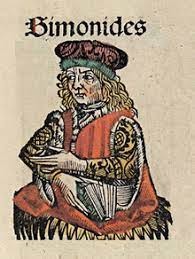
In the dialogue “Protagoras,” Plato attributes the following poem to Simonides of Ceos, the itinerant and influential poet who lived between the late-6th century and mid-5th century BC.
The text is anything but pristine. Plato did not quote all of the verses and he interpolated verses of his own (I’ve excised the lines editors have found most doubtful).
I’ve done some violence of my own: to make the poem’s argument–and what an argument it is!–somewhat easier to follow (and it still isn’t easy), I’ve divided the poem into more stanzas than exist in the Greek.
Simonides Fr. 542 (PMG)
It’s hard for a man to be truly good
in hands, feet, and mind,
a square, as it were, drawn without blemish . . .
Yet Pittacus’ maxim does not suit me,
though it was spoken by a wise man:
it’s hard, he said, to be good,
an honor only a god could enjoy.
A man can’t help but be bad when misfortune,
before which he’s helpless, overtakes him.
When things are going well, all men are good,
but when things are going badly, men are bad . . .
So, I’d never waste my allotted life searching
in empty, vain hope for the impossible:
an altogether unblemished man
among us men who eat the broad earth’s fruits.
But if I find one, I’ll let you know.
I praise and I love every man
who, when he’s free to choose,
does nothing blameworthy.
Against compulsion though,
not even the gods can fight . . .
<Someone> who’s not too lazy,
who judges what profits the city,
this is a sound man.
Even I can’t fault him,
not when the race of fools is countless.
Truth be told, all things are beautiful
when base things aren’t intermixed.
“I have not a single but many things to mourn:
My native city, Hektor dead, and the hateful
Fate to which I was tied when I fell
Unworthily into a life of slavery.
Don’t ever say that any mortal is blessed
Before you see how they end life at death
How they finish that last day and go below.”
“No Hektor is in this place.
Nor Priam nor their gold. But this is a Greek city.
Are you so lost in your ignorance, you wretch,
That you dare to sleep with the man who killed
Your husband and to have a child for those who
Killed your family? This is the way of all foreigners:
A father sleeps with his daughter and son with his mother,
A girl sleeps with her brother and the dearest relatives
Fall apart over murder. The law prevents none of these things.
Don’t introduce any of these practices here: it is not good
For one man to hold the reins for two wives.
Anyone who wants to avoid living badly
Prefers looking to one lover in his bed.”