Death from the Sea and Cities of Men: Odysseus and Mortality

This is a re-post that became part of a book.

Homer, Odyssey 11.119–137 [cf. 23.265–284]

“But after you kill the suitors in your home
Either with a trick or openly with sharp bronze,
Then go, taking with you a well-shaped oar,
until you come to people who know nothing of the sea,
men who do not eat food that has been mixed with salt.
These people also know nothing of purple-prowed ships,
Nor well-shaped oars which give the ships their wings.
I will speak to you an obvious sign and it will not escape you.
Whenever some other traveler meets you and asks
Why you have a winnowing fan on your fine shoulder,
At that very point drive the well-shaped oar in the ground
And once you sacrifice a bull a a boar which has loved sows,
Go home again and complete holy hekatombs
To the immortal gods, who live in the broad sky,
All of them in order. And then from the sea death will come
To you in a gentle way, and it will kill you
Already taken by a kind old age. Your people
Will be prosperous around you. I speak these things truly.”

αὐτὰρ ἐπὴν μνηστῆρας ἐνὶ μεγάροισι τεοῖσι
κτείνῃς ἠὲ δόλῳ ἢ ἀμφαδὸν ὀξέϊ χαλκῷ,
ἔρχεσθαι δὴ ἔπειτα, λαβὼν εὐῆρες ἐρετμόν,
εἰς ὅ κε τοὺς ἀφίκηαι, οἳ οὐκ ἴσασι θάλασσαν
ἀνέρες οὐδέ θ’ ἅλεσσι μεμιγμένον εἶδαρ ἔδουσιν·
οὐδ’ ἄρα τοὶ ἴσασι νέας φοινικοπαρῄους,
οὐδ’ εὐήρε’ ἐρετμά, τά τε πτερὰ νηυσὶ πέλονται.
σῆμα δέ τοι ἐρέω μάλ’ ἀριφραδές, οὐδέ σε λήσει·
ὁππότε κεν δή τοι ξυμβλήμενος ἄλλος ὁδίτης
φήῃ ἀθηρηλοιγὸν ἔχειν ἀνὰ φαιδίμῳ ὤμῳ,
καὶ τότε δὴ γαίῃ πήξας εὐῆρες ἐρετμόν,
ἕρξας ἱερὰ καλὰ Ποσειδάωνι ἄνακτι,
ἀρνειὸν ταῦρόν τε συῶν τ’ ἐπιβήτορα κάπρον,
οἴκαδ’ ἀποστείχειν ἕρδειν θ’ ἱερὰς ἑκατόμβας
ἀθανάτοισι θεοῖσι, τοὶ οὐρανὸν εὐρὺν ἔχουσι,
πᾶσι μάλ’ ἑξείης. θάνατος δέ τοι ἐξ ἁλὸς αὐτῷ
ἀβληχρὸς μάλα τοῖος ἐλεύσεται, ὅς κέ σε πέφνῃ
γήρᾳ ὕπο λιπαρῷ ἀρημένον· ἀμφὶ δὲ λαοὶ
ὄλβιοι ἔσσονται. τὰ δέ τοι νημερτέα εἴρω.’

Why does Odysseus leave home again and how does he die? According to the prophecy, he still has to make amends with Poseidon. From this perspective, his journey is a type of expiation. As with many details in the Odyssey, however, we have only Odysseus to trust: he is the one who narrates the prophecy! One slight difference between the two versions of the prophecy gives me pause.

Odysseus does not come straight out and tell the story to his wife. Instead, he merely outlines that there will be more troubles and uses language of toil and suffering which is familiar from the rest of the epic.

Odyssey 23.248–253

“Wife, we have not yet come to the end of our struggles
But toil without measure is still in front of us,
Great and hard toil, all the things which I have to complete.
For the spirit of Teiresias prophesied this to me
On that day when I went to the home of Hades
To inquire about my companions’ homecoming and my own.”

“ὦ γύναι, οὐ γάρ πω πάντων ἐπὶ πείρατ’ ἀέθλων
ἤλθομεν, ἀλλ’ ἔτ’ ὄπισθεν ἀμέτρητος πόνος ἔσται,
πολλὸς καὶ χαλεπός, τὸν ἐμὲ χρὴ πάντα τελέσσαι.
ὣς γάρ μοι ψυχὴ μαντεύσατο Τειρεσίαο
ἤματι τῷ, ὅτε δὴ κατέβην δόμον ῎Αϊδος εἴσω,
νόστον ἑταίροισιν διζήμενος ἠδ’ ἐμοὶ αὐτῷ.

For someone who has suffered so much in this epic with not knowing the outcome of events, with the paralysis that comes from grief that is unresolved, Penelope is compelled to ask Odysseus to tell her (256-262) ending with a gnomic plea that “it is not at all worse to know right away” (πεύσομαι, αὐτίκα δ’ ἐστὶ δαήμεναι οὔ τι χέρειον). Odysseus winds up his story and prepares to recite the prophecy, but he begins differently.

Odyssey 23.265–279

“But I will tell you and I will not hide it.
My heart will not take pleasure in it. For I take no joy
Since he ordered me to go again through many cities of men
Holding a well-shaped oar in my hands…”

…αὐτὰρ ἐγὼ μυθήσομαι οὐδ’ ἐπικεύσω.
οὐ μέν τοι θυμὸς κεχαρήσεται· οὐδὲ γὰρ αὐτὸς
χαίρω, ἐπεὶ μάλα πολλὰ βροτῶν ἐπὶ ἄστε’ ἄνωγεν
ἐλθεῖν, ἐν χείρεσσιν ἔχοντ’ εὐῆρες ἐρετμόν.

After building up the suffering and forestalling any clarification, he seems almost to protest too much that he will not enjoy what the future brings. His curse, he claims, is that he is ordered to go through many cities of men. The absence of this line in the original narration alone would be telling, but it is even more marked because it recalls the third line of the epic’s proem: πολλῶν δ’ ἀνθρώπων ἴδεν ἄστεα καὶ νόον ἔγνω (“he knew the cities and the mind of many people”. This traveling through many cities for which Odysseus is famous enough to be marked at the beginning of the poem does not really happen in our epic.

Note as well, that Odysseus’ tale of the future undoes much of what the Homeric Odyssey accomplishes. His future toils are his alone: there is no room for the lives of his son, elderly father, or wife. So, even though Odysseus is home and reunited with his family, this new revelation is enough to imply, perhaps, that when this story is over, Odysseus returns to himself, the one before the Odyssey brought him home again.

This is, I think, the inspiration behind Cavafy’s startling poem on the topic.

C. P. Cavafy, Second Odyssey [Walter Kaiser, trans.]

A great second Odyssey,
Greater even than the first perhaps,
But alas, without Homer, without hexameters.

Small was his ancestral home,
Small was his ancestral city,
And the whole of his Ithaca was small.

The affection of Telemachus, the loyalty
Of Penelope, his father’s aging years,
His old friends, the love
Of his devoted subjects,
The happy repose of his home,
Penetrated like rays of joy
The heart of the seafarer.

And like rays they faded.

The thirst
For the sea rose up with him.
He hated the air of the dry land.
At night, spectres of Hesperia
Came to trouble his sleep.
He was seized with nostalgia
For voyages, for the morning arrivals
At harbors you sail into,
With such happiness, for the first time.

The affection of Telemachus, the loyalty
Of Penelope, his father’s aging years,
His old friends, the love
Of his devoted subjects,
The peace and repose of his home
Bored him.

And so he left.

As the shores of Ithaca gradually
Faded away behind him
And he sailed swiftly westward
Toward Iberia and the Pillars of Hercules,
Far from every Achaean sea,
He felt he was alive once more,
Freed from the oppressive bonds
Of familiar, domestic things.
And his adventurous heart rejoiced
Coldly, devoid of love.

Another reception of Odysseus that echoes some of these themes is Tennyson’s “Ulysses”. The poem begins with frustration, the complaint that it is useless for a king to sit and rule men less than he with an aging wife, a crowd that cannot understand him (1–5). Tennyson’s Odysseus has retreated into an interior life, rejecting the dismal repetition of his life at home, and imaging him self as he once was. For this hero, a life at home is a life of wasted opportunities. The poem’s Ulysses confesses “I cannot rest from travel: I will drink / Life to the lees…” (6–7). This Ulysses understands his coming transformation: “…I am become a name” (11) and this name is made up of his travels, his suffering, and his joys (11–20). The narrator continues (20–30):

How dull it is to pause, to make an end,
To rust unburnish’d, not to shine in use!
As tho’ to breathe were life! Life piled on life
Were all too little, and of one to me
Little remains: but every hour is saved
From that eternal silence, something more,
A bringer of new things; and vile it were
For some three suns to store and hoard myself,
And this gray spirit yearning in desire
To follow knowledge like a sinking star,
Beyond the utmost bound of human thought.

Although in the next portion of the poem, Ulysses looks briefly back at the world he leaves to his son (31–42), this passage homes in on the Odyssey’s hero in a different light. Odysseus is looking forward to the boundary of death and although he concedes it is closer than ever before, he seems determined to inhabit it and atomize it, turning what remains of life to something like Zeno’s paradox, as if by filling every portion of it, he may always have another portion to fill. As will become clear from the prophecy itself, boundaries and limits are at the very core of his worry.

Tennyson’s Ulysses returns to the sea just as the Odyssey’s protagonist promises. He narrates a journey through the space of the sea that is also a straining against the bounds of time. This final battle, personal if epic still, culminates in Tennyson’s final, grasping boast: “To strive, to seek, to find, and not to yield.”

But to what is this Odysseus yielding? The story of the prophecy is ultimately that of an externally imposed compulsion. In its simplest form, this is death. In the more complex vision of the poem, this is fate, the very thing Zeus says men make worse through their own recklessness at the beginning of the epic.

Perhaps what is really chilling is that Odysseus is looking forward to the end of his story, to his own death. Few of us embrace the idea of our own ending. And when we know that the milestones of life and perhaps our greatest accomplishments are behind us, we often have little choice but to look toward the end on the horizon. This is a different type of helplessness from what Odysseus endures during his ‘exile’ with Kalypso–when he is stranded on Ogygia he has no where to go and all the time in the world. Once he gets home, he can go anywhere, but where has all that time gone?

In a way, Odysseus continues on the journey of his life rather than stopping and facing the reality around him. In other heroic tales–Bellerophon and Herakles especially, but Gilgamesh too–after a hero completes his great deeds, he metaphorically and literally challenges death only, ultimately, to fail. The fall of a hero is an allegory for what happens to us all when we are no longer young but not yet old: we either scan the horizon for our ending, or run to avoid even looking for it.

But I think there may be another allegory beyond this one. As Alex Purves (2006) and John Peradotto (along with Ann Bergren 1983) note, Odysseus’ emphasis the fact that they are not at “the limits of their suffering” (πάντων ἐπὶ πείρατ’ ἀέθλων) and on the “boundless toil” (ἀμέτρητος πόνος) strains against the limits of the narrative and the poem. But this epic is also about the boundaries of a life as it is lived. To look for the experiences of the life beyond the story we are living is to look for the promise that this story that our story will not end.

And, again, in that oar–as Alex Purves notes–we find a promise of transformation as the relationship between signifier and signified breaks down. The oar becomes a thing it isn’t when it is transported into different lands and, once planted, it is a “clear sign”, a sema of what has been accomplished.  In the Iliad (7.81-91), a sema is the burial mound which will tell the story of what has transpired to future generations. It reduces an active, living thing, to a still, singular sign of the past. Here, of course, is the paradox of kleos perhaps articulated by Achilles’ rejection of the Iliadic ethos when he appears in the Odyssey: the story that continues on and does not change is not the self. The memory of the person is not the person remembered.

And in the Odyssey, it has already been established that an oar can function as the marker for a tomb–this is precisely what Elpenor requests when he meets Odysseus after dying (11.68-78). As a marker, a tombstone is final and, without readers, simple rather than complex. The single sign in the future Teiresias promises in the first version of the prophecy stands at odds with the multiplicity of meanings within the Odyssey and the multiple versions of the man whose tale it tells. So, while others have argued well that the prophecy anticipates a day and a place beyond the bounds of the heroic world, of epic meaning, and the range of epic transmission, I would add that this moment also reflects anxiety about the limits of the self.

(for a longer bibliography see at the end of the post)

Porphyry has an allegorical take Odysseus’ death and the tale of the sea.

Porphyry, On the Cave of the Nymphs 35

“And thus one may not escape from his toils, but when he has emerged from the sea altogether that his thoughts are so untouched of the sea and material matters, that he believes that an oar is a winnowing fan because of his total inexperience of the tools and affairs of the sea.”

ἵνα γυμνωθεὶς τῶν ῥακέων καθέλῃ πάντα καὶ οὐδ’ οὕτως ἀπαλλαγῇ τῶν πόνων, ἀλλ’ ὅταν παντελῶς ἔξαλος γένηται καὶ ἐν ψυχαῖς ἀπείροις θαλασσίων καὶ ἐνύλων ἔργων, ὡς πτύον εἶναι ἡγεῖσθαι τὴν κώπην διὰ τὴν τῶν ἐναλίων ὀργάνων καὶ ἔργων παντελῆ ἀπειρίαν.

Of course, in ancient myth, the “death from the sea” bit was not always considered an allegory. Homeric interpreters struggle over whether the phrase “from the sea” means a death that travels from the sea or one that happens away from the sea. Most versions settle on the first interpretation.

According  to Aeschylus’ fragmentary Psychagogoi, Teiresias prophesied to Odysseus that his death would come from the sea in an avian fecal format:

<ΤΕΙΡΕΣ.> ‘ἐρρω<ι>διὸς γὰρ ὑψόθεν ποτώμενος
ὄνθω<ι> σε πλήξε<ι>, νηδύιος χειλώμασιν.
ἐκ τοῦ δ’ ἄκανθα ποντίου βοσκήματος
σήψει παλαιὸν δέρμα καὶ τριχορρυές’.

“As a heron flies on high, he will strike you with shit from his stomach’s end.
And the thorns from that watery food will rot your old and balding skin.”

This may correspond to the Odyssey‘s cryptic note that “death will come from the sea”. For a great discussion, see Timothy Gantz. Early Greek Myth. 1993. 711-712.

A scholiast to the Odyssey glosses the “death will come to you from the sea” line as follows: “Some also say that Hephaistos at the bidding of Kirkê fashioned a spear from Telegonos from a sea sting-ray’s stinger, which Phorkys had killed while it was trying to eat fish in his harbor. The spear-base was adamantine and the handle was gold and that killed Odysseus.” (καί φασιν ὡς ἐντεύξει τῆς Κίρκης ῞Ηφαιστος κατεσκεύασε Τηλεγόνῳ δόρυ ἐκ τρυγόνος θαλασσίας, ἣν Φόρκυς ἀνεῖλεν ἐσθίουσαν τοὺς ἐν τῇ Φορκίδι λίμνῃ ἰχθῦς• οὗ τὴν μὲν ἐπιδορατίδα ἀδαμαντίνην, τὸν δὲ στύρακα χρυσοῦν εἶναι, τὸν ᾿Οδυσσέα ἀνεῖλεν,Schol. ad. Od. 11.134).

This is the story recorded in Apollodoros’ Epitome 7.36:

“Telegonos, after learning from Kirkê that he was the child of Odysseus, sailed out looking for him. After he arrived in Ithaka, he began to steal some of the Island’s cattle and he wounded Odysseus in the hand, who came out to help against him, with a spear that had a point made of a sting-ray’s spine. Then Odysseus died.”

[36] Τηλέγονος δὲ παρὰ Κίρκης μαθὼν ὅτι παῖς Ὀδυσσέως ἐστίν, ἐπὶ τὴν τούτου ζήτησιν ἐκπλεῖ. παραγενόμενος δὲ εἰς Ἰθάκην τὴν νῆσον ἀπελαύνει τινὰ τῶν βοσκημάτων, καὶ Ὀδυσσέα βοηθοῦντα τῷ μετὰ χεῖρας δόρατι Τηλέγονος τρυγόνος κέντρον τὴν αἰχμὴν ἔχοντι τιτρώσκει, καὶ Ὀδυσσεὺς θνήσκει.

This poisonous sting-ray weapon, as you might imagine, is exactly the type of thing Hellenistic authors might get excited about. The fragmentary historian Dictys tells a bit of a more complicated story: he has Odysseus send Telemachus away because dream-interpreters told him he would be killed by his son. According to Dictys, Telegonos struck him in the lung (τιτρώσκει τὸν ᾿Οδυσσέα κατὰ τοῦ πλευροῦ) “with a sting-ray’s point given to him by Kirkê” (ὅπερ ἔδωκε κέντρον θαλάσσιον τῆι Κίρκηι, FGH 1a49F fr. 10).

When Eustathius discusses Odysseus’ death from the sea (Comm. ad Od. 1.404) he first makes it clear that what is interesting is that Odysseus doesn’t die on the sea (ἀλλ’ ὁ θάνατός σοι οὐκ ἐν αὐτῇ ἔσται ἀλλ’ ἔξω αὐτῆς.) He then presents features both from the scholia (the special stin-ray spear) and Dictys while also explaining that Oppian tells us more about this in the Halieutica. Eustathius explains that the spear-point made from a sting-ray was considered especially sharp by some (αἰχμὴ δὲ τρυγόνος τὸ ἐπὶ τῷ ἀδάμαντι ὀξύτατον). A basic point to be drawn from his extensive discussion is that the sting-ray spear was a generally well-known motif.

It is so well-known, of course, that the Scholia to Lykophron must present an alternative. There, Telegonos does kill Odysseus but Kirkê resurrects him with her drugs, only after which was Telegonos married to Penelope and Telemakhos was married to Kassiphone, his half-sister. (ἄλλοι δέ φασιν ὅτι ἀναιρεθεὶς ὁ ᾿Οδυσσεὺς ὑπὸ Τηλεγόνου πάλιν ὑπὸ τῆς Κίρκης φαρμάκῳ ἀνέστη καὶ ἐγήματο *Κασσιφόνην* Τηλεμάχῳ, Πηνελόπη δ’ ἐν Μακάρων νήσοις ἐγήματο Τηλεγόνῳ, Schol ad. Lykophron 805). But that’s a story for another day.

[updated c. 2 hours later with an assist from Erik (see comments for his addition of the Tennyson poem)]

Some works consulted

Benardete, S. 1997. The Bow and the Lyre: A Platonic Reading of the Odyssey. Lanham.

Bergen, Ann, 1983. “Odyssean Temporality: Many (Re)Turns,” in C. A. Rubino and C. W. Shelmerdine, eds., Approaches to Homer. Austin. 38–73.

Buchan, M. 2004. The Limits of Heroism: Homer and the Ethics of Reading. Ann Arbor.

Foley, J. M. 1997. “Traditional Signs and Homeric Art,” in E. Bakker and A. Kahane, eds., Written Voices, Spoken Signs: Tradition, Performance, and the Epic Text. Cambridge, Mass. 56–82.

Nagy, G. 1990. Pindar’s Homer: the Lyric Possession of an Epic Past. Baltimore.

Nagy, G. “The Cult Hero in Homeric Poetry and Beyond”

Olson, S. D. 1997. “Odysseus’ ‘Winnowing-Shovel’ (Hom. Od. 11.119–37) and the Island of the Cattle of the Sun,” ICS 22.7–9.

Purves, Alex. 2006. “Unmarked Space: Odysseus and the Inland Journey.” Arethusa 39: 1-20.

Purves, Alex. 2010. Space and Time in Ancient Greek Narrative. Cambridge.

Peradotto, J. 1985. “Prophecy Degree Zero: Tiresias and the End of the Odyssey,” in B. Gentili and G. Paioni, eds., Oralità: cultura, letteratura, discorso. Rome. 429–59.

_____. 1990. Man in the Middle Voice: Name and Narration in the Odyssey. Princeton.

Image result for death of odysseus
A frieze in the new Queen’s Gallery at Buckingham Palace by Alex Stoddard

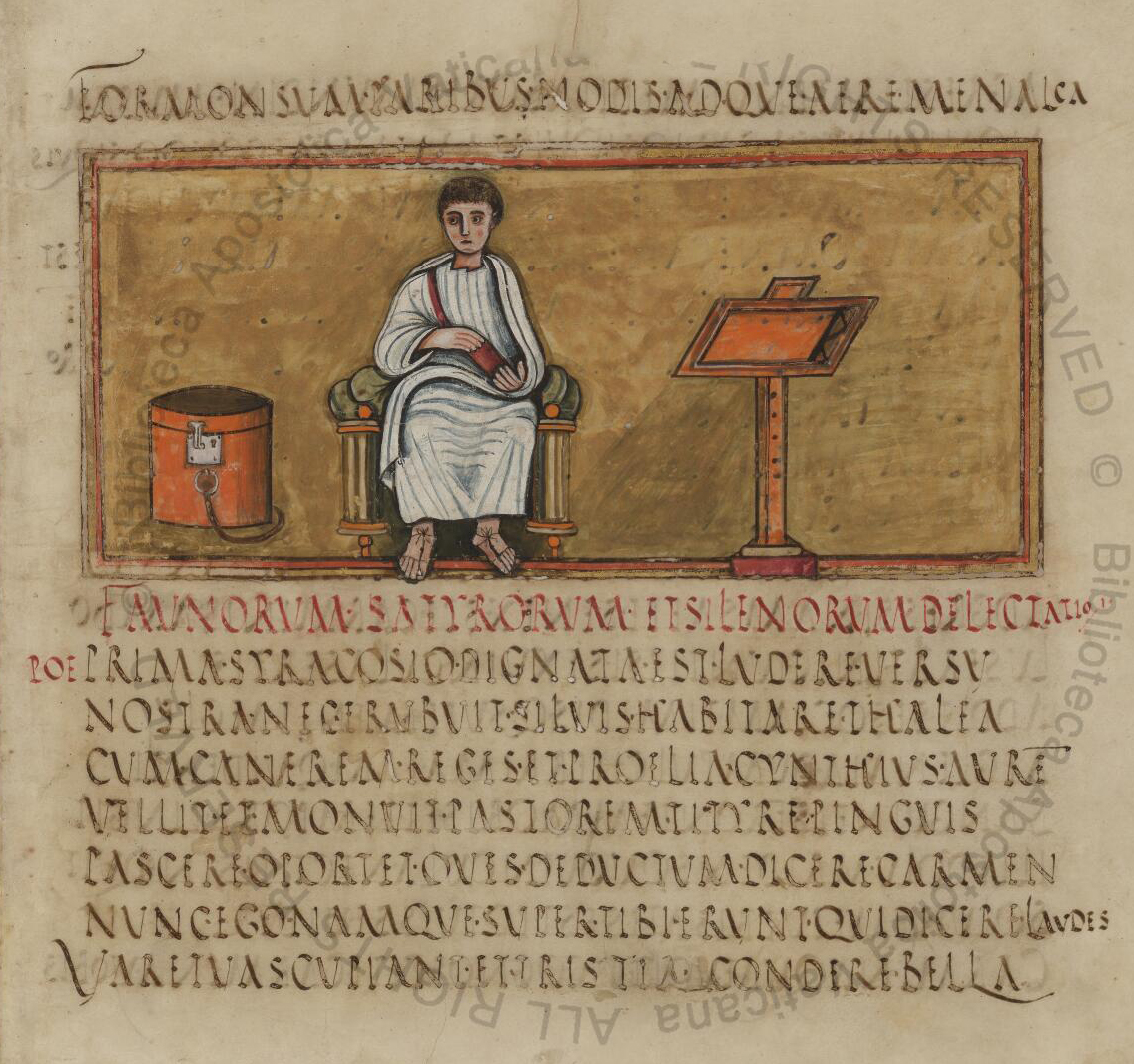
What It Takes to Understand Vergil

Macrobius, Saturnalia 5.14-15

“Has it been proved to you that Vergil cannot be understood by someone who is ignorant of the sound of Latin and is equally distant to one who has not drunk Greek learning deep with the fullest thirst?

If I did not fear making you antsy, I could fill huge volumes with the material he translated from the most obscure Greek teachings. But these assertions are enough to support the thesis I have proposed.”

probatumne vobis est Vergilium, ut ab eo intellegi non potest qui sonum Latinae vocis ignorat, ita nec ab eo posse qui Graecam non hauserit extrema satietate doctrinam?

nam si fastidium facere non timerem, ingentia poteram volumina de his quae a penitissima Graecorum doctrina transtulisset implere: sed ad fidem rei propositae relata sufficient.’


Image result for Medieval manuscript Vergil

Greed: Possessed by Love of Possession

Publilius Syrus, 560

“Greed considers what it wants not what is right”

Quod vult cupiditas cogitat, non quod decet

Dicta Catonis 31

“Greed always loves lies, secrets, and stealing”

Semper avarus amat mendacia furta rapinas

Seneca De Beneficiis 2.27

“Greed does not allow anyone to be grateful”

Non patitur aviditas quemquam esse gratum

De Beneficiis 2.27

“Greed always reaches beyond itself and one cannot sense his own happiness because he looks not at where he came from but instead to where he reaches.”

Ultra se cupiditas porrigit et felicitatem suam non intellegit, quia non, unde venerit, respicit, sed quo tendat.

Pliny the Younger, Letters 30.4

“Such a greed for possession has overtaken people that they seem to be owned by things rather than possess them”

Ea invasit homines habendi cupido, ut possideri magis quam possidere videantur

Macrobius, Saturnalia 1.8

“One is a slave to lust, another to greed, or ambition: all are slaves to hope, to fear. Certainly, no servitude is fouler than a voluntary one.”

alius libidini servit, alius avaritiae, alius ambitioni, omnes spei, omnes timori: et certe nulla servitus turpior quam voluntaria.

Publilius Syrus 438

“Greed loves nothing more than what is not permitted”

Nihil magis amat cupiditas quam quod non licet

Yates_thompson_ms_36_f002r
Yates Thompson MS 36, f. 2r

Three Options in War

The many Greek epigrams on martial themes could lead to the belief that the only reaction to grim war was to fight valiantly and kill, kill, kill. That was of course the celebrated option:

Simonides 6.2 (Greek Anthology)

This bow, now retired from tear-filled battle,
Rests under the roof of Athena’s temple.
Often the cause of groans
In the chaos of men’s wars,
It’s been cleansed in the blood of Persian horsemen.

But as Timocreon, a contemporary of Simonides, demonstrated, one might also defect to the enemy, and cheer the exposure of other turncoats:

Timocreon Fr.729

It was not Timocreon alone
Who swore an oath to the Medes.
There were other rogues;
Mine is not the only clipped tail.
There are other foxes.

Archilochus showed yet another alternative to fighting: take the life-preserving coward’s path of dropping your weapons and running away:

Archilochus Fr.5

Some Saion is strutting with my shield,
Pristine gear I dropped by a shrub.
Thoughtless.
But, I did save myself!
What’s that shield to me?
Screw it!
The new one I get will be no worse.

Simonides 6.2 (Greek Anthology)

τόξα τάδε πτολέμοιο πεπαυμένα δακρυόεντος
νηῷ Ἀθηναίης κεῖται ὑπορρόφια,
πολλάκι δὴ στονόεντα κατὰ κλόνον ἐν δαῒ φωτῶν
Περσῶν ἱππομάχων αἵματι λουσάμενα.

Timocreon Fr.729

οὐκ ἄρα Τιμοκρέων μόνος
Μήδοισιν ὁρκιατομεῖ,
ἀλλ᾽ ἐντὶ κἆλλοι δὴ πονη-
ροί κοὐκ ἐγὼ μόνα κόλου-
ρις· ἐντὶ κἄλλαι ᾽λώπεκες.

Archilocus Fr.5

ἀσπίδι μὲν Σαΐων τις ἀγάλλεται, ἣν παρὰ θάμνῳ
ἔντος ἀμώμητον κάλλιπον οὐκ ἐθέλων:
αὐτὸν δ᾽ ἔκ μ᾽ ἐσάωσα: τί μοι μέλει ἀσπὶς ἐκεινη;
ἐρρέτω: ἐξαῦτις κτήσομαι οὐ κακίω.

Corinthian helmet. c.700-480 BC.
Metropolitan Museum of Art.

Larry Benn has a B.A. in English Literature from Harvard College, an M.Phil in English Literature from Oxford University, and a J.D. from Yale Law School. Making amends for a working life misspent in finance, he’s now a hobbyist in ancient languages and blogs at featsofgreek.blogspot.com.

Hey Poindexter, You Don’t Know Sh*t!

Petrarch, On His Own Ignorance (32):

“I don’t say these things in an effort to avoid their judgment, but so that they who are ignorant may feel some shame (if they are capable of it) in making their judgment. For, on this subject, I do not just embrace the opinion of friendly jealousy, but even the judgment of hostile hatred, and in sum, if someone pronounces that I am ignorant, I agree with him! When I myself think over how many things are lacking to me, toward which my mind, eager for knowledge, exerts itself, I sadly and silently recognize my own ignorance. But in the meantime, while the end of my present exile is near, at which point this imperfection (from whence our knowledge derives) will be terminated, I am consoled by the thought of our shared nature. I think that it happens to all good and modest minds, that they learn about themselves and derive consolation therefrom. For those who get hold of great knowledge (I am speaking according to the standards of human learning), it is always small when considered in itself, but it becomes great in light of the narrow circumstances from which it is derived, and certainly looks great when compared to others. Otherwise, I ask you, how small and insignificant is the knowledge granted to one mind? Nay, how much like nothing is the knowledge of any one person, whoever they be, when it is compared not just to the knowledge of God, but to one’s own fund of ignorance?”

Petrarch-engraving

Non hec dico, ut declinem forum, sed ut pudeat, siquis est pudor, iudicasse qui nesciunt. Ego etenim de hac re non modo sententiam amicabilis amplector invidie, sed hostilis odii, et ad summam, quisquis ignarum me pronuntiat, mecum sentit. Nam et ego ipse recogitans quam multa michi desint ad id quo sciendi avida mens suspirat, ignorantiam meam dolens ac tacitus recognosco. Sed me interim, dum presentis exilii finis adest, quo nostra hec imperfectio terminetur, qua ex parte nunc scimus, nature communis extimatione consolor. Idque omnibus bonis ac modestis ingeniis evenire arbitror, ut agnoscant se pariter ac solentur; his etiam quibus ingens obtigit scientia — secundum humane scientie morem loquor — que in se semper exigua, pro angustiis quibus excipitur, et collata aliis ingens fit. Alioquin quantulum, queso, est, quantumcunque est, quod nosse uni ingenio datum est? Imo quam nichil est scire hominis, quisquis sit, si non dicam scientie Dei, sed sui ipsius ignorantie comparetur?

Drinking with Roman Usurpers

Firmus was, according to the Historia Augusta, a usurper. The historical record is less clear.

Historia Augusta 29.IV

“Firmus was nevertheless of huge stature with prominent eyes, curly hair, a scarred forehead, a darker complexion on his face while most of his body was white, although it was tough and hairy, so that many used to call him a Cyclops. He used to eat a lot of meat and allegedly ate an ostrich in a day. He drank some wine and a lot of water. He was extremely strong in mind, most robust in nerves to the extent that he overcame Tritannus, whom Varro mentions. For he endured an anvil placed on his chest and struck constantly while he seemed to be rising up rather than lying down because he was face up supporting himself on his hands.

Yet, [Firmus] had a drinking competition with Aurelian’s generals when they wanted to test him. For, when a certain Burburus, one of the standard-bearers and a notable drinker, challenged him to a drinking context, he sucked down two pails of wine but was still sober after the banquet. When Burburus asked him, “Why didn’t you drink the dregs?” he responded “Fool, the earth is not drunk.” We are pursuing lighter notes here, we must speak of more important ones.”

Fuit tamen Firmus statura ingenti, oculis foris eminentibus, capillo crispo, fronte vulnerata, vultu nigriore, reliqua parte corporis candidus sed pilosus atque hispidus, ita ut eum plerique Cyclopem vocarent. 2carne multa vescebatur, struthionem ad diem comedisse fertur. vini non multum bibit, aquae plurimum. mente firmissimus, nervis robustissimus, ita ut Tritannum vinceret, cuius Varro meminit. 3nam et incudem superpositam pectori constanter aliis tundentibus pertulit, cum ipse reclinis ac resupinus et curvatus in manus penderet potius quam iaceret.  fuit tamen ei contentio cum Aureliani ducibus ad bibendum, si quando eum temptare voluissent. nam quidam Burburus nomine de numero vexillariorum, notissimus potator, cum ad bibendum eundem provocasset, situlas duas plenas mero duxit et toto postea convivio sobrius fuit; et cum ei Burburus diceret, “Quare non faeces bibisti?” respondit ille, “Stulte, terra non bibitur.” levia persequimur, cum maiora dicenda sint.


Image result for ancient roman drinking games

Fantastic Friday 2: Further Adventures in Ethnography

Paradoxographus Vaticanus, 51-55

51 “The Assyrians sell their daughters in the marketplace to whoever wants to settle down with them. First the most well-born and most beautiful and then the rest in order. Whenever they get to the least attractive, they announce how much someone is willing to take to live with them and they add this consolation price from the fee charged for the desirable girls to these [last ones].”

᾿Ασσύριοι τὰς παρθένους ἐν ἀγορᾷ πωλοῦσι τοῖς θέλουσι συνοικεῖν, πρῶτον μὲν τὰς εὐγενεστάτας καὶ καλλίστας, εἶτα τὰς λοιπὰς ἐφεξῆς· ὅταν δὲ ἔλθωσι ἐπὶ τὰς φαυλοτάτας, κηρύττουσι πόσον τις θέλει προσλαβὼν ταύταις συνοικεῖν, καὶ τὸ συναχθὲν ἐκ τῆς τῶν εὐπρεπῶν τιμῆς ταύταις προστίθενται [ταῖς παρθένοις].

52 “If it is impossible to do something, the Persians do not mention it. Among the Persians, whoever considers a new pleasure, obtains heaps of it. [Among the Persians] whoever is discovered by the king grieves throughout his life and drinks a stone draft. Whenever the king dies, all of his claims are released and people take what they want and act lawlessly for three days until, once they arrive at the royal doors, they seek a new king who will resolve the lawlessness. [Among the Persians] if the king designates someone to whip, he is thankful as if he received something good.”

Πέρσαι, ὃ μὴ ποιεῖν ἔξεστιν, οὐδὲ λέγουσιν. παρὰ Πέρσαις, ὃς ἂν ἡδονὴν καινὴν ἐπινοήσῃ, σῶρα λαμβάνει. [Παρὰ Πέρσαις] ὃς ἂν καταγνωσθῇ παρὰ
βασιλέως, πενθεῖ διὰ βίον καὶ ποτηρίῳ πίνει πετρίνῳ. ὅταν δὲ ὁ βασιλεὺς ἀποθάνῃ, ἀφίενται τῶν ἐγκλημάτων πάντες καὶ ἁρπάζουσιν ἂ θέλουσι καὶ παρανομοῦσιν ἐπὶ
τρεῖς ἡμέρας, ἕως ἂν ἐπὶ τὰς βασιλείους θύρας ἐλθόντες αἰτήσωνται βασιλέα, ὅστις αὐτοὺς ἀπαλλάξει τῆς ἀνομίας. [Παρὰ Πέρσαις] ἐάν τινα προστάξῃ βασιλεὺς μαστιγῶσαι, εὐχαριστεῖ ὡς ἀγαθοῦ τυχών.

53 “Among the Indians, if anyone ruins the hand or eye of an artisan he is punished with death.”

Παρὰ τοῖς ᾿Ινδοῖς ὁ τεχνίτου πηρώσας χεῖρα ἢ ὀφθαλμὸν θανάτῳ ζημιοῦται.

54 “Among the Egyptians it is not allowed for the illiterate to provide testimony.”

Παρ’ Αἰγυπτίοις μαρτυρεῖν ἀγραμμάτῳ οὐκ ἔξεστιν.

55 “the Libyan Atarantes judge the best of their daughters to be the ones who remained virgins for the longest time.”

᾿Ατάραντες Λίβυες τῶν θυγατέρων ἀρίστας κρίνουσι τὰς πλεῖστον χρόνον μεμενηκυίας παρθένους.


Image result for medieval manuscript assyrians
The J. Paul Getty Museum, Ms. 5, fol. 36v

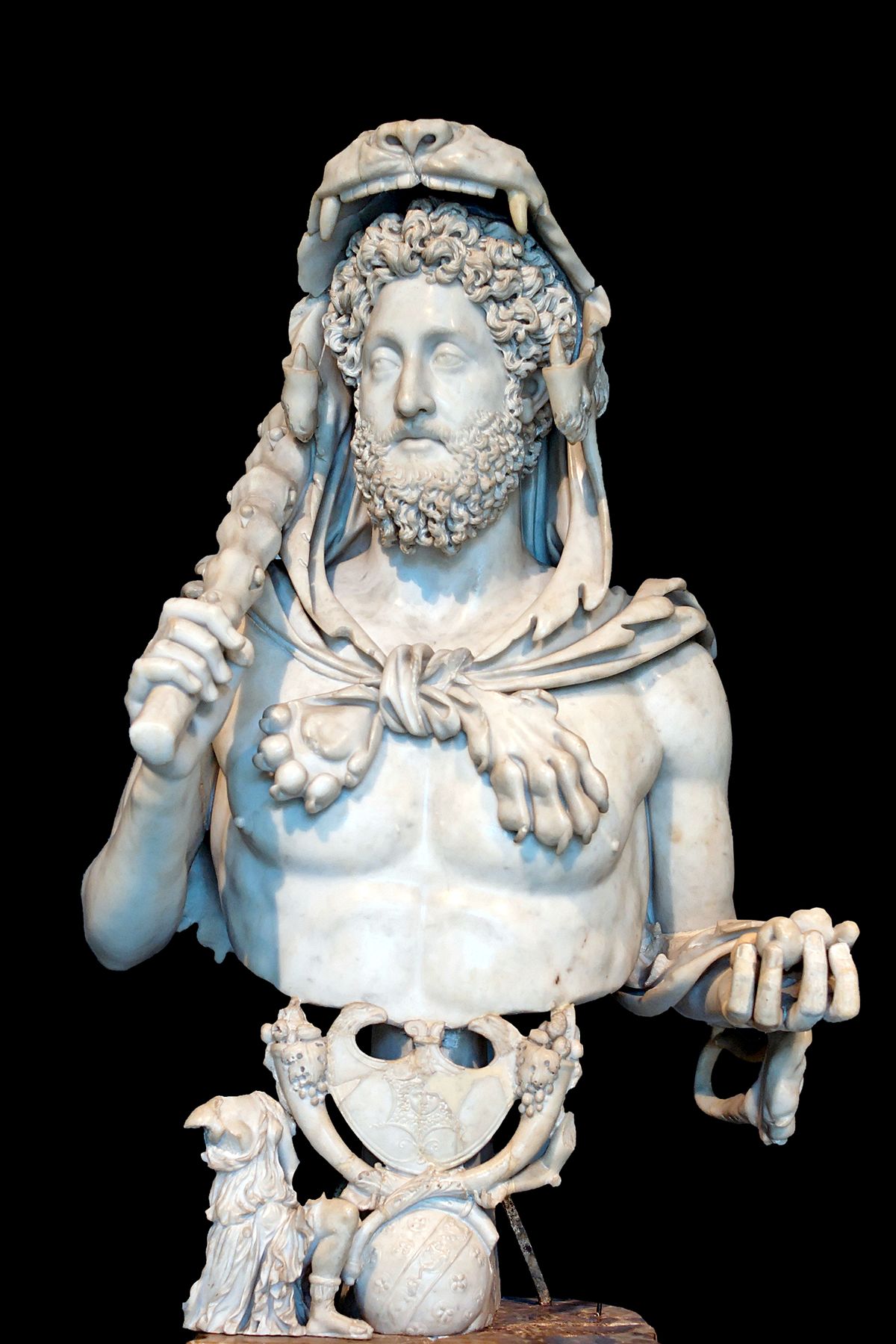
A Failure of Education: Commodus’ Cruelty

From the Historia Augusta on Commodus, 1

“Therefore, when his brother had passed, Marcus tried to educate Commodus with his own writings and those of famous and prominent men. As teachers he had Onesicrates for Greek literature, Antistius Capella for Latin and Ateius Sanctus for rhetoric.

But teachers of so many disciplines were useless in his case—such was the power of his native character or of those who were kept as instructors in the palace. For from his early childhood, Commodus was nasty, dishonest, cruel, desirous, foul-mouthed, and corrupted. For he was already a craftsman in those things which were not proper to the imperial class, such as making chalices, dancing, singing, whistling, playing a fool, and acting the perfect gladiator.

When he was twelve years old, he provided an omen of his cruelty at Centumcellae. For, when his bath was accidentally too cool, he ordered that the bath-slave be thrown into the furnace. Then, the slave who was ordered this, burned a sheep’s skin into the furnace, so that he might convince the punishment was performed through the foulness of the smell.”

mortuo igitur fratre Commodum Marcus et suis praeceptis et magnorum atque optimorum virorum erudire conatus est. habuit litteratorem Graecum Onesicratem, Latinum Capellam Antistium; orator ei Ateius Sanctus fuit.

Sed tot disciplinarum magistri nihil ei profuerunt. tantum valet aut ingenii vis aut eorum qui in aula institutores habentur. nam a prima statim pueritia turpis, improbus, crudelis, libidinosus, ore quoque pollutus et constupratus fuit. iam in his artifex, quae stationis imperatoriae non erant, ut calices fingeret, saltaret, cantaret, sibilaret, scurram denique et gladiatorem perfectum ostenderet. auspicium crudelitatis apud Centumcellas dedit anno aetatis duodecimo. nam cum tepidius forte lautus esset, balneatorem in fornacem conici iussit; quando a paedagogo, cui hoc iussum fuerat, vervecina pellis in fornace consumpta est, ut fidem poenae de foetore nidoris impleret.


Image result for Commodus

The Oratorical Practices of Gaius Caligula

Suetonius, Gaius Caligula 53

“Of the liberal arts, Caligula paid the least attention to literature and the most to rhetoric. He was as eloquent and witty as you would want, especially when he could launch an attack on someone. Words and phrases used to find him whenever he was angry—his articulation and voice too rose up so that it was impossible for him to stay in the same place thanks to excitement and he was heard well by people standing far away.

When he was about to give a speech, he used to threaten to unsheathe the tool of his nocturnal strains, and he despised work composed smoothly and with style so much that he used to say that Seneca wrote “only school-essays” and was “sand without lime”. He was also in the custom of responding to the successful speeches of orators and of working on accusations and defenses for major matters brought to the senate; when his stylus progressed well, whether he was adding guilt or lightening responsibility with his own oration, the whole equestrian class was invited to hear him by edict.”

LIII. Ex disciplinis liberalibus minimum eruditioni, eloquentiae plurimum attendit, quamtumvis facundus et promptus, utique si perorandum in aliquem esset. Irato et verba et sententiae suppetebant, pronuntiatio quoque et vox, ut neque eodem loci prae ardore consisteret et exaudiretur a procul stantibus. Peroraturus stricturum se lucubrationis suae telum minabatur, lenius comptiusque scribendi genus adeo contemnens, ut Senecam tum maxime placentem “commissiones meras” componere et “harenam esse sine calce” diceret. Solebat etiam prosperis oratorum actionibus rescribere et magnorum in senatu reorum accusationes defensionesque meditari ac, prout stilus cesserat, vel onerare sententia sua quemque vel sublevare, equestri quoque ordine ad audiendum invitato per edicta.


Image result for Ancient Roman Gaius Caligula

Wild Claims to Massive Fame

Montesquieu, Considerations on the Greatness and the Decline of the Romans (Part 1)

We should not take up the same idea of Rome in its beginnings which we give to the cities which we see today, unless it be one of those in Crimea, made for enclosing spoils, beasts, and the produce of the country. The ancient names of Rome’s principal cities correspond to this usage.

The city did not have the same streets, unless one called by that name the continuation of the paths which lead to them. Houses were located without order, and were very small; for the people, being always at work or in a public place, hardly kept themselves within their houses.

But the greatness of Rome soon appeared in its public buildings. The accomplishments which gave, and give even today, the highest idea of their power, were completed under the kings. They began from that point to construct their eternal city.

Il ne faut pas prendre de la ville de Rome, dans ses commencements, l’idée que nous donnent les villes que nous voyons aujourd’hui, à moins que ce ne soit de celles de la Crimée, faites pour renfermer le butin, les bestiaux et les fruits de la campagne. Les noms anciens des principaux lieux de Rome ont tous du rapport à cet usage.
La ville n’avait pas même de rues, si l’on n’appelle de ce nom la continuation des chemins qui y aboutissaient. Les maisons étaient placées sans ordre et très petites : car les hommes, toujours au travail ou dans la place publique, ne se tenaient guère dans les maisons.
Mais la grandeur de Rome parut bientôt dans ses édifices publics. Les ouvrages qui ont donné et qui donnent encore aujourd’hui la plus haute idée de sa puissance ont été faits sous les Rois On commençait déjà à bâtir la ville éternelle.
Romulus et ses successeurs furent presque toujours en guerre avec leurs voisins pour avoir des citoyens, des femmes ou des terres. Ils revenaient dans la ville avec les dépouilles des peuples vaincus : c’étaient des gerbes de blé et des troupeaux ; cela y causait une grande joie. Voilà l’origine des triomphes, qui furent dans la suite la principale cause des grandeurs où cette ville parvint.