Zonaras 7.6 Part I – Tullus Hostilius and the Horatii

Tullus Hostilius becomes king and abandons Numa’s policy of peace; Conflict breaks out with Alba Longa; The Horatii fight the Curiatii

Upon the death of Numa, who had left behing no successor, Tullus Hostilius was selected as king by the people and senate. He, holding in contempt most of the ways of Numa, eagerly strove to emulate Romulus, and he therefore got himself up for battles and provoked the people. At one point, when the Albans had undertaken a plundering expedition against the Romans, the people of both cities set out for war against each other. Before it came to blows, they were reconciled, and it seemed suitable to both sides that they should each live together in one city. When each one held to its own and thought it proper that the people of the other side should move to their own, they abandoned this proposal. Thereupon, they came into conflict over the question of political supremacy. As neither side would cede control to the other, they decided to engage in a contest to decide which side would govern. It did not seem right to engage in a full-blown military contest, nor were they inclined to submit the decision to single combat. There were among both the Romans and the Albans sets of triplets, who were born of twin mothers, and were of equal age and strength. The triplets on the Roman side were called the Publii Horatii, and those on the Alban side were the Curiatii. The were then thrown into battle against each other, and disregarded any previous ties of kinship which they shared. They armed themselves, and having arrayed themselves in the middle of the field, they called upon their protector deities and looked uninterruptedly at the sun. When they came up against each other, they fought at first as a group, and then one-by-one. Finally, when two of the Romans had fallen and all three of the Albans had been wounded, Horatius – because he could not encounter all three Albans even though he himself were unwounded – turned himself to flight so that they would be separated from each other in their pursuit of him. Because they were torn asunder in the chase, Hostilius was able to set upon each one individually and slay them all, for which feat he was honored. He was, however, brought to trial for murder when he killed his sister, who had expressed her grief upon seeing him carring the spoils of her slain cousins. He pled his case before an assembly of the people, and was released from the charge.

Τοῦ δὲ Νόμα τελευτήσαντος καὶ μηδένα καταλιπόντος διάδοχον, ῾Οστίλλιος Τοῦλλος ᾑρέθη παρὰ τοῦ δήμου καὶ τῆς βουλῆς. ὃς τὰ πλεῖστα τῶν τοῦ Νόμα χλευάσας ἠθῶν τὸν ῾Ρωμύλον ἐζήλωσε, καὶ πρὸς μάχας αὐτός τε ὥρμα καὶ τὸν δῆμον ἠρέθιζεν. ἁρπαγῆς γοῦν γενομένης παρὰ ῾Ρωμαίων ἐξ ᾿Αλβανῶν, ὥρμησαν πρὸς μάχην ἑκάτεροι· πρὸ δὲ τοῦ συμβαλεῖν κατηλλάγησαν, καὶ ἐς μίαν πόλιν ἀμφοῖν ἐδόκει συνοικῆσαι τοῖς γένεσιν. ἑκάστου δὲ τῆς οἰκείας ἐχομένου καὶ τὸ ἕτερον εἰς ταύτην ἀξιοῦντος μεταναστεῦσαι, ἀπέστησαν τοῦ σκοποῦ. εἶτα περὶ τῆς ἡγεμονίας διηνέχθησαν· ὡς δὲ οὐδεὶς τῷ ἑτέρῳ παρεχώρει αὐτῆς, ἀγωνίσασθαι συνέθεντο περὶ τῆς ἀρχῆς. οὔτε δὲ τοῖς στρατοπέδοις ὅλοις ἐδόκει μαχέσασθαι οὔτε μὴν μονομαχίᾳ κριθήσεσθαι. ἦσαν δὲ παρ’ ἀμφοῖν τρίδυμοι ἀδελφοί, ἐκ μητέρων γεγονότες διδύμων, ἰσήλικές τε καὶ ἰσοπαλεῖς τὴν ἰσχύν· ἐκαλοῦντο δὲ οἱ μὲν τῶν ῾Ρωμαίων Πουπλιοράτιοι, οἱ δὲ τῶν ᾿Αλβανῶν Κουριάται. τούτους εἰς μάχην προεβάλοντο, παρ’ οὐδὲν τὴν πρὸς ἀλλήλους αὐτῶν συγγένειαν θέμενοι. οἱ δὲ ὁπλισάμενοι καὶ ἐν τῷ μεταιχμίῳ τῶν στρατοπέδων ἀντιπαραταξάμενοι θεούς τε ὁμογνίους ἀνεκαλοῦντο καὶ συνεχῶς ἀνέβλεπον πρὸς τὸν ἥλιον. συμβαλόντες δὲ ποτὲ μὲν ἀθρόοι, ποτὲ δὲ καὶ καθ’ ἕνα ἐμάχοντο. τέλος δὲ τῶν μὲν ῾Ρωμαίων τῶν δύο πεσόντων, τῶν δὲ ᾿Αλβανῶν ἁπάντων τρωθέντων, ὁ ῾Οράτιος ὁ κατάλοιπος, ὅτι τοῖς τρισὶν ἅμα, εἰ καὶ ἄτρωτος ἦν, οὐκ ἠδύνατο ἀντιτάξασθαι, ἐνέκλινεν, ὡς ἂν διώκοντες αὐτὸν σκεδασθῶσι· κἀπειδὴ πρὸς τὴν δίωξιν διεσπάρησαν, ἑκάστῳ ἐπιτιθέμενος ἅπαντας διεχρήσατο. κἀντεῦθεν τετίμητο· ὅτι δὲ καὶ τὴν ἀδελφὴν προσαπέκτεινεν, ὀλοφυρομένην, ἐπεὶ τὰ τῶν ἀνεψιῶν σκῦλα ἑώρα φέροντα τὸν ῾Οράτιον, φόνου ἐκρίθη· ἐς δὲ τὸν δῆμον ἔκκλητον αἰτήσας ἀφείθη.

Zonaras 7.5 Part IV – Numa’s Calendar and Death

Numa’s calendar is compared to others, and his benevolent influence is felt in and around Rome:

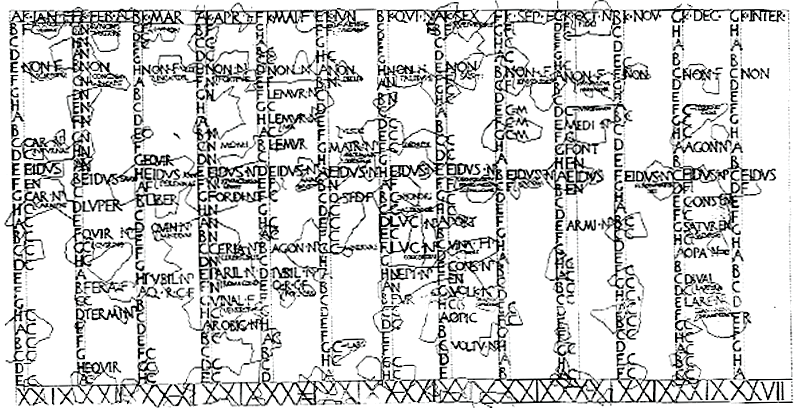
It is also said that January and February were added by Numa to the other months, who set out that the year should be reckoned as twelve months in accordance with the course of the moon. The calendar year had among the Romans previously been ten months, just as among some of the barbarians it was three months, and of the Greeks it was four months with the Arcadians, six months with the Acharnians. The calendar year was one month among the Egyptians, and subsequently four months. For that reason, the Egyptians seem wonderously ancient (though they are not), because they bring a preposterous weight of years into their genealogy when they match the number of years to the number of months. Numa also gave January its place at the beginning of the year.

Thus, as Numa accustomed his subjects to justice and piety, he removed all considerations of war. For, not only was the Roman people made tame by Numa’s sense of divine order and gentle disposition, but the beginnings of change overtook even the surrounding cities as they were all seized by desire for peace and justice, and a zeal for planting crops, raising children in peace, and reverencing the gods. No war, no uprising, no revolution in the city is recorded during Numa’s reign, nor is it recorded that any hatred, any envy, or any conspiracy was contrived against Numa through desire to seize the throne. Numa had a daughter named Pompilia, and he gave her in marriage to Marcius. From Pompilia was born Numa’s grandson Ancus Marcius, who reigned after Tullus Hostilius. When Ancus was five, Numa left him behind as he died, having been worn down by old age and a mild illness. He had lived for 83 years, and ruled for 43.

Λέγεται δὲ καὶ τὸν ᾿Ιανουάριον καὶ τὸν Φεβρουάριον παρ’ αὐτοῦ τοῖς μησὶ προστεθῆναι, δωδεκάμηνον κατὰ τὸν τῆς σελήνης δρόμον νομοθετήσαντος λογίζεσθαι τὸν ἐνιαυτόν, δεκάμηνον πρόσθεν ὄντα, ὡς ἐνίοις τῶν βαρβάρων τρίμηνον, καὶ τῶν ῾Ελλήνων ᾿Αρκάσι μὲν τετράμηνον, τοῖς δὲ ᾿Ακαρνᾶσιν ἑξάμηνον. Αἰγυπτίοις δὲ μηνιαῖος ἦν ὁ ἐνιαυτός, εἶτα τετράμηνος· διὸ καὶ ἀρχαιότατοι δοκοῦσιν εἶναι, καίτοι μὴ ὄντες, πλῆθος ἀμήχανον ἐτῶν ἐπὶ ταῖς γενεαλογίαις εἰσάγοντες, ἅτε δὴ τοὺς μῆνας εἰς ἐτῶν τιθέμενοι ἀριθμόν. καὶ τὸν ᾿Ιανουάριον δὲ Νόμας εἰς ἀρχὴν τοῦ ἔτους ἀπένειμεν. Οὕτω δὲ δικαιοσύνῃ καὶ εὐσεβείᾳ συνεθίσαντος τὸ ὑπήκοον, ἐξῄρητο πάντῃ τὰ τοῦ πολέμου. οὐ γὰρ μόνον ὁ ῾Ρωμαίων δῆμος ἡμέρωτο τῇ τοῦ βασιλέως εὐνομίᾳ καὶ πρᾳότητι, ἀλλὰ καὶ τὰς κύκλῳ πόλεις ἀρχὴ μεταβολῆς ἔλαβε, καὶ πόθος εἰσερρύη πάντας εἰρήνης καὶ τοῦ δικαίου, γῆν φυτεύειν καὶ τέκνα τρέφειν ἐν ἡσυχίᾳ καὶ σέβεσθαι θεούς. οὔτε γὰρ πόλεμος οὔτε στάσις οὔτε νεωτερισμὸς περὶ πολιτείας ἱστόρηται Νόμα βασιλεύοντος, οὐδ’ ἐπ’ ἐκεῖνον ἔχθρα τις ἢ φθόνος ἢ σύστασις ἀνδρῶν καὶ ἐπιβουλὴ δι’ ἔρωτα βασιλείας γενέσθαι ποι ἀναγέγραπται. θυγατέρα δ’ ἐσχηκὼς Πομπιλίαν, Μαρκίῳ ταύτην ἐξέδοτο· ἐξ ἧς Μάρκιος ῎Αγκος θυγατριδοῦς ἐτέχθη αὐτῷ, ὃς μετὰ Τοῦλλον ῾Οστίλλιον ἐβασίλευσε. τοῦτον πενταετῆ καταλιπὼν ὁ Νόμας ἐτελεύτησεν, κατὰ μικρὸν ὑπὸ γήρως καὶ νόσου μαλακῆς ἀπομαραινόμενος, χρόνον τριετῆ τοῖς ὀγδοήκοντα προσβιώσας,
βασιλεύσας ἔτη ἐπὶ τρισὶ τεσσαράκοντα.

Zonaras does not mention Numa’s “Nocturnal Congress” with the nymph Egeria.

Zonaras 7.5 Part III – Numa’s Religious Reforms

Numa Pompilius attempts to civilize the Romans by turning their minds from war to the cultivation of divine favor:

Bound by these considerations, Numa sacrificed to the gods and then set out to Rome, where the senate and people sang his praises and greeted him warmly. When they then called together the assembly and presented him with the regal insignia, he ordered them to hold off and said that he needed Jupiter, too, to ratify his rule. He then ascended the Capitoline, made a sacrifice, and then finally taking up the regal insignia, he descended once again.

As soon as he assumed the throne, he disbanded the group of three-hundred, which Romulus always had about his person. For he said that it was not right to distrust those who trusted him, nor did he think it a worthy thing to be king of those who distrusted him. Next, he undertook to make the city, which to this point was rough and warlike, a bit more civilized and peaceful. He forbid the erection of an anthropomorphic statue of Zeus by the Romans. For this reason, there was among them no drawn or sculpted images of the god, and in a period of 170 years they made no anthropomorphic images in the shrines which they erected, considering it irreligious to manufacture things which were superior to our hands, and because it was not possible to seize upon a god otherwise than as he intended. Numa also ordered that sacrifices be made bloodless by using barley and libations, because it was necessary that the gods, being as they were guardians of peace and justice, should be pure of any murder. Nor, he insisted, should anyone listen or watch anything pertaining to the gods as a distraction or with little care; rather, they should take a break from other affairs and focus their attention upon piety, since it was the most important affair. From these things and many more which I have not mentioned, Numa fashioned from custom the religious constitution of the state for the people of the time. They say that Numa himself was so hung up on his hopeful notions about the gods that when it was announced to him in the middle of a sacrifice that Rome’s enemies were at hand, he simply smiled and said, “Ah, but I am sacrificing.” Numa also distributed the land, which Romulus had acquired in war, to the needy citizens; in so going, he alleviated their poverty, which he considered a necessary cause of injustice, and turned it into the pursuit of agriculture, which he thought helped to soften the people while making their love of a powerful peace much more keenly perceptible.

Τούτοις ἐνδεδωκὼς ὁ Νόμας θύσας τοῖς θεοῖς προῆγεν εἰς ῾Ρώμην· ὑπήντα δὲ ἡ βουλὴ καὶ ὁ δῆμος εὐφημοῦντες καὶ χαίροντες. ἐπεὶ δὲ κατέστησαν εἰς τὴν ἀγοράν, προσφερομένων αὐτῷ τῶν βασιλικῶν παρασήμων, ἐπισχεῖν κελεύσας ἔφη δεῖσθαι καὶ θεοῦ τὴν βασιλείαν ἐμπεδοῦντος αὐτῷ. ἄνεισιν οὖν εἰς τὸ Καπιτώλιον, καὶ θύσας, οὕτω τε τὴν βασιλικὴν ἀναλαβὼν ἐσθῆτα, κατέβαινε.

Παραλαβὼν δὲ τὴν ἀρχὴν πρῶτον μὲν τὸ τῶν τριακοσίων διέλυσε σύστημα, οὓς περὶ τὸ σῶμα ῾Ρωμύλος εἶχεν ἀεί· οὐ γὰρ δεῖν ἀπιστεῖν πιστεύουσιν ἔλεγεν, οὐδὲ βασιλεύειν ἀπιστούντων ἠξίου· εἶτα τὴν πόλιν ἐκ σκληρᾶς καὶ πολεμικῆς ἐπεχείρει μαλακωτέραν ποιῆσαι καὶ εἰρηνικωτέραν. ἀνθρωποειδῆ τε καὶ ζωόμορφον εἰκόνα θεοῦ ἀνιστᾶν ῾Ρωμαίοις ἀπείρηκεν· ὅθεν οὐδ’ ἦν παρ’ αὐτοῖς οὔτε γραπτὸν οὔτε πλαστὸν εἶδος θεοῦ, ἐν ἑκατὸν δὲ πρὸς ἑβδομήκοντα ἔτεσι ναῶν αὐτοῖς ἀνεγειρομένων οὐδὲν ἔμμορφον ἐποίουν ἀφίδρυμα, ὡς οὔτε ὅσιον ἀφομοιοῦν τοῖς χείροσι τὰ βελτίονα οὔτε ἐφάπτεσθαι ἄλλως θεοῦ δυνατὸν ἢ νοήσει. καὶ τὰς θυσίας δὲ ἀναιμάκτους ποιεῖσθαι ἐθέσπισε δι’ ἀλφίτων τε καὶ σπονδῆς· δεῖν γὰρ τοὺς θεούς, εἰρήνης καὶ δικαιοσύνης φύλακας ὄντας, φόνου καθαροὺς εἶναι· μήτε δὲ ἀκούειν τι τῶν θείων μήτε ὁρᾶν ἐν παρέργῳ καὶ ἀμελῶς, ἀλλὰ σχολὴν ἄγοντας ἀπὸ τῶν ἄλλων καὶ προσέχοντας τὴν διάνοιαν ὡς πράξει μεγίστῃ τῇ περὶ τὴν εὐσέβειαν. ἐκ δὲ τούτων καὶ ἄλλων πλειόνων, ἃ διὰ τὸ πλῆθος παρήκαμεν, διάθεσιν πρὸς τὸ θεῖον τοῖς τότε ἀνθρώποις ἐξ ἐθισμοῦ ὁ Νόμας ἐνεποίησεν. αὐτὸν δὲ οὕτω φασὶν εἰς τὸ θεῖον ἀνηρτῆσθαι ταῖς ἐλπίσιν ὥστε προσαγγελίας αὐτῷ θύοντί ποτε γινομένης ὡς ἐπέρχονται πολέμιοι μειδιᾶσαι καὶ εἰπεῖν “ἐγὼ δὲ θύω.” καὶ τὴν χώραν δὲ ἣν αἰχμῇ ῾Ρωμύλος ἐκτήσατο διένειμεν οὗτος τοῖς ἀπόροις τῶν πολιτῶν, ἀφαιρῶν ἐξ αὐτῶν τὴν ἀπορίαν, ὡς ἀνάγκην τῆς ἀδικίας ποιητικήν, καὶ τρέπων εἰς γεωργίαν, ὡς ταύτης ἐξημερούσης τὸν δῆμον καὶ δριμὺν εἰρήνης δυναμένης ἐμποιεῖν ἔρωτα.

Zonaras 7.5 Part II – Numa Pompilius, The Reluctant King

The Romans and Sabines are united in their choice of Numa Pompilius as king, but he is not eager to accept the crown:

Nevertheless, tumults arose from the suspicion that the patricians were converting the state to an oligarchy and did not wish for a king. The people revolted from this. When all agreed that a ruler should be selected, the Sabines gave the first choice to the Romans, who selected from among the Sabines a certain Numa Pompilius, a man who was well known by all for his virtue. Ambassadors from Rome were therefore sent to him. Numa did not live in Rome, but stayed among the Sabines and and inhabited the city of the Quirites. His father was a well-renowned man named Pomponius, who was adorned by every virtue which can be bestowed by either nature or education. For this reason, he has a great name and a certain amount of fame, such that Tatius, when he ruled with Romulus, married Numa to his only daughter, Tatia. She remained married to Numa for three years before she departed from this life. Numa then left behind his occupations in the city so that he could live for the most part in the open, where he wished to spend his time in the meadows and glades.

Therefore, the ambassadors came from Rome to call him to the throne as he was finishing his fortieth year of life. He declined their offer. The ambassadors, however, pressed hard upon him, having contrived every way to persuade him, and fearing lest the city should again fall into rebellion and civil war, since there was no other man to whom both parts of the state would readily grant their assent. In private, even, Numa’s father urged his son to accept the throne as a divine gift and a form of service of god, as well the sort of thing which would be the source of noble and great deeds for a wise man; moreover, it would serve as a pledge of goodwill and friendship between the entire Sabine race and a powerful, thriving city.

᾿Αλλὰ καὶ οὕτως ἐξ ὑπονοίας ἐφύοντο θόρυβοι, ὑποπτευομένων τῶν πατρικίων εἰς ὀλιγαρχίαν τὴν πολιτείαν περιιστᾶν καὶ μὴ βούλεσθαι βασιλεύεσθαι· ἐκ δὲ τούτου κατεστασίαζον. ὁμονοησάντων δὲ πάντων αἱρεθῆναι τὸν βασιλεύσοντα, οἱ Σαβῖνοι τοῖς ῾Ρωμαίοις προτέροις τὴν αἵρεσιν ἔδοσαν· οἱ δ’ ἐκ Σαβίνων εἵλοντο Νόμαν Πομπίλιον, ὄντα ἄνδρα γνώριμον πᾶσι δι’ ἀρετήν. στέλλονται γοῦν πρὸς ἐκεῖνον ἐκ ῾Ρώμης πρέσβεις· οὐ γὰρ ἐν τῇ ῾Ρώμῃ μετῴκιστο, ἀλλ’ ἐν Σαβίνοις ἦν καὶ πόλιν ᾤκει τὴν Κυριτῶν, πατρὸς ὢν Πομπωνίου ἀνδρὸς εὐδοκίμου, πᾶσαν ἀρετὴν φύσει τε καὶ παιδείᾳ ἐξησκημένος. ὅθεν καὶ ὄνομα μέγα καὶ δόξαν εἶχεν, ὡς καὶ Τάτιον τὸν τῷ ῾Ρωμύλῳ συμβασιλεύσαντα κηδεστὴν αὐτὸν ἐπὶ Τατίᾳ θέσθαι τῇ θυγατρί, ἣν μίαν ἐκεῖνος ἐγείνατο· ἣ δέκα ἐπὶ τρισὶν ἐνιαυτοὺς τῷ Νόμᾳ συνοικήσασα μετήλλαξε τὴν ζωήν. ὁ δὲ Νόμας ἐκλιπὼν τὰς ἐν ἄστει διατριβὰς ἀγραυλεῖν τὰ πολλὰ καὶ διατρίβειν ἤθελεν ἐν λειμῶσι καὶ ἄλσεσιν.

῟Ηκον οὖν ἀπὸ ῾Ρώμης οἱ πρέσβεις καλοῦντες ἐπὶ τὴν βασιλείαν αὐτὸν ἤδη τεσσαρακοστὸν ἔτος ἀνύοντα· ὁ δὲ ἀπείπατο. οἱ πρέσβεις δ’ ἐνέκειντο, πάντα τρόπον πείσειν αὐτὸν μηχανώμενοι, καὶ δεόμενοι μὴ τὴν πόλιν αὖθις εἰς στάσιν ἐμβαλεῖν καὶ ἐμφύλιον πόλεμον, οὐκ ὄντος ἑτέρου πρὸς ὃν ἄμφω τὰ μέρη συννεύσουσιν. ἰδίᾳ μέντοι καὶ ὁ πατὴρ παρεκίνει τὸν Νόμαν δέξασθαι τὴν ἀρχὴν ὡς θεῖον δῶρον καὶ ὑπηρεσίαν θεοῦ καὶ πράξεων καλῶν καὶ μεγάλων ἀνδρὶ φρονίμῳ τε καὶ χρηστῷ ἐσομένην αἰτίαν, σύνδεσμόν τε τῇ πατρίδι καὶ παντὶ τῷ Σαβίνων ἔθνει εὐνοίας τε καὶ φιλίας πρὸς πόλιν δυνατὴν καὶ ἀκμάζουσαν.

Zonaras 7.4 Part V: The Appearance of Quirinus

Suspicions surrounding Romulus’ disappearance are dispelled by Julius Proculus:

Many, being captivated by these salutary hopes, believed the account of Romulus’ disappearance. Some, however, felt suspicious of the patricians and were afraid that they were trying to snow the citizens with a stupid story, when in fact they themselves were the murderers of Romulus. They would have offered resisitance to the patricians if it were not for Julius Proculus, a man distinguished for his birth, excellent in character, and a close friend of Romulus. Proculus came to the forum and swore under oath that Romulus appeared to him, big and beautiful as never before, and decked out with shining, even flaming, arms; he claimed that he asked Romulus, ‘Suffering what, o King, have you left us tothese toilsome squabbles, and the whole city in grief?’ Romulus responded, ‘It seemed to the gods, o Proculus, that I had spent enough time among mortals, and that I should dwell again in the heavens, where I now am. But take heart, and tell the Romans that if they stay wise and manly they will achieve the height of human power. I Quirinus will forever be well-disposed to you all.’ All of this seemed believable to the Romans because of the speaker’s oath and general character; no one spoke out against this account, and setting aside all suspicion and plotting they prayed to and worshipped Quirinus. They say that Romulus acquired this name either because they called some of the citizens Quirites or because the ancients called either spear-points or spear-shafts ‘Quirinoi.’ Thus they called Romulus, braver than a warrior god, Quirinus. It was said that he lived fifty-four years, and that he disappeared in the thirty-eighth year of his reign.

Οἱ μὲν οὖν πολλοὶ πεπεισμένοι τοῖς λόγοις ἀπηλλάττοντο ἐλπίσι χρησταῖς αἰωρούμενοι, ἔνιοι δὲ ἐν ὑπονοίαις τοὺς πατρικίους πεποίηντο καὶ ἐτάραττον ὡς τὸν δῆμον ἀβέλτερα πείθοντας, αὐτοὺς τοῦ βασιλέως γεγονότας αὐτόχειρας. καὶ πράγματα ἂν παρέσχον τοῖς δυνατοῖς, εἰ μή τις τῶν ἱππέων ᾿Ιούλιος Πρόκλος, γένει τε δοκιμώτατος καὶ ἤθει χρηστὸς καὶ ῾Ρωμύλῳ πιστός, εἰς ἀγορὰν ἐλθὼν ἐνόρκως εἶπεν ὡς ὀφθείη ῾Ρωμύλος αὐτῷ καλὸς καὶ μέγας ὡς οὔποτε πρόσθεν καὶ ὅπλοις λαμπροῖς κεκοσμημένος καὶ φλέγουσι, καὶ ὡς αὐτὸς μὲν πύθοιτο “τί δὴ παθών, ὦ βασιλεῦ, ἡμᾶς μὲν ἐν αἰτίαις πεποίηκας πονηραῖς, πᾶσαν δὲ τὴν πόλιν ἐν πένθει προλέλοιπας;”ἐκεῖνος δὲ πρὸς ταῦτα ἀμείψαιτο “θεοῖς ἔδοξεν, ὦ Πρόκλε, τοσοῦτον ἡμᾶς μετ’ ἀνθρώπων γενέσθαι χρόνον, αὖθις δ’ οὐρανὸν οἰκεῖν, ἐκεῖθεν ὄντας. ἀλλὰ χαῖρε καὶ φράζε ῾Ρωμαίοις ὅτι σωφροσύνην καὶ ἀνδρείαν ἀσκοῦντες ἐπὶ πλεῖστον δυνάμεως ἀνθρωπίνης ἀφίξονται. ἐγὼ δὲ ὑμῖν εὐμενὴς ἔσομαι Κυρῖνος.” ταῦτα διά τε τὸν ὅρκον τοῦ λέγοντος καὶ τὸν τρόπον πιστὰ ῾Ρωμαίοις ἐδόκει τοσοῦτον ὡς μή τινα ἀντειπεῖν, πάσης δὲ ἀφεμένους ὑποψίας τε καὶ διαβολῆς εὔχεσθαι Κυρίνῳ καὶ θεοκλυτεῖν. ταύτην δὲ τὴν ἐπωνυμίαν φασὶ τῷ ῾Ρωμύλῳ γενέσθαι ἢ ὅτι τοὺς πολίτας Κυρίτας ὠνόμαζον ἢ ὅτι τὴν αἰχμὴν ἢ τὸ δόρυ κυρῖνον ἐκάλουν οἱ παλαιοί· ὡς οὖν ἀρήιόν τινα τὸν ῾Ρωμύλον ἢ αἰχμητὴν θεὸν ὀνομασθῆναι Κυρῖνον. λέγεται δὲ τέσσαρα μὲν ἔτη καὶ πεντήκοντα βιῶναι, ὄγδοον δ’ ἐπὶ τριακοστῷ βασιλεύων ἐνιαυτὸν ἐξ ἀνθρώπων ἀφανισθῆναι.

Zonaras 7.4 Part IV: The Deification of Romulus

Romulus pushes his tyranny to the limit and… disappears. 

When Romulus’ grandfather Numitor died in Alba Longa and the throne of that city fell to Romulus, he led some people to found a city between Alba Longa and Rome, and every year he produced a new leader for the Sabines. He grew angry at the powerful in Rome who sought an autonomous city without a king. For, those who were called ‘Patricians’ did not have a part in the city’s affairs, but rather a title and the outward appearance of power; they were brought together in the senate house more for the sake of custom than for the sake of their counsel. Then, while Romulus was in action, they would listen in silence, and they considered it better to learn what seemed better to him than to consult the opinion of the others and left off of the rest. From this circumstance arose the opinion that he treated the senate with indignity. On that account, it seemed suspicious when Romulus suddenly disappeared. It is said that while he was calling an assembly in the spot known as the Goat’s Meadow the sun lost its light, night descended upon everything, and there was terrible thunder along with gusts of wind which brought driving rain. In this storm, the masses fled, but the powerful men turned together. When the storm had subsided, and they had come together again, they began to seek the king. The powerful men did not allow anyone to inquire after Romulus, but ordered everyone to respect him and worship him, as he had been snatched away to be with the gods, and he would be a god to the Romans in place of a simple king.

᾿Επεὶ δὲ Νομίτωρος τοῦ πάππου αὐτοῦ ἐν ῎Αλβῃ τελευτήσαντος, ῾Ρωμύλῳ προσηκούσης τῆς βασιλείας, αὐτὸς εἰς μέσον ἔθηκε τὴν πολιτείαν δημαγωγῶν, καὶ κατ’ ἐνιαυτὸν ἀπεδείκνυεν ἄρχοντα τοῖς Σαβίνοις, ἠρέθισε τοὺς ἐν ῾Ρώμῃ δυνατοὺς ἀβασίλευτον ζητεῖν καὶ αὐτόνομον πολιτείαν. οὐδὲ γὰρ οἱ καλούμενοι πατρίκιοι πραγμάτων μετεῖχον, ἀλλ’ ὄνομα καὶ σχῆμα ἦν αὐτοῖς, ἔθους ἕνεκα μᾶλλον ἢ γνώμης ἀθροιζομένοις εἰς τὸ βουλευτήριον· εἶτα ῾Ρωμύλου πράττοντος ἠκροῶντο σιγῇ, καὶ τὸ πρὸ τῶν ἄλλων τὸ δεδογμένον ἐκείνῳ μαθεῖν πλέον ἔχοντες τῶν λοιπῶν ἀπηλλάττοντο. ὅθεν ἐδόκει τὴν γερουσίαν προπηλακίζειν· διὸ αὕτη ὕποπτος ἔδοξεν ἀφανοῦς μετ’ ὀλίγον γενομένου ῾Ρωμύλου. λέγεται γὰρ ἐκκλησίαν ἄγοντος αὐτοῦ περὶ τὸ καλούμενον Αἰγὸς ἕλος τοῦ μὲν ἡλίου τὸ φῶς ἐπιλιπεῖν, νύκτα δὲ κατασχεῖν βροντάς τε δεινὰς συμβῆναι καὶ πνοὰς ἀνέμων ζάλην ἐλαυνούσας. ἐν δὲ τούτῳ τὸν μὲν ὄχλον φεύγειν, τοὺς δὲ δυνατοὺς συστραφῆναι μετ’ ἀλλήλων. τῆς δ’ ἐν τῷ ἀέρι ταραχῆς λωφησάσης καὶ αὖθις πολλῶν ὁμοῦ γενομένων ζητεῖσθαι τὸν βασιλέα· τοὺς δὲ δυνατοὺς οὐκ ἐᾶν ἐξετάζειν περὶ αὐτοῦ, τιμᾶν δὲ παρακελεύεσθαι πᾶσι καὶ σέβεσθαι ῾Ρωμύλον ὡς ἀνηρπασμένον εἰς θεούς, καὶ θεὸν ἐσόμενον σφίσιν ἀντὶ χρηστοῦ βασιλέως.

Zonaras 7.4 Part III: Romulus Becomes a Tyrant


Zonaras relates how Romulus consolidated both the substance and the pageantry of despotic power:

While things were going well for the Romans, those with less power stooped under the yoke of their neighbors, while the powerful did not think that it was necessary to take this into consideration, but rather to check their growth. The people of Veii were the first of the Tyrrhenians to start a war against Rome. They came against the Romans and, losing many men, the made a treaty of friendship lasting one hundred years, and they offered fifty of their noblest citizens as hostages.

Romulus led those whom he had conquered in triumph. Then, puffed up by his own unbelievable good fortune and being possessed of a rather dull mind, he departed from the more democratic aspects of government and exchanged it for a burdensome and grievous form of monarchy which he fashioned after his own mold. He then began to wear a purple cloak, as well a toga encircled with purple, red sandals, and he delivered his declarations while sitting in a reclining chair. There were always about his person many young men, whom he called ‘Celeres,’ which in the language of the Romans means ‘swift,’ and some others walked before him bearing rods which they used to part the crowd, and they had straps tied to them, so that they could bind those whom they ordered around.

῾Ρωννυμένων δὲ τῶν πραγμάτων ῾Ρωμαίοις οἱ μὲν ἀσθενέστεροι τῶν προσοίκων ὑπέκυπτον, οἱ δυνατοὶ δὲ οὐκ ᾤοντο δεῖν περιορᾶν, ἀλλὰ κολούειν τὴν αὔξησιν. πρῶτοι δὲ Τυρρηνῶν Οὐήιοι ἀρχὴν ἐποιήσαντο πολέμου. συμβαλόντες οὖν καὶ πολλοὺς ἀποβαλόντες ὁμολογίαν ἐποιήσαντο καὶ φιλίαν ἐπὶ ἐνιαυτοὺς ἑκατόν, καὶ τῶν παρ’ αὐτοῖς ἀρίστων παρέσχον εἰς ὁμηρείαν πεντήκοντα.

᾿Εθριάμβευσεν οὖν τούτους νικήσας ῾Ρωμύλος. εἶτα ἐπαρθεὶς ταῖς παραλόγοις εὐτυχίαις καὶ βαρυτέρῳ φρονήματι χρώμενος ἐξίστατο τοῦ δημοτικοῦ καὶ παρήλλαττε καὶ εἰς ἐπαχθῆ μοναρχίαν καὶ λυποῦσαν ἀπὸ τοῦ σχήματος ἑαυτὸν ἐσχημάτιζεν. ἁλουργῆ μὲν γὰρ ἐνεδύετο χιτῶνα καὶ τήβεννον ἠμπίσχετο περιπόρφυρον καὶ πεδίλοις ἐκέχρητο ἐρυθροῖς καὶ ἐν θρόνῳ ἀνακλίτῳ καθήμενος ἐχρημάτιζεν· ἦσαν δὲ περὶ αὐτὸν ἀεὶ καὶ τῶν νέων συχνοί, οὓς Κέλερας προσηγόρευεν, ὃ κατὰ τὴν τῶν ῾Ρωμαίων διάλεκτον δηλοῖ τοὺς ταχεῖς, καὶ πρόσθεν ἐβάδιζον ἕτεροι βακτηρίαις τὸν ὄχλον ἀνείργοντες, ὑπεζωσμένοι ἱμάντας, ὥστε συνδεῖν οὓς κελευσθῶσιν.

Zonaras 7.4 Part II: Murder and Bloody Rain

In the fifth year of Tatius’ joint reign with Romulus, some of his kinsmen encountered some elders walking along the road from Larentum to Rome, and attempted to take from them by force the goods which they were carrying. When they did not give up the goods, but rather attempted to protect them, they were killed by Tatius’ men. Romulus then cast his vote to chastise the men who had committed this injustice, but Tatius opposed him and tried to lead him away from his purpose. This alone was the cause of the manifest rupture in their friendship. Since the kinsmen of those who were killed did not receive justice, they set upon Tatius as he was making sacrifice in the Alban Hills and killed him. They sent Romulus away with some well-wishing because they considered him a just man. The murder of Titus Tatius did not disturb the Sabines; some of them were well-disposed to Romulus, and others continued to yield to him out of fear for his power. Thereupon, a plague fell upon the city, bringing much sudden death to its inhabitants without any illness; there was moreover a lack of grain, and all of the herds and flocks became sterile. Drops of blood even rained on the city. Similar things happened in Laurentum. It seemed that a heaven-sent fury pursued these cities on account of the murder of Tatius and those ambassadords who had been killed by the Sabines. When they gave up the murderers and punished them, the terrible portents ceased.

῎Ετει δὲ πέμπτῳ τοῦ Τατίου ῾Ρωμύλῳ συμβασιλεύοντος συγγενεῖς αὐτοῦ πρέσβεσι καθ’ ὁδὸν ἐντυχόντες εἰς ῾Ρώμην ἀπὸ Λαυρεντοῦ βαδίζουσιν ἐπεχείρουν ἀφαιρεῖσθαι βίᾳ τὰ χρήματα ἃ ἐπήγοντο, καὶ μὴ προϊεμένους, ἀλλ’ ἀμυνομένους ἀνεῖλον. ὁ μὲν οὖν Ρωμύλος κολάζεσθαι τοὺς ἀδικήσαντας ἐψηφίζετο, ὁ δὲ Τάτιος ἐξέκρουε καὶ παρῆγε· καὶ τοῦτο μόνον ὑπῆρξεν αἴτιον σφίσι διαφορᾶς ἐμφανοῦς. οἱ δὲ τῶν ἀνῃρημένων οἰκεῖοι μὴ τυγχάνοντες δίκης, ἐν ᾿Αλβανῷ θύοντα μετὰ ῾Ρωμύλου τὸν Τάτιον προσπεσόντες κτιννύουσι· τὸν δὲ ῾Ρωμύλον ὡς δίκαιον ἄνδρα σὺν εὐφημίαις προέπεμψαν. οὐ μὴν ἐτάραξε τοὺς Σαβίνους ὁ φόνος τοῦ σφῶν ἄρχοντος, ἀλλ’ οἱ μὲν εὐνοίᾳ τῇ πρὸς ῾Ρωμύλον, οἱ δὲ φόβῳ τῆς δυνάμεως εἴκοντες διετέλουν. εἶτα λοιμὸς ἐμπίπτει τῇ πόλει θανάτους αἰφνιδίους ἀνθρώποις ἐπιφέρων νόσων χωρίς, καὶ ἀφορία καρπῶν καὶ θρεμμάτων ἀγονία· ὕσθη δὲ καὶ σταγόσιν αἵματος ἡ πόλις. ὅμοια δὲ καὶ τοῖς Λαυρεντίοις συνέβαινεν. ἐδόκει τοίνυν διὰ τὸν Τατίου φόνον καὶ τοὺς παρὰ τῶν Σαβίνων ἀνῃρημένους πρέσβεις ποινηλατεῖν τὰς πόλεις δαιμόνιον μήνιμα. ἐκδοθέντων δὲ τῶν φονέων καὶ κολασθέντων ἐλώφησαν τὰ δεινά.

Zonaras 7.4 Part I: The Roman/Sabine Peace

The Sabines and Romans make peace; Zonaras plays at Latin etymology, and gives an interesting explanation of the Roman epithet “Quirites.”

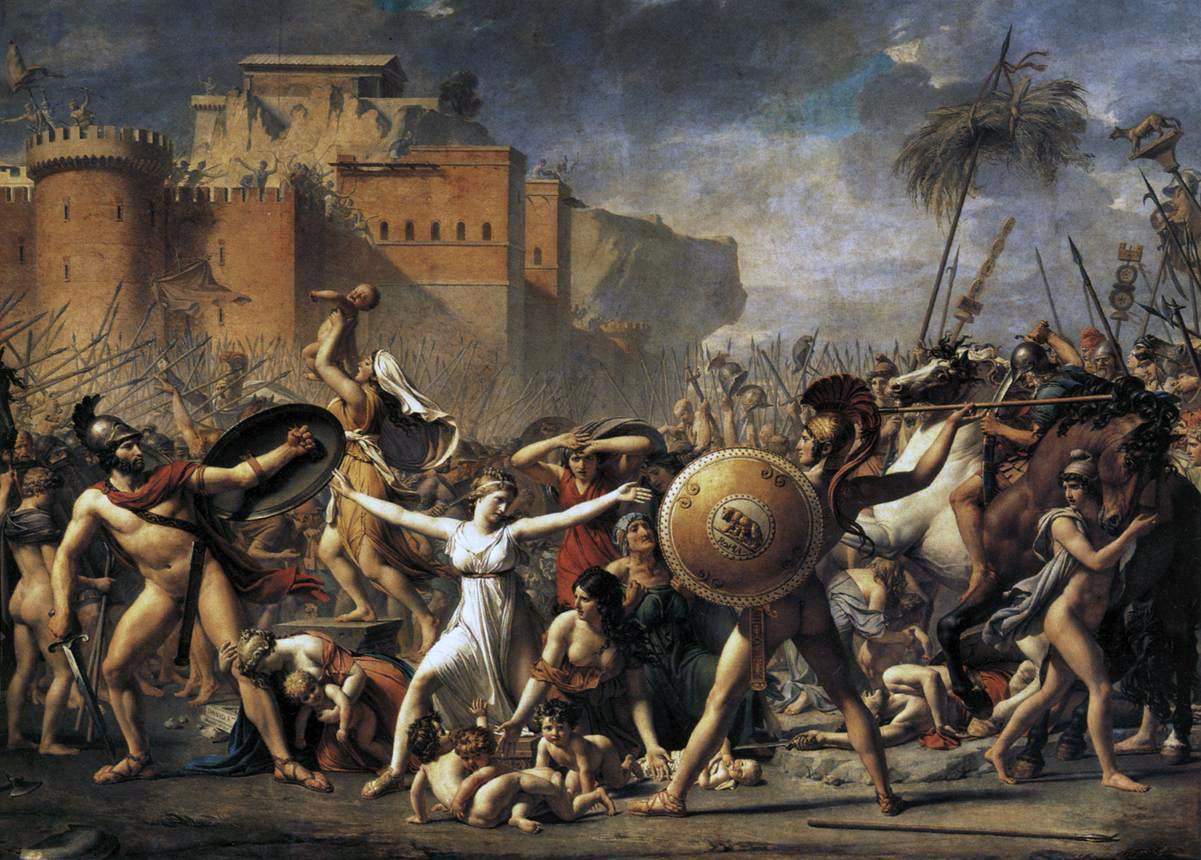
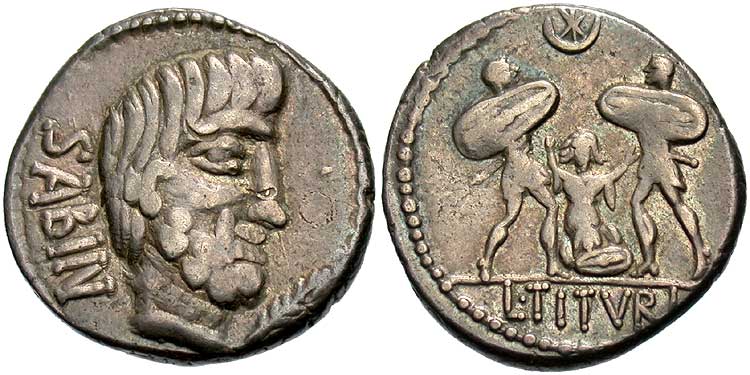
When the heights had been abandoned by the Sabines, fierce fighting broke out between them and the Romans, in which many people were slain, and Romulus was struck on the head with a rock.The captive daughters checked their Sabine kinsmen who were still prepared to fight, and were seen shouting here and wailing there. They brought out their babies in their arms, they loosed their hair, and they called now upon the Sabines, and now upon the Romans, with various terms of endearment. The enemies were moved to pity, and stood apart while the women stood in the middle of the lines, and all sides began to cry. Once the women had made their point, the opposing leaders made a parley, and the women who so wished were allowed to remain with the men who now possessed them, with an exemption from every deed and all daily work except for spinning wool. Furthermore, the Romans and Sabines would jointly inhabit the city, which was to be called Rome after Romulus, but the citizens were to be named Kurites [Quirites] after Kurita, the father of Titus Tatius. Both peoples would rule the city, and they would marshal armies jointly. The place in which they made this agreement was called the Comitium, clearly because it was a spot for meeting, because among the Romans the word ‘comire’ means to come together. Moreover, another hundred men were selected from the Sabines and added to the number of patricians. At first, the kings did not take counsel in common among each other, but in private with their own hundred patricians. Subsequently, everyone came together in the same place.

Ληφθείσης δὲ τῆς ἄκρας ὑπὸ τῶν Σαβίνων, μάχη καρτερὰ συνερράγη μέσον αὐτῶν καὶ ῾Ρωμαίων, ἐν ᾗ πολλοὶ μὲν ἔπεσον, ὁ δὲ ῾Ρωμύλος ἐπλήγη λίθῳ τὴν κεφαλήν. ἔτι δὲ μάχεσθαι παρασκευαζομένους τοὺς Σαβίνους ἐπέσχον αἱ ἡρπασμέναι θυγατέρες αὐτῶν, ἄλλοθεν ἄλλαι μετὰ βοῆς καὶ ὀλολυγμοῦ ὀφθεῖσαι αὐτοῖς, αἱ μὲν νήπια πρὸς ταῖς ἀγκάλαις κομίζουσαι, αἱ δὲ τὴν κόμην προϊσχόμεναι λελυμένην, πᾶσαι δὲ ἀνακαλούμεναι τοῖς φιλτάτοις ὀνόμασι ποτὲ μὲν τοὺς Σαβίνους, ποτὲ δὲ τοὺς ῾Ρωμαίους. ἐπεκλάσθησαν οὖν οἱ ἐναντίοι καὶ διέστησαν αὐταῖς ἐν μέσῳ στῆναι τῆς παρατάξεως, καὶ κλαυθμὸς ἅμα διὰ πάντων ἐχώρει. διαλεχθέντων δὲ τῶν γυναίων συνῆλθον εἰς λόγους οἱ ἡγεμόνες καὶ συνέθεντο τῶν μὲν γυναικῶν αἳ βούλονται τοῖς ἔχουσι συνοικεῖν, παντὸς ἔργου καὶ πάσης λατρείας πλὴν ταλασίας ἀφειμένας, οἰκεῖν δὲ τὴν πόλιν ῾Ρωμαίους καὶ Σαβίνους κοινῇ, καὶ καλεῖσθαι αὐτὴν ῾Ρώμην ἐπὶ ῾Ρωμύλῳ, Κυρίτας δὲ ῾Ρωμαίους ἐπὶ τῇ Τατίου πατρίδι Κυρίτα, βασιλεύειν δὲ κοινῇ καὶ στρατηγεῖν ἀμφοτέρους. ὁ δὲ τόπος ἐν ᾧ τὰς συνθήκας ἔθεντο καλεῖται κομίτιον, τόπος δηλαδὴ συνελεύσεως· κόμιρε γὰρ ῾Ρωμαίοις τὸ συνελθεῖν λέγεται. προσκατελέχθησαν δὲ τοῖς πατρικίοις ἐκ τῶν Σαβίνων ἕτεροι ἑκατόν. ἐβουλεύοντο δὲ οἱ βασιλεῖς οὐκ εὐθὺς ἐν κοινῷ μετ’ ἀλλήλων, ἀλλ’ ἑκάτερος πρότερον ἰδίᾳ μετὰ τῶν ἑκατόν· εἶτα εἰς τὸ αὐτὸ πάντες συνήγοντο.

Zonaras 7.3 Part V – Titus Tatius and the Death of Tarpeia

Titus Tatius launches another Sabine attack on Rome; Tarpeia betrays the city.

Thereupon some of the Sabines fought with the Romans and were defeated. The rest of the Sabines made Titus Tatius their leader and set out against Rome. They took the Capitoline, which was betrayed by Tarpeia, the daughter of the Roman general. For she went down to the water where she was caught and brought to Titus Tatius, and she was persuaded to betray the defense of the city because she was desirous of the golden bracelets, which the Sabines were wearing on their left arms. She demanded these bracelets as a payment for her betrayal. At night, when Tatius had taken his position, she opened one gate and let the Sabines in. As Tatius entered, he commanded his forces to give Tarpeia whatever they had on their left arms. Tatius was the first to toss his armlet at Tarpeia, along with his shield. When everyone else did likewise, she was struck with the gold and, being showered with shields, she died under their weighty multitude.

This man Tatius accomplished in deed what Caesar and Antigonus subsequently talked about with words. For he claimed that he loved treachery, but hated the traitor. Antigonus however, said that he would welcome those who were in the act of treachery, but decreed death to those who had completed their treason.

Εἶτα καὶ ἄλλοι τῶν Σαβίνων τοῖς ῾Ρωμαίοις ἐμαχέσαντο καὶ ἡττήθησαν. ἐπὶ τούτοις οἱ λοιποὶ τῶν Σαβίνων στρατηγὸν τὸν Τάτιον ἀποδείξαντες ἐπὶ τὴν ῾Ρώμην ἐστράτευσαν καὶ τὸ Καπιτώλιον εἷλον προδεδομένον ὑπὸ Ταρπηίας τῆς θυγατρὸς τοῦ φρουράρχου. ἐκείνη γὰρ ἐφ’ ὕδωρ κατελθοῦσα συνελήφθη καὶ ἤχθη πρὸς Τάτιον, καὶ ἀνεπείσθη προδοῦναι τὸ ἔρυμα, τῶν χρυσῶν βραχιονιστήρων ἐρασθεῖσα, οὓς ἐν ταῖς ἀριστεραῖς ἐφόρουν χερσὶν οἱ Σαβῖνοι, καὶ μισθὸν ὑπὲρ τῆς προδοσίας λαβεῖν αὐτοὺς ἀπαιτήσασα. συνθεμένου δὲ τοῦ Τατίου νύκτωρ μίαν πύλην ἀνοίξασα τοὺς Σαβίνους ἐδέξατο. εἰσελθὼν δὲ ὁ Τάτιος ἐκέλευσε τοὺς ὑπ’ αὐτὸν ὅσα ἐν ταῖς ἀριστεραῖς χερσὶν ἔφερον διδόναι αὐτῇ, καὶ πρῶτος αὐτὸς τὸν βραχιονιστῆρα τῇ Ταρπηίᾳ ἐπέρριψε καὶ τὸν θυρεόν. πάντων δὲ ὁμοίως ποιούντων βαλλομένη τε τῷ χρυσῷ καὶ καταχωσθεῖσα τοῖς θυρεοῖς ὑπὸ πλήθους καὶ βάρους ἀπέθανεν.

῎Εργῳ οὖν οὗτος ἐποίησεν ὃ λόγοις ὕστερον εἶπον ὁ Καῖσαρ καὶ ὁ ᾿Αντίγονος· ὁ μὲν γὰρ προδοσίαν ἔφη φιλεῖν, προδότην δὲ μισεῖν· ὁ δὲ ᾿Αντίγονος προδιδόντας μὲν ἀσπασίως εἶπε προσίεσθαι, προδεδωκόσι δὲ ἀπεχθάνεσθαι.