Love [Curse] Magic: Some Amatory Spells for Valentine’s Day

More from the mind of Brandon Conley…

DTA 78.

Άριστοκυδη και τας φανο(υ)μενας αυτῳ γυναικας μηποτ’ αυτον γημαι αλλην γυναι(κα) μηδε παιδα

“[I compel] Aristokydes and the women appearing with him. May he never marry another woman or maiden.”


Pl. 67, Inv. No. IL 952. Jordan (1985). Defixiones from a Well Near the Southwest Corner of the Athenian Agora.

…παραδιδωμι σοι Ιουλιανην, ην ετε[κεν Μαρκια,] και Πολυνεικον, ινα καταψυξῃς αυτου[ς και την γνω]μην και την στοργην και την συνηθειαν [αυτων, και αυ]τους ις τον ζοφωδη σου αερα και τους συν [αυτοις…

“I hand over to you Juliana, daughter of Markia, and Polynikos. May you cool them, and their intention and love and intimacy, and (keep) them and those with them in your dark air.


Audollent (1904), 227.

uratur Sucesa, aduratur amo(re) vel desideri(o) Sucesi

“Let Successa be lit afire and burn with love and desire of Successus.”


AE 1994, 1072.

Quintula cum Fortunali sit semel et numquam

“Let Quintula be with Fortunalis one time and never again.”


AE 2000, 1611.

os (hos?) opera, ritine mi(hi) Patelaria(m) Minor(em). Amor piger n(obis). Exc oficina magica…

“Work on this: keep Patelaria the Younger for me. Our love is slow. From your magic services…”


Audollent (1904), 231.

…εξ αχ διη οχ μομεντο…αμετ Μαρτιαλε(μ) ουτ ομμνι μουλιεβρι ωρας μ[ε] ιν μεντε αβεατ ετ τωτα(μ) διε(μ) ιν ανιμω αβεατ αμορε(μ) μεουμ…

“From this day, this moment, let her love Martialis, so that she thinks of me constantly during every womanly matter, and all day she has my love on her mind.”


Audollent (1904), 270.

αδιυρο ετ…περ μαγνουμ δεουμ ετ περ ανθεροτας…ετ περ εουμ χουι αβετ (habet) αρχεπτορεμ (accipitrem) σουπρα χαπουθ ετ περ σεπτεμ σθελλας, ουυτ εξ χουα ορα οχ σομποσυερο νον δορμιατ Σεξτιλλιος, Διονισιε φιλιους, ουραθουρ φουρενς νον δορμιαθ νεχουε (neque) σεδεατ νεχουε λοχουατουρ σεδ ιν μεντεμ αβιατ με Σεπθιμαμ Αμενε φιλια ουραθουρ φουρενς αμορε ετ δεσιδεριο μεο…

“I swear…by the great god, and by Anteros…and by him who holds the eagle over his head, and by the seven stars, so that from the moment I compose this, Sextilius, son of Dionysia, does not sleep; let him burn, raging, and not sleep, or sit, or speak. But let him have me, Septima, daughter of Amoenae, in his mind; let him burn, raging, with love and desire for me.”


Valentine's Fart

The Cunning Cunnilinguist (Love Week)

Ausonius, Epigrams 120

“When Castor wanted to slobber on the medial member of many a man, but couldn’t have a mob at his house, that cocksucker figured out a way that he could avoid wasting any genitalia: he just gave his wife a lick instead.”

Lambere cum vellet mediorum membra virorum

Castor, nec posset vulgus habere domi,

Reperit, ut nullum fellator perderet inguen:

Uxoris coepit lingere membra suae.

Epigrams, 126:

“Lilly, Irene, Cassie and Karl; if you write out these names, and take the first letter of each, you can form the word which describes what you do, master Eunus! But I can’t mention something so scandalous in Latin.”

Λαὶς, Ἔρως et Ἴτυς Χείρων, et Ἔρως  Ἴτυς alter,

Nomina si scribis, prima elementa adime,

Ut facias verbum, quod facis, Eune magister.

Dicere me Latium non decet opprobrium.


Epigrams, 127:

“Eunus, when you’re licking your pregnant wife’s rotten vagina, you’re hurrying to give your unborn children some tongue.”

Eune, quod uxoris gravidae putria inguina lambis,

festinas glossas non natis tradere natis.

Image result for greek roman cunnilingus


One Perpetual Sleep for Love Week: From Catullus to Marvell

Catullus, Carm. 5

“My Lesbia, let’s live and let’s love,
Let all the rumors of harsh old men
count for only a penny.
Suns can set and rise again:
but when our brief light sets
we must sleep a lonely endless night.
Give me a thousand kisses and then a hundred,
then another thousand and a second hundred,
And even then another thousand, a hundred more.
When we’ve had so many thousands,
we will mix them together so we don’t know,
so that no wicked man can feel envy
when he knows what a number of kisses there’ve been.”

Vivamus mea Lesbia, atque amemus,
rumoresque senum severiorum
omnes unius aestimemus assis!
soles occidere et redire possunt:
nobis cum semel occidit brevis lux,
nox est perpetua una dormienda.
da mi basia mille, deinde centum,
dein mille altera, dein secunda centum,
deinde usque altera mille, deinde centum.
dein, cum milia multa fecerimus,
conturbabimus illa, ne sciamus,
aut ne quis malus invidere possit,
cum tantum sciat esse basiorum.

Image result for medieval manuscript  love
From here

Continue reading “One Perpetual Sleep for Love Week: From Catullus to Marvell”

Bellum Incivile: Manicula’s Associate Procures Pictures of Private Parts

Another text tentatively attributed to Caesar was discovered along with the fragments of the De Silvis and an appendix to De Bello Gallico. This is almost surely from the lost Bellum Incivile.

C. Julius Caesar (?), Bellum Incivile. Edited by Dani Bostick

6.3 Whenever Manicula found himself in the midst of scandal, money was often paid by his associate D. Pecker to buy off accusations. For even prior to his nefarious consulship, Manicula had associated with people of such a kind and conducted his business in such a way that many reports of his offences and delinquency became widespread. For this reason, D. Pecker made many payments to conceal Manicula’s misdeeds. It is said that evidence of them is kept under lock and key.

6.3 Cum contumelia in Maniculam iaceretur, pecunia ne accusaretur saepe a comite D. Vellicatore data est. Nam etiam ante nefarium consulatum cum talibus hominibus vixerat negotiaque ita transegerat Manicula ut multae famae de eius delictis ac peccatis dispergerentur. Qua de causa D. Vellicator multam pecuniam qua scelera eius celarentur pendebat. Quorum testimonia scripta ac alia indicia sub clavi servari dicitur.

6.8 After D. Pecker obtained images of the intimate regions of a wealthy man named J. Bezos, who made his fortune doing business in the cloud, he threatened to publish them in order to silence Bezos who had discovered information unfavorable to Pecker’s company.  It ended up, however, that D. Pecker’s plan seemed more shameful than the images themselves.

6.8 Imagines verendorum locupletis J. Bezi, qui negotiando in caelo maximam pecuniam lucrifecit, adeptus, D. Vellicator minabatur se imagines verandorum volgo elaturum apertissimeque ostenturum ut J. Bezum certiorem de suae societatis probris factum comprimeret. Effecit tamen ut consilium D. Vellicatoris foedius imaginibus ipsis videretur.

slave


Bold Assertion of Bovine Insertion

Historia Augusta, Macrinus (12)

“Macrinus was arrogant, bloodthirsty, and eager to rule like a general, complaining about the discipline of earlier times and praising Severus alone above all other emperors. For he often crucified his soldiers and afflicted them with the punishments reserved for slaves. When he experienced mutinies of the soldiers, he often subjected them to decimation*, and sometimes to centimation. This latter word was his own invention, which he used to demonstrate his clemency, since he was only centimating the soldiers who were really worth of decimation or vicesimation.

It would be tedious to relate all of his cruelties, yet I will record one which, though it was not (as he thought) the greatest, was yet sadder than all of his other tyrannical cruelty. When some soldiers had violated the slavemaiden of their host who had long been of dubious moral character, Macrinus learned of it through one of his secret spies. He had the men brought before him and asked whether they had committed the crime. When it had been proven, Macrinus ordered two live bulls of immense size to be cut open, and for these two soldiers to be inserted into them with their heads poking out so that they could speak with each other. And so he afflicted them with this punishment because such punishments had not been established for adulterers either in the pastor even in his own time.”

*decimation = killing of every tenth man; centimation (perhaps centesimation?) = killing of every hundredth man; vicesimation = killing of every twentieth man

Image result for macrinus

Fuit igitur superbus et sanguinarius et volens militariter imperare, incusans quin etiam superiorum temporum disciplinam ac solum Severum prae ceteris laudans. Nam et in crucem milites tulit et servilibus suppliccis semper adfecit et, cum seditiones militares pateretur, milites saepius decumavit, aliquando etiam centesimavit, quod verbum proprium ipsius est, cum se clementem diceret, quando eos centesimaret, qui digni essent decimatione atque vicensimatione. Longum est eius crudelitates omnes aperire, attamen unam ostendam non magnam, ut ipse credebat, sed omnibus tyrannicis inmanitatibus tristiorem. Cum quidam milites ancillam hospitis iam diu pravi pudoris affectassent atque per quendam frumentarium ille didicisset, adduci eos iussit interrogavitque, utrum esset factum. Quod cum constitisset, duos boves mirae magnitudinis vivos subito aperiri iussit atque his singulos milites inseri capitibus, ut secum conloqui possent, exertis; itaque poena eos affecit, cum ne adulteris quidem talia apud maiores vel sui temporis essent constituta supplicia.

Incommoded by Cruelty

Historia Augusta, Commodus (10-11)

“He was both a glutton and a degenerate. As a young man, he disgraced every kind of person who was with him, and was disgraced in turn. He used to throw people who laughed at him to the beasts. He even had a man, who was reading the book of Suetonius containing the life of Caligula, to be thrown to the beasts, because he had the same birthday as Caligula. If anyone expressed a wish to die, he ordered the execution to be hurried up, even if the person was actually unwilling. He was even given to harm in his jokes. He had once seen a man who had some gray hairs which resembled worms among his black hair, and had placed before him a starling who pecked at his head, thinking that he was pecking at worms; this left his head suppurating from the blows of the beak.

He cut a fat man in the middle of the stomach, so that his intestines poured out. He called people “Limpy” or “Winky” after he himself had deprived them of an eye or broken their foot. Further, he killed many more because they had run into him in barbarian dress, and others because they were noble or famous. He had among his favorites people named after the genitals of each sex, whom he used to shower with kisses. He had with him a man with a penis far exceeding the measure of those of animals; he called this man, who was dearest to him, Onos (The Ass), and he both enriched him and made him head of the priesthood of the Rustic Hercules. It is said that he often mixed human shit into even the most expensive foods, and did not even refrain from tasting them himself, making (as he thought) a mockery of others.”

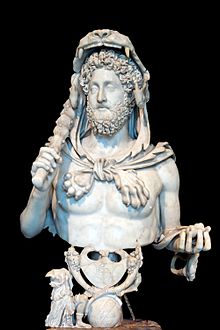
Image result for commodus

Iam puer et gulosus et impudicus fuit. Adulescens omne genus hominum infamavit, quod erat secum, et ab omnibus est infamatus. Inridentes se feris obiciebat. Eum etiam, qui Tranquilli librum vitam Caligulae continentem legerat, feris obici iussit, quia eundem diem natalis habuerat, quem et Caligula. Si quis sane se mori velle praedixisset, hunc invitum praecipitari iubebat. In iocis quoque perniciosus. Nam eum, quem vidisset albescentes inter nigros capillos quasi vermiculos habere, sturno adposito, qui se vermes sectari crederet, capite suppuratum reddebat obtunsione oris. Pinguem hominem medio ventre dissicuit, ut eius intestina subito funderentur. Monopodios et luscinios eos, quibus aut singulos oculos tulisset aut singulos pedes fregisset, appellabat. Multos praeterea passim extinxit alios, quia barbarico habitu occurrerant, alios quia nobiles et speciosiores erant.  Habuit in deliciis homines appellatos nominibus verendorum utriusque sexus, quos libentius suis osculis applicabat. Habuit et hominem pene prominentem ultra modum animalium, quem Onon appellabat, sibi carissimum. quem et ditavit et sacerdotio Herculis rustici praeposuit. Dicitur saepe pretiosissimis cibis humana stercora miscuisse nec abstinuisse gustum aliis, ut putabat, inrisis.

Hadrian: Cruelty, Vanity, and Dad Jokes

Historia Augusta: Hadrian (20)

“In his conversation with the lower orders, he was most civil, and detested those who would take this pleasure away from him under the pretext of guarding the imperial dignity. In Alexandria, he proposed many questions to the professors, and resolved them himself. Marius Maximus says that he was cruel by nature and on that account acted in many cases very piously, fearing that what had happened to Domitian might happen to him.

Although he was not fond of placing inscriptions on his works, he named many cities Hadrianopolis, as for example Carthage and even a part of Athens. He also named a countless number of aqueducts this way. Hadrian was also the first to institute a lawyer in charge of advocating for the treasury.

Hadrian had an enormous memory and was possessed of boundless ability – he himself dictated his orations and responded to everything. Many of his jokes survive, too, for he was a fairly witty man. That one line became well known, in which he responded to an old man to whom he had already refused something yet who had put on a hairpiece and asked again, ‘I already denied that to your father.'”

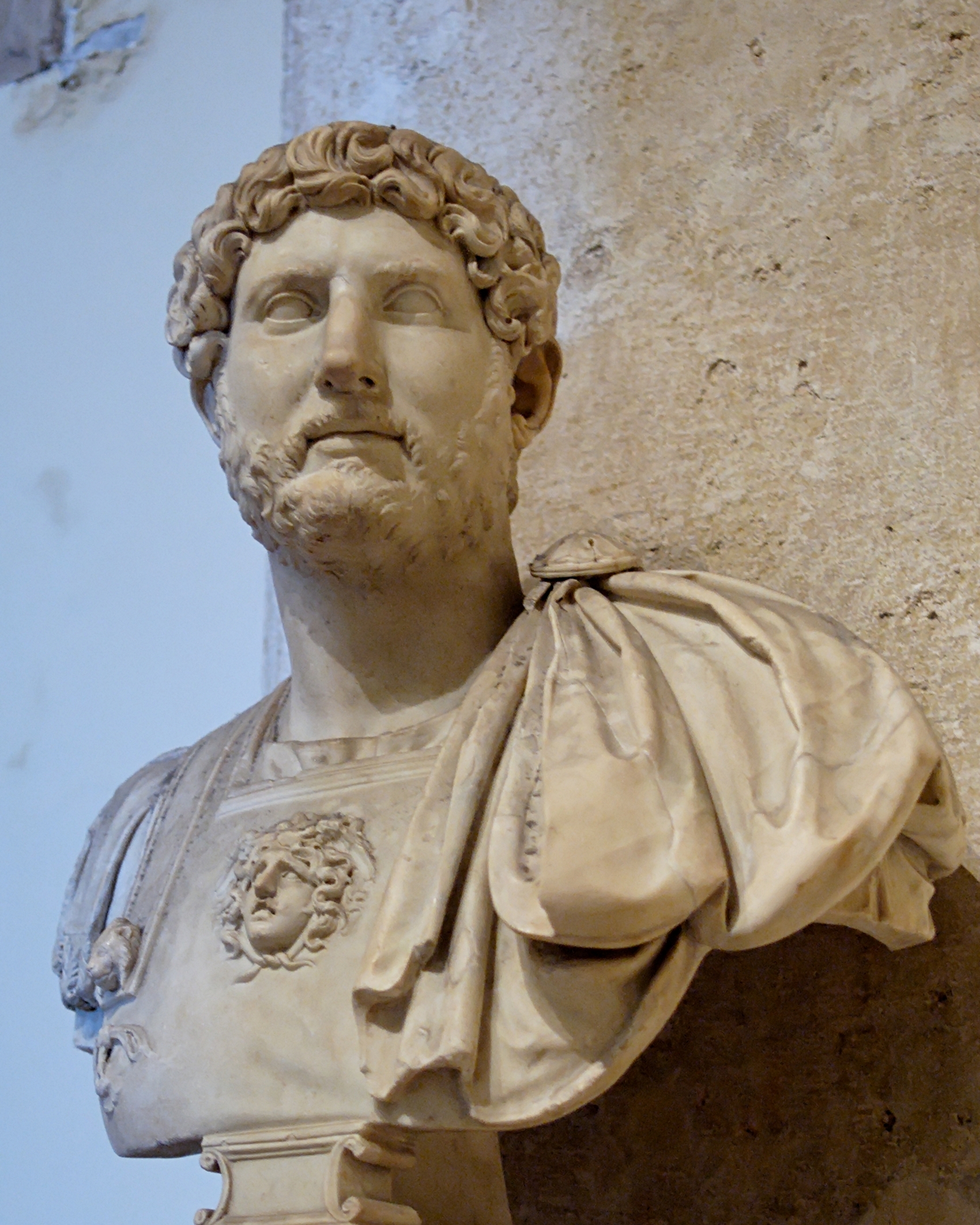
Image result for hadrian

In conloquiis etiam humillimorum civilissimus fuit, detestans eos qui sibi hanc voluptatem humanitatis quasi servantes fastigium principis inviderent. apud Alexandriam in Museo multas quaestiones professoribus proposuit et propositas ipse dissolvit. Marius Maximus dicit eum natura crudelem fuisse et idcirco multa pie fecisse quod timeret, ne sibi idem quod Domitiano accidit eveniret.

Et cum titulos in operibus non amaret, multas civitates Hadrianopolis appellavit, ut ipsam Carthaginem et Athenarum partem. aquarum ductus etiam infinitos hoc nomine nuncupavit. fisci advocatum primus instituit.

Fuit memoriae ingentis, facultatis immensae; nam ipse et orationes dictavit et ad omnia respondit. ioca eius plurima exstant; nam fuit etiam dicaculus. unde illud quoque innotuit quod, cum cuidam canescenti quiddam negasset, eidem iterum petenti sed infecto capite respondit: “Iam hoc patri tuo negavi”.

One Without a Greedy Heart: Horace’s Minor Madness

Horace, Epistles 2.118-125

“This mistake, this minor madness, still possesses
This many advantages—consider them. The poet is
Not one with a greedy heart. He loves his lines, and desires
This alone. He mocks lost money, the flight of slaves and fires
There’s no thought of fraud against his friend or his ward
He lives as well as thin gruel and dry bread can afford.
Although he’s slow and a bad soldier, he’s still of use,
If you believe this: that grand affairs are helped by small matters too.

Hic error tamen et levis haec insania quantas
virtutes habeat, sic collige. vatis avarus
non temere est animus; versus amat, hoc studet unum;
detrimenta, fugas servorum, incendia ridet;
non fraudem socio puerove incogitat ullam
pupillo; vivit siliquis et pane secundo;
militiae quamquam piger et malus, utilis urbi,
si das hoc, parvis quoque rebus magna iuvari.

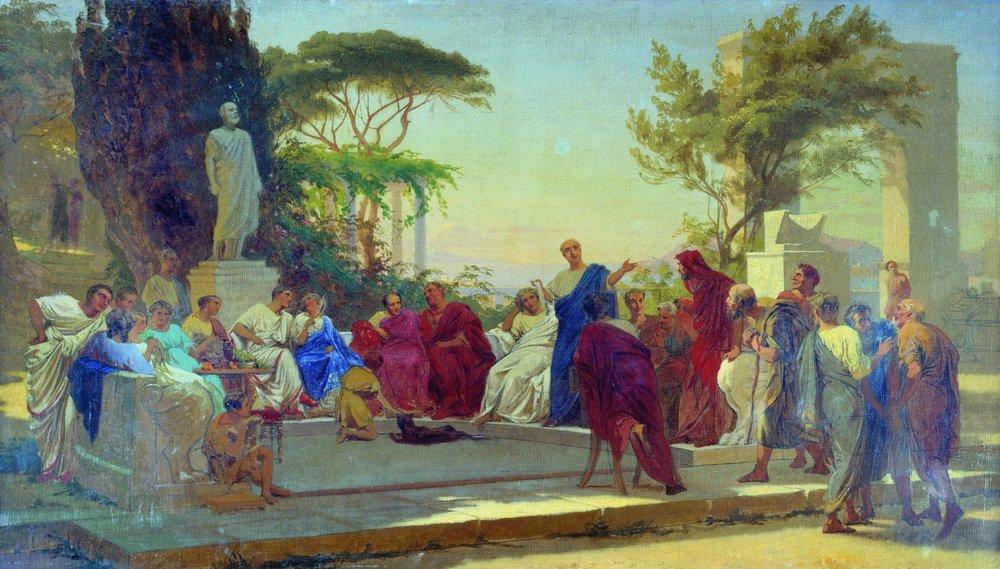
Horace reads before Maecenas, by Fyodor Bronnikov

Quomodo Dicitur “State of the Union Address”?

The amazing Dani Bostick (@danibostick) live tweeted the State of the Union Address tonight in Latin. For those off twitter (or off TV), here are her tweets.

https://twitter.com/danibostick/status/1092967939093872640

https://twitter.com/danibostick/status/1092969038077030405

https://twitter.com/danibostick/status/1092969971125182464

https://twitter.com/danibostick/status/1092971101674557440

https://twitter.com/danibostick/status/1092971783354007552

https://twitter.com/danibostick/status/1092972357688410113

https://twitter.com/danibostick/status/1092973373267808258

https://twitter.com/danibostick/status/1092974682675048458


https://twitter.com/danibostick/status/1092975444041842688

https://twitter.com/danibostick/status/1092976446631485440


https://twitter.com/danibostick/status/1092977630306070528

Continue reading “Quomodo Dicitur “State of the Union Address”?”

Lucretius Tries to Write a Sex Scene: An ‘Epic’ Tawdry Tuesday

Lucretius, De Rerum Natura 4.1105-1120

“And then when they consume the flower of their age
As their limbs are laced together, just when the body senses delight
And that Venus is about to sow the furrows of the feminine field,
They press their bodies together greedily and join their wet mouths
Trying to breathe each other in as they press lips into teeth—
All pointlessly, since they can’t rub anything from there,
Nor can they truly enter each other or leave for a single body.

For this is what they often seem to want and try to do.
That’s how eagerly they cleave to Venus’s re-combinations of flesh
While their limbs become liquid under pleasure’s force.
Finally, once the lust which has amassed in their veins erupts,
Then, for a moment, there is a brief lull in the violent fire.

But soon the rabid hunger and the same madness returns,
And they quest to fulfill what they desire,
But they cannot discover any trick to overcome the pain,
And they remain uncertain, wasting away from a hidden wound.”

denique cum membris conlatis flore fruuntur
aetatis, iam cum praesagit gaudia corpus
atque in eost Venus ut muliebria conserat arva,
adfigunt avide corpus iunguntque salivas
oris et inspirant pressantes dentibus ora—
nequiquam, quoniam nil inde abradere possunt
nec penetrare et abire in corpus corpore toto;
nam facere interdum velle et certare videntur:
usque adeo cupide in Veneris compagibus haerent,
membra voluptatis dum vi labefacta liquescunt.
tandem ubi se erupit nervis conlecta cupido,
parva fit ardoris violenti pausa parumper.
inde redit rabies eadem et furor ille revisit,
cum sibi quod cupiunt ipsi contingere quaerunt,
nec reperire malum id possunt quae machina vincat:
usque adeo incerti tabescunt volnere caeco.

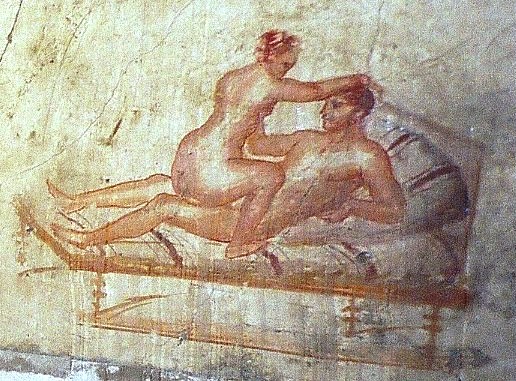
“This is how humans do it. I think.” Pompeii, House of Veii