First-Wives’ Club: Oinone and Her Son

Here’s some mythical-grade misogyny, with a variation on the Potiphar’s wife motif, and some infanticide.

Apollodorus, Bibliotheca, 3.155

“Hektor married Andromache, Êetiôn’s daughter, and Alexandros [Paris] married Oinônê the daughter of Kebren the river. She learned the power of prophecy from Rhea and warned Alexander not to sail to Helen. Because she did not persuade him, she said that if he was wounded, he should come to her because she alone would be able to heal him.

But he did steal Helen from Sparta and, while Troy was attacked, he was struck by Herakles’ arrows from Philoktêtes. He went to Oinône in Ida. She, because she took delight in his suffering, said she would not heal him. Alexandros returned to Troy and was dying, but Oinônê changed her mind and was bringing medicine to heal him only to find him dead. She hanged herself.”

῞Εκτωρ μὲν οὖν ᾿Ανδρομάχην τὴν ᾿Ηετίωνος γαμεῖ, ᾿Αλέξανδρος δὲ Οἰνώνην τὴν Κεβρῆνος τοῦ ποταμοῦ θυγατέρα. αὕτη παρὰ ῾Ρέας τὴν μαντικὴν μαθοῦσα προέλεγεν ᾿Αλεξάνδρῳ μὴ πλεῖν ἐπὶ ῾Ελένην. μὴ πείθουσα δὲ εἶπεν, ἐὰν τρωθῇ, παραγενέσθαι πρὸς αὐτήν· μόνην γὰρ θεραπεῦσαι δύνασθαι. τὸν δὲ ῾Ελένην ἐκ Σπάρτης ἁρπάσαι, πολεμουμένης δὲ Τροίας τοξευθέντα ὑπὸ Φιλοκτήτου τόξοις ῾Ηρακλείοις πρὸς Οἰνώνην ἐπανελθεῖν εἰς ῎Ιδην. ἡ δὲ μνησικακοῦσα θεραπεύσειν οὐκ ἔφη. ᾿Αλέξανδρος μὲν οὖν εἰς Τροίαν κομιζόμενος ἐτελεύτα, Οἰνώνη δὲ μετανοήσασα τὰ πρὸς θεραπείαν φάρμακα ἔφερε, καὶ καταλαβοῦσα αὐτὸν νεκρὸν ἑαυτὴν ἀνήρτησεν.

This story is the one basically told in Parthenius (Love Tales, 4.7). Another version of the tale is preserved in Photios but is attributed to the historian and mythographer Konon (BNJ 26 F1 = Photios, Bibliotheka 186). A few notes of caution: Konon is dated to the 1st century CE; Photios to the 9th Century CE

 Konon BNJ 26 F1 = Photios, Bibliotheka 186

[This section] is about how a child Koruthos, who surpassed his father in beauty, was born from Alexander/Paris and Oinône, the woman he married before he kidnapped Helen. His mother sent him to Helen to make Alexandros jealous and devise some evil for Helen. When Koruthos got to ‘know’ Helen, Alexandros arrived in the bedroom, and saw Koruthos sitting near her, and, already enraged out of suspicion, he killed him.

Because of the outrage against herself and the killing of her child, she cursed Alexandros a lot and predicted—for she had the inspiration of prophecy and was skilled in preparing medicines—that he would be wounded by one of the Achaeans some day and because he could not find treatment, he would need her and come home.

Later on, Alexander was wounded in the battle against the Achaeans in front of Troy by Philoktetes and he was suffering terribly. He was brought in a wagon to Idea and sent a herald to ask for Oinône. She arrogantly reproached him, saying that he should go back to Helen. Then Alexander died along the road because of the wound.

A powerful change of mind over took her at the time of his death before she heard of it, and once she gathered some medicine, she rushed to overtake him. Once she learned from the herald that he was dead and that she had killed him, she killed the herald for his arrogance by smashing a stone on his head. She threw herself over Alexander’s corpse and, after repeatedly blaming their shared fate, she hanged herself with her belt.”


[23] Οἰνώνη. ἡ κ̄γ̄· ὡς ᾽Αλεξάνδρου τοῦ Πάριδος καὶ Οἰνώνης, ἣν ἐγήματο πρὶν ἢ τὴν ῾Ελένην ἁρπάσαι, παῖς Κόρυθος γίνεται, κάλλει νικῶν τὸν πατέρα. τοῦτον ἡ μήτηρ ῾Ελένηι προσέπεμψε, ζηλοτυπίαν τε κινοῦσα ᾽Αλεξάνδρωι καὶ κακόν τι διαμηχανωμένη ῾Ελένηι. ὡς δὲ συνήθης ὁ Κόρυθος πρὸς ῾Ελένην ἐγένετο, ᾽Αλέξανδρός ποτε παρελθὼν εἰς τὸν θάλαμον καὶ θεασάμενος τὸν Κόρυθον τῆι ῾Ελένηι παρεζόμενον καὶ ἀναφλεχθεὶς ἐξ ὑποψίας εὐθὺς ἀναιρεῖ.

(2) καὶ Οἰνώνη τῆς τε εἰς αὐτὴν ὕβρεως καὶ τῆς τοῦ παιδὸς ἀναιρέσεως πολλὰ ᾽Αλέξανδρον ἀρασαμένη καὶ ἐπειποῦσα (καὶ γὰρ ἦν ἐπίπνους μαντείας καὶ τομῆς φαρμάκων ἐπιστήμων) ὡς τρωθείς ποτε ὑπ᾽ ᾽Αχαιῶν καὶ μὴ τυγχάνων θεραπείας δεήσεται αὐτῆς, οἴκαδε ἤιει. (3) ὕστερον δ᾽ ᾽Αλέξανδρος ἐν τῆι πρὸς ᾽Αχαιοὺς ὑπὲρ Τροίας μάχηι τρωθεὶς ὑπὸ Φιλοκτήτου καὶ δεινῶς ἔχων δι᾽ ἀπήνης ἐκομίζετο πρὸς τὴν ῎Ιδην· καὶ προεκπέμψας κήρυκα ἐδεῖτο Οἰνώνης· ἡ δὲ ὑβριστικῶς μάλα τὸν κήρυκα διωσαμένη πρὸς ῾Ελένην ἰέναι ᾽Αλέξανδρον ἐξωνείδιζε. καὶ ᾽Αλέξανδρος μὲν κατὰ τὴν ὁδὸν ὑπὸ τοῦ τραύματος τελευτᾶι. τὴν δὲ μήπω πεπυσμένην τὴν τελευτὴν μειάμελος ὅμως δεινὸς εἶχε, καὶ δρεψαμένη τῆς πόας ἔθει φθάσαι ἐπειγομένη. ὡς δ᾽ ἔμαθε παρὰ τοῦ κήρυκος ὅτι τεθνήκοι καὶ ὅτι αὐτὴ αὐτὸν ἀνήιρηκεν, ἐκεῖνον μὲν ἀντὶ τῆς ὕβρεως λίθωι τὴν κεφαλὴν πατάξασα ἀναιρεῖ, τῶι δ᾽ ᾽Αλεξάνδρου νεκρῶι περιχυθεῖσα καὶ πολλὰ τὸν κοινὸν ἀμφοῖν καταμεμψαμένη δαίμονα ἑαυτὴν ἀνήρτησε τῆι ζώνηι.

A couple of takeaways from this one. First, it seems that Oinône knew about Paris’ lust for Helen before he departed for Sparta and remained behind on Mt. Ida once he returned to Troy. Second, it is entirely unclear when the child returns to Troy to tempt Helen. This story is a variation on the same story told about Phoinix in book 9 (his mother had him seduce his father’s lover; his father exiled him). No one in this story looks great (except for Koruthos, he looks real great). Paris is, well, a jerk. Poor Oinône is depicted as a witch-prophetess who, despite all the abuse, still loves her terrible husband.

Like Apollodorus’ version above, Ovid’s Heroides (5) do not mention the son. The earliest extant reference to Oinône seems to be Hellanicus, but some speculation links her to Bacchylides fr. 20d (where three letters OIN[….] seem to refer to a wife of Paris. See Gantz Early Greek Myth, 1993 n. 67 on page 839

Image result for Ancient Greek vase paris
This guy? Helen and Paris. Side A from an Apulian (Tarentum?) red-figure bell-krater, 380–370 BC.

“Two Beautiful Girls”: The Song of Achilles and Deidamia

I really wish antiquity had bequeathed to us this entire poem…

Bion, The Wedding song of Achilles and Deidamia

Mursôn
Lukidas, will you sing me some sweet Sicilian song,
A love song full of sweetness and longing—the very kind
The Kyklôps Polyphemos once sang on the shore for Galatea?

Lucidas
I’d love to play too, Myrsôn, but what should I sing?

Mursôn
The love story of Skyros, which you used to be praised for singing,
Peleus’ son’s secret kisses, his secret love affair,
how the boy dressed in a robe to disguise his form
And how among those daughters of Lucomêdes who had no worries
Dêidameia knew Achilles in her bedroom.

Lucidas
When the cowboy Paris kidnapped Helen and took her to Ida
It was terrible for Oinônê. And Sparta was filled with rage,
Enough to gather the whole Achaean host—no Greek
From Mycenaea or Elis or Sparta was staying
At his own home to flee miserable Ares.

But Achilles all alone escaped notice among the daughters of Lykomêdes
Where he learned about weaving instead of weapons
And held a maiden’s tools in his white hand—he looked just like a girl.
For he acted as feminine as the daughters did—the bloom
Which reddened on his white cheeks was as great, he walked
With a maiden’s step, and he covered his hair with a veil.

But he possessed a man’s heart and he had a man’s lust too.
From dawn until dusk he used to sit next to Deidameia—
Then he used to kiss her hands and often he would
Lift the fine warp and compliment her intricate weaving,
He never ate with another friend and did everything he could
To get her to sleep with him. He actually used to say this to her,

“Other sisters sleep in bed with one another,
But I sleep alone and you, princess, you sleep alone.
We are two girls of the same age, two beautiful girls,
But we sleep along in separate beds—that wicked
Space keeps me carefully distant from you…”

ΜΥΡΣΩΝ
Λῇς νύ τί μοι, Λυκίδα, Σικελὸν μέλος ἁδὺ λιγαίνειν,
ἱμερόεν γλυκύθυμον ἐρωτικόν, οἷον ὁ Κύκλωψ
ἄεισεν Πολύφαμος ἐπ’ ᾐόνι <τᾷ> Γαλατείᾳ;

ΛΥΚΙΔΑΣ
κἠμοὶ συρίσδεν, Μύρσων, φίλον, ἀλλὰ τί μέλψω;

ΜΥΡΣΩΝ
Σκύριον <ὅν>, Λυκίδα, ζαλώμενος ᾆδες ἔρωτα,
λάθρια Πηλεΐδαο φιλάματα, λάθριον εὐνάν,
πῶς παῖς ἕσσατο φᾶρος, ὅπως δ’ ἐψεύσατο μορφάν,
χὤπως ἐν κώραις Λυκομηδίσιν οὐκ ἀλεγοίσαις
ἠείδη κατὰ παστὸν Ἀχιλλέα Δηιδάμεια.

ΛΥΚΙΔΑΣ
ἅρπασε τὰν Ἑλέναν πόθ’ ὁ βωκόλος, ἆγε δ’ ἐς Ἴδαν,
Οἰνώνῃ κακὸν ἄλγος. ἐχώσατο <δ’> ἁ Λακεδαίμων
πάντα δὲ λαὸν ἄγειρεν Ἀχαϊκόν, οὐδέ τις Ἕλλην,
οὔτε Μυκηναίων οὔτ’ Ἤλιδος οὔτε Λακώνων,
μεῖνεν ἑὸν κατὰ δῶμα φυγὼν δύστανον Ἄρηα.
λάνθανε δ’ ἐν κώραις Λυκομηδίσι μοῦνος Ἀχιλλεύς,
εἴρια δ’ ἀνθ’ ὅπλων ἐδιδάσκετο, καὶ χερὶ λευκᾷ
παρθενικὸν κόρον εἶχεν, ἐφαίνετο δ’ ἠύτε κώρα·
καὶ γὰρ ἴσον τήναις θηλύνετο, καὶ τόσον ἄνθος
χιονέαις πόρφυρε παρηίσι, καὶ τὸ βάδισμα
παρθενικῆς ἐβάδιζε, κόμας δ’ ἐπύκαζε καλύπτρῃ.
θυμὸν δ’ ἀνέρος εἶχε καὶ ἀνέρος εἶχεν ἔρωτα·
ἐξ ἀοῦς δ’ ἐπὶ νύκτα παρίζετο Δηιδαμείᾳ,
καὶ ποτὲ μὲν τήνας ἐφίλει χέρα, πολλάκι δ’ αὐτᾶς
στάμονα καλὸν ἄειρε τὰ δαίδαλα δ’ ἄτρι’ ἐπῄνει·
ἤσθιε δ’ οὐκ ἄλλᾳ σὺν ὁμάλικι, πάντα δ’ ἐποίει
σπεύδων κοινὸν ἐς ὕπνον. ἔλεξέ νυ καὶ λόγον αὐτᾷ·
“ἄλλαι μὲν κνώσσουσι σὺν ἀλλήλαισιν ἀδελφαί,
αὐτὰρ ἐγὼ μούνα, μούνα δὲ σύ, νύμφα, καθεύδεις.
αἱ δύο παρθενικαὶ συνομάλικες, αἱ δύο καλαί,
ἀλλὰ μόναι κατὰ λέκτρα καθεύδομες, ἁ δὲ πονηρά
†νύσσα† δολία με κακῶς ἀπὸ σεῖο μερίσδει.
οὐ γὰρ ἐγὼ σέο. . . . .”

What was Achilles’ name when he was living as a girl?

Achilles on Skyros, 1656 painting by Nicolas Poussin

The One Who Needs Forgiveness: Clytemnestra on Her Husband

Seneca, Agamemnon 260-267

“Aegisthus, why do you push me again into the deep
And re-kindle my rage which was just cooling down?
The victor has indulged himself a bit with a captive girl—
It befits neither a wife nor a mistress to acknowledge it.
The law for the throne is different from the one for a man’s bed.

Even with this, why does my mind not allow me
To bring the harsher laws to bear on my husband when I have been shamed?
It’s right for the one who needs forgiveness to grant it easily.”

Aegisthe, quid me rursus in praeceps agis
iramque flammis iam residentem incitas?
permisit aliquid victor in captam sibi:
nec coniugem hoc respicere nec dominam decet.
lex alia solio est, alia privato in toro.
quid, quod severas ferre me leges viro
non patitur animus turpis admissi memor?
det ille veniam facile cui venia est opus.

Image result for clytemnestra and agamemnon
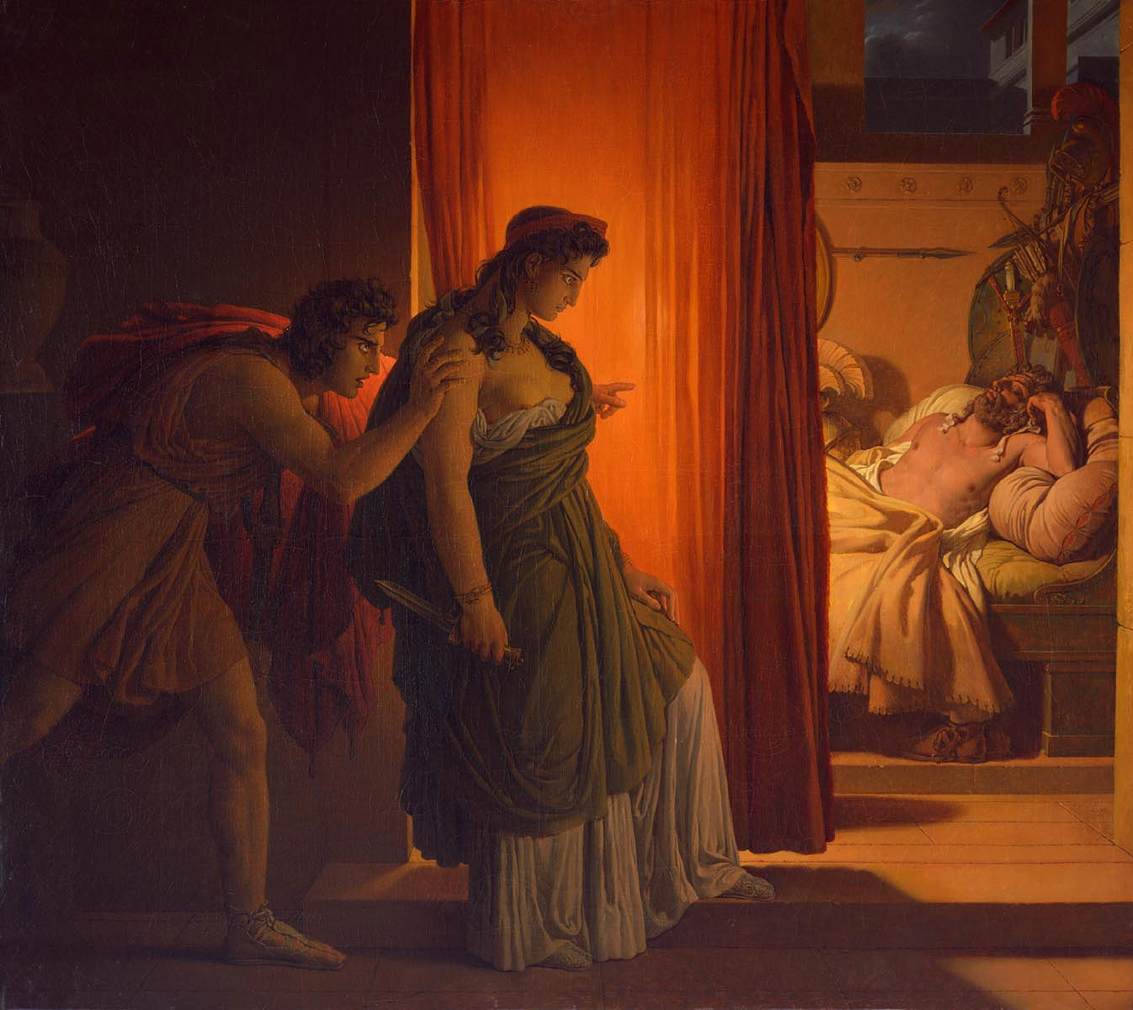
Pierre-Narcisse Guérin – Clytemnestra and Agamemnon

Ah, It Was All Helen’s Fault

This may be one of the strangest poems about Helen. Note that Thetis goes unnamed.

Alcaeus,  fr. 42 (P. Oxy. 1233 fr. 2 ii 1–16)

“The story is that bitter grief from evil deeds
Came to Priam and his children, thanks to you
Helen, and so Zeus destroyed
Holy Troy.

Not like this was the tender virgin
Peleus acquired when he called all the blessed
Gods to his marriage, once he took her from
Nereus’ halls

To the home of Kheiron. He loosened
The girdle of the holy maiden. And the ‘love’
Of Peleus and the best of the Nereids grew
For a year.

And produced a child, the best of the demigods,
A blessed driver of fiery horses.
But they died for Helen, the Phrygians
And their city too.”

ὠς λόγος, κάκων ἄ[χος ἔννεκ᾿ ἔργων
Περράμῳ καὶ παῖσ[ί ποτ᾿, Ὦλεν᾿, ἦλθεν
ἐκ σέθεν πίκρον, π[ύρι δ᾿ ὤλεσε Ζεῦς
Ἴλιον ἴραν.

οὐ τεαύταν Αἰακίδα̣ι̣ [ς ἄγαυος
πάντας ἐς γάμον μάκ̣ [αρας καλέσαις
ἄγετ᾿ ἐκ Νή[ρ]ηος ἔλων [μελάθρων
πάρθενον ἄβραν

ἐς δόμον Χέρρωνος· ἔλ[υσε δ᾿ ἄγνας
ζῶμα παρθένω· φιλό[τας δ᾿ ἔθαλε
Πήλεος καὶ Νηρεΐδων ἀρίστ[ας,
ἐς δ᾿ ἐνίαυτον

παῖδα γέννατ᾿ αἰμιθέων [φέριστον
ὄλβιον ξάνθαν ἐλάτη[ρα πώλων·
οἰ δ᾿ ἀπώλοντ᾿ ἀμφ᾿ Ἐ[λένᾳ Φρύγες τε
καὶ πόλις αὔτων.

Image result for ancient greek helen vase

Mythical Masks: Paris’ Menelaos Costume

 In the Helen, Euripides pursues the version of events favored by Stesichorus and mentioned by Herodotus too: that Helen was replaced by a cloud-Helen (whom I call a Cylon). The fake-Helen went to Troy while the real one went to Egypt.

Apparently there was also a tradition that has Aphrodite pulling a Zeus-Amphitryon trick with Paris and Menelaos.

Nikias of Mallos, BNJ 60 F 2a [=Schol. V ad Od. 23.218]

“Priam’s child Alexander  left Asia and went to Sparta with the plan of abducting Helen while he was a guest there. But she, because of her noble and husband-loving character, was refusing him and saying that she would honor her marriage with the law and thought more of Menelaos. Because Paris was ineffective, the story is that Aphrodite devised this kind of a trick: she exchanged the appearance of Alexander for Menelaos’ character to persuade Helen in this way. For, because she believed that this was truly Menelaos, she was not reluctant to leave with him. After she went to the ship before him, he took her inside and left. This story is told in Nikias of Mallos’ first book”

᾽Αλέξανδρος ὁ Πριάμου παῖς ἀπὸ τῆς ᾽Ασίας κατάρας εἰς τὴν Λακεδαίμονα διενοεῖτο τὴν ῾Ελένην ξενιζόμενος ἁρπάσαι· ἡ δὲ γενναῖον ἧθος καὶ φίλανδρον ἔχουσα ἀπηγόρευε καὶ προτιμᾶν ἔλεγε τὸν μετὰ νόμου γάμον καὶ τὸν Μενέλαον περὶ πλείονος ἡγεῖσθαι. γενομένου δὲ τοῦ Πάριδος ἀπράκτου φασὶ τὴν ᾽Αφροδίτην ἐπιτεχνῆσαι τοιοῦτόν τι, ὥστε καὶ μεταβάλλειν τοῦ ᾽Αλεξάνδρου τὴν ἰδέαν εἰς τὸν τοῦ Μενελάου χαρακτῆρα, καὶ οὕτω τὴν ῾Ελένην παραλογίσασθαι· δόξασαν γὰρ εἶναι ταῖς ἀληθείαις τὸν Μενέλαον μὴ ὀκνῆσαι ἅμα αὐτῶι ἕπεσθαι, φθάσασαν δὲ αὐτὴν ἄχρι τῆς νεὼς ἐμβαλλόμενος ἀνήχθη. ἡ ἱστορία παρὰ Νικίαι †τῶι πρώτωι†.

Image result for Ancient Greek Vase Paris and Helen

This kind of doubling and uncertainty about identity is certainly at home in any discussion of Euripides’ Helen (well, at least the first third where no one knows who anybody is). But it is also apt for the Odyssey where Odysseus cryptically insists (16.204):

“No other Odysseus will ever come home to you”

οὐ μὲν γάρ τοι ἔτ’ ἄλλος ἐλεύσεται ἐνθάδ’ ᾿Οδυσσεύς,

More of Thersites with Achilles and Odysseus

Plutarch’s Moralia 1065c-d Against the Stoics on Common Conceptions

“Achilles would not have had long hair if Thersites had not been bald.”

καὶ οὐκ ἂν ἦν Ἀχιλλεὺς κομήτης εἰ μὴ φαλακρὸς Θερσίτης.


Plato, Republic 10 620c-d

“A bit farther along among the final souls, he saw that of the ridiculous Thersities taking on the form of a monkey. By chance, he came upon the soul of Odysseus last of all as it made its choice still remembering its previous sufferings and, having decided to rest from the pursuit of honor, was spending an excessive among of time seeking the life of an untroubled private citizen. He found it barely situated somewhere and ignored by the rest of the souls. When he saw it, he said that he would have made the same choice even had he drawn the first lot and was happen to make this choice.”

πόρρω δ’ ἐν ὑστάτοις ἰδεῖν τὴν τοῦ γελωτοποιοῦ Θερσίτου πίθηκον ἐνδυομένην. κατὰ τύχην δὲ τὴν Ὀδυσσέως λαχοῦσαν πασῶν ὑστάτην αἱρησομένην ἰέναι, μνήμῃ δὲ | τῶν προτέρων πόνων φιλοτιμίας λελωφηκυῖαν ζητεῖν περιιοῦσαν χρόνον πολὺν βίον ἀνδρὸς ἰδιώτου ἀπράγμονος, καὶ μόγις εὑρεῖν κείμενόν που καὶ παρημελημένον ὑπὸ τῶν ἄλλων, καὶ εἰπεῖν ἰδοῦσαν ὅτι τὰ αὐτὰ ἂν ἔπραξεν καὶ πρώτη λαχοῦσα, καὶ ἁσμένην ἑλέσθαι.


Galen, Hygiene 16-17k

“Accordingly, then, they differ from one another in  magnitude of more or less, just as the whiteness in show compares to the whiteness of milk: it is white for each it is not different in this, but it contrasts in being more or less white. In the same manner, if you will allow me to say, the health of Achilles does not differ from that of Thersites: inasmuch as it is health, it is the same, but it differs in another thing.”

κατὰ τὸ μᾶλλον ἄρα καὶ ἧττον ἀλλήλων διαφέρουσιν. ὥσπερ γὰρ ἡ ἐν τῇ χιόνι λευκότης τῆς ἐν τῷ γάλακτι λευκότητος, ᾗ μὲν λευκόν ἐστιν, οὐ διαφέρει, τῷ μᾶλλον δὲ καὶ ἧττον διαφέρει, τὸν αὐτὸν δὴ τρόπον ἡ ἐν τῷ Ἀχιλλεῖ, φέρε εἰπεῖν, ὑγεία τῆς ἐν τῷ Θερσίτῃ ὑγείας, καθ’ ὅσον μὲν ὑγεία, ταὐτόν ἐστιν, ἑτέρῳ δέ τινι διάφορος

Image result for greek underworld vase souls
The boatman doesn’t care.

The Death of Thersites

Proclus, Chrestomathia 178–184

“Then Achilles killed Thersites because he was mocked by him when he reproached him, claiming he loved Penthesileia. A conflict arose among the Achaeans over the murder of Thersites. After that Achilles went sailing to Lesbos where, after he made a sacrifice to Apollo, Artemis and Leto, he was cleansed of the murder by Odysseus.”

καὶ Ἀχιλλεὺς Θερσίτην ἀναιρεῖ λοιδορηθεὶς πρὸς αὐτοῦ καὶ ὀνειδισθεὶς τὸν ἐπὶ τῆι Πενθεσιλείαι λεγόμενον ἔρωτα. καὶ ἐκ τούτου στάσις γίνεται τοῖς Ἀχαιοῖς περὶ τοῦ Θερσίτου φόνου. μετὰ δὲ ταῦτα Ἀχιλλεὺς εἰς Λέσβον πλεῖ, καὶ θύσας Ἀπόλλωνι καὶ Ἀρτέμιδι καὶ Λητοῖ καθαίρεται τοῦ φόνου ὑπ᾿ Ὀδυσσέως.

In some traditions, Penthesileia bore Achilles a child before she died.

Cf. Apollodorus, Epitome E 5

“…And later on, [Penthesileia] died at Achilles’ hands and he killed Thersites who was mocking him after her death because he had loved the Amazon.”

 εἶθ᾿ ὕστερον θνήσκει ὑπὸ Ἀχιλλέως, ὅστις μετὰ θάνατον ἐρασθεὶς τῆς Ἀμαζόνος κτείνει Θερσίτην λοιδοροῦντα αὐτόν.

Quintus Smyrnaeus fleshes out some of the story in his Posthomerica: see the post on maicar.com.

Image result for ancient greek thersites

Hektor’s Bastards and His “Good” Wife

Listen, I know Hektor gets a lot of love in the world and he is often seen as the one good man in a rather bad world. So, I hate to share this with you, but he’s not perfect either…

Euripides Andromache, 222-227

“Dearest Hektor, I tried for your sake
With your love affairs if Kupris made you stumble,
And often then I offered my breast to your bastards
So that I might demonstrate no bitterness for you.
And by doing these things I attracted my husband
To my virtue…”

ὦ φίλταθ᾿ Ἕκτορ, ἀλλ᾿ ἐγὼ τὴν σὴν χάριν
σοὶ καὶ ξυνήρων, εἴ τί σε σφάλλοι Κύπρις,
καὶ μαστὸν ἤδη πολλάκις νόθοισι σοῖς
ἐπέσχον, ἵνα σοι μηδὲν ἐνδοίην πικρόν.
καὶ ταῦτα δρῶσα τῇ ἀρετῇ προσηγόμην
πόσιν·

Scholia in Eur. Andromache 224 [=BNJ 307 F1]

“For they claim that this is against the history—for there is no history of sons born to Hektor from another woman. But those who say these things have not done their research. For Anaksikratês says in the second book of his Argive Affairs that those with Aineias and Skamandrios, Hektor’s son and an older son […] that first was his bastard who was taken away…[and the legitimate son] was killed.

But these men were saved. For Skamandrios arrived in Ida and Aineias—along with his son Askanios—and Ankhises his father, and his other sons and, and Aigestas who was Ankhises’ servant moved to Dardanos. Therefore Euripides does not oddly claim that [Hektor] had illegitimate sons.”

τοῦτο παρὰ τὴν ἱστορίαν φασὶν εἰρῆσθαι· μὴ γὰρ ἱστορεῖσθαι ῞Εκτορι ἐξ ἄλλης γυναικὸς γεγενῆσθαι υἱούς. ἀπερίσκεπτοι δέ εἰσιν οἱ ταῦτα λέγοντες. ᾿Αναξικράτης γὰρ διὰ τῆς β τῶν ᾿Αργολικῶν [frg. 1] οὕτως λέγει· ‘οἱ δ’ ἀμφὶ Αἰνείαν καὶ Σκαμάνδριον τὸν ῞Εκτορος υἱὸν καὶ παλαίτερον ** ἦσαν δὲ αὐτῷ οὗτος μὲν νόθος, ὃς αὐτοῦ κατελήφθη καὶ ἀπόλλυται ** οὗτοι δὲ διασῴζονται· Σκαμάνδριος γὰρ ἀφικνεῖται εἰς τὰ ἐν ῎Ιδῃ, Αἰνείας δὲ <καὶ ᾿Ασκάνιος ὁ υἱὸς> καὶ ᾿Αγχίσης ὁ πατὴρ αὐτοῦ, ἀλλὰ καὶ ἄλλοι τινὲς παῖδες αὐτοῦ καὶ Αἰγέστας οἰκεῖος ὢν τῷ ᾿Αγχίσῃ [καὶ Αἰνείας] εἰς Δάρδανον μετανίστανται’. οὐκ ἀτόπως οὖν νῦν Εὐριπίδης νόθους φησὶν αὐτὸν ἐσχηκέναι παῖδας: —MOA

Anatole Mori in her commentary on this fragment for Brill’s New Jacoby notes that there are several later mythographical traditions that put Askanios and Skamandrios together:

“According to the fifth-century mythographer Hellanikos of Lesbos, Neoptolemos released Skamandrios and other descendants of Hektor, who returned with Askanios to Troy (BNJ 4 F 31 = Dionysios of Halikarnassos, Antiquities of Rome 1.47.53). The joint foundation of Skepsis by Skamandrios and Askanios is likewise noted by the geographer Strabo (Geography 13.1.52; Geography 14.5.29… On the various sources for the tradition of Skamandrios as a Trojan survivor, see P. M. Smith, ‘Aineiadai as Patrons of Iliad XX and the Homeric Hymn to Aphrodite’, HSCPh 85 (1981), 17-58, at 53-58. C.”

As Mori also notes, this name might be familiar to readers of the Iliad which takes pain to not that “Hektor used to call his son Skamandrios but the rest / called him Astyanax, for he alone kept Ilion safe” (τόν ῥ’ ῞Εκτωρ καλέεσκε Σκαμάνδριον, αὐτὰρ οἱ ἄλλοι
/ ᾿Αστυάνακτ’· οἶος γὰρ ἐρύετο ῎Ιλιον ῞Εκτωρ. 6.402–403). The Homeric scholia are silent on this. This seems a likely case of an instance where the Iliad knowingly suppresses details from myth to streamline the themes in its narrative (so, here, conflating multiple sons of Hektor into one). Indeed, Homeric epic seems to have a thing with eliminating second sons (as with Telegonus in the Odyssey.)

When it comes to the act of nursing a husband’s illegitimate children, the scholia to Euripides do bring up a Homeric example:

“[and I often then [gave my] breast]: This is the kind of woman Antênor’s wife was. For Homer has “Megês killed Pedaios, the son of Antênor / who was actually a bastard, but shining Theanô raised him carefully / equal to her own dear children, because she wanted to please her husband.”

καὶ μαστὸν ἤδη πολλάκις: ὁποία ἦν ἡ Θεανὼ ἡ ᾿Αντήνορος γυνή. ῞Ομηρος [Ε 69]·
‘Πηδαῖον δ’ ἂρ ἔπεφνε Μέγης, ᾿Αντήνορος υἱὸν,
ὅς ῥα νόθος μὲν ἔην, πύκα δ’ ἔτρεφε δῖα Θεανὼ
ἶσα φίλοισι τέκεσσι χαριζομένη πόσεϊ ᾧ’:

(Note some linguistic similarity to Euripides’ passage above in the phrases χαριζομένη πόσεϊ ᾧ and τὴν σὴν χάριν.) The Homeric epics are not wholly silent on bastard sons--they feature Menelaos’ son Megapenthes. According to the scholion to this passage (Schol. A ad Hom. 5.70b) “it was the foreign custom to have children with a lot of women. (Ariston. ὅς ῥα νόθος μὲν ἔην: ὅτι βαρβαρικὸν ἔθος τὸ ἐκ πλειόνων γυναικῶν παιδοποιεῖσθαι. A). The bT Scholion to the same passage goes further:

“It is the foreign custom to have sex with many women—indeed, Laertes* “avoids the wrath of his wife” (1.433) Or she must quickly make it right through the priesthood. But the poetry attributes this custom to women—for it is a mark of a wise woman to cover the mistake her husband has made.”

ex. | ex. βάρβαρον ἔθος τὸ ταῖς πολλαῖς γυναιξὶ μίγνυσθαι· Λαέρτης γοῦν
„χόλον δ’ ἀλέεινε γυναικός” (α 433). | ἢ τάχα ἥγνευεν αὐτὴ διὰ τὴν ἱερωσύνην. νόμον δὲ τοῦτον ὑπογράφει ταῖς γυναιξὶν ὁ ποιητής· σώφρονος γὰρ γυναικὸς τὸ γεγονὸς ἁμάρτημα τοῦ ἀνδρὸς σκέπειν.

*The Odyssey specifically remarks that Laertes did not sleep with Antikleia, his very attractive slave, because he did not want to anger Eurykleia, his wife.

So, in Euripides’ play, Andromache’s nursing of her husbands’ bastards is both a sign of her foreignness and of her dedication to her husband (and, perhaps here, a mark of her quality as a slave since she was already so accustomed to supporting another….).

A few Bonus Bastard Passages from Euripides (and here for the language of illegitimacy in Greek)

Andromache, 636–639 [Peleus speaking]

“For as often as the dry ground surpasses
deep earth in the life it brings forth,
so many a bastard is better than legitimate children.”

…πολλάκις δέ τοι
ξηρὰ βαθεῖαν γῆν ἐνίκησε σπορᾷ,
νόθοι τε πολλοὶ γνησίων ἀμείνονες.

Fr. 824

“They say that step-mothers think nothing helpful
About bastard children—I will guard against their rebuke.”

ὡς οὐδὲν ὑγιὲς φασὶ μητρυιὰς φρονεῖν
νόθοισι παισίν, ὧν φυλάξομαι ψόγον.

Image result for astyanax and hector
A vase painting similar to a famous scene in Iliad 6

Thanks to Theo Nash for sending this passage to me:

Also, check this out:

Diogenes’ Advice for Self-Care

Dio recounts how the philosopher proposed dealing with, um, animal urges.

Dio Chrysostom, The Sixth Oration: On Diogenes or Tyranny (16-20)

“On behalf of that very thing which men make the most effort and waste the most money—through which many cities have been overturned and for whose sake many people have perished pitiably—for [Diogenes] this was the easiest and cheapest thing. For he didn’t have to go anywhere for sexual satisfaction, since, as he used to joke, Aphrodite was near him everywhere, and for free. He used to say that the poets slandered the goddess because of their own lack of control when they called her “all golden”. Since many did not believe this, he proved it out in the open while everyone was watching. And he used to say that if people did this, then Troy would not have fallen, nor would have Priam, the Phrygian king of the line of Zeus, bled out on Zeus’ altar.

He added that the Achaeans were so witless as to imagine that even corpses needed women and so slaughtered Polyxena on the tomb of Achilles. So he used to explain that fish proved themselves to be almost more prudent than men—for whenever they needed to expel their seed, the went out and rubbed up against something with friction. Diogenes was amazed at the unwillingness of men to spend money to have their foot, hand, or any other part of the body rubbed, and how the very rich would not waste even a drachma on this. But they [all] lavished many a talent on that single member often and that some even still endangered their lives too.

He used to joke that this kind of intercourse was Pan’s discovery: when he was lusting after Echo but couldn’t overtake her, he was wondering in the mountains night and day until that point when Hermes taught him how to do this, because he pitied his helplessness and he was his son. And, after he learned this, he got a break from his great suffering. Apparently, shepherds learned this from him.”

ὑπὲρ οὗ δὲ πλεῖστα μὲν πράγματα ἔχουσιν ἄνθρωποι πλεῖστα δὲ χρήματα ἀναλίσκουσι, πολλαὶ δὲ ἀνάστατοι πόλεις διὰ ταῦτα γεγόνασι, πολλὰ δὲ ἔθνη τούτων ἕνεκεν οἰκτρῶς ἀπόλωλεν, ἁπάντων ἐκείνῳ χρημάτων ἀπονώτατον ἦν καὶ ἀδαπανώτατον. οὐ γὰρ ἔδει αὐτὸν οὐδαμόσε ἐλθεῖν ἀφροδισίων ἕνεκεν, ἀλλὰ παίζων ἔλεγεν ἁπανταχοῦ παρεῖναι αὐτῷ τὴν Ἀφροδίτην προῖκα· τοὺς δὲ ποιητὰς καταψεύδεσθαι τῆς θεοῦ διὰ τὴν αὑτῶν ἀκρασίαν, πολύχρυσον καλοῦντας. ἐπεὶ δὲ πολλοὶ τοῦτο ἠπίστουν, ἐν τῷ φανερῷ ἐχρῆτο καὶ πάντων ὁρώντων· καὶ ἔλεγεν ὡς εἴπερ οἱ ἄνθρωποι οὕτως εἶχον, οὐκ ἂν ἑάλω ποτὲ ἡ Τροία, οὐδ᾿ ἂν ὁ Πρίαμος ὁ Φρυγῶν βασιλεύς, ἀπὸ Διὸς γεγονώς, ἐπὶ τῷ βωμῷ τοῦ Διὸς ἐσφάγη. τοὺς δὲ Ἀχαιοὺς οὕτως εἶναι ἄφρονας ὥστε καὶ τοὺς νεκροὺς νομίζειν προσδεῖσθαι γυναικῶν καὶ τὴν Πολυξένην σφάττειν ἐπὶ τῷ τάφῳ τοῦ Ἀχιλλέως. ἔφη δὲ τοὺς ἰχθύας σχεδόν τι φρονιμωτέρους φαίνεσθαι τῶν ἀνθρώπων· ὅταν γὰρ δέωνται τὸ σπέρμα ἀποβαλεῖν, ἰόντας ἔξω προσκνᾶσθαι πρός τι τραχύ. θαυμάζειν δὲ τῶν ἀνθρώπων τὸ τὸν μὲν πόδα μὴ θέλειν ἀργυρίου κνᾶσθαι μηδὲ τὴν χεῖρα μηδὲ ἄλλο μηδὲν τοῦ σώματος, μηδὲ τοὺς πάνυ πλουσίους ἀναλῶσαι ἂν μηδεμίαν ὑπὲρ τούτου δραχμήν· ἓν δὲ ἐκεῖνο τὸ μέρος πολλάκις πολλῶν ταλάντων, τοὺς δέ τινας ἤδη καὶ τὴν ψυχὴν παραβαλλομένους. ἔλεγε δὲ παίζων τὴν συνουσίαν ταύτην εὕρεμα εἶναι τοῦ Πανός, ὅτε τῆς Ἠχοῦς ἐρασθεὶς οὐκ ἐδύνατο λαβεῖν, ἀλλ᾿ ἐπλανᾶτο ἐν τοῖς ὄρεσι νύκτα καὶ ἡμέραν, τότε οὖν τὸν Ἑρμῆν διδάξαι αὐτόν, οἰκτείραντα τῆς ἀπορίας, ἅτε υἱὸν αὐτοῦ. καὶ τόν, ἐπεὶ ἔμαθε, παύσασθαι τῆς πολλῆς ταλαιπωρίας· ἀπ᾿ ἐκείνου δὲ τοὺς ποιμένας χρῆσθαι μαθόντας.

Image result for Ancient Greek Diogenes

Here’s another post on masturbation in Ancient Greek.

Fate-Breaker or Bag-boy? Some Odd Etymologies for the Trojan Paris

Major names in the Homeric tradition have some pretty opaque etymological origins. But folk etymologies (really any ‘false’ etymologies that are important to the reception of myths in performance) are viable objects of study both for what they tell us about Greek thoughts on language and for what they tell us about the life of myths outside our extant poems. Some of these are ridiculous–as in “lipless Achilles” or the story of an Odysseus who was born on the road in the rain. But they all tell us something about how audiences responded to traditional tales.

Here are some etymologies for Paris. (and credit to @spannycat for asking about this)

Photios

“Ill-passing” [Dusparis] someone named for evil, for example when Paris was born. A bad-nickname. Also, a place that is difficult to pass through [duspariton], unpassable. Xenophon uses it this way in the Anabasis.

Δύσπαρι (Γ 39)· ἐπὶ κακῷ ὠνομασμένε, οἷον ζήσας ὡς Πάρις, δυσώνυμε. καὶ δυσπάριτον χωρίον· τὸ ἄβατον. οὕτως Ξενοφῶν ἐν τῇ ᾿Αναβάσει (4, 1, 25).


Etym. Gud. 454.39

“Paris, of Paris [Paridos], the son of Hekabê who was called Alexander and also Paris. The name comes from the fire [Fire] in Ida. For Hekabê believed in a dream that she was giving birth to a torch which would consume the city with fire and the forest on Ida too. For this reason, she exposed him on Ida after he was born.”

Πάρις, Πάριδος, ὁ υἱὸς ῾Εκάβης ἐκλήθη ᾿Αλέξανδρος, ὁ καὶ Πάρις. παρὰ τὸ πῦρ καὶ τὴν ῎Ιδην. ἐν ὁράματι γὰρ ἡ ῾Εκάβη ἐνόμισε δάλον τίκτειν, ὅστις κατέφλεγε τὴν πόλιν, καὶ τὴν ἐν τῇ ῎Ιδη ὕλην· καὶ τούτου χάριν τεχθέντα ἐν τῇ ῎Ιδῃ ἀπέῤῥιψεν.

Etymologicum Magnum 654.37

“Paris: this is from going against [parienai] fate, which means to escape death. Or it is from a pêra which is a kind of bag. It comes from the fact that he was taken care of in a shepherd’s bag.”

Πάρις: Παρὰ τὸ παριέναι τὸν μόρον, τουτέστιν ἐκφυγεῖν τὸν θάνατον· ἢ παρὰ τὴν πήραν, ὃ σημαίνει τὸ μαρσίπιον· ἀπὸ τοῦ ἐν τῇ ποιμαντικῇ πήρᾳ ἀνατραφῆναι.

What is up with all the variant etymologies? It seems that the name Paris is not from Greek origins. As with other famous names, once the origins of a word become obscure, later audiences re-analyze them in some fantastic ways.

“The hero ’ s other name, Paris, is clearly non-Greek. Watkins indicated a possible Luvian attestation of it and related it to the name of his father Priam, which is allegedly of the same etymology (Luvian: Pariyamuvas ‘ supreme in force ’ , from pari(ya)-, which is contracted in the case of Priam).³² It may thus seem that the name Paris is equivalent in sense to Alexandros. However, it is very doubtful that the poem appreciated the meaning of a name in a foreign language…” Kanavou 2015, 85)

Kanavou, Nikoletta. The Names of Homeric Heroes : Problems and Interpretations, De Gruyter, Inc., 2015


Image result for greek vase paris
A Judgment of Paris Vase at the MFA.