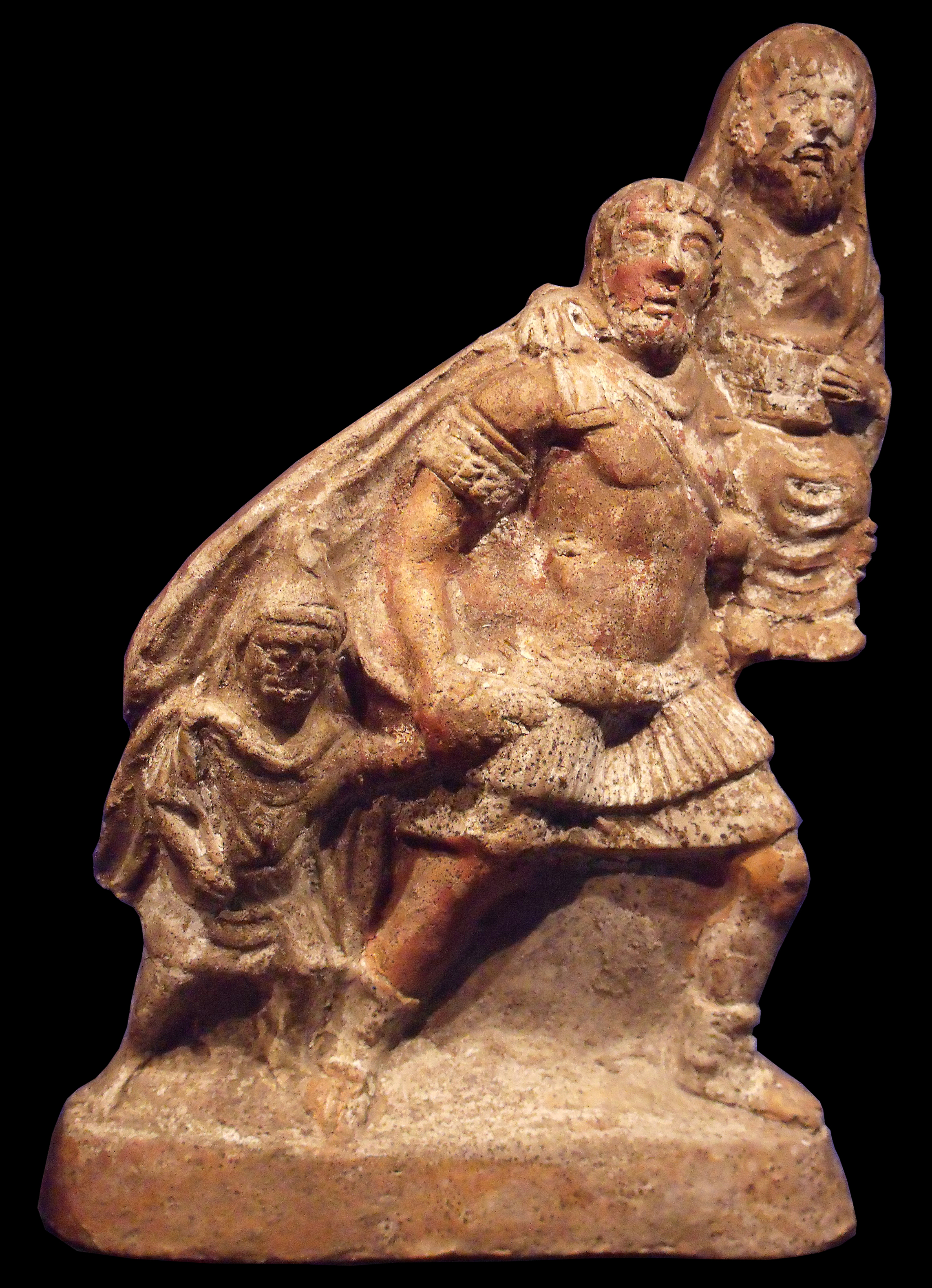
“Used to Love Her…” Achilles, Penthesileia, and a Love-Child?

While discussing unexpected variants in Greek myths today with twitter friends Carly Silver and Emily Hauser (whose forthcoming third book For the Immortal takes its readers to the world of the Amazons, just as her earlier For the Winner and For the Most Beautiful retell the tales of Atalanta and Helen respectively), I learned another new thing today: some traditions give Achilles a “love-child” with Penthesileia [Carly’s great phrase].. And the child’s name is Kaustros (Causter/Cayster).

One of the very humbling things about studying myth–once you accept that there is no central version and realize that audiences kept writing themselves and their local traditions into myth (and vice versa)–is that it is pretty much impossible to know it all. Rather than get discouraged by this, I actually find it exciting–it infuses some work with child-like wonder and makes other work feel like an episode of CSI: Ancient Greece  (or something like that).

The sources for this child are pretty limited–and it does not seem that any specifically name Achilles as father (which is ok–I look forward to seeing what she does with the character):

Schol A ad. Il. 2.461d ex [cf. Eusth. Comm ad I 1.387]

“Kaüstros is a son of Penthesileia the Amazon. He married Derketô in Askalon and fathered from her Semiramis. Among the Syrians, Derketô is called Atargatis.”

(Porph. ?) Κάϋστρος υἱὸς Πενθεσιλείας τῆς ᾿Αμαζόνος, ὃς ἐν ᾿Ασκάλωνι ἔγημεν τὴν Δερκετὼ καὶ ἐξ αὐτῆς ἔσχεν τὴν Σεμίραμιν. | ἡ δὲ Δερκετὼ παρὰ Σύροις καλεῖται ᾿Αταργατῖς. A

Atargatis is sometimes a mermaid-like deity (as is Derketô).

Pretty much the same information is repeated in several different texts, for example:

Etym. Magn. [=Kallierges 493.10, s.v. Kaüstros; cf. Ps. Herod.]

“Kaüstros: a river in Lydia, from Kaüstros. And Kaüstros is a son of Penthesileia the Amazon. He married Derketô in Askalon and fathered from her Semiramis. She’s the one who had the walls of Babylon built.”

     Κάϋστρος: Ποταμὸς Λυδίας· ἀπὸ Καΰστρου· Κάϋστρος δέ ἐστιν υἱὸς Πενθεσιλείας τῆς ᾿Αμαζόνος, ὃς ἐν ᾿Ασκάλωνι ἔγημε τὴν Δερκετὼ, καὶ ἐξ αὐτῆς ἔσχε τὴν Σεμίραμιν, ἥτις καὶ τὰ Βαβυλώνια τείχη κατεσκεύασε.

https://twitter.com/ehauserwrites/status/989543596020977664

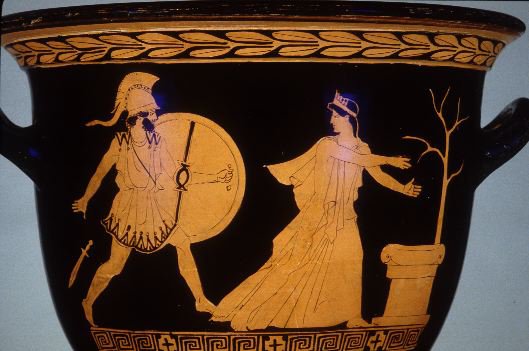
For many, this story is surprising and strange, because the famous vase images and the tales that are told in most of the citations above are that Achilles fell in love with Penthesileia while or after killing her

Image result for Greek Vase Achilles and Penthesilea
A Black-figure vase from the British Museum: 1836,0224.127
This vase is in Munich

We do, however, have other versions of this.

Eustathius, Comm. Ad Od. 11.538, 1696.51

“Tellis tells the tale that Penthesileia killed Achilles but that, after Thetis asked Zeus, he resurrcted him and Achilles killed her in turn. Penthesileia’s father sued Thetis for this but Poseidon judged against Ares.”

…Τέλλις δὲ ἱστορεῖ Πενθεσίλειαν ἀνελεῖν τὸν ᾽Αχιλλέα, αἰτησαμένης δὲ Θέτιδος τὸν Δία ἀναστῆναι αὐτὸν καὶ ἀντανελεῖν ἐκείνην. ῎Αρεα δὲ πατέρα Πενθεσιλείας δίκην λαχεῖν Θέτιδι· κριτὴν δὲ γενόμενον Ποσειδῶνα κατακρῖναι ῎Αρην.

Photios, Novel History = BNJ 61 F 1a

“The Sixth book has the following table of contents: how Achilles, killed by Penthesileia, returned to life after his mother made this request, and then returned to Hades after killing Penthesileia”

τὸ δὲ ς̄ βιβλίον (sc. Πτολεμαίου) κεφάλαια περιέχει τάδε· ὡς ᾽Αχιλλεὺς ὑπὸ Πενθεσιλείας ἀναιρεθείς, δεηθείσης αὐτοῦ τῆς μητρὸς Θέτιδος, ἀναβιοῖ, καὶ ἀνελὼν Πενθεσίλειαν εἰς ῞Αιδου πάλιν ὑποστρέφει.

https://twitter.com/ehauserwrites/status/989547843932315648

The story of Achilles and Penthesileia is likely the inspiration for this song by Guns n’ Roses

First-Wives’ Club: Oinone and Her Son

A twitter correspondent started asking me about Oinônê this morning. To be honest, I had only the faintest idea who she was. Now that I know a little more, I am no happier about the world. Cue up some mythical-grade misogyny, a variation on the Potiphar’s wife motif, and some infanticide.

Apollodorus, Bibliotheca, 3.155

“Hektor married Andromache, Êetiôn’s daughter, and Alexandros [Paris] married Oinônê the daughter of Kebren the river. She learned the power of prophecy from Rhea and warned Alexander not to sail to Helen. Because she did not persuade him, she said that if he was wounded, he should come to her because she alone would be able to heal him.

But he did steal Helen from Sparta and, while Troy was attacked, he was struck by Herakles’ arrows from Philoktêtes. He went to Oinône in Ida. She, because she took delight in his suffering, said she would not heal him. Alexandros returned to Troy and was dying, but Oinônê changed her mind and was bringing medicine to heal him only to find him dead. She hanged herself.”

῞Εκτωρ μὲν οὖν ᾿Ανδρομάχην τὴν ᾿Ηετίωνος γαμεῖ, ᾿Αλέξανδρος δὲ Οἰνώνην τὴν Κεβρῆνος τοῦ ποταμοῦ θυγατέρα. αὕτη παρὰ ῾Ρέας τὴν μαντικὴν μαθοῦσα προέλεγεν ᾿Αλεξάνδρῳ μὴ πλεῖν ἐπὶ ῾Ελένην. μὴ πείθουσα δὲ εἶπεν, ἐὰν τρωθῇ, παραγενέσθαι πρὸς αὐτήν· μόνην γὰρ θεραπεῦσαι δύνασθαι. τὸν δὲ ῾Ελένην ἐκ Σπάρτης ἁρπάσαι, πολεμουμένης δὲ Τροίας τοξευθέντα ὑπὸ Φιλοκτήτου τόξοις ῾Ηρακλείοις πρὸς Οἰνώνην ἐπανελθεῖν εἰς ῎Ιδην. ἡ δὲ μνησικακοῦσα θεραπεύσειν οὐκ ἔφη. ᾿Αλέξανδρος μὲν οὖν εἰς Τροίαν κομιζόμενος ἐτελεύτα, Οἰνώνη δὲ μετανοήσασα τὰ πρὸς θεραπείαν φάρμακα ἔφερε, καὶ καταλαβοῦσα αὐτὸν νεκρὸν ἑαυτὴν ἀνήρτησεν.

This story is the one basically told in Parthenius (Love Tales, 4.7). Another version of the tale is preserved in Photios but is attributed to the historian and mythographer Konon (BNJ 26 F1 = Photios, Bibliotheka 186). A few notes of caution: Konon is dated to the 1st century CE; Photios to the 9th Century CE

 Konon BNJ 26 F1 = Photios, Bibliotheka 186

[This section] is about how a child Koruthos, who surpassed his father in beauty, was born from Alexander/Paris and Oinône, the woman he married before he kidnapped Helen. His mother sent him to Helen to make Alexandros jealous and devise some evil for Helen. When Koruthos got to ‘know’ Helen, Alexandros arrived in the bedroom, and saw Koruthos sitting near her, and, already enraged out of suspicion, he killed him.

Because of the outrage against herself and the killing of her child, she cursed Alexandros a lot and predicted—for she had the inspiration of prophecy and was skilled in preparing medicines—that he would be wounded by one of the Achaeans some day and because he could not find treatment, he would need her and come home.

Later on, Alexander was wounded in the battle against the Achaeans in front of Troy by Philoktetes and he was suffering terribly. He was brought in a wagon to Idea and sent a herald to ask for Oinône. She arrogantly reproached him, saying that he should go back to Helen. Then Alexander died along the road because of the wound.

A powerful change of mind over took her at the time of his death before she heard of it, and once she gathered some medicine, she rushed to overtake him. Once she learned from the herald that he was dead and that she had killed him, she killed the herald for his arrogance by smashing a stone on his head. She threw herself over Alexander’s corpse and, after repeatedly blaming their shared fate, she hanged herself with her belt.”


[23] Οἰνώνη. ἡ κ̄γ̄· ὡς ᾽Αλεξάνδρου τοῦ Πάριδος καὶ Οἰνώνης, ἣν ἐγήματο πρὶν ἢ τὴν ῾Ελένην ἁρπάσαι, παῖς Κόρυθος γίνεται, κάλλει νικῶν τὸν πατέρα. τοῦτον ἡ μήτηρ ῾Ελένηι προσέπεμψε, ζηλοτυπίαν τε κινοῦσα ᾽Αλεξάνδρωι καὶ κακόν τι διαμηχανωμένη ῾Ελένηι. ὡς δὲ συνήθης ὁ Κόρυθος πρὸς ῾Ελένην ἐγένετο, ᾽Αλέξανδρός ποτε παρελθὼν εἰς τὸν θάλαμον καὶ θεασάμενος τὸν Κόρυθον τῆι ῾Ελένηι παρεζόμενον καὶ ἀναφλεχθεὶς ἐξ ὑποψίας εὐθὺς ἀναιρεῖ.

(2) καὶ Οἰνώνη τῆς τε εἰς αὐτὴν ὕβρεως καὶ τῆς τοῦ παιδὸς ἀναιρέσεως πολλὰ ᾽Αλέξανδρον ἀρασαμένη καὶ ἐπειποῦσα (καὶ γὰρ ἦν ἐπίπνους μαντείας καὶ τομῆς φαρμάκων ἐπιστήμων) ὡς τρωθείς ποτε ὑπ᾽ ᾽Αχαιῶν καὶ μὴ τυγχάνων θεραπείας δεήσεται αὐτῆς, οἴκαδε ἤιει. (3) ὕστερον δ᾽ ᾽Αλέξανδρος ἐν τῆι πρὸς ᾽Αχαιοὺς ὑπὲρ Τροίας μάχηι τρωθεὶς ὑπὸ Φιλοκτήτου καὶ δεινῶς ἔχων δι᾽ ἀπήνης ἐκομίζετο πρὸς τὴν ῎Ιδην· καὶ προεκπέμψας κήρυκα ἐδεῖτο Οἰνώνης· ἡ δὲ ὑβριστικῶς μάλα τὸν κήρυκα διωσαμένη πρὸς ῾Ελένην ἰέναι ᾽Αλέξανδρον ἐξωνείδιζε. καὶ ᾽Αλέξανδρος μὲν κατὰ τὴν ὁδὸν ὑπὸ τοῦ τραύματος τελευτᾶι. τὴν δὲ μήπω πεπυσμένην τὴν τελευτὴν μειάμελος ὅμως δεινὸς εἶχε, καὶ δρεψαμένη τῆς πόας ἔθει φθάσαι ἐπειγομένη. ὡς δ᾽ ἔμαθε παρὰ τοῦ κήρυκος ὅτι τεθνήκοι καὶ ὅτι αὐτὴ αὐτὸν ἀνήιρηκεν, ἐκεῖνον μὲν ἀντὶ τῆς ὕβρεως λίθωι τὴν κεφαλὴν πατάξασα ἀναιρεῖ, τῶι δ᾽ ᾽Αλεξάνδρου νεκρῶι περιχυθεῖσα καὶ πολλὰ τὸν κοινὸν ἀμφοῖν καταμεμψαμένη δαίμονα ἑαυτὴν ἀνήρτησε τῆι ζώνηι.

A couple of takeaways from this one. First, it seems that Oinône knew about Paris’ lust for Helen before he departed for Sparta and remained behind on Mt. Ida once he returned to Troy. Second, it is entirely unclear when the child returns to Troy to tempt Helen. This story is a variation on the same story told about Phoinix in book 9 (his mother had him seduce his father’s lover; his father exiled him). No one in this story looks great (except for Koruthos, he looks real great). Paris is, well, a jerk. Poor Oinône is depicted as a witch-prophetess who, despite all the abuse, still loves her terrible husband.

Like Apollodorus’ version above, Ovid’s Heroides (5) do not mention the son. The earliest extant reference to Oinône seems to be Hellanicus, but some speculation links her to Bacchylides fr. 20d (where three letters OIN[….] seem to refer to a wife of Paris. See Gantz Early Greek Myth, 1993 n. 67 on page 839

Image result for Ancient Greek vase paris
This guy? Helen and Paris. Side A from an Apulian (Tarentum?) red-figure bell-krater, 380–370 BC.

Aiakos Built A Wall…And the Gods Paid for It

According to some authors Aiakos, who ends up as a judge of the dead in the underworld, was the son of Zeus and Europa. According to others (Pindar, Corinna) he was son of Zeus and Aegina (Or Poseidon and Aegina). When Poseidon and Apollo went to build the walls of Troy, they took Aiakos along to help them. A scholiast reports that it had to happen this way: since a mortal helped build the walls, they were not wholly invincible.

Pindar’s account of this emphasizes an omen that appeared at the completion of the walls. In his telling, Apollo interprets the omen as indicating that the descendants of Aiakos will be instrumental in the destruction of the city. Who are his descendants? Ajax, Achilles. Oh, Neoptolemos and Epeius the builder of the Trojan horse too!
(go here for the full Ode and a good commentary).

Pindar, Ol. 8.24-54

“For whatever weighs a great deal is hard
To judge with a fair mind at the right time.
But some law of the gods established this sea-protected land [Aegina]
As a sacred pillar
For every kind of stranger.
May rising time never tire
Of making this true
for this land tended by the Dorian people since Aiakos’ time.
It was Aiakos that Leto’s son and wide-ruling Apollo took
When they were going to build a wall around Troy. They summoned him
As a coworker for the wall. For it was fated that
When wars arose in the city-sacking battles,
That the wall would breathe out twisting smoke.
When the wall was just built, three dark serpents
Leapt up at it: two fell against it
and, stunned, lost their lives.
One rose up with cries of mourning.
Apollo interpreted this sign immediately and said:
“Pergamos will be sacked, hero, by your hands’ deeds:
So this sacred vision says to me
Sent by loud-thundering Zeus.
And it won’t be done without your sons: the city will be slaughtered by the first
And the third generations.*” So the god spoke clearly
And he rode Xanthus to the well-horsed Amazons and to the Danube.
The trident-bearer directed his swift-chariot.
To the sea by the Isthmus
Bearing Aiakos here
With golden horses,
Gazing upon the ridge of Corinth, famous for its feasts.
But nothing is equally pleasing among men.”

… ὅ τι γὰρ πολὺ καὶ πολλᾷ ῥέπῃ,
ὀρθᾷ διακρίνειν φρενὶ μὴ παρὰ καιρόν,
δυσπαλές: τεθμὸς δέ τις ἀθανάτων καὶ τάνδ᾽ ἁλιερκέα χώραν
παντοδαποῖσιν ὑπέστασε ξένοις
κίονα δαιμονίαν
ὁ δ᾽ ἐπαντέλλων χρόνος
τοῦτο πράσσων μὴ κάμοι
Δωριεῖ λαῷ ταμιευομέναν ἐξ Αἰακοῦ:
τὸν παῖς ὁ Λατοῦς εὐρυμέδων τε Ποσειδᾶν,
Ἰλίῳ μέλλοντες ἐπὶ στέφανον τεῦξαι, καλέσαντο συνεργὸν
τείχεος, ἦν ὅτι νιν πεπρωμένον
ὀρνυμένων πολέμων
πτολιπόρθοις ἐν μάχαις
λάβρον ἀμπνεῦσαι καπνόν.
γλαυκοὶ δὲ δράκοντες, ἐπεὶ κτίσθη νέον,
πύργον ἐσαλλόμενοι τρεῖς, οἱ δύο μὲν κάπετον,
αὖθι δ᾽ ἀτυζομένω ψυχὰς βάλον:
εἷς δ᾽ ἀνόρουσε βοάσαις.
ἔννεπε δ᾽ ἀντίον ὁρμαίνων τέρας εὐθὺς, Ἀπόλλων:
‘ Πέργαμος ἀμφὶ τεαῖς, ἥρως, χερὸς ἐργασίαι ἁλίσκεται:
ὣς ἐμοὶ φάσμα λέγει Κρονίδα
πεμφθὲν βαρυγδούπου Διός:
οὐκ ἄτερ παίδων σέθεν, ἀλλ᾽ ἅμα πρώτοις ῥάζεται
καὶ τερτάτοις.’ ὣς ἆρα θεὸς σάφα εἴπαις
Ξάνθον ἤπειγεν καὶ Ἀμαζόνας εὐίππους καὶ ἐς Ἴστρον ἐλαύνων.
Ὀρσοτρίαινα δ᾽ ἐπ᾽ Ἰσθμῷ ποντίᾳ
ἅρμα θοὸν τανύεν,
ἀποπέμπων Αἰακὸν
δεῦρ᾽ ἀν᾽ ἵπποις χρυσέαις,
καὶ Κορίνθου δειράδ᾽ ἐποψόμενος δαιτικλυτάν.
τερπνὸν δ᾽ ἐν ἀνθρώποις ἴσον ἔσσεται οὐδέν.

*First and Third generation: Aiakos had two sons (Telemon and Peleus) with Endeis and one with another woman (Phocus). Telemon and Peleus killed their half-brother; but the three sons fathered Ajax, Achilles and Panopeus (Phocus). The latter two grandsons fathered Neoptolemus and Epeios. Achilles’ son Neoptolemus helped take Troy; Epeios built the wooden horse.

Zeus – Aegina
|
Endeis – Aiakos – Psamathe
|                 |
Telamon Peleus                  Phocus
|                |                               |
Ajax       Achilles                  Panopeus
|                                  |
Neoptolemus                 Epeios

Image result for Medieval Manuscript walls of troy

Aeneas Gazes Upon the Broken Victors

Accius, Fragment of an unknown play (lines 46-63: from Varro De Lingua Latina 6.60)

This is allegedly Aeneas speaking. I have no idea what is going on here. But a few of these lines are beautiful. And timely.

“Who is it who calls upon my name?”

It is said that Tantalus was born from Zeus
And that Pelops came from Tantalus. Then from Pelops
Atreus was born, who was then the father of our line.
Atreus’ sons, kings, are now preparing their homecoming.

But if you don’t shut up, Menelaos, you’ll fall by this right hand.
And thus, while Argos has power it will strip you of power.
Oh ancient parent of our race, honor of the Argives,
He did the greatest deed when the Danai were turned away
He completed the highest act, the madman regained the fight
With his own hand.
An arrogant victor
He could not endure to be conquered himself
Because of the pain at such terrible fame.

I see you, I see you. Live Ulysses while you can
Seize the final shining light with your eyes.

Is this that Telamon, whom glory has raised
Up to heaven itself
Whom the Greeks used to watch, to whose face
The Greeks always used to turn their own?
His spirit has collapsed with his circumstances.”

Quis enim est qui meum nomen nuncupat?
Iove propagatus est ut perhibent Tantalus,
Ex Tantalo ortus Pelops, ex Pelope autem satus
Atreus, qui nostrum porro propagat genus.
. . . Iam domutionem reges Atridae parant.

Quod nisi quieris, Menelae, hac dextra occides.
Proin demet abs te regimen Argos dum est
potestas consili.
O parens antiqua nostrae gentis, Argivum decus,
. . . Facinus fecit maximum, cum Danais
inclinantibus
summam perfecit rem, manu sua restituit proelium
insaniens.
Victor insolens
ignominiae se dolore victum non potuit pati.

Video, video te. Vive, Ulixes, dum licet;
oculis postremum lumen radiatum rape.
Hicine est Telamo ille, modo quem gloria ad
caelum extulit,
quem aspectabant, cuius ob os Grai ora obvertebant
sua? . . .

. . . Simul animus cum re concidit.

Image result for Ancient Roman Aeneas
Aeneas.


A Suicide Pact: Some Toxic Masculinity with Menelaos

The Scene: In Euripides’ Helen, Proteus’ son wants to marry her and Menelaos has been shipwrecked outside of Egypt. He arrived with a fake-Helen but has now found the real one and they are trying to persuade the seer Theonoe not to tell her brother that Menelaos is there. Just in case the plan fails, Menelaos has a contingency plan:

832-854

Menelaos: Come on, what if she doesn’t accept our arguments?

Helen: The you die. And wretched me, well I will be married by force

M: You would be a traitor. You use ‘force’ as an excuse.

H:No—I swear a sacred oath on your head…

M: What are you saying, you will die? You will never leave our bed?

H: By the same sword. I will lie near you.

M: Take my right hand to swear these things.

H:I take it: I will leave the life when you die.

M: And I, deprived of you, will end my life.

H: How will we die in a way that gains us fame?

M: After killing you over the back of this grave I will kill myself.
But first we will fight a great fight over your bed.
Let any man who wants to come near.
I will not bring shame to my Trojan fame,
Nor will I have left Greece to get great blame,
I, the man who deprived Thetis of Achilles,
Who saw Telamonian Ajax slaughter himself
And saw Neleus’ son made childless! Should I not
Think it right that I should die for my own wife?
Oh, it really is. For if the gods are wise,
They will make a light burden of the earth’s tomb
For the brave man struck down by his enemies,
While they expel cowards from onto lonely stone.”

Με. φέρ’, ἢν δὲ δὴ νῶιν μὴ ἀποδέξηται λόγους;
Ελ. θανῆι· γαμοῦμαι δ’ ἡ τάλαιν’ ἐγὼ βίαι.
Με. προδότις ἂν εἴης· τὴν βίαν σκήψασ’ ἔχεις.
Ελ. ἀλλ’ ἁγνὸν ὅρκον σὸν κάρα κατώμοσα …
Με. τί φήις; θανεῖσθαι; κοὔποτ’ ἀλλάξεις λέχη;
Ελ. ταὐτῶι ξίφει γε· κείσομαι δὲ σοῦ πέλας.
Με. ἐπὶ τοῖσδε τοίνυν δεξιᾶς ἐμῆς θίγε.
Ελ. ψαύω, θανόντος σοῦ τόδ’ ἐκλείψειν φάος.
Με. κἀγὼ στερηθεὶς σοῦ τελευτήσειν βίον.
Ελ. πῶς οὖν θανούμεθ’ ὥστε καὶ δόξαν λαβεῖν;
Με. τύμβου ‘πὶ νώτοις σὲ κτανὼν ἐμὲ κτενῶ.
πρῶτον δ’ ἀγῶνα μέγαν ἀγωνιούμεθα
λέκτρων ὑπὲρ σῶν· ὁ δὲ θέλων ἴτω πέλας.
τὸ Τρωϊκὸν γὰρ οὐ καταισχυνῶ κλέος
οὐδ’ ῾Ελλάδ’ ἐλθὼν λήψομαι πολὺν ψόγον,
ὅστις Θέτιν μὲν ἐστέρησ’ ᾿Αχιλλέως,
Τελαμωνίου δ’ Αἴαντος εἰσεῖδον σφαγὰς
τὸν Νηλέως τ’ ἄπαιδα· διὰ δὲ τὴν ἐμὴν
οὐκ ἀξιώσω κατθανεῖν δάμαρτ’ ἐγώ;
μάλιστά γ’· εἰ γάρ εἰσιν οἱ θεοὶ σοφοί,
εὔψυχον ἄνδρα πολεμίων θανόνθ’ ὕπο
κούφηι καταμπίσχουσιν ἐν τύμβωι χθονί,
κακοὺς δ’ ἐφ’ ἕρμα στερεὸν ἐκβάλλουσι γῆς.

Image result for Menelaus and Helen


Paris Donned a Menelaos Disguise to Convince Helen to Go To Troy!

I recently gave my upper level Greek students a mythography assignment. Since we’re reading Euripides’ Helen, the assignment was to research some part of her story. In the Helen, Euripides pursues the version of events favored by Stesichorus and mentioned by Herodotus too: that Helen was replaced by a cloud-Helen (whom I call a Cylon). The fake-Helen went to Troy while the real one went to Egypt.

One of the passages a student found was completely new to me. Apparently there was a tradition that has Aphrodite pulling a Zeus-Amphitryon trick with Paris and Menelaos.

Nikias of Mallos, BNJ 60 F 2a [=Schol. V ad Od. 23.218]

“Priam’s child Alexander  left Asia and went to Sparta with the plan of abducting Helen while he was a guest there. But she, because of her noble and husband-loving character, was refusing him and saying that she would honor her marriage with the law and thought more of Menelaos. Because Paris was ineffective, the story is that Aphrodite devised this kind of a trick: she exchanged the appearance of Alexander for Menelaos’ character to persuade Helen in this way. For, because she believed that this was truly Menelaos, she was not reluctant to leave with him. After she went to the ship before him, he took her inside and left. This story is told in Nikias of Mallos’ first book”

᾽Αλέξανδρος ὁ Πριάμου παῖς ἀπὸ τῆς ᾽Ασίας κατάρας εἰς τὴν Λακεδαίμονα διενοεῖτο τὴν ῾Ελένην ξενιζόμενος ἁρπάσαι· ἡ δὲ γενναῖον ἧθος καὶ φίλανδρον ἔχουσα ἀπηγόρευε καὶ προτιμᾶν ἔλεγε τὸν μετὰ νόμου γάμον καὶ τὸν Μενέλαον περὶ πλείονος ἡγεῖσθαι. γενομένου δὲ τοῦ Πάριδος ἀπράκτου φασὶ τὴν ᾽Αφροδίτην ἐπιτεχνῆσαι τοιοῦτόν τι, ὥστε καὶ μεταβάλλειν τοῦ ᾽Αλεξάνδρου τὴν ἰδέαν εἰς τὸν τοῦ Μενελάου χαρακτῆρα, καὶ οὕτω τὴν ῾Ελένην παραλογίσασθαι· δόξασαν γὰρ εἶναι ταῖς ἀληθείαις τὸν Μενέλαον μὴ ὀκνῆσαι ἅμα αὐτῶι ἕπεσθαι, φθάσασαν δὲ αὐτὴν ἄχρι τῆς νεὼς ἐμβαλλόμενος ἀνήχθη. ἡ ἱστορία παρὰ Νικίαι †τῶι πρώτωι†.

Image result for Ancient Greek Vase Paris and Helen

This kind of doubling and uncertainty about identity is certainly at home in any discussion of Euripides’ Helen (well, at least the first third where no one knows who anybody is). But it is also apt for the Odyssey where Odysseus cryptically insists (16.204):

“No other Odysseus will ever come home to you”

οὐ μὲν γάρ τοι ἔτ’ ἄλλος ἐλεύσεται ἐνθάδ’ ᾿Οδυσσεύς,

The Man is Close: Diomedes’ Turn with a Plan

In this passage, Diomedes announces his genealogy as justification for his authority to provide a plan for the other Achaean kings. Note, the women in his family receive no introductions. The scholia to this passage tell another part of his story, first explaining why Tydeus had to leave Calydon, and then why Diomedes had to leave Argos.

Homer, Iliad 14.110-132

“The man is nearby—we will not look long for him. If you are willing
To consent and each of you does not get troubled by anger
Because I am the youngest among you by birth.
I claim to be from a noble father by birth,
Tydeus, whom a heap of earth covers in Thebes.
Three blameless children were born to Portheus
And they used to live in Pleurôn and steep Kalydon:
Agrios, Melas and the third was the horseman Oeneus,
The father of my father. He was exceptional for his excellence.
But while he remained there, my father left, driven out
To Argos. This was, I guess, how Zeus and the other gods wanted it.
He married one of the daughters of Adrastos and lived in a home
Wealthy for life: he had enough wheat-bearing fields,
And there hear many orchards on all sides;
And he had many flocks. He also surpassed all the Achaeans
With a spear. You all have heard these things, if they are true.
Thus, you cannot claim that I come from low birth or I am a coward
And disregard the speech I make well for some reason.
Now, let us go to war by necessity, even though we are wounded.
There, we can keep ourselves out of the strife of the missiles,
Lest someone add a wound to a wound.
But we can go and encourage others, even those who before
Stood apart and did not fight, doing some favor for their hearts.”

ἐγγὺς ἀνήρ· οὐ δηθὰ ματεύσομεν· αἴ κʼ ἐθέλητε
πείθεσθαι, καὶ μή τι κότῳ ἀγάσησθε ἕκαστος
οὕνεκα δὴ γενεῆφι νεώτατός εἰμι μεθʼ ὑμῖν·
πατρὸς δʼ ἐξ ἀγαθοῦ καὶ ἐγὼ γένος εὔχομαι εἶναι
Τυδέος, ὃν Θήβῃσι χυτὴ κατὰ γαῖα καλύπτε
πορθεῖ γὰρ τρεῖς παῖδες ἀμύμονες ἐξεγένοντο,
οἴκεον δʼ ἐν Πλευρῶνι καὶ αἰπεινῇ Καλυδῶνι
Ἄγριος ἠδὲ Μέλας, τρίτατος δʼ ἦν ἱππότα Οἰνεὺς
πατρὸς ἐμοῖο πατήρ· ἀρετῇ δʼ ἦν ἔξοχος αὐτῶν.
ἀλλʼ ὃ μὲν αὐτόθι μεῖνε, πατὴρ δʼ ἐμὸς Ἄργεϊ νάσθη
πλαγχθείς· ὡς γάρ που Ζεὺς ἤθελε καὶ θεοὶ ἄλλοι.
Ἀδρήστοιο δʼ ἔγημε θυγατρῶν, ναῖε δὲ δῶμα
ἀφνειὸν βιότοιο, ἅλις δέ οἱ ἦσαν ἄρουραι
πυροφόροι, πολλοὶ δὲ φυτῶν ἔσαν ὄρχατοι ἀμφίς,
πολλὰ δέ οἱ πρόβατʼ ἔσκε· κέκαστο δὲ πάντας Ἀχαιοὺς
ἐγχείῃ· τὰ δὲ μέλλετʼ ἀκουέμεν, εἰ ἐτεόν περ.
τὼ οὐκ ἄν με γένος γε κακὸν καὶ ἀνάλκιδα φάντες
μῦθον ἀτιμήσαιτε πεφασμένον ὅν κʼ ἐῢ εἴπω.
δεῦτʼ ἴομεν πόλεμον δὲ καὶ οὐτάμενοί περ ἀνάγκῃ.
ἔνθα δʼ ἔπειτʼ αὐτοὶ μὲν ἐχώμεθα δηϊοτῆτος
ἐκ βελέων, μή πού τις ἐφʼ ἕλκεϊ ἕλκος ἄρηται·
ἄλλους δʼ ὀτρύνοντες ἐνήσομεν, οἳ τὸ πάρος περ
θυμῷ ἦρα φέροντες ἀφεστᾶσʼ οὐδὲ μάχονται.

Schol. ad. Il. 14.114b

“Tydeus, the son of Oineus and Periboia the daughter of Hippotos. He killed his cousins who were conspiring against Oieneus, Lykopeus and Alkathoos, accidentally, he also killed with them his uncle Melanas who was dining with them. After he fled the murder, he went to Argos; and once he was purified by Adrastos, he married his daughter Dêipulê.”

b(BCE3E4)T ὁ δὲ Τυδεὺς Οἰνέως καὶ Περιβοίας τῆς ῾Ιππότου· ὃς ἀνεψιοὺς ἐπιβουλεύοντας Οἰνεῖ Λυκωπέα καὶ ᾿Αλκάθουν ἀπέκτεινεν †ἀγρόθι†, σὺν αὐτοῖς δὲ ἄκων καὶ τὸν πατράδελφον Μέλανα (συνεδαίνυτο γὰρ αὐτοῖς) καὶ φεύγων τὸν φόνον ἧκεν ἐς ῎Αργος καὶ καθαρθεὶς ὑπὸ ᾿Αδράστου γαμεῖ Δηϊπύλην τὴν θυγατέρα αὐτοῦ. T

Scholia D ad Il. 5.412

“Aigialeia, was the youngest of the daughters of Adrastos. For Adrastos had three daughters, this one [Aigialeia, who married Diomedes], Argeia, Polyneikos’ wife, and Dêipulê, Tydeus’ wife”

Διομήδους γυνὴ Αἰγιάλεια, ἡ νεωτάτη τῶν ᾿Αδράστου θυγατέρων. Τρεῖς γὰρ ἔσχε θυγατέρας ὁ ῎Αδραστος· ταύτην, καὶ ᾿Αργείαν τὴν Πολυνείκους, καὶ Δηϊπύλην τὴν Τυδέως. Τῆς οὖν μητρὸς αὐτοῦ”

And then the scholion continues….

But he, after he went to Troy, left Sthenelos’ son Komêtês, as an overseer of his position and household. The story goes as follows. Aphrodite, although she was wounded by Diomedes, could not bring up her hatred of him because of the alliance with Athena, so she made his wife crazy about screwing so that she yielded to every age of the young men as she engaged in outrages. [Aphrodite] also filled Komêtês with lust of Agialeia. When Diomedes returned from Troy, he pursued him with spearmen wising to kill him. Diomedes, benefiting from the weakness of his opponents, fled to the altar of Hera. After that, he went to the west and it is said he received some land for a colony from Daunos. And finally, when his companions were impoverished and starving, Athena turned them into herons and then Diomedes ended his life. This story is recorded by Lykophron. The Poet does not mention this account.”

῾Ο δὲ, στρατεύσας ἐς ῎Ιλιον, κατέλιπε τῆς ἀρχῆς καὶ τῆς οἰκίας ἐπίτροπον τὸν Σθενέλου Κομήτην. Κατέχει δὲ ὁ λόγος· τρωθεῖσαν τὴν ᾿Αφροδίτην ὑπὸ Διομήδους, αὐτῷ μὲν μὴ μνησικακῆσαι, διὰ τὴν τῆς ᾿Αθηνᾶς ἐπικουρίαν, τὴν δὲ τούτου γυναῖκα ἐκμῆναι περὶ πορνείαν, ὡς περὶ πᾶσαν τὴν τῶν νέων ἡλικίαν συγχορεύειν ἀσελγαίνουσαν· τῷ δὲ Κομήτῃ καὶ ἔρωτα τῆς Αἰγιαλείας ἐμποιῆσαι. παραγενόμενον δὲ τὸν Διομήδην ἐξ ᾿Ιλίου, διώκειν μετὰ δορυφόρων, ἀποκτεῖναι βουλόμενον· τὸν δὲ λοιπὸν, τοῖς ἀσθενέσι βοηθήμασι χρώμενον, καταφυγεῖν ἐπὶ τὸν ῎Ηρας βωμόν. Μετὰ ταῦτα δὲ ἀπῇρεν εἰς ῾Εσπερίαν, καὶ παραλαβεῖν λέγεται παρὰ Δαύνου [τόπους] τινὰς εἰς κατοικισμόν. Καὶ τέλος, ἀπορούντων αὐτοῦ τῶν ἑταίρων, καὶ λιμωττόντων, τούτους μὲν τὴν ᾿Αθηνᾶν εἰς ἐρωδιοὺς ἀπορνεῶσαι, τὸν Διομήδην δὲ ἐνταῦθα καταστρέψαι τὸν βίον. ῾Η δὲ ἱστορία παρὰ Λυκόφρονι. Ταύτην δὲ τὴν ἱστορίαν ὁ Ποιητὴς οὐ λέγει.


Image result for Diomedes ancient greek

Paris’ First Wife and Astyanax’s Post-Trojan Life

Things are getting really strange with Servius (=Jacoby Abas 46, f1)

Servius  on Virgil, Aeneid 9.262

devicta genitor (sc. Aeneas) quae cepit Arisba]

“Which his father took once Arisba was conquered…”

“(And yet, according to Homer, Arisba sent aid to the Trojans and was overcome by Achilles)…the city is called Arisba after the daughter of Merpos or Macareus who was the first wife of Paris. According to some authors, Abas, who wrote the Troika, related that after the Greeks left Troy, the rule of this city was given to Astyanax. Antenor expelled him once he had allied himself with the states neighboring where Arisba’s location. Aeneas took this badly and took up arms for Astyanax; once the expedition was prosecuted successfully, he returned the kingdom to Astyanax.”

[[atqui secundum Homerum Arisba Troianis misit auxilia et ab Achille subversa est …]] dicta est Arisba ab Meropis vel Macarei filia, quam primum Paris in coniugio habuit. quidam ab Abante, qui Troica scripsit, relatum ferunt, post discessum a Troia Graecorum Astyanacti ibi datum regnum. hunc ab Antenore expulsum sociatis sibi finitimis civitatibus, inter quas et Arisba fuit. Aeneam hoc aegre tulisse et pro Astyanacte arma cepisse, ac prospere gesta re Astyanacti restituisse regnum.


Several details of this are strange. First, the fact that Paris had a first wife, though not strange on the surface, is rarely mentioned. Second, Astyanax’s survival after the fall of Troy is far from typical—the typical tale is his murder at the hands of Odysseus. Less surprising but still worth mentioning is the antagonism between Antenor—who is depicted in some sources as being friendly to Menelaos and Agamemnon—and the surviving heir of the house of Priam. Finally, I find it touching that Aeneas would take a break from all of his own troubles to help his cousin’s star-crossed son.

Image result for Ancient Greek Paris vase

Calculated Fictions: The Logic Of Odysseus’ Lies

Od. 13.256-273

“I heard of Ithaca even in broad Krete
Far over the sea. And now I myself have come
With these possessions. I left as much still with my children
When I fled, because I killed the dear son of Idomeneus,
Swift-footed Orsilokhos who surpassed all the grain-fed men
In broad Krete with his swift feet
Because he wanted to deprive me of all the booty
From Troy, over which I had suffered much grief in my heart,
Testing myself against warlike men and the grievous waves.
All because I was not showing his father favor as an attendant
In the land of the Trojans, but I was leading different companions.
I struck him with a bronze-pointed spear as he returned
From the field, after I set an ambush near the road with a companion.
Dark night covered the sky and no human beings
Took note of us, I got away with depriving him of life.
But after I killed him with the sharp bronze,
I went to a ship of the haughty Phoenicians
And I begged them and gave them heart-melting payment.”

“πυνθανόμην ᾿Ιθάκης γε καὶ ἐν Κρήτῃ εὐρείῃ,
τηλοῦ ὑπὲρ πόντου· νῦν δ’ εἰλήλουθα καὶ αὐτὸς
χρήμασι σὺν τοίσδεσσι· λιπὼν δ’ ἔτι παισὶ τοσαῦτα
φεύγω, ἐπεὶ φίλον υἷα κατέκτανον ᾿Ιδομενῆος,
᾿Ορσίλοχον πόδας ὠκύν, ὃς ἐν Κρήτῃ εὐρείῃ
ἀνέρας ἀλφηστὰς νίκα ταχέεσσι πόδεσσιν,
οὕνεκά με στερέσαι τῆς ληΐδος ἤθελε πάσης
Τρωϊάδος, τῆς εἵνεκ’ ἐγὼ πάθον ἄλγεα θυμῷ,
ἀνδρῶν τε πτολέμους ἀλεγεινά τε κύματα πείρων,
οὕνεκ’ ἄρ’ οὐχ ᾧ πατρὶ χαριζόμενος θεράπευον
δήμῳ ἔνι Τρώων, ἀλλ’ ἄλλων ἦρχον ἑταίρων.
τὸν μὲν ἐγὼ κατιόντα βάλον χαλκήρεϊ δουρὶ
ἀγρόθεν, ἐγγὺς ὁδοῖο λοχησάμενος σὺν ἑταίρῳ·
νὺξ δὲ μάλα δνοφερὴ κάτεχ’ οὐρανόν, οὐδέ τις ἥμεας
ἀνθρώπων ἐνόησε, λάθον δέ ἑ θυμὸν ἀπούρας.
αὐτὰρ ἐπεὶ δὴ τόν γε κατέκτανον ὀξέϊ χαλκῷ,
αὐτίκ’ ἐγὼν ἐπὶ νῆα κιὼν Φοίνικας ἀγαυοὺς
ἐλλισάμην καί σφιν μενοεικέα ληΐδα δῶκα·

This is the first ‘lie’ Odysseus tells upon his arrival on Ithaca. He does not know that he is speaking to Athena and a scholiast explains his choices as if he were speaking to a suitor or one who would inform them.

Scholia V ad. Od. 13.267

“He explains that he killed Idomeneus’ son so that the suitors will accept him as an enemy of dear Odysseus. He says that he has sons in Crete because he will have someone who will avenge him. He says that the death of Orsilochus was for booty, because he is showing that he would not yield to this guy bloodlessly. He says that he trusted Phoenicians so that he may not do him wrong, once he has reckoned that they are the most greedy for profit and they spared him.”

τὸν μὲν ἐγὼ κατιόντα] σκήπτεται τὸν ᾿Ιδομενέως υἱὸν ἀνῃρηκέναι, ἵνα αὐτὸν πρόσωνται οἱ μνηστῆρες ὡς ἐχθρὸν τοῦ ᾿Οδυσσέως φίλου. ἑαυτῷ δὲ ἐν Κρήτῃ υἱούς φησιν εἶναι, ὅτι τοὺς τιμωρήσοντας ἕξει. καὶ τὸν ᾿Ορσιλόχου δὲ θάνατον λέγει διὰ τὴν λείαν, δεικνὺς ὅτι οὐδὲ ἐκείνῳ παραχωρήσει ἀναιμωτί. Φοίνιξι δὲ πιστεῦσαι λέγει, ἵνα μὴ ἀδικήσῃ, λογισάμενος ὅτι οἱ φιλοκερδέσταται αὐτοῦ ἐφείσαντο.
V.


Image result for Odysseus Medieval

Orsilochus is a name of a son of Diokles as well.

Hektor’s “Empty” Grave

Homer, Il. 24.797–800

“They quickly placed the bones in an empty trench and then
They covered it with great, well-fitted stones.
They rushed to heap up a marker, around which they set guards
In case the well-greaved Achaeans should attack too soon.”

αἶψα δ’ ἄρ’ ἐς κοίλην κάπετον θέσαν, αὐτὰρ ὕπερθε
πυκνοῖσιν λάεσσι κατεστόρεσαν μεγάλοισι·
ῥίμφα δὲ σῆμ’ ἔχεαν, περὶ δὲ σκοποὶ ἥατο πάντῃ,
μὴ πρὶν ἐφορμηθεῖεν ἐϋκνήμιδες ᾿Αχαιοί.

In Iliad seven, Hector challenges the ‘best of the Achaeans’ to a duel. There he imagines that, once he had won the contest, the dead hero’s tomb would be a monument to, and sign of, his everlasting glory. Ironically, the dead hero’s tomb turns out to be his, once the Trojans construct it at the epic’s end

But what kind of sign is it? Homer describes how the Trojans’ burial mound for Hector leaves ‘a mark’—the word here is sêma (from which we get the words ‘semantics’ or ‘semaphore’), and also means a sign or symbol. In the end, then, the epic leaves us with a symbol of some kind. Ostensibly, of course, that is Hector’s burial mound, a physical marker of his fame—and the fame of all the heroes who fought at Troy. Yet, its immediate referent, the physical thing it describes, is a ‘hollow grave’ (koilên kapeton).

hector_brought_back_to_troy

An English speaker might wonder whether or not the hollowness of the grave marks some sort of empty meaning and thus offers some judgment on the vanity and meaninglessness of the conflict, perhaps evoking ambivalence. But part of the trick in translating metaphors from one culture to another is understanding that a cognitive valence can be very different. In English, ‘hollow’ and ‘empty’ tend to refer to the absence of substance within something else. (Hence, our use for it to describe depression or anhedonia.)

But in ancient Greek, the word koilê is used to describe the shape made by a thing that allows it to hold something else. It can sometimes then come to shift to point to the absence of that something else, but it is, more often, a marker for the vessel which can carry something, even when it is carrying it. In conjunction with Hektor’s grave, consider the following lyric mentions of the ‘hollow ships’ of the Trojan War:

Consider:

Ibycus fr. 1a 16-19

Nor yet the overreaching virtue
of heroes whom the hollow,
many-benched ships brought
as the destruction of Troy.

ἡρ]ώων ἀρετὰν
ὑπ]εράφανον οὕς τε κοίλα[ι
νᾶες] πολυγόμφοι ἐλεύσα[ν
Τροί]αι κακόν, ἥρωας ἐσ̣θ̣[λούς·

Pindar, Ol. 6.1

“Unrisked virtue becomes honored
Neither among men nor in the empty ships.
But many a man is remembered
When something noble has been tried.”

… ἀκίνδυνοι δ’ ἀρεταί
οὔτε παρ’ ἀνδράσιν οὔτ’ ἐν ναυσὶ κοίλαις
τίμιαι· πολλοὶ δὲ μέμναν-
ται, καλὸν εἴ τι ποναθῇ.

In both these passages, the ships are marked out for their potential to carry something and their ability to do so. It is also arguable that the ships carry ethical content of the heroes they convey to Troy as well. Of course, in the Iliad the ships are often invoked as empty in their capacity to carry things as well as people—but these moments are also seen as critical in telling the story, as when the Trojan herald Idaios refers to the beginning of the conflict:

Il. 7.399-400

“However many possessions Alexandros led in his hollow ships
To troy. Oh, how I wish he had died first!”

κτήματα μὲν ὅσ’ ᾿Αλέξανδρος κοίλῃς ἐνὶ νηυσὶν
ἠγάγετο Τροίηνδ’· ὡς πρὶν ὤφελλ’ ἀπολέσθαι·

So, when the word used to describe that ‘hollow trench’ (koilein kápeton) is the same used for the ships that brought the Achaeans to Troy and will take their stories away, the grave is being marked out as a vessel for Hector’s fame. The message of Hektor’s “empty grave” is not like the elegiac regret of T.S. Eliot’s “Hollow Men”, but instead it represents the potential of an empty vessel to be filled by the audience in its reception of the poem.

In addition to Hector’s grave itself, however, this vessel, this sêma, may also refer to the Iliad itself. The epic is a vessel of fame, of Hector’s, Achilles’, and Agamemnon’s, but it is also a marker for the death of a world, for the end of a bygone time. On the one hand, it marks the transition from the heroic age to the present day. On the other, it acts as a grave marker of an entire tradition of epic poetry which would have sung about the wars at Troy and Thebes.

The hollowness of this thing is not about being empty, but about having the power to carry something. As the Tao Te Ching states, “We shape clay into a pot / but it is the emptiness inside / that holds whatever we want. We hammer wood for a house, but it is the inner space / that makes it livable” (Chapter 11; Stephen Mitchell, 1988). Thus, Hector’s grave carries with it everything he was or could be; and the Iliad, far from empty and devoid of meaning, is that vessel that carries so much unknown across the oceans of time.

Tao Te Ching: Chapter 11
translated by Stephen Mitchell (1988)

We join spokes together in a wheel,
but it is the center hole
that makes the wagon move.

We shape clay into a pot,
but it is the emptiness inside
that holds whatever we want.

We hammer wood for a house,
but it is the inner space
that makes it livable.

We work with being
but non-being is what we use.