Plagues and (Human) Sacrifice


Christie SacrificeClement, First Letter to the Corinthians 55

“Let’s offer some examples from other peoples as well. Many kings and people in charge, have given themselves to death after listening to an oracle, so that they might save their citizens with their own blood. And many private citizens have exiled themselves in order to decrease civil strife.”

Ἵνα δὲ καὶ ὑποδείγματα ἐθνῶν ἐνέγκωμεν· πολλοὶ βασιλεῖς καὶ ἡγούμενοι, λοιμικοῦ τινος ἐνστάντος καιροῦ χρησμοδοτηθέντες παρέδωκαν ἑαυτοὺς εἰς θάνατον, ἵνα ῥύσωνται διὰ τοῦ ἑαυτῶν αἵματος τοὺς πολίτας· πολλοὶ ἐξεχώρησαν ἰδίων πόλεων, ἵνα μὴ στασιάζωσιν ἐπὶ πλεῖον.

Stobaios, Florilegium  3.7.69

“When a plague was afflicting the Spartans because of the murder of the heralds sent by Xerxes—because he demanded earth and water as signs of servitude—they received an oracle that they would be saved if some Spartans would be selected to be killed by the king. Then Boulis and Sperkhis came forward to the king because they believed they were worthy to be sacrificed. Because he was impressed by their bravery he ordered them to go home.”

Τοῦ αὐτοῦ. λοιμοῦ κατασχόντος τὴν Λακεδαίμονα διὰ τὴν ἀναίρεσιν τῶν κηρύκων τῶν ἀπεσταλέντων παρὰ Ξέρξου αἰτοῦντος γῆν καὶ ὕδωρ ὥσπερ ἀπαρχὰς δουλείας, χρησμὸς ἐδόθη ἐπαλλαγήσεσθαι αὐτούς, εἴ γέ τινες ἕλοιντο Λακεδαιμονίων παρὰ τοῦ βασιλέως ἀναιρεθῆναι. τότε Βοῦλις καὶ Σπέρχις ἀφικόμενοι πρὸς βασιλέα ἠξίουν ἀναιρεθῆναι· ὁ δὲ θαυμάσας αὐτῶν τὴν ἀρετὴν ἐπανιέναι προσέταξεν.

Diogenes Laertius, Vitae philosophorum 1.110 [Epimenides]

“Epimenides was known among the Greeks and was thought to be extremely beloved to the gods. For this reason, when the Athenians were once afflicted by a plague and the Pythian oracle prophesied that they should cleanse their city, they sent a ship along with Nikias the son of Nikêratos, summoning Epimenides.

He made it to Athens at the time of the 46th Olympiad [c. 596 BCE] and cleansed the city. He stopped it in the following manner. After obtaining white and black sheep, he led them to the Areopagos and then allowed them to go wherever they wanted there. He ordered the people following them to sacrifice the sheep to whichever god was proper to the place where each sheep laid down.

This is how the plague stopped. For this reason it is still even today possible to find altars without names in certain Athenian neighborhoods as a commemoration of that ancient cleansing. Some people report that Epimenides indicated the pollution from the Kylon scandal as the cause of the plague along with a resolution for it. For this reason, they killed two youths, Kratinos and Ktêsibios and the suffering was relieved.”

(110) γνωσθεὶς δὲ παρὰ τοῖς ῞Ελλησι θεοφιλέστατος εἶναι ὑπελήφθη. ὅθεν καὶ Ἀθηναίοις ποτὲ λοιμῶι κατεχομένοις ἔχρησεν ἡ Πυθία καθῆραι τὴν πόλιν, οἱ δὲ πέμπουσι ναῦν τε καὶ Νικίαν τὸν Νικηράτου εἰς Κρήτην, καλοῦντες τὸν Ἐπιμενίδην. καὶ ὃς ἐλθὼν ὀλυμπιάδι τεσσαρακοστῆι ἕκτηι ἐκάθηρεν αὐτῶν τὴν πόλιν, καὶ ἔπαυσε τὸν λοιμὸν τοῦτον τὸν τρόπον· λαβὼν πρόβατα μέλανά τε καὶ λευκά, ἤγαγεν πρὸς τὸν ῎Αρειον πάγον, κἀκεῖθεν εἴασεν ἰέναι οἷ βούλοιντο, προστάξας τοῖς ἀκολούθοις, ἔνθα ἂν κατακλινῆι αὐτῶν ἕκαστον, θύειν τῶι προσήκοντι θεῶι· καὶ οὕτω λῆξαι τὸ κακόν· ὅθεν ἔτι καὶ νῦν ἔστιν εὺρεῖν κατὰ τοὺς δήμους τῶν Ἀθηναίων βωμοὺς ἀνωνύμους, ὑπόμνημα τῆς τότε γενομενης ἐξιλάσεως. οἱ δὲ τὴν αἰτίαν εἰπεῖν τοῦ λοιμοῦ τὸ Κυλώνειον ἄγος σημαίνειν τε τὴν ἀπαλλαγήν· καὶ διὰ τοῦτο ἀποθανεῖν δύο νεανίας Κρατῖνον καὶ Κτησίβιον, καὶ λυθῆναι τὴν συμφοράν

Ps.-Plutarch, Parallela minora 19A, 310B-C

“Kuanippos, a Syracusan by birth, did not sacrifice to Dionysus alone. In rage over this, the god caused him to become drunk and then he raped his daughter Kuanê in some shadowy place. She took his ring and gave it to her nurse as to be proof of what had happened in the future.

When they were later struck by a plague and Pythian Apollo said that they had to sacrifice the impious person to the Gods-who-Protect, everyone else was uncertain about the oracle. Kuanê understood it. She grabbed her father by the hair and sacrificed herself over him once she’d butchered him on the altar.

That’s the story Dositheos tells in the third book of his Sicilian Tales.

Κυάνιππος γένει Συρακούσιος μόνωι Διονύσωι οὐκ ἔθυεν· ὁ δὲ θεὸς ὀργισθεὶς μέθην ἐνέσκηψε, καὶ ἐν τόπωι σκοτεινῶι τὴν θυγατέρα ἐβιάσατο Κυάνην· ἡ δὲ τὸν δακτύλιον περιελομένη ἔδωκε τῆι τροφῶι ἐσόμενον ἀναγνώρισμα. λοιμωξάντων δὲ, καὶ τοῦ Πυθίου εἰπόντος μὲν δεῖν τὸν ἀσεβῆ <᾽Απο>τροπαίοις θεοῖς σφαγιάσαι, τῶν δ᾽ ἄλλων ἀγνοούντων τὸν χρησμόν, γνοῦσα ἡ Κυάνη καὶ ἐπιλαβομένη τῶν τριχῶν εἷλκε, καὶ αὐτὴ κατασφάξασα τὸν πατέρα ἑαυτὴν ἐπέσφαξε, καθάπερ Δοσίθεος ἐν τῶι τρίτωι Σικελικῶν.

Plague of Athens - Wikipedia
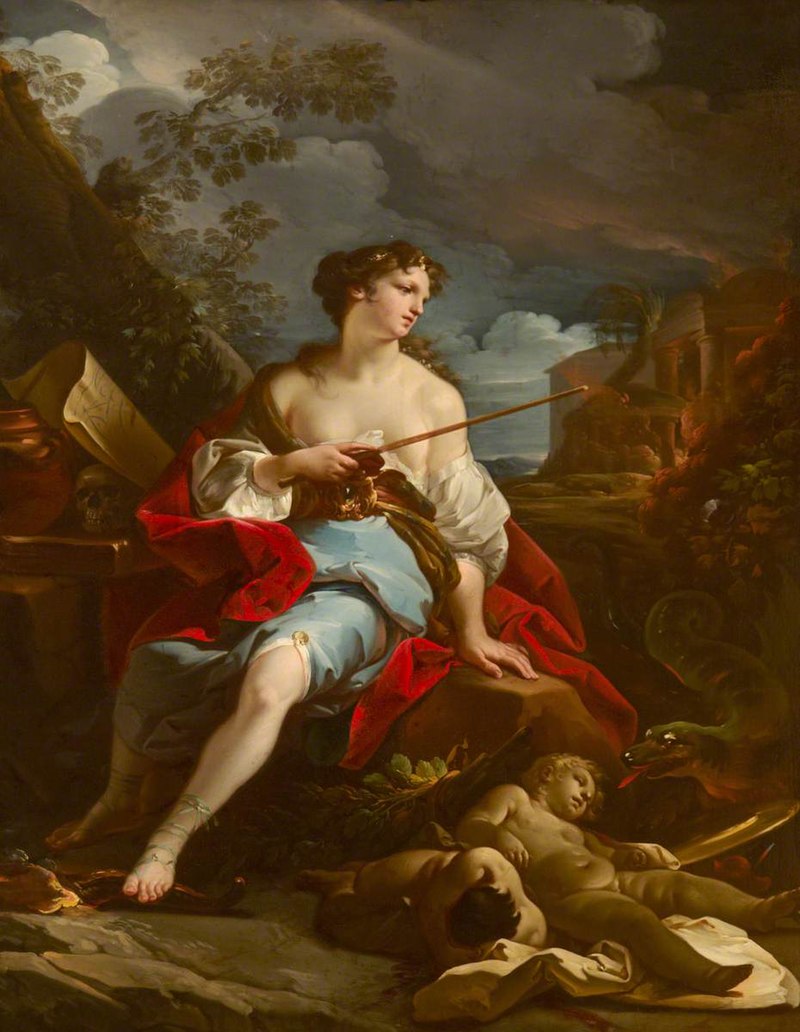
The Plague of Athens, Michiel Sweerts, c. 1652–1654

Hesiod, Works and Days, 101-105

“The land is full of evils; the sea is full of evils.
Diseases come to humans at day and at night
they come on their own bringing evils to mortals in silence
Since devious Zeus took their voices away.”

πλείη μὲν γὰρ γαῖα κακῶν, πλείη δὲ θάλασσα·
νοῦσοι δ’ ἀνθρώποισιν ἐφ’ ἡμέρῃ, αἳ δ’ ἐπὶ νυκτὶ
αὐτόματοι φοιτῶσι κακὰ θνητοῖσι φέρουσαι
σιγῇ, ἐπεὶ φωνὴν ἐξείλετο μητίετα Ζεύς.
οὕτως οὔ τί πη ἔστι Διὸς νόον ἐξαλέασθαι.

Hesiod, Works and Days 240-247

“The whole state often suffers because of a wicked man
Who transgresses the gods and devises reckless deeds.
Kronos’ son rains down great pain on them from heaven:
Famine and plague and the people start to perish.
[Women don’t give birth and households waste away
Thanks to the vengeance of Olympian Zeus.] And at other times
Kronos’ son ruins their great army or their wall
Or he destroys their ships on the the sea.”

πολλάκι καὶ ξύμπασα πόλις κακοῦ ἀνδρὸς ἀπηύρα,
ὅστις ἀλιτραίνῃ καὶ ἀτάσθαλα μηχανάαται.
τοῖσιν δ’ οὐρανόθεν μέγ’ ἐπήγαγε πῆμα Κρονίων,
λιμὸν ὁμοῦ καὶ λοιμόν, ἀποφθινύθουσι δὲ λαοί·
[οὐδὲ γυναῖκες τίκτουσιν, μινύθουσι δὲ οἶκοι
Ζηνὸς φραδμοσύνῃσιν ᾿Ολυμπίου· ἄλλοτε δ’ αὖτε]
ἢ τῶν γε στρατὸν εὐρὺν ἀπώλεσεν ἢ ὅ γε τεῖχος
ἢ νέας ἐν πόντῳ Κρονίδης ἀποτείνυται αὐτῶν.

Hold Olympics, End a Plague? Make Herakles Your Friend Too

Pausanias, Description of Greece, 5.4.5-6

“After Oksulos, Laias, his son, held power, but I have learned that his descendants did not rule as kings. I am going to pass over them even though I know who they are, since I do not want my story to descend to talking about private citizens.

Later on, Iphitos, who was a descendant of Oksulos and around the same age as Lukourgos who wrong the laws for the Spartans, he organized the contests at Olympia and re-organized the Olympic festival and the truce from the beginning, since the games had been neglected for some amount of time. I explain this in the parts of my record which discuss the region of Olympia.

It was Iphitos’ responsibility to ask the god in Delphi for a relief from suffering since Greece was at that time especially suffering destruction from civil strife and epidemic disease. The story is that the Pythia commanded that Iphitos himself had to renew the Olympic Games along with the Eleians. Iphitos persuaded the Eleians to sacrifice to Herakles too, even though that had previously believed that Herakles was their enemy.

The inscription at Olympia claims that Iphitos was the child of Haimon. But most Greeks say that he was the son of Praksônides, not Haimôn. But the Eleians’ ancient writings attribute Iphitos to a father of the same name.”

μετὰ δὲ ῎Οξυλον Λαίας ἔσχεν ὁ ᾽Οξύλου τὴν ἀρχήν, οὐ μὴν τούς γε ἀπογόνους αὐτοῦ βασιλεύοντας εὕρισκον, καὶ σφᾶς ἐπιστάμενος ὅμως παρίημι· οὐ γάρ τί μοι καταβῆναι τὸν λόγον ἠθέλησα ἐς ἄνδρας ἰδιώτας. χρόνωι δὲ ὕστερον ῎Ιφιτος, γένος μὲν ὢν ἀπὸ ᾽Οξύλου, ἡλικίαν δὲ κατὰ Λυκοῦργον τὸν γράψαντα Λακεδαιμονίοις τοὺς νόμους, τὸν ἀγῶνα διέθηκεν ἐν ᾽Ολυμπίαι πανήγυρίν τε Ολυμπικὴν αὖθις ἐξ ἀρχῆς καὶ ἐκεχειρίαν κατεστήσατο, ἐκλιπόντα ἐπὶ χρόνον ὁπόσος δὴ οὗτος ἦν. αἰτίαν δέ, δι᾽ ἥντινα ἐξέλιπε τὰ ᾽Ολύμπια, ἐν τοῖς ἔχουσιν ἐς ᾽Ολυμπίαν τοῦ λόγου δηλώσω. (6) τῶι δὲ ᾽Ιφίτωι, φθειρομένης τότε δὴ μάλιστα τῆς ῾Ελλάδος ὑπὸ ἐμφυλίων στάσεων καὶ ὑπὸ νόσου λοιμώδους, ἐπῆλθεν αἰτῆσαι τὸν ἐν Δελφοῖς θεὸν λύσιν τῶν κακῶν· καί οἱ προσταχθῆναί φασιν ὑπὸ τῆς Πυθίας ὡς αὐτόν τε ῎Ιφιτον δέοι καὶ ᾽Ηλείους τὸν ᾽Ολυμπικὸν ἀγῶνα ἀνανεώσασθαι. ἔπεισε δὲ ᾽Ηλείους ῎Ιφιτος καὶ ῾Ηρακλεῖ θύειν, τὸ πρὸ τούτου πολέμιόν σφισιν ῾Ηρακλέα εἶναι νομίζοντας. τὸν δὲ ῎Ιφιτον τὸ ἐπίγραμμα τὸ ἐν ᾽Ολυμπίαι φησὶν Αἵμονος παῖδα εἶναι· ῾Ελλήνων δὲ οἱ πολλοὶ Πραξωνίδου καὶ οὐχ Αἵμονος εἶναί φασι· τὰ δὲ ᾽Ηλείων γράμματα ἀρχαῖα ἐς πατέρα ὁμώνυμον ἀνῆγε τὸν ῎Ιφιτον.

File:A competitor in the long jump, Black-figured Tyrrhenian amphora showing athletes and a combat scene, Greek, but made for the Etruscan market, 540 BC, found near Rome, Winning at the ancient Games, British Museum (7675649600).jpg
Jump Your Way to Health! Black Figure Vase, British Museum

Sophocles, Antigone 72–77

“It is noble for me to do this and then die.
I will lie with him because I belong to him, with him,
Once I have completed my sacred crimes. There’s more time
When I must please those below than those here,
Since I will lie there forever. You? Go ahead,
Dishonor what the gods honor if it seems right.”

… καλόν μοι τοῦτο ποιούσῃ θανεῖν.
φίλη μετ᾿ αὐτοῦ κείσομαι, φίλου μέτα,
ὅσια πανουργήσασ᾿· ἐπεὶ πλείων χρόνος
ὃν δεῖ μ᾿ ἀρέσκειν τοῖς κάτω τῶν ἐνθάδε·
ἐκεῖ γὰρ αἰεὶ κείσομαι. σὺ δ᾿ εἰ δοκεῖ
τὰ τῶν θεῶν ἔντιμ᾿ ἀτιμάσασ᾿ ἔχε.

Sophocles, Antigone 280–288

“Stop speaking before you fill me with rage!
And you’re revealed as a fool as well as an old man.
You speak of unendurable things, claiming that the gods
Have some plan for this corpse.

Did they do it to honor him so greatly for his fine work,
Concealing him, the man who came here
To burn their temples and their statutes,
To ruin their land and their laws?
Do you see the gods honoring evil people?”

παῦσαι, πρὶν ὀργῆς καί με μεστῶσαι λέγων,
μὴ ᾿φευρεθῇς ἄνους τε καὶ γέρων ἅμα.
λέγεις γὰρ οὐκ ἀνεκτὰ δαίμονας λέγων
πρόνοιαν ἴσχειν τοῦδε τοῦ νεκροῦ πέρι.
πότερον ὑπερτιμῶντες ὡς εὐεργέτην
285ἔκρυπτον αὐτόν, ὅστις ἀμφικίονας
ναοὺς πυρώσων ἦλθε κἀναθήματα
καὶ γῆν ἐκείνων καὶ νόμους διασκεδῶν;
ἢ τοὺς κακοὺς τιμῶντας εἰσορᾷς θεούς;

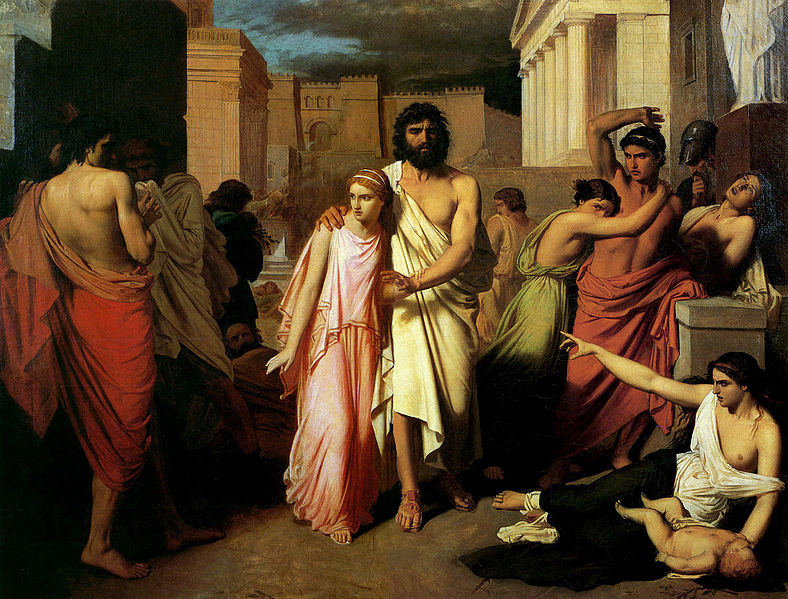
File:The Plague of Thebes.jpg
Antigone and Oedipus, Charles Jalabert

Cleansing the City

Plutarch, Romulus 24

“Then a plague fell on the land, bringing unexpected death to people without sickness, also infecting the crops with barrenness and making the cattle stop reproducing. Drops of blood rained on the city too which added great superstition to the compulsory suffering.

When similar things happened to the people in Laeurentum, it seemed obvious to everyone that it was the crime against justice over Tatius and the murdered ambassadors which drove divine rage against the cities. Once the murderers were surrendered and punished on both sides, the horrors clearly ebbed. Romulus also cleansed the city with purificatory rites which people allege are still celebrated in our time at the Ferentine gate.”

XXIV. Ἐκ τούτου λοιμὸς ἐμπίπτει, θανάτους μὲν αἰφνιδίους ἀνθρώποις ἄνευ νόσων ἐπιφέρων, ἁπτόμενος δὲ καὶ καρπῶν ἀφορίαις καὶ θρεμμάτων ἀγονίαις. ὕσθη δὲ καὶ σταγόσιν αἵματος ἡ πόλις, ὥστε πολλὴν προσγενέσθαι τοῖς ἀναγκαίοις πάθεσι δεισιδαιμονίαν. ἐπεὶ δὲ καὶ τοῖς τὸ Λαύρεντον οἰκοῦσιν ὅμοια συνέβαινεν, ἤδη παντάπασιν ἐδόκει τῶν ἐπὶ Τατίῳ συγκεχυμένων δικαίων ἐπί τε τοῖς πρέσβεσι φονευθεῖσι μήνιμα δαιμόνιον ἀμφοτέρας ἐλαύνειν τὰς πόλεις. ἐκδοθέντων δὲ τῶν φονέων καὶ κολασθέντων παρ᾿ ἀμφοτέροις, ἐλώφησεν ἐπιδήλως τὰ δεινά· καὶ καθαρμοῖς ὁ Ῥωμύλος ἥγνισε τὰς πόλεις, οὓς ἔτι νῦν ἱστοροῦσιν ἐπὶ τῆς Φερεντίνης πύλης συντελεῖσθαι.

Petter Paul Rubens, Romulus and Remus

The Epidemic’s Over, We’re Fine

Cicero, Letters to Friends, to Terentia 8 (14.1)

“When it comes to my family, I will do what you report seems right to our friends. Concerning where I am currently, the epidemic is certainly already over and, even though it lasted a while, it didn’t touch me. Plancius, the most dutiful man, longs to keep me with him and detains me here.

I was hoping to stay in some deserted place in Epirus where Piso and his soldiers would never come, but Plancius holds me here. He posts that it will turn out to be possible for him to leave for Italy with me. Should I see that day and return to your embrace and my families and get you and myself back again, I will judge that a great profit of your commitment and mine.”

De familia, quo modo placuisse scribis amicis faciemus. de loco, nunc quidem iam abiit pestilentia, sed quam diu fuit me non attigit. Plancius, homo officiosissimus, me cupit esse secum et adhuc retinet. ego volebam loco magis deserto esse in Epiro, quo neque Piso veniret nec milites, sed adhuc Plancius me retinet; sperat posse fieri ut mecum in Italiam decedat. quem ego diem si videro et si in vestrum complexum venero ac si et vos et me ipsum reciperaro, satis magnum mihi fructum videbor percepisse et vestrae pietatis et meae.

Cicero Very Fine

Killing the God of Plague and Famine

Plutarch On Isis and Osiris 370 b-c

“A fated time is coming when Areimanios, because he brings plague and famine, must be killed and then forced to disappear altogether. Then, when the earth is balanced and even, there will be one life and a shared government of all the lucky people with a shared language for all.

Theopompos claims that, according to the Magi, one of the gods rules for a term of three thousand years and then another rules in turn, and then for another three thousand years they fight and war and one destroys the accomplishments of another.

Finally, Hades is overcome and people will be happy because they no longer need food and they do not become ghosts. The god who made these things possible withdraws and rests for a time, and it is not a long time for a god it is is like a person sleeping a normal amount of time.”

ἔπεισι δὲ χρόνος εἱμαρμένος, ἐν ὧι τὸν ᾽Αρειμάνιον λοιμὸν ἐπάγοντα καὶ λιμὸν ὑπὸ τούτων ἀνάγκη φθαρῆναι παντάπασι καὶ ἀφανισθῆναι, τῆς δὲ γῆς ἐπιπέδου καὶ ὁμαλῆς γενομένης, ἕνα βίον καὶ μίαν πολιτείαν ἀνθρώπων μακαρίων καὶ ὁμογλώσσων ἁπάντων γενέσθαι. Θεόπομπος δέ φησι κατὰ τοὺς Μάγους ἀνὰ μέρος τρισχίλια ἔτη τὸν μὲν κρατεῖν τὸν δὲ κρατεῖσθαι τῶν θεῶν, ἄλλα δὲ τρισχίλια μάχεσθαι καὶ πολεμεῖν καὶ ἀναλύειν τὰ τοῦ ἑτέρου τὸν ἕτερον· τέλος δ᾽ ἀπολείπεσθαι τὸν ῞Αιδην, καὶ τοὺς μὲν ἀνθρώπους εὐδαίμονας ἔσεσθαι μήτε τροφῆς δεομένους μήτε σκιὰν ποιοῦντας, τὸν δὲ ταῦτα μηχανησάμενον θὲον ἠρεμεῖν καὶ ἀναπαύεσθαι χρόνον, [καλῶς] μὲν οὐ πολὺν [τῶι θεῶι], ὥσπερ ἀνθρώπωι κοιμωμένωι μέτριον.

A  Mithraic Arimanios

Clean Rivers and Peacock Tongues: Some Cures for the Plague

Diogenes Laertius, Empedocles 8.70

“When a plague struck the Selinuntians thanks to the pollution from a nearby river causing people to die and the women to miscarry, Empedocles recognized the problem and turned two local rivers at his own expense. They sweetened the streams by mixing in with them.

Once the plague was stopped in this way, Empedocles appeared while the Selinuntines were having a feast next to the river. They rose and bowed before him, praying to him as if he were a god. He threw himself into a fire because he wanted to test the truth of his divinity.”

τοῖς Σελινουντίοις ἐμπεσόντος λοιμοῦ διὰ τὰς ἀπὸ τοῦ παρακειμένου ποταμοῦ δυσωδίας, ὥστε καὶ αὐτοὺς φθείρεσθαι καὶ τὰς γυναῖκας δυστοκεῖν, ἐπινοῆσαι τὸν Ἐμπεδοκλέα καὶ δύο τινὰς ποταμοὺς τῶν σύνεγγυς ἐπαγαγεῖν ἰδίαις δαπάναις· καὶ καταμίξαντα γλυκῆναι τὰ ῥεύματα. οὕτω δὴ λήξαντος τοῦ λοιμοῦ καὶ τῶν Σελινουντίων εὐωχουμένων ποτὲ παρὰ τῷ ποταμῷ, ἐπιφανῆναι τὸν Ἐμπεδοκλέα· τοὺς δ’ ἐξαναστάντας προσκυνεῖν καὶ προσεύχεσθαι καθαπερεὶ θεῷ. ταύτην οὖν θέλοντα βεβαιῶσαι τὴν διάληψιν εἰς τὸ πῦρ ἐναλέσθαι.

Historia Augusta, Elagabalus 4, 5

“He had banquet and bedroom furniture made from silver. He often ate camel-heels and cock’s combs removed from birds who were still alive to imitate Apicius, as well as the tongues of peacocks and nightingales because it was said that whoever ate them was safe from the plague.

He also gave the the Palace visitors enormous serving dishes piled with the innards of mullets, flamingo-brains, partridge eggs, the brains of thrushes, and the whole heads of parrots, pheasants, and peacocks.”

Hic solido argento factos habuit lectos et tricliniares et cubiculares. comedit saepius ad imitationem Apicii calcanea camelorum et cristas vivis gallinaceis demptas, linguas pavonum et lusciniarum, quod qui ederet a pestilentia tutus diceretur. exhibuit et Palatinis lances ingentes extis mullorum refertas et cerebellis phoenicopterum et perdicum ovis et cerebellis turdorum et capitibus psittacorum et phasianorum et pavonum.

File:Empedocles. Line engraving after (C. V.). Wellcome V0001768.jpg
Empedocles Line Engraving

Murdered Immigrant Children and a Plague: A Different Medea Story

Child murder, worries about immigrants, and paranoia about drugs. Why are the ancients so weird?

Scholia B on Euripides, Medea 264

Parmeniskos writes as follows: “The story is that because the Korinthian women did not want to be ruled by a foreign woman and poison-user, they conspired against her and killed her children, seven male and seven female. Euripides says that Medea had only two. When the children were being pursued, they fled to the temple of Hera Akraia and sheltered in the shrine. But the Korinthians did not restrain themselves even there—they slaughtered the children over the altar.

Then a plague fell upon the city and many bodies were ruined by the disease. When they went to the oracle, it prophesied that they should appease the god for the slaughter of Medea’s children. For this reason, even in our day, the Korinthians send seven young men and seven young women from the most illustrious families each year to spend the year in the sanctuary to appease the rage of the children and the divine anger which arose because of them.”

But Didymos argues against this and provides Kreophylos’ writings: “For Medea is said to have killed the leader of Korinth at the time, Kreon, with drugs, when she was living there. Because she feared his friends and relatives, she fled to Athens, but left her sons who were too young and incapable of accompanying here, at the altar of Hera Akraia. She thought that their father would provide for their safety. But once Kreon’s relatives killed them they circulated the tale that Medea not only killed Kreon but murdered her own children too.”

1 Παρμενίσκος γράφει κατὰ λέξιν οὕτως·

« <…>1 ταῖς [δὲ] Κορινθίαις οὐ βουλομέναις ὑπὸ βαρβάρου καὶ φαρμακίδος γυναικὸς ἄρχεσθαι αὐτῆι τε ἐπιβουλεῦσαι καὶ τὰ τέκνα αὐτῆς ἀνελεῖν, ἑπτὰ μὲν ἄρσενα, ἑπτὰ δὲ θήλεα. [Εὐριπίδης δὲ δυσὶ μόνοις φησὶν αὐτὴν κεχρῆσθαι]. ταῦτα δὲ διωκόμενα καταφυγεῖν εἰς τὸ τῆς Ἀκραίας ῞Ηρας ἱερὸν καὶ ἐπὶ τὸ ἱερὸν καθίσαι· Κορινθίους δὲ αὐτῶν οὐδὲ οὕτως ἀπέχεσθαι, ἀλλ᾽ ἐπὶ τοῦ βωμοῦ πάντα ταῦτα ἀποσφάξαι. λοιμοῦ δὲ γενομένου εἰς τὴν πόλιν, πολλὰ σώματα ὑπὸ τῆς νόσου διαφθείρεσθαι· μαντευομένοις δὲ αὐτοῖς χρησμωιδῆσαι τὸν θεὸν ἱλάσκεσθαι τὸ τῶν Μηδείας τέκνων ἄγος. ὅθεν Κορινθίοις μέχρι τῶν καιρῶν τῶν καθ᾽ ἡμᾶς καθ᾽ ἕκαστον ἐνιαυτὸν ἑπτὰ κούρους καὶ ἑπτὰ κούρας τῶν ἐπισημοτάτων ἀνδρῶν ἐναπενιαυτίζειν ἐν τῶι τῆς θεᾶς τεμένει καὶ μετὰ θυσιῶν ἱλάσκεσθαι τὴν ἐκείνων μῆνιν καὶ τὴν δι᾽ ἐκείνους γενομένην τῆς θεᾶς ὀργήν. »

2 Δίδυμος δὲ ἐναντιοῦται τούτωι καὶ παρατίθεται τὰ Κρεωφύλου ἔχοντα οὕτως·

« τὴν γὰρ Μήδειαν λέγεται διατρίβουσαν ἐν Κορίνθωι τὸν ἄρχοντα τότε τῆς πόλεως Κρέοντα ἀποκτεῖναι φαρμάκοις. δείσασαν δὲ τοὺς φίλους καὶ τοὺς συγγενεῖς αὐτοῦ φυγεῖν εἰς ᾽Αθήνας, τοὺς δὲ υἱούς, ἐπεὶ νεώτεροι ὄντες οὐκ ἠδύναντο ἀκολουθεῖν, ἐπὶ τὸν βωμὸν τῆς ᾽Ακραίας ῞Ηρας καθίσαι, νομίσασαν τὸν πατέρα αὐτῶν φροντιεῖν τῆς σωτηρίας αὐτῶν. τοὺς δὲ Κρέοντος οἰκείους ἀποκτείναντας αὐτοὺς διαδοῦναι λόγον ὅτι ἡ Μήδεια οὐ μόνον τὸν Κρέοντα ἀλλὰ καὶ τοὺς ἑαυτῆς παῖδας ἀπέκτεινε. »

It has long been a favorite anecdote that Euripides was paid off by the Korinthians to make Medea look bad. For other accounts of Medea: Here’s one about her saving lives, another about her losing a beauty contest to Achilles’ mother Thetis, another account of it being Jason’s fault, an earlier scholion explaining how much the Korinthian women hated Medea, rationalizing accounts about Medea’s magic and her treatment of Pelias.

Medea by Corrado Giaquinto

A Tyrant and A Plague

N.B This is a different Pythagoras from the one with the theorem.

Suda, s.v. Pythagoras of Ephesos

“Pythagoras of Ephesos. Once he overthrew the government called the reign of the Basilidai, Pythagoras became the harshest tyrant. He seemed and sometimes was very kind to the people and the masses, increasing their hopes, but under-delivering on their profits. Because he despoiled those in high esteem and power and liquidated their property, he was not at all tolerable.

He did not hesitate to impose the harshest punishments or to mercilessly kill those who had done no wrong—for he had gotten just this crazy. His lust for money was endless. He was also quickest to anger in response to any insults to those near to him. On their own, these things would have been enough reason for people to kill him in the worst way, but he also was contemptuous of the divine. Indeed, many of his previously mentioned victims he actually killed in temples.

When the daughters of one man took refuge in a temple, he did not dare to extract them forcefully, but he waited them out so long that the girls resolved their hunger with a rope. A plague then afflicted the people along with a famine and Pythagoras, who was worried for himself, sent representatives to Delphi, requesting relief from these sufferings. She said that he needed to build temples and take care of the dead. He lived before Cyrus of Persia, according to Batôn.”

Πυθαγόρας ᾽Εφέσιος· καταλύσας δι᾽ ἐπιβουλῆς τὴν τῶν Βασιλιδῶν καλουμένην ἀρχήν, ἀνεφάνη τε τύραννος πικρότατος. καὶ τῶι μὲν δήμωι καὶ τῆι πληθύι ἦν τε καὶ ἐδόκει κεχαρισμένος, ἅμα τὰ μὲν αὐτοὺς ἐπελπίζων ὑποσχέσεσιν, τὰ δὲ ὑποσπείρων αὐτοῖς ὀλίγα κέρδη· τούς γε μὴν ἐν ἀξιώσει τε καὶ δυνάμει περισυλῶν καὶ δημεύων φορητὸς οὐδαμὰ οὐδαμῆ ἦν. καὶ κολάσαι δὲ πικρότατα οὐκ ἂν ὤκνησε, καὶ ἀφειδέστατα ἀποκτεῖναι οὐδὲν ἀδικοῦντας (ἐξελύττησε γὰρ εἰς ταῦτα)· ἔρως τε χρημάτων ἄμετρος· καὶ διαβολαῖς ταῖς ἐς τοὺς πλησίους ἐκριπισθῆναι κουφότατος ἦν. ἀπέχρησε μὲν οὖν καὶ ταῦτα ἂν κάκιστα ἀνθρώπων ἀπολέσαι αὐτόν, ἤδη δὲ καὶ τοῦ θείου κατεφρόνει· τῶν γοῦν προειρημένων οἷς ἐπέθετο παμπόλλους ἐν τοῖς ναοῖς ἀπέκτεινεν, ἑνὸς δὲ τὰς θυγατέρας καταφυγούσας εἰς τὸ ἱερὸν ἀναστῆσαι μὲν βιαίως οὐκ ἐτόλμησε, συνεχῆ δὲ φυλακὴν ἐπιστήσας ἐξετρύχωσεν ἄρα ἐς τοσοῦτον, ὡς βρόχωι τὰς κόρας τὸν λιμὸν ἀποδρᾶναι. οὐκοῦν ἠκολούθησε δημοσίαι νόσος καὶ τροφῶν ἀπορία· καὶ σαλεύων ὑπὲρ ἑαυτοῦ ὁ Πυθαγόρας εἰς Δελφοὺς ἀπέστειλε καὶ ἤιτει λύσιν τῶν κακῶν. ἡ δὲ ἕφη νεὼν ἀναστῆσαι καὶ κηδεῦσαι τοὺς νεκρούς. ἦν δὲ πρὸ Κύρου τοῦ Πέρσου, ὥς φησι Βάτων.

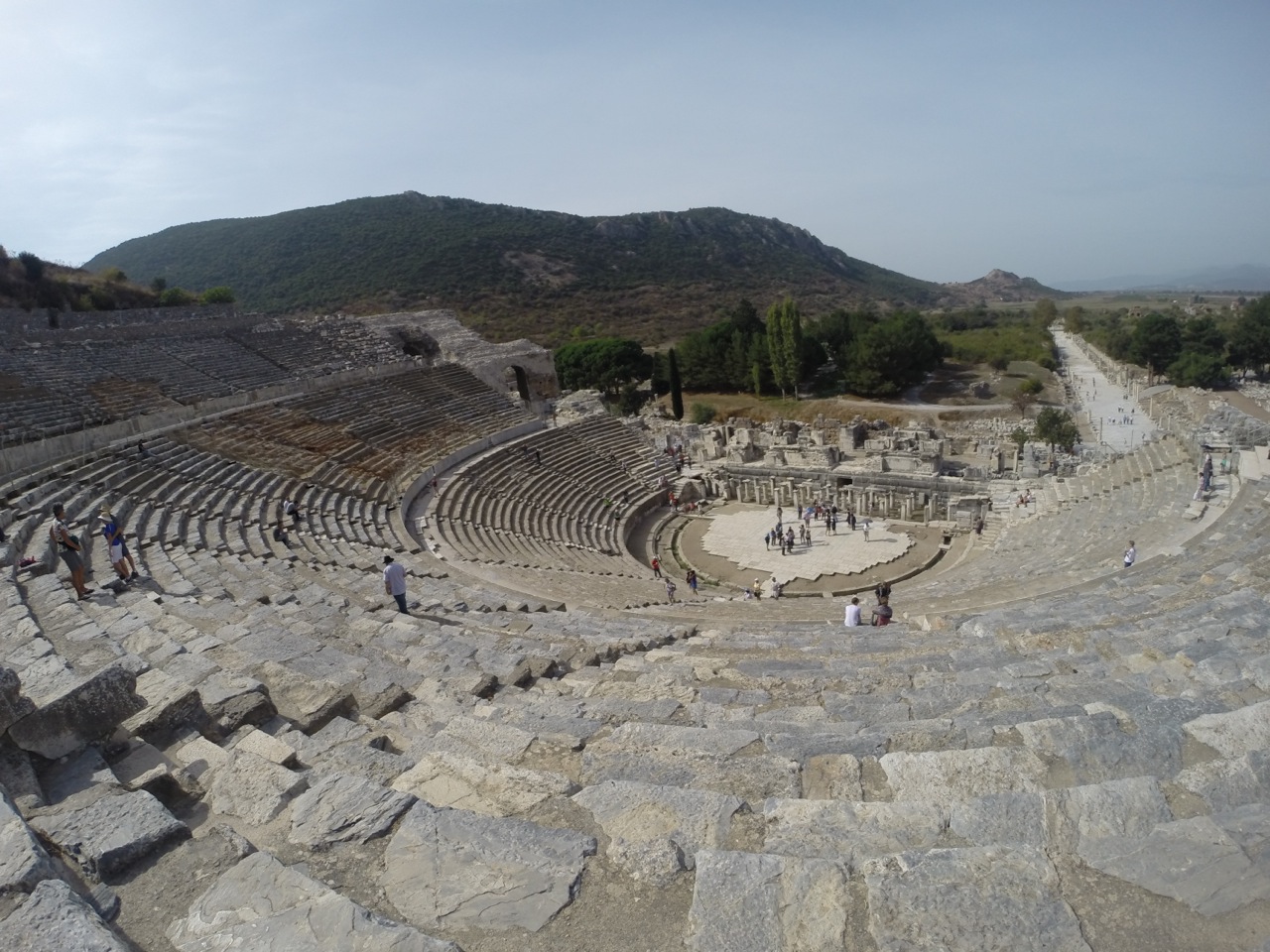
Ancient Theater at Ephesus

Blame it on the Comets

Manilius, Astronomica 875-893

“The sky has never gone alight with meaningless fires,
But farmers, deluded, have cursed their wasted fields
And in the infertile rows the depressed plowman
Pointlessly coaxes his mourning oxen to their yokes.
Or when a mortal spark hollows out the marrow of life
In bodies taken by heavy sickness or aged exhaustion,
And it takes a wavering people, and throughout entire cities
Shared mourning is accompanied by funereal fires.

That’s what the plague was like when it attacked Erekhtheus’ people
And carried ancient Athens out to graves in a time of peace.
One after another, slipping into sickness and cursing fate,
No kind of medical skill or prayer was helping them.

Duty itself fell to sickness, and the dead received neither
Burial nor tears. Even fire failed in its exhaustion
And the limbs of bodies were piled on burning limbs.
A people once so great could scarcely find their next of kin.

These are the horrors shining comets often proclaim.”

numquam futtilibus excanduit ignibus aether,
squalidaque elusi deplorant arva coloni,
et sterilis inter sulcos defessus arator
ad iuga maerentis cogit frustrata iuvencos.
aut gravibus morbis et lenta corpora tabe
corripit exustis letalis flamma medullis
labentisque rapit populos, totasque per urbes
publica succensis peraguntur iusta sepulcris.
qualis Erectheos pestis populata colonos
extulit antiquas per funera pacis Athenas,
alter in alterius labens cum fata ruebant,
nec locus artis erat medicae nec vota valebant;
cesserat officium morbis, et funera derant
mortibus et lacrimae; lassus defecerat ignis
et coacervatis ardebant corpora membris,
ac tanto quondam populo vix contigit heres.
talia significant lucentes saepe cometae:


From Gizmodo.com