A Preface to a Plague

Philostratus, Heroicus 14

“He reports that they were harboring a grudge again from the following kind of thing. Wolves were coming down from Mt Ida and preying upon the slaves who tend to the supplies along with the animals of burden around the dwellings. Odysseus ordered that they grab their bows and spears and go to Idea to attack the wolves, but Palamedes said, “Odysseus, Apollo is making the wolves a preface to a plague and he attacks them as he will the mules and the dogs here. He is sending them first to those who will be sick as a sign of his goodwill towards human beings for us to be on guard. Let’s pray to Lykian Apollo and Phuksios, both to destroy these beasts with his arrows and to turn the disease on the goats, as they say. And we, Greek men, let’s take care of ourselves. We need a light diet and good exercise to guard against the plague. Even though I know nothing of medicine, anything can be figured out through wisdom!”

After he said these things, he banned meat in public and ordered them army to refuse their rations. Instead, he gave the army wild plants and fruits. They consented to him because they considered everything Palamedes said to be a prophetic command. Indeed, the plague which he was foretelling caused great destruction in the cities of the Hellespont—it began, as some say, in Pontos—and it hit Troy too. But it didn’t touch any of the Greeks even though their camp was in the diseased land.”

διενεχθῆναι δὲ πάλιν αὐτοὺς ἐκ τοιούτου φησί· λύκοι καταβαίνοντεςἐκ τῆς Ἴδης ἐσίνοντο τὰ σκευοφόρα παιδάρια καὶ τῶν ὑποζυγίων τὰ περὶ τὰς σκηνάς· ὁ μὲν δὴ Ὀδυσσεὺς ἐκέλευσεν ἀραμένους τόξα καὶ ἀκόντια φοιτᾶν ἐς τὴν Ἴδην ἐπὶ τοὺς λύκους, ὁ δὲ Παλαμήδης “ὦ Ὀδυσσεῦ” ἔφη, “τοὺς λύκους ὁ Ἀπόλλων προοίμιον λοιμοῦ ποιεῖται καὶ τοξεύει μὲν αὐτοὺς καθάπερ τοὺς ὀρέας τε καὶ τοὺς κύνας ἐνταῦθα, πέμπει δὲ πρότερον παρὰ τοὺς νοσήσοντας εὐνοίας εἵνεκα τῶν ἀνθρώπων καὶ τοῦ φυλάξασθαι. εὐχώμεθα οὖν Ἀπόλλωνι Λυκίῳ τε καὶ Φυξίῳ, τὰ μὲν θηρία ταῦτα τοῖς ἑαυτοῦ τόξοις ἐξελεῖν, τὴν νόσον δὲ ἐς αἶγας, φασί, τρέψαι. καὶ ἡμεῖς δέ, ὦ ἄνδρες Ἕλληνες, ἐπιμελώμεθα ἡμῶν αὐτῶν· δεῖ δὲ τοῖς φυλαττομένοις τὰ λοιμώδη διαίτης λεπτῆς καὶ κινήσεων συντόνων. ἰατρικῆς μὲν γὰρ οὐχ ἡψάμην, σοφίᾳ δὲ καταληπτὰ ἅπαντα.”

εἰπὼν ταῦτα τὴν μὲν τῶν κρεῶν ἀγορὰν ἐπέσχε καὶ τὰ στρατιωτικὰ τῶν σιτίων ἐκέλευσε παραιτήσασθαι, τραγήμασι δὲ καὶ λαχάνοις ἀγρίοις διῆγε τὸν στρατὸν πειθομένους αὐτῷ καὶ πᾶν τὸ ἐκ Παλαμήδους θεῖόν τε ἡγουμένους καὶ χρησμῶδες· καὶ γὰρ δὴ ὁ λοιμὸς ὃν προὔλεγεν ἐνέσκηψε μὲν ἐς τὰς Ἑλλησποντικὰς πόλεις, ἀρξάμενος, φασίν, ἐκ τοῦ Πόντου, προσέπεσε δὲ καὶ τῷ Ἰλίῳ, τῶν δὲ Ἑλλήνων οὐδενὸς ἥψατο καίτοι στρατοπεδευόντων ἐν γῇ νοσούσῃ.
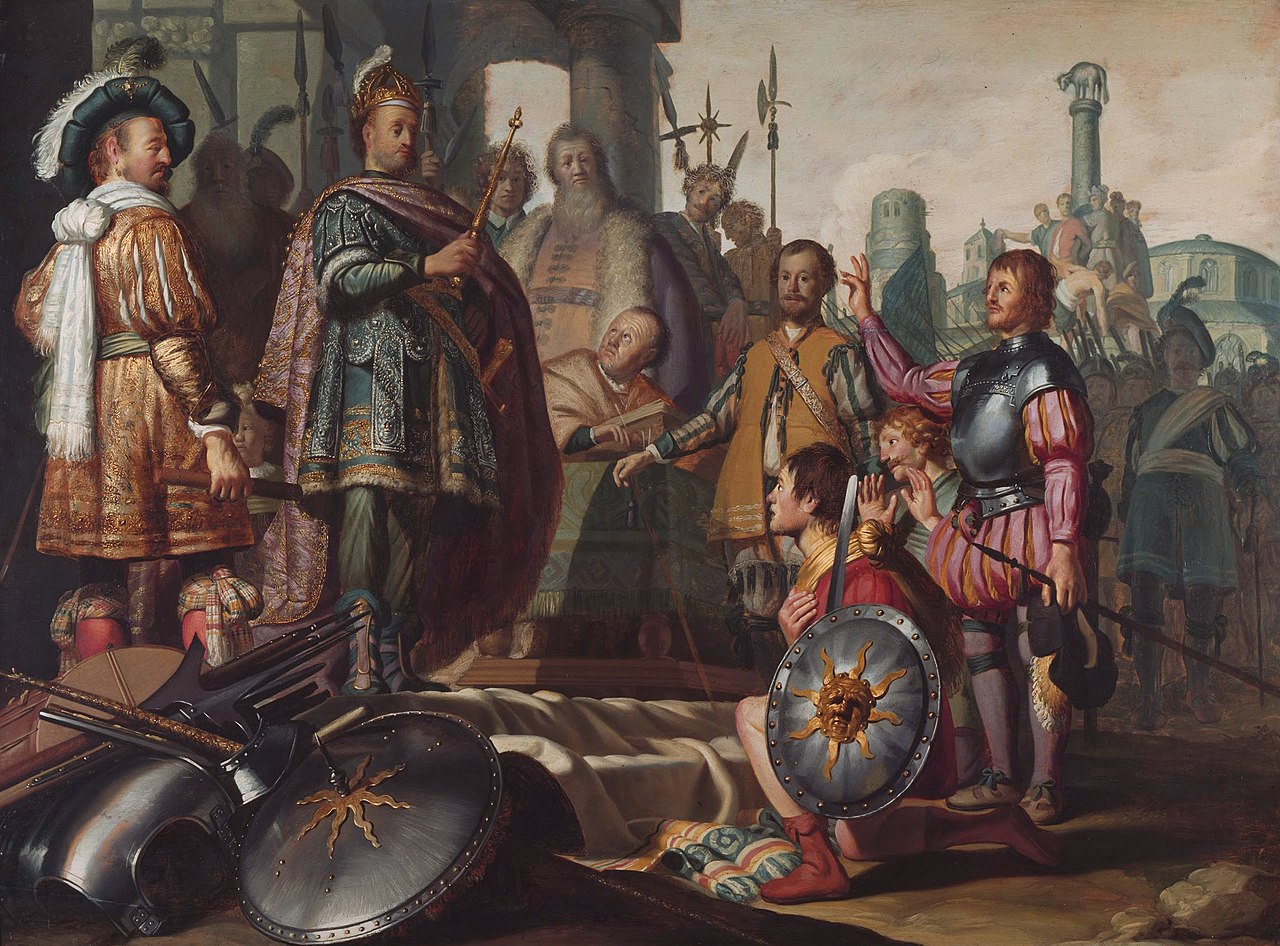
“Palamedes Before Agamemnon,” by Rembrandt

Magic Words and Quack Cures: An ‘Epic’ Fail During a Plague

Lucian, Alexander the False Prophet 36

“There was one oracle, also an autophone, which he had sent to all peoples during the plague. It was a single line of verse, “Phoebus, with uncut hair, keeps off the cloud of plague.”

This line was to be seen everywhere, written on doorposts as a spell against the plague. In most cases it produced the opposite result. For, through some fortune, those homes on which the line was written were those which were especially impacted. Don’t imagine that I am saying that they were destroyed because of the line, but that it happened this way in some fashion. Perhaps the people who were encouraged by the words acted negligently or took everything too easily and did nothing to help the oracle against the disease because they believed they had these syllables to fight for them and “long-haired” Apollo to shoot down the plague with his bow.”

ἕνα δέ τινα χρησμόν, αὐτόφωνον καὶ αὐτόν, εἰς ἅπαντα τὰ ἔθνη ἐν τῷ λοιμῷ διεπέμψατο· ἦν δὲ τὸ ἔπος ἕν·

Φοῖβος ἀκειρεκόμης λοιμοῦ νεφέλην ἀπερύκει.

καὶ τοῦτο ἦν ἰδεῖν τὸ ἔπος πανταχοῦ ἐπὶ τῶν πυλώνων γεγραμμένον ὡς τοῦ λοιμοῦ ἀλεξιφάρμακον. τὸ δ᾿ εἰς τοὐναντίον τοῖς πλείστοις προὐχώρει· κατὰ γάρ τινα τύχην αὗται μάλιστα αἱ οἰκίαι ἐκενώθησαν αἷς τὸ ἔπος ἐπεγέγραπτο. καὶ μή με νομίσῃς τοῦτο λέγειν, ὅτι διὰ τὸ ἔπος ἀπώλλυντο· ἀλλὰ τύχῃ τινὶ οὕτως ἐγένετο. τάχα δὲ καὶ οἱ πολλοὶ θαρροῦντες τῷ στίχῳ ἠμέλουν καὶ ῥᾳθυμότερον διῃτῶντο, οὐδὲν τῷ χρησμῷ πρὸς τὴν νόσον συντελοῦντες, ὡς ἂν ἔχοντες προμαχομένας αὑτῶν τὰς συλλαβὰς καὶ τὸν ἀκειρεκόμην Φοῖβον ἀποτοξεύοντα τὸν λοιμόν.

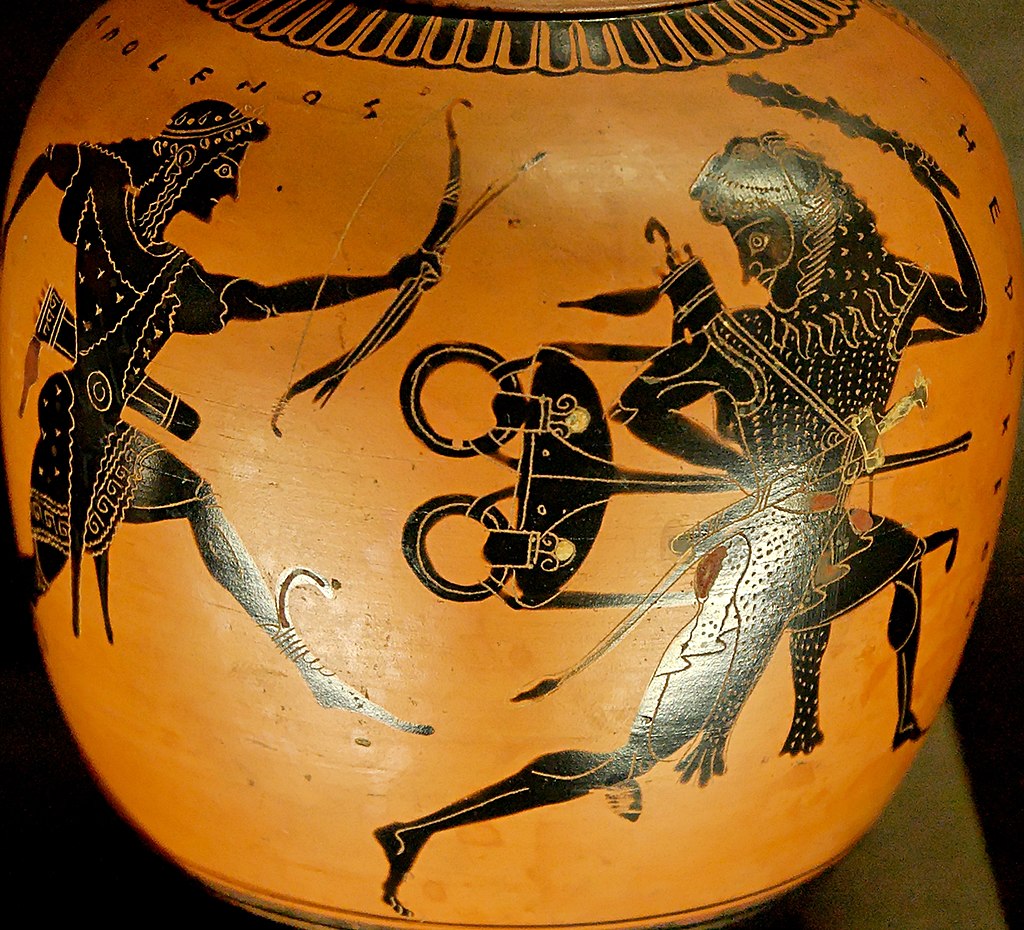
Herakles tripod Louvre F341.jpg
Apollo and Herakles fight over tripod, Taleides painter

Two Plagues in Imperial Rome

Suetonius 8.2 Titus 4-5 [79-81 CE, Plague in 80 CE]

“During the public fire at Rome he said nothing except “I am destroyed” and he designated all the decorations of his own houses for public buildings and temples. He put several people from the equestrian order in command of this so that the work might be completing more quickly. There was no effort either human or divine he did not pursue for healing and lessening the strength of the disease: he tried every type of sacrifice and every kind of treatment.

Among the challenges of the times there were also conmen and their associates, long left to their own devices. Once they were beaten in the Forum with whips and clubs and then led in a perp-walk through the floor of the amphitheater, ordered some of them to be sold and others sent off to the most remote islands. In order to dissuade those who might pursue these kinds of activities, he made it illegal for people to be sued under multiple laws for the same offense or for anything to be pursued from a dead person after a set number of years.”

Urbis incendio nihil publice nisi periisse testatus, cuncta praetoriorum suorum ornamenta operibus ac templis destinavit praeposuitque compluris ex equestri ordine, quo quaeque maturius peragerentur. Medendae valitudini leniendisque morbis nullam divinam humanamque opem non adhibuit inquisito omni sacrificiorum remediorumque genere.

Inter adversa temporum et delatores mandatoresque erant ex licentia veteri. Hos assidue in Foro flagellis ac fustibus caesos ac novissime traductos per amphitheatri harenam partim subici ac venire imperavit, partim in asperrimas insularum avehi. Utque etiam similia quandoque ausuros perpetuo coerceret, vetuit inter cetera de eadem re pluribus legibus agi quaerive de cuiusquam defunctorum statu ultra certos annos.


Tacitus, Annals 16.13 [=reign of Nero, 65/66 CE]

“The gods marked this year already tainted by so many crimes with storms and disease. Campania was destroyed by a tornado which laid waste to homes, fruit trees, and crops all over and then took its violence to the streets of the capital where a powerful epidemic was bringing death to all groups of people.

There was no sign of disease in the air to see, but dead bodies filled the homes and funerals filled the street. No gender or age avoided the danger; slaves and the free were killed one after another while spouses and children lamented even as they were often soon cremated on the same mound since they were around the people they mourned. Knights and senators, even though they perished similarly, were mourned less, just as if they had avoided the emperor’s violence by dying a commoner’s death.”

XIII. Tot facinoribus foedum annum etiam di tempestatibus et morbis insignivere. Vastata Campania turbine ventorum, qui villas arbusta fruges passim disiecit pertulitque violentiam ad vicina urbi; in qua omne mortalium genus vis pestilentiae depopulabatur, nulla caeli intemperie, quae occurreret oculis. Sed domus corporibus exanimis, itinera funeribus complebantur; non sexus, non aetas periculo vacua; servitia perinde et ingenua plebes raptim extingui, inter coniugum et liberorum lamenta, qui dum adsident, dum deflent, saepe eodem rogo cremabantur. Equitum senatorumque interitus, quamvis promisci, minus flebiles erant, tamquam communi mortalitate saevitiam principis praevenirent.

the Triumph of Titus by Lawrence Alma-Tadema,1885

Action Not Words and Smooth-Talking Doctors

Seneca, Moral Epistles 75

“A sick man doesn’t look for a an eloquent doctor, but if he finds one who is able to heal him and can speak articulately about what needs to be done, he will accept it well. Yet he still will not praise luck for finding so well-spoken a doctor.

This is the same kind of a thing as a knowledgeable ship captain who is good-looking! Why do you caress my ears? Why do you amuse me? There is different work to be done! I need to be cauterized, stitched, or forced to a diet. You were called for these things! You need to treat an ancient disease, a serious and common one. You have as much responsibility as a doctor does in  a plague.

Are you worrying about words? Rejoice if you can merely handle things. When will you learn much? When will you plant in your mind what you have learned so it cannot escape? When will you practice it? It is not enough to commit these things to memory: they need to be attempted in deeds. The happy person is not the one who knows but who acts.”

Non quaerit aeger medicum eloquentem, sed, si ita conpetit, ut idem ille, qui sanare potest, compte de iis, quae facienda sunt, disserat, boni consulet. Non tamen erit, quare gratuletur sibi, quod inciderit in medicum etiam disertum. Hoc enim tale est, quale si peritus gubernator etiam formosus est. Quid aures meas scabis? Quid oblectas? Aliud agitur; urendus, secandus, abstinendus sum. Ad haec adhibitus es.

Curare debes morbum veterem, gravem, publicum. Tantum negotii habes, quantum in pestilentia medicus. Circa verba occupatus es? Iamdudum gaude, si sufficis rebus. Quando, quae multa disces? Quando, quae didiceris, adfiges tibi ita, ut excidere non possint? Quando illa experieris? Non enim ut cetera, memoriae tradidisse satis est; in opere temptanda sunt. Non est beatus, qui scit illa, sed qui facit.

Copper engraving of Doctor Schnabel (i.e., Dr. Beak), a plague doctor in seventeenth-century Rome, circa 1656

On the Folly of Complete Victories

Aelian, Varia Historia 14.25

“When there was once that worst of plagues, civil conflict, on Khios, one man who was a politician among them said to some of his companions who were hurrying to exile all their opponents, “Don’t! Now that we’ve won, let’s keep some of them around so that we won’t start to fight one another in the future because we don’t have any enemies.”

He persuaded them when he said this since it seemed to all that he spoke well in saying so.”

Ἐστασίασάν ποτε πρὸς ἀλλήλους οἱ Χῖοι, ἀνδρειότατα νοσήσαντες νόσον ταύτην βαρυτάτην. ἀνὴρ οὖν ἐν αὐτοῖς πολιτικὸς τὴν φύσιν πρὸς τοὺς σπουδάζοντας τῶν ἑταίρων πάντας ἐκβάλλειν τοὺς ἐναντίους “μηδαμῶς” ἔφη· “ἀλλ᾿ ἐπεὶ κεκρατήκαμεν, ὑπολειπώμεθά τινας, ἵνα μὴ τοῦ χρόνου προϊόντος, οὐκ ἔχοντες ἀντιπάλους, ἡμῖν αὐτοῖς ἀρξώμεθα πολεμεῖν.” καὶ εἰπὼν ἔπεισε· καὶ γὰρ ἔδοξε καλῶς λέγειν, ἐπεὶ οὕτως ἔλεγεν

Hieronymus Bosch, “The Ship of Fools”

Sacrifice and Plagues

Clement, First Letter to the Corinthians 55

“Let’s offer some examples from other peoples as well. Many kings and people in charge, have given themselves to death after listening to an oracle, so that they might save their citizens with their own blood. And many private citizens have exiled themselves in order to decrease civil strife.”

Ἵνα δὲ καὶ ὑποδείγματα ἐθνῶν ἐνέγκωμεν· πολλοὶ βασιλεῖς καὶ ἡγούμενοι, λοιμικοῦ τινος ἐνστάντος καιροῦ χρησμοδοτηθέντες παρέδωκαν ἑαυτοὺς εἰς θάνατον, ἵνα ῥύσωνται διὰ τοῦ ἑαυτῶν αἵματος τοὺς πολίτας· πολλοὶ ἐξεχώρησαν ἰδίων πόλεων, ἵνα μὴ στασιάζωσιν ἐπὶ πλεῖον.

Stobaios, Florilegium  3.7.69

“When a plague was afflicting the Spartans because of the murder of the heralds sent by Xerxes—because he demanded earth and water as signs of servitude—they received an oracle that they would be saved if some Spartans would be selected to be killed by the king. Then Boulis and Sperkhis came forward to the king because they believed they were worthy to be sacrificed. Because he was impressed by their bravery he ordered them to go home.”

Τοῦ αὐτοῦ. λοιμοῦ κατασχόντος τὴν Λακεδαίμονα διὰ τὴν ἀναίρεσιν τῶν κηρύκων τῶν ἀπεσταλέντων παρὰ Ξέρξου αἰτοῦντος γῆν καὶ ὕδωρ ὥσπερ ἀπαρχὰς δουλείας, χρησμὸς ἐδόθη ἐπαλλαγήσεσθαι αὐτούς, εἴ γέ τινες ἕλοιντο Λακεδαιμονίων παρὰ τοῦ βασιλέως ἀναιρεθῆναι. τότε Βοῦλις καὶ Σπέρχις ἀφικόμενοι πρὸς βασιλέα ἠξίουν ἀναιρεθῆναι· ὁ δὲ θαυμάσας αὐτῶν τὴν ἀρετὴν ἐπανιέναι προσέταξεν.

Plague of Athens - Wikipedia
The Plague of Athens, Michiel Sweerts, c. 1652–1654

Nameless Altars and Human Sacrifice

Diogenes Laertius, Vitae philosophorum 1.110 [Epimenides]

“Epimenides was known among the Greeks and was thought to be extremely beloved to the gods. For this reason, when the Athenians were once afflicted by a plague and the Pythian oracle prophesied that they should cleanse their city, they sent a ship along with Nikias the son of Nikêratos, summoning Epimenides.

He made it to Athens at the time of the 46th Olympiad [c. 596 BCE] and cleansed the city. He stopped it in the following manner. After obtaining white and black sheep, he led them to the Areopagos and then allowed them to go wherever they wanted there. He ordered the people following them to sacrifice the sheep to whichever god was proper to the place where each sheep laid down.

This is how the plague stopped. For this reason it is still even today possible to find altars without names in certain Athenian neighborhoods as a commemoration of that ancient cleansing. Some people report that Epimenides indicated the pollution from the Kylon scandal as the cause of the plague along with a resolution for it. For this reason, they killed two youths, Kratinos and Ktêsibios and the suffering was relieved.”

(110) γνωσθεὶς δὲ παρὰ τοῖς ῞Ελλησι θεοφιλέστατος εἶναι ὑπελήφθη. ὅθεν καὶ Ἀθηναίοις ποτὲ λοιμῶι κατεχομένοις ἔχρησεν ἡ Πυθία καθῆραι τὴν πόλιν, οἱ δὲ πέμπουσι ναῦν τε καὶ Νικίαν τὸν Νικηράτου εἰς Κρήτην, καλοῦντες τὸν Ἐπιμενίδην. καὶ ὃς ἐλθὼν ὀλυμπιάδι τεσσαρακοστῆι ἕκτηι ἐκάθηρεν αὐτῶν τὴν πόλιν, καὶ ἔπαυσε τὸν λοιμὸν τοῦτον τὸν τρόπον· λαβὼν πρόβατα μέλανά τε καὶ λευκά, ἤγαγεν πρὸς τὸν ῎Αρειον πάγον, κἀκεῖθεν εἴασεν ἰέναι οἷ βούλοιντο, προστάξας τοῖς ἀκολούθοις, ἔνθα ἂν κατακλινῆι αὐτῶν ἕκαστον, θύειν τῶι προσήκοντι θεῶι· καὶ οὕτω λῆξαι τὸ κακόν· ὅθεν ἔτι καὶ νῦν ἔστιν εὺρεῖν κατὰ τοὺς δήμους τῶν Ἀθηναίων βωμοὺς ἀνωνύμους, ὑπόμνημα τῆς τότε γενομενης ἐξιλάσεως. οἱ δὲ τὴν αἰτίαν εἰπεῖν τοῦ λοιμοῦ τὸ Κυλώνειον ἄγος σημαίνειν τε τὴν ἀπαλλαγήν· καὶ διὰ τοῦτο ἀποθανεῖν δύο νεανίας Κρατῖνον καὶ Κτησίβιον, καὶ λυθῆναι τὴν συμφοράν

File:3217 - Athens - Sto… of Attalus Museum - Kylix - Photo by ...
 Kylix showing an armored youth offering a sacrifice. Ancient Agora Museum in Athens, around 480 BC

Virgins and Heroic Bones: Some Responses to Plagues

Ps. Plutarch, Parallela Minora 35, 314C

“When the Spartans were suffering a plague, the god prophesied that they could stop it if they sacrificed a highborn virgin every year. Helen was then selected by lot. When she was being led forward all adorned for the purpose, an eagle flew down, stole away the sword, carried it to the cattle and dropped it on a heifer. For this reason, they stopped the practice of virgin sacrifice.

That’s the story Aristodemos tells in his third Collection of Myth.”

λοιμοῦ κατασχόντος Λακεδαίμονα, ἔχρησεν ὁ θεὸς παύσασθαι, ἐὰν παρθένον εὐγενῆ κατ᾽ ἔτος θύσωσιν. ῾Ελένης δέ ποτε κληρωθείσης καὶ προαχθείσης κεκοσμημένης, ἀετὸς καταπτὰς ἥρπασε τὸ ξίφος καὶ ἐς τὰ βουκόλια κομίσας ἐπὶ δάμαλιν κατέθηκεν· ὅθεν ἀπέσχοντο τῆς παρθενοκτονίας· ὡς ᾽Αριστόδημος ἐν τρίτηι Μυθικῆι Συναγωγῆι.


Schol. To Aristophanes’ Knights 84b

“When the Athenians were enduring a plague, the god prophesied to them that they should bring back the bones of Themistokles. After the Magnesians did not agree to this, the Athenians asked to spend thirty days sacrificing at his grave. Once they set up camp at the spot, they secretly dug up his bones and took them home.”

λοιμωξάντων δὲ ᾽Αθηναίων, ὁ θεὸς εἶπε μετάγειν τὰ ὀστᾶ Θεμιστοκλέους. Μαγνήτων δὲ μὴ συγχωρούντων ᾐτήσαντο ἐπὶ τριάκοντα ἡμέραις ἐναγίσαι τῷ τάφῳ, καὶ περισκηνώσαντες τὸ χωρίον λάθρα κομίζουσιν ἀνορύξαντες τὰ ὀστᾶ.

File:Themistocles Admetus.jpg

A Brutal End to a Plague

Ps.-Plutarch, Parallela minora 19A, 310B-C

“Kuanippos, a Syracusan by birth, did not sacrifice to Dionysus alone. In rage over this, the god caused him to become drunk and then he raped his daughter Kuanê in some shadowy place. She took his ring and gave it to her nurse as to be proof of what had happened in the future.

When they were later struck by a plague and Pythian Apollo said that they had to sacrifice the impious person to the Gods-who-Protect, everyone else was uncertain about the oracle. Kuanê understood it. She grabbed her father by the hair and sacrificed herself over him once she’d butchered him on the altar.

That’s the story Dositheos tells in the third book of his Sicilian Tales.

Κυάνιππος γένει Συρακούσιος μόνωι Διονύσωι οὐκ ἔθυεν· ὁ δὲ θεὸς ὀργισθεὶς μέθην ἐνέσκηψε, καὶ ἐν τόπωι σκοτεινῶι τὴν θυγατέρα ἐβιάσατο Κυάνην· ἡ δὲ τὸν δακτύλιον περιελομένη ἔδωκε τῆι τροφῶι ἐσόμενον ἀναγνώρισμα. λοιμωξάντων δὲ, καὶ τοῦ Πυθίου εἰπόντος μὲν δεῖν τὸν ἀσεβῆ <᾽Απο>τροπαίοις θεοῖς σφαγιάσαι, τῶν δ᾽ ἄλλων ἀγνοούντων τὸν χρησμόν, γνοῦσα ἡ Κυάνη καὶ ἐπιλαβομένη τῶν τριχῶν εἷλκε, καὶ αὐτὴ κατασφάξασα τὸν πατέρα ἑαυτὴν ἐπέσφαξε, καθάπερ Δοσίθεος ἐν τῶι τρίτωι Σικελικῶν.

 Archaeological Museum of Herakleion. Sarcophagus of Agia Triada 

A Seven Day Plague and Tragic Fever

Lucian, How to Write History 1

‘They say, dear Philo, that in the time of King Lysimakhos a different kind of plague afflicted the people of Abdera. First, the pandemic struck everyone with a fever which was intense and persistent from the beginning. It broke after about seven days and was followed in some by severe nosebleeds and sweats in others.

But the next symptom put them in a ridiculous state: everyone starting turning to tragedy and they were sounding out iambic lines while shouting. They seemed especially to sing songs from Euripides’ Andromeda, working through Perseus’ speech in song. The city was just full of these pale and drawn seventh-day tragedians, singing “Desire, you tyrant of gods and men”

They sang the rest too in a bellowing voice on and on until winter and deep cold weather stopped their nonsense. I think that Arkhelaos the actor was the cause of this—he was popular then and had performed the Andromeda in the middle of a hot summer and then many of them left the theater with a fever, returning home to relapse into tragic song since the Andromeda was lurking in their memory and Perseus was flitting around everyone’s thoughts with Medousa’s head in his hands.”

Museo Nazionale Napoli Perseus And Andromeda

Αβδηρίταις φασὶ Λυσιμάχου ἤδη βασιλεύοντος ἐμπεσεῖν τι νόσημα, ὦ καλὲ Φίλων, τοιοῦτο· πυρέττειν μὲν γὰρ τὰ πρῶτα πανδημεὶ ἅπαντας ἀπὸ τῆς πρώτης εὐθὺς ἐρρωμένως καὶ λιπαρεῖ τῷ πυρετῷ, περὶ δὲ τὴν ἑβδόμην τοῖς μὲν αἷμα πολὺ ἐκ ῥινῶν ῥυέν, τοῖς δ᾿ ἱδρὼς ἐπιγενόμενος, πολὺς καὶ οὗτος, ἔλυσεν τὸν πυρετόν. ἐς γελοῖον δέ τι πάθος περιίστα τὰς γνώμας αὐτῶν· ἅπαντες γὰρ ἐς τραγῳδίαν παρεκίνουν καὶ ἰαμβεῖα ἐφθέγγοντο καὶ μέγα ἐβόων· μάλιστα δὲ τὴν Εὐριπίδου Ἀνδρομέδαν ἐμονῴδουν καὶ τὴν τοῦ Περσέως ῥῆσιν ἐν μέλει διεξῄεσαν, καὶ μεστὴ ἦν ἡ πόλις ὠχρῶν ἁπάντων καὶ λεπτῶν τῶν ἑβδομαίων ἐκείνων τραγῳδῶν,

σὺ δ᾿ ὦ θεῶν τύραννε κἀνθρώπων Ἔρως,

καὶ τὰ ἄλλα μεγάλῃ τῇ φωνῇ ἀναβοώντων καὶ τοῦτο ἐπὶ πολύ, ἄχρι δὴ χειμὼν καὶ κρύος δὲ μέγα γενόμενον ἔπαυσε ληροῦντας αὐτούς. αἰτίαν δέ μοι δοκεῖ τοῦ τοιούτου παρασχεῖν Ἀρχέλαος ὁ τραγῳδός, εὐδοκιμῶν τότε, μεσοῦντος θέρους ἐν πολλῷ τῷ φλογμῷ τραγῳδήσας αὐτοῖς τὴν Ἀνδρομέδαν, ὡς πυρέξαι τε ἀπὸ τοῦ θεάτρου τοὺς πολλοὺς καὶ ἀναστάντας ὕστερον ἐς τὴν τραγῳδίαν παρολισθαίνεινἐπὶ πολὺ ἐμφιλοχωρούσης τῆς ᾿Ανδρομέδας τῇ μνήμῃ αὐτῶν καὶ τοῦ Περσέως ἔτι σὺν τῇ Μεδούσῃ τὴν ἑκάστου γνώμην περιπετομένου ἐπὶ πολὺ ἐμφιλοχωρούσης τῆς ᾿Ανδρομέδας τῇ μνήμῃ αὐτῶν καὶ τοῦ Περσέως ἔτι σὺν τῇ Μεδούσῃ τὴν ἑκάστου γνώμην περιπετομένου.

Love in the time of fevers….