Epitaphs Converse about Drinking

Two Epitaphs for Alcman by Julian, the Prefect of Egypt

Greek Anthology, 7.32

“Often I said this and now I cry it from the grave:
Drink, before you wrap this dust around you!”

Πολλάκι μὲν τόδ’ ἄεισα καὶ ἐκ τύμβου δὲ βοήσω·
„Πίνετε, πρὶν ταύτην ἀμφιβάλησθε κόνιν.”

Greek Anthology, 7.33

“ ‘You died from drinking too much, Anacreon!’ ‘Yes, I took pleasure in it!
And you who didn’t drink will arrive in Hades too!’ ”

Πολλὰ πιὼν τέθνηκας, ᾿Ανάκρεον. —„᾿Αλλὰ τρυφήσας·
καὶ σὺ δὲ μὴ πίνων ἵξεαι εἰς ᾿Αίδην.”

anacreon640

One might gather from this blog that its authors are really in to drinking. While we do enjoy the occasional beverage, this is not actually true. Really. We are, however, quite entertained by the range and nature of ancient comments on drinking...

Zonaras 7.12 Part IV: The Death of Brutus and The First Triumph

Brutus dies in battle; Publicola becomes the first consul to celebrate a triumph:

Tarquinius, perceiving the failure of his conspiracy to recover the monarchy, betook himself to the Etruscans. They restored him to considerable power, but the consuls led the Romans against them in turn. When the battle began, Arruns, the son of Tarquinius, and Brutus, the Roman consul, fell upon each other in battle. They spared nothing, and died together after fighting with great spirit. After a huge battle and many deaths on both sides, the victory was still unclear. As night came on, it is said that the battleground shook, and a large voice sounded forth saying that in that spot the Etruscans had lost one more man than the Romans. The Romans rose a large, bold war cry upon hearing this sound, and terror seized the Etruscans. In their fear, they withdrew from the battlefield. The Romans seized upon this and plundered the field. They counted the corpses which had fallen in battle, and found that 11,300 Etruscans had died, while the Romans had lost 11,299. Valerius Publicola was then the first Roman consul to hold a triumph.

Ταρκύνιος δὲ ἀπογνοὺς τὴν ἐκ προδοσίας τῆς βασιλείας ἀνάληψιν, προσῄει τοῖς Τυρσηνοῖς. οἱ δὲ δυνάμει βαρείᾳ κατῆγον αὐτόν. ἀντεξῆγον δὲ καὶ τοὺς ῾Ρωμαίους οἱ ὕπατοι. ἀρχομένης δὲ τῆς μάχης ῎Αρρων ὁ Ταρκυνίου παῖς καὶ Βροῦτος ὁ ῾Ρωμαίων ὕπατος ἀλλήλοις περιπεσόντες ἐμάχοντο, καὶ ἀφειδήσαντες ὑπὸ θυμοῦ ἑαυτῶν συναπέθανον. μεγάλης δὲ τῆς μάχης γενομένης καὶ πολλῶν ἑκατέρωθεν πεσόντων ἄκριτος ἦν ἡ νίκη. νυκτὸς δ’ ἐπελθούσης λέγεται σεισθῆναι τὸ ἄλσος παρ’ ᾧ ἐστρατοπεδεύοντο, καὶ φωνὴν ἐκπεσεῖν ἐκεῖθεν μεγάλην φράζουσαν ἑνὶ πλείους τεθνάναι Τυρρηνῶν ἢ ῾Ρωμαίων. ἅμα δὲ τῇ φωνῇ ῾Ρωμαῖοι μὲν μέγα καὶ θαρσαλέον ἠλάλαξαν, πτοία δ’ ἐνέπεσε Τυρρηνοῖς· καὶ θορυβηθέντες τοῦ στρατοπέδου ἐξέπεσον· εἷλον δ’ οἱ ῾Ρωμαῖοι τοῦτο καὶ διηρπάκασιν. ἀριθμηθέντες δὲ οἱ νεκροὶ τῶν ἐν τῇ μάχῃ θανόντων εὑρέθησαν οἱ μὲν τῶν Τυρρηνῶν ἐπὶ μυρίοις χίλιοι τριακόσιοι, οἱ δὲ ῾Ρωμαῖοι παρ’ ἕνα τοσοῦτοι. ἐθριάμβευσε δὲ Οὐαλέριος Ποπλικόλας πρῶτος ὑπατεύων.

An Exhortation to Drink Instead of Sleeping

Apollonides, Greek Anthology 15.25

“You are sleeping, friend, but the cup itself calls:
“Wake and do not indulge in mortal fear!”
Don’t abstain, Diodoros! Slip deep into wine,
Drink it unmixed until your knees are weak.
There will be a day when we do not drink, many of them.
Come on: wisdom is touching our temples now.”

῾Υπνώεις, ὠταῖρε· τὸ δὲ σκύφος αὐτὸ βοᾷ σε·
„῎Εγρεο, μὴ τέρπου μοιριδίῃ μελέτῃ.”
μὴ φείσῃ, Διόδωρε· λάβρος δ’ εἰς Βάκχον ὀλισθὼν
ἄχρις ἐπὶ σφαλεροῦ ζωροπότει γόνατος.
ἔσσεθ’, ὅτ’ οὐ πιόμεσθα, πολὺς πολύς· ἀλλ’ ἄγ’ ἐπείγου·
ἡ συνετὴ κροτάφων ἅπτεται ἡμετέρων.


grapes

A Little Poem by Leo the Philosopher

This poem is a little strange and might not really project Epicurean beliefs…but I like it any way.

LEO THE PHILOSOPHER, GR. ANTH, 15.12

“Fortune, you kindly grant me Epicurus’
sweetest leisure and his delightful peace.
Why do I need the many-pained business of men?
I don’t want wealth, a blind, unstable friend,
Nor honors—human honors are a feeble dream.
Go to hell, Kirkê’s dusky cave: for I am ashamed
To eat the acorns of beasts when I am born from gods.
I hate the sweet, amnesiac fruit of the Lotus-eaters,
And I reject the seduction of the Sirens as an enemy’s song.
But I hope to obtain from the gods the soul-saving bloom,
Moly, an antidote against evil beliefs. And my ears,
I will block firmly with wax to escape innate compulsion.
May I reach the end of my life, saying and writing these things.”

Εὖγε, Τύχη, με ποεῖς ἀπραγμοσύνῃ μ’ ᾿Επικούρου
ἡδίστῃ κομέουσα καὶ ἡσυχίῃ τέρπουσα.
τίπτε δέ μοι χρέος ἀσχολίης πολυκηδέος ἀνδρῶν;
οὐκ ἐθέλω πλοῦτον, τυφλὸν φίλον, ἀλλοπρόσαλλον,
οὐ τιμάς· τιμαὶ δὲ βροτῶν ἀμενηνὸς ὄνειρος·
ἔρρε μοι, ὦ Κίρκης δνοφερὸν σπέος· αἰδέομαι γὰρ
οὐράνιος γεγαὼς βαλάνους ἅτε θηρίον ἔσθειν·
μισῶ Λωτοφάγων γλυκερὴν λιπόπατριν ἐδωδήν,
Σειρήνων τε μέλος καταγωγὸν ἀναίνομαι ἐχθρῶν·
ἀλλὰ λαβεῖν θεόθεν ψυχοσσόον εὔχομαι ἄνθος,
μῶλυ, κακῶν δοξῶν ἀλκτήριον· ὦτα δὲ κηρῷ
ἀσφαλέως κλείσας προφυγεῖν γενετήσιον ὁρμήν.
ταῦτα λέγων τε γράφων τε πέρας βιότοιο κιχείην.

Leo the Philosopher is from the 8th century CE! He is also called Leo the Mathematician.

leon

Zonaras 7.12 Part III: Expulsion of Collatinus; Rise of Publicola

The remaining conspirators are executed; Brutus urges the murder of Collatinus:

After Brutus’ sons had died, Brutus ordered that a vote be taken concerning the punishment of the other conspirators. He said, “I have discharged my duty as judge in the case of my sons; I yield the vote concerning the others to the people, who are free.” When the vote had been taken, all of the conspirators were killed with axes. Some of these men were the cronies of Collatinus, and he was angered on their account. For that reason, Brutus goaded the people on against him as a minor man, and urged them to murder him with their own hands. They did not do this, but they did compel him to abandon his office. They chose as consul in his place Publius Valerius, who was given the honorary name of Publicola. The name would, converted into Greek, most clearly express that he cared for the people (demokede) or was on the people’s side (demotikotaton).

Οὕτω δὲ τούτων θανόντων καὶ περὶ τῶν ἄλλων συνωμοτῶν ψῆφον ἐνεγκεῖν ὁ Βροῦτος ἀπῄτητο. ὁ δέ “τοῖς μὲν υἱέσιν” εἶπεν “αὐτὸς ἀποχρῶν εἰμι δικαστής, περὶ δὲ τῶν ἄλλων τοῖς πολίταις ἐλευθέροις οὖσι τῆς ψήφου παραχωρῶ.” ψήφου τοίνυν δοθείσης πάντες ἐπελεκίσθησαν. ἦσαν δὲ τούτων τινὲς τῷ Κολλατίνῳ προσήκοντες· δι’ οὓς καὶ ὠργίζετο.
ὅθεν ὁ Βροῦτος οὕτω κατ’ αὐτοῦ τὸν δῆμον παρώξυνεν ὡς μικροῦ καὶ αὐτοχειρίᾳ αὐτὸν ἀνελεῖν. ἀλλὰ τοῦτο μὲν οὐκ ἐποίησαν, τὴν δ’ ἀρχὴν ἠνάγκασαν αὐτὸν ἀπειπεῖν. εἵλοντο δὲ ἀντ’ ἐκείνου συνάρχοντα Πόπλιον Οὐαλέριον, ὃς Ποπλικόλας προσωνομάσθη· δηλοῖ δ’ ἡ κλῆσις ἐξελληνιζομένη δημοκηδῆ ἢ δημοτικώτατον.

Making the Rich Do Right and Helping the Poor

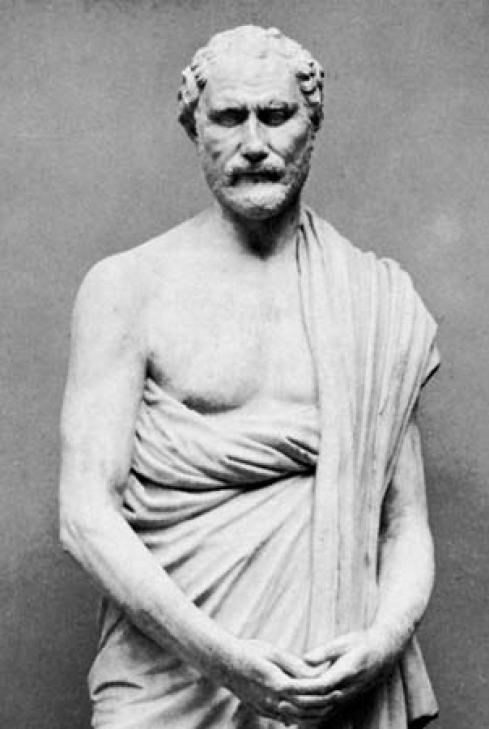
In this beautiful periodic sentence from Demosthenes,  he articulates the importance of leveling off income inequality.

De Corona, 103

“Right now, I want to take you back through the things I did when in power in order. And you, examine them again, anew, for what was best for the state. When I saw, Athenian men, that your navy was in disarray, and that some of the wealthy citizens were essentially untaxed because of the limited expenditures while other citizens of moderate or little wealth were losing what they had, and that the city was falling behind its opportunities because of these circumstances, I made a law through which I forced the wealthy to do what was right and I prevented the poor from suffering injustice—and this was most useful to the city: I ensured that her preparations happened at the necessary time.”


Βούλομαι τοίνυν ἐπανελθεῖν ἐφ’ ἃ τούτων ἑξῆς ἐπολιτευόμην· καὶ σκοπεῖτ’ ἐν τούτοις πάλιν αὖ, τί τὸ τῇ πόλει βέλτιστον ἦν. ὁρῶν γάρ, ὦ ἄνδρες ᾿Αθηναῖοι, τὸ ναυτικὸν ὑμῶν καταλυόμενον καὶ τοὺς μὲν πλουσίους ἀτελεῖς ἀπὸ μικρῶν ἀναλωμάτων γιγνομένους, τοὺς δὲ μέτρι’ ἢ μικρὰ κεκτημένους τῶν πολιτῶν τὰ ὄντ’ ἀπολλύοντας, ἔτι δ’ ὑστερίζουσαν ἐκ τούτων τὴν πόλιν τῶν καιρῶν, ἔθηκα νόμον καθ’ ὃν τοὺς μὲν τὰ δίκαια ποιεῖν ἠνάγκασα, τοὺς πλουσίους, τοὺς δὲ πένητας ἔπαυσ’ ἀδικουμένους, τῇ πόλει δ’ ὅπερ ἦν χρησιμώτατον, ἐν καιρῷ γίγνεσθαι τὰς παρασκευὰς ἐποίησα.


demosthenes

The Dog and His Treasure: A Fable about Priorities

Phaedrus, 1.27

“This tale has something to say to the greedy
And  those who want to be called rich, though born needy.
A dog was digging up human bones when he found
A treasure and, because he offended the gods in the ground,
He was struck by a love of riches he couldn’t forget
To pay sacred religion back this debt.
And so, the dog thought not of food as he guarded his gold
And he died from hunger, and a vulture took hold
And reportedly said, “Dog, you deserve it—
To lie there when you wanted royal wealth
After you were born in a gutter and raised on shit!”

dog


I.27. Canis et Thesaurus

Haec res avaris esse conveniens potest,
et qui, humiles nati, dici locupletes student.
Humana effodiens ossa thesaurum canis
invenit, et, violarat quia Manes deos,
iniecta est illi divitiarum cupiditas,
poenas ut sanctae religioni penderet.
Itaque, aurum dum custodit oblitus cibi,
fame est consumptus. Quem stans vulturius super
fertur locutus “O canis, merito iaces,
qui concupisti subito regales opes,
trivio conceptus, educatus stercore”.

Sophocles, Euripides, and Maybe Also STD’s

Athenaeus, 13.82, 604d:

“Hieronymus of Rhodes says, in his Historical Recollections, that Sophocles once led a handsome youth outside the city-walls so that he could have his way with him. The boy laid out his own cloak on the grass, and they put Sophocles’ coat on top of themselves. After this bit of mingling, the boy took Sophocles’ cloak and departed, leaving his boys’ cloak with Sophocles. As often happens in these matters, the story got around. Euripides heard about it, and hassled joked about the matter, saying that he too had enjoyed this same boy, but that he had not left anything behind, adding that Sophocles had been scorned because of his intemperance. Sophocles, upon hearing this, wrote the following epigram, in which he employs the story of the Sun and Boreas, adding by the way a little innuendo about Euripides’ own scandalous affairs:

‘It was the sun, Euripides, not the boy, who made me
Bereft of all my clothes. When you were making love with a prostitute,
It was Boreas who came upon you. You are certainly not wise, since you
Carry off a thief while you sow another’s field of Love.'”

καὶ ῾Ιερώνυμος δ’ ὁ ῾Ρόδιος ἐν τοῖς ῾Ιστορικοῖς ῾Υπομνήμασίν φησιν (fr. 7 Hi) ὅτι Σοφοκλῆς εὐπρεπῆ παῖδα ἔξω τείχους ἀπήγαγε χρησόμενος αὐτῷ. ὁ μὲν οὖν παῖς τὸ ἴδιον ἱμάτιον ἐπὶ τῇ πόᾳ ὑπέστρωσεν, τὴν δὲ τοῦ Σοφοκλέους χλανίδα περιεβάλοντο. μετ’ οὖν τὴν ὁμιλίαν ὁ παῖς ἁρπάσας τὸ τοῦ Σοφοκλέους χλανίδιον ᾤχετο, καταλιπὼν τῷ Σοφοκλεῖ τὸ παιδικὸν ἱμάτιον. οἷα δὲ εἰκὸς διαλαληθέντος τοῦ συμβεβηκότος Εὐριπίδης πυθόμενος καὶ ἐπιτωθάζων τὸ γεγονὸς καὶ αὐτός ποτε ἔφη τούτῳ κεχρῆσθαι τῷ παιδί, ἀλλὰ μηδὲν προσθεῖναι, τὸν δὲ Σοφοκλέα διὰ τὴν ἀκολασίαν καταφρονηθῆναι. καὶ ὁ Σοφοκλῆς ἀκούσας ἐποίησεν εἰς αὐτὸν τὸ τοιοῦτον ἐπίγραμμα, χρησάμενος τῷ περὶ τοῦ ῾Ηλίου καὶ Βορέου λόγῳ, καί τι πρὸς μοιχείαν αὐτοῦ παραινιττόμενος·

῞Ηλιος ἦν, οὐ παῖς, Εὐριπίδη, ὅς με χλιαίνων
γυμνὸν ἐποίησεν· σοὶ δὲ φιλοῦντι ἑταίραν
Βορρᾶς ὡμίλησε. σὺ δ’ οὐ σοφός, ὃς τὸν ῎Ερωτα
ἀλλοτρίαν σπείρων λωποδύτην ἀπάγεις.

Zonaras 7.12 Part II: Brutus Executes His Sons

“It was either godly or beastly.”

The ambassadors who had been sent to Rome on the pretence of asking for money remained in the city for a while and managed to corrupt some of the nobles, among whom were the sons of Brutus, whom they persuaded to engage in treason. Therefore, as they persuaded them, it seemed right to undertake an oath, and after all of this they returned home. The house was deserted and dark. A certain slave named Vindicius escaped their notice within the house, not by contrivance but by chance. As he lay hidden, he was a witness to their deeds and plans, which involved the murder of the consuls and the surrender of the city; they had related these intentions to Tarquinius through the ambassadors. Once the conspirators had left the house, the slave left the house and related everything. Those who had planned the treachery were rounded up, and their letters were attended to. They were led to the forum and placed against Vindicius. They recognized their letters. Many stood in dejection and silence, but Brutus called each of his sons by name and asked, “You do not make any defense against the charge?” They held their silence, so Brutus turned to the officers and said, “The rest of the business is yours.” They took the youths and beat them to death with their clubs. Although some of the others felt pity for his sons in their suffering, Brutus did not divert his eyes, nor did he display any grief from the beginning until the end, when the executioners removed their heads with an axe. It is not easy either to praise or to blame this action. Either the sublimity of virtue had prompted him to apathy, or the greatness of the suffering drove him to insensibility. Neither of these things is inconsiderable or human – rather, it was either godly or beastly.

Οἱ πρέσβεις δὲ ἐπὶ τῇ τῶν χρημάτων προφάσει τῇ ῾Ρώμῃ ἐνδιατρίβοντες ἴσχυσαν διαφθεῖραι τῶν ἐπισήμων τινάς, μεθ’ ὧν καὶ δύο τοῦ Βρούτου παῖδας ἔπεισαν ἐν τῇ προδοσίᾳ γενέσθαι. ὡς οὖν συνέπεισαν τὰ μειράκια, ἔδοξε καὶ ὅρκον προβῆναι, καὶ ἐπὶ τούτοις εἰς οἰκίαν συνῆλθον. ἦν δὲ ὁ οἶκος ὑπέρημος καὶ σκοτώδης. ἔλαθεν οὖν ἔνδον ὢν οὐκ ἐκ προνοίας, ἀλλὰ τυχαίως οἰκέτης ὄνομα Οὐινδίκιος, καὶ κατακρυφθεὶς ἐκεῖ θεατής τε τῶν δρωμένων ἦν καὶ τῶν βεβουλευμένων ἐπήκοος· ἅπερ ἦσαν τοὺς ὑπάτους ἀνελεῖν καὶ τὴν πόλιν προδοῦναι· καὶ ταῦτα τῷ Ταρκυνίῳ διὰ τῶν πρέσβεων ἐπεστάλκασιν. ἀπελθόντων δὲ τοῦ οἰκήματος τῶν συνωμοτῶν, ἐξελθὼν ὁ οἰκέτης ἅπαντα κατεμήνυσε. καὶ οἵ τε τὴν προδοσίαν μελετήσαντες συνελήφθησαν, καὶ τὰ γράμματα ἐκομίσθησαν· καὶ εἰς τὴν ἀγορὰν προαχθέντων αὐτῶν καὶ τὸν Οὐίνδικα παρεστήσαντο. τά τε γράμματα ἀνεγνώσθησαν· καὶ οἱ μὲν ἄλλοι ἐν κατηφείᾳ ἦσαν καὶ σιωπῇ, ὁ δὲ Βροῦτος ὀνομαστὶ τῶν υἱέων ἑκάτερον προσειπών “οὐκ ἀπολογεῖσθε” ἔφη “πρὸς τὴν κατηγορίαν;” τῶν δὲ σιωπώντων στραφεὶς πρὸς τοὺς ὑπηρέτας “ὑμέτερον” εἶπεν “ἤδη λοιπὸν τὸ ἔργον.” οἱ δὲ συλλαβόντες τοὺς νεανίσκους ῥάβδοις κατέξαινον. καὶ τῶν ἄλλων ἐπικλωμένων τοῖς πάσχουσιν ὁ πατὴρ οὔτ’ ἀλλαχόσε τὰς ὄψεις ἀπήγαγεν οὔτε μὴν οἴκτου τι ἐνεδείξατο μέχρι πελέκει τὰς κεφαλὰς τῶν παίδων ἀπέκοψαν. τοῦτο δὲ οὔτ’ ἐπαινεῖν οὔτε ψέγειν ἐστὶ ῥᾴδιον· ἢ γὰρ ἀρετῆς ὕψος εἰς ἀπάθειαν ἐξέστησεν αὐτοῦ τὴν ψυχὴν ἢ πάθους μέγεθος εἰς ἀναλγησίαν· οὐδέτερον δὲ μικρὸν οὐδ’ ἀνθρώπινον, ἀλλ’ ἢ θεῖον ἢ θηριῶδες.

A Grammar Joke. In Verse. By Palladas.

Palladas of Alexandria, everyone’s favorite ancient epigrammatist, tells a dirty joke of his own:

“A grammarian’s daughter had sex with a man
And gave birth to a child—male, feminine and neuter.”

Γραμματικοῦ θυγάτηρ ἔτεκεν φιλότητι μιγεῖσα
παιδίον ἀρσενικόν, θηλυκόν, οὐδέτερον.

pallads

Palaiophron has posted a few of his longer pieces before:

Palladas of Alexandria, Greek Anthology 9.173

“The foundation of grammatical knowledge is a five-line curse. The first has ‘wrath,’ the second ‘destructive.’ And after ‘destructive’ comes the ‘many woes’ of the Greeks. The third line leads ‘the souls to Hades.’ In the fourth we find ‘spoils’ and ‘dogs,’ while the fifth gives us ‘carrion birds’ and the ‘anger of Zeus.’ With all of this, how can a grammarian be anything but miserable after five curses, and five cases*?”

᾿Αρχὴ γραμματικῆς πεντάστιχός ἐστι κατάρα·
πρῶτος „μῆνιν” ἔχει, δεύτερος „οὐλομένην”,
καὶ μετὰ δ’ „οὐλομένην” Δαναῶν πάλιν „ἄλγεα” πολλά·
ὁ τρίτατος „ψυχὰς εἰς ᾿Αίδην” κατάγει·
τοῦ δὲ τεταρταίου τὰ „ἑλώρια” καὶ „κύνες” ἀργοί,
πέμπτου δ’ „οἰωνοὶ” καὶ „χόλος” ἐστὶ „Διός”.
πῶς οὖν γραμματικὸς δύναται μετὰ πέντε κατάρας
καὶ πέντε πτώσεις μὴ μέγα πένθος ἔχειν;

*That is, the five cases of Greek nouns/adjectives.