Aristotle’s Defense for Going to That Superbowl Party

Aristotle, Nicomachean Ethics IX

“…so, friends properly desire spending time with one another. And whatever it is that is truly living for each and what they think makes life worth living, they want to share that with their friends. This is why some people drink together, others play dice together, some exercise together, or hunt, or study philosophy.

Each group of people spend their time together doing what they delight in most in life—because they want to share their lives with their friends, they join them and share in their pursuits as much as possible.”

ὥστ᾿ εἰκότως τούτου  ἐφίενται. καὶ ὅ τι ποτ᾿ ἐστὶν ἑκάστοις τὸ εἶναι ἢ οὗ χάριν αἱροῦνται τὸ ζῆν, ἐν τούτῳ μετὰ τῶν φίλων βούλονται διάγειν· διάπερ οἱ μὲν συμπίνουσιν, οἱ δὲ συγκυβεύουσιν, ἄλλοι δὲ συγγυμνάζονται καὶ συγκυνηγοῦσιν ἢ συμφιλοσοφοῦσιν, ἕκαστοι ἐν τούτῳ συνημερεύοντες ὅ τί περ μάλιστα ἀγαπῶσι τῶν ἐν τῷ βίῳ· συζῆν γὰρ βουλόμενοι μετὰ τῶν φίλων, ταῦτα ποιοῦσι καὶ τούτων κοινωνοῦσιν ὡς οἷόν τε [συζῆν].

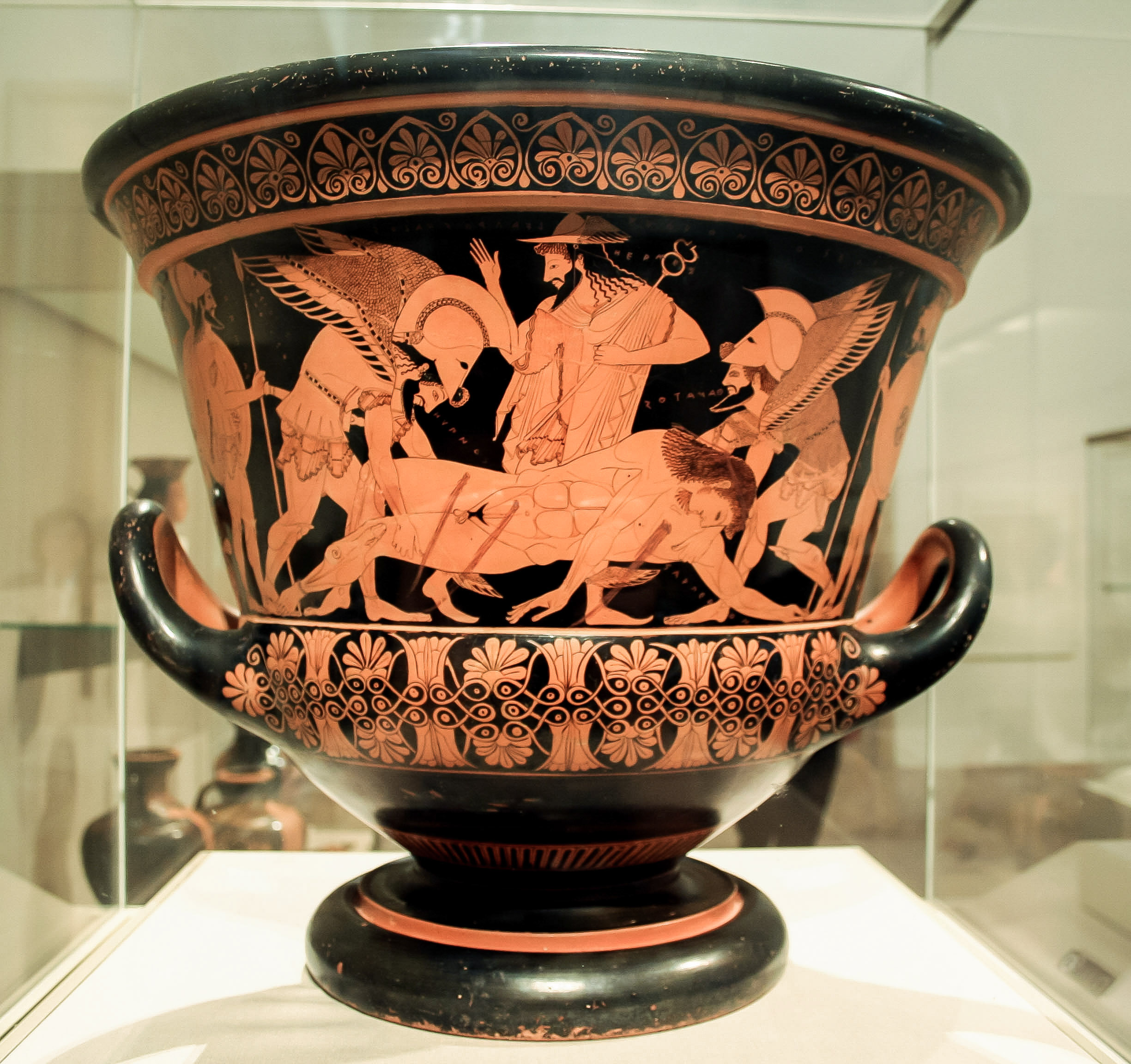
Image result for ancient greek party

The Ghost Giving Up the Mind: Psukhe, Eidolon, and Phrenes in the Iliad

Homer, Il. 23.103-4

“Wretches, really someone in Hades’ home
is a spirit and ghost but there are no phrenes at all inside them.”

ὢ πόποι ἦ ῥά τίς ἐστι καὶ εἰν ᾿Αΐδαο δόμοισι
ψυχὴ καὶ εἴδωλον, ἀτὰρ φρένες οὐκ ἔνι πάμπαν·

Schol ad Il. 23.104a-b ex

A: “Soul and ghost, “but the thoughts were not completely present inside them”

Patroklos converses thoughtfully and with understanding. This line, then, is inserted from the Odyssey [where it does not exist]. For there [Homer] makes the psykhai into shadowy ghosts with no share of understanding.

Either he means that thoughts [phrenes] are not perceptive, but they are some part of the organs within the body as is said elsewhere: “they kept the phrenes and liver inside” and elsewhere “there really where the thoughts go/are”. Therefore this is the whole body from a part. Thus says Aristophanes the grammarian. But there is a diplê: Homer depicts the souls of the unburied as still preserving thought.”

[lemma] Some [say] that phrenes are the body. For the phrenes are a portion of the body. But he means that he did not obtain them as long as he was stretched out. But, it is better that the dead do not have thoughts. For he criticizes [Achilles] that he does not care. And, certainly, the unburied often give prophecies. Or, it could also be, that they are present, but not completely.”

Did. (?) | ψυχὴ καὶ εἴδωλον, <ἀτὰρ φρένες οὐκ ἔνι πάμπαν>:
Ariston. ἐμφρόνως καὶ συνετῶς διείλεκται πάντα ὁ Πάτροκλος. ἐνσέσεισται οὖν
ἐκ τῆς ᾿Οδυσσείας ὁ στίχος (ubi non exstat)· ἐκεῖ γὰρ τὰς ψυχὰς εἴδωλα σκιώδη φρονήσεως ἀμέτοχα ὑπέθετο. ἢ φρένας λέγει οὐ τὸ διανοητικόν, ἀλλὰ μέρος τι τῶν ἐντὸς σώματος, ὡς καὶ ἀλλαχοῦ „ἔν τε φρένες ἧπαρ ἔχουσι” (ι 301) καὶ πάλιν „ἔνθ’ ἄρα τε φρένες ἔρχαται” (Π 481). ἔστιν οὖν ἀπὸ μέρους τὸ ὅλον σῶμα. οὕτως ᾿Αριστοφάνης ὁ γραμματικός (fr. 87, p. 227 N. [= p. 191 Sl.]). | ἡ διπλῆ δέ, ὅτι τὰς τῶν
ἀτάφων ψυχὰς ῞Ομηρος ἔτι σωζούσας τὴν φρόνησιν ὑποτίθεται. A
ex. ἀτὰρ φρένες οὐκ ἔνι πάμπαν: φρένες T τινὲς σῶμα· μέρος γὰρ σώματος αἱ φρένες. τοῦτο δὲ εἶπε, παρ’ ὅσον ἐκταθεὶς οὐκ ἔλαβε. κάλλιον δέ, ὅτι φρένας οἱ τεθνεῶτες οὐκ ἔχουσιν· ἐμέμφετο γὰρ ὡς ἠμελημένος (cf. Ψ 69—74). b(BCE3E4)T καὶ
μὴν οἱ ἄταφοι προμαντεύονται. T ἢ εἰσὶ μέν, οὐ μὴν πάμπαν.
b(BCE3E4)T

Image result for ancient greek burial vase

Shitting on Pope’s Homer

Adam Gopnik writes in a recent New Yorker piece, “Pope’s Homer read like Homer when it was published…” Pope’s Homer was undoubtedly a commercial success, but certainly it failed to impress those who were qualified to judge its merits relative to the Greek original. Pope’s translation is a testament to his thorough saturation in the spirit of the English Augustan spirit, but revealed to his contemporaries a failure to steep himself in the classical springs.

Edward Gibbon, Memoirs of My Life:

“Before I left Kingston school I was well acquainted with Pope’s Homer and the Arabian Nights Entertainments, two books which will always please by the moving picture of human manners and specious miracles: nor was I then capable of discerning that Pope’s translation is a portrait endowed with every merit, excepting that of likeness to the original.”

Matthew Arnold, On Translating Homer:

“Yet it is strictly true that, for want of duly penetrating themselves with the first named quality of Homer, his rapidity, Cowper and Mr. Wright have failed in rendering him; that, for want of duly appreciating the second named quality, his plainness and directness of style and diction, Pope and Mr. Sotheby have failed in rendering him

James Boswell, The Life of Samuel Johnson:

“I remember also distinctly, (though I have not for this the authority of my journal,) that the conversation going on concerning Mr. Pope, I took notice of a report which had been sometimes propagated that he did not understand Greek. Lord Bathurst said to me, that he knew that to be false; for that part of the Iliad was translated by Mr. Pope in his house in the country; and that in the mornings when they assembled at breakfast, Mr. Pope used frequently to repeat, with great rapture, the Greek lines which he had been translating, and then to give them his version of them, and to compare them together.”

Sir Leslie Stephen, Alexander Pope:

“It is needless to say that he never became a scholar in the strict sense of the term. Voltaire declared that he could hardly read or speak a word of French; and his knowledge of Greek would have satisfied Bentley as little as his French satisfied Voltaire.”

[…]

“But he could say with perfect truth that, ‘thanks to Homer,’ he ‘could live and thrive, indebted to no prince or peer alive.’ The money success is, however, of less interest to us than the literary. Pope put his best work into the translation of the Iliad. His responsibility, he said, weighed upon him terribly on starting. He used to dream of being on a long journey, uncertain which way to go, and doubting whether he would ever get to the end. Gradually he fell into the habit of translating thirty or forty verses before getting up, and then “piddling with it” for the rest of the morning; and the regular performance of his task made it tolerable. He used, he said at another time, to take advantage of the “first heat,” then correct by the original and other translations; and finally to “give it a reading for the versification only.” The statement must be partly modified by the suggestion that the translations were probably consulted before the original. Pope’s ignorance of Greek—an awkward qualification for a translator of Homer—is undeniable. Gilbert Wakefield, who was, I believe, a fair scholar and certainly a great admirer of Pope, declares his conviction to be, after a more careful examination of the Homer than any one is now likely to give, that Pope ‘collected the general purport of every passage from some of his predecessors—Dryden’ (who only translated the first Iliad), ‘Dacier, Chapman, or Ogilby.’ He thinks that Pope would have been puzzled to catch at once the meaning even of the Latin translation, and points out proofs of his ignorance of both languages and of ‘ignominious and puerile mistakes.’”

Thomas Jefferson to Joseph Priestley, January 27th 1800:

“To read the Latin and Greek authors in their original, is a sublime luxury; and I deem luxury in science to be at least as justifiable as in architecture, painting, gardening, or the other arts. I enjoy Homer in his own language infinitely beyond Pope’s translation of him, and both beyond the dull narrative of the same events by Dares Phrygius; and it is an innocent enjoyment. I thank on my knees, him who directed my early education, for having put into my possession this rich source of delight; and I would not exchange it for anything which I could then have acquired, and have not since acquired.”

Finally, a note on Pope’s theology:

Sir Leslie Stephen, Alexander Pope:

“The old gods, then, were made into stiff mechanical figures, as dreary as Justice with her scales, or Fame blowing a trumpet on a monument. They belonged to that family of dismal personifications which it was customary to mark with the help of capital letters. Certainly they are a dismal and frigid set of beings, though they still lead a shivering existence on the tops of public monuments, and hold an occasional wreath over the head of a British grenadier. To identify the Homeric gods with these wearisome constructions was to have a more serious disqualification for fully entering into Homer’s spirit than even an imperfect acquaintance with Greek, and Pope is greatly exercised in his mind by their eating and drinking and fighting, and uncompromising anthropomorphism. He apologizes for his author, and tries to excuse him for unwilling compliance with popular prejudices. The Homeric theology he urges was still substantially sound, and Homer had always a distinct moral and political purpose. The Iliad, for example, was meant to show the wickedness of quarrelling, and the evil results of an insatiable thirst for glory, though shallow persons have thought that Homer only thought to please.”

Image result for homer
“What sort of speech has fled from the bulwark of your teeth!?”

An Epitaph for a Dog

Literary Papyri, 109.2

“A dog is interred beneath this marker—
Tauron who was not undone when faced with a killer.
For he encountered a boar in direct combat-
It could not be passed as it puffed out its jaw
And drove a furrow in his chest as it dripped with white foam.
But the dog struck two feet into its back
And grabbed the bristling beast in the middle of its chest
And drove it down into the ground—he made a gift
Of the beast to Hades and died himself, as is the custom for an Indian.
He saved the life of Zenon, the hunter he followed.
So he is buried here beneath this light dust.”

σκύλαξ ὁ τύμβωι τῶιδ᾿ ὕπ᾿ ἐκτερισμένος
Ταύρων, ἐπ᾿ αὐθένταισιν οὐκ ἀμήχανος·
κάπρωι γὰρ ὡς συνῆλθεν ἀντίαν ἔριν,
ὁ μέν τις ὡς ἄπλατος οἰδήσας γένυν
5στῆθος κατηλόκιζε λευκαίνων ἀφρῶι,
ὁ δ᾿ ἀμφὶ νώτωι δισσὸν ἐμβαλὼν ἴχνος
ἐδράξατο φρίσσοντος ἐκ στέρνων μέσων
καὶ γᾶι συνεσπείρασεν· Ἀίδαι δὲ δοὺς
τὸν αὐτόχειρ᾿ ἔθναισκεν, Ἰνδὸν ὡς νόμος.
σώιζων δὲ τὸν κυναγὸν ὧι παρείπετο
Ζήνων᾿ ἐλαφρᾶι τᾶιδ᾿ ὑπεστάλη κόνει.

From the Medieval Bestiary

You’ve Heard of Zeno’s Paradox, But What about his Dilemma?

Aristotle, Physics 209a

“In addition to this, if something is one of those things that exists, where can it exist? For Zeno’s dilemma asks this kind of question: if everything which is exists in a place, then it is clear that the place is part of a place too and this problem persists endlessly.

Wait, there’s more: if every body is in a place, then the body is also in the entire place. How, then, are were to talk about things that increase and grow? For, based on what we have said, it would be necessary for the place to expand as well so that the space may be neither smaller nor greater than the thing which occupies it.

Because of these arguments we are necessarily in a state of confusion not only about what [a place] is but whether it even exists.”

Ἔτι δὲ καὶ αὐτὸς εἰ ἔστι τι τῶν ὄντων, ποῦ ἔσται; ἡ γὰρ Ζήνωνος ἀπορία ζητεῖ τινα λόγον· εἰ γὰρ πᾶν τὸ ὂν ἐν τόπῳ, δῆλον ὅτι καὶ τοῦ τόπου τόπος ἔσται, καὶ τοῦτο εἰς ἄπειρον πρόεισιν.

Ἔτι ὥσπερ ἅπαν σῶμα ἐν τόπῳ, οὕτω καὶ ἐν τόπῳ ἅπαντι σῶμα· πῶς οὖν ἐροῦμεν περὶ τῶν αὐξανομένων; ἀνάγκη γὰρ ἐκ τούτων συναύξεσθαι τὸν τόπον αὐτοῖς, εἰ μήτ᾿ ἐλάττων μήτε μείζων ὁ τόπος ἑκάστου.

Διὰ μὲν οὖν τούτων οὐ μόνον τί ἐστιν, ἀλλὰ καὶ εἰ ἔστιν, ἀπορεῖν ἀναγκαῖον

[The paradox/dilemma thing is a bit of a misdirection: Zeno actually had multiple paradoxes]. This is funny:

Found here

Also, it has been a few months, but I find myself laughing about this every few days:

https://twitter.com/JordanDavisPoet/status/1061832827451383809

Non-Elite Latin for the Classroom

The following is a thoroughly masterful and fascinating introduction to using non-elite Latin in teaching by Brandon Conley.

Introduction

This is a brief introduction to non-elite Latin texts, intended for use in the classroom as a supplement to the more traditional Latin readings. For the majority of the following texts, knowledge of Latin equivalent to the first two to three semesters at the college level is advised, though several are suitable for first-year courses.

Firstly, what is non-elite Latin? Generally speaking, non-elite Latin comprises the texts produced outside of Rome’s powerful, exclusive literary circles, the arbiters of linguistic prestige—the ‘literati,’ so to speak. Other terms are often used to describe these texts, such as non-literary or non-standard. These definitions often, but not always, apply, and regularly more than one can be used to describe the same text. For example, we wouldn’t use ‘non-standard’ to describe an epitaph written for a freedwoman in Dacia that adheres to the linguistic standards of classical Latin (its adherence makes it, in fact, standard), but we could describe it as both non-elite and non-literary. The texts here can be standard or not (though most contain non-standard forms), as well as literary or not (though most aren’t). But they are all non-elite by virtue of the statuses, locations, and linguistic conventions of their authors.
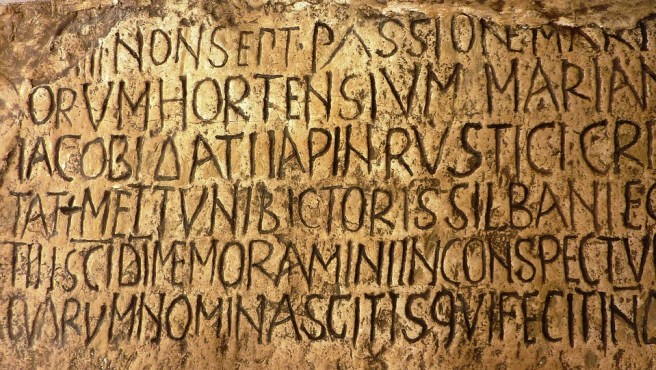
nelatin

Reading non-elite texts, with few exceptions, presents a set of challenges different from those of classical Latin. Linguistic features are more prone to diachronic and geographic change than the comparatively change-resistant classical standards. Spellings can be phonetic, colloquial, learned conventions, or intentionally archaic for effect. Morphology and syntax often differ widely as well, as in the increased usage of the indicative or the expanded role of the accusative (at the expense of the ablative, regularly). Vocabulary can be geographically specific, and differences in semantic value between non-elite and classical Latin are not uncommon.

Some of these features are discussed below to aid in reading. Efforts were made to add punctuation, etc., for ease of reading and approachability to students. Spellings are often left in their non-standard forms, though to aid in reading, many words are edited using brackets or parentheses; for particularly problematic spellings, a classical form of the word is added in parentheses. Texts (and translations, where available) are taken from the sources linked, with modifications (unless otherwise noted).

Exercises in non-elite Latin are often exercises in editing, critical reading, and emendation, as many of the texts are damaged or difficult to interpret. Reading these texts presents a practical opportunity to discuss textual editing as a scholarly process.

Lastly, accessibility is paramount. Students, instructors, and independent scholars often lack access to the databases and publications in which many non-elite texts are presented. All of the texts presented below are freely available online. At the end of this document, however, the recommended reading list contains mostly sources that are not open access.

Feel free to add, remove, edit, scream at, or pour coffee on the text—though should you choose to pour the coffee, print it first.

Spelling

Motives for the spellings can be any number of things, from a widespread phonetic change to a local scribe’s misspelling. Often, unsurprisingly and necessarily, there is considerable debate on the causes of the spellings. Likewise, we must resist, often with great difficulty, tendencies to generalize non-standard spellings as broader linguistic features without the presence of more evidence.

These are some of the most common differences in spelling between non-elite and classical Latin.

Word-initial and Intervocalic Aspirate, h-, /h/ (habeo, hic, mihi, ): The initial and intervocalic aspirate /h/ had disappeared from most speech varieties by the imperial period, and from all eventually (with the exception of a select few prescriptive grammarians, perhaps). Hence, it is often omitted in non-elite texts, with resulting forms such as abes, mi, and ic.

Word-final -m, /m/ (dicam, amicum, etc.): -m was not pronounced (as /m/, at least) at the end of a word in spoken Latin, even before the time of Cicero; consider, for example, the impact this had in classical poetry in the process of elision. It is omitted from spelling with great frequency in non-elite texts, and can often cause confusion for first-time readers.

The v/b Shift, /w/ à /β/ (cf. the v in Spanish): this is a simplification of the process, but essentially the glide /w/ of classical pronunciation became increasingly pronounced as a bilabial fricative. This change is represented in non-standard spellings by the replacement of Latin v for b (e.g. dibi, classical divi, “gods”), as writers considered b to more closely represent the sound.

xs for x (dixsit,): there are potentially a few, if separate, factors that motivated this spelling. In short, an s was added after x due to the differing phonetic qualities of x as it was written (by itself, not representing /ks/). This is a common spelling feature, but generally not a problematic one for reading.

Assimilation and Weakening: a widespread trend in non-elite spellings is the simplification of consonant clusters, often through assimilation (i.e. one sound in the cluster ‘absorbs’ another sound) or weakening leading to loss. These can result in either a different letter being used to represent the altered sound (imveni, inveni) or the complete loss of a consonant (nuc, cf. nunc; meses, cf. menses). A notable loss, in cosul, is even reflected in standardized inscriptions in the abbr. cos. Loss is also quite common with consonants preceding the semivowel /j/, i (aiuto, cf. adiuto, “I help”).

Doubling of letters and reduction of doubled letters (faccio, facio; anis, cf. annis): multiple operations are at work, including the strengthening, weakening, and shortening of consonants, gemination and degemination, as well as the general tendency to eliminate letters that are not reflected in speech. Though not all spellings of these types can be ascribed to changes in pronunciation. For reading purposes, the doubling of letters (e.g. faccio) is usually not problematic. The absence of doubled letters can be problematic, though, as the non-standard forms frequently resemble other words with standard spellings (e.g. annis, dat/abl pl. ‘years,’ but anis, dat/abl pl. ‘rings’; or suum ‘own’, but sum ‘I am’).

Deletion: Vowels and consonants are regularly deleted in medial positions. Unstressed vowels are most commonly deleted (aspros, cf. asperos; copla, cf. copula), reducing the number of syllables in a word. This trend is not entirely unusual even in literary Latin.

Often duplicate vowels are reduced to one letter (serus, seruus; tus, cf. tuus).

Voiced and Devoiced Consonant Switching: switching in both directions is common, and the motives vary. The use of t for d and vice versa are perhaps the most common in the texts below (ed, set, at, ). Sometimes they are even used interchangeably in the same document. There is considerable doubt that these spellings reflected wider speech patterns.

Other Orthographic Consonant Substitutions: k is regularly used for c (karissimo), as is, to a lesser extent, q before u (mequm, quravit). These generally do not pose problems for readers.

e/i Representation: the writing of e for i and vice versa is one of the most commonly found spelling deviations from classical standards. Spellings of this type sometimes, though not always, reflect a widespread phonetic change in Latin speech well into the imperial period, whereby the vowels long e /e:/ and short i /i/ merged into a single vowel, /ẹ/. Both letters were used with little consistency to represent this phoneme. Another motive was the tendency for /e/ and /i/ to become a semivowel /j/ after a consonant (vinia as two syllables, rather than vinea). Occasionally, e was even used to represent ī /i:/. Some examples: sene, nese, dicet, ube, ibe, and signabet.

u/o Representation: another very common set of vowel substitutions, o is frequently used in place of u. The majority of instances occur in final syllables of the nominative and accusative singular; -us and -um become -os and -om, respectively. While another widespread vowel merger (similar to e/i) occurred very late in the imperial period, whereby ō /o:/ and u /u/ merged to a closed o /ọ/, the great majority of non-elite texts from the Roman Empire likely do not reflect this process. The use of o for u is far more likely to be an orthographic remnant (a ‘relic’, perhaps) of the old Latin spelling, which reflects the original o-stem. As mentioned above, there is also a strong stylistic tendency against writing the consecutive vowels uu, and o often replaces the second one. Examples: servos, mortuos, novom, salvom.

ei for i (tibei, ubei, etc.): the use of the vowels ei for classical i occurs regularly, and is an archaism of spelling, either for style or by learned inheritance, rather than an indication of pronunciation. It is a remnant of a popular spelling in old Latin which did reflect speech; the original diphthong /ei/ underwent a change to /i:/.

Monophthongization: ae /ae/ à e /ɛ/: other diphthongs disappear as well, but ae to e is present most frequently in the texts. Examples: que, quae; Cecilius, cf. Caecilius; and equum, cf. aequum. These can be problematic, as evidenced by the final example equum (potentially confused for the classical ‘horse’).

Morphology and Syntax

While there are numerous morphological and syntactic differences from classical Latin, they rarely impede reading to the extent of spelling differences. For example, a Latin student might recognize that the ‘incorrect’ verb tense is used in a conditional, but meaning can still be deduced. As such, only a few points will be mentioned here; see the recommended readings for further discussion.

Accusatives with Prepositions: there is plenty of evidence to support the convincing notion that the accusative became the default case for prepositional phrases. Most notably, cum, de, pro and in regularly take accusatives (even in instances in which the classical ‘ablative of place where’ would be expected). The situation is further complicated by the status of word-final -m, which made the ablative and accusative cases sound identical in speech in some instances, and the omission of which in writing can make a word appear ablative, though a writer originally had in mind an accusative. Advice for readers is to expect accusatives with prepositions which would otherwise be unexpected in classical Latin.

Analogy and Paradigm Leveling: analogy was a productive process in Latin, and in non-elite texts it occurs often in verbal and nominal morphology. Forth declension nouns in classical Latin sometimes use the more regular endings of the second declension in non-elite texts (an ongoing process that eventually saw the near-complete elimination of the fourth declension). Verbal constructions are leveled as well, for example in posso (“I can”) being given a common -o 1st singular ending in place of the standard possum.

Indicative or Infinitive: in instances where classical Latin would employ a subjunctive, such as in an indirect question, it is not uncommon in non-elite texts to see an indicative or an infinitival construction.

The conjunctions et and sed: a number of texts rely heavily on these conjunctions, including them where syntactically unnecessary or where other conjunctions would be more appropriate for clarity. One must not always take these literally or strictly when reading.

Vocabulary

Reading any different author or genre of Latin usually requires familiarization with new vocabulary, and non-elite texts are no exception. Cicero’s surviving works, for example, do not contain inventories of materials or equipment, and in the texts that do contain these, some words will be new to readers. In some instances, however, things are more complicated. Loanwords or local words with limited attestation are common, and their meanings are uncertain; the ostraka found at Bu Njem, for example, contain several Punic words. The texts below were chosen with these considerations in mind, though it will perhaps be necessary to look up some military terms, for example.

Keep reading for some phenomenal texts….

Continue reading “Non-Elite Latin for the Classroom”

Filthy Friday: Rank Misogyny

Antonio Beccadelli, Hermaphroditus 2.8:

“If such a tremendous stink were always blowing upon the sea, so that no one’s nose could bear the shore, what sailor would be a shipwreck on the Adriatic or Scythian or Tyrrhenian Sea? But you – don’t be afraid. When you get it up for Ursa, when you really want her badly, her stinking vagina will drive you off. It breathes such a horrid stench, that a fat and stinking corpse would smell like lilies when set against it; it blows out such a smell that if one were to compare her crotch to shit, a huge sewer would suddenly see like violets and roses. If your nose is not put off by such a smell, I will give you something to make it tighter.”

beccadelli2


Why Does Apollo Kill the Mules and Dogs First?

Hint: Either because he likes people. Or, animals have a good sense of smell.

Schol. A ad Il. 1.50c ex.

“First he [attacked] the mules and the fast dogs”

“Because the god is well-disposed toward human beings, he kills mules, dogs, and the other irrational beasts first, so that, by inducing fear through these [deaths], he might nurture proper reverence in the Greeks.

Or, it is because the mules and dogs have a more powerful perception of smell. For, dogs are really good at tracking beasts because of their sense of smell, and mules, when they are left behind, often rediscover their paths thanks to their sense of smell.”

<οὐρῆας μὲν πρῶτον ἐπῴχετο καὶ κύνας ἀργούς:>

φιλάνθρωπος ὢν ὁ θεὸς πρῶτον τὰς ἡμιόνους καὶ τοὺς κύνας καὶ τὰ ἄλογα ζῷα ἀναιρεῖ, ἵνα διὰ τούτων εἰς δέος ἀγαγὼν τοὺς ῞Ελληνας ἐπὶ τὸ εὐσεβεῖν παρασκευάσῃ. ἢ ὅτι αἱ ἡμίονοι καὶ οἱ κύνες τὴν αἴσθησιν τῆς ὀσφρήσεως ἐνεργεστέραν ἔχουσιν· οἱ μὲν γὰρ κύνες ἀπὸ τῆς ὀσφρήσεως τῶν ἰχνῶν ἐν αἰσθήσει τῶν θηρίων γίνονται, αἱ δὲ ἡμίονοι πολλάκις ἀπολειφθεῖσαι τινων ἀπὸ τῆς ὀσφρήσεως καὶ τὰς ὁδοὺς ἀνευρίσκουσιν.

I was reading the beginning of the Iliad with some students the other day and I opened up the scholia to see what various nonsense there was to support or deny Zenodotus’ editorial dismissal of lines 1.46-47 (ἔκλαγξαν δ’ ἄρ’ ὀϊστοὶ ἐπ’ ὤμων χωομένοιο, / αὐτοῦ κινηθέντος· ὃ δ’ ἤϊε νυκτὶ ἐοικώς.). I started looking ahead and saw this! As other students might attest, this is what often happens in my advanced Greek classes–we discuss the strangeness of a thing, we check the apparatus, I hoot or holler over some editorial intervention, and then I open the scholia: look, this is absurd. and wonderful. and mad. and I love it.

Additional note: On 1.50, Aristonicus denies the claims by by some rogues that “mules” here is a word for “guards”; the bT scholia make the quasi-scientific claim that these animals are more susceptible to diseases than humans. I like the idea of Apollo trying to teach people a lesson before just murdering them all.

Lessons.

The One Who Needs Forgiveness: Clytemnestra on Her Husband

Seneca, Agamemnon 260-267

“Aegisthus, why do you push me again into the deep
And re-kindle my rage which was just cooling down?
The victor has indulged himself a bit with a captive girl—
It befits neither a wife nor a mistress to acknowledge it.
The law for the throne is different from the one for a man’s bed.

Even with this, why does my mind not allow me
To bring the harsher laws to bear on my husband when I have been shamed?
It’s right for the one who needs forgiveness to grant it easily.”

Aegisthe, quid me rursus in praeceps agis
iramque flammis iam residentem incitas?
permisit aliquid victor in captam sibi:
nec coniugem hoc respicere nec dominam decet.
lex alia solio est, alia privato in toro.
quid, quod severas ferre me leges viro
non patitur animus turpis admissi memor?
det ille veniam facile cui venia est opus.

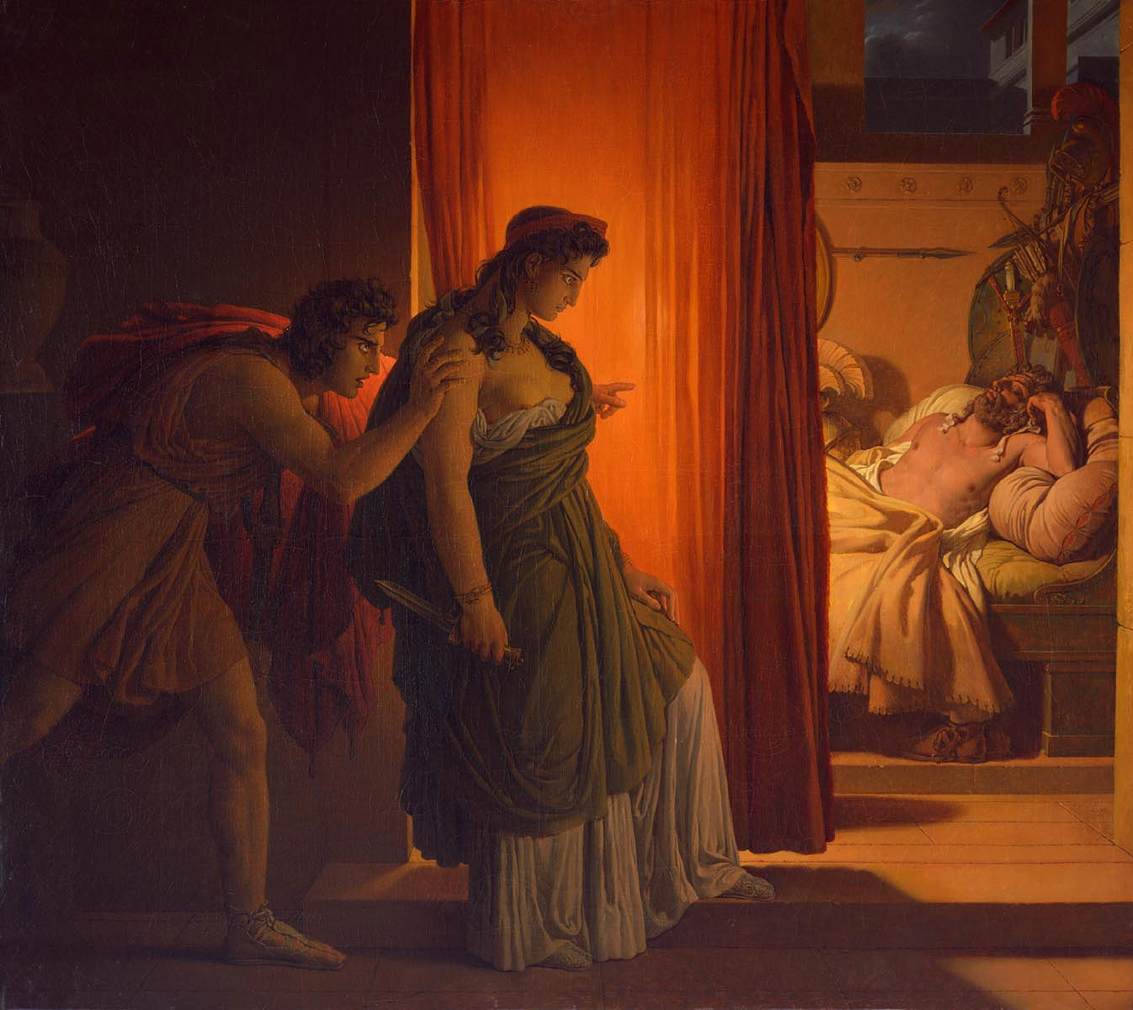
Image result for clytemnestra and agamemnon
Pierre-Narcisse Guérin – Clytemnestra and Agamemnon

Thanks for the Homer!

Petrarch, Epistulae Familiares 18.2:

“My dearest man, remembering both my desire and your promise, you gave this book to me, and – what adds more than a little to the gift – you gave it to me, not funneled by some violent channel into another language, but pure and uncorrupted, from the very springs of Greek eloquence, just as it first flowed from Homer’s divine intellect. I consider it the highest gift and, if the true price of the thing be considered, it is one of entirely incalculable value. Nothing more could be added to it if you would bestow along with Homer your gracious presence, with the aid of which I first entered upon the narrow paths of a foreign tongue. Happily would I enjoy your gift, and astonished I would glance the ‘light’ and the ‘visual marvels’ about which Horace writes in his Art of Poetry, 

 Antiphates and Scylla, and the Cyclops with Charybdis.”

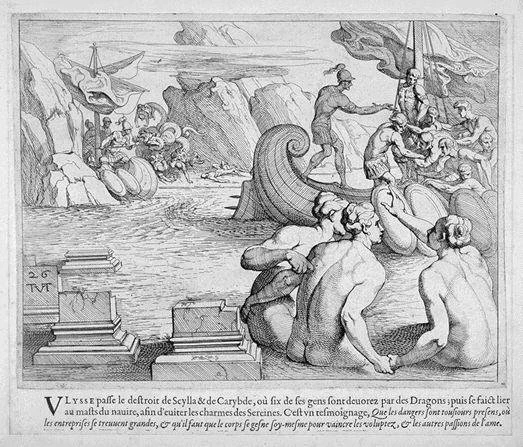
Image result for scylla and charybdis

Hunc tu michi, vir amicissime, donasti, promissi tui simul ac desiderii mei memor, quodque non modicum dono adicit, donasti eum non in alienum sermonem violento alveo derivatum, sed ex ipsis greci eloquii scatebris purum et incorruptum et qualis primum divino illi perfluxit ingenio. Summum utique et, si verum rei precium exquiritur, inextimabile munus habeo, cuique nil possit accedere si cum Homero tui quoque presentiam largireris, qua duce peregrine lingue introgressus angustias, letus dono tuo fruerer attonitusque conspicerem “lucem” illam et “speciosa miracula” de quibus in Arte poetica Flaccus ait:

 Antiphatem Scyllamque et cum Cyclope Caribdim.