“This mistake, this minor madness, still possesses
This many advantages—consider them. The poet is
Not one with a greedy heart. He loves his lines, and desires
This alone. He mocks lost money, the flight of slaves and fires
There’s no thought of fraud against his friend or his ward
He lives as well as thin gruel and dry bread can afford.
Although he’s slow and a bad soldier, he’s still of use,
If you believe this: that grand affairs are helped by small matters too.
Hic error tamen et levis haec insania quantas
virtutes habeat, sic collige. vatis avarus
non temere est animus; versus amat, hoc studet unum;
detrimenta, fugas servorum, incendia ridet;
non fraudem socio puerove incogitat ullam
pupillo; vivit siliquis et pane secundo;
militiae quamquam piger et malus, utilis urbi,
si das hoc, parvis quoque rebus magna iuvari.
“[in this case] the soul and the body would experience things together, but they would not have the same reactions as one another. But, now, it is entirely clear that one follows another. This is especially obvious from the following. For madness seems to be a matter of the mind; doctors, however, respond to it by cleansing the body with medicines and also by telling them to pursue certain habits in life which may relieve the mind of madness.
So, the form of the body is relieved by treatments to the body at the very same time that the soul is freed from madness. Since they are both relieved together, it is clear that their reactions are in synchrony. It is also clear from this that the forms special to the body are similar to the capabilities of the mind, with the result that all similarities in living things are clear signs of some kind of sameness.”
The amazing Dani Bostick (@danibostick) live tweeted the State of the Union Address tonight in Latin. For those off twitter (or off TV), here are her tweets.
Tonight we will witness the annual political theater of the President’s State of the Union address. It will be charged and probably traumatizing. But, never fear, the inimitable Dani Bostick has promised to provided commentary in Latin from her twitter account (.@danibostick). Look for the hashtag #LatinSOTU.
In honor of her personal sacrifice, here are some of her #FakeLatin for #RealNews posts chronicling the rise of the mysterious Manicula from the past few months.
C. Julius Caesar (?), De Silvis. Edited by Dani Bostick.
1.3 The best part of Gaul is Finland which is inhabited by the most intelligent citizens of all because they most often rake leaves and keep four rakes under every tree. For this reason the Finnish people also surpass everybody in safety, because almost every day they clean their forest with these rakes either when leaves fall from trees or when there is dirt of another kind.
1.3 Optima pars Galliae est Finlandia quam cives intellegentissimi omnium colunt propterea quod saepissimeque folias conradunt atque quattuor pectines sub omni arbore ponunt. Qua de causa Finlandi quoque omnes sapientia praecedunt, quod fere cotidie pectinibus silvas purgant, cum aut foliae ex arboribus cadunt aut illuvies alterius generis est.
1.4 This technique is thought to have originated in Canada, where there are many forests, and brought to Finland, but now those who want to learn more about it do not go there for the sake of learning about it. You see, the entire nation of the Finnish people is extremely devoted to learning and on that account foreign teachers come to Finland so that they might learn to teach well, but they never ask how to keep forests clean on account of their stupidity.
1.4 Haec disciplina in Canada reperta atque in Finlandiam translata esse existimatur, sed nunc, qui diligentius eam rem cognoscere volunt, plerumque illo discendi causa non proficiscuntur. Nam natio est omnis Finlandorum admodum dedita eruditioni, atque ob eam causam barbari magistri veniunt ut bene docere discant, sed ob stultitiam quomodo silvae purgentur numquam rogant.
C. Julius Caesar (?), De Silvis. Edited by Dani Bostick.
1.5 In Finland schools are very different from prisons and for this reason seem rather unusual to foreigners. It is permitted to walk and play outside rather often so that teachers, who are considered to be almost gods and receive the greatest honor among their people, can keep students in a happy state of mind. When students learn, their bodies are calm not because they fear punishment or are asleep but because they delight in knowledge. They enjoy excellent lunches consisting of small fish, sausages, cheese, and fruit so that bad nutrition does not diminish their strength and enthusiasm. And none of this originates in factories far away, but in neighboring gardens and fields. The state prepares for slaughter in schools in proportion to the danger of this possibility; since there is no danger of this type of situation, they have nothing to prepare for. This is the greatest glory to Finland.
1.5 In Finlandia scholae dissimillimae carceribus atque ob eam causam inusitatioresque barbaris sunt. licet in locis apertis saepius errare ludereque ut magistri, qui paene deorum habentur loco maximamque inter suos ferunt laudem, animi felicitate discipulos contineant. Cum hi docent, corpora eorum neque timore poenarum neque somnio, sed delectationibus scientiae immota sunt. gustant prandia optima, quae in pisculis et tomaculis et caseo et pomis consistunt, ne malus victus vires studiumque diminuat. nec quicquam in remota fabrica, sed in hortis et agris vicinis nascitur. Civitas pro magnitudine periculi caedem in scholis parat. Quoniam nullum periculum caedis est, nihil parandum est. Finlandiae maxima laus est.
1.6 The leader of Finland can read and understands everything easily even without pictures. When he hears gossip or a rumor, he does not communicate it publicly because it has been discovered that fearful and ignorant people are scared by rumors and sometimes believe false words. The leader avoids driving his citizens to greater madness and conveys the truth to the people. For in Finland they do not think it is appropriate to deceive or manipulate with deceitful lies. For this reason the leader of Finland is held in high regard not only at home home but also among all nations.
1.6 Dux Finlandiae legere potest omniaque etiam sine picturis faciliter intellegit. Cum rumorem aut famam accepit, publice non communicat, quod saepe homines temerarios atque imperitos falsis rumoribus terreri et falsis verbis interdum credere cognitum est. Itaque dux cives ad maiorem amentiam impellere vitans veritatem multitudini prodit. Nam in Finlandia nefas esse existimatur subdolis mendaciis fallere aut inducere. Qua de causa dux Finlandiae non solum domi sed etiam apud omnes nationes honore largiter habetur.
C. Julius Caesar (?), Bellum Incivile. Edited by Dani Bostick
1.30 Although he had five draft deferments, did not pay taxes along with everyone else, had nothing to do with politics, and had no skill in public speaking, Manicula sought the consulship, but not out of a desire to serve the people nor out of enthusiasm for his political party.
For which reason his associates Michael Cohen, Ivanka, Don Jr., Paul Manafort, Michael Flynn, George Papadopoulus, Carter Page, Roger Stone, and Rick Gates, driven by the hope of influence and rewards, started communicating with Russians that Manicula had hoped for a long time to build opulent housing in their country and that he was seeking the enemy’s help so that he could be elected consul.
Manicula and his associates were completely incapable of reading Cicero’s orations, but they believed his words: “There are no plots more undetectable than those carried out under the guise of public duty or in the name of some sort of obligation. For you can easily avoid a known enemy by being cautious; to contrast, a hidden and deep-seated domestic threat not only exists, but actually crushes you before you can detect it and learn more about it.”* Because of this, they all thought they were able to avoid suspicion.
1.30 Manicula cum militiae quinque vacationes haberet neque tributa una cum reliquis penderet neque forum attingeret neque ullam dicendi facultatem haberet, tamen consulatum petivit, sed neque cupiditate serviendi populi neque studio partium adficiebatur.
Qua de causa eius comites M. Coenus et Ivanca et Donaldellus et P. Virfortus et M. Flinnus et G. Papadus et P. Cartus et R. Lapis et R. Porta spe auctoritatis atque munerum inducti cum legatis Sarmatiae loqui coeperant: Maniculam se aulam auream in Sarmatiae finibus aedificaturum diu speravisse et auxilium hostium quo consul nuntiaretur petere.
Manicula comitesque orationes Ciceronis legere haudquaquam poterant, sed crederunt eius verbis: “Nullae sunt occultiores insidiae quam eae quae latent in simulatione offici aut in aliquo necessitudinis nomine. Nam eum qui palam est adversarius facile cavendo vitare possis; hoc vero occultum intestinum ac domesticum malum non modo non exsistit, verum etiam opprimit antequam prospicere atque explorare potueris.” Ob eam causam omnes sese suspicionem vitare posse arbitrabantur.
“In his lectures, Housman was naturally under the necessity of discussing all the problems raised by his author, and novelties of his own were but incidents in the whole. At the Philological Society, where the paper dealt with his own solutions of a difficulty, the qualities shown in his lectures had freer scope, and one commonly came away with the feeling that so would the recording angel on the Judgment Day would read his scroll, and so would faults be amended beyond appeal or dispute. All the relevant facts would be marshalled with such seeing ease that the erudition might almost escape notice (for Housman, though scrupulous in meeting any possible objection in advance, never piled up evidence beyond his immediate need), and the conclusion or emendation followed so surely upon them that the paper left nothing to debate.”
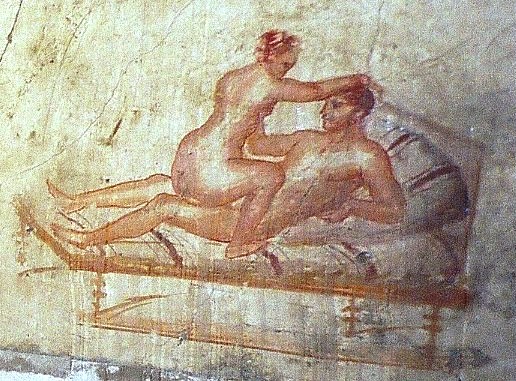
“And then when they consume the flower of their age
As their limbs are laced together, just when the body senses delight
And that Venus is about to sow the furrows of the feminine field,
They press their bodies together greedily and join their wet mouths
Trying to breathe each other in as they press lips into teeth—
All pointlessly, since they can’t rub anything from there,
Nor can they truly enter each other or leave for a single body.
For this is what they often seem to want and try to do.
That’s how eagerly they cleave to Venus’s re-combinations of flesh
While their limbs become liquid under pleasure’s force.
Finally, once the lust which has amassed in their veins erupts,
Then, for a moment, there is a brief lull in the violent fire.
But soon the rabid hunger and the same madness returns,
And they quest to fulfill what they desire,
But they cannot discover any trick to overcome the pain,
And they remain uncertain, wasting away from a hidden wound.”
denique cum membris conlatis flore fruuntur
aetatis, iam cum praesagit gaudia corpus
atque in eost Venus ut muliebria conserat arva,
adfigunt avide corpus iunguntque salivas
oris et inspirant pressantes dentibus ora—
nequiquam, quoniam nil inde abradere possunt
nec penetrare et abire in corpus corpore toto;
nam facere interdum velle et certare videntur:
usque adeo cupide in Veneris compagibus haerent,
membra voluptatis dum vi labefacta liquescunt.
tandem ubi se erupit nervis conlecta cupido,
parva fit ardoris violenti pausa parumper.
inde redit rabies eadem et furor ille revisit,
cum sibi quod cupiunt ipsi contingere quaerunt,
nec reperire malum id possunt quae machina vincat:
usque adeo incerti tabescunt volnere caeco.
“Therefore, it is that same Chrysippos, who, by furnishing images, teaches that everything is better in its perfect and mature form, that a horse is better than a foal, a dog better than a puppy, a man better than a boy, etc. He also shows that what is best in the whole world ought to be found in that same perfect and complete creature and that there is, moreover, nothing more perfect in the whole world, nothing better than virtue. Because of this, virtue is a fundamental element of the world. Now, the nature of a human being is not perfect, but virtue may still emerge in a person.”
Bene igitur idem Chrysippus, qui similitudines adiungens omnia in perfectis et maturis docet esse meliora, ut in equo quam in eculeo, in cane quam in catulo, in viro quam in puero; item quod in omni mundo optimum sit id in perfecto aliquo atque absoluto esse debere; est autem nihil mundo perfectius, nihil virtute melius; igitur mundi est propria virtus. Nec vero hominis natura perfecta est, et efficitur tamen in homine virtus
But, perhaps we should be forgiving of dear Tully’s inability to recognize the perfection of nature in a puppy’s cuteness. Roman approaches to dogs present some interesting challenges to modern readers:
Pliny, Natural History 29.14
“I have mentioned the glory earned by geese when the incursion of the Gauls onto the Capitoline hill was uncovered. For the very same reason, dogs hang in an annual punishment between the temple of Juventas and that of Summanus, crucified while still alive on a cross of elder wood.
The traditions of our ancestors demand that many things be said about this animal. They used to believe that puppies who were still nursing were such pure food for appeasing the gods that they even used to offer them in place of sacrificial victims. The divine rite of Genita Mana is performed with a puppy and at dinners for the gods even today puppy-meat is set out on the table.
The plays of Plautus provide a good indication that puppy meat was a proper dish in special banquets. It was also believed that nothing was a better remedy for poisonous arrows than puppy’s blood and this creature also seems to have shown human beings the use of emetics…”
XIV. De anserum honore quem meruere Gallorum in Capitolium ascensu deprehenso diximus. eadem de causa supplicia annua canes pendunt inter aedem Iuventatis et Summani vivi in furca sabucea armo fixi. sed plura de hoc animali dici cogunt priscorum mores. catulos lactentes adeo puros existimabant ad cibum ut etiam placandis numinibus hostiarum vice uterentur iis. Genitae Manae catulo res divina fit et in cenis deum etiamnunc ponitur catulina. aditialibus quidem epulis celebrem fuisse Plauti fabulae indicio sunt. sanguine canino contra toxica nihil praestantius putatur, vomitiones quoque hoc animal monstrasse homini videtur, et alios usus ex eo mire laudatos referemus suis locis. nunc ad statutum ordinem pergemus.
“And then again in his details about Pyrrhus he says that the Romans still recall the memory of the destruction at Troy when they shoot a warhorse on a certain day in front of the city in the Campus Martius because the sacking of troy happened because of a wooden horse—a fact which is the most childish thing of all. For, he would need to say that all the barbarians are the descendants of Trojans, since almost all of them when they are about to start a war or are taking a risk toward great danger, sacrifice and slaughter a horse, interpreting what is going to happen from the fall of the animal.
Timaios does not only show is inexperience in this bit of stupidity about the horse, but also it seems to be a great bit of pedantry when he supposes so naively that they go through the practice of sacrificing a horse because Troy was taken by one!”
“There are some of those athletes who display such perfection of body that their opponents decline to face them and they are announced as victors without a fight….”
“Look at the kind of circumstance selected for murder: games, parties, and drinking.”
tempora quidem qualia sint ad parricidium electa vides: lusus convivii comissationis.
Plutarch, Life of Antony 28
“There, he used his leisure in the distractions of youth and childish games, spending and even wasting that most expensive currency, as Antiphon calls it, time.”





.jpg)