Anger, Insult, and Wounds

Seneca, De Ira, 28

“Anger hobbles many, it makes many disabled even when it finds ready material. Add to this the fact that nothing is born so submissive that it will pass on without any threat for its destroyer. Pain and danger make some of the weak equal to the strongest. What, don’t most of the things we get angry about insult us more than they wound?

Indeed, there is a great difference whether someone resists my will, steals it from me, or does not agree with it. But we attach equal value to each, whether someone takes something or denies it, whether he crushes our hope or puts it off, whether he acts against us or for himself, and whether because of love or out of hate.”

Multos iracundia mancos, multos debiles fecit, etiam ubi patientem est nancta materiam. Adice nunc quod nihil tam imbecille natum est, ut sine elidentis periculo pereat; imbecillos valentissimis alias dolor, alias casus exaequat. Quid, quod pleraque eorum, propter quae irascimur, offendunt nos magis quam laedunt? Multum autem interest, utrum aliquis voluntati meae obstet an desit, eripiat an non det. Atqui in aequo ponimus, utrum aliquis auferat an neget, utrum spem nostram praecidat an differat, utrum contra nos faciat an pro se, amore alterius an odio nostri. Quidam vero non tantum iustas causas standi contra nos, sed etiam honestas habent.

Image result for medieval manuscript anger
Angry Fish The Hague, KA 16, 14th c.


Forget Virtue, Study Vice!

Poggio Bracciolini, Facetiae 23:

“In the Roman Curia, Fortune holds the most power, and I was searching to see whether it be a place for intelligence or for virtue. But all things are obtained by ambition and opportunity (not to mention money, which appears to reign all over the world.) A certain friend of mind, who was vexed that many people inferior to him in learning and morals were nevertheless preferred to him, was complaining to Angelotto, the cardinal of St. Mark’s, that his virtue was of no account but was an afterthought when compared to those who were not his equals. He recollected all of his studies, and all of his labors in learning. Then, the cardinal, who was always ready to chastise the vices of the Curia, said, ‘Here knowledge and learning will do you no good. But go on and apply yourself to forgetting them and learning instead some idle vices, if you want to be accepted into the Pope’s favor.”

https://brewminate.com/wp-content/uploads/2018/11/111318-30-History-Medieval-Middle-Ages-Church-Corruption.jpg

In Curia Romana ut plurimum Fortuna dominatur, cum perraro locus sit vel ingenio, vel virtuti; sed ambitione et opportunitate parantur omnia, ut de nummis sileam, qui ubique terrarum imperare videntur. Amicus quidam, qui aegre ferebat praeferri sibi multos doctrina et probitate inferiores, querebatur apud Angelottum cardinalem Sancti Marci nullam haberi suae virtutis rationem, sed postponi his, qui nulla in re sibi pares essent. Sua insuper studia commemoravit, et in discendo labores. Tum promptus ad lacessendum Curiae vitia cardinalis, “Hic scientia et doctrina” inquit “nihil prosunt. Sed perge et aliquod tempus ad dediscendum et addiscendum vitia vaca, si vis Pontifici acceptus esse”.

I hate Education: Let Me Compose a Poem About It

Petronius, Satyricon 4

“The fact is this: if they would tolerate the work advancing by stages, so that the studious youth were were steeped in strict reading, they shaped their minds with the sayings the wise, they were digging out words with a tireless pen, they were listening at length to words they want to imitate, and they believed that what was pleasing to children was never truly exceptional, then that old style of oratory would have the weight of its majesty.

As it is now, children play at school and our youths are mocked in public. And what is more disgusting than this, no one is willing to admit in old age whatever nonsense they learned before. But, please don’t think that I am attacking a tenet of Lucilian humility. I will put what I believe in a poem.”

Quod si paterentur laborum gradus fieri, ut studiosi iuvenes lectione severa irrigarentur, ut sapientiae praeceptis animos componerent, ut verba atroci stilo effoderent, ut quod vellent imitari diu audirent, <ut persuaderent>2 sibi nihil esse magnificum, quod pueris placeret: iam illa grandis oratio haberet maiestatis suae pondus. Nunc pueri in scholis ludunt, iuvenes ridentur in foro, et quod utroque turpius est, quod quisque perperam didicit, in senectute confiteri non vult. Sed ne me putes improbasse schedium Lucilianae humilitatis, quod sentio, et ipse carmine effingam:

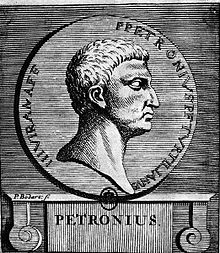
Petronius Arbiter by Bodart 1707.jpg

Flush for Friday!

Robert Burton, The Anatomy of Melancholy 2.2.2:

“I have declared in the causes what harm costiveness hath done in procuring this disease; if it be so noxious, the opposite must needs be good, or mean at least, as indeed it is, and to this cure necessarily required; maxime conducit, saith Montaltus, cap. 27. it very much avails. Altomarus, cap. 7, commends walking in a morning, into some fair green pleasant fields, but by all means first, by art or nature, he will have these ordinary excrements evacuated. Piso calls it, Beneficium ventris, the benefit, help or pleasure of the belly, for it doth much ease it. Laurentius, cap. 8, Crato, consil. 21. l. 2. prescribes it once a day at least: where nature is defective, art must supply, by those lenitive electuaries, suppositories, condite prunes, turpentine, clysters, as shall be shown. Prosper Calenus, lib. de atra bile, commends clysters in hypochondriacal melancholy, still to be used as occasion serves; Peter Cnemander in a consultation of his pro hypocondriaco, will have his patient continually loose, and to that end sets down there many forms of potions and clysters. Mercurialis, consil. 88. if this benefit come not of its own accord, prescribes clysters in the first place: so doth Montanus, consil. 24. consil. 31 et 229. he commends turpentine to that purpose: the same he ingeminates, consil. 230. for an Italian abbot. ‘Tis very good to wash his hands and face often, to shift his clothes, to have fair linen about him, to be decently and comely attired, for sordes vitiant, nastiness defiles and dejects any man that is so voluntarily, or compelled by want, it dulleth the spirits.”

https://i.pinimg.com/736x/2b/da/42/2bda42d45ea0372269e71ca2d8965a12--medieval-manuscript-illuminated-manuscript.jpg

Further Lyric Inducements to Drink

PMG 900

“Ah, but I wish I were a large bit of gold
And a beautiful lady would wear me with a pure mind.”

εἴθ᾿ ἄπυρον καλὸν γενοίμην μέγα χρυσίον |
dκαί με καλὴ γυνὴ φοροίη καθαρὸν θεμένη νόον

PMG 901

“Drink with me. Be Young with me. Love with Me. Wear crowns with me.”
σύν μοι πῖνε, συνήβα, συνέρα, συστεφανηφόρει

PMG 902

“Be crazy with me when I’m crazy
Be sensible when I have sense.”

σύν μοι μαινομένῳ μαίνεο, σὺν σώφρονι
σωφρόνει.

Greek Anthology, 7.415 [=Callimachus 37]

“You are walking over the grave of a man who knew how to sing,
Callimachus, who also could laugh at the right time with a drink.”

Βαττιάδεω παρὰ σῆμα φέρεις πόδας, εὖ μὲν ἀοιδὴν
εἰδότος, εὖ δ᾿ οἴνῳ καίρια συγγελάσαι.

Alcaeus, Fr. 38A (P. Oxy. 1233 fr. 1)

“Drink and get drunk with me, Melanippos.
Why would you say that once you cross the great eddying
River of Acheron you will see the pure light of the sun again?

πῶνε [καὶ μέθυ᾿ ὦ] Μελάνιππ᾿ ἄμ᾿ ἔμοι· τί [φαῖς †
ὄταμε[. . . .]διννάεντ᾿ † Ἀχέροντα μέγ[αν πόρον
ζάβαι[ς ἀ]ελίω κόθαρον φάος [ἄψερον

Anacreon, fr. 412

“I’m drunk, won’t you let me go home?”

οὐ δηὖτέ μ᾿ ἐάσεις μεθύοντ᾿ οἴκαδ᾿ ἀπελθεῖν;

From medievalists.net

Come and Drink! A Blessing Equal to Fire

Panyasis is an epic poet from the 5th century BCE. We have a few long fragments of his Heraklea.

Panyasis fr. 19 [also cited at Athenaeus 37a 12–13; Stob. 3.18.21]

“Friend, come and drink! For this itself is also a virtue,
Whenever someone drinks the most wine at the feast
Using the best techniques, and also encourages his friends.

Yes, the man who is fast at the feast is equal to one in war,
Working through the grievous battles, where few people
Are actually brave and withstand the rushing war.

I think that his glory is equal when someone delights in
Being there at the feast and encourages the rest of the band too.
For a mortal does not seem to me to live or to have the life
Of a mortal who knows pain, if he sits there
Restraining his heart from wine—no, he’s an idiot.

For wine is a blessing for mortals equal to fire,
A fine armor against evil and companion for song.
It has its own share of the feast and of reward,
It has the power of dance, of bewitching love,
And is a shelter from worry and sadness.

So, you need to drink to the dedication at the feast
With a happy spirit—don’t sit with a full stomach,
Sated like a vulture who has forgotten happiness.”

“ξεῖν᾿, ἄγε δὴ καὶ πῖν᾿· ἀρετή νύ τίς ἐστι καὶαὕτη,
ὅς κ᾿ ἀνδρῶν πολὺ πλεῖστον ἐν εἰλαπίνηι μέθυ πίνηι
εὖ καὶ ἐπισταμένως,ἅμα τ᾿ ἄλλον φῶτα κελεύηι.
ἶσον δ᾿ ὅς τ᾿ ἐν δαιτὶ καὶ ἐν πολέμωι θοὸς ἀνήρ,
ὑσμίνας διέπων ταλαπενθέας, ἔνθά τε παῦροι
θαρσαλέοι τελέθουσι μένουσί τε θοῦρον ἄρηα.
τοῦ κεν ἐγὼ θείμην ἶσον κλέος, ὅς τ᾿ ἐνὶ δαιτί
τέρπηται παρεὼν ἅμα τ᾿ ἄλλον λαὸν ἀνώγηι.
οὐ γάρ μοι ζώειν γε δοκεῖ βροτὸς οὐδὲ βιῶναι
ἀνθρώποιο βίον ταλασίφρονος, ὅστις ἀπ᾿ οἴνου
θυμὸν ἐρητύσας μείνηι πότον, ἀλλ᾿ ἐνεόφρων.
οἶνος γὰρ πυρὶ ἶσον ἐπιχθονίοισιν ὄνειαρ,
ἐσθλὸν ἀλεξίκακον, πάσης συνοπηδὸν ἀοιδῆς.
ἐν μὲν γὰρ θαλίης ἐρατὸν μέρος ἀγλαΐης τε,
ἐν δὲ χοροιτυπίης, ἐν δ᾿ ἱμερτῆς φιλότητος,
ἐν δέ τε μενθήρης καὶ δυσφροσύνης ἀλεωρή.
τώ σε χρὴ παρὰ δαιτὶ δεδεγμένον εὔφρονι θυμῶι
πίνειν, μηδὲ βορῆς κεκορημένον ἠΰτε γῦπα
ἧσθαι πλημύροντα, λελασμένον εὐφροσυνάων.”

Add MS 27695 f. 14r K057778
British Library, from a treatise on the Seven Vices, Add MS 27695, f. 14r

Themistocles Says ‘F**k School!’

Plutarch, Themistocles (2):

“It is agreed that even when he was a boy he was full of energy, naturally intelligent, bold in his purpose, and political. When he found himself with some free time or leisure from his studies, he did not play or trifle around like the other children, but he was found developing and putting together certain speeches to himself. The speeches were either accusations or defenses of the other children. For this reason, his teacher used to say to him, ‘You will not be small – definitely, you will be either a great good or a great evil.’ When he came to learn those subjects which are directed to develop character, or afford pleasure, or instill a liberal grave, he learned them reluctantly and with little enthusiasm, but he was clearly keen on those speeches which had to do with intelligence or action at an exceptionally early age, as though he believed in his own natural ability.”

Themistocles and Aristides; Themistocles sitting at centre with three councillors on each side; Aristides standing at r, seen from behind; illustration to Cicero, 'Officia', Augsburg: Steiner, 1531.  Woodcut
From The British Museum

῎Ετι δὲ παῖς ὢν ὁμολογεῖται φορᾶς μεστὸς εἶναι, καὶ τῇ μὲν φύσει συνετός, τῇ δὲ προαιρέσει μεγαλοπράγμων καὶ πολιτικός. ἐν γὰρ ταῖς ἀνέσεσι καὶ σχολαῖς ἀπὸ τῶν μαθημάτων γιγνόμενος, οὐκ ἔπαιζεν οὐδ’ ἐρρᾳθύμει καθάπερ οἱ πολλοὶ παῖδες, ἀλλ’ εὑρίσκετο λόγους τινὰς μελετῶν καὶ συνταττόμενος πρὸς ἑαυτόν. ἦσαν δ’ οἱ λόγοι κατηγορία τινὸς ἢ συνηγορία τῶν παίδων. ὅθεν εἰώθει λέγειν πρὸς αὐτὸν ὁ διδάσκαλος ὡς ‘οὐδὲν ἔσει, παῖ, σὺ μικρόν, ἀλλὰ μέγα πάντως ἀγαθὸν ἢ κακόν’. ἐπεὶ καὶ τῶν παιδεύσεων τὰς μὲν ἠθοποιοὺς ἢ πρὸς ἡδονήν τινα καὶ χάριν ἐλευθέριον σπουδαζομένας ὀκνηρῶς καὶ ἀπροθύμως ἐξεμάνθανε, τῶν δ’ εἰς σύνεσιν ἢ πρᾶξιν † λεγομένων δῆλος ἦν ὑπερερῶν παρ’ ἡλικίαν ὡς τῇ φύσει πιστεύων.

Surprise! Wolf Slaughters Lamb on Slight Pretext

Phaedrus, Fabula 1.1


“A wolf and lamb arrived at the same stream
Compelled by thirst. The wolf was standing above it,
And the lamb far below. Then with wicked jaw agape
For a bark the wolf began to argue his case:

“Why”, he asked, “did you dirty up the water that
I am drinking?” The little lamb responded in fear:

“Please, how can I have done what you have accused, wolf?
The water runs from you to my jaws.”

Rebuffed by the strength of truth, he said,
“Six months ago you maligned my name.”

The lamb responded, “But I was not yet born!”
The wolf said, “By god, then your father did me wrong.”
And he then he killed the lamb by tearing him to pieces.

This fable has been written against those men
Who oppress the innocent for trumped-up reasons.”

Wolf


Ad rivum eundem lupus et agnus venerant,
siti compulsi. Superior stabat lupus,
longeque inferior agnus. Tunc fauce improba
latro incitatus iurgii causam intulit;
‘Cur’ inquit ‘turbulentam fecisti mihi
aquam bibenti?’ Laniger contra timens
‘Qui possum, quaeso, facere quod quereris, lupe?
A te decurrit ad meos haustus liquor’.
Repulsus ille veritatis viribus
‘Ante hos sex menses male’ ait ‘dixisti mihi’.
Respondit agnus ‘Equidem natus non eram’.
‘Pater hercle tuus’ ille inquit ‘male dixit mihi’;
atque ita correptum lacerat iniusta nece.
Haec propter illos scripta est homines fabula
qui fictis causis innocentes opprimunt.

For more, go to mythfolklore

Continue reading “Surprise! Wolf Slaughters Lamb on Slight Pretext”

You Reflect So Much Glory On Me!

Lorenzo Valla, Letter to Luchino Belbello
“Dear Luchino, you seem to progress and grow stronger in eloquence every day, even every hour! Would that the gods loved me as they do you – I really marvel both at your accurate and noble sentiments, and also at the charm of your speech. So go on, dear Luchino, so that you can be an honor to yourself, a benefit to your friends, and a profit to Pavia. Indeed, you even confer some glory upon me when you call me your teacher, and you engender a wondrous benevolence. How much do you think my favor has increased for you when I see you so learned, so eloquent, so full of humanity and of some kind of piety toward me? Indeed, I grieve that I didn’t give you an extra little polishing for a few short months and place the finishing touches on your ability.

Scarcity of time prevents me from writing much, for I am distracted by many different affairs which don’t even allow me time to breathe. But keep writing to me as elegantly as you do now: I will show your letters to all who listen to me, and they always praise and admire you in the highest terms, and agree with me when I heap the accolades on you. Farewell, my great hope!

http://www.umass.edu/wsp/images/valla.jpg

LAURENTIUS VALLA LUCHINO BELBELLO SALUTEM PLURIMAM DICIT.

In dies atque adeo in horas, mi Luchine, in eloquentia progredi et convalescere videris. Ita dii me ament ut te vehementer admiror, cum propter accuratas gravesque sententias, tum propter orationis venustatem. Quare perge, mi Luchine, ut et tibi honori et amicis utilitati et Papiensi reipublice emolumento esse possis. Nam mihi tu quidem et gloriam comparas, quem tuum preceptorem appellas, et miram tui benivolentiam ingeneras. Quid enim putas et quantum benivolentie mee in te accrevisse, cum videam te ita doctum, ita facundum, ita plenum humanitatis ac cuiusdam in me quasi pietatis? Doleo equidem quod te non etiam aliquot pauculis mensibus expoliam et tue facultati extremam manum imponam.

Temporis brevitas facit ut non possim multa scribere; distringor enim multis variisque occupationibus, que me respirare non sinunt. Tu tamen persevera scribere ad me eleganter, ut facis; quas tuas litteras auditoribus meis ostendam, qui te summopere laudant et admirantur et mihi te impense laudanti assentiuntur. Vale, spes magna.

Don’t Conceive While Drunk!

Plutarch, de liberis educandis, 2a:

“Those who go to bed with their wives for the sake of making children should do so while sober or at least only moderately intoxicated. For those whose fathers happened to be drunk at the moment of first sowing their seed tend to be wine-loving and prone to drunkenness. For this reason, when Diogenes saw a man raving and quite out of his mind, said, ‘Young man, your father must have begotten you when he was drunk!'”

τοὺς ἕνεκα παιδοποιίας πλησιάζοντας ταῖς γυναιξὶν ἤτοι τὸ παράπαν ἀοίνους ἢ μετρίως γοῦν οἰνωμένους ποιεῖσθαι προσήκει τὸν συνουσιασμόν. φίλοινοι γὰρ καὶ μεθυστικοὶ γίγνεσθαι φιλοῦσιν ὧν ἂν τὴν ἀρχὴν τῆς σπορᾶς οἱ πατέρες ἐν μέθῃ  ποιησάμενοι τύχωσιν. ᾗ καὶ Διογένης μειράκιον ἐκστατικὸν ἰδὼν καὶ παραφρονοῦν “νεανίσκε” ἔφησεν, “ὁ πατήρ σε μεθύων ἔσπειρε.”