A Brother or a Counterfeit: Theognis on Friendship

Theognis, 93-100

“If someone praises you for as long as you see him
But lashes you with an evil tongue when you are apart,
That kind of man is not a very good friend at all.
He’s the kind who speaks smoothly with his tongue, but harbors different thoughts.

Let me have that kind of friend who knows his companion
And puts up with him when he’s mean or in a rage,
Like a brother. But you, friend, keep these things your heart
And you will remember me in future days.”

ἄν τις ἐπαινήσῃ σε τόσον χρόνον ὅσσον ὁρῴης,
νοσφισθεὶς δ᾿ ἄλλῃ γλῶσσαν ἱῇσι κακήν,
τοιοῦτός τοι ἑταῖρος ἀνὴρ φίλος οὔ τι μάλ᾿ἐσθλός.
ὅς κ᾿ εἴπῃ γλώσσῃ λεῖα, φρονῇ δ᾿ ἕτερα.
ἀλλ᾿ εἴη τοιοῦτος ἐμοὶ φίλος, ὃς τὸν ἑταῖρον
γινώσκων ὀργὴν καὶ βαρὺν ὄντα φέρει
ἀντὶ κασιγνήτου. σὺ δέ μοι, φίλε, ταῦτ᾿ ἐνὶ θυμῷ
φράζεο, καί ποτέ μου μνήσεαι ἐξοπίσω.

117-118

“Nothing is harder than recognizing a counterfeit.
But, Kurnos, there is nothing more urgent than guarding against one.”

κιβδήλου δ᾿ ἀνδρὸς γνῶναι χαλεπώτερον οὐδέν,
Κύρν᾿, οὐδ᾿ εὐλαβίης ἐστὶ περὶ πλέονος.

119-128

“One can survive the ruin from counterfeit silver and gold
Kurnos—and a wise person can easily discover it.
But if a dear friend’s mind is hidden in his chest
When he is false and he has a deceptive heart,
Well this the most counterfeit thing god has made for mortals
And it is the most painful thing of all to recognize.
For you cannot know the mind of a man or a woman
Before you investigate them, like an animal under a yoke—
And you cannot imagine what they are like at the right time
Since the outer image often misleads your judgment.”

Χρυσοῦ κιβδήλοιο καὶ ἀργύρου ἀνσχετὸς ἄτη,
Κύρνε, καὶ ἐξευρεῖν ῥάιδιον ἀνδρὶ σοφῶι.
εἰ δὲ φίλου νόος ἀνδρὸς ἐνὶ στήθεσσι λελήθηι
ψυδρὸς ἐών, δόλιον δ’ ἐν φρεσὶν ἦτορ ἔχηι,
τοῦτο θεὸς κιβδηλότατον ποίησε βροτοῖσιν,
καὶ γνῶναι πάντων τοῦτ’ ἀνιηρότατον.
οὐδὲ γὰρ εἰδείης ἀνδρὸς νόον οὐδὲ γυναικός,
πρὶν πειρηθείης ὥσπερ ὑποζυγίου,
οὐδέ κεν εἰκάσσαις ὥσπερ ποτ’ ἐς ὥριον ἐλθών·
πολλάκι γὰρ γνώμην ἐξαπατῶσ’ ἰδέαι.

1318a-b

“Alas, I am a wretch: because of the terrors I have suffered
I bring pleasure to my enemies and toil to my friends”

῎Ωιμοι ἐγὼ δειλός· καὶ δὴ κατάχαρμα μὲν ἐχθροῖς,
τοῖσι φίλοις δὲ πόνος δεινὰ παθὼν γενόμην.

1079-80

“I’ll fault no enemy when he is noble,
nor will I praise a friend when he is wrong”

Οὐδένα τῶν ἐχθρῶν μωμήσομαι ἐσθλὸν ἐόντα,
οὐδὲ μὲν αἰνήσω δειλὸν ἐόντα φίλον.

1151–52

“Never dismiss a present friend and seek another
Because you are persuaded by the words of cowardly people.”

μήποτε τὸν παρεόντα μεθεὶς φίλον ἄλλον ἐρεύνα
δειλῶν ἀνθρώπων ῥήμασι πειθόμενος.

 595-598

“Dude, let’s be friends with each other at a distance.
With the exception of wealth, there’s too much of any good thing.
But we can be friends for a long time, just spend time with different men
Who have a better grasp of your mind.”

ἄνθρωπ᾿, ἀλλήλοισιν ἀπόπροθεν ὦμεν ἑταῖροι·
πλὴν πλούτου παντὸς χρήματός ἐστι κόρος.
δὴν δὴ καὶ φίλοι ὦμεν· ἀτάρ τ᾿ ἄλλοισιν ὁμίλει
ἀνδράσιν, οἳ τὸν σὸν μᾶλλον ἴσασι νόον.

1219-1220

“It is difficult for an enemy to deceive
But it is easy for a friend to fool a friend.”

᾿Εχθρὸν μὲν χαλεπὸν καὶ δυσμενεῖ ἐξαπατῆσαι,
Κύρνε· φίλον δὲ φίλωι ῥάιδιον ἐξαπατᾶν.

Friendship
Royal 19 C II  f. 59v

Deep Thoughts with Aristotle

Aristotle, Problems 885b

“Why does sitting make some people fat while it makes others thin?”

Διὰ τί ἡ καθέδρα τοὺς μὲν παχύνει τῶν ἀνθρώπων, τοὺς δὲ ἰσχναίνει

886a

“Why do people yawn when they see others yawn? Is it because they desire something if they are reminded of it, especially with things that are easily encouraged, like urination?”

Διὰ τί τοῖς χασμωμένοις ἀντιχασμῶνται ὡς ἐπὶ τὸ | πολύ; ἢ διότι, ἐὰν ἀναμνησθῶσιν ὀργῶντες, ἐνεργοῦσιν, μάλιστα δὲ τὰ εὐκίνητα, οἷον οὐροῦσιν;

[…]

“is it because every voice and sound is actually breath?”

ἢ διότι φωνὴ μὲν πᾶσα καὶ ψόφος πνεῦμά ἐστιν;

887a

“Why when we see someone being cut or burned or harmed or suffering any other terror do we feel grief in our minds?”

Διὰ τί, ἐπειδὰν τεμνόμενόν τινα ἴδωμεν ἢ καιόμενον ἢ στρεβλούμενον ἢ ἄλλο τι τῶν δεινῶν πάσχοντα, συναλγοῦμεν τῇ διανοίᾳ;

888b

“Why do we shiver after we’ve finished peeing?”

Διὰ τί ἐν τῇ τελευταίᾳ προέσει τοῦ οὔρου φρίττομεν;

889a

“Why don’t angry people feel the cold?”

Διὰ τί οἱ ὀργιζόμενοι οὐ ῥιγῶσιν;

Image result for Aristotle

On Drinking and Sex

872b

“Why can’t drunk people have sex?”

Διὰ τί οἱ μεθύοντες ἀφροδισιάζειν ἀδύνατοί εἰσιν;

874b

“Why are the drunk more prone to tears?”

Διὰ τί οἱ μεθύοντες ἀριδάκρυοι μᾶλλον;

“Why is it hard to sleep when you’re drunk?”

Διὰ τί τοῖς μεθύουσιν οὐκ ἐγγίνεται ὕπνος

“Why does someone who is buzzed act more inebriated than either the drunk or the sober?”

Διὰ τί ὁ ἀκροθώραξ μᾶλλον παροινεῖ τοῦ μᾶλλον μεθύοντος καὶ τοῦ νήφοντος;

876b

“Why does a drinker’s tongue stumble?”

Διὰ τί τῶν μεθυόντων ἡ γλῶττα πταίει;

877a

“Why is being barefoot not an advantage for sex?”

Διὰ τί ἡ ἀνυποδησία οὐ συμφέρει πρὸς ἀφροδισιασμούς;

“Why does sex wear humans out more than other animals?”

Διὰ τί ἐκλύεται μάλιστα τῶν ζῴων ἀφροδισιάσας ἄνθρωπος;

877b

“Why do people fasting have sex so quickly?”

Διὰ τί νήστεις θᾶττον ἀφροδισιάζουσιν;

878a

“Why is it harder for people for have sex in water?”

Διὰ τί ἐν τῷ ὕδατι ἧττον δύνανται ἀφροδισιάζειν οἱ ἄνθρωποι;

880b

“Why does a person’s eyes weaken if they have sex?”

Διὰ τί, ἐὰν ἀφροδισιάζῃ ὁ ἄνθρωπος, οἱ ὀφθαλμοὶ ἀσθενοῦσι μάλιστα;

882b

“Why do people fall more while running than walking?”

Διὰ τί μᾶλλον θέοντες ἢ βαδίζοντες πίπτουσιν;

883b

“Why does the road seem longer when we don’t know how far we are walking than when we do, even if everything else is the same?”

Διὰ τί πλείων δοκεῖ ἡ ὁδὸς εἶναι, ὅταν μὴ εἰδότες βαδίζωμεν πόση τις, ἢ ὅταν εἰδότες, ἐὰν τἆλλα ὁμοίως | ἔχοντες τύχωμεν;

883b

“Why is running harder than walking?”

Διὰ τί χαλεπώτερον θεῖν ἢ βαδίζειν;

884a

“Why do short walks wear us out?”

Διὰ τί κοπώδεις οἱ βραχεῖς τῶν περιπάτων;

885b

“Why do those on horses fall less frequently? Is it because they are more afraid?”

Διὰ τί οἱ ἀφ᾿ ἵππων ἧττον πίπτουσιν; ἢ διὰ τὸ φοβεῖσθαι φυλάττονται μᾶλλον;

“Why do some of us feel numb?”

Διὰ τί ναρκῶσιν;

Frightfully Stupid Classics

E.M. Forster, The Longest Journey (Chp. 17):

Mr. Pembroke was silent. Then he observed, “There is, as you say, a higher attitude and a lower attitude. Yet here, as so often, cannot we find a golden mean between them?”

“What’s that?” said a dreamy voice. They turned and saw a tall, spectacled man, who greeted the newcomer kindly, and took hold of his arm. “What’s that about the golden mean?”

“Mr. Jackson—Mr. Elliot: Mr. Elliot—Mr. Jackson,” said Herbert, who did not seem quite pleased. “Rickie, have you a moment to spare me?”

But the humanist spoke to the young man about the golden mean and the pinchbeck mean, adding, “You know the Greeks aren’t broad church clergymen. They really aren’t, in spite of much conflicting evidence. Boys will regard Sophocles as a kind of enlightened bishop, and something tells me that they are wrong.”

“Mr. Jackson is a classical enthusiast,” said Herbert. “He makes the past live. I want to talk to you about the humdrum present.”

“And I am warning him against the humdrum past. That’s another point, Mr. Elliot. Impress on your class that many Greeks and most Romans were frightfully stupid, and if they disbelieve you, read Ctesiphon with them, or Valerius Flaccus.”

Intertextuality in Valerius Flaccus' Argonautica


Retreat or Resist? Seneca and Plutarch Disagree on Peace of Mind

How do we maintain equanimity in the midst of chaos? 

Seneca, Moral Epistle 94.68-69

“Don’t believe it is possible for anyone to be happy because of someone else’s unhappiness. These examples placed before our ears and ears, must be taken apart—we have to empty our hearts of the corrupting tales that fill them. Virtue must be introduced into the place they held—a virtue which can uproot these lies and contrafactual ideologies; a virtue which may separate us from the people whom we have trusted too much, to return us to sane beliefs.

This is wisdom, truly: to be returned to a prior state and to that place from where public sickness dislodged us. A great part of health is to have rejected the champions of madness and to have abandoned that union which was destructive for everyone involved.”

Non est quod credas quemquam fieri aliena infelicitate felicem. Omnia ista exempla, quae oculis atque auribus nostris ingeruntur, retexenda sunt et plenum malis sermonibus pectus exhauriendum. Inducenda in occupatum locum virtus, quae mendacia et contra verum placentia exstirpet, quae nos a populo, cui nimis credimus, separet ac sinceris opinionibus reddat. Hoc est enim sapientia, in naturam converti et eo restitui,unde publicus error expulerit. Magna pars sanitatis est hortatores insaniae reliquisse et ex isto coitu invicem noxio procul abisse.

Seneca seems to be unfamiliar with schadenfreude (probably because it was a Greek word). Or, perhaps he refuses to acknowledge it as real tranquility. Plutarch may have agreed that Seneca’s prescription was good for attaining ataraxia, but Plutarch does not see it as a efficacious for mental health. 

Plutarch, On the Tranquility of the Mind 465c-d

“The one who said that “it is necessary that someone who would be tranquil avoid doing much both in private and public” makes tranquility extremely pricey for us since its price is doing nothing. This would be like advising a sick man “Wretch, stay unmoving in your sheets” [Eur. Orestes 258.].

And certainly, depriving the body of experience is bad medicine for mental illness. The doctor of the mind is no better who would relieve it of trouble and pain through laziness, softness and the betrayal of friends, relatives and country. Therefore, it is also a lie that tranquility comes to those who don’t do much. For it would be necessary for women to be more tranquil than men since they do most everything at home….”

Ὁ μὲν οὖν εἰπὼν ὅτι “δεῖ τὸν εὐθυμεῖσθαι μέλλοντα μὴ πολλὰ πρήσσειν μήτε ἰδίῃ μήτε ξυνῇ,” πρῶτον μὲν ἡμῖν πολυτελῆ τὴν εὐθυμίαν καθίστησι, γινομένην ὤνιον ἀπραξίας· οἷον ἀρρώστῳ παραινῶν ἑκάστῳ
μέν᾿, ὦ ταλαίπωρ᾿, ἀτρέμα σοῖς ἐν δεμνίοις.
καίτοι κακὸν μὲν ἀναισθησία σώματος φάρμακον ἀπονοίας· οὐδὲν δὲ βελτίων ψυχῆς ἰατρὸς ὁ ῥᾳθυμίᾳ καὶ μαλακίᾳ καὶ προδοσίᾳ φίλων καὶ οἰκείων καὶ πατρίδος ἐξαιρῶν τὸ ταραχῶδες αὐτῆς καὶ λυπηρόν.
Ἔπειτα καὶ ψεῦδός ἐστι τὸ εὐθυμεῖν τοὺς μὴ πολλὰ πράσσοντας. ἔδει γὰρ εὐθυμοτέρας εἶναι γυναῖκας ἀνδρῶν οἰκουρίᾳ τὰ πολλὰ συνούσας·

Image result for Ancient Greek insanity

Plotinus on That Guy in Your Philosophy Seminar

Plotinus, Ennead 6.7

And the following cannot be dismissed, what some super-cranky man might say, that “you people, why do you puff yourselves up and down with words, claiming that life is good, saying that thought is good, and that there is something beyond these things? Why should thought be good? Or what that is good can the thinker of the ideal forms derive while he hunts for each of them? If he is deceived and feels pleasure in them, well then he might soon say that it is god and that life is because it is pleasant.

But what if he remains in a state free of pleasure, why would he call them good? Is it just because this exists? What difference could there be in existing or totally not existing, unless someone establishes affinity for these things as the cause for it? Then, he would have to concede that the good of these things is posited because of this natural kind of deception and fear of the loss of these things.”

κἀκεῖνο δὲ οὐκ ἀφετέον, ὃ τάχ᾿ ἄν τις δυσχεραντικὸς ἀνὴρ εἴποι, ὡς “ὑμεῖς, ὦ οὗτοι, τί δὴ ἀποσεμνύνετε τοῖς ὀνόμασιν ἄνω καὶ κάτω ζωὴν20ἀγαθὸν λέγοντες καὶ νοῦν ἀγαθὸν λέγοντες καί τι ἐπέκεινα τούτων; τί γὰρ ἂν καὶ ὁ νοῦς ἀγαθὸν εἴη; ἢ τί ὁ νοῶν τὰ εἴδη αὐτὰ ἀγαθὸν ἔχοι αὐτὸ ἕκαστον θερῶν; ἠπατημένος μὲν γὰρ ἂν καὶ ἡδόμενος ἐπὶ τούτοις τάχα ἂν ἀγαθὸν λέγοι καὶ τὴν ζωὴν ἡδεῖαν οὖσαν· στὰς δ᾿ ἐν 25τῷ ἀνήδονος εἶναι διὰ τί ἂν φήσειν ἀγαθά; ἢ τὸ αὐτὸν εἶναι; τί γαρ ἂν ἐκ τοῦ εἶναι καρπώσαιτο; ἢ τί ἂν διαφέροι ἐν τῷ εἶναι ἢ ὅλως μὴ εἶναι, εἰ μή τις τὴν πρὸς αὑτὸν φιλίαν αἰτίαν τούτων θεῖτο; ὥστε διὰ ταύτην τὴν ἀπάτην φυσικὴν οὖσαν καὶ τὸν φόβον τῆς φθορᾶς τὴν 30τῶν ἀγαθῶν νομισθῆναι θέσιν.”

Image result for medieval manuscript classroom
From this website.

Classical Learning, Ignorance of Life

E.M. Forster, The Longest Journey (Chp. 6):

Rickie was silent. He had told his friend how he felt, but not what had happened. Ansell could discuss love and death admirably, but somehow he would not understand lovers or a dying man, and in the letter there had been scant allusion to these concrete facts. Would Cambridge understand them either? He watched some dons who were peeping into an excavation, and throwing up their hands with humorous gestures of despair. These men would lecture next week on Catiline’s conspiracy, on Luther, on Evolution, on Catullus. They dealt with so much and they had experienced so little. Was it possible he would ever come to think Cambridge narrow? In his short life Rickie had known two sudden deaths, and that is enough to disarrange any placid outlook on the world. He knew once for all that we are all of us bubbles on an extremely rough sea. Into this sea humanity has built, as it were, some little breakwaters—scientific knowledge, civilized restraint—so that the bubbles do not break so frequently or so soon. But the sea has not altered, and it was only a chance that he, Ansell, Tilliard, and Mrs. Aberdeen had not all been killed in the tram.

Catullus (Caius Valerius): Catullus, Tibullus, Propertius.

Night Terrors and Anxiety Attacks in Hippocrates

Hippocrates of Cos, Critical Days  302

“And whenever the liver swells more against his lungs, someone goes mad. He thinks he sees before his eyes creeping things and all kinds of beasts, fighting soldiers even as he believes that he is fighting with them. He speaks as if he is seeing these things and lashes out and threatens if someone forbids him from going out. If he stands, he may not be able to raise his legs and falls. His feet are always cold and whenever he sleeps, he jumps up from slumber and has witnessed frightening dreams.

We know that this fitfulness and fearing comes from dreams: whenever he calms down, he describes the kinds of dreams that he shaped out with his body and was describing with his tongue. He suffers these things in this way. And there are times when he is speechless for a whole day and night, gasping deeply for breath. When he stops this mad episode, he is immediately sensible again and if someone asks him a question, he responds right away and understands everything which was said. But, then later again, he falls under the same symptoms. This malady strikes most often when someone is abroad, especially if someone is walking on a deserted road. But it does happen other times too.’

καὶ ὁκόταν τὸ ἧπαρ μᾶλλον ἀναπτυχθῇ πρὸς τὰς φρένας, παραφρονέει· καὶ προφαίνεσθαί οἱ δοκέει πρὸ τῶν ὀφθαλμῶν ἑρπετὰ καὶ ἄλλα παντοδαπὰ θηρία, καὶ ὁπλίτας μαχομένους, καὶ αὐτὸς αὐτοῖς δοκέει μάχεσθαι· καὶ τοιαῦτα λέγει ὡς ὁρέων, καὶ ἐξέρχεται, καὶ ἀπειλεῖ, ἢν μή τις αὐτὸν ἐῴη διεξιέναι· καὶ ἢν ἀναστῇ, οὐ δύναται αἴρειν τὰ σκέλεα, ἀλλὰ πίπτει. οἱ δὲ πόδες αἰεὶ ψυχροί γίνονται· καὶ ὁκόταν καθεύδῃ, ἀναΐσσει ἐκ τοῦ ὕπνου, καὶ ἐνύπνια ὁρῇ φοβερά. τῷδε δὲ γινώσκομεν ὅτι ἀπὸ ἐνυπνίων ἀναΐσσει καὶ φοβέεται· ὅταν ἔννοος γένηται, ἀφηγεῖται τὰ ἐνύπνια τοιαῦτα ὁκοῖα καὶ τῷ σώματι ἐποίεέ τε καὶ τῇ γλώσσῃ ἔλεγε. ταῦτα μὲν οὖν ὧδε πάσχει. ἔστι δ᾿ ὅτε καὶ ἄφωνος γίνεται ὅλην τὴν ἡμέρην καὶ τὴν νύκτα, ἀναπνέων πολὺ ἀθρόον πνεῦμα. ὅταν δὲ παύσηται παραφρονέων, εὐθὺς ἔννοος γίνεται, καὶ ἢν ἐρωτᾷ τις αὐτόν, ὀρθῶς ἀποκρίνεται, καὶ γινώσκει πάντα τὰ λεγόμενα· εἶτ᾿ αὖθις ὀλίγῳ ὕστερον ἐν τοῖσιν αὐτοῖσιν ἄλγεσι κεῖται. αὕτη ἡ νοῦσος προσπίπτει μάλιστα ἐν ἀποδημίῃ, καὶ ἤν πῃ ἐρήμην ὁδὸν βαδίσῃ· λαμβάνει δὲ καὶ ἄλλως.

Image result for medieval manuscript nightmare
Image from the British Library

Life’s Purpose, The Pursuit of Knowledge?

Diogenes Laertius, Lives of the Eminent Philosophers 7.2

“Hêrillos the Karthaginian said that our purpose was knowledge: we should live by adducing the life of knowledge to everything and surrendering nothing to ignorance. He believed that knowledge was a practice of the imagination, imperturbable by argument. He used to say that there was no single end, but that it changed depending on events and situations, just as a bronze figure could be made into either Alexander or Socrates.”

Ἥριλλος δ᾿ ὁ Καρχηδόνιος τέλος εἶπε τὴν ἐπιστήμην, ὅπερ ἐστὶ ζῆν ἀεὶ πάντ᾿ ἀναφέροντα πρὸς τὸ μετ᾿ ἐπιστήμης ζῆν καὶ μὴ τῇ ἀγνοίᾳ διαβεβλημένον. εἶναι δὲ τὴν ἐπιστήμην ἕξιν ἐν φαντασιῶν προσδέξει ἀνυπόπτωτον ὑπὸ λόγου. ποτὲ δ᾿ ἔλεγε μηδὲν εἶναι τέλος, ἀλλὰ κατὰ τὰς περιστάσεις καὶ τὰ πράγματ᾿ ἀλλάττεσθαι αὐτό, ὡς καὶ τὸν αὐτὸν χαλκὸν ἢ Ἀλεξάνδρου γινόμενον ἀνδριάντα ἢ Σωκράτους.”

Lactantius, Inst. Div. 3.7

“The highest good according to Herillus is knowledge; according to Zeno, to live congruously with nature, and according to some Stoics, to pursue virtue.”

Herilli summum bonum est scientia, Zenonis cum natura congruenter vivere, quorundam Stoicorum virtutem sequi.

Cicero, De Finibus 2.14

“Erillus, moreover, since he refers everything back to knowledge, imagines one certain good, but it is not the greatest good by which you could steer a life. For this reason, Erillus has been dismissed for a long time. No one has directly disputed him since Chrysippus.”

Erillus autem ad scientiam omnia revocans unum quoddam bonum vidit, sed nec optimum nec quo vita gubernari possit. Itaque hic ipse iam pridem est reiectus; post enim Chrysippum non sane est disputatum.

Cicero, Academica  2.42

“I am not including the philosophies which now seem abandoned, for example Erillus who positioned the highest good in thinking and knowledge. Although he was a pupil of Zeno, you can see how much he disagreed with him and how little with Plato.”

Omitto illa quae relicta iam videntur—ut Erillum, qui in cognitione et scientia summum bonum ponit; qui cum Zenonis auditor esset, vides quantum ab eo dissenserit et quam non multum a Platone.

Image result for ancient roman scientia

A Not So Tawdry Tuesday: Cicero Talks About Sex

Apart from his pristine Latinity, Cicero was likely popular with church fathers for other reasons….

Letter to Octavian, 10

“Brutus will hear that the very people he himself and his children freed from kings have descended into slavery for the sake of filthy lust. This news will come to him quickly—and I will take it if no one else will. For if I cannot escape such things while alive, I have decided that I will flee them and life at the same time.”

audiet Brutus eum populum, quem ipse primo, post progenies eius a regibus liberavit, pro turpi stupro datum in servitutem. quae quidem, si nullo alio, me tamen internuntio celeriter ad illos deferentur; nam si vivus ista subterfugere non potero, una cum istis vitam simul fugere decrevi.

Tusculan Disputationes, 4.68

“And as those who are carried away with joy when they enjoy Venus’ pleasures are filthy, those who share their desire with a burning spirit are criminal. Indeed, the whole thing which is commonly called ‘love’—and by god it is impossible to name it anything else—is of such meaninglessness that I know of nothing I think is comparable.”

Et ut turpes sunt qui efferunt se laetitia tum, cum fruuntur Veneriis voluptatibus, sic flagitiosi, qui eas inflammato animo concupiscunt. Totus vero iste, qui vulgo appellatur amor—nec hercule invenio quo nomine alio possit appellari—, tantae levitatis est, ut nihil videam quod putem conferendum

Image result for Ancient Roman statue cicero

De Senectute, 39

“The third typical criticism of old age follows this, and that is that people complain that it lacks [sexual] pleasures. Oh! Glorious wealth of age, if it takes that from us, the most criminal part of youth! Take this from me, most noble young men, this is the ancient speech of Archytas of Tarentum, which was repeated to me when I was a young man working for Quintus Maximus there: “Nature has given man no deadlier a curse than sexual desire.”

XII. Sequitur tertia vituperatio senectutis, quod eam carere dicunt voluptatibus. O praeclarum munus aetatis, si quidem id aufert a nobis, quod est in adulescentia vitiosissimum! Accipite enim, optimi adulescentes, veterem orationem Archytae Tarentini, magni in primis et praeclari viri, quae mihi tradita est cum essem adulescens Tarenti cum Q. Maximo. Nullam capitaliorem pestem quam voluptatem corporis hominibus dicebat a natura datam


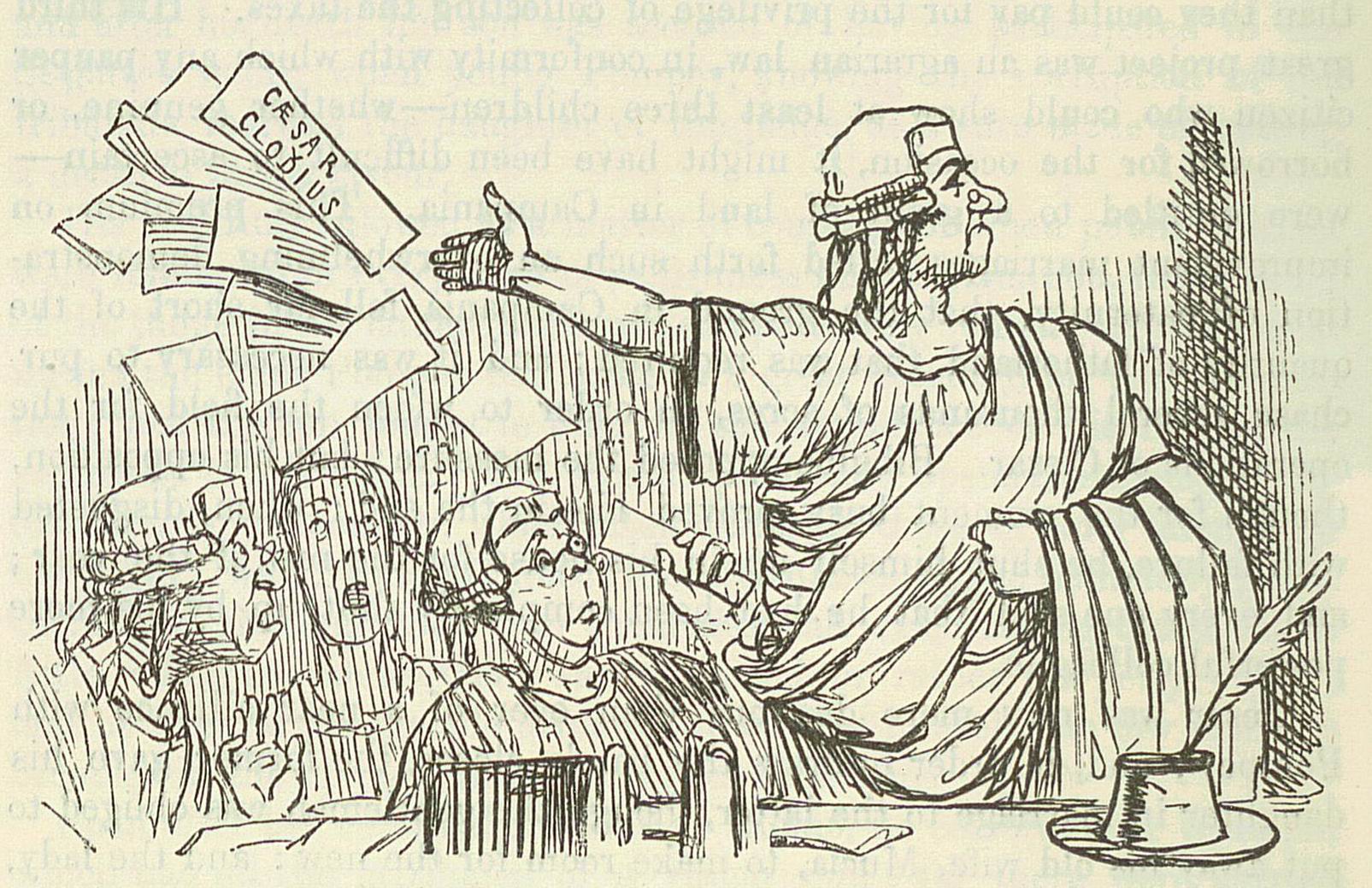
Can someone please put this into Latin?

By John Leech –  Public Domain


An Untold Number of Gods and the Path to Eternal Fame

Pliny the Elder, Natural History 2.5 16–18

“This is the reason it is possible to estimate a greater number of divinities than there are humans: individuals make a number of gods equal to their number by adopting their own Junos and Genii. Indeed, some peoples have animals, even horrible ones, for gods and many others too shameful to report, such as swearing by rotten food or other similar things.

Believing in marriage among the gods but without anyone being born from them for such a great span of time or that some are always old and graying while others are eternally young even children, or that some gods are dark-colored, winged, crippled born from eggs, or dying and living on alternating days, these beliefs are like childhood delusions. But it is beyond every kind of shame to imagine adultery among them, then strife and hatred, and that there are powers of thieves and criminals. “God” is a person helping another person; this is the path to eternal fame.”

quamobrem maior caelitum populus etiam quam hominum intellegi potest, cum singuli quoque ex semetipsis totidem deos faciant Iunones Geniosque adoptando sibi, gentes vero quaedam animalia et aliqua etiam obscena pro dis habeant ac multa dictu magis pudenda, per fetidos cibos et alia similia iurantes. matrimonia quidem inter deos credi tantoque aevo ex eis neminem nasci, et alios esse grandaevos semper canosque, alios iuvenes atque pueros, atricolores, aligeros, claudos, ovo editos et alternis diebus viventes morientesque, puerilium prope deliramentorum est; sed super omnem inpudentiam adulteria inter ipsos fingi, mox iurgia et odia, atque etiam furtorum esse et scelerum numina. deus est mortali iuvare mortalem, et haec ad aeternam gloriam via.

File:Pliny the Elder, Natural History, Florence, Plut. 82.4.jpg
Pliny the Elder, Natural History in ms. Florence, Biblioteca Medicea Laurenziana, Plut. 82.4, fol. 3r.