“After that, I left Thebes, where they dine all night
And all day long and each person has a toilet
Next to his door—and there’s nothing better
For a person who’s full. Someone who is walking far
And needs to shit after eating a lot,
He’s hilarious to see as he bites down on his lips.”
μετὰ ταῦτα Θήβας ἦλθον, οὗ τὴν νύχθ᾿ ὅλην
In the midst of a nearly endless discussion of fish in the 8th book of his Deipnosophistai, Athenaeus has his banqueters bandy about epigrammatic advice about the nature of human life. One of his speakers quotes Chrysippus who alleges that Sardanapallos (the Greek name for the Syrian king Ashurbanipal) had the following as an epitaph:
“Know well that you are mortal: fill your heart
By delighting in the feasts: nothing is useful to you when you’re dead.
I am ash, though I ruled great Ninevah as king.
I keep whatever I ate, the insults I made, and the joy
I took from sex. My wealth and many blessings are gone.
[This is wise advice for life: I will never forget it.
Let anyone who wants to accumulate limitless gold.]
The speakers critique the dead king’s sentiments and propose that the epitaph could be emended with more elevated aims.
“Know well that you are mortal: fill your heart
By delighting in words: nothing is useful once eaten.
For even I am now but rages though I ate and took as much pleasure as possible.
I keep whatever I learned and the thoughts I had and the fine things
I experienced with them. Everything else, however pleasing, is gone.”
“Next is Zephurion which has the same name as a place near Kalydnos. Nearby, not far from the sea, is Ankhialê, founded by Sardanapallos according to Aristoboulos. There he claims is a monument of Sardanapallos, a stone sculpture that shows the fingers of his right hand as if they are snapping. Beneath is an epigraph in Assyrian letters reading: “Sardanapallos the son of Anakundaraxes / founded Ankhialê and Tarsos in a single day. / Eat. Drink. Play, because no other things are worthy of this”, indicating the snapping fingers.
Khoirilos also mentions these things–and the following verses are known everywhere. “Everything I have eaten, the insults I have made, and the delights I have taken in love are mine. These numerous blessings I leave behind.”
Among certain Greek writers (starting as early as Aristophanes: Birds 1021) Sardanapallus was proverbially a glutton
Hesychius
“Sardanapallos: Nearly everyone writes that this guy was a slave to every kind of excess and delicacy. They say that this is recorded on his on monument in Assyrian letters in Ninevah, Assyria.”
“Kallisthenes claims in the second book of his Persian Histories that there were two men named Sardapapalos [Assurbanipal], one was active and well-born, but the other was a dandy. In Ninevah, his memorial bears the inscription
“The son of Anakundaraxes built Tarsos and Ankhialê in a single day.
Eat, drink, screw because other things are not worthy of this.”
That is, [worthy of] a snap of his fingers. For when he set up the statue in his memory it was made with its hands over its head, as if it were snapping its fingers. The same thing is inscribed in Ankhialê and Tarsos, which is called Zephurion now.
There is also a proverb: “May you grow older than Tithonos, wealthier than Kinyras, and more industrious than Sardanopalos. Then you can prove the proverb: Old men are children twice.” This is used for the very old, since Tithonos avoided aging with a prayer and became a cicada. Kinyras was a descendant of king Pharakes of the Cypriots and he was distinguished for his wealth. And Sardanapalos, king of the Assyrians, destroyed his own kingdom while he lived in luxury and immoderation. He was the son of Anakyndarakes, the king of Ninevah which falls within Persian lands. The story is that he founded Tarsos and Ankhilaê in a single day. And that, shamefully, he was too proud to be seen by his servants unless they were girls or eunuchs. He rotted himself with wine and was found after he died indoors.”
“Persius has justly observed, that knowledge is nothing to him who is not known by others to possess it: to the scholar himself it is nothing with respect either to honour or advantage, for the world cannot reward those qualities which are concealed from it; with respect to others it is nothing, because it affords no help to ignorance or errour.
It is with justice, therefore, that in an accomplished character, Horace unites just sentiments with the power of expressing them; and he that has once accumulated learning, is next to consider, how he shall most widely diffuse and most agreeably impart it.
A ready man is made by conversation. He that buries himself among his manuscripts, ‘besprent,’ as Pope expresses it, ‘with learned dust,’ and wears out his days and nights in perpetual research and solitary meditation, is too apt to lose in his elocution what he adds to his wisdom; and when he comes into the world, to appear overloaded with his own notions, like a man armed with weapons which he cannot wield. He has no facility of inculcating his speculations, of adapting himself to the various degrees of intellect which the accidents of conversation will present; but will talk to most unintelligibly, and to all unpleasantly.
I was once present at the lectures of a profound philosopher, a man really skilled in the science which he professed, who having occasion to explain the terms opacum and pellucidum, told us, after some hesitation, that opacum was, as one might say, opake, and that pellucidum signified pellucid. Such was the dexterity with which this learned reader facilitated to his auditors the intricacies of science; and so true is it, that a man may know what he cannot teach.”
Persius, 1.25-26
“O, our silly ways! Is knowledge worthless,
unless someone else knows that you know it?”
o mores, usque adeone
scire tuum nihil est nisi te scire hoc sciat alter?
“Cicero once said “What customs, what times!”
As Cataline laid out his sinful designs
And when a son and father-in-law met with dread arms
And dyed the ground red with civil blood.
But why do you repeat “What Customs, What times” now
What can displease you now? Caecilianus, what is it?
We have no clash of kings or insanity of sword.
Our customs don’t make you hate your own times,
but your own do, Caecilianus.”
Dixerat ‘O mores! O tempora!’ Tullius olim,
sacrilegum strueret cum Catilina nefas,
cum gener atque socer diris concurreret armis
maestaque civili caede maderet humus.
cur nunc ‘O mores!’ cur nunc ‘O tempora!’ dicis? 5
quod tibi non placeat, Caeciliane, quid est?
nulla ducum feritas, nulla est insania ferri;
pace frui certa laetitiaque licet.
Non nostri faciunt tibi quod tua tempora sordent,
sed faciunt mores, Caeciliane, tui.
“Just like a spring storm, Diodoros,
My love is decided by an uncertain sea.
Sometimes you show pouring rain, but at others
You are clear, and you pour a soft smile from your eyes.
So I, like the shipwrecked on the swell,
Measure out the blind waves as I spin,
Drawn here and there by the great storm.
But you, shine me a beacon of love or even hate
So I can know by which wave we should swim.”
“What good would singing about swift Achilles do for me? What would one or the other of the sons of Atreus do for me, or what could I get from the one who wasted so many years in wandering the world as he did in war, or from lamentable Hector dragged by Haemonian horses? But the often praised face of the delicate girl came to the poet, worth a song itself. A great reward is given here! Farewell, famous names of heroes! Your grace is not fit for me. Girls, offer your beautiful faces to me songs, which purple coated Amor dictates to me!”
Quid mihi profuerit velox cantatus Achilles?
quid pro me Atrides alter et alter agent,
quique tot errando, quot bello, perdidit annos,
raptus et Haemoniis flebilis Hector equis?
at facies tenerae laudata saepe puellae,
ad vatem, pretium carminis, ipsa venit.
magna datur merces! heroum clara valete
nomina; non apta est gratia vestra mihi!
ad mea formosos vultus adhibete, puellae,
carmina, purpureus quae mihi dictat Amor!
Kenneth Grahame, The Wind in the Willows (Chp. 1):
“It all seemed too good to be true. Hither and thither through the meadows he rambled busily, along the hedgerows, across the copses, finding everywhere birds building, flowers budding, leaves thrusting—everything happy, and progressive, and occupied. And instead of having an uneasy conscience pricking him and whispering ‘whitewash!’ he somehow could only feel how jolly it was to be the only idle dog among all these busy citizens. After all, the best part of a holiday is perhaps not so much to be resting yourself, as to see all the other fellows busy working.”
Lucretius, de Rerum Natura (2.1-13):
“It is sweet, when the winds on the wide sea are churning the waters, to watch the great suffering of someone else from your perch on land: not because it is a gratifying pleasure to see someone harassed, but because it is sweet to see what sufferings you yourself are free from. It is also sweet to look upon the great struggles of war, drawn up on the fields without any danger on your side. But there is nothing sweeter, than to hold the serene and fortified temples of the wise, fabricated by learning, from which you can look down upon others and see them wandering astray in their search for the path through this walking shadow of life as they strive with their minds, contend with each other for nobility, and exert themselves with the utmost effort every night and day to rise forth to the greatest riches and get control of worldly affairs.”
Suave, mari magno turbantibus aequora ventis
e terra magnum alterius spectare laborem;
non quia vexari quemquamst iucunda voluptas,
sed quibus ipse malis careas quia cernere suavest.
suave etiam belli certamina magna tueri 6
per campos instructa tua sine parte pericli; 5
sed nihil dulcius est, bene quam munita tenere 7
edita doctrina sapientum templa serena,
despicere unde queas alios passimque videre
errare atque viam palantis quaerere vitae, 10
certare ingenio, contendere nobilitate,
noctes atque dies niti praestante labore
ad summas emergere opes rerumque potiri.
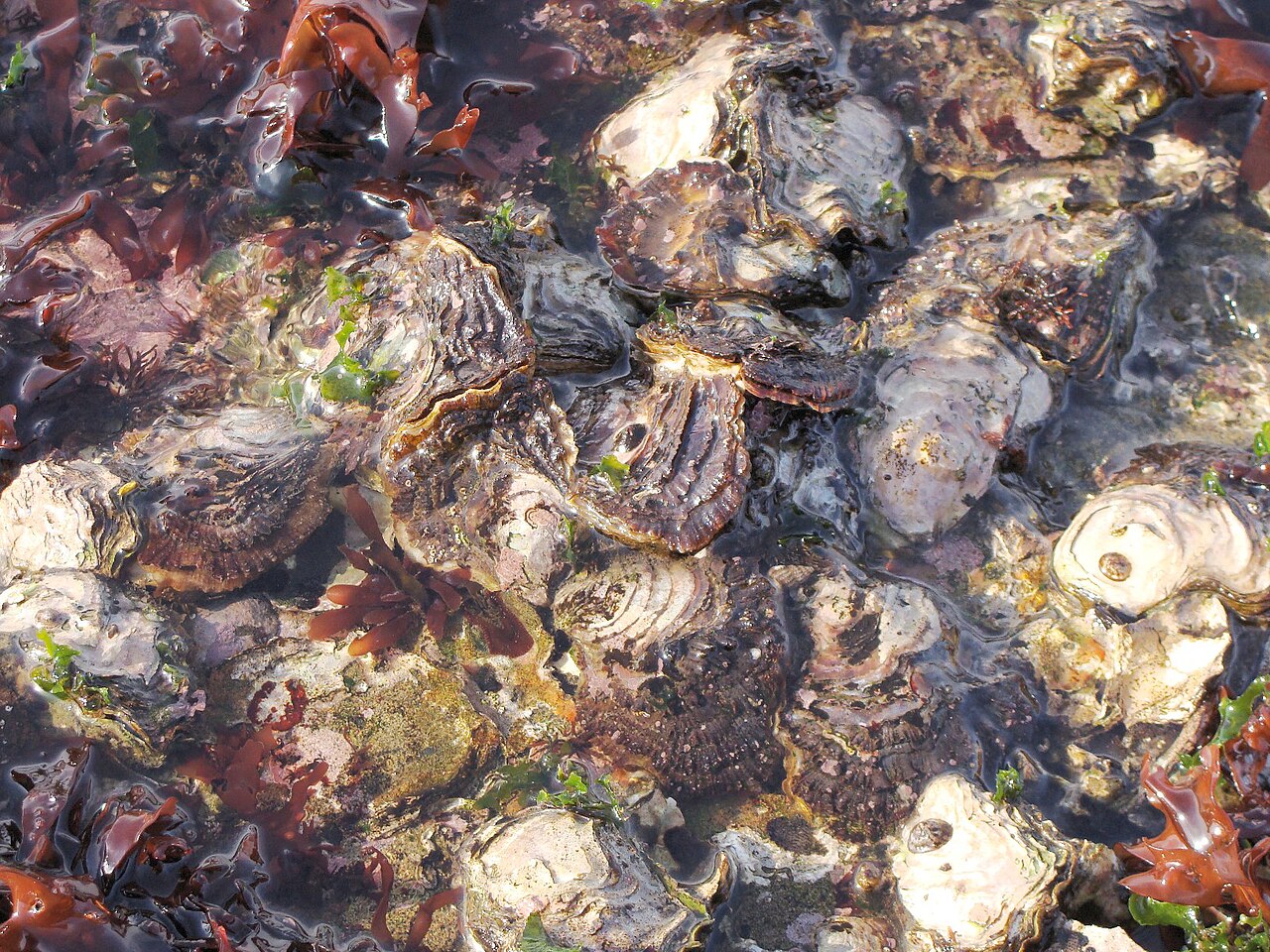
“This man would feed many by seeking oysters. He uses this word “oyster” only once. It is a kind of marine shellfish. See the Separatists on this. For they claim that the poet of the Iliad does not present heroes using fish at food, while the Odyssey poet does. But it is clear that, if he did not present them as using them, they knew it, from the fact that Patroklos talks about oysters. Note how the poet tends to avoid the trivial. And surely, he does not show people eating greens. But, nevertheless, he does say “The enslaved women using shit to fertilize his great property”
“The poet also does not show heroes eating fish or birds, but still Odysseus’ companions do try to under compulsion. Generally, the poet avoids this kind of habit because of its triviality, but he has [heroes] eat roasted meat.”
“What key word can one find in the Divine Comedy which is absent from the Aeneid? One word of course is lume, and all the words expressive of the spiritual significance of light. But this, I think, as used by Dante, has a meaning which belongs only to explicit Christianity, fused with a meaning which belongs to mystical experience. And Virgil is no mystic. The term which one can justifiably regret the lack of in Virgil is amor. It is, above all others, the key word for Dante. I do not mean that Virgil never uses it. Amor recurs in the Eclogues (amor vincit omnia). But the loves of the shepherds represent hardly more than a poetic convention.
The use of the word amor in the Eclogues is not illuminated by meanings of the word in the Aeneid in the way in which, for example, we return to Paolo and Francesca with greater understanding of their passion after we have been taken through the circles of love in the Paradiso. Certainly, the love of Aeneas and Dido has great tragic force. There is tenderness and pathos enough in the Aeneid. But Love is never given, to my mind, the same significance as a principle of order in the human soul, in society and in the universe that pietas is given; and it is not Love that causes fatum, or moves the sun and the stars. Even for intensity of physical passion, Virgil is more tepid than some other Latin poets, and far below the rank of Catullus. If we are not chilled we at least feel ourselves, with Virgil, to be moving in a kind of emotional twilight. Virgil was, among all authors of classical antiquity, one for whom the world made sense, for whom it had order and dignity, and for whom, as for no one before his time except the Hebrew prophets, history had meaning.”
“Clear hatred and open insurrection are repelled. Fraud and treason are hidden and for this reason unavoidable. Civilis stands in front and forms a battleline. Hordeonius orders whatever helps the enemy from his bedroom and little bed. The whole army of the bravest men are ruled by the will of a single old man. Let’s have the traitor killed and liberate our fortune and virtue from this evil sign.”
Aperta odia armaque palam depelli: fraudem et dolum obscura eoque inevitabilia. Civilem stare contra, struere aciem: Hordeonium e cubiculo et lectulo iubere quidquid hosti conducat. Tot armatas fortissimorum virorum manus unius senis valetudine regi: quin potius interfecto traditore fortunam virtutemque suam malo omine exolverent.