Hey D, Where Does Punctuation Come From?

Demetrius, On Style 11

“Aristotle defines the period in this way: The period is a statement which has beginning and an end. He has defined it very well and properly. For, saying the word “period” emphasizes that it begins in a place and ends in a place and is moving toward some goal, like runners once they take off, since the end of the race is already clear to them from the beginning.

This is where the name “period” comes from, an analogy from the circular paths which wind around to an end. Generally speaking, a period is nothing other than a certain kind of composition of words. If you take away its arrangement and circular nature, the subjects remain the same but it is no longer a period.”

(11) Ἀριστοτέλης δὲ ὁρίζεται τὴν περίοδον οὕτως, “περίοδός ἐστι λέξις ἀρχὴν ἔχουσα καὶ τελευτήν,” μάλα καλῶς καὶ πρεπόντως ὁρισάμενος· εὐθὺς γὰρ ὁ τὴν περίοδον λέγων ἐμφαίνει, ὅτι ἦρκταί ποθεν καὶ ἀποτελευτήσει ποι καὶ ἐπείγεται εἴς τι τέλος, ὥσπερ οἱ δρομεῖς ἀφεθέντες· καὶ γὰρ ἐκείνων συνεμφαίνεται τῇ ἀρχῇ τοῦ δρόμου τὸ τέλος. ἔνθεν καὶ περίοδος ὠνομάσθη, ἀπεικασθεῖσα ταῖς ὁδοῖς ταῖς κυκλοειδέσι καὶ περιωδευμέναις. καὶ καθόλου οὐδὲν ἡ περίοδός ἐστι πλὴν ποιὰ σύνθεσις. εἰ γοῦν λυθείη αὐτῆς τὸ περιωδευμένον καὶ μετασυντεθείη, τὰ μὲν πράγματα μένει τὰ αὐτά, περίοδος δὲ οὐκ ἔσται

I was today years old when I realized that our words period, colon, and comma are just Greek words for lengths of clauses used as signs for those things in English. From the Oxford English Dictionary.

Comma Colon Period

Colon

Demetrius, On Style 1

“…So too do things called kôla divide and clarify the language of prose”

οὕτω καὶ τὴν ἑρμηνείαν τὴν λογικὴν διαιρεῖ καὶ διακρίνει τὰ καλούμενα κῶλα

mood mind blown GIF

Comma

Demetrius, On Style 9

“This kind of brevity of speech in writing is called a komma. A komma is defined as shorter than a kôlon.”

ἡ δὲ τοιαύτη βραχύτης κατὰ τὴν σύνθεσιν κόμμα ὀνομάζεται. ὁρίζονται δ᾿ αὐτὸ ὧδε, κόμμα ἐστὶν τὸ κώλου ἔλαττον

teenage mutant ninja turtles mind blown GIF

Autocorrect came for Armand’s grave and made it acute.

Here’s Archolochus fr. 120… συγκεραυνωθεὶς φρένας.

PSA: Colon (punctuation) vs. Colon (Intestine)

Greek kôlon (κῶλον) can mean body part (as in segment, member), so isocolonic can mean having equal-lengthed phrases or equal-lengthed limbs. But our colon (as in the segment between intestines and anus) comes from Greek kolon (κόλον). To make matters more confusing, later Greek, influenced by the closeness of the two, does present kôlon for the body part.

Here’s Beekes Etymological Dictionary 2010 on each:

kolonkwlon

Hearing Color, Seeing Words

Aristotle, On Gorgias 980b

“For how can someone express in words what they have seen? Or how is it possible for a thing to be clear to someone who has only heard it but has not seen it? For just as sight cannot recognize sounds, so too hearing cannot sense colors. So, the speaker speaks but not a color or a thing. How can someone communicate what is not actually in their mind in speech or in any other sign which is different from the thing itself other than through a color, if a thing is seen, or a sound if something is heard?

To start, no one speaks sound or color, but words. For this reason, it is not possible to think a color but only to see it nor a sound but only to hear it. Since we accept that we know and read words, how then does someone who hears the same thing conceptualize it?”

ὃ γὰρ εἶδε, πῶς ἄν τις, φησί, τοῦτο εἴποι λόγῳ; ἢ πῶς ἂν ἐκεῖνο δῆλον ἀκούσαντι γίγνοιτο, μὴ ἰδόντι; ὥσπερ γὰρ οὐδὲ ἡ ὄψις τοὺς φθόγγους γιγνώσκει, οὕτως οὐδὲ ἡ ἀκοὴ τὰ χρώματα ἀκούει, ἀλλὰ φθόγγους· καὶ λέγει ὁ λέγων, ἀλλ᾿ οὐ χρῶμα οὐδὲ πρᾶγμα. ὃ οὖν τις μὴ ἐννοεῖ, πῶς ἂν αὐτὸ παρ᾿ ἄλλου λόγῳ ἢ σημείῳ τινί, ἑτέρῳ τοῦ πράγματος, ἐννοήσειεν, ἀλλ᾿ ἢ ἐὰν μὲν χρῶμα, ἰδών, ἐὰν δὲ <φθόγγος, ἀκροώ> μενος; ἀρχὴν γὰρ οὐ<δεὶς> λέγει <φθόγ>γον οὐδὲ χρῶμα, ἀλλὰ λόγον· ὥστ᾿ οὐδὲ διανοεῖσθαι χρῶμα ἔστιν, ἀλλ᾿ ὁρᾶν, οὐδὲ ψόφον, ἀλλ᾿ ἀκούειν. εἰ δὲ καὶ ἐνδέχεται γιγνώσκειν τε καὶ ἀναγιγνώσκειν λόγον, ἀλλὰ πῶς ὁ ἀκούων τὸ αὐτὸ ἐννοήσει;

File:Modern Tropical Art-Window of Perception.jpg
Window of Perception 

Homer in the Sunshine

Ralph Waldo Emerson, Shakespeare; Or, the Poet:

“One more royal trait properly belongs to the poet. I mean his cheerfulness, without which no man can be a poet,—for beauty is his aim. He loves virtue, not for its obligation, but for its grace: he delights in the world, in man, in woman, for the lovely light that sparkles from them. Beauty, the spirit of joy and hilarity, he sheds over the universe. Epicurus relates, that poetry hath such charms that a lover might forsake his mistress to partake of them. And the true bards have been noted for their firm and cheerful temper. Homer lies in sunshine; Chaucer is glad and erect; and Saadi says, ‘It was rumored abroad that I was penitent; but what had I to do with repentance?’ Not less sovereign and cheerful,—much more sovereign and cheerful, is the tone of Shakspeare. His name suggests joy and emancipation to the heart of men. If he should appear in any company of human souls, who would not march in his troop? He touches nothing that does not borrow health and longevity from his festal style.”

Image result for ralph waldo emerson

Homeric Epigrams: Unknowable Minds; Pitiable Sailors; Dog-Feeding Instructions

Three Epigrams from the Pseudo-Herodotean Life of Homer

Epigram 5

“Thestorides, though men encounter many unexpected things,
There is nothing more unknowable than the human mind.”

Θεστορίδης θνητοῖσιν ἀνωΐστων πολέων περ,
οὐδὲν ἀφραστότερον πέλεται νόου ἀνθρώποισιν.

Epigram 9

“Sea-traveling sailors with your hateful task,
Living an unenviable life on the shimmering waves,
Revere Zeus the guest-god who rules from on high.
For Zeus Xenios’ rage is great for the man who crosses him”

ναῦται ποντοπόροι στυγερῇ ἐναλίγκιοι ἄτῃ,
πτωκάσιν αἰθυίῃσι βίον δύσζηλον ἔχοντες,
αἰδεῖσθε ξενίοιο Διὸς σέβας ὑψιμέδοντος•
δεινὴ γὰρ μέτ’ ὄπις ξενίου Διός, ὅς κ’ ἀλίτηται.

Rhyton_en_forme_de_tête_de_chien

Epigram 11

“Glaukos, overseer, I will place another saying in your thoughts:
Give the dogs dinner first near the courtyard’s gates.
This is better: for the dog hears first when a man
Approaches or if a wild beast dares near the fence.”

Γλαῦκε πέπων, ἐπιών τοι ἔπος τι ἐνὶ φρεσὶ θήσω•
πρῶτον μὲν κυσὶ δεῖπνον ἐπ’ αὐλείῃσι θύρῃσι
δοῦναι• ὣς γὰρ ἄμεινον• ὃ γὰρ καὶ πρῶτον ἀκούει
ἀνδρὸς ἐπερχομένου καὶ ἐς ἕρκεα θηρὸς ἰόντος.

Sharing the Struggle For Freedom

Thucydides 6.56

“When Harmodios defeated his lawsuit, as he intended, [Hipparkhos] insulted him. After they invited his sister to come out to carry a basket in a certain procession, they rejected her, claiming they had not invited her at all because she was not good enough. Even as Harmodios took this badly, Aristogeitôn was a great deal angrier. Then all of the arrangements were made for the deed with those who were sympathetic to them but they were waiting for the great Panathenaia festival, because on that day there would be no suspicion at all if the citizens who were going to be part of the procession would be armed.

They had to begin the act, but the others were supposed to take care of the bodyguard immediately. The conspirators were few for safety’s sake, since they hoped that  even those who did not know beforehand would be willing to share the struggle for their own freedom necessarily if they had arms in their hands and saw so few acting boldly.”

LVI. Τὸν δ᾿ οὖν Ἁρμόδιον ἀπαρνηθέντα τὴν πείρασιν, ὥσπερ διενοεῖτο, προυπηλάκισεν· ἀδελφὴν γὰρ αὐτοῦ κόρην ἐπαγγείλαντες ἥκειν κανοῦν οἴσουσαν ἐν πομπῇ τινι, ἀπήλασαν λέγοντες οὐδὲ ἐπαγγεῖλαι τὴν ἀρχὴν διὰ τὸ μὴ ἀξίαν εἶναι. χαλεπῶς δὲ ἐνεγκόντος τοῦ Ἁρμοδίου πολλῷ δὴ μᾶλλον δι᾿ ἐκεῖνον καὶ ὁ Ἀριστογείτων παρωξύνετο. καὶ αὐτοῖς τὰ μὲν ἄλλα πρὸς τοὺς ξυνεπιθησομένους τῷ ἔργῳ ἐπέπρακτο, περιέμενον δὲ Παναθήναια τὰ μεγάλα, ἐν ᾗ μόνον ἡμέρᾳ οὐχ ὕποπτον ἐγίγνετο ἐν ὅπλοις τῶν πολιτῶν τοὺς τὴν πομπὴν πέμψοντας ἁθρόους γενέσθαι· καὶ ἔδει ἄρξαι μὲν αὐτούς, ξυνεπαμύνειν δὲ εὐθὺς τὰ πρὸς τοὺς δορυφόρους ἐκείνους. ἦσαν δὲ οὐ πολλοὶ οἱ ξυνομωμοκότες ἀσφαλείας ἕνεκα· ἤλπιζον γὰρ καὶ τοὺς μὴ προειδότας, εἰ καὶ ὁποσοιοῦν τολμήσειαν, ἐκ τοῦ παραχρῆμα, ἔχοντάς γε ὅπλα, ἐθελήσειν σφᾶς αὐτοὺς ξυνελευθεροῦν.

Plato, Hipparchus 229b

“But his death is said to have occurred by the more polished people not in the way most believe, because his sister was not allowed to be a basket-bearer in the procession. That’s pretty simplistic. Instead, they say Harmodius was Aristogeitôn’s brother and had been educated by him. For this reason, Aristogeitôn also took pride in educating people and considered Hipparkhos his rival. At the same time, it seems, Harmodios was in love with one of the fine and well-born young men of the day. People use his name but I don’t remember it. This young man was enamored with both Harmodios and Aristogeitôn for a while because they were wise. But when he started hanging out with Hipparkhos, he despised them and they were so pissed off by this slight that they killed Hipparkhos.”

λέγεται δὲ ὑπὸ τῶν χαριεστέρων ἀνθρώπων καὶ ὁ θάνατος αὐτοῦ γενέσθαι οὐ δι᾿ ἃ οἱ πολλοὶ ᾠήθησαν, διὰ τὴν τῆς ἀδελφῆς ἀτιμίαν τῆς κανηφορίας, ἐπεὶ τοῦτό γε εὔηθες, ἀλλὰ τὸν μὲν Ἁρμόδιον γεγονέναι παιδικὰ τοῦ Ἀριστογείτονος καὶ πεπαιδεῦσθαι ὑπ᾿ ἐκείνου. μέγα δ᾿ ἐφρόνει ἄρα καὶ ὁ Ἀριστογείτων ἐπὶ τῷ παιδεῦσαι ἄνθρωπον, καὶ ἀνταγωνιστὴν ἡγεῖτο εἶναι τὸν Ἵππαρχον. ἐν ἐκείνῳ δὲ τῷ χρόνῳ αὐτὸν τὸν Ἁρμόδιον τυγχάνειν ἐρῶντά τινος τῶν νέων τε καὶ καλῶν καὶ γενναίων τῶν τότε· καὶ λέγουσι τοὔνομα αὐτοῦ, ἐγὼ δὲ οὐ μέμνημαι· τὸν οὖν νεανίσκον τοῦτον τέως μὲν θαυμάζειν τόν τε Ἁρμόδιον καὶ τὸν Ἀριστογείτονα ὡς σοφούς, ἔπειτα συγγενόμενον τῷ Ἱππάρχῳ καταφρονῆσαι ἐκείνων, καὶ τοὺς περιαλγήσαντας ταύτῃ τῇ ἀτιμίᾳ οὕτως ἀποκτεῖναι τὸν Ἵππαρχον.


Drinking Songs for Harmodios and Aristogeton

PMG 893-897

“I will wrap my sword in a crown of myrtle
As Harmodius and Aristogeiton did
When they killed the tyrant
And made the Athenians equal under the law.”

ἐν μύρτου κλαδὶ τὸ ξίφος φορήσω
ὥσπερ ῾Αρμόδιος καὶ ᾿Αριστογείτων
ὅτε τὸν τύραννον κτανέτην
ἰσονόμους τ’ ᾿Αθήνας ἐποιησάτην.

“Dearest Harmodius, you have never died,
But they say you live in the isles of the blest
Where swift-footed Achilles
And Tydeus’ fine son Diomedes are”

φίλταθ’ ῾Αρμόδι’, οὔ τί πω τέθνηκας,
νήσοις δ’ ἐν μακάρων σέ φασιν εἶναι,
ἵνα περ ποδώκης ᾿Αχιλεὺς
Τυδεΐδην τέ †φασι τὸν ἐσθλὸν† Διομήδεα.

“I will wrap my sword with a branch of myrtle,
Just as Harmodius and Aristogeiton did
When at the Athenian sacrifices
They killed the tyrant, a man named Hipparchus”

ἐν μύρτου κλαδὶ τὸ ξίφος φορήσω
ὥσπερ ῾Αρμόδιος καὶ ᾿Αριστογείτων
ὅτ’ ᾿Αθηναίης ἐν θυσίαις
ἄνδρα τύραννον ῞Ιππαρχον ἐκαινέτην.

“Fame will always be yours in this land,
Dearest Harmodios and Aristogeiton,
Because you killed the tyrant
And made the Athenians equal under the law.”

αἰεὶ σφῶιν κλέος ἔσσεται κατ’ αἶαν,
φίλταθ’ ῾Αρμόδιε καὶ ᾿Αριστόγειτον,
ὅτι τὸν τύραννον κτανέτην
ἰσονόμους τ’ ᾿Αθήνας ἐποιησάτην.

An Epigram

Hephaestion, Handbook on Meter

 “Every line of verse ends with a complete word. For this reason, lines like Simonides’ Epigram should be criticized:

“A great light arose for the Athenians when Aristo-
geitôn and Harmodios killed Hipparkhos

[…]

They restored equality to their land.”

πᾶν μέτρον εἰς τελείαν περατοῦται λέξιν· ὅθεν ἐπίληπτά ἐστι τὰ τοιαῦτα Σιμωνίδου ἐκ τῶν ἐπιγραμμάτων·

ἦ μέγ᾿ Ἀθηναίοισι φόως γένεθ᾿, ἡνίκ᾿ Ἀριστο-
γείτων Ἵππαρχον κτεῖνε καὶ Ἁρμόδιος·
[ ]
[ ἰσόνομον πα]τρίδα γῆν ἐθέτην.

Naples National Archaeological Museum

The Furious Memory Of The Evils You’ve Done

Cicero, Paradoxa Stoicorum 17-18

“Terrify this person, if you find anyone like this, with threats of death or exile. Whatever happens to me in so ungrateful a state will happen without any protest from me, not just without fighting back. For what have I accomplished or what I done or to what end have my anxieties and thoughts kept me awake all night if I have actually pursued nothing at all which puts me in a place that cannot be weakened by lapses in fortune or harm from my enemies?

Do you threaten death so I will leave the presence of people or exile so I must depart from wicked men? Death is frightening for people who lose everything along with life but not for those whose glory cannot perish. Exile is frightening to those whose homes are prescribed by a border line, not for those who believe that the whole world is just one city.

No, every bit of sorrow and misfortune oppresses you because you think you are happy and wealthy. Your desires torture you; you are in pain day and night because what you have is not enough and you worry that even this bit will not last. Your memory of wicked deeds works away at you; fear of judges and laws make your heart race. Wherever you look, the harms you have inflicted on others assail you like Furies who will not even let you breathe.”

tum tu hominem terreto, si quem eris nactus, istis mortis aut exilii minis; mihi vero quidquid acciderit in tam ingrata civitate ne recusanti quidem evenerit, non modo non repugnanti, Quid enim ego laboravi aut quid egi aut in quo evigilaverunt curae et cogitationes meae, si quidem nihil peperi tale nihil consecutus sum ut in eo statu essem quem neque fortunae temeritas neque inimicorum labefactaret iniuria? Mortemne mihi minitaris ut omnino ab hominibus, an exilium ut ab improbis demigrandum sit? Mors terribilis est eis quorum cum vita omnia exstinguuntur, non eis quorum laus emori non potest, exilium autem illis quibus quasi circumscriptus est habitandi locus, non eis qui omnem orbem terrarum unam urbem esse ducunt. Te miseriae te aerumnae premunt omnes, qui te beatum qui florentem putas; tuae libidines te torquent, tu dies noctesque cruciaris, cui nec sat est quod est et id ipsum ne non sit diuturnum times; te conscientiae stimulant maleficiorum tuorum, te metus exanimant iudiciorum atque legum; quocumque aspexisti, ut furiae sic tuae tibi occurrunt iniuriae quae te respirare non sinunt.

Lutróforo con escena del rapto de Perséfone por Hades. Pintor de Baltimore - M.A.N. 03.jpg
Red Figure Vase

Great Authors Err Too

Quintilian, Inst. Orat. 10.1.24-26

“Let the reader not be persuaded as a matter of course that everything the best authors said is perfect. For they slip at times, they give in to their burdens, and they delight in the pleasure of their own abilities. They do not always pay attention; and they often grow tired. Demosthenes seems to doze to Cicero; Homer naps for Horace. Truly, they are great, but they are still mortals and it happens that those who believe that whatever appears in these authors should be laws for speaking often imitate their lesser parts, since this is easier—and they believe they are enough like them if they emulate the faults of great authors.

Still, one must pass judgment on these men with modesty and care to avoid what often happens when people condemn what they do not understand. If it is necessary to err in either part, I would prefer readers to enjoy everything in these authors rather than dismiss much.”

Neque id statim legenti persuasum sit, omnia quae summi auctores dixerint utique esse perfecta. Nam et labuntur aliquando et oneri cedunt et indulgent ingeniorum suorum voluptati, nec semper intendunt animum, nonnumquam fatigantur, cum Ciceroni dormitare interim Demosthenes, Horatio vero etiam Homerus ipse videatur.  Summi enim sunt, homines tamen, acciditque iis qui quidquid apud illos reppererunt dicendi legem putant ut deteriora imitentur (id enim est facilius), ac se abunde similes putent si vitia magnorum consequantur. Modesto tamen et circumspecto iudicio de tantis viris pronuntiandum est, ne, quod plerisque accidit, damnent quae non intellegunt. Ac si necesse est in alteram errare partem, omnia eorum legentibus placere quam multa displicere maluerim.

Image result for Ancient Roman Literature

Latin Authors, Far From Homer

Ezra Pound, ABC of Reading (47):

“I took my critical life in my hand, some years ago, when I suggested that Catullua was in some ways a better writer than Sappho, not for melopoeia, but for economy of words. I don’t in the least know whether this is true. One should start with an open mind.

The snobbism of the renaissance held that all Greek poetry was better than ANY Latin poetry. The most intelligent of the Quattrocento Latinists, Basinio of Parma, proclaimed a very different thesis; he held that you couldn’t write Latin poetry really well unless you knew Greek. That is, you see, very different. In the margins of his Latin narrative you can still see the tags of Homer that he was using to keep his melodic sense active.

I don’t believe that any Latin author is in measurable distance of Homer. I doubt if Catullus is inferior to Sappho. I doubt if Propertius is a millimetre inferior to his Greek antecedents; Ovid is for us a store-house of a vast mass of matter that we cannot NOW get from the Greek.

He is uneven. He is clear. His verse is as lucid as prose. Metrically he is not a patch on Catullus or Propertius.”

Image result for propertius
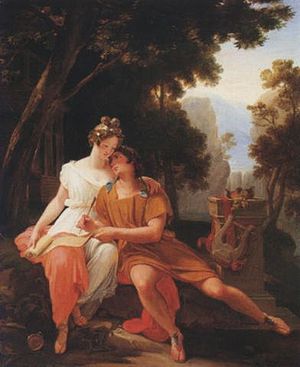
Auguste Jean Baptiste Vinchon, Propertius and Cynthia at Tivoli

This Poem Breaks Metrical Rules

Hephaestion, Handbook on Meter

 “Every line of verse ends with a complete word. For this reason, lines like Simonides’ Epigram should be criticized:

“A great light arose for the Athenians when Aristo-
geitôn and Harmodios killed Hipparkhos

[…]

They restored equality to their land.”

πᾶν μέτρον εἰς τελείαν περατοῦται λέξιν· ὅθεν ἐπίληπτά ἐστι τὰ τοιαῦτα Σιμωνίδου ἐκ τῶν ἐπιγραμμάτων·

ἦ μέγ᾿ Ἀθηναίοισι φόως γένεθ᾿, ἡνίκ᾿ Ἀριστο-
γείτων Ἵππαρχον κτεῖνε καὶ Ἁρμόδιος·
[ ]
[ ἰσόνομον πα]τρίδα γῆν ἐθέτην.

Harmodius and Aristogeiton Lekythos

Soul. Cold.

ψυχή, ἡ: soul, life

ψύχωσις: life-giving/generating

ψυχοανακάλυπτος: soul-baring, revealing

ψυχοκλέπτης: soul-thief

ψυχοκτόνος:soul-killing

ψυχοπλανής: soul-wandering

ψυχοπότης: soul drinker (drinking of life, i.e. blood)


ψῦχος, τό: cold

ψυχρία: cold

ψυχοκρασία: growing cold

ψυχολογία: frigid talking

ψυχροποιός: making cold

ψυχροπότης: cold drinker (one who drinks cold water)

ψυχρόσαρκος: with cold flesh

soulCOld1

cold 2

Snowy Mountain