Some Roman Morals for a Season of Gifts

Cicero, De Officiis 3.118

“For goodness, generosity and kindness cannot exist any more than friendship if they are not pursued for themselves but are nurtured for the sake of pleasure or advantage.”

Neque enim bonitas nec liberalitas nec comitas esse potest, non plus quam amicitia, si haec non per se expetantur, sed ad voluptatem utilitatemve referantur.

Publilius Syrus, 78

“Generosity even devises an excuse for giving”

Benignus etiam causam dandi cogitat.

Seneca, De Beneficiis 4

“All generosity hurries—it is characteristic of one who does something willingly to do it quickly. If someone comes to help slowly or drags it out day by day, he does not do it sincerely. And he has thus lost the two most important things: time and a sign of his willing friendship. To be slowly willing is a sign of being unwilling.”

Omnis benignitas properat, et proprium est libenter facientis cito facere; qui tarde et diem de die extrahens profuit, non ex animo fecit. Ita duas res maximas perdidit, et tempus et argumentum amicae voluntatis; tarde velle nolentis est.

Image result for Ancient Roman friendship frieze

Image result for Ancient Roman friendship frieze
Aeneas Panel from the Ara Pacis

Here Comes the SCAPP Bot!

Editor’s Note: Here is a second post by/for Dr. Alexandra Ratzlaff. Alex has been working with the Brandeis Techne Group as Residents at the Autodesk Technology Center and in partnership with the Brandeis MakerLab run by Brandeis’ very own Ian Roy. They have some pretty amazing work to feature.

The overarching aim of the Brandeis Techne Group as Residents at the Autodesk Technology Center in Boston is to develop new equipment and methodologies to help push forward the collaboration between technology and the humanities. With a focus on archaeological research and applications, this group seeks to develop new ways of analyzing the material culture of the ancient and historical world. The initial goal of our project is to fabricate a prototype ‘Single Camera Automated Photogrammetry Platform’ (SCAPP) with the final designs and methodology available for reproduction through an open-source platform. The SCAPP is intended to be relatively low-cost and easily reproduced as an alternative to other digital imaging equipment.

Techne-Logo2

Archaeologists tend to be technological and equipment scavengers, often looking to related fields for ways to gather data and perform an array of methods of object analysis. The advantage of this is that it is a process and environment that breeds innovation. It is easy to work outside the box when you have very few limitations. This spirit of innovation is what drives our Techne Group.

71517370_2899107190119240_5067884211814268928_n (1)

After being initially approached by a member of the Autodesk team at the Boston Technology Center, Alexandra considered how to combine her interests in technology with archaeological field methods. With over 15 years of experience excavating, she recognized the importance of new technological applications used in digital imaging, mapping, and site virtual reality among other areas. The Autodesk Technology Center presented an opportunity to not only develop new equipment to be used in excavation and lab analysis but also a means towards further bridging the gap between the humanities and technology. A partnership with Autodesk and Brandeis also would have the potential to be used as a learning experience for students and a way to experience the humanities through a completely new lens.

IMG_2986

After spending months negotiating a contract between the two institutions, Alex then had to build a team. Having met Ian Roy the previous year, Alexandra considered his background in digital applications, imaging, and 3D workflows particularly relevant and ideal as a potential team partner. Ian’s extensive background in 3D scanning, photogrammetry, and photography, as well as participation in archaeological excavations in Greece as a technology director and specialist, all complimenting the potential collaboration with Alexandra and the Autodesk team. In an effort to make the Autodesk team a beneficial learning experience for students, Alexandra selected a graduate and undergraduate student from the Department of Classical Studies to join the team. Erin Brantmayer (MA 18’) and Helen Wong (BA 19’) contributed years of archaeological excavation experience as well as Erin’s previous work with field photogrammetry and Helen’s comprehensive work with 3D scanning provided the team with a variety of skill sets.

In an initial meeting with the early team members, numerous ideas were proposed in how to effectively integrate new forms of technology into archaeological methodology and what current applications could be further modified and improved upon? Ian showed the group the research of Professor Duncan Irschick’s “BEAST Cam”, a photogrammetry rig that employs approximately forty dSLR cameras to capture image datasets. This methodology produces high-quality images and models; however, the equipment is far too cumbersome for archaeological fieldwork and impractical for budgets as well. Ian’s suggestion inspired the group to focus on digital imaging. This resonated with archaeologists, Alexandra noted that a current problem in archaeology is obtaining high quality photogrammetry of artifacts as they are found in the ground before removal, in which some fragile artifacts sometimes further deteriorate. From this conversation, the idea emerged to develop and fabricate a new type of photogrammetry equipment that would incorporate the group’s interests and expertise.

However, it was evident that any development of equipment would require the input of a professional engineer. Ian proposed another member of the Brandeis RTI team, Tim Hebert, the Embedded Systems and Robotics Specialist and head of the Automation Lab in the Brandeis Library. Tim and Ian had worked together since 2013 as part of the team that founded the MakerLab at Brandeis. Tim contributes a background in embedded systems engineering and mechanical logic, as well as meticulous CAD design with Fusion 360. Together the initial group began their residency at Autodesk in the winter of 2018. Alex took the role of Team Lead and Principle Investigator, Ian took the role of Head of Method, Workflow & Planning, and Tim took the role of Head of Engineering and Design.

In archaeology we are constantly seeking new technological applications to field and survey research. However, very seldom is any of the equipment or software we use specifically designed for archaeology. Recording architecture and artifacts is a cornerstone in archaeological methodology, any developments in this area can become vital for the preservation and interpretation of a site or assemblage of artifacts. This was the broad problem identified by the group, further focusing on the development of equipment that could be used in the field and laboratory on objects that are highly specular or unsuitable for structured light scanning.

Copy of 2019-02-15 16.02.48

The SCAPP resolves these issues as a relatively light-weight and portable automated rig for a single camera. The design helps to rectify another issue faced by archaeologists in the field, which is how to perform photogrammetry on small object before they are removed in excavation. Some artifacts can be extremely fragile, such as glass or metal, the SCAPP is specifically designed to be put over an artifact to collect a photogrammetry dataset before the artifact is ultimately removed in excavation. If it is too fragile and further deteriorates while being removed at least a partial or full 3D model can be created from the SCAPP data. It also allows consistent and repeatable results. Our goal in the Techne Group is to “Science the past” – so much photogrammetry is based on artistic decisions, we want to “science” this problem. We have found that by normalizing our data acquisition, we can be agnostic about our processing methodology: cleaner data results in cleaner renders regardless of the software used.


The Techne group is truly a product of multi-disciplinary experiences and approaches to problem-solving. As our group keeps refining the capabilities of the SCAPP we will look at other issues facing archaeology in the realm of digital imaging and reconstruction.

Copy of 2019-04-05 14.41.25

The Process: What is a SCAPP bot?

Design and fabrication of an automated gantry system to move a dSLR camera in a full circuit around an object in order to take 30-100 + photos as datasets processed in photogrammetry software. The output generated through these programs provides a scale and color accurate 3D model, best for objects with high secularity.

  •  The initial prototype was constructed in birch to test the perimeters of camera angles and the feasibility of the geared frame and arch system.
  •     In the second incarnation of the SCAPP the entire frame was cut from aluminum using the Autodesk waterjet; carriages were printed in PLA and Markforged; and a computer from an industry standard “Ramps board” – the materials were chosen for their accessibility and relatively low cost.
  •     The SCAPP operates essentially as if it were a 3D printer, it uses a printer control board and motors, but moves and actuates a DSLR or phone).
  •     SCAPP can also function as a non-automated circular tripod in which data acquisition can be done manually while maintaining the leveled set degree position of the camera. 

SCAP Prototype

The Fieldwork

Designed as a portable imaging tool, SCAPP testing has included laboratory settings such as those at Autodesk, the classroom, and at an archaeological excavation. Initial SCAPP field testing was carried out in the summer of 2019 at Tel Kabri (israel) by Alexandra Ratzlaff and Erin Brantmayer of the Brandeis Techne Group.

While data was collected in the field, team members Ian Roy, Tim Hebert, and Daniel Lay developed an updated version of the SCAPP based on feedback from field and continued lab testing. Currently, the group is continuing to improve and refine the engineering and design of the SCAPP through collection of data sets primarily on artifacts from the Brandeis CLARC (Classical Artifact Research Collection). 

The Future

In archaeology we are constantly seeking new technological applications to field and survey research. However, very seldom is any of the equipment or software we use specifically designed for archaeology. Recording architecture and artifacts is a cornerstone in archaeological methodology, any developments in this area can become vital for the preservation and interpretation of a site or assemblage of artifacts. This was the broad problem identified by the group, further focusing on the development of equipment that could be used in the field and laboratory on objects that are highly specular or unsuitable for structured light scanning.

The SCAPP resolves these issues as a relatively light-weight and portable automated rig for a single camera. The design helps to rectify another issue faced by archaeologists in the field, which is how to perform photogrammetry on small object before they are removed in excavation. Some artifacts can be extremely fragile, such as glass or metal, the SCAPP is specifically designed to be put over an artifact to collect a photogrammetry dataset before the artifact is ultimately removed in excavation. If it is too fragile and further deteriorates while being removed at least a partial or full 3D model can be created from the SCAPP data. It also allows consistent and repeatable results. Our goal in the Techne Group is to “Science the past” – so much photogrammetry is based on artistic decisions, we want to “science” this problem. We have found that by normalizing our data acquisition, we can be agnostic about our processing methodology: cleaner data results in cleaner renders regardless of the software used.

The Techne group is truly a product of multi-disciplinary experiences and approaches to problem-solving. As our group keeps refining the capabilities of the SCAPP we will look at other issues facing archaeology in the realm of digital imaging and reconstruction.

Brevity and Wit: Demetrius on Compression

See earlier posts for Demetrius on the words for punctuation

Demetrius, On Style 9

“This smallest part of a composition is called a phrase [komma]. This often defines a phrase: it is shorter than a clause” [kôlon], as in the previously quoted “Dionysus [is] in Korinth” or “know yourself” or “follow god”, those sayings of the wise men. Brevity is a characteristic of proverbs and maxims and it is cleverer to compress a lot of meaning into a small space, just as seeds have the power of whole trees. If someone works a proverb out at length, it develops into teaching or rhetoric instead of a proverb.”

(9) ἡ δὲ τοιαύτη βραχύτης κατὰ τὴν σύνθεσιν κόμμα ὀνομάζεται. ὁρίζονται δ᾿ αὐτὸ ὧδε, κόμμα ἐστὶν τὸ κώλου ἔλαττον, οἷον τὸ προειρημένον, τὸ [τε] “Διονύσιος ἐν Κορίνθῳ,” καὶ τὸ “γνῶθι σεαυτόν,” καὶ τὸ “ἕπου θεῷ,” τὰ τῶν σοφῶν. ἔστι γὰρ καὶ ἀποφθεγματικὸν ἡ βραχύτης καὶ γνωμολογικόν, καὶ σοφώτερον τὸ ἐν ὀλίγῳ πολλὴν διάνοιαν ἠθροῖσθαι, καθάπερ ἐν τοῖς σπέρμασιν δένδρων ὅλων δυνάμεις· εἰ δ᾿ ἐκτείνοιτό τις τὴν γνώμην ἐν μακροῖς, διδασκαλία γίνεταί τις καὶ ῥητορεία ἀντὶ γνώμης.

Image result for brevity is the soul of wit

Singing While the House Burns Down

Aesop, Fab. 54 (Perry=Chambry 172) Boy and Snails

“A farmer’s child was roasting snails. When he heard them trilling as they cooked, he said, “Most pathetic creatures, You are singing as your homes burn?”

This story makes it clear that everything done at the wrong time should be mocked.”

γεωργοῦ παῖς κοχλίας ὤπτει. ἀκούσας δὲ αὐτῶν τριζόντων ἔφη· „ὦ κάκιστα ζῷα, τῶν οἰκιῶν ὑμῶν ἐμπιπραμένων αὐτοὶ ᾄδετε;”

ὁ λόγος δηλοῖ, ὅτι πᾶν τὸ παρὰ καιρὸν δρώμενον ἐπονείδιστον.

This looks like it has jumped to a proverb in Modern Greek which attributes it to Thucydides and changes the person of the verb, rendering it. “you sing while your homes are burning.” [«Των οικιών ημών εμπιπραμένων, ημείς άδομεν»]. I retweeted  thinking it did not sound much like the ancient historian, but just had to check for it.

https://twitter.com/Andreas50805488/status/1161574040554868736?s=20

So, I think this qualifies on my rating scale as Delphian Graffiti Fake: It has antiquity, but has been reassigned for authority in a new context. I mean, really, who wants to cite Aesop and his animals when we have the gravity of Thucydides.  And, let’s be honest, this is a good line for any age, but especially apt for ours.

Kid should have been careful. Snails are dangerous.Brunetto Latini’s Li Livres dou Tresor, c 1315-1325 via British Library

Here’s some singing about burning down a house:

Anonymous, Greek Anthology, 7.704 [=see here for more]

“When I’m dead, the earth can be fucked by fire.
It means nothing to me since I’ll be totally fine.”

Ἐμοῦ θανόντος γαῖα μιχθήτω πυρί·
οὐδὲν μέλει μοι· τἀμὰ γὰρ καλῶς ἔχει.


Mary’s Pregnancy and Joseph’s Dream: the Protoevangelium of James Continues

This is a continuation of the Christmas Story in the apocryphal Gospel of James [also sometimes called the “Infancy” Gospel” or the Protoevangelium of James].

The Gospel According to James 12-14

12.1 “So Mary spun the purple and red cloth and returned them to the temple. The priest praised her and said, “Mary, the Lord God is glorifying your name among every race on the earth, and you will be praised by the Lord.” Mary found some joy in this and went to her relative Elisabeth and knocked on her door. When Elisabeth heard, she threw up her hands and rant to open the door and greet her, saying, “From where is it that this comes to me, that the mother of my Lord should come to me! Look, the child which is in me has jumped and blessed you.” Mary had forgotten the mysteries which Gabriel had mentioned to her, and she looked up to heaven, saying, “Who am I that all the women are blessing me?”

She spent three months with Elisabeth and then returned to her on home. As each day went by, her stomach grew larger and she was hiding herself from the sons of Israel. She was then fifteen years old, when these mysteries were happening.”

13.1. In the sixth month, Joseph came from his building and returned to his home and found Mary, who was growing. He struck his forehead and threw himself to the ground and wept, saying, “With what kind of face can I look to the Lord, my God? What shall I say about this girl, who I took from the temple of the Lord as a virgin and did not keep her safe? Who set a snare for me? Who did this terrible thing in my home and defiled the virgin? Hasn’t Adam’s story been repeated in me? For just as Adam was in the hour of his thanksgiving, a snake came, found Eve alone, and deceived her. That has happened to me too.

And then Joseph rose up from his his sackcloth and called Mary and said to her, “beloved to god, why did you do this? Why did you lay your soul low? Have you forgotten the Lord, your God? Your soul was raised up in the Holiest of Holies and took food from the hands of an angel and danced among them.” She wept, bitterly, saying, “As the Lord God lives, I am clean and I have not known a man.” Joseph said to her, “Where did this thing in your stomach come from?” And she said, “As the Lord God Lives, I do not know where this thing in my stomach came from.”

14“And Joseph, because he was terribly afraid, departed from her and was debating what he should do about her. He said to himself, “If I should hide her error, I will be found to be fighting the law of the Lord. And if I make this clear to the sons of Israel, I fear that, should what is inside her be angelic seed, I will be found to betray innocent blood to a punishment of death. What should I do about her? I will let her leave me in secret.” As he considered these things, night overtook him.

And, look, an angel of the Lord appeared to him in a dream, saying, “Joseph, son of David, do not feel fear about this child. For this offspring has been sown in her from divine breath. You will give him the name Jesus. For he will save his people from their sins.” Then Joseph woke from his dream and believed that the God of Israel had given to him this blessing—so he guarded the girl.”

12. Καὶ ἐποίησεν τὴν πορφύραν καὶ τὸ κόκκινον καὶ ἀπήνεγκεν αὐτὰ τῷ ἱερεῖ, καὶ εὐλόγησεν αὐτὴν ὁ ἱερεὺς καὶ εἶπεν: Μαριάμ, ἐμεγάλυνε κύριος ὁ θεὸς τὸ ὄνομά σου ἐν πάσαις ταῖς γενεαῖς τῆς γῆς καὶ ἔσῃ εὐλογημένη ὑπὸ κυρίου. 2 χαρὰν δὲ λαβοῦσα Μαριὰμ ἀπῆλθε πρὸς τὴν συγγενίδα αὐτῆς Ἐλισάβετ καὶ ἔκρουσε πρὸς τῇ θύρᾳ. καὶ ἀκούσασα Ἐλισάβετ ἔρριψε τὸ ἐν χερσὶν, καὶ δραμοῦσα ἤνοιξεν αὐτῇ καὶ εὐλόγησεν αὐτὴν καὶ εἶπεν: πόθεν μοι τοῦτο, ἵνα ἡ μήτηρ τοῦ κυρίου μου ἔλθῃ πρὸς ἐμέ; ἰδοὺ γὰρ τὸ ἐν ἐμοὶ βρέφος ἐσκίρτησε καὶ εὐλόγησέν σε. Μαριὰμ δὲ ἐπελάθετο τῶν μυστηρίων, ὧν εἶπεν πρὸς αὐτὴν Γαβριήλ, καὶ ἀτενίσασα εἰς τὸν οὐρανὸν εἶπεν: τίς εἰμι ἐγώ, ὅτι πᾶσαι αἱ γυναῖκες μακαριοῦσί με; 3 ἐποίησε δὲ τρεῖς μῆνας πρὸς τὴν Ἐλισάβετ καὶ ἀπῆλθεν εἰς τὸν οἶκον αὐτῆς. ἡμέρᾳ δὲ ἀφ’ ἡμέρας ἡ γαστὴρ αὐτῆς ὀγκοῦτο, καὶ ἔκρυβεν ἑαυτὴν ἀπὸ τῶν υἱῶν Ἰσραήλ. ἦν δὲ ἐτῶν πεντεκαίδεκα, ὅτε τὰ μυστήρια ταῦτα ἐγένοντο.

13.1 Ἐγένετο δὲ ἕκτος μὴν καὶ ἦλθεν Ἰωσὴφ ἀπὸ τῶν οἰκοδομῶν αὐτοῦ καὶ εἰσῆλθεν ἐν τῷ οἴκῳ αὐτοῦ καὶ εὗρε τὴν Μαριὰμ ὀγκωμένην. καὶ ἔτυψε τὸ πρόσωπον αὐτοῦ καὶ ἔρριψεν ἑαυτὸν χαμαὶ καὶ ἔκλαυσε λέγων: ποίῳ προσόπῳ ἀτενίσω πρὸς κύριον τὸν θεόν μου; τί δὴ εἴπω περὶ τῆς κόρης ταύτης, ὅτι παρθένον αὐτὴν παρέλαβον ἐκ ναοῦ κυρίου καὶ οὐκ ἐφύλαξα αὐτήν; τίς ὁ θηρεύσας με; τίς τὸ πονηρὸν τοῦτο ἐποίησεν ἐν τῷ οἴκῳ μου καὶ ἐμίανεν τὴν παρθένον; μήτι εἰς ἐμὲ ἀνεκεφαλαιόθη ἡ ἱστορία Ἀδάμ; ὥσπερ γὰρ Ἀδὰμ ἦν ἐν τῇ ὥρᾳ τῆς δοξολογίας αὐτοῦ καὶ ἦλθεν ὁ ὄφις καὶ εὗρεν τὴν Εὔαν μόνην καὶ ἐξηπάτησεν αὐτήν, οὕτως κἀμοί συνέβη. 2 καὶ ἀνέστη Ἰωσὴφ ἀπὸ τοῦ σάκκου καὶ ἐκάλεσε τὴν Μαριὰμ καὶ εἶπεν αὐτῇ: μεμελημένη τῷ θεῷ, τί τοῦτο ἐποίησας; τί ἐταπείνωσας τὴν ψυχήν σου; ἐπελάθου κυρίου τοῦ θεοῦ σου, ἡ ἀνατραφεῖσα εἰς τὰ ἅγια τῶν ἁγίων καὶ λαβοῦσα τροφὴν ἐκ χειρὸς ἀγγέλου καὶ χορεύσασα ἐν αὐτοῖς; 3 ἡ δὲ ἔκλαυσε πικρῶς λέγουσα: ζῇ κύριος ὁ θεός, καθότι καθαρά εἰμι ἐγὼ καὶ ἄνδρα οὐ γινώσκω. εἶπε δὲ αὐτῇ Ἰωσήφ: πόθεν οὖν ἐστι τοῦτο ἐν τῇ γαστρί σου; εἶπε δὲ αὐτῷ: ζῇ κύριος ὁ θεός μου, καθότι οὐ γινώσκω, πόθεν ἐστὶ τοῦτο τὸ ἐν τῇ γαστρί μου.

14.1 Καὶ ἐφοβήθη Ἰωσὴφ σφόδρα καὶ ἠρέμησεν ἐξ αὐτῆς καὶ διελογίζετο, τί αὐτὴν ποιήσει, εἶπε δὲ ἐν ἑαυτῷ: ἐὰν αὐτῆς κρύψω τὸ ἁμάρτημα, εὑρεθήσομαι μαχόμενος τῷ νόμῳ κυρίου: καὶ ἐὰν αὐτὴν φανερὰν ποιήσω τοῖς υἱοῖς Ἰσραήλ, φοβοῦμαι, μήπως ἀγγελικόν ἐστι τὸ ἐν αὐτῇ καὶ εὑρεθήσομαι παραδιδοὺς αἷμα ἀθῷον εἰς κρίμα θανάτου. τί οὖν αὐτὴν ποιήσω; λάθρᾳ αὐτὴν ἀπολύσω ἀπ’ ἐμοῦ. καὶ ταῦτα αὐτοῦ ἐνθυμουμένου κατέλαβεν αὐτὸν ἡ νύξ. 2 καὶ ἰδοὺ ἄγγελος κυρίου φαίνεται αὐτῷ κατ’ ὄναρ λέγων: Ἰωσήφ (υἱὸς Δαυίδ), μὴ φοβηθῇς τὴν παῖδα ταύτην. τὸ γὰρ ἐν αὐτῇ γεννηθὲν ἐκ πνεύματός ἐστιν ἁγίου, καὶ καλέσεις τὸ ὄνομα αὐτοῦ Ἰησοῦν: αὐτὸς γὰρ σώσει τὸν λαὸν αὐτοῦ ἀπὸ τῶν ἁμαρτιῶν αὐτῶν. καὶ ἀνέστη Ἰωσὴφ ἀπὸ τοῦ ὕπνου καὶ ἐδόξασε τὸν θεὸν Ἰσραὴλ τὸν δόντα αὐτῷ τὴν χάριν ταύτην, καὶ ἐφύλασσε τὴν παῖδα.

Image result for joseph and gabriel
By Philippe de Champaigne

Silver For Gold: Strategic Gift Exchange for the Holiday Season

Julian, Letter 63 (To Hecebolus)

“…but the story is from ancient men. If, then, I were to give to you silver as swap of equal worth when you sent me gold, do not value the favor less nor, as Glaukos did, believe that the exchange is harmful, since not even Diomedes would switch silver armor for gold since the former is much more practical than the latter in the way of lead that is shaped for the ends of spears.

I am joking with you! I have assumed a certain freedom of speech based on the example you have written yourself. But, if in truth you want to send me gifts worth more than gold, write and don’t ever stop writing to me! For even a brief note from you is more dear to me than anything someone else might consider good.”

ἀλλὰ παλαιῶν ἀνδρῶν ὁ λόγος ἐστίν. εἰ δέ σοι τοῦ πεμφθέντος ὑπὸ σοῦ χρυσοῦ νομίσματος εἰς τὸ ἴσον τῆς τιμῆς ἕτερον ἀργύρεον ἀντιδίδομεν, μὴ κρίνῃς ἥττω τὴν χάριν, μηδὲ ὥσπερ τῷ Γλαύκῳ πρὸς τὸ ἔλαττον οἰηθῇς εἶναι τὴν ἀντίδοσιν, ἐπεὶ μηδὲ ὁ Διομήδης ἴσως ἀργυρᾶ χρυσῶν ἀντέδωκεν ἄν,1 ἅτε δὴ πολλῷ τῶν ἑτέρων ὄντα χρησιμώτερα καὶ τὰς αἰχμὰς οἱονεὶ μολίβδου δίκην ἐκτρέπειν εἰδότα. ταῦτά σοι προσπαίζομεν, ἀφ᾿ ὧν αὐτὸς γράφεις τὸ ἐνδόσιμον εἰς σὲ τῆς παρρησίας λαμβάνοντες. σὺ δὲ εἰ τῷ ὄντι χρυσοῦ τιμιώτερα ἡμῖν δῶρα ἐθέλεις ἐκπέμπειν, γράφε, καὶ μὴ λῆγε συνεχῶς τοῦτο πράττων· ἐμοὶ γὰρ καὶ γράμμα παρὰ σοῦ μικρὸν ὅτου περ ἂν εἴπῃ τις ἀγαθοῦ κάλλιον εἶναι κρίνεται.

Who knew that the popular Christmas song was inspired by Julian the Apostate?

Julian is referring to the famous scene of exchange between Diomedes and Glaukos in the Iliad (6.230-236)

“Let’s exchange armor with one another so that even these people
May know that we claim to be guest-friends from our fathers’ lines.”

So they spoke and leapt down from their horses,
Took one another’s hands and made their pledge.
Then Kronos’s son Zeus stole away Glaukos’ wits,
For he traded to Diomedes golden arms in exchange for bronze,
weapons worth one hundred oxen traded for those worth nine.”

τεύχεα δ’ ἀλλήλοις ἐπαμείψομεν, ὄφρα καὶ οἷδε
γνῶσιν ὅτι ξεῖνοι πατρώϊοι εὐχόμεθ’ εἶναι.
῝Ως ἄρα φωνήσαντε καθ’ ἵππων ἀΐξαντε
χεῖράς τ’ ἀλλήλων λαβέτην καὶ πιστώσαντο·
ἔνθ’ αὖτε Γλαύκῳ Κρονίδης φρένας ἐξέλετο Ζεύς,
ὃς πρὸς Τυδεΐδην Διομήδεα τεύχε’ ἄμειβε
χρύσεα χαλκείων, ἑκατόμβοι’ ἐννεαβοίων.

Schol. ad. Il. 6.234b ex.

“Kronos’ son Zeus took Glaukos’ wits away”. Because he was adorning him among his allies with more conspicuous weapons. Or, because they were made by Hephaistos. Or, as Pios claims, so that [the poet?] might amplify the Greek since they do not make an equal exchange—a thing which would be sweet to the audience.

Or, perhaps he credits him more, that he was adorned with conspicuous arms among his own and his allies. For, wherever these arms are, it is a likely place for an enemy attack.”

ex. ἔνθ’ αὖτε Γλαύκῳ <Κρονίδης> φρένας ἐξέλετο: ὅτι κατὰ τῶν συμμάχων ἐκόσμει λαμπροτέροις αὐτὸν ὅπλοις. ἢ ὡς ῾Ηφαιστότευκτα. ἢ, ὡς Πῖος (fr. 2 H.), ἵνα κἀν τούτῳ αὐξήσῃ τὸν ῞Ελληνα μὴ ἐξ ἴσου ἀπηλ<λ>αγμένον, ὅπερ ἡδὺ τοῖς ἀκούουσιν. T
ἢ μᾶλλον αἰτιᾶται αὐτόν, ὅτι λαμπροῖς ὅπλοις ἐκοσμεῖτο κατὰ ἑαυτοῦ καὶ τῶν συμμάχων· ὅπου γὰρ ταῦτα, εὔκαιρος ἡ τῶν πολεμίων ὁρμή. b(BE3E4)

I always thought that Glaukos got a raw deal from interpreters here. Prior to the stories Diomedes and Glaukos tell each other, Diomedes was just murdering everyone in his path. Glaukos—who already knew who Diomedes was before he addressed him—tells a great tale, gives Diomedes his golden weapons, and actually lives to the end of the poem. I think this is far from a witless move. And, if the armor is especially conspicuous, maybe the plan-within-a-plan is to put a golden target on Diomedes’ back.

Image result for silver and gold still

Hey Poindexter, You Don’t Know Sh*t!

Petrarch, On His Own Ignorance (32):

“I don’t say these things in an effort to avoid their judgment, but so that they who are ignorant may feel some shame (if they are capable of it) in making their judgment. For, on this subject, I do not just embrace the opinion of friendly jealousy, but even the judgment of hostile hatred, and in sum, if someone pronounces that I am ignorant, I agree with him! When I myself think over how many things are lacking to me, toward which my mind, eager for knowledge, exerts itself, I sadly and silently recognize my own ignorance. But in the meantime, while the end of my present exile is near, at which point this imperfection (from whence our knowledge derives) will be terminated, I am consoled by the thought of our shared nature. I think that it happens to all good and modest minds, that they learn about themselves and derive consolation therefrom. For those who get hold of great knowledge (I am speaking according to the standards of human learning), it is always small when considered in itself, but it becomes great in light of the narrow circumstances from which it is derived, and certainly looks great when compared to others. Otherwise, I ask you, how small and insignificant is the knowledge granted to one mind? Nay, how much like nothing is the knowledge of any one person, whoever they be, when it is compared not just to the knowledge of God, but to one’s own fund of ignorance?”

Petrarch-engraving

Non hec dico, ut declinem forum, sed ut pudeat, siquis est pudor, iudicasse qui nesciunt. Ego etenim de hac re non modo sententiam amicabilis amplector invidie, sed hostilis odii, et ad summam, quisquis ignarum me pronuntiat, mecum sentit. Nam et ego ipse recogitans quam multa michi desint ad id quo sciendi avida mens suspirat, ignorantiam meam dolens ac tacitus recognosco. Sed me interim, dum presentis exilii finis adest, quo nostra hec imperfectio terminetur, qua ex parte nunc scimus, nature communis extimatione consolor. Idque omnibus bonis ac modestis ingeniis evenire arbitror, ut agnoscant se pariter ac solentur; his etiam quibus ingens obtigit scientia — secundum humane scientie morem loquor — que in se semper exigua, pro angustiis quibus excipitur, et collata aliis ingens fit. Alioquin quantulum, queso, est, quantumcunque est, quod nosse uni ingenio datum est? Imo quam nichil est scire hominis, quisquis sit, si non dicam scientie Dei, sed sui ipsius ignorantie comparetur?

Manly Paternal Indifference

Aelian, Historia Varia 3.1:

When Anaxagoras of Clazomenae was talking seriously with his companions, someone came to him and told him that his two sons, the only ones he had, were dead. Anaxagoras, not a bit disturbed, said, that he knew that he had fathered mortals.

When Xenophon was sacrificing, a herald from Mantineia came to him saying that his son Gryllus had died. Xenophon set aside his garland and finished sacrificing. When the messenger then added to the previous sentence the fact that he had at least died victorious, Xenophon put the garland back on his head. This story is common, and has made its rounds among the masses.

Dion, the son of Hipparinus and the associate of Plato, happened to be engaged in some common business of the people, when his son fell from the roof down to the courtyard and died. Dion did not turn his attention toward this, but continued doing what he had been working on at first, and finished the business he was engaged in.

They say that Antigonus the Second, when some people brought his son’s corpse to him from the battlefield, looked upon it and without changing color or shedding a tear, praised him as a good soldier and ordered that his body be buried.

Edward Gibbon, The Decline and Fall of the Roman Empire (Chp. V):

The emperor Gallienus, who had long supported with impatience the censorial severity of his father and colleague, received the intelligence of his misfortunes with secret pleasure and avowed indifference. “I knew that my father was a mortal,” said he; “and since he has acted as it becomes a brave man, I am satisfied.” Whilst Rome lamented the fate of her sovereign, the savage coldness of his son was extolled by the servile courtiers as the perfect firmness of a hero and a stoic.

Image result for ancient greek funeral

᾿Αναξαγόρᾳ τις τῷ Κλαζομενίῳ σπουδάζοντι πρὸς τοὺς ἑταίρους προσελθὼν ἔφη τεθνηκέναι οἱ τοὺς δύο παῖδας οὕσπερ οὖν εἶχε μόνους ὁ ᾿Αναξαγόρας.  ὃ δὲ μηδὲν διαταραχθεὶς εἶπεν ‘ᾔδειν θνητοὺς γεγεννηκώς.’

Ξενοφῶντι θύοντι ἧκέ τις ἐκ Μαντινείας ἄγγελος, λέγων τὸν υἱὸν αὐτοῦ τὸν Γρύλλον τεθνάναι· κἀκεῖνος ἀπέθετο μὲν τὸν στέφανον, διετέλει δὲ θύων. ἐπεὶ δὲ ὁ ἄγγελος προσέθηκε τῷ πρότερον λόγῳ καὶ ἐκεῖνον τὸν λέγοντα ὅτι νικῶν μέντοι τέθνηκε, πάλιν ὁ Ξενοφῶν ἐπέθετο τῇ κεφαλῇ τὸν στέφανον. ταῦτα μὲν οὖν δημώδη καὶ ἐς πολλοὺς ἐκπεφοίτηκεν.

Δίων δὲ ὁ ῾Ιππαρίνου μὲν παῖς Πλάτωνος δὲ ὁμιλητὴς ἔτυχε μὲν χρηματίζων ὑπέρ τινων δημοσίων καὶ κοινῶν πραγμάτων, ὁ δὲ παῖς αὐτοῦ ἐκ τοῦ τέγους κατενεχθεὶς ἐς τὴν αὐλὴν τὸν βίον κατέστρεψεν. οὐδὲν οὖν ἐπὶ τούτοις μετεβάλετο ὁ Δίων, ἀλλ’ ὅπερ οὖν ἐξ ἀρχῆς ἔπραττε, τοῦτο καὶ δρῶν διετέλεσεν.

᾿Αντίγονόν γε μήν φασι τὸν δεύτερον ἐπεί τινες τὸν υἱὸν αὐτῷ ἐκ τῆς παρατάξεως ἐκόμισαν νεκρόν, εἶδε μὲν αὐτόν, οὐδὲν δὲ τρέψας τοῦ χρωτός, οὐδὲ μὴν ἐπιδακρύσας, ἐπαινέσας δὲ ὡς ἀγαθὸν στρατιώτην, θάπτειν προσέταξεν.

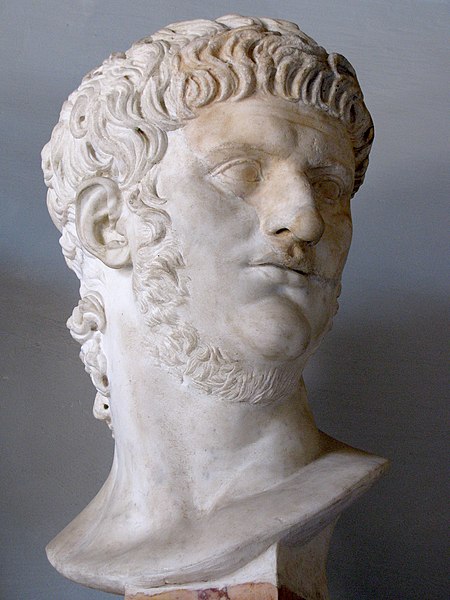
On His Birthday: Nero Sings and Renames Things

Ps-Lucian, Nero 6

Menekrates: “Musonius, that voice which made him music-mad and longing for Olympian and Pythian games, how was the tyrant’s voice? Some people who sailed to Lemnos were amazed by it, others mock it.”

Musonius: “Well, Menekrates, his voice really merits neither wonder nor mockery, since nature has made him moderately and unquestionably in tune. He speaks with a naturally open and deep voice, since his throat is deep, and when he sings he buzzes a little because of his throat shape. Nevertheless, the tones of his voice make him seem smoother if he does not try too hard, but relies instead on the melody, good accompaniment, and selecting the right time to walk, to stop, to move, and to nod his head along with the music. What is shameful is that a king appears to want success in these pursuits.”

ΜΕΝΕΚΡΑΤΗΣ
6. Ἡ φωνὴ δέ, Μουσώνιε, δι᾿ ἣν μουσομανεῖ καὶ τῶν Ὀλυμπιάδων τε καὶ Πυθιάδων ἐρᾷ, πῶς ἔχει τῷ τυράννῳ; τῶν γὰρ Λήμνῳ προσπλεόντων οἱ μὲν ἐθαύμαζον, οἱ δὲ κατεγέλων.
ΜΟΥΣΩΝΙΟΣ
Ἀλλ᾿ ἐκεῖνός γε, ὦ Μενέκρατες, οὔτε θαυμασίως ἔχει τοῦ φθέγματος οὔτ᾿ αὖ γελοίως· ἡ γὰρ φύσις αὐτὸν ἀμέμπτως τε καὶ μέσως ἥρμοκε. φθέγγεται δὲ κοῖλον μὲν φύσει καὶ βαρύ, ἐγκειμένης αὐτῷ τῆς φάρυγγος· μέλη δ᾿ οὕτω κατεσκευασμένης βομβεῖ πως. οἱ δέ γε τόνοι τῶν φθόγγων ἐπιλεαίνουσι τοῦτον, ἐπεὶ μὴ θαρρεῖ αὑτῷ, χρωμάτων δὲ φιλανθρωπίᾳ καὶ μελοποιίᾳ εὐαγώγῳ μὲν δὴ καὶ κιθαρῳδίᾳ εὐσταλεῖ καὶ <τῷ> οὗ καιρὸς βαδίσαι καὶ στῆναι καὶ μεταστῆναι καὶ τὸ νεῦμα ἐξομοιῶσαι τοῖς μέλεσιν, αἰσχύνην ἔχοντος μόνου τοῦ βασιλέα δοκεῖν ἀκριβοῦν ταῦτα.

Suetonius, Lives of the Caesars: Nero 53, 55

“He was mostly deranged by a desire for popularity and was an enemy to anyone who had any sway over the popular mob. Most believed that after all of his accomplishments on the stage he was going to compete among the Athletes at the next Olympian games. He was wrestling endlessly and he had watched the gymnastic contests all over Greece as a judge would, sitting on the ground of the stadium. If any competitors withdrew too far back, he would push them forth again with his own hand. Because he was alleged to have equaled Apollo in song and the Sun in chariot-driving, Nero planned to rival the deeds of Herakles too. People claim that a lion had been trained which he would be able to kill naked in the amphitheater in front of all the people with either a club or his arms’ embrace.”

Maxime autem popularitate efferebatur, omnium aemulus, qui quoquo modo animum vulgi moverent. Exiit opinio post scaenicas coronas proximo lustro descensurum eum ad Olympia inter athletas; nam et luctabatur assidue nec aliter certamina gymnica tota Graecia spectaverat quam brabeutarum more in stadio humi assidens ac, si qua paria longius recessissent, in medium manibus suis protrahens. Destinaverat etiam, quia Apollinem cantu, Solem aurigando aequiperare existimaretur, imitari et Herculis facta; praeparatumque leonem aiunt, quem vel clava vel brachiorum nexibus in amphitheatri harena spectante populo nudus elideret.

“He had a desire for eternal and endless fame, but it was ill-considered. Because of this he changed the names of many things and places from their ancient titles to something from his own name. So, he called the month of April Neroneus and planned to have Rome renamed Neropolis.”

Erat illi aeternitatis perpetuaeque famae cupido, sed inconsulta. Ideoque multis rebus ac locis vetere appellatione detracta novam indixit ex suo nomine, mensem quoque Aprilem Neroneum appellavit; destinaverat et Romam Neropolim nuncupare.

File:Nero 1.JPG
Bust of Nero at the Capitoline Museum

Writing Season Advice: Don’t Make Your Clauses Too Long. Or Too Short

For more on punctuation and ancient Greek words, see Demetrius

Demetrius, On Style 4

“Don’t write very long clauses, since your sentence then becomes unmeasured and hard to understand. Even poetry rarely exceeds the bound of a hexametric line, and only a little bit. For it would be ridiculous of poetry had no limits and we would forget what started when the line began! And yet, if the length of some clauses are not proper to prose because it goes on too long, others are too short and would create what is called “dry composition” as in the phrase, “life is short, art long, the right time brief.”

(4) Δεῖ δὲ οὔτε πάνυ μακρὰ ποιεῖν τὰ κῶλα, ἐπεί τοι γίνεται ἄμετρος ἡ σύνθεσις ἢ δυσπαρακολούθητος· οὐδὲ γὰρ ἡ ποιητικὴ ὑπὲρ ἑξάμετρον ἦλθεν, εἰ μή που ἐν ὀλίγοις· γελοῖον γὰρ τὸ μέτρον ἄμετρον εἶναι, καὶ καταλήγοντος τοῦ μέτρου ἐπιλελῆσθαι ἡμᾶς πότε ἤρξατο. οὔτε δὴ τὸ μῆκος τῶν κώλων πρέπον τοῖς λόγοις διὰ τὴν ἀμετρίαν, οὔτε ἡ μικρότης, ἐπεί τοι γίνοιτ᾿ ἂν ἡ λεγομένη ξηρὰ σύνθεσις, οἷον ἡ τοιάδε “ὁ βίος βραχύς, ἡ τέχνη μακρά, ὁ καιρὸς ὀξύς.”

Image result for greek hexameter inscription
An early christian inscription