The Proverbial Wisdom of Envy and Pity

Pindar, Pyth. 1.85

“Envy is stronger than pity

κρέσσον γὰρ οἰκτιρμοῦ φθόνος

This line is something I bounce around twitter every few months or so. As with many of our tweets, it is divorced from its context and takes on a new meaning in our own time (one, I think, which is less than positive since people are motivated more by an acquisitive, begrudging impulse than one of empathy).

A twitter correspondent (@History_Twerp) noted that this line was echoed in Herodotus.

Herodotus 3.52

Periander speaks to his son and says “since you have learned how much being envied is better than being pitied, and also what it is like to be angry at your parents and your betters, come home…”

Σὺ δὲ μαθὼν ὅσῳ φθονέεσθαι κρέσσον ἐστὶ ἢ οἰκτίρεσθαι, ἅμα τε ὁκοῖόν τι ἐς τοὺς τοκέας καὶ ἐς τοὺς κρέσσονας τεθυμῶσθαι, ἄπιθι ἐς τὰ οἰκία.» Περίανδρος

The notes on Perseus for Pindar’s Pythian 1 refer to the passage from Herodotus as “proverbial” without any additional evidence. The passages do seem proverbial since they use the same basic lexical items to express the same basic idea. Nevertheless, there is not additional evidence for a proverb. Instead, I think we probably have evidence of a general cultural value immanent among aristocratic classes during the early Classical period.

Here’s a fuller context for Pindar, Pyth. 1.84-86

“Satiety reshapes
Fast and easy expectations—
And the citizens’ secret witness grows especially burdened over foreign wealth.
But still, since envy is stronger than pity,
Do not overlook noble things, but guide the people
With a just rudder. Make your tongue
Bronze on an truthful anvil.”

….ἀπὸ γὰρ κόρος ἀμβλύνει
αἰανὴς ταχείας ἐλπίδας:
ἀστῶν δ᾽ ἀκοὰ κρύφιον θυμὸν βαρύνει μάλιστ᾽ ἐσλοῖσιν ἐπ᾽ ἀλλοτρίοις.
ἀλλ’ ὅμως, κρέσσον γὰρ οἰκτιρμοῦ φθόνος,
μὴ παρίει καλά. νώμα δικαίῳ
πηδαλίῳ στρατόν· ἀψευ-
δεῖ δὲ πρὸς ἄκμονι χάλκευε γλῶσσαν.

In the context of the Pythian ode, the brevity of the statement along with the epexegetical γὰρ gives the impression of a proverb drawn from elsewhere. But it is my sense, from reading through a lot of Pindar and Bacchylides, that the epinician genre is in the business of sounding proverbial  (it lends itself towards gnomic utterances because of the lyric brevity of expression, lack of epic-style repetition, and limited syntax). The trick of epinician poetry is to sound old and authoritative without actually being so.

The positive valence attributed to envy over pity is present as well in Hesiod’s Works and Days where two types of Strife are distinguished in order to mark one type of human conflict as good and one type as bad.

Hesiod, Works and Days, 26-7

“And a potter is angry with a potter, and a carpenter with a carpenter;
Even a beggar will envy a beggar and a singer a singer.”

καὶ κεραμεὺς κεραμεῖ κοτέει καὶ τέκτονι τέκτων,
καὶ πτωχὸς πτωχῷ φθονέει καὶ ἀοιδὸς ἀοιδῷ.

So the general attitude projected by Herodotus’ Periander and Pindar is harmonious with the Archaic Greek notion that ‘envy’ produces a type of rivalry that has positive effects. It is better than pity because pity is something which people in a stronger position have over those in a weaker position (and who wants to be in the weaker position?). For Pindar, envy is better because it imbues Hiero’s people with a spirit of rivalry; for Periander, who uses the statement in an attempt to get his son to come home, it is an attempt to convince him to give up the ways of a mendicant and return the palace. Interestingly, according to Herodotus, Periander fails.

The relationship between pity and envy appears in Diogenes as well.

Diogenes Laertius, Life of Zeno of Citium 7.111

“[they claim] that grief is an irrational reaction. Its variations include: pity, envy, jealousy, rivalry, annoyance, bitterness, anger, and distraction. Pity is pain for someone who suffers evil unworthily; envy is grief over someone else’s good fortunes; jealousy is pain over what another possesses when you want it yourself; and rivalry is pain over what another has and which you possess too…”

Καὶ τὴν μὲν λύπην εἶναι συστολὴν ἄλογον· εἴδη δ’ αὐτῆς ἔλεον, φθόνον, ζῆλον, ζηλοτυπίαν, ἄχθος, ἐνόχλησιν, ἀνίαν, ὀδύνην, σύγχυσιν. ἔλεον μὲν οὖν εἶναι λύπην ὡς ἐπ’ ἀναξίως κακοπαθοῦντι, φθόνον δὲ λύπην ἐπ’ ἀλλοτρίοις ἀγαθοῖς, ζῆλον δὲ λύπην ἐπὶ τῷ ἄλλῳ παρεῖναι ὧν αὐτὸς ἐπιθυμεῖ, ζηλοτυπίαν δὲ λύπην ἐπὶ τῷ καὶ ἄλλῳ παρεῖναι ἃ καὶ αὐτὸς ἔχει, ἄχθος δὲ λύπην

At first sight, there is little value judgment in this summary. But pity and envy are collocated as emotional or unreasoning impulses distinguished by their frames of reference but united by the fact that both are a type of pain. The comparison between pity and envy, does not seem otherwise common in Greek literature. (But this conclusion is extremely tentative. Please let me know of any other passages.)

A fragment of Plutarch (quoted in Stobaeus) established what turns out to be somewhat proverbial, that envious people risk two sources of pain.

Πλουτάρχου ἐκ τοῦ διαβάλλειν (Plut. fr. 155a = Hippias fr. 16).

Hippias says that there are two types of envy. One is just, whenever someone envies evil men who have been honored. The other is unjust, whenever someone envies good people who are honored. Men who envy suffer twice as much as others; for they are troubled not only by their own evils, but by others’ good fortunes.”

῾Ιππίας λέγει δύο εἶναι φθόνους· τὸν μὲν δίκαιον, ὅταν τις τοῖς κακοῖς φθονῇ τιμωμένοις· τὸν δὲ ἄδικον, ὅταν τοῖς ἀγαθοῖς. καὶ διπλᾶ τῶν ἄλλων οἱ φθονεροὶ κακοῦνται· οὐ γὰρ μόνον τοῖς ἰδίοις κακοῖς ἄχθονται, ὥσπερ ἐκεῖνοι, ἀλλὰ καὶ τοῖς ἀλλοτρίοις ἀγαθοῖς.

This sentiment is rather similar to one attributed to Anacharsis the Skythian by the Gnomologium Vaticanum:

“When asked by someone why envious men are always in pain, he said “because not only do their own evils bite them, but the good fortunes of those near them cause them grief too…”

῾Ο αὐτὸς ἐρωτηθεὶς ὑπό τινος, διὰ τί οἱ φθονεροὶ ἄνθρωποι ἀεὶ λυποῦνται, ἔφη· „ὅτι οὐ μόνον τὰ ἑαυτῶν αὐτοὺς κακὰ δάκνει, ἀλλὰ καὶ τὰ τῶν πέλας ἀγαθὰ λυπεῖ”.

Plato in the Timaeus detracts from envy a little too (29e) when discussing the attributes of a creating deity.

“He was good. And no envy ever develops in a good man about anything.

᾿Αγαθὸς ἦν· ἀγαθῷ δὲ οὐδεὶς περὶ οὐδενὸς οὐδέποτε ἐγγίνεται φθόνος.

Later paroemiographers do record some proverbs on envy, with an interesting variation.

Arsenius, Cent. 6.1a1

“Democritus says that envy is a wound from the truth”

Δημόκριτος τὸν φθόνον εἶπεν ἕλκος εἶναι τῆς ἀληθείας.

Stobaeus 3.38

“Socrates says that envy is a wound from the soul”

Σωκράτης τὸν φθόνον εἶπεν ἕλκος εἶναι τῆς ψυχῆς.

File:Giotto di Bondone - No. 48 The Seven Vices - Envy - WGA09275.jpg
A 14th Century Fresco from Padua illustrating the deadly sin of Eny

Ancient Shock Treatments for Mental Health

Celsus, On Medicine, 3.21-23

“If [the patient] is sick with an insane mind, he should be treated well with certain torments. When he does or says anything troubling, he must be corrected with starvation, chains, and beating. He must be forced to pay attention, to learn something, and to keep it in his memory. He will change in this way so that he will be compelled bit by bit by fear to think about what he is doing.

Sudden fear and complete horror is a good for this sickness and so is anything else which troubles the spirit intensely. For a certain change may happen when the mind is in a different state from where it usually is. For insane hilarity is better treated by the frightening I just described. Excessive sadness, however, needs light and long-lasting massage twice a day along with cold water poured over the head and immersing the body in water and oil.

Here are some common treatments: insane people should exercise vigorously, be given lengthy massages, and then fed neither fat nor wine. Once they are purged of what they ate before, they should have food of medium weight. You should not leave them alone or with people they don’t know or those they hate or ignore. It is best if they get a change of scenery and if their minds improve, they need to be shaken up with an annual trip.”

Si vero consilium insanientem fallit, tormentis quibusdam optime curatur. Ubi perperam aliquid dixit aut fecit, fame, vinculis, plagis coercendus est. Cogendus est et attendere et ediscere aliquid et meminisse: sic enim fiet, ut paulatim metu cogatur considerare quid faciat. Subito etiam terreri et expavescere in hoc morbo prodest, et fere quicquid animum vehementer turbat. Potest enim quaedam fieri mutatio, cum ab eo statu mens, in quo fuerat, abducta est. Interest etiam, ipse sine causa subinde rideat, an maestus demissusque sit: nam demens hilaritas terroribus iis, de quibus supra (§ 21) dixi, melius curatur. Si nimia tristitia, prodest lenis sed multa bis die frictio, item per caput aqua frigida infusa, demissumque corpus in aquam et oleum. Illa communia sunt, insanientes vehementer exerceri debere, multa frictione uti, neque pinguem carnem neque vinum adsumere; cibis uti post purgationem ex media materia quam levissimis; non oportere esse vel solos vel inter ignotos, vel inter eos, quos aut contemnant aut neglegant; mutare debere regiones et, si mens redit, annua peregrinatione esse iactandos.

Image result for medieval manuscript torture devices
Medieval Breaking Wheel

Philosophical Piffle

Barolomeo Scala, de Consolatione 22:

From where do you think that so many and such great errors, both in philosophy and in religion, sprang forth from almost the beginning of the world? Certainly Greece itself, which was always most famous because of the talents of its people and their cleverness in invention and decoration, had such a diversity of schools that it finally arrived to the number of two hundred and eighty eight sects, as Augustine says in his The City of God. They stirred up a kind of contest and confusion of knowledge, so that whether it was a question of the highest good, or of virtues (if I may omit the greater delusions of religion), there was nothing of the questions about some type of honors which did not find its defenders and champions. For, in questions of pain or suffering – for so they wish a harsh movement of the mind from the thought of some evil to be called instead of pain – even if they rightly brought forth the similarity of mental and bodily illnesses, nevertheless, whether it was to be called pain or suffering, they offer us nothing except for contention and a kind of gladiatorial game with their endless disputations. Meanwhile, they defend and embrace some kind of ineffable wisdom which looks down at everything as if from some high promontory, and as though human affairs had nothing to do with it, condemns and despises them. With their gracious leave, I don’t see how they can be called wise.

Western philosophy - Wikipedia
“Who’s up for another round of bullshit?”

Unde enim putas tot tantosque errores, et in philosophia et in religione, iam tum a principio fere conditi orbis aliunde pululasse? Graecia ipsa profecto, quae semper ob suorum hominum preclara ingenia et ad inveniendum exornandumque sollertiam fabulosissima fuit, hinc tantam habuit disciplinarum diversitatem ut ad sectarum numerum ducentarum et octuaginta octo, ut Augustinus auctor est in libris De Civitate Dei pervenisseiam potuerit; et scientiarum quasi certamen quoddam et confusionem excitant, ut sive de summo bono, sive de virtutibus quaeratur, ut maiora illa de religione deliramenta praetermittam, nihil fere ex his quae sunt de genere aliquo honorum defensores atque assertores proprios non invenerit. Nam de dolore quidem aut aegritudine— ita enim asperum animi motum praesentis alicuius mali opinione appellari malunt quam dolore— etsi similitudinem animi morborum et corporis, et vero quidem, inducant, tamen, sive dolor ille sit sive aegritudo nuncupanda, nihil nobis afferunt praeter contentionem et quasi digladiationem quandam perpetuis eorum disputationibus, dum sapientiam nescio quam defendunt atque complectuntur, quae tanquam ex altissima specula despiciat et, quasi ad se nihil humana pertineant, ambitiose contemnat ac pro nihilo habeat. Quod bona eorum venia dictum sit, non video quo modo ipsi quidem sint existimandi sapientes.

Writing Advice from Odysseus and David Byrne

Homer, Odyssey 12.447-453

“From there I was carried for nine days and on the tenth
The gods drove me at night to the island where Kalypso,
That nymph with the good hair, the dread goddess lives.
She was loving me and taking care of me. But why should I tell that story again?
I already told the tale of these things yesterday in this house
To you and your wife. It is super annoying for me
To say something again once it was already said clearly.”

ἔνθεν δ’ ἐννῆμαρ φερόμην, δεκάτῃ δέ με νυκτὶ
νῆσον ἐς ᾿Ωγυγίην πέλασαν θεοί, ἔνθα Καλυψὼ
ναίει ἐϋπλόκαμος, δεινὴ θεὸς αὐδήεσσα,
ἥ μ’ ἐφίλει τ’ ἐκόμει τε. τί τοι τάδε μυθολογεύω;
ἤδη γάρ τοι χθιζὸς ἐμυθεόμην ἐνὶ οἴκῳ
σοί τε καὶ ἰφθίμῃ ἀλόχῳ· ἐχθρὸν δέ μοί ἐστιν
αὖτις ἀριζήλως εἰρημένα μυθολογεύειν.”

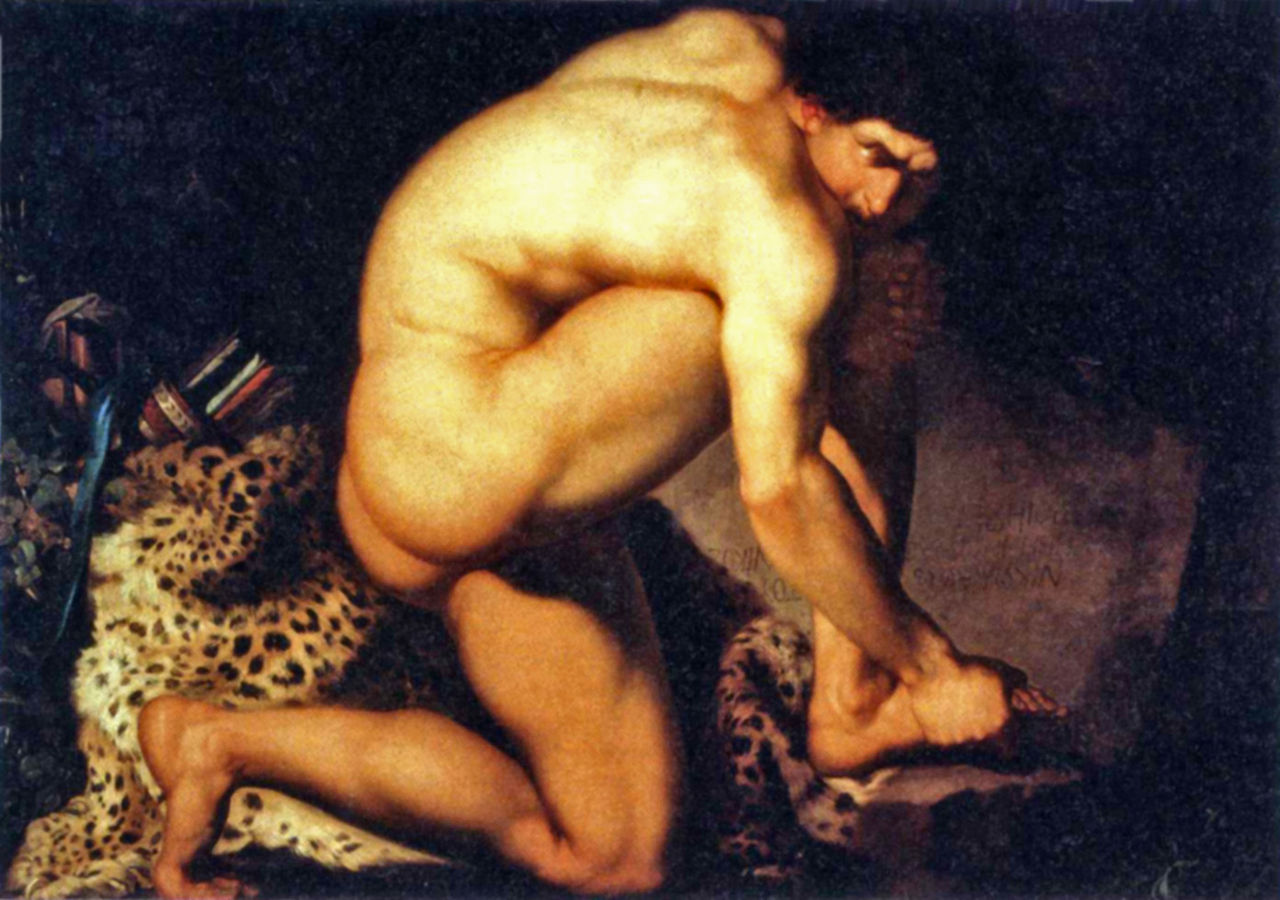
Odysseus Yearns for Ithaca by Johann Heinrich Wilhelm Tischbein

The Talking Heads, Psycho Killer 14-17

You start a conversation you can’t even finish it
You’re talking a lot, but you’re not saying anything
When I have nothing to say, my lips are sealed
Say something once, why say it again?

David Byrne

Since You’re Stuck At Home, You Can Read My Book!

Cicero, Letters 12.17 (to Cornificius, September 46)

“I’ll have you know that in your absence I have taken the opportunity and the freedom, as it is, to write rather boldly and some of them are the kinds of things you might even accept! Now I have most recently written about the best style of speaking, a topic on which I imagine your judgment is often far from mine, as it often goes when a learned man differs a bit in opinion from one who is not unlearned.

I really hope you take the book to heart if only to make me happy. I will ask your servants to please copy it and send it to you. I truly think that even if you are less approving of the material, you will still find whatever I write welcome in your current isolation.”

Me <s>cito, dum tu absis, quasi occasionem quandam et licentiam nactum scribere audacius, et cetera quidem fortasse quae etiam tu concederes, sed proxime scripsi de optimo genere dicendi; in quo saepe suspicatus sum te a iudicio nostro, sic scilicet ut doctum hominem ab non indocto, paulum dissidere. huic tu libro maxime velim ex animo, si minus, gratiae causa suffragere. dicam tuis ut eum, si velint, describant ad teque mittant. puto enim, etiam si rem minus probabis, tamen in ista solitudine quicquid a me profectum sit iucundum tibi fore.

Fresco from Herculaneum

A Slave Revolt in the Bath

Pliny describes an attack by slaves with little empathy and comes to a dehumanizing conclusion. Here is some excellent advice on how to teach and write about slavery  from P. Gabrielle Foreman (@profgabrielle). I have not followed all of the advice in the translation in an effort to convey Pliny’s tone.

Pliny the Younger, Letters, 3.14

“This terrible news deserves more than just a letter: Lucius Macedo, a former praetor has been overcome by his own slaves. He was an arrogant and harsh slave owner, one who remembered too little—or maybe too much—that his own father was enslaved. He was bathing in his Formian villa. Suddenly, the slaves stood around him. One attacked his throat; another beat his face; others struck his chest, gut, and—foul to report—they also struck his genitals.

When they believed he was dead, they left him to lie out cooking on the pavement just to see if he was alive or not. Whether he was conscious or not or just pretending not to be, he stayed there without moving, making them confident that he was completely dead. At that point he was taken out as if he were overcome by the heat. His more faithful slaves took him as his concubines rushed around with screaming and wailing. He was revived by such voices and perhaps the cooler place, and then seemed to believe it was safe to show he was alive with a glance of the eyes or some movement of the body.

The slaves fled and a great number of them have been caught while the others are being actively sought. Macedo himself was resuscitated for a few days and only with great labor. But he did not die without the comfort of vengeance, since he lived with the punishment meted out as if they had murdered him. You see here how many dangers and insults we are exposed to. There is no one who can feel safe just because he is gentle or restrained: slave owners are murdered not because of reason but because of an inclination toward crime.”

1 Rem atrocem nec tantum epistula dignam Larcius Macedo vir praetorius a servis suis passus est, superbus alioqui dominus et saevus, et qui servisse patrem suum parum, immo nimium meminisset. 2 Lavabatur in villa Formiana. Repente eum servi circumsistunt. Alius fauces invadit, alius os verberat, alius pectus et ventrem, atque etiam (foedum dictu) verenda contundit; et cum exanimem putarent, abiciunt in fervens pavimentum, ut experirentur an viveret. Ille sive quia non sentiebat, sive quia se non sentire simulabat, immobilis et extentus fidem 3 peractae mortis implevit. Tum demum quasi aestu solutus effertur; excipiunt servi fideliores, concubinae cum ululatu et clamore concurrunt. Ita et vocibus excitatus et recreatus loci frigore sublatis oculis agitatoque corpore vivere se (et iam tutum erat) confitetur.
Diffugiunt servi; quorum magna pars comprehensa est, ceteri requiruntur. Ipse paucis diebus aegre focilatus non sine ultionis solacio decessit 5ita vivus vindicatus, ut occisi solent. Vides quot periculis quot contumeliis quot ludibriis simus obnoxii; nec est quod quisquam possit esse securus, quia sit remissus et mitis; non enim iudicio domini sed scelere perimuntur.

Listen to the letter read aloud here on librivox  (h/t to Dr. Liv Yarrow, @profyarrow,  for that tip)

Thanks to @wophugus for bringing up this passage when discussing Dani Bostick’s essay on Slave Auctions and the Junior Classical League

Here’s another Letter from Pliny to show how his causal discussion of purchasing an enslaved person:

Pliny, Letters 1.21: To Plinius Paternus

“I place the highest value on the judgment of your mind and eyes, not just because—and don’t primp about this—it is great, but because it is as full of insight as mine is!

All jokes aside, I think the slaves whom I would buy at your advice look pretty good, but whether they are worthwhile remains to be seen: When it comes to a slave’s worth, it is better judged by the ears than the eyes. Goodbye!”

Plinius Plinio Paterno Suo S.

Ut animi tui iudicio sic oculorum plurimum tribuo, non quia multum (ne tibi placeas) sed quia tantum quantum ego sapis; quamquam hoc quoque multum est. Omissis iocis credo decentes esse servos, qui sunt empti mihi ex consilio tuo. Superest ut frugi sint, quod de venalibus melius auribus quam oculis iudicatur. Vale.

https://twitter.com/wophugus/status/1189285330974924801?s=20

File:Roman collared slaves - Ashmolean Museum.jpg
Roman collared slaves, Ashmolean museum

A Little Scholarship is the Best Fortune

Anthony Trollope, Framley Parsonage chp. 22:

“Oh, yes, there is nothing here but this young gentleman’s library,”
said Lucy, moving a pile of ragged, coverless books on to the table.
“I hope he’ll forgive me for moving them.”

“They are not Bob’s,–at least, not the most of them,–but mine,”
said the girl.

“But some of them are mine,” said the boy; “ain’t they, Grace?”

“And are you a great scholar?” asked Lucy, drawing the child to her.

“I don’t know,” said Grace, with a sheepish face. “I am in Greek
Delectus and the irregular verbs.”

“Greek Delectus and the irregular verbs!” And Lucy put up her hands
with astonishment.

“And she knows an ode of Horace all by heart,” said Bob.

“An ode of Horace!” said Lucy, still holding the young shamefaced
female prodigy close to her knees.

“It is all that I can give them,” said Mr. Crawley, apologetically.
“A little scholarship is the only fortune that has come in my way,
and I endeavour to share that with my children.”

“I believe men say that it is the best fortune any of us can have,”
said Lucy, thinking, however, in her own mind, that Horace and the
irregular Greek verbs savoured too much of precocious forcing in a
young lady of nine years old.

Isolation and Self-Sufficiency

Aristotle, Nicomachean Ethics 1. 6-9

“We use ‘self-sufficient’ not to mean a person alone—someone living in isolation—but to include one’s parents, children, spouse, friends, and even fellow citizens, since a human being is a social creature by nature. Now, some limit needs to be observed in these ties—for it will go on endlessly if you extend it to someone’s ancestors and descendants.  But that’s a problem for another time.

We posit that self-sufficiency is something which in itself makes life attractive and lacks nothing and for this reason we think it is happiness, since we imagine that happiness is the most preferable of all things when it is not counted with others. It is clear that it is desirable even with the least of the goods—the addition of goods increases the total, since the greater good is always desirable.”

τὸ δ᾿ αὔταρκες λέγομεν οὐκ αὐτῷ μόνῳ, τῷ ζῶντι βίον μονώτην, ἀλλὰ καὶ γονεῦσι καὶ τέκνοις καὶ γυναικὶ καὶ ὅλως τοῖς φίλοις καὶ πολίταις, ἐπειδὴ φύσει πολιτικὸν ὁ ἄνθρωπος. τούτων δὲ ληπτέος ὅρος τις· ἐπεκτείνοντι γὰρ ἐπὶ τοὺς γονεῖς καὶ τοὺς ἀπογόνους καὶ τῶν φίλων τοὺς φίλους εἰς ἄπειρον πρόεισιν. ἀλλὰ τοῦτο μὲν εἰσαῦθις ἐπισκεπτέον, τὸ δ᾿ αὔταρκες τίθεμεν ὃ μονούμενον αίπετὸν ποιεῖ τὸν βίον καὶ μηδενὸς ἐνδεᾶ· τοιοῦτον δὲ τὴν εὐδαιμονίαν οἰόμεθα εἶναι. ἔτι δὲ πάντων αἱρετωτάτην μὴ συναριθμουμένην—συναριθμουμένην γὰρ δῆλον ὡς αἱρετωτέραν μετὰ τοῦ ἐλαχίστου τῶν ἀγαθῶν, ὑπεροχὴ γὰρ ἀγαθῶν γίνεται τὸ προστιθέμενον, ἀγαθῶν δὲ τὸ μεῖζον αἱρετώτερον

John Donne, Meditation 17

No man is an Iland, intire of itselfe; every man
is a peece of the Continent, a part of the maine;
if a Clod bee washed away by the Sea, Europe
is the lesse, as well as if a Promontorie were, as
well as if a Manor of thy friends or of thine
owne were; any mans death diminishes me,
because I am involved in Mankinde;
And therefore never send to know for whom
the bell tolls; It tolls for thee.

Wounded Philoctetes by Nicolai Abildgaard

F**k Sleep, I’m Going to the Library!

Petrarch, Epistulae Familiares 19.16:

“You know how I eat, and even how I sleep – no fortune could ever persuade me to add anything to these. Rather, I subtract a little every day, and it has reached the point now that only a little bit can be subtracted. Even if some royal fortune befell me, it could not drive frugality from my table or drive me to look for more sleep at night. My bed never holds me if I am healthy and awake, and I never toss in the sheets unless I am sick or sleeping. As soon as sleep departs from me, I depart from the bed, and I will lie enough or even more than enough on a bed of earth or rock.

Thinking about it, I hate my bed and I never return to it but at the urging of necessity, but soon I sense that I am freed from it as from the chains of nature, and without delay I rip myself out of it and flee to the closest library as though it were a citadel. This divorce occurs between me and my bed in the middle of the night: if by chance a shorter night or some late hours drag on, yet certainly dawn never sees us together. Finally, I strive with all my heart to prevent anything from coming between me and my more pleasant concerns, except that which the necessity of nature extracts from me in an imperious way – I mean things like sleep, food, and the short and honorable solace which is just enough for relaxing the body and replenishing the spirit.”

Image result for petrarch library

Victum meum nosti, somnum quoque; his ut addam, nulla michi unquam fortuna suaserit; demo potius aliquid in dies, iamque eo perventum est ut modicum demi possit; denique non si regie opes advenerint, aut e mensa frugalitatem pellere poterunt aut in cubiculum longos somnos arcessere. Nunquam me sanum ac vigilem lectus habet, nunquam nisi eger aut dormiens stratis versor; simul et me somnus et ego lectum desero, et somnum morti et lectulum busto simillimum duco. Cum supremus sopor obrepserit, satis superque satis in cubiculo terreo seu saxeo iacebimus; id meditans lectulum meum odi et ad illum nisi urgente necessitate non redeo, sed ab illo mox ut me nature vinclis explicitum sentio, incuntanter avellor inque bibliothecam illi proximam velut in arcem fugio. Fit hoc inter nos media nocte divortium, quod siquando forte vel nox brevior vel vigilie longiores traxerint, at profecto nunquam simul aurora nos invenit; postremo modis omnibus nitor nequid melioribus curis interveniat, preter id solum quod imperiose necessitas nature exigit, somnum dico et cibum et breve honestumque solatium vegetando corpori refovendoque animo duntaxat ydoneum.  Id enimvero quia pro varietate temporum ac locorum variari oportet, et quale michi nunc sit nisi audias nosse non potes, dicam. Amo solitudinem ut soleo sectorque silentium nisi inter amicos, inter quos nemo me loquacior, hanc reor ob causam quod amicorum presentia solito rarior nunc est; raritas autem desiderium accendit. Sepe igitur annuum silentium diurna loquacitate compenso rursumque amicis abeuntibus mutus fio; importunum negotium cum vulgo loqui aut omnino cum homine quem non amor tibi seu doctrina conciliet.

Gaisford, Liddell, and a Motto for Any Library

Henry L. Thompson, Henry George Liddell: A Memoir

Scott and Liddell had been appointed by the Dean to the post of Sub-Librarian, and had thus access to the splendid collection of books, pictures, and engravings contained in the College Library. In making the appointment Gaisford advised Liddell to make himself well acquainted with the contents of the Library, referring with gusto to the motto which he had seen over Bishop Cosin’s library at Durham: Nosse bonos libros non minima pars est bonae eruditionis.* This phrase Liddell used in after-days to quote when himself appointing students to the same honourable post.

* (To know good books is not the least part of sound erudition.)

Thomas Gaisford