Kleptocracy, Beauty Contests, and Lies

From the Suda

“To speak Cretan to Cretans: Since they liars and deceivers”

Κρητίζειν πρὸς Κρῆτας. ἐπειδὴ ψεῦσται καὶ ἀπατεῶνές εἰσι.

Hesychius

krêtizein: used for lying and deceiving. People use this phrase because Krêtans are liars.”

κρητίζειν· ἐπὶ τοῦ ψεύδεσθαι καὶ ἀπατᾶν. ἔταττον δὲ τὴν λέξιν ἀπὸ <τοῦ> τοὺς Κρῆτας ψεύστας εἶναι

Zenobius, 4.62.10

“To be a Cretan: People use this phrase to mean lying and cheating. And they say it developed as a proverb from Idomeneus the Cretan. For, as the story goes, when there was a disagreement developed about the greater [share] among the Greeks at troy and everyone was eager to acquire the heaped up bronze for themselves, they made Idomeneus the judge. Once he took open pledges from them that they would adhere to the judgments he would make, he put himself in from of all the rest! For this reason, it is called Krêtening.”

Κρητίζειν: ἐπὶ τοῦ ψεύδεσθαι καὶ ἀπατᾶν ἔταττον τὴν λέξιν, καὶ φασὶν ἀπὸ τοῦ ᾿Ιδομενέως τοῦ Κρητὸς τὴν παροιμίαν διαδοθῆναι. Λέγεται γὰρ διαφορᾶς ποτὲγενομένης τοῖς ἐν Τροίᾳ ῞Ελλησιν περὶ τοῦ μείζονος, καὶ  πάντων προθυμουμένων τὸν συναχθέντα χαλκὸν ἐκ τῶν λαφύρων πρὸς ἑαυτοὺς ἀποφέρεσθαι, γενόμενον κριτὴν τὸν ᾿Ιδομενέα, καὶ λαβόντα παρ’ αὐτῶν τὰς ἐνδεχομένας πίστεις ἐφ’ ᾧ κατακολουθῆσαι τοῖς κριθησομένοις, ἀντὶ πάντων τῶν ἀριστέων ἑαυτὸν προτάξαι. Διὸ λέγεσθαι τὸ Κρητίζειν.


Dionysius Attic, Aelian

Krêtizein: to lie. For Idomenus, when he was placed in charge of distributing the bronze from the spoils, chose the best for himself.”

κρητίζειν· τὸ ψεύδεσθαι. ᾿Ιδομενεὺς γὰρ ἐπιτραπεὶς τὸν ἀπὸ τῶν λαφύρων χαλκὸν διανεῖμαι τὸν ἄριστον αὑτῷ ἐξείλετο.

There is another tradition too for why Cretans are liars:

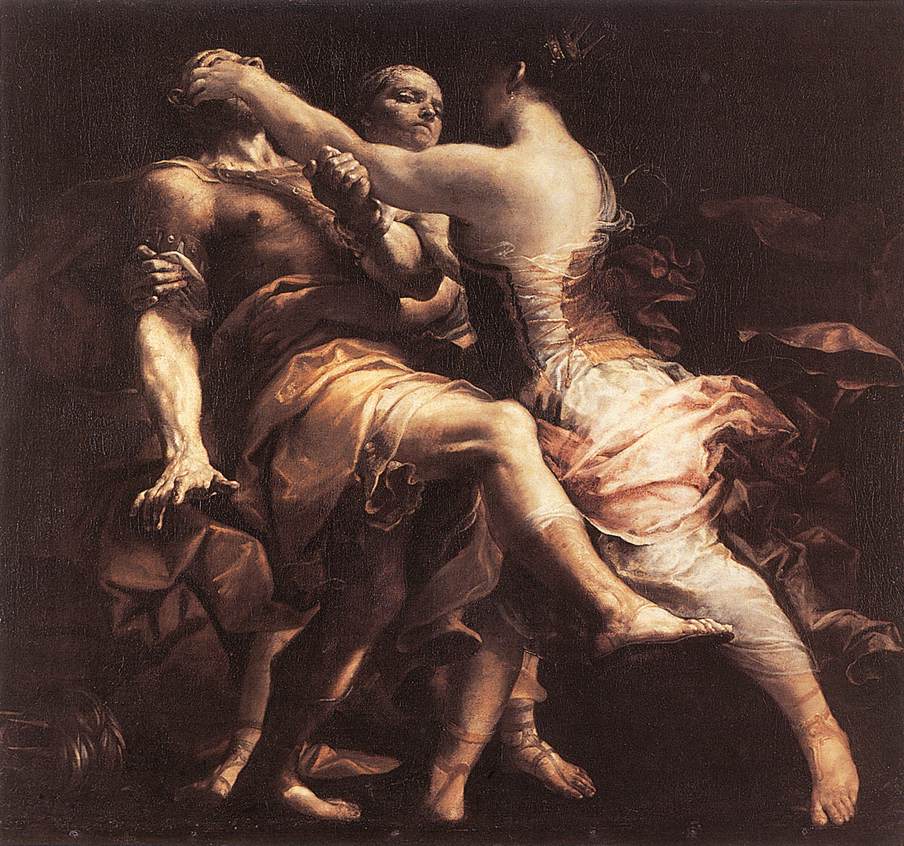
Medeia’s Beauty Contest: Fr. Gr. Hist (=Müller 4.10.1) Athenodorus of Eretria

“In the eighth book of his Notes, Athenodorus says that Thetis and Medeia competed over beauty in Thessaly and made Idomeneus the judge—he gave the victory to Thetis. Medeia, enraged, said that Kretans are always liars and she cursed him, that he would never speak the truth just has he had [failed to] in the judgment. And this is the reason that people say they believe that Kretans are liars. Athenodorus adds that Antiokhos records this in the second book of his Urban Legends.”

Ἀθηνόδωρος ἐν ὀγδόῳ Ὑπομνημάτων φησὶ Θέτιν καὶ Μήδειαν ἐρίσαι περὶ κάλλους ἐν Θεσσαλίᾳ, καὶ κριτὴν γενέσθαι Ἰδομενέα, καὶ προσνεῖμαι Θέτιδι τὴν νίκην. Μήδειαν δ ̓ ὀργισθεῖσαν εἰπεῖν· Κρῆτες ἀεὶ ψευσταὶ, καὶ ἐπαράσασθαι αὐτῷ, μηδέποτε ἀλήθειαν εἰπεῖν, ὥσπερ ἐπὶ τῆς κρίσεως ἐποίησε. Καὶ ἐκ τούτου φησὶ τοὺς Κρῆτας ψεύστας νομισθῆναι· παρατίθεται δὲ τοῦτο ἱστοροῦντα ὁ Ἀθηνόδωρος Ἀντίοχον ἐν δευτέρῳ τῶν Κατὰ πόλιν μυθικῶν.


Of course, in the Odyssey Idomeneus shows up in Odysseus’ lies

Od. 13.256-273

“I heard of Ithaca even in broad Krete
Far over the sea. And now I myself have come
With these possessions. I left as much still with my children
When I fled, because I killed the dear son of Idomeneus,
Swift-footed Orsilokhos who surpassed all the grain-fed men
In broad Krete with his swift feet
Because he wanted to deprive me of all the booty
From Troy, over which I had suffered much grief in my heart,
Testing myself against warlike men and the grievous waves.
All because I was not showing his father favor as an attendant
In the land of the Trojans, but I was leading different companions.
I struck him with a bronze-pointed spear as he returned
From the field, after I set an ambush near the road with a companion.
Dark night covered the sky and no human beings
Took note of us, I got away with depriving him of life.
But after I killed him with the sharp bronze,
I went to a ship of the haughty Phoenicians
And I begged them and gave them heart-melting payment.”

“πυνθανόμην ᾿Ιθάκης γε καὶ ἐν Κρήτῃ εὐρείῃ,
τηλοῦ ὑπὲρ πόντου· νῦν δ’ εἰλήλουθα καὶ αὐτὸς
χρήμασι σὺν τοίσδεσσι· λιπὼν δ’ ἔτι παισὶ τοσαῦτα
φεύγω, ἐπεὶ φίλον υἷα κατέκτανον ᾿Ιδομενῆος,
᾿Ορσίλοχον πόδας ὠκύν, ὃς ἐν Κρήτῃ εὐρείῃ
ἀνέρας ἀλφηστὰς νίκα ταχέεσσι πόδεσσιν,
οὕνεκά με στερέσαι τῆς ληΐδος ἤθελε πάσης
Τρωϊάδος, τῆς εἵνεκ’ ἐγὼ πάθον ἄλγεα θυμῷ,
ἀνδρῶν τε πτολέμους ἀλεγεινά τε κύματα πείρων,
οὕνεκ’ ἄρ’ οὐχ ᾧ πατρὶ χαριζόμενος θεράπευον
δήμῳ ἔνι Τρώων, ἀλλ’ ἄλλων ἦρχον ἑταίρων.
τὸν μὲν ἐγὼ κατιόντα βάλον χαλκήρεϊ δουρὶ
ἀγρόθεν, ἐγγὺς ὁδοῖο λοχησάμενος σὺν ἑταίρῳ·
νὺξ δὲ μάλα δνοφερὴ κάτεχ’ οὐρανόν, οὐδέ τις ἥμεας
ἀνθρώπων ἐνόησε, λάθον δέ ἑ θυμὸν ἀπούρας.
αὐτὰρ ἐπεὶ δὴ τόν γε κατέκτανον ὀξέϊ χαλκῷ,
αὐτίκ’ ἐγὼν ἐπὶ νῆα κιὼν Φοίνικας ἀγαυοὺς
ἐλλισάμην καί σφιν μενοεικέα ληΐδα δῶκα·

This is the first ‘lie’ Odysseus tells upon his arrival on Ithaca. He does not know that he is speaking to Athena and a scholiast explains his choices as if he were speaking to a suitor or one who would inform them.

Scholia V ad. Od. 13.267

“He explains that he killed Idomeneus’ son so that the suitors will accept him as an enemy of dear Odysseus. He says that he has sons in Crete because he will have someone who will avenge him. He says that the death of Orsilochus was for booty, because he is showing that he would not yield to this guy bloodlessly. He says that he trusted Phoenicians so that he may not do him wrong, once he has reckoned that they are the most greedy for profit and they spared him.”

τὸν μὲν ἐγὼ κατιόντα] σκήπτεται τὸν ᾿Ιδομενέως υἱὸν ἀνῃρηκέναι, ἵνα αὐτὸν πρόσωνται οἱ μνηστῆρες ὡς ἐχθρὸν τοῦ ᾿Οδυσσέως φίλου. ἑαυτῷ δὲ ἐν Κρήτῃ υἱούς φησιν εἶναι, ὅτι τοὺς τιμωρήσοντας ἕξει. καὶ τὸν ᾿Ορσιλόχου δὲ θάνατον λέγει διὰ τὴν λείαν, δεικνὺς ὅτι οὐδὲ ἐκείνῳ παραχωρήσει ἀναιμωτί. Φοίνιξι δὲ πιστεῦσαι λέγει, ἵνα μὴ ἀδικήσῃ, λογισάμενος ὅτι οἱ φιλοκερδέσταται αὐτοῦ ἐφείσαντο.
V.

idomeneus
Give me the loot.


Gregory the Great Says: “Forget Grammar, Donatus be Damned”

J.E. Sandys, A History of Classical Scholarship, Vol. 1

“Towards the close of the long letter prefixed to the Moralia, he confesses his contempt for the art of speech, and admits that he is not over-careful in the avoidance of barbarisms or inaccurate uses of prepositions, deeming it ‘ utterly unworthy to keep the language of the Divine Oracles in subjection to the rules of Donatus’; and this principle he applies to his own commentary, as well as to the sacred text. His attitude towards the secular study of Latin literature is well illustrated in the letter to Desiderius, bishop of Vienne. He is almost ashamed to mention the rumour that has reached him, to the effect that the bishop was in the habit of instructing certain persons in grammatical learning. ‘ The praises of Christ cannot be pronounced by the same lips as the praises of Jove’. He hopes to hear that the bishop is not really interested in such trifling subjects. Elsewhere, however, the study of Grammar and the knowledge of the liberal arts are emphatically commended on the ground of the aid they afford in the understanding of the Scriptures; but the genuineness of the work, in which this opinion is expressed is doubtful. Later writers record the tradition that Gregory did his best to suppress the works of Cicero, the charm of whose style diverted young men from the study of the Scriptures’, and that he burnt all the books of Livy which he could find, because they were full of idolatrous superstitions. It was even stated that he set the Palatine Library on fire, lest it should interfere with the study of the Bible, but the sole authority for this is John of Salisbury’ (d. 1 180), and the statement is unworthy of credit. “

Leaving, Forgetting Troy

Euripides, Trojan Women, 25-27

“I am leaving famous Ilion and my altars.
Whenever terrible isolation overtakes a city
The gods’ places turn sick and don’t want to receive worship”

λείπω τὸ κλεινὸν Ἴλιον βωμούς τ᾽ ἐμούς:
ἐρημία γὰρ πόλιν ὅταν λάβῃ κακή,
νοσεῖ τὰ τῶν θεῶν οὐδὲ τιμᾶσθαι θέλει.

357-360

“That famous lord of the Achaeans, Agamemnon
Will make me a wife harder to handle than Helen:
I will kill him. I will destroy his home
And take vengeance for my brothers and father…”

Ἑλένης γαμεῖ με δυσχερέστερον γάμον
ὁ τῶν Ἀχαιῶν κλεινὸς Ἀγαμέμνων ἄναξ.
κτενῶ γὰρ αὐτόν, κἀντιπορθήσω δόμους
ποινὰς ἀδελφῶν καὶ πατρὸς λαβοῦσ᾽ ἐμοῦ…

384-386

“Their army has earned this kind of praise:
Silence is better for shame, may my Muse
Never be a singer who recalls their terrible deeds.”

ἦ τοῦδ᾽ ἐπαίνου τὸ στράτευμ᾽ ἐπάξιον. —
σιγᾶν ἄμεινον τᾀσχρά, μηδὲ μοῦσά μοι
γένοιτ᾽ ἀοιδὸς ἥτις ὑμνήσει κακά.

395-399

“Listen how it is with Hektor’s mournful tale:
He died, leaving a reputation as the best man.
The coming of the Greeks made this happen.
If they had stayed home, his value would have stayed hidden.”

τὰ δ᾽ Ἕκτορός σοι λύπρ᾽ ἄκουσον ὡς ἔχει:
δόξας ἀνὴρ ἄριστος οἴχεται θανών,
καὶ τοῦτ᾽ Ἀχαιῶν ἵξις ἐξεργάζεται:
εἰ δ᾽ ἦσαν οἴκοι, χρηστὸς ὢν ἐλάνθανεν.

1165-66

“You fear a child this young? I can’t praise fear
When someone is frightened without examining why.”

βρέφος τοσόνδ᾽ ἐδείσατ᾽: οὐκ αἰνῶ φόβον,
ὅστις φοβεῖται μὴ διεξελθὼν λόγῳ.

Jean-Joseph Benjamin Constant, La mort d’Astyanax, 1868

I Have Never Read Anything Worse

J.E. Sandys, A History of Classical Scholarship Vol. II

“Aldus was far more than a printer and bookseller; he rejoiced in rescuing the writings of the ancients from the hands of selfish bibliomaniacs, many of his texts were edited by himself, and he was honoured as a scholar by the foremost scholars of the age. One of the most generous of men, his generosity was appreciated by Erasmus, and by his own countrymen. The editor of the Prefaces to the Ediiiones Principes justly describes ‘the dedications of Aldus as worth all the rest; there is a high and a noble feeling, a self-respect, and simplicity of language about him which is delightful; he certainly had aspiring hopes of doing the world good’. He is probably the only publisher who, in the preface of a work published by himself, ever used such language as the following : — nihil unquam memini me legere deterius, lectuque minus dignum [I don’t recall ever reading anything worse or less worth reading in all my life.]. Such are the terms in which he refers to the Life of Apollonius by Philostratus; but he hastens to add that, as an antidote to the poison, he publishes in the same volume the refutation by Eusebius, translated by the friend to whom he dedicates the work. In the twenty-one years between 1494 and 1515, Aldus produced no less than twenty-seven editiones principes of Greek authors and of Greek works of reference. By the date of his death in 1515, all the principal Greek Classics had been printed. Before 1525 the study of Greek had begun to decline in Italy, but meanwhile an interest in that language had happily been transmitted to the lands beyond the Alps.”

Aldus Manutius - Wikipedia

Miscellaneous Reading, Cursory Learning

Sir Leslie Stephen, Alexander Pope:

“Like other lads of genius, he put together a kind of play—a combination, it seems, of the speeches in Ogilby’s Iliad—and got it acted by his schoolfellows. These brief snatches of schooling, however, counted for little. Pope settled at home at the early age of twelve, and plunged into the delights of miscellaneous reading with the ardour of precocious talent. He read so eagerly that his feeble constitution threatened to break down, and when about seventeen, he despaired of recovery, and wrote a farewell to his friends. One of them, an Abbé Southcote, applied for advice to the celebrated Dr. Radcliffe, who judiciously prescribed idleness and exercise. Pope soon recovered, and, it is pleasant to add, showed his gratitude long afterwards by obtaining for Southcote, through Sir Robert Walpole, a desirable piece of French preferment. Self-guided studies have their advantages, as Pope himself observed, but they do not lead a youth through the dry places of literature, or stimulate him to severe intellectual training. Pope seems to have made some hasty raids into philosophy and theology; he dipped into Locke, and found him “insipid;” he went through a collection of the controversial literature of the reign of James II., which seems to have constituted the paternal library, and was alternately Protestant and Catholic, according to the last book which he had read. But it was upon poetry and pure literature that he flung himself with a genuine appetite. He learnt languages to get at the story, unless a translation offered an easier path, and followed wherever fancy led ‘like a boy gathering flowers in the fields and woods.'”

Changing Your Mind is the Point of Research

Quintilian, Inst. Orat. 3.6.

“I admit that I now have a bit of a different opinion from what I believed before. Perhaps it would be safest for my reputation to change nothing which I not only believed but also approved for many years. But I cannot endure knowing that I misrepresent myself, especially in this work which I compose as some help for our good students. For even Hippocrates, famous still for his skill in medicine, seems to have conducted himself very honorably when he admitted his own errors so his followers would not make a mistake. Marcus Tullius did not hesitate to condemn some of his own books in subsequent publications, the Catulus and Lucullus, for example.

Prolonged effort in research would certainly be useless if we were not allowed to improve upon previous opinions. Nevertheless, nothing of what I taught then was useless. These things I offer now, in fact, return us to basic principles. Thus it will cause no one grief to have learned from me. I am trying only to collect and lay out the same ideas in a slightly more sensible fashion. I want it made known to all, moreover, that I am showing this to others no later than I have convinced myself.”

Ipse me paulum in alia quam prius habuerim opinione nunc esse confiteor. Et fortasse tutissimum erat famae modo studenti nihil ex eo mutare quod multis annis non sensissem modo verum etiam adprobassem. Sed non sustineo esse conscius mihi dissimulati, in eo praesertim opere quod ad bonorum iuvenum aliquam utilitatem componimus, in ulla parte iudicii mei. Nam et Hippocrates clarus arte medicinae videtur honestissime fecisse quod quosdam errores suos, ne posteri errarent, confessus est, et M. Tullius non dubitavit aliquos iam editos libros aliis postea scriptis ipse damnare, sicut Catulum atque Lucullum et… Etenim supervacuus foret in studiis longior labor si nihil liceret melius invenire praeteritis. Neque tamen quicquam ex iis quae tum praecepi supervacuum fuit; ad easdem enim particulas haec quoque quae nunc praecipiam revertentur. Ita neminem didicisse paeniteat: colligere tantum eadem ac disponere paulo significantius conor. Omnibus autem satis factum volo non me hoc serius demonstrare aliis quam mihi ipse persuaserim.

Mind Change real

Leonardo Bruni: Consummate Badass

Giovanni Marrasio, Angelinetum (Preface):

This book, Leonardo, I wished to inscribe with your name so that the title page itself could shine forth more all the more brightly. If the honor of Greek and Latin eloquence and whatever praise there is in the world is to be given to anyone, if the immortal fame of our ancestors is owed to anyone, then the highest glory remains for you. You fashion our earliest ancestors with excessive gravity, and you even overcome the ancients in your probity. Not only would the Latins say that they are in debt to you, but even the Greeks would cultivate you and yours. Latin speech converted to Greek holds no less of the Greek than Latin does, thanks to you. Aristotle, made Latin, speaks with a charming and ornate voice – he was a barbarian before! The Punic Wars, dead for so many years, live; Cicero lives; Plato does not die. Why should I recount the fact that you translated countless Greek books and composed the same number of your own? Through you came the light of Italy, through you the Muses came to Italy, through you the ancient words please us. Would that you would indulge, my dear Leonardo, my madness, whether it was madness or pain. Would that you would make a judgment about my poem, whether incense should cover it, or whether my little words are worthy of being read. If they were praised by a benign judgment, then any poet at all could rebuke me as much as he wanted. Don’t be afraid to respond to your tablets, whether in prose or poem. If you write back to me, I will think that the nine sacred spirits of the Muses came straight from the Aeonian fount. Indulge my furor, man of Arrezzo, whether it’s furor or pain. When new poets dared to contrive their songs in ancient times, the consulted the Apollinian fires. But now, I need not consult the Sibylline oracles, and even Phoebus can be despised in these verses: you will be my Sibyl, you will be my Apollinian sisters, you will be the Apollo and the Calliope to my pen.

Epic World History: Leonardo Bruni
“Yeah, that’s fuckin’ right!”

Hunc, Leonarde, tuo volui obsignare libellum Nomine, quo titulus luceat ipse magis. Si quoi dandus honos Grai pariterque Latini Eloquii et quicquid laudis in orbe fuit Si quoi debetur fama immortalis avorum, Arretine, tibi gloria prima manet. Effingis priscos nimia gravitate parentes Et superas veteres tu probitate viros. Non solum dicant tibi se debere Latini, Verum etiam Argolici teque tuosque colant. Non minus in Graium conversus sermo Latinus Quam Graium per te lingua Latina tenet. Eloquitur lepida ac ornata voce Latinus Factus Aristoteles: barbarus ante fuit. Punica bella diu tot in annis mortua vivunt, Rex Cicero vivit non moriturque Plato. Quid recitem libros te traduxisse Pelasgos Innumeros, totidem et composuisse novos? Italiae lumen, per te venere Camenae Ad Latium, per te dicta vetusta placent. Indulgere velis nostro, Arretine, furori, Sive sit ille furor, sive sit ille dolor. Iudicium facias nostro de carmine, sive Thura tegat, vel sint verbula digna legi. Quae si iudicio fuerint laudata benigno, Mordeat o quantum quisque poeta velit. Nec pigeat nostris te respondere tabellis, Sive velis prosa, carmine sive velis. Si mihi rescribes, Musas venisse putabo Aonio ex fonte et numina sacra novem. Indulgere velis nostro, Arretine, furori, Sive sit ille furor, sive sit ille dolor. Quando novi vates ausi sunt tempore prisco Carmina, Phoebeos consuluere focos; Nunc quaerenda meis non sunt oracla Sibyllae Versibus et Phoebus despiciendus erit: Tu Cumaea mihi, tu Phoebeaeque sorores, Phoebus eris calamis Calliopeque meis. Prefatio in Angelinetum explicit.

Half-Assing It: A Love Story

Aristokles, BNJ 831 F 3b (=Stobaios, Florides 4.20 b74)

“In the second book of his Wonders, Aristokles has this: A young man named Aristonymos, an Ephesian of a noble family, was Demostratos’ son, but in reality he was Ares’ son.

In the middle of the night, because he hated all women, he went to his father’s herd and had sex with a female donkey. She got pregnant and gave birth to the most beautiful girl, named Onoskelia, a nickname borrowed from the way she was born.”

᾽Αριστοκλέους ἐν β̄ Παραδόξων. <᾽Αριστώνυμος> ᾽Εφέσιος τῶι γένει, νεανίας τῶν ἐπισήμων, υἱὸς Δημοστράτου, ταῖς δ᾽ ἀληθείαις ῎Αρεως. οὗτος τὸ θῆλυ μισῶν γένος νυκτὸς βαθείας εἰς τοὺς πατρώιας ἔτρεχεν ἀγέλας, καὶ ὄνωι συνεγένετο θηλείαι· ἡ δὲ ἔγκυος γενομένη ἔτεκε κόρην εὐειδεστάτην ᾽Ονοσκελίαν τοὐνομα, τὴν προσηγορίαν λαβοῦσαν ἀπὸ τοῦ συμπτώματος.

Bodleian Library, MS. Bodley 764, Folio 44r

Being Happy Takes Practice!

Diogenes Laertius, Diogenes 71

“He used to say, however, that there was no success in life at all without practice and that this can conquer everything. For this reason, people must choose the types of practice nature demands to live well instead of useless toils—and to live unhappily is a type of madness.

For even despising pleasure is extremely pleasurable, when it has been practiced; and just as those who are used to pleasure feel discomfort when they try to opposite, so too do those who have practiced the opposite get more pleasure from hating pleasure than from pleasure itself.

These were the things Diogenes talked about and clearly did—for he debased the currency and gave no rule authority unless it was natural. He used to say that he lived the same kind of life Herakles did and valued nothing more than freedom.”

Οὐδέν γε μὴν ἔλεγε τὸ παράπαν ἐν τῷ βίῳ χωρὶς ἀσκήσεως κατορθοῦσθαι, δυνατὴν δὲ ταύτην πᾶν ἐκνικῆσαι. δέον οὖν ἀντὶ τῶν ἀχρήστων πόνων τοὺς κατὰ φύσιν ἑλομένους ζῆν εὐδαιμόνως, παρὰ τὴν ἄνοιαν κακοδαιμονοῦσι. καὶ γὰρ αὐτὴ τῆς ἡδονῆς ἡ καταφρόνησις ἡδυτάτη προμελετηθεῖσα, καὶ ὥσπερ οἱ συνεθισθέντες ἡδέως ζῆν, ἀηδῶς ἐπὶ τοὐναντίον μετίασιν, οὕτως οἱ τοὐναντίον ἀσκηθέντες ἥδιον αὐτῶν τῶν ἡδονῶν καταφρονοῦσι. τοιαῦτα διελέγετο καὶ ποιῶν ἐφαίνετο, ὄντως νόμισμα παραχαράττων, μηδὲν οὕτω τοῖς κατὰ νόμον ὡς τοῖς κατὰ φύσιν διδούς· τὸν αὐτὸν χαρακτῆρα τοῦ βίου λέγων διεξάγειν ὅνπερ καὶ Ἡρακλῆς, μηδὲν ἐλευθερίας προκρίνων.

This reminded me of the saying attributed to Democritus:

Democritus, fr. 200

‘Those who live without enjoying life are fools.’

ἀνοήμονες βιοῦσιν οὐ τερπόμενοι βιοτῆι. #Democritus

Image result for medieval manuscript happiness
Happiness and Fortune

Sailing With Fortune to the Grave

Euripides, Trojan Women 102-105

“Sail following the stream, sail following fate,
Don’t set the prow of your life
Against the waves, sailing against fortune.”

πλεῖ κατὰ πορθμόν, πλεῖ κατὰ δαίμονα,
μηδὲ προσίστω πρῷραν βιότου
πρὸς κῦμα πλέουσα τύχαισιν.

510

“Don’t believe that anyone who is lucky is blessed
Before they’re dead.”

…τῶν δ᾽ εὐδαιμόνων
μηδένα νομίζετ᾽ εὐτυχεῖν, πρὶν ἂν θάνῃ.

1203-1206

“Any mortal is a fool who takes some pleasure
From imagining their good luck is safe: in its turns
Fortune’s like a crazed person leaping this way one day
And then another, no one ever keeps the same good luck.”

θνητῶν δὲ μῶρος ὅστις εὖ πράσσειν δοκῶν
βέβαια χαίρει: τοῖς τρόποις γὰρ αἱ τύχαι,
ἔμπληκτος ὡς ἄνθρωπος, ἄλλοτ᾽ ἄλλοσε
πηδῶσι, κοὐδεὶς αὐτὸς εὐτυχεῖ ποτε.

1247-1250

“I imagine it makes no difference to the dead
If they receive some rich funeral.
This is the source of silly pride for the living.”

δοκῶ δὲ τοῖς θανοῦσι διαφέρειν βραχύ,
εἰ πλουσίων τις τεύξεται κτερισμάτων:
κενὸν δὲ γαύρωμ᾽ ἐστὶ τῶν ζώντων τόδε.

Hecuba Kills Polymestor, by Giuseppe Maria Crespi