That Old Time (Heavenly) Rock and Roll…

Cristoforo Landino, Preface to Vergil in a Florentine Gymnasium (Part 1)

Since I am about to bring into the middle, in this annual event of ours, that poet who, of all the regions whose inhabitants are known to history or of all the times which have come down to our own recollection thanks to the good offices of writers, is either the first poet or at any rate entirely equal to the first, I have judged it neither alien to my duty nor unpleasing to your ears if, before we approach the interpretation of Vergil himself, I bring to your notice in the briefest manner not only on what poetry is, and from where it drew its origins and where the name of the poet stems from, but also expatiate on what venerable fame and what ample honor it has been held from the earliest ages of humanity and among various nations. I will add finally that it did not only confer dignity and glory upon individual and private people, but also that it has always stood out in well-ordered republics and the most successful peoples, and has always been a not trifling use, and even a great ornament.

Poetry is not, I would say, one of those arts which our ancestors called liberal, but one which, embracing them all, bound by certain meters and distinguished by various lights and blossoms, ornaments whatever it is that people have done or known with wonderful contrivances and translates them into other forms. As the divine Plato shows in his Phaedrus, and the Platonic Cicero demonstrates in his Tusculan Disputations, no mortal was ever able to attain to poetry without some divine madness. For, when that philosopher whom I just mentioned describes the three other types of divine madness, he expresses, unless I am mistaken, the fourth, which he wishes to be the poetic, in this idea. For he says that our minds, while they were still in their celestial seats, were participants in that harmony which consists in the eternal mind of God, and in that harmony which is made by the motions of the heavens. Then, weighed down by the contagion of mortal affairs and on that account devolving to lower things, enclosed in bodies, impeded by terrestrial limbs and bodies bound to fail, they were barely able to perceive with their ears those sounds which were made by mortal industry. Which, nevertheless, even if they are far from those heavenly sounds, nonetheless, since they are simulacra or images of them, draw us on to a silent recollection of the first music and inflame us with the most burning desire of flying back to our ancient fatherland so that we can experience that true music, whose shadowy image this is. But meanwhile, as much as one can in this most vexatious prison of the body, we strive to imitate that heavenly music with these sounds of ours.
Cum eum vobis poetam hoc annuo cursu in medium allaturus essem, qui vel ex omnibus regionibus <quarum habitatores> historia cognoscantur vel ex omnibus saeculis quae ad nostram usque memoriam scriptorum beneficio pervenerint, aut primus sit aut primo omnino par atque aequalis, neque ab officio nostro alienum neque auribus vestris iniocundum futurum existimavi si, antea quam ipsius Maronis interpretationem aggredimur, brevissimis quidem verbis non solum quid ars poetica sit atque unde originem traxerit unde<que> poetae nomen deducatur in medium afferam, verum etiam quam vetustissima a priscis hominum saeculis apud multas variasque nationes maxima celebritate amplissimisque honoribus fuerit disseram. Addam postremo illam non solum singulis privatisque hominibus dignitatem gloriamque attulisse, verum bene institutis rebus publicis florentissimisque populis et usui non mediocri et ornamento maximo semper extitisse.
Est igitur poetica disciplina non dicam unam ex iis artibus quas nostri maiores liberales appellarunt, sed quae illas universas complectens, certis quibusdam numeris astricta variisque luminibus ac floribus distincta, quaecunque homines egerint, quaecunque norint miris figmentis exornet atque in alias quasdam speties traducat. Quam quidem rem, ut et divinus ille Plato in Phaedro et Platonicus Cicero in Tusculanis disputationibus ostendit, nemo unquam mortalium sine divino quodam furore attingere potuit. Nam cum is quem paulo ante dixi philosophus et tria alia divini furoris genera describat, quartum quem poeticum esse vult hac, nisi fallor, sententia exprimit. Ait enim animos nostros, dum in caelestibus sedibus versarentur, et eius harmoniae, quae in aeterna Dei mente consistit, et eius, quae caelorum motibus conficitur, participes fuisse; deinde, cum mortalium rerum contagione degravati et propterea ad inferiora iam devoluti corporibus includantur, iam terrenis arctubus et moribundis membris impeditos, vix eos concentus, qui mortalium industria conficiuntur, auribus percipere posse. Qui tamen, quicunque ii sint, etsi a caelestibus longe absint, nihilominus cum simulachra quaedam ac imagines illorum existant, nos in tacitam quandam primorum recordationem inducunt ardentissimaque cupiditate ad antiquam patriam revolandi inflamant, ut veram ipsam musicam, cuius adumbrata quaedam haec imago est, pernoscamus. Interim vero, quoad per molestissimum nobis corporis carcerem licet, hac nostra illam imitari contendimus.

For the Love of…A Goose?

Everyone has heard about Leda and the swan. But have you heard about Amphilokhos and his gift-giving goose?

Aelian, De Natura Animalium 5.29

“In Aigion, in Akhaia, a goose was in love with a handsome boy, an Ôlenian named Amphilokhos. Theophrastus tells this story. The boy was under guard with the Olenian exiles in Aigion—there, the goose used to bring him gifts. In Khios, too, there was an especially beautiful woman named Glaukê, a harp player, and many men lusted after her—which is nothing big. But a ram and a goose loved her too, as I have heard.”

Ἐν Αἰγίῳ τῆς Ἀχαίας ὡραίου παιδός, Ὠλενίου τὸ γένος, ὄνομα Ἀμφιλόχου, ἤρα χήν. Θεόφραστος λέγει τοῦτο. σὺν τοῖς Ὠλενίων δὲ φυγάσιν ἐφρουρεῖτο ἐν Αἰγίῳ ὁ παῖς. οὐκοῦν ὁ χὴν αὐτῷ δῶρα ἔφερε. καὶ ἐν Χίῳ Γλαύκης τῆς κιθαρῳδοῦ ὡραιοτάτης οὔσης εἰ μὲν ἤρων ἄνθρωποι, μέγα οὐδέπω· ἠράσθησαν δὲ καὶ κριὸς καὶ χήν, ὡς ἀκούω, τῆς αὐτῆς.

File:Ammannati - Leda and the Swan.jpg

How Many Eyes Did The Cyclops Have? (The Answer Might Surprise You)

The scholia present some debates about what exactly a Cyclops looks like. 

Schol. ad Od. 9.106

“Aristotle examines how the Cyclops Polyphemos came to be a cyclops when neither his father nor his mother was a cyclops. He resolved the issue with a different myth. For, he asserted, horses came from Boreas but Pegasos was born from Poseidon and Medousa. Why, then, would it be strange that this wild beast be born from Poseidon? Similarly, other wild beasts were born from him in the sea, as well as marvels and unusual things.

Hesiod laughably etymologizes [the Kyklopes], saying “They were given the nickname Kyklopes / because they have one single circle eye in the middle of their forehead.” But Homer clearly describes  their nature.

For, if it was of that sort, just as he described the other particular features of the Cyclops, like his size, his cruelty, he would have also described his eye! Philoxenos says that he diverged from Hesiod in that the fact he could not see because he was blinded in one eye. For Homer does not say this about all the other Cyclopes. It is likely that Polyphemos lost his other eye for some other reason before Odysseus’ arrival.

Others oppose this, claiming that if he had two eyes and Odysseus blinded one, how would he say what is attributed to him, “Cyclops, if any mortal man asks you who is the blinder of your eye…” He does not say eyes. And in return the Cyclops says “My father is able to heal my eye.” For if he had another eye, properly, and Odysseus were speaking to him in this way, how would he not have taken care of the other eye? But he said “the earth-shaker will not heal [my] eye.” For this very reason people argue about his eye being completely pierced, because of what is said here, if he did not take care of the eye when it was first compromised, he would never be able to heal it.”

From the MFA in Boston, taken artfully on my phone.


ζητεῖ ᾿Αριστοτέλης πῶς ὁ Κύκλωψ ὁ Πολύφημος μήτε πατρὸς ὢν Κύκλωπος, Ποσειδῶνος γὰρ ἦν, μήτε μητρὸς, Κύκλωψ ἐγένετο. αὐτὸς δὲ ἑτέρῳ μύθῳ ἐπιλύεται. καὶ γὰρ ἐκ Βορέου ἵπποι γίνονται, καὶ ἐκ Ποσειδῶνος καὶ τῆς Μεδούσης ὁ Πήγασος ἵππος. τί δ’ ἄτοπον ἐκ Ποσειδῶνος τὸν ἄγριον τοῦτον γεγονέναι; ὥσπερ καὶ τὰ ἄλλα ἐξ αὐτοῦ ἀναλόγως τῇ θαλάσσῃ ἄγρια γεννᾶται ἢ τερατώδη ἢ παρηλλαγμένα. γελοίως δ’ αὐτοὺς ἐτυμολογεῖ ῾Ησίοδος “Κύκλωπες δ’ ὄνομ’ ἦσαν ἐπώνυμον, οὕνεκ’ ἄρω σφέων κυκλοτερὴς ὀφθαλμὸς ἕεις ἐνέκειτο μετώπῳ.” ὁ δ’ ῞Ομηρος φαίνεται φύσιν αὐτῶν λέγων· εἰ γὰρ ἦν τι τοιοῦτον, ὥσπερ τὰς ἄλλας ἰδιότητας τῶν ὀφθέντων ἔγραψεν ἐπ’ αὐτοῦ Κύκλωπος, τὸ μέγεθος, τὴν ὠμότητα, οὕτω κἂν τὸ περὶ ὀφθαλμοῦ ἔγραψε. φησὶ δὲ ὁ Φιλόξενος ὅτι ἐπλάνησε τὸν ῾Ησίοδον τὸ τὸν ἕνα ὀφθαλμὸν τυφλωθέντα μηκέτι ὁρᾶν. οὔτε δὲ περὶ πάντων τῶν Κυκλώπων εἶπε τοῦτο ῞Ομηρος, εἰκός τε τὸν Πολύφημον κατά τινα ἄλλην αἰτίαν τὸν ἕτερον τῶν ὀφθαλμῶν ἀπολωλεκέναι πρὸ τῆς ᾿Οδυσσέως ἀφίξεως. οἱ δὲ ἀντιλέγοντες τούτῳ φασὶν, εἰ δύο εἶχεν ὀφθαλμοὺς καὶ τὸν ἕνα ᾿Οδυσσεὺς ἐτύφλωσε, πῶς συμφωνήσει τὸ ὑπ’ αὐτοῦ λεγόμενον, “Κύκλωψ, εἰ καί τίς σε καταχθονίων ἀνθρώπων ὀφθαλμοῦ εἴρηται ἀεικελίην ἀλαωτύν” (502.); οὐκ εἶπεν ὀφθαλμῶν. ἔτι δὲ καὶ τὸ προκείμενον παρὰ τοῦ Κύκλωπος, ὅτι δύναταί μου ὁ Ποσειδῶν ἰάσασθαι τὸν ὀφθαλμόν. εἰ γὰρ ἦν ἑτερόφθαλμος ἤδη ὑπάρχων, ἔλεγεν ἂν αὐτῷ ᾿Οδυσσεὺς, καὶ πῶς τὸν ἕτερον οὐκ ἐθεράπευσεν; ἀλλ’ εἶπεν “ὡς οὐκ ὀφθαλμόν γ’ ἰήσεται οὐδ’ ἐνοσίχθων” (525.). δι’ αὐτοῦ δὲ τούτου ἀπολογοῦνται περὶ τοῦ εἶναι αὐτὸν διόφθαλμον, διὰ τοῦ εἰπεῖν, εἰ τὸν πρῶτον πηρωθέντα ὀφθαλμὸν οὐκ ἐθεράπευσεν, οὐδὲ τοῦτον ἰάσεται. H.Q.

These are, of course, the types of investigations for which Seneca would have the most disdain:

Seneca, De Brevitate Vitae 13

“It would be annoying to list all the people who spent their lives pursuing board games, ball games, or sunbathing. Men whose pleasures are so busy are not at leisure. For example, no one will be surprised that those occupied by useless literary studies work strenuously—and there is great band of these in Rome now too. This sickness used to just afflict the Greeks, to discover the number of oars Odysseus possessed, whether the Iliad was written before the Odyssey, whether the poems belong to the same author, and other matters like this which, if you keep them to yourself, cannot please your private mind; but if you publish them, you seem less learned than annoying.”

Persequi singulos longum est, quorum aut latrunculi aut pila aut excoquendi in sole corporis cura consumpsere vitam. Non sunt otiosi, quorum voluptates multum negotii habent. Nam de illis nemo dubitabit, quin operose nihil agant, qui litterarum inutilium studiis detinentur, quae iam apud Romanos quoque magna manus est. Graecorum iste morbus fuit quaerere, quem numerum Ulixes remigum habuisset, prior scripta esset Ilias an Odyssia, praeterea an eiusdem essent auctoris, alia deinceps huius notae, quae sive contineas, nihil tacitam conscientiam iuvant sive proferas, non doctior videaris sed molestior.

Mocking the quibbles of scholars is where the pejorative use of the term ‘academic’ comes. This is an ancient tradition!

Athenaeus, Deipnosophistae 1.22

“You know that somewhere Timo the Philasian calls the Museum a birdcage as he mocks the scholars who are supported there because they were fed like the priciest birds in a big cage:

Many are fed in many-peopled Egypt,
The paper-pushers closed up waging endless war
in the bird-cage of the Muses.

ὅτι τὸ Μουσεῖον ὁ Φιλιάσιος Τίμων ὁ σιλλογράφος (fr. 60 W) τάλαρόν πού φησιν ἐπισκώπτων τοὺς ἐν αὐτῷ τρεφομένους φιλοσόφους, ὅτι ὥσπερ ἐν  πανάγρῳ τινὶ σιτοῦνται καθάπερ οἱ πολυτιμότατοι ὄρνιθες·

πολλοὶ μὲν βόσκονται ἐν Αἰγύπτῳ πολυφύλῳ
βιβλιακοὶ χαρακῖται ἀπείριτα δηριόωντες
Μουσέων ἐν ταλάρῳ.

The Home as a Microcosm of the State: Seneca on Slavery

A passage from Macrobius which generalizes about slavery. As a friend on Macrobius draws heavily on Seneca

Seneca Moral Epistle 47.13–14

“Live mercifully with your slave, even in a friendly way. Invite him to a conversation, to share your plans and to live with you. At this suggestion the whole band of elites will shout at me: “Nothing is baser or fouler than this”. These very same men I often catch kissing on the hands of other men’s slaves.

Don’t you see this, at least, how our forebears tried to erase everything insidious and every kind of insult from slaveholding? They called the master a “father of the family” and slaves “family members”, a fact that endures today in mimes. They started a festival day one which it was custom and obligation for masters to eat with their servants. They also permitted slaves to earn honors in the home and to pronounce judgments so that the home was a microcosm of the state.”

Vive cum servo clementer, comiter quoque, et in sermonem illum admitte et in consilium et in convictum. Hoc loco adclamabit mihi tota manus delicatorum: “Nihil hac re humilius, nihil turpius.” Hos ego eosdem deprehendam alienorum servorum osculantes manum. Ne illud quidem videtis, quam omnem invidiam maiores nostri dominis, omnem contumeliam servis detraxerint? Dominum patrem familiae appellaverunt, servos, quod etiam in mimis adhuc durat, familiares. Instituerunt diem festum, non quo solo cum servis domini vescerentur, sed quo utique; honores illis in domo gerere, ius dicere permiserunt et domum pusillam rem publicam esse iudicaverunt.

Just before this passage, he writes to try to encourage people to treat slaves better. Unfortunately, Seneca seems to accept slavery as a condition of human life. This is part of the point of Macrobius’ post too, that we are all ‘slaves’ to something and therefore never truly free. Yet this certainly overlooks the very real difference in agency and liberty between those who are ‘slaves’ to desire and those who are literally enslaved to another human being (or to a state). 

Seneca, Moral Epistles 47.10-12

“Please remember that the person you call your slave rose from the same seeds, enjoys the same sky and equally breathes, lives and dies! You could see him just as much as a free man as a slave. Because of the slaughter in the time of Marius, fortune struck down many born to high station, taking the trail to the senate through the army—one of these it made a shepherd, another an overseer of a cottage. Despise now the fortune of a person whose place you may take even as you look down on them!

I don’t want to get involved in a big controversy and argue about the treatment of slaves toward whom we are most arrogant, cruel, and offensive. But this is the sum of my guidance: deal with your inferior the way you wish your superior would deal with you. However many times it pops in your mind to consider how much is right for you regarding your slave, let it also occur that this is permitted to your master regarding you. “But I have no master” you say. Your age is still good. Don’t you know how old Hecuba was when she began to serve, or Croesus, or Darius’ mother, or Plato and Diogenes?”

Vis tu cogitare istum, quem servum tuum vocas, ex isdem seminibus ortum eodem frui caelo, aeque spirare, aeque vivere, aeque mori! tam tu illum videre ingenuum potes quam ille te servum. Mariana clade multos splendidissime natos, senatorium per militiam auspicantes gradum, fortuna depressit, alium ex illis pastorem, alium custodem casae fecit; contemne nunc eius fortunae hominem, in quam transire, dum contemnis, potes.

Nolo in ingentem me locum inmittere et de usu servorum disputare, in quos superbissimi, crudelissimi, contumeliosissimi sumus. Haec tamen praecepti mei summa est: sic cum inferiore vivas, quemadmodum tecum superiorem velis vivere. Quotiens in mentem venerit, quantum tibi in servum liceat, veniat in mentem tantundem in te domino tuo licere. “At ego,” inquis, “nullum habeo dominum.” Bona aetas est; forsitan habebis. Nescis, qua aetate Hecuba servire coeperit, qua Croesus, qua Darei mater, qua Platon, qua Diogenes?


Macrobius, Saturnalia 1.11

“You see how much care comes from a slave to the highest of the gods. From whence comes such a great and vain loathing for slaves, as though they did not stem from and receive their nourishment from the same elements as you, and as though they did not draw the same breath from the same source? Would you think about those whom you call slaves – that they, born from the same seed, enjoy the same sky, and live and die just as you? They are slaves, you say? No, they are people! They are slaves, you say? No, they are fellow slaves, if you would but consider that Fortune may employ the same license against you as it does against them. You can see him free just as soon as he might see you a slave. Do you not know at what age Hecuba, Croesus, the mother of Darius, Diogenes, and even Plato himself all began to be slaves? Finally, why do we fear the name of slavery?

Sure, he’s a slave – but by compulsion, and perhaps he is a slave with a free soul. This will harm him, if you can show who is not a slave. One person may serve desire, another avarice, another ambition – all of us are slaves to hope, all of us are slaves to fear. And to be sure, there is no slavery more abject than slavery which we have chosen for ourselves. But here we trample underfoot a man lying under the yoke which Fortune has thrown upon him as though he were wretched and worthless, yet we do not allow the yoke which we have accepted for ourselves to be criticized.”


Vides, quanta de servo ad deorum summum cura pervenerit. Tibi autem unde in servos tantum et tam inane fastidium, quasi non ex isdem tibi et constent et alantur elementis eundemque spiritum ab eodem principio carpant? Vis tu cogitare eos quos ius tuum vocas isdem seminibus ortos eodem frui caelo, aeque vivere aeque mori? Servi sunt? immo homines. Servi sunt? immo conservi, si cogitaveris tantundem in utrosque licere fortunae. Tam tu illum videre liberum potes, quam ille te servum. Nescis, qua aetate Hecuba servire coeperit, qua Croesus, qua Darei mater, qua Diogenes, qua Plato ipse?  Postremo quid ita nomen servitutis horremus? Servus est quidem: sed necessitate, sed fortasse libero animo servus est. Hoc illi nocebit, si ostenderis quis non sit. Alius libidini servit, alius avaritiae, alius ambitioni, omnes spei, omnes timori. Et certe nulla servitus turpior quam voluntaria. At nos iugo a fortuna inposito subiacentem tamquam miserum vilemque calcamus: quod vero nos nostris cervicibus inserimus non patimur reprehendi.


Image result for medieval manuscript slavery
Image from Wikipedia Commons but found here

Why Doesn’t Remembering Sadness Make Me Sad?

Augustine, Confessions X. 21-22

“The same memory holds my mind’s affections too—not in that manner in which the mind has them when it is experiencing them, but in a very different manner, just as the power of memory conducts itself. For I remember that I was once happy even when I am not happy; and I may recall that I was previously said without being said; I can recollect that I once feared something without fear and also remember ancient desire without feeling desire. But sometimes it is the opposite: I remember previous sadness when I am happy and happiness when I am sad.

This fact is not remarkable for the body: the soul is a different thing from the body. So if I take pleasure in remembering prior pain, this is not surprising. Here, honestly, the mind may also be like memory itself. For when we command that something be recalled, we say “look, keep that in mind.” And when we forget, we said “it’s not in my mind” and “it slipped from my mind”, calling memory itself our mind—although were this the case, why is it that when I recall my past sadness while I am happy, my soul keeps its happiness and my memory its sadness and my mind is happy because of the happiness within it even though the memory which is within it is sad?

Perhaps this is because the memory isn’t integral to the mind? Who could say this? It is not unlikely that the memory is something like the mind’s stomach and happiness and sadness are like its sweet or bitter food. When they are contained within memory, they are unable to be tasted like food taken into the stomach. It is absurd to think that this things are comparable—but still, they are not completely different.”


  1. (21) Affectiones quoque animi mei eadem memoria continet, non illo modo quo eas habet ipse animus cum patitur eas, sed alio multum diverso, sicut sese habet vis memoriae. nam et laetatum me fuisse reminiscor non laetus, et tristitiam meam praeteritam recordor non tristis, et me aliquando timuisse recolo sine timore et pristinae cupiditatis sine cupiditate sum memor. aliquando et e contrario tristitiam meam transactam laetus reminiscor et tristis laetitiam. quod mirandum non est de corpore: aliud enim animus, aliud corpus. itaque si praeteritum dolorem corporis gaudens memini, non ita mirum est. hic vero, cum animus sit etiam ipsa memoria—nam et cum mandamus aliquid ut memoriter habeatur, dicimus, “vide ut illud in animo habeas,” et cum obliviscimur, dicimus, “non fuit in animo” et “elapsum est animo,” ipsam memoriam vocantes animum—cum ergo ita sit, quid est hoc, quod cum tristitiam meam praeteritam laetus memini, animus habet laetitiam et memoria tristitiam laetusque est animus ex eo quod inest ei laetitia, memoria vero ex eo quod inest ei tristitia tristis non est? num forte non pertinet ad animum? quis hoc dixerit? nimirum ergo memoria quasi venter est animi, laetitia vero atque tristitia quasi cibus dulcis et amarus: cum memoriae commendantur, quasi traiecta in ventrem recondi illic possunt, sapere non possunt. ridiculum est haec illis similia putare, nec tamen sunt omni modo dissimilia.
  2. Image result for St. Augustine Medieval

Roman Religion & Roman War

Montesquieu, Dissertation on Politics in Roman Religion (Part 6):

As the magistrates found themselves masters of presages, they had a sure means for turning the people from a war which was disastrous or to make them undertake one which could be profitable.The priests, who always followed the armies, and who were interpreters more of the general than of the gods, inspired confidence in the soldiers. If by chance some evil presage terrified the army, an able general would convert its sense and render it favorable. Thus Scipio, who fell in disembarking from his vessel on the shore of Africa, grabbed the earth with his hands and said, “I have you now, Africa!” And with these words he rendered happy an omen which had appeared so disastrous.

Comme les magistrats se trouvaient maîtres des présages, ils avaient un moyen sur pour détourner le peuple d’une guerre qui aurait été funeste, ou pour lui en faire entreprendre une qui aurait pu être utile. Les devins, qui suivaient toujours les armées, et qui étaient plutôt les interprètes du général que des dieux, inspiraient de la confiance aux soldats. Si par hasard quelque mauvais présage avait épouvanté l’armée, un habile général en convertissait le sens et se le rendait favorable ; ainsi Scipion, qui tomba en sautant de son vaisseau sur le rivage d’Afrique, prit de la terre dans ses mains : « Je te tiens, dit-il, ô terre d’Afrique ! » Et par ces mots il rendit heureux un présage qui avait paru si funeste.

Tawdry Tuesday: Sidedishes for [Obscenity] (NSFW)

sidedish

Plato the Comic Poet, fr. 43 [=Athenaeus 9. 367c-d]

[1] A woman who is asleep is boring
[2] I am learning this.
[1] But there are, uh, side-dishes when she is awake
And these alone are much more useful for pleasure than anything else
[2] What are fucking’s sidedishes, may I ask you?

Α. γυνὴ καθεύδουσ’ ἐστὶν ἀργόν. Β. μανθάνω.
Α. ἐγρηγορυίας δ’ εἰσὶν αἱ παροψίδες,
αὗται μόνον κρείττους πολὺ χρῆμ’ εἰς ἡδονὴν
ἠταλλαβεῖν. οὐ γάρ τινες παροψίδες
εἴσ’, ἀντιβολῶ σε;

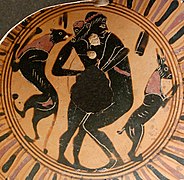
File:Pederastic erotic scene Louvre F85bis.jpg
Pederastic erotic scene: intercrural sex between a teenager (on the left, with long hair) and a young man (on the right, with short hair). Fragment of a black-figure Attic cup, 550 BC–525 BC.

Master of Pleasure and Master of Pain: Three Anecdotes about Sophokles and Euripides

These are from the Gnomologium Vaticanum

404

“When Menander was asked what the difference was between Sophokles and Euripides he said that Sophokles makes people feel pleasure while Euripides makes his audience feel anger.”

Μένανδρος ἐρωτηθεὶς τί διαφέρουσιν ἀλλήλων Σοφοκλῆς καὶ Εὐριπίδης εἶπεν ὅτι Σοφοκλῆς μὲν τέρπεσθαι ποιεῖ τοὺς ἀνθρώπους, Εὐριπίδης δὲ σκυθρωπάζειν τοὺς ἀκροατάς.


518

“Sophokles the tragic poet, after he heard that Euripides died in Macedonia, said “The whetstone of my poems is gone.”

Σοφοκλῆς, ὁ τῶν τραγῳδιῶν ποιητής, ἀκούσας Εὐριπίδην ἐν Μακεδονίᾳ τεθνηκέναι εἶπεν· „ἀπώλετο ἡ τῶν ἐμῶν ποιημάτων ἀκόνη.”


519

“When he was asked why he made people with noble characters and Euripides made those of base ones, Sophokles answered “Because I make people how they should be and he makes people as they are.”

῾Ο αὐτὸς ἐρωτηθεὶς διὰ τί αὐτὸς μὲν ποιεῖ τὰ ἤθη τῶν ἀνθρώπων χρηστά, Εὐριπίδης δὲ φαῦλα „ὅτι” ἔφη „ἐγὼ μέν, οἵους ἔδει εἶναι, τοὺς ἀνθρώπους ποιῶ, ἐκεῖνος δέ, ὁποῖοί εἰσιν.”

Image result for Sophocles and euripides

Quipping with Diogenes

These sayings come from the Gnomologium Vaticanum


168 “Diogenes, after he saw a small city with big gates, said “Lock the gates so that the city can’t escape!”

Διογένης θεασάμενος μικρὰν πόλιν μεγάλας πύλας ἔχουσαν ἔφη· „κλείσατε τὰς πύλας, μὴ ἡ πόλις ἐξέλθῃ”.


189 “When [Diogenes] was asked what is evil in life, he said “A pretty woman.”

῾Ο αὐτὸς ἐρωτηθεὶς τί κακὸν ἐν βίῳ ἔφη· „γυνὴ καλὴ τῷ εἴδει”.


201 “[Diogenes] to say that he had everything that happened in the tragedies: for he was a beggar, a wanderer, and he had an ephemeral life.”

῾Ο αὐτὸς ἔφη πάντα ἔχειν τὰ ἐν ταῖς τραγῳδίαις· εἶναί τε γὰρ πτωχός, πλανήτης, βίον ἔχων ἐφήμερον·

Image result for ancient greek sleep Diogenes the Cynic

Sleep, Death, and Dying: Some Anecdotes for a Monday

These sayings come from the Gnomologium Vaticanum

128 “When Aesop was asked what the greatest trouble might be for people he responded “If the dead return and ask for their stuff back.”

῾Ο αὐτὸς ἐρωτώμενος ὑπό τινος πῶς ἂν μεγίστη ταραχὴ γένοιτο ἐν ἀνθρώποις ἔφη· „εἰ οἱ τετελευτηκότες ἀναστάντες ἀπαιτοῖεν τὰ ἴδια.”


160 “Biôn used to say that [we have] two teachers for death: the time before we were born and sleep.”

Βίων ἔλεγε δύο διδασκαλίας θανάτου εἶναι, τόν τε πρὸ τοῦ γενέσθαι χρόνον καὶ τὸν ὕπνον.


446 “Plato said that sleep was a short-lived death but death was a long-lived sleep.”

῾Ο αὐτὸς ἔφησε τὸν μὲν ὕπνον ὀλιγοχρόνιον θάνατον, τὸν δὲ θάνατον πολυχρόνιον ὕπνον.


64 “Anaxarkhos, the natural philosopher, when king Alexander said to him “I will hang you” responded: “Threaten others. It is no difference to me whether I rot above or below the earth.”

᾿Ανάξαρχος, ὁ φυσικὸς φιλόσοφος, ᾿Αλεξάνδρου τοῦ βασιλέως εἰπόντος αὐτῷ· „κρεμῶ σε”, „ἄλλοις”, ἔφη, „ἀπείλει· ἐμοὶ δὲ οὐδὲν διαφέρει ὑπὲρ γῆς ἢ κατὰ γῆς σήπεσθαι.”

Image result for ancient greek sleep and death vase
Sleep and Death on the Euphronios Krater