Who Punishes Gods for Doing Wrong?

Euripides Ion, 329-443

“Why does this woman abuse the god with words
And twist him up with constant riddles?
Is it because she loves the women she gets oracles for?
Is she keeping something silent because she needs to?
But why does Erekhtheus’ daughter matter to me?
She’s nothing to me! I will go to fill
The purificatory vessels with golden cups of water

I need to criticize Apollo. What’s he thinking?
He keeps ruining girls for marriage with rape
And producing children in secret only to ignore them
As they die. Don’t act this way, but since you can,
Pursue excellence. The gods punish any mortal
Who does wrong. How is it right for those who write
The laws for mortals to lead lawless lives?”

τί ποτε λόγοισιν ἡ ξένη πρὸς τὸν θεὸν
κρυπτοῖσιν αἰεὶ λοιδοροῦσ᾿ αἰνίσσεται;
ἤτοι φιλοῦσά γ᾿ ἧς ὕπερ μαντεύεται,
ἢ καί τι σιγῶσ᾿ ὧν σιωπᾶσθαι χρεών;
ἀτὰρ θυγατρὸς τῆς Ἐρεχθέως τί μοι
μέλει; προσήκει γ᾿ οὐδέν. ἀλλὰ χρυσέαις
πρόχοισιν ἐλθὼν εἰς ἀπορραντήρια
δρόσον καθήσω. νουθετητέος δέ μοι
Φοῖβος, τί πάσχει· παρθένους βίᾳ γαμῶν
προδίδωσι; παῖδας ἐκτεκνούμενος λάθρᾳ
θνῄσκοντας ἀμελεῖ; μὴ σύ γ᾿· ἀλλ᾿, ἐπεὶ κρατεῖς,
ἀρετὰς δίωκε. καὶ γὰρ ὅστις ἂν βροτῶν
κακὸς πεφύκῃ, ζημιοῦσιν οἱ θεοί.
πῶς οὖν δίκαιον τοὺς νόμους ὑμᾶς βροτοῖς
γράψαντας αὐτοὺς ἀνομίαν ὀφλισκάνειν

501-508

“Play your pipe, Pan
In your caves
Where some pitiful girl
Gave birth to a child with Apollo
And then exposed it as a feast
For the birds and beasts
The insult of their bitter ‘marriage’.
Never at the loom or in tales have I heard of
Mortal women having divine children and good fortune.”

συρίζεις, ὦ Πάν,
τοῖσι σοῖς ἐν ἄντροις,
ἵνα τεκοῦσά τις
παρθένος μελέα βρέφος
Φοίβῳ πτανοῖς ἐξόρισεν
θοίναν θηρσί τε φοινίαν
δαῖτα, πικρῶν γάμων ὕβριν·
οὔτ᾿ ἐπὶ κερκίσιν οὔτε †λόγοις† φάτιν
ἄιον εὐτυχίας μετέχειν θεόθεν τέκνα θνατοῖς.

Apollo on a coin


Gods for Magistrates

Montesquieu, Dissertation on Politics in Roman Religion (Part 9)

Although they magistrates may not have slipped into the religion of the people, it is not necessary to believe that they did not have one at all. M. Cudworth has well proven that those who were most enlightened among the pagans adored one supreme divinity, of which the divinities of the people only participated. The pagans, much less scrupulous in their cult practices, believed that it made no difference whether one adored the divinity itself or its manifestations – whether, for example, one adored in Venus the passive force of nature or the supreme divinity, in as much as she was responsible for all generation; whether one made a cult for the sun, or for the supreme being, in as much as he gave life to the plants and made the earth fertile through his heat. Thus the Stoic Balbus says, in Cicero, ‘that God participates, through his nature, in all those things down below: that he is Ceres on the ground, Neptune on the seas.’ We would know more if we had the book which Asclepiades composed, titled ‘The Concordance of all Theologies.’

Quoique les magistrats ne donnassent pas dans la religion du peuple, il ne faut pas croire qu’ils n’en eussent point. M. Cudworth a fort bien prouvé que ceux qui étaient éclairés parmi les païens adoraient une divinité suprême, dont les divinités du peuple n’étaient qu’une participation. Les païens, très-peu scrupuleux dans le culte, croyaient qu’il était indifférent d’adorer la divinité même, ou les manifestations de la divinité ; d’adorer, par exemple, dans Vénus, la puissance passive de la nature, ou la divinité suprême, en tant qu’elle est susceptible de toute génération ; de rendre un culte au soleil, ou à l’Être suprême, en tant qu’il anime les plantes et rend la terre féconde par sa chaleur. Ainsi le stoïcien Balbus dit, dans Cicéron, « que Dieu participe, par sa nature, à toutes les choses d’ici-bas ; qu’il est Cérès sur la terre, Neptune sur les mers ». Nous en saurions davantage si nous avions le livre qu’Asclépiade composa, intitulé l’Harmonie de toutes les théologies.

Fertility Troubles? Have You Tried a Puppy?

Hippocrates of Cos, On Barrenness 3

The following is a penultimate step in a treatment for female infertility

“During the final vapor bath, at that moment when she is about to stop the treatment, cut open the youngest puppy you can find, pound down every kind of fragrant and dry aromatic spices. After you have removed the puppy’s innards, fill it as much as you can with the aromatics and pack them in. Put wood underneath, put the puppy in the pot and add in some extremely fragrant wine before you raise the temperature through the pipe.

As much as her strength will allow, have the woman stay in the vapor bath the entire day, continuing the heating and asking her whether she thinks that the smell of the herbs is coming through her mouth. For this is no small sign that the woman being treated has conceived.”

(3) Τὴν τελευταῖαν δὲ πυρίην, ὅταν μέλλῃς ἀφιέναι τῆς θεραπείης, σκυλάκιον ὅτι νεώτατον ἀνασχίσας, ἀρωμάτων παντοδαπῶν ὅτι εὐωδεστάτων καὶ ξηροτάτων κόψας, τὰ ἐντοσθίδια ἐξελὼν τοῦ σκυλακίου ἐμπλῆσαι καὶ σάξαι ὅτι μάλιστα τῶν ἀρωμάτων, ξυλήφια δὲ ὑποθείς, ἐς τὸν ἐχῖνον ἐνθεὶς τὸ σκυλάκιον, οἴνου ὡς εὐωδεστάτου ἐπιχέαι, καὶ πυριῆν διὰ τοῦ αὐλοῦ· καὶ ὅπως κατὰ δύναμιν εἶναι ὅλην τὴν ἡμέρην ἐπὶ ταύτης τῆς πυρίης, πυριῆσαί τε καὶ ἐρωτᾶν αὐτήν, εἰ ὀδμὴ διὰ τοῦ στόματος δοκέει ὄζειν τῶν ἀρωμάτων· σημεῖον γὰρ οὐ σμικρὸν ἐς ξύλληψιν τῇ θεραπευομένῃ.

Image result for medieval manuscript puppies
Paris, Bibliothèque Sainte-Geneviève, ms. 143, fol. 174r

Hippocrates on the Problems and Solution to Menstruation

Hippocrates, On Girls

“Blood returns only slowly from the heart and mind because the veins there are transverse and the place is really important and is inclined toward madness and anger. Whenever these parts are filled, a wandering shiver moves about with a fever. When the situation is like this, a woman goes into a rage because of the inflammation. She wants to murder because of the rotting. And because of the depression, she is frightened and afraid. The compression around the heart cause them to want to self-harm and because of the evil state of the blood, her mind is sad and sorrowful and longs for evil.

She also names weird and frightening things that push women to leap or to throw themselves in wells or hang themselves. Even when there are no visions, there’s some strange pleasure that makes her long for death as if it is a kind of good thing. When a woman is sensible again, women will dedicate many different things to Artemis, including really expensive women’s cloaks all because they are tricked by prophets.

Relief from this disease comes whenever there is nothing impeding the flow of blood. I tell young women who are suffering this kind of thing to live with a man as soon as possible, since, if they are pregnant, they become healthy. Otherwise, a girl will be overtaken by this disease or another in puberty or a little latter on.  Barren married women sometimes suffer these things.”

ἐκ δὲ τῆς καρδίης καὶ τῶν φρενῶν βραδέως παλιρροεῖ· ἐπικάρσιαι γὰρ αἱ φλέβες καὶ ὁ τόπος ἐπίκαιρος ἔς τε παραφροσύνην καὶ μανίην ἕτοιμος. ὁπόταν γὰρ πληρωθέωσι ταῦτα τὰ μέρεα, καὶ φρίκη ξὺν πυρετῷ ἀναΐσσει πλανήτης. ἐχόντων δὲ τούτων ὧδε, ὑπὸ μὲν τῆς ὀξυφλεγμασίης μαίνεται, ὑπὸ δὲ τῆς σηπεδόνος φονᾷ, ὑπὸ δὲ τοῦ ζοφεροῦ φοβέεται καὶ δέδοικεν, ὑπὸ δὲ τῆς περὶ τὴν καρδίην πιέξιος ἀγχόνας κραίνουσιν, ὑπὸ δὲ τῆς κακίης τοῦ αἵματος ἀλύων καὶ ἀδημονέων ὁ θυμὸς κακὸν ἐφέλκεται.

ἕτερον δὲ καὶ φοβερὰ ὀνομάζει· καὶ κελεύουσιν ἅλλεσθαι καὶ καταπίπτειν ἐς φρέατα ἢ ἄγχεσθαι, ἅτε ἀμείνονά τε ἐόντα καὶ χρείην ἔχοντα παντοίην. ὁκότε δὲ ἄνευ φαντασμάτων, ἡδονή τις ἀφ᾿ ἧς ἐρᾷ τοῦ θανάτου ὥσπερ τινὸς ἀγαθοῦ. φρονεούσης δὲ τῆς ἀνθρώπου, τῇ Ἀρτέμιδι αἱ γυναῖκες ἄλλα τε πολλὰ καὶ τὰ ἱμάτια τὰ πολυτελέστατα καθιεροῦσι τῶν γυναικείων, κελευόντων τῶν μάντεων ἐξαπατεώμεναι. ἡ δὲ τῆσδε ἀπαλλαγή, ὁκόταν μὴ ἐμποδίζῃ τι τοῦ αἵματος τὴν ἀπόρρυσιν. κελεύω δὴ τὰς παρθένους, ὁκόταν τι τοιοῦτο πάσχωσιν, ὡς τάχιστα ξυνοικῆσαι ἀνδράσιν· ἢν γὰρ κυήσωσιν, ὑγιέες γίνονται.  εἰ δὲ μή, ἢ εὐθέως ἅμα τῇ ἥβῃ ἢ ὀλίγον ὕστερον ἁλώσεται, εἴπερ μὴ ἑτέρῃ νούσῳ. τῶν δὲ ἠνδρωμένων γυναικῶν στεῖραι ταῦτα πάσχουσιν.

Hippocrates sticks to this logic elsewhere too.

Joseph Mallord William Turner – Vision of Medea, 1828

When ‘Good’ Means ‘Good Enough’

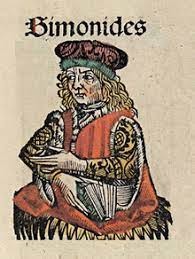
In the dialogue “Protagoras,” Plato attributes the following poem to Simonides of Ceos, the itinerant and influential poet who lived between the late-6th century and mid-5th century BC.

The text is anything but pristine. Plato did not quote all of the verses and he interpolated verses of his own (I’ve excised the lines editors have found most doubtful).

I’ve done some violence of my own: to make the poem’s argument–and what an argument it is!–somewhat easier to follow (and it still isn’t easy), I’ve divided the poem into more stanzas than exist in the Greek.

Simonides Fr. 542 (PMG)

It’s hard for a man to be truly good
in hands, feet, and mind,
a square, as it were, drawn without blemish . . .

Yet Pittacus’ maxim does not suit me,
though it was spoken by a wise man:
it’s hard, he said, to be good,
an honor only a god could enjoy.

A man can’t help but be bad when misfortune,
before which he’s helpless, overtakes him.
When things are going well, all men are good,
but when things are going badly, men are bad . . .

So, I’d never waste my allotted life searching
in empty, vain hope for the impossible:
an altogether unblemished man
among us men who eat the broad earth’s fruits.
But if I find one, I’ll let you know.

I praise and I love every man
who, when he’s free to choose,
does nothing blameworthy.
Against compulsion though,
not even the gods can fight . . .

<Someone> who’s not too lazy,
who judges what profits the city,
this is a sound man.
Even I can’t fault him,
not when the race of fools is countless.
Truth be told, all things are beautiful
when base things aren’t intermixed.

Fr.542 (PMG)

ἄνδρ᾿ ἀγαθὸν μὲν ἀλαθέως γενέσθαι
χαλεπὸν χερσίν τε καὶ ποσὶ καὶ νόῳ
τετράγωνον ἄνευ ψόγου τετυγμένον.

[Between 6 and 15 lines are missing]

οὐδέ μοι ἐμμελέως τὸ Πιττάκειον
νέμεται, καίτοι σοφοῦ παρὰ φωτὸς εἰρημένον·
χαλεπὸν φάτ᾿ ἐσθλὸν ἔμμεναι.
θεὸς ἂν μόνος τοῦτ᾿ ἔχοι γέρας, ἄνδρα δ᾿ οὐκ
ἔστι μὴ οὐ κακὸν ἔμμεναι,
ὃν ἀμήχανος συμφορὰ καθέλῃ·
πράξας γὰρ εὖ πᾶς ἀνὴρ ἀγαθός,
κακὸς δ᾿ εἰ κακῶς [ ]
[
[

τοὔνεκεν οὔ ποτ᾿ ἐγὼ τὸ μὴ γενέσθαι
δυνατὸν διζήμενος κενεὰν ἐς ἄπρακτον
ἐλπίδα μοῖραν αἰῶνος βαλέω,
πανάμωμον ἄνθρωπον, εὐρυεδέος ὅσοι
καρπὸν αἰνύμεθα χθονός·
ἐπὶ δ᾿ ὑμὶν εὑρὼν ἀπαγγελέω.
πάντας δ᾿ ἐπαίνημι καὶ φιλέω,
ἑκὼν ὅστις ἔρδῃ
μηδὲν αἰσχρόν· ἀνάγκᾳ
δ᾿ οὐδὲ θεοὶ μάχονται.

[
[
] μηδ᾿ ἄγαν ἀπάλαμνος εἰδώς
γ᾿ ὀνησίπολιν δίκαν,
ὑγιὴς ἀνήρ· οὐδὲ μή μιν ἐγὼ
μωμήσομαι· τῶν γὰρ ἠλιθίων
ἀπείρων γενέθλα.
πάντα τοι καλά, τοῖσίν
τ᾿ αἰσχρὰ μὴ μέμεικται.

Larry Benn has a B.A. in English Literature from Harvard College, an M.Phil in English Literature from Oxford University, and a J.D. from Yale Law School. Making amends for a working life misspent in finance, he’s now a hobbyist in ancient languages and blogs at featsofgreek.blogspot.com.


There’s No Hektor Here

Euripides, Andromache, 96-102

“I have not a single but many things to mourn:
My native city, Hektor dead, and the hateful
Fate to which I was tied when I fell
Unworthily into a life of slavery.
Don’t ever say that any mortal is blessed
Before you see how they end life at death
How they finish that last day and go below.”

πάρεστι δ᾽ οὐχ ἓν ἀλλὰ πολλά μοι στένειν,
πόλιν πατρῴαν τὸν θανόντα θ᾽ Ἕκτορα
στερρόν τε τὸν ἐμὸν δαίμον᾽ ᾧ συνεζύγην
δούλειον ἦμαρ εἰσπεσοῦσ᾽ ἀναξίως.
χρὴ δ᾽ οὔποτ᾽ εἰπεῖν οὐδέν᾽ ὄλβιον βροτῶν,
πρὶν ἂν θανόντος τὴν τελευταίαν ἴδῃς
ὅπως περάσας ἡμέραν ἥξει κάτω.

168-177

“No Hektor is in this place.
Nor Priam nor their gold. But this is a Greek city.
Are you so lost in your ignorance, you wretch,
That you dare to sleep with the man who killed
Your husband and to have a child for those who
Killed your family? This is the way of all foreigners:
A father sleeps with his daughter and son with his mother,
A girl sleeps with her brother and the dearest relatives
Fall apart over murder. The law prevents none of these things.
Don’t introduce any of these practices here: it is not good
For one man to hold the reins for two wives.
Anyone who wants to avoid living badly
Prefers looking to one lover in his bed.”

οὐ γάρ ἐσθ᾽ Ἕκτωρ τάδε,
οὐ Πρίαμος οὐδὲ χρυσός, ἀλλ᾽ Ἑλλὰς πόλις.
εἰς τοῦτο δ᾽ ἥκεις ἀμαθίας, δύστηνε σύ,
ἣ παιδὶ πατρός, ὃς σὸν ὤλεσεν πόσιν,
τολμᾷς ξυνεύδειν καὶ τέκν᾽ αὐθεντῶν πάρα
τίκτειν. τοιοῦτον πᾶν τὸ βάρβαρον γένος:
πατήρ τε θυγατρὶ παῖς τε μητρὶ μείγνυται
κόρη τ᾽ ἀδελφῷ, διὰ φόνου δ᾽ οἱ φίλτατοι
χωροῦσι, καὶ τῶνδ᾽ οὐδὲν ἐξείργει νόμος.
ἃ μὴ παρ᾽ ἡμᾶς εἴσφερ᾽: οὐδὲ γὰρ καλὸν
δυοῖν γυναικοῖν ἄνδρ᾽ ἕν᾽ ἡνίας ἔχειν,
ἀλλ᾽ εἰς μίαν βλέποντες εὐναίαν Κύπριν
στέργουσιν, ὅστις μὴ κακῶς οἰκεῖν θέλει.

“Amdromache” by Georges Rochegrosse

Hip to be Hypocritical

Montesquieu, Dissertation on Politics in Roman Religion (Part 8)

Those who read Roman history and are in the least perceptive find at every step the traits of the political system which we’re talking about. So, in particular, we see Cicero who even among his friends makes every moment a confession of his disbelief, but speaks in public with an extraordinary zeal against the impiety of Verres. We see Clodius, who insolently profaned the mysteries of Bona Sea, and whose impiety had been marked out by interruptions of the senate, made a harangue filled with the same zeal for that same senate which he struck against the disregard for ancient practices and religion. One sees Sallust, the most corrupt of all citizens, setting at the head of his works a preface worthy of the gravity and austerity of Cato. I would never finish if I wished to produce all the examples of this.

Ceux qui lisent l’histoire romaine, et qui sont un peu clairvoyants, trouvent à chaque pas des traits de la politique dont nous parlons. Ainsi on voit Cicéron qui, en particulier, et parmi ses amis, fait à chaque moment une confession d’incrédulité, parler en public avec un zèle extraordinaire contre l’impiété de Verrès. On voit un Clodius, qui avait insolemment profané les mystères de la bonne déesse, et dont l’impiété avait été marquée par vingt arrêts du sénat, faire lui-même une harangue remplie de zèle à ce sénat qui l’avait foudroyé, contre le mépris des pratiques anciennes et de la religion. On voit un Salluste, le plus corrompu de tous les citoyens, mettre à la tête de ses ouvrages une préface digne de la gravité et de l’austérité de Caton. Je n’aurais jamais fait, si je voulais épuiser tous les exemples.

Hey D, Why Did God Make the Comma?

Demetrius, On Style 11

“Aristotle defines the period in this way: The period is a statement which has beginning and an end. He has defined it very well and properly. For, saying the word “period” emphasizes that it begins in a place and ends in a place and is moving toward some goal, like runners once they take off, since the end of the race is already clear to them from the beginning.

This is where the name “period” comes from, an analogy from the circular paths which wind around to an end. Generally speaking, a period is nothing other than a certain kind of composition of words. If you take away its arrangement and circular nature, the subjects remain the same but it is no longer a period.”

(11) Ἀριστοτέλης δὲ ὁρίζεται τὴν περίοδον οὕτως, “περίοδός ἐστι λέξις ἀρχὴν ἔχουσα καὶ τελευτήν,” μάλα καλῶς καὶ πρεπόντως ὁρισάμενος· εὐθὺς γὰρ ὁ τὴν περίοδον λέγων ἐμφαίνει, ὅτι ἦρκταί ποθεν καὶ ἀποτελευτήσει ποι καὶ ἐπείγεται εἴς τι τέλος, ὥσπερ οἱ δρομεῖς ἀφεθέντες· καὶ γὰρ ἐκείνων συνεμφαίνεται τῇ ἀρχῇ τοῦ δρόμου τὸ τέλος. ἔνθεν καὶ περίοδος ὠνομάσθη, ἀπεικασθεῖσα ταῖς ὁδοῖς ταῖς κυκλοειδέσι καὶ περιωδευμέναις. καὶ καθόλου οὐδὲν ἡ περίοδός ἐστι πλὴν ποιὰ σύνθεσις. εἰ γοῦν λυθείη αὐτῆς τὸ περιωδευμένον καὶ μετασυντεθείη, τὰ μὲν πράγματα μένει τὰ αὐτά, περίοδος δὲ οὐκ ἔσται

Our words period, colon, and comma are just Greek words for lengths of clauses used as signs for those things in English. From the Oxford English Dictionary.

Comma Colon Period

Colon

Demetrius, On Style 1

“…So too do things called kôla divide and clarify the language of prose”

οὕτω καὶ τὴν ἑρμηνείαν τὴν λογικὴν διαιρεῖ καὶ διακρίνει τὰ καλούμενα κῶλα

mood mind blown GIF

Comma

Demetrius, On Style 9

“This kind of brevity of speech in writing is called a komma. A komma is defined as shorter than a kôlon.”

ἡ δὲ τοιαύτη βραχύτης κατὰ τὴν σύνθεσιν κόμμα ὀνομάζεται. ὁρίζονται δ᾿ αὐτὸ ὧδε, κόμμα ἐστὶν τὸ κώλου ἔλαττον

teenage mutant ninja turtles mind blown GIF

Autocorrect came for Armand’s grave and made it acute.

Here’s Archolochus fr. 120… συγκεραυνωθεὶς φρένας.

PSA: Colon (punctuation) vs. Colon (Intestine)

Greek kôlon (κῶλον) can mean body part (as in segment, member), so isocolonic can mean having equal-lengthed phrases or equal-lengthed limbs. But our colon (as in the segment between intestines and anus) comes from Greek kolon (κόλον). To make matters more confusing, later Greek, influenced by the closeness of the two, does present kôlon for the body part.

Here’s Beekes Etymological Dictionary 2010 on each:

kolonkwlon

Dancing With the Heroes

Schol ad Pind. Pyth 2:

 “He used the word Kastorian because of the account of some that the Dioskouri invented the dance in armor. For some say that the Dioskouroi are dancers. Epicharmus, however, says that Athena played the martial song for the Dioskouri on an Aulos and for this reason the Lakonians march against the enemy to the same sound. But others claim that he Kastorean is a certain rhythm and that the Laconians use it when attacking the enemy.

There is also a distinction between the dance of the pyrrikhê for which the hyporkhêmata were composed. For some say that the Kouretes invented dancing in armor and performed this dance, or that Pyrrikhos of Krete or Thaletas first created them. But Sosibios argues that all hyporkhêmata are Cretan.

Still, some say that the pyrrhic dance is not named from Pyrrikhos of Crete but from Achilles’ son Pyrrhos who danced in his arms over his victory over Telephos, which the Kyprians call the prulis, making the name pyrrikhê from the pyre.”

Καστόρειον εἶπε διὰ τὸ τὴν ἔνοπλον ὄρχησιν κατ᾽ ἐνίους τοὺς Διοσκούρους εὑρεῖν· ὀρχηστικοὶ γάρ τινες οἱ Διόσκουροι. ὁ δὲ Ἐπίχαρμος τὴν Ἀθηνᾶν φησι τοῖς Διοσκούροις τὸν ἐνόπλιον νόμον ἐπαυλῆσαι, ἐξ ἐκείνου δὲ τοὺς Λάκωνας μετ᾽ αὐλοῦ τοῖς πολεμίοις προσιέναι. τινὲς δὲ ῥυθμόν τινά φασι τὸ Καστόρειον, χρῆσθαι δὲ αὐτῶι τοὺς Λάκωνας ἐν ταῖς πρὸς τοὺς πολεμίους συμβολαῖς. διέλκεται δὲ ἡ τῆς πυρρίχης ὄρχησις, πρὸς ἣν τὰ ὑπορχήματα ἐγράφησαν. ἔνιοι μὲν οὖν φασι τὴν ἔνοπλον ὄρχησιν πρῶτον Κούρητας εὑρηκέναι, καὶ ὑπορχήσασθαι, αὖθις δὲ Πύρριχον Κρῆτα συντάξασθαι, Θαλήταν δὲ πρῶτον τὰ εἰς αὐτὴν ὑπορχήματα. Σωσίβιος δὲ τὰ ὑπορχηματικὰ πάντα μέλη Κρηταικὰ λέγεσθαι. ἔνιοι δὲ οὐκ ἀπὸ Πυρρίχου τοῦ Κρητὸς τὴν πυρρίχην ὠνομάσθαι ἀλλὰ ἀπὸ τοῦ παιδὸς τοῦ Ἀχιλλέως Πύρρου ἐν τοῖς ὅπλοις ὀρχησαμένου ἐπὶ τῆι κατὰ Εὐρυπύλου τοῦ Τηλέφου νίκηι. ᾽Αριστοτέλης δὲ πρῶτον Ἀχιλλέα ἐπὶ τῆι τοῦ Πατρόκλου πυρᾶι τῆι πυρρίχηι κεχρῆσθαι, ἣν παρὰ Κυπρίοις φησὶ πρύλιν λέγεσθαι, ὥστε παρὰ τὴν πυρὰν τῆς πυρρίχης τὸ ὄνομα θέσθαι.

Paradoxographus Vaticanus 58

58 “First of the Greeks, the Cretans were possessing the laws which Minos set down. Minos claimed to have learned them from Zeus after he wandered for nine years over a certain month which is called the “cave of Zeus”. The children of the Cretans are raised in common and brought up hardy with one another. They learn the arts of war, and hunts, and they also practice uphill runs without shoes and they work hard on the pyrrhic dance which Purrikhos invented first.”

Κρῆτες πρῶτοι ῾Ελλήνων νόμους ἔσχον Μίνωος θεμένου· προσεποιεῖτο δὲ Μίνως παρὰ τοῦ Διὸς αὐτοὺς μεμαθηκέναι ἐννέα ἔτη εἴς τι ὄρος φοιτήσας, ὃ Διὸς ἄντρον ἐλέγετο. Οἱ Κρητῶν παῖδες ἀγελάζονται κοινῇ μετ’ ἀλλήλων σκληραγωγούμενοι καὶ τὰ πολέμια διδασκόμενοι καὶ θήρας δρόμους τε ἀνάντεις ἀνυπόδετοι ἀνύοντες καὶ τὴν ἐνόπλιον πυρρίχην ἐκπονοῦντες, ἥντινα πρῶτος εὗρε Πύρριχος.

Zenobius 3.71

“To dance in darkness”: A proverb applied to those who toil over unwitnessed things—their work is invisible.”

᾿Εν σκότῳ ὀρχεῖσθαι: ἐπὶ τῶν ἀμάρτυρα μοχθούντων, ὧν τὸ ἔργον ἀφανές.

 A war-dance was performed in honor of Athena’s birth in full-armor at the Panathenain festival (pyrrhiche). See Walter Burkert, Greek Religion 1985, 102.

Image result for hero dancing vase

Deceit Essential to Statecraft

Montesquieu, Dissertation on Politics in Roman Religion (Part 7)

It is true that the Romans occasionally punished a general for not following the guidance of the omens; and this too was a new effect of Roman politics. They did not want it to seem to the people that misfortune, captured cities, or lost battles were the effect of a bad condition of the state or of the weakness of the Republic; they preferred that it seem rather the impiety of one citizen, against whom the gods were angered. With this persuasion, it was not difficult to gain the trust of the people. To achieve this, there was no need for ceremonies or sacrifices. Thus, whenever the city was menaced or afflicted by some misfortune, they did not fail to look for the cause, which was always the anger of some god whose cultivation they had neglected. It sufficed, in order to regain their goodwill, to make some sacrifices and some processions, to purify the city with torches, sulphur, and salted water. It was necessary for the victim to tour the ramparts before being slaughtered, and this practice was called the sacrificium amburbium and the amburbiale. They sometimes purified their armies and their fleets, after which they recovered some courage.

Scaevola, the pontifex Maximus, and Varro, one of their great theologians, said that it was necessary for the people to be ignorant of many true things, and to believe many false ones. Saint Augustine said that Varro had discovered in this the secret of politics and of ministers of the state.
This same Scaevola, according to Augustine, divided the gods into three classes: those who were established by the poets, those who were established by the philosophers, and those who were established by the magistrates, a principibus civitatis.

Il est vrai qu’on punissait quelquefois un général de n’avoir pas suivi les présages; et cela même était un nouvel effet de la politique des Romains. On voulait faire voir au peuple que les mauvais succès, les villes prises, les batailles perdues, n’étaient point l’effet d’une mauvaise constitution de l’État, ou de la faiblesse de la république, mais de l’impiété d’un citoyen, contre lequel les dieux étaient irrités. Avec cette persuasion, il n’était pas difficile de rendre la confiance au peuple; il ne fallait pour cela que quelques cérémonies et quelques sacrifices. Ainsi, lorsque la ville était menacée ou affligée de quelque malheur, on ne manquait pas d’en chercher la cause, qui était toujours la colère de quelque dieu dont on avait négligé le culte: il suffisait, pour s’en garantir, de faire des sacrifices et des processions, de purifier la ville avec des torches, du soufre et de l’eau salée. On faisait faire à la victime le tour des remparts avant de l’égorger, ce qui s’appelait sacrificium amburbium, et amburbiale. On allait même quelquefois jusqu’à purifier les armées et les flottes, après quoi chacun reprenait courage.

Scévola, grand pontife, et Varron, un de leurs grands théologiens, disaient qu’il était nécessaire que le peuple ignorât beaucoup de choses vraies, et en crût beaucoup de fausses: saint Augustin dit que Varron avait découvert par là tout le secret des politiques et des ministres d’État.

Le même Scévola, au rapport de saint Augustin, divisait les dieux en trois classes: ceux qui avaient été établis par les poëtes, ceux qui avaient été établis par les philosophes, et ceux qui avaient été établis par les magistrats, à principibus civitatis.