Cicero On the Civil Conflict and the Punishment of Children

Cicero, Letters to Brutus, 23 (I.15), 43 BCE

“There has been no civil war in our state which I can remember in which, regardless of which side was victorious, there was not some hope for a government in the future. In this conflict, however, I could not easily confirm what government we would have if we are victorious, but there will surely never be another if we lose.

This is why I put forth harsh legislation against Antony and Lepidus too, not so much for the sake of vengeance as to frighten the lawless citizens among us from besieging their own country and to prepare for posterity a reason why no one should desire to emulate such insanity.

Although this idea certainly was not more mine than everyone’s, in one way it seems cruel: the fact that children, who have earned none of this, suffer the same punishment as their parents. But this is an ancient practice which has existed in every kind of state. Even the children of Themistocles lived in deprivation! If the same penalty attends citizens condemned in court, how could we possibly be easier against our enemies? And what can anyone complain about me when he would have to admit that if he had defeated me he would have treated me worse?”

nullum enim bellum civile fuit in nostra re publica omnium quae memoria mea fuerunt, in quo bello non, utracumque pars vicisset, tamen aliqua forma esset futura rei publicae: hoc bello victores quam rem publicam simus habituri non facile adfirmarim, victis certe nulla umquam erit. dixi igitur sententias in Antonium, dixi in Lepidum severas, neque tam ulciscendi causa quam ut et in praesens sceleratos civis timore ab impugnanda patria deterrerem et in posterum documentum statuerem ne quis talem amentiam vellet imitari. quamquam haec quidem sententia non magis mea fuit quam omnium. in qua videtur illud esse crudele, quod ad liberos, qui nihil meruerunt, poena pervenit. sed id et antiquum est et omnium civitatum, si quidem etiam Themistocli liberi eguerunt. et si iudicio damnatos eadem poena sequitur civis, qui potuimus leniores esse in hostis? quid autem queri quisquam potest de me qui si vicisset acerbiorem se in me futurum fuisse confiteatur necesse est?

Siege of Montargis. Chroniques de France ou de Saint Denis (from 1422 to 1460) France, N. (Calais?); 1487. ff. 1-299v. British Library, Royal 20 E VI f. 22

Tawdry Tuesday: Proctological Proverb Edition

Arsenius, 34a1

“May you fall into Hades’ asshole”: [a curse]: may you die.

῞Αιδου πρωκτῷ περιπέσῃς: ἤγουν τελευτήσῃς.

Note: Even though Ancient Greek prôktos can merely mean “rear end” (as in butt), it most often means ‘anus’ in comedy and insults. Also, I wanted to use something profane and given the British/American divide on arse/ass, I decided just to go with “asshole” because it is funnier. In addition, I know that dative + peri for in the first example is not properly fall into, but “fall around, trace around, linger in” does not have the same ‘punch’.

Diogenianus (v.1 e cod. Marz. 2.42)

“I wish you’d fall into Hades’ asshole”: this is clear

῞Αιδου πρωκτῷ περιπέσοις: δῆλον.

Diogenianus (v.2 e cod. Vindob. 133, 1.97 )

“I wish you’d fall into Hades’ asshole”: Used for cursing someone

Αἵδου πρωκτῷ περιπέσοις: ἐπὶ τῶν καταρωμένων τινί.

Diogenianus, 3.58

“The asshole survives the bath” [or, “Ass surpasses the bath”]. Whenever someone is not able to wash himself, but his bowels still assail him. This is a proverb used for things done uselessly.

Πρωκτὸς λουτροῦ περιγίνεται: ὅταν τις μὴ δύνηται ἀπονίψασθαι, ἀλλ’ ἡ κοιλία αὐτῷ ἐπιφέρηται. λέγεται ἡ παροιμία ἐπὶ τῶν ἀνωφελῶς πραττομένων.

Michael Apostolius, 14.78

“The asshole survives the bath”: This proverb is used for things done uselessly and done for show. For people with thick asses and potbellies are not able to wash themselves off easily.”

Πρωκτὸς λουτροῦ περιγίνεται: ἐπὶ τῶν ἀνωφελῶν καὶ εἰκῇ πραττομένων ἐλέγετο· οἱ γὰρ παχύπρωκτοι καὶ προγάστορες οὐ δύνανται ἑαυτοὺς ἀπονίψασθαι εὐπετῶς.

Zenobius, Vulg. 1.52

“It was cured by Akesias”: this is a proverb for when things are healed for the worse. Aristophanes provides the proverb in tetrameters: “Akesias healed his asshole.”

Ἀκεσίας ἰάσατο· ἐπὶ τῶν ἐπὶ τὸ χεῖρον ἰωμένων. ὅλην δὲ Ἀριστοφάνης ἐν τετραμέτροις τὴν παροιμίαν ἐκφέρει, λέγων· Ἀκεσίας τὸν πρωκτὸν ἰάσατο.

Suda, s.v. Ἀφευθεὶς

“Singed around the asshole:” Aristophanes has this instead of being “all burned up”

Ἀφευθεὶς τὸν πρωκτόν: Ἀριστοφάνης ἀντὶ τοῦ φλογισθείς.

Balneum Tripergulae – particolare da miniatura del Codice Angelico del “De Balneis Puteolanis� di Pietro da Eboli.

Bonus: Suda on defecation (And there is more of this)

Apopatêma: this is the same as ‘dung’ Eupolis has in his Golden Age: “What is that man? Shit of a fox.” And Kratinus has in Runaway Slaves: I knocked Kerkyon out at dawn when I found him shitting in the vegetables.” We also find the participle apopatêsomenoi (“they are about to shit”) which means they are going to evacuate the feces from their bodies. But patos also means path.

Aristophanes writes “No one sacrifices the old way any more or even enters the temple except for the more than ten thousand who want to shit. So, apopatos is really the voiding of the bowels. Aristophanes also says about Kleonymous: “He went off to shit after he got he army and shat for ten months in the golden mountains? For how long was he closing his asshole? A whole turn of the moon?”

Ἀποπάτημα: αὐτὸ τὸ σκύβαλον. Εὔπολις Χρυσῷ γένει: τί γάρ ἐστ’ ἐκεῖνος; ἀποπάτημ’ ἀλώπεκος. Κρατῖνος Δραπέτισι: τὸν Κερκύονά τε ἕωθεν ἀποπατοῦντ’ ἐπὶ τοῖς λαχάνοις εὑρὼν ἀπέπνιξα. καὶ Ἀποπατησόμενοι, τὴν κόπρον κενώσοντες. πάτος δὲ ἡ ὁδός. Ἀριστοφάνης: οὐδεὶς θύει τοπαράπαν οὐδ’ εἰσέρχεται, πλὴν ἀποπατησόμενοί γε πλεῖν ἢ μύριοι. Ἀπόπατος γὰρ ἡ κένωσις τῆς γαστρός. καὶ Ἀριστοφάνης περὶ Κλεωνύμου φησίν: εἰς ἀπόπατον ᾤχετο στρατιὰν λαβὼν κἄχεζεν ὀκτὼ μῆνας ἐπὶ χρυσῶν ὄρων. πόσου δὲ τὸν πρωκτὸν χρόνου ξυνήγαγε; τῇ πανσελήνῳ.

From Henderson’s Maculate Muse

proktos

Eubulus, fr. 106

“This is an asshole and you are always full of nonsense.
For the asshole is tongueless and chatty at the same time.

(A.) πρωκτὸς μὲν οὖν οὗτός <γε>· σὺ δὲ ληρεῖς ἔχων.
οὗτος γὰρ αὑτός ἐστιν ἄγλωττος λάλος,

Tell Me Ancient Sages: Should I Take a Nap?

Democritus D183 [(B212) Stob. 3.6.27]

“Sleeping in the day is a sign of trouble in the body or else anxiety, laziness or ignorance of the soul”

ἡμερήσιοι ὕπνοι σώματος ὄχλησιν ἢ ψυχῆς ἀδημοσύνην ἢ ἀργίην ἢ ἀπαιδευσίην σημαίνουσι.

But Cicero did it!

Cicero, De Divinatione 2. 142 (Full text on the Scaife Viewer)

“With the exception of that dream about Marius, I don’t remember any one clearly. How many of the nights during my long life have been useless! Now too, thanks to a break in my political work, I have stopped studying at night and I have added daytime napping—which I never used to do at all. But I am neither bothered by any dream in so much sleep—and certainly not concerning these great affairs, and nor do I ever think more to myself that must be dreaming when I actually see the magistrates in the forum and the senators in the senate.”

Mihi quidem praeter hoc Marianum nihil sane, quod meminerim. Frustra igitur consumptae tot noctes tam longa in aetate! Nunc quidem propter intermissionem forensis operae et lucubrationes detraxi et meridiationes addidi, quibus uti antea non solebam, nec tam multum dormiens ullo somnio sum admonitus, tantis praesertim de rebus, nec mihi magis umquam videor, quam cum aut in foro magistratus aut in curia senatum video, somniare.

Theocritus, Epigram 19

“Be bold and sit down—if you want, take a nap”

θαρσέων καθίζευ, κἢν θέλῃς ἀπόβριξον

Philostratus, Heroicus 16

“For he happened to be sleeping there at midday…”

ὁ μὲν γὰρ ἔτυχε καθεύδων μεσημβρίας ἐνταῦθα

Warning…

Apuleius, Metamorphoses 4.27 (Full Latin text on the Scaife Viewer)

“To start with, only false dreams accompany naps during the day and, in addition, even nighttime dreams often prophesy the opposite facts. For example, crying, being beaten or even sometimes having your throat slit in dreams actually predicts profitable or prosperous futures. Laughing or scarfing down honey-sweet treats or having sex, on the contrary, will foretell someone being troubled by depression, physical exhaustion and other kinds of curses.”

Nam praeter quod diurnae quietis imagines falsae perhibentur, tunc etiam nocturnae visiones contrarios eventus nonnumquam pronuntiant. Denique flere et vapulare et nonnumquam iugulari lucrosum prosperumque proventum nuntiant; contra ridere et mellitis dulciolis ventrem saginare vel in voluptatem Veneriam convenire tristitie animi, languore corporis, damnisque ceteris vexatum iri praedicabunt.

Martial, Epigram 3.44.16 (Full Latin text on the Scaife Viewer)

“Exhausted, I am trying to sleep—you keep waking me when I lie down.”

lassus dormio: suscitas iacentem.

Lucian, A True Story 2. 26 (Full Greek text on the Scaife Viewer)

“I was not there for I happened to be taking a nap at the dinner party”

ἐγὼ μὲν οὐ παρῆν· ἐτύγχανον γὰρ ἐν τῷ συμποσίῳ κοιμώμενος

Varro did it too!

Varro, On Agriculture 2.6 (Full text on LacusCurtius)

“I would not be able to live here, where the night and day return and depart in equal turn, if I did not split the difference with my customary midday nap.”

Ego hic, ubi nox et dies modice redit et abit, tamen aestivo die, si non diffinderem meo insiticio somno meridie, vivere non possum. Illic in semenstri die aut nocte quem ad modum quicquam seri aut alescere aut meti possit?

Give me a verdict, Horace….

Horace, Epistle 2.31-36 (Full Latin text on the Scaife Viewer)

“Come now, what disturbs the sound of our shared song?
One who once wore finely made and beautiful hair
One you know was pleasing to thirsty Cinara,
And who would drink bright Falernian in the middle of the day,
Now a small meal pleases him followed by a nap in the soft plants by a river–
It is not shameful to have been a fool, but only not to stop being one.”

Nunc age, quid nostrum concentum dividat audi.
quem tenues decuere togae nitidique capilli,
quem scis immunem Cinarae placuisse rapaci,
quem bibulum liquidi media de luce Falerni,
cena brevis iuvat et prope rivum somnus in herba;
nec lusisse pudet, sed non incidere ludum.

Image result for medieval monk napping
British Library Royal 10 E IV f. 221

Andromache’s Sons With Neoptolemos

Scholia ad Eur. Andromache, 24

“In these halls, I [Andromache] produced this male child / after sleeping with Achilles’ son, my master]:

One source says that she bore only one son to Neoptolemos while others say that there were three: Pyrrhos, Molossos, Aiakos and a daughter named Troas. Lysimachus, in the second volume of his On Homecomings, writes that Proxenos and Nikomedes the Akanthian report in Macedonian Matters that Andromache gave birth to those who were just mentioned, and from Leonassa, Kleodaios’ daughter, [he fathered?] Argos, Pergamos, Pandaros, Dorieus, Genyos, Danae and Eurylockus. They also say that Pyrrhos received the kingdom from his father and that the country was named Mossia to give honor to Molossos.”

κἀγὼ δόμοις [τοῖσδ᾽ ἄρσεν᾽ ἐντίκτω κόρον / πλαθεῖσ᾽ ᾽Αχιλλέως παιδί, δεσπότῃ γ᾽ ἐμῷ] ἰδίως ἕνα φησὶ παῖδα γενέσθαι τῷ Νεοπτολέμῷ, ἄλλων τρεῖς λεγόντων Πύρρον, Μολοσσόν, Αἰακίδην καὶ Τρωάδα. Λυσίμαχος δὲ ἐν τῷ δευτέρῳ τῶν Νόστων φησὶ Πρόξενον καὶ τὸν ᾽Ακάνθιον Νικομήδην ἐν τοῖς Μακεδονικοῖς ἱστορεῖν ἐκ μὲν ᾽Ανδρομάχης γενέσθαι τοὺς προειρημένους, ἐκ δὲ Λεωνάσσης τῆς Κλεοδαίου ῎Αργον, Πέργαμον, Πάνδαρον, Δωριέα, Γένυον, †δανάην, Εὐρύλοχον. φασὶ δὲ Πύρρῳ μὲν ἐγχειρίσαι τὴν βασιλείαν τὸν πατέρα, Μολοσσῷ δὲ τὴν ἐκ τῆς προσηγορίας τιμὴν προστάξαντα τὴν χώραν Μολοσσίαν ὀνομάζειν.

Andromache and Neoptolemus, by Pierre-Narcisse Guerin

The Palladion and Pelops’s Bones

Clement of Alexandria, Protreptikos, 4.47.6

“Many would probably be amazed if they learned that the Palladion, reportedly heaven sent, which Diomedes and Odusseus are said to have taken from Troy and then gave to Demophon, was made of Pelops’s bones, just as the Olympion was made from various bones of an Indian animal. I rely on Dionysus for this, who reports it in the fifth book of his Cycle.”

πολλοὶ δ᾽ ἂν τάχα που θαυμάσειαν, εἰ μάθοιεν τὸ Παλλάδιον τὸ διοπετὲς καλούμενον, ὃ Διομήδης καὶ ᾽Οδυσσεὺς ἱοτοροῦνται μὲν ὑφελέσθαι ἀπὸ ᾽Ιλίου, παρακαταθέσθαι δὲ Δημοφῶντι, ἐκ τῶν Πέλοπος ὀστῶν κατεσκευάσθαι, καθάπερ τὸν ᾽Ολύμπιον ἐξ ἄλλων ὀστῶν ᾽Ινδικοῦ θηρίου. καὶ δὴ τὸν ἱστοροῦντα Διονύσιον ἐν τῶι πέμπτωι μέρει τοῦ Κύκλου παρίστημι.

Image result for odysseus diomedes palladium
Roman Marble Relief of Palladium

Demetrius, Where Does Punctuation Come From?

Demetrius, On Style 11

“Aristotle defines the period in this way: The period is a statement which has beginning and an end. He has defined it very well and properly. For, saying the word “period” emphasizes that it begins in a place and ends in a place and is moving toward some goal, like runners once they take off, since the end of the race is already clear to them from the beginning.

This is where the name “period” comes from, an analogy from the circular paths which wind around to an end. Generally speaking, a period is nothing other than a certain kind of composition of words. If you take away its arrangement and circular nature, the subjects remain the same but it is no longer a period.”

(11) Ἀριστοτέλης δὲ ὁρίζεται τὴν περίοδον οὕτως, “περίοδός ἐστι λέξις ἀρχὴν ἔχουσα καὶ τελευτήν,” μάλα καλῶς καὶ πρεπόντως ὁρισάμενος· εὐθὺς γὰρ ὁ τὴν περίοδον λέγων ἐμφαίνει, ὅτι ἦρκταί ποθεν καὶ ἀποτελευτήσει ποι καὶ ἐπείγεται εἴς τι τέλος, ὥσπερ οἱ δρομεῖς ἀφεθέντες· καὶ γὰρ ἐκείνων συνεμφαίνεται τῇ ἀρχῇ τοῦ δρόμου τὸ τέλος. ἔνθεν καὶ περίοδος ὠνομάσθη, ἀπεικασθεῖσα ταῖς ὁδοῖς ταῖς κυκλοειδέσι καὶ περιωδευμέναις. καὶ καθόλου οὐδὲν ἡ περίοδός ἐστι πλὴν ποιὰ σύνθεσις. εἰ γοῦν λυθείη αὐτῆς τὸ περιωδευμένον καὶ μετασυντεθείη, τὰ μὲν πράγματα μένει τὰ αὐτά, περίοδος δὲ οὐκ ἔσται

Our words period, colon, and comma are just Greek words for lengths of clauses used as signs for those things in English. From the Oxford English Dictionary.

Comma Colon Period

Colon

Demetrius, On Style 1

“…So too do things called kôla divide and clarify the language of prose”

οὕτω καὶ τὴν ἑρμηνείαν τὴν λογικὴν διαιρεῖ καὶ διακρίνει τὰ καλούμενα κῶλα

mood mind blown GIF

Comma

Demetrius, On Style 9

“This kind of brevity of speech in writing is called a komma. A komma is defined as shorter than a kôlon.”

ἡ δὲ τοιαύτη βραχύτης κατὰ τὴν σύνθεσιν κόμμα ὀνομάζεται. ὁρίζονται δ᾿ αὐτὸ ὧδε, κόμμα ἐστὶν τὸ κώλου ἔλαττον

teenage mutant ninja turtles mind blown GIF

Autocorrect came for Armand’s grave and made it acute.

Here’s Archolochus fr. 120… συγκεραυνωθεὶς φρένας.

PSA: Colon (punctuation) vs. Colon (Intestine)

Greek kôlon (κῶλον) can mean body part (as in segment, member), so isocolonic can mean having equal-lengthed phrases or equal-lengthed limbs. But our colon (as in the segment between intestines and anus) comes from Greek kolon (κόλον). To make matters more confusing, later Greek, influenced by the closeness of the two, does present kôlon for the body part.

Here’s Beekes Etymological Dictionary 2010 on each:

kolonkwlon

Persius Addresses a Petulant Man-Baby

Persius, Satires 3.15-19

“Fool, more foolish with each passing day,
Is this what we’ve come to? Ah, why not just be like
A little pigeon or a baby prince and insist on eating chopped up food
Or stop your mom from singing to you because you’re so angry?”

“o miser inque dies ultra miser, hucine rerum
venimus? a, cur non potius teneroque columbo
et similis regum pueris pappare minutum
poscis et iratus mammae lallare recusas?”

Elon Musk's Rich Life Is a Friggin Nightmare (He Tears up Explaining It) |  by Tim Denning | ILLUMINATION | Medium

I hate Education: Let Me Compose a Poem About It

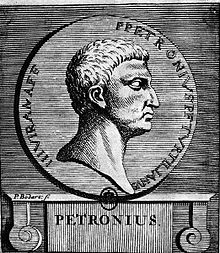
Petronius, Satyricon 4

“The fact is this: if they would tolerate the work advancing by stages, so that the studious youth were were steeped in strict reading, they shaped their minds with the sayings the wise, they were digging out words with a tireless pen, they were listening at length to words they want to imitate, and they believed that what was pleasing to children was never truly exceptional, then that old style of oratory would have the weight of its majesty.

As it is now, children play at school and our youths are mocked in public. And what is more disgusting than this, no one is willing to admit in old age whatever nonsense they learned before. But, please don’t think that I am attacking a tenet of Lucilian humility. I will put what I believe in a poem.”

Quod si paterentur laborum gradus fieri, ut studiosi iuvenes lectione severa irrigarentur, ut sapientiae praeceptis animos componerent, ut verba atroci stilo effoderent, ut quod vellent imitari diu audirent, <ut persuaderent>2 sibi nihil esse magnificum, quod pueris placeret: iam illa grandis oratio haberet maiestatis suae pondus. Nunc pueri in scholis ludunt, iuvenes ridentur in foro, et quod utroque turpius est, quod quisque perperam didicit, in senectute confiteri non vult. Sed ne me putes improbasse schedium Lucilianae humilitatis, quod sentio, et ipse carmine effingam:

Petronius Arbiter by Bodart 1707.jpg

Students without Teaching

Plato, Phaedrus 274e-275a (go here for the full dialogue)

Socrates is telling a story of the invention of writing in Egypt

“When it came to the written letters, Theuth said, ‘This training, King, will make Egyptians wiser and will give them stronger memories: for it is a drug for memory and wisdom!’ But the king replied, “Most inventive Theuth, one man is able to create technology, but another judges how much harm and benefit it brings to those who use it. Just so now you, who are father of letters, declare the opposite of what they are capable because of your enthusiasm.

This craft will engender forgetfulness in the minds of those who learn it from the disuse of the memory since they will trust external writing struck by others, no longer recalling their own thoughts within them. You have discovered a drug for reminding, not one for memory; you will offer students the reputation of wisdom but not the true thing. For many who become students without instruction will seem to know a lot when they are mostly ignorant and difficult to be around, since they have become wise for appearance instead of wise in truth.’

Ph. Socrates, you can easily make up any story about Egypt that you want to…”

ἐπειδὴ δ’ ἐπὶ τοῖς γράμμασιν ἦν, Τοῦτο δέ, ὦ βασιλεῦ, τὸ μάθημα, ἔφη ὁ Θεύθ,

σοφωτέρους Αἰγυπτίους καὶ μνημονικωτέρους παρέξει, μνήμης τε γὰρ καὶ σοφίας φάρμακον εὑρέθη. ῾Ο δ’ εἶπεν, ῏Ω τεχνικώτατε Θεύθ, ἄλλος μὲν δυνατὸς τεκεῖν τὰ τέχνης, ἄλλος δὲ κρῖναι, τίν’ ἔχει μοῖραν βλάβης τε καὶ ὠφελείας τοῖς μέλλουσι χρῆσθαι. Καὶ νῦν σὺ πατὴρ ὢν γραμμάτων δι’ εὔνοιαν τοὐναντίον εἶπες ἢ δύναται. Τοῦτο γὰρ τῶν μαθόντων λήθην μὲν ἐν ψυχαῖς παρέξει, μνήμης ἀμελετησίᾳ, ἅτε διὰ πίστιν γραφῆς ἔξωθεν ὑπ’ ἀλλοτρίων τύπων, οὐκ ἔνδοθεν αὐτοὺς ὑφ’ αὑτῶν ἀναμιμνησκομένους. Οὐκοῦν οὐ μνήμης ἀλλ’ ὑπομνήσεως φάρμακον εὗρες, σοφίας δὲ τοῖς μαθηταῖς δόξαν οὐκ ἀλήθειαν πορίζεις. πολυήκοοι γάρ σοι γενόμενοι ἄνευ διδαχῆς πολυγνώμονες εἶναι δόξουσιν, ἀγνώμονες ὡς ἐπὶ πλῆθος ὄντες καὶ χαλεποὶ ξυνεῖναι, δοξόσοφοι γεγονότες ἀντὶ σοφῶν.

ὦ Σώκρατες, ῥᾳδίως σὺ Αἰγυπτίους καὶ ὁποδαποὺς ἂν ἐθέλῃς λόγους ποιεῖς.

Image result for Ancient Egyptian writing

Always Relevant: An Iliad of Troubles

Erasmus, Adagia 226:

Ἰλιὰς κακῶν, that is, an Iliad of troubles; used when speaking of the greatest and most numerous calamities, because in Homer’s Iliad there is no type of problem which isn’t covered. For this reason, the learned think that the premises of tragedies were taken from it, just as the plots of comedies were taken from the Odyssey. It is, however, a rather wordy work, hardly finished in twenty-four volumes. Thus, they call any speech which is a little more prolix than necessary ‘longer than the Iliad,’ as Aeschines, against Demosthenes wrote, ‘Ταῦτα δὲ εἰπὼν δίδωσιν ἀναγνῶναι ψήφισμα τῷ γραμματεῖ, μακρότερον μὲν τῆς Ἰλιάδος, κενώτερον δὲ τῶν λόγων οὓς εἴωθε λέγειν’ that is, ‘with these words he gave the decision to the scribe to be read, more long-winded than the Iliad, but more empty than the words with which he usually speaks.’

Eustathius inverts the saying thus: ‘Καὶ παροιμία μέντοι κακῶν Ἰλιάδα φησίν, αὕτη δὲ καλοῦ παντὸς Ἰλιάς,’ that is, ‘the proverb says an Iliad of troubles, but this is an Iliad of everything good.’ Synesius writes in a letter to his brother, Καὶ ὅλως κακῶν ἂν Ἰλιάς περιέστη τὴν πόλιν ἡμῶν, that is, ‘in sum, an Iliad of troubles has surrounded our city.’ Plutarch, in his Conjugal Precepts, writes, ‘Ὁ δὲ ἐκείνων Ἰλιάδα κακῶν Ἕλλησι καὶ βαρβάροις ἐποίησεν,’ that is, ‘but their marriage rites brought a whole Iliad of troubles upon the Greeks and the barbarians.’ For he is talking about the wedding of Paris and Helen, which was the cause of inestimable troubles. Cicero, too, uses this expression in his letters to Atticus: ‘such a great Iliad of troubles hangs over us.’

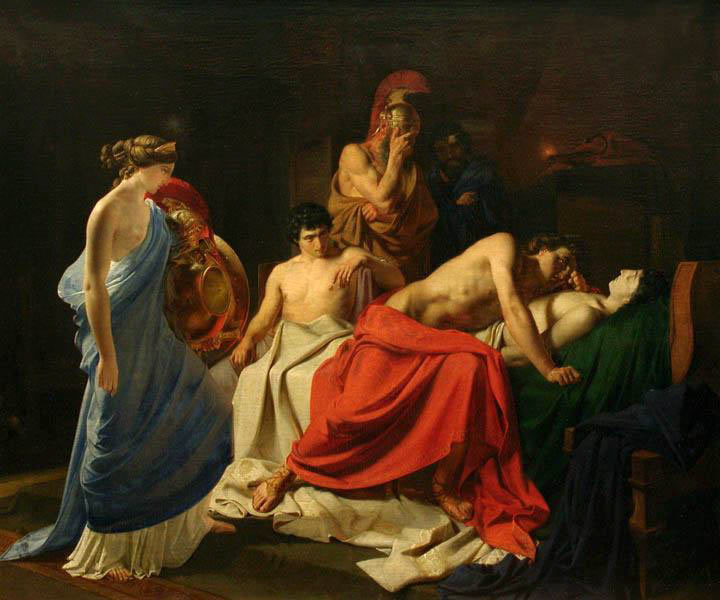
Achilles Lamenting the Death of Patroclus, by Nikolay Ge

Ἰλιὰς κακῶν, id est Ilias malorum. De calamitatibus maximis simul et plurimis. Propterea quod in Iliade Homerica nullum mali genus non recensetur. Vnde ex hac docti putant tragoediarum argumenta fuisse sumpta, sicut ex Odyssea comoediarum. Est autem opus verbosum, viginti quatuor voluminibus vix absolutum. Vnde et quamuis orationem plus satis prolixam Iliade longiorem vocant, vt Aeschines aduersus Demosthenem. Ταῦτα δὲ εἰπὼν δίδωσιν ἀναγνῶναι ψήφισμα τῷ γραμματεῖ, μακρότερον μὲν τῆς Ἰλιάδος, κενώτερον δὲ τῶν λόγων οὓς εἴωθε λέγειν, id est His dictis decretum scribae legendum tradit, prolixius quidem lliade, vanius autem verbis iis quae dicere consueuit.

Eustathius inuertit adagionem ad hunc modum: Καὶ παροιμία μέντοι κακῶν Ἰλιάδα φησίν, αὕτη δὲ καλοῦ παντὸς Ἰλιάς, id est Iliadem malorum prouerbium ait, at haec omnium bonorum llias. Synesius in epistola quadam ad fratrem: Καὶ ὅλως κακῶν ἂν Ἰλιάς περιέστη τὴν πόλιν ἡμῶν, id est In summa,  malorum Ilias circunstetit vrbem nostram. Plutarchus in Praeceptis coniugalibus: Ὁ δὲ ἐκείνων Ἰλιάδα κακῶν Ἕλλησι καὶ βαρβάροις ἐποίησεν, id est At illorum nuptiae Iliada malorum Graecis ac barbaris inuexerunt. Loquitur enim de coniugio Paridis et Helenae, quod inaestimabilium malorum fuit causa. Vtitur et M. Tullius in Epistolis ad Atticum: Tanta malorum impendet Ilias.