Nothing Left for the Learned

Leon Battista Alberti,
On the Advantages and Disadvantages of Literature (Part II):

“Therefore, turning over many things in my mind both for my own sake and that of my friends, I was meditating in what worthy endeavor I might test the strength of my intellect, and then – with the encouragement of my friends – I might test whether it was in me. Nothing ever came to my mind during this investigation which itself had not already been taken up beautifully by those divine ancient writers, and so it seemed that it was not left for the most learned man of this age to speak upon a matter better than the ancients did themselves, nor was it left to me to do anything similar to them in a fitting or worthy way. The ancients themselves embraced all serious and trivial subjects so thoroughly, and they left for us only the opportunity and the necessity of reading and admiring them.

Then, in our time, those who are of an older age seized, for the sake of their praise and reputation, upon some things which had perhaps been lying neglected by the ancient authors. For those who desired glory thought rightly that it was much better to attempt something even if it be not entirely perfect and absolute, than simply to grow old from silence in the study of letters. What then about us? Will we to no good end imitate that orator Isocrates, who is said to have praised the most worthless tyrant Busiris and heaped scorn upon Socrates, the best and holiest philosopher, in his celebrated speeches? To be sure, here is what I think: I have conceded many things to us especially as we exercised our talents in youth, which otherwise are denied to us as mature men in the perfection of our erudition.”

Leon Battista Alberti

Itaque et mea et meorum causa sepe ac multum animo et cogitatione plurima ipse mecum versans meditabar quidnam possem dignum adinvenire in quo vires ingenii mei periclitarer, tum meis iubentibus, si quid in me esset, obtemperarem. Nihil mihi unquam pervestiganti in mentem subiit, quod ipsum a priscis illis divinis scriptoribus non pulchre esset occupatum, ut neque eam rem viro hac etate doctissimo quam iidem illi melius dicere neque mihi similia illis apte et condigne agere relictum sit; ita et seria omnia et iocosa veteres ipsi complexi sunt, nobis tantum legendi atque admirandi sui facultatem et necessitatem dimiserunt.

Tum hac etate qui maiores adsunt natu nonnulla que fortassis a superioribus scriptoribus neglecta latitabant laudis et nominis gratia deprehenderunt. Nam prestantius esse recte opinantur ii qui laudem cupiant quippiam etsi non omni ex parte perfectum atque absolutum conari, quam in litteris silentio consenescere. Quid igitur nos? Num parum commode Isocratem illum rhetorem imitabimur qui Busiridem nequissimum tyrannum laudasse ac Socratem optimum et sanctissimum philosophum conditis orationibus vituperasse fertur? Sane sic censeo: multa ingenium exercentibus nobis presertim iuvenibus concedi, que alioquin maturis et perfecte eruditis viris denegarentur.

Madness, Flies, and Domitian’s Pen

de ingenuis moribus et liberalibus adulescentiae studiis, XXXII & XXXIII:

“At these times, when we are unable to employ our leisure outside, reading and books come to our aid. That is, unless we wish to indulge in sleep or to waste away in idle leisure, or even to imitate the custom of the Roman emperor Domitian, who on some days, at certain hours, would withdraw from the company of the world and hunt flies with his iron pen.”

[…]

“One of the imperial domestic servants once commented upon the madness of Domitian with a witty joke. At one time, when he was asked whether anyone was in the room with Domitian, the servant responded, ‘Not even a fly,’ as though the emperor had managed to kill them all with his pen.”

in hoc igitur tempus, cum nihil nobis per otium agere foris licebit, lectio librique succurrent. Nisi prorsus somno indulgere aut inerti otio tabescere volemus aut morem imitari Domitiani principis qui singulis diebus, certis horis, secretus ab omnibus stilo ferreo muscas insectabatur.

[…]

… eius ipsius Domitiani dementiam e cubiculariis unus urbano scommate notavit. Aliquando enim interrogatus, essetne quisquam cum Domitiano intus, respondit, ‘Ne musco quidem,’ quasi ille stilo suo omnes sustulisset.

Drink Your Vergil!

Pietro Bembo, Letter to Pico della Mirandola (1530)

We cannot say the same thing about Vergil, namely, that he is fit to be emulated by everyone who takes pleasure in his poems. For those who write elegies or lyric poems, or those who are held by an enthusiasm for writing comedies or tragedies, will find very little help from the Vergilian structure, meter, or poetic program. Rather, they should imitate those whom they consider to be the chief poets in each individual genre of writing, and should give themselves wholly to the project of following them and even overcoming them. To be sure, I myself have done this. In writing my elegies, I imitated the poet who seemed to me to be the best in that genre. But for the poet who commits himself to heroic verse, then surely Vergil is to be learned, drunk in, and expressed as much as possible, as I had once personally told you was my opinion on the matter.

Pietro Bembo - Wikipedia

De Virgilio vero non idem possumus dicere, ut idoneus sit, quem, qui carminibus delectantur, imitari omnes queant. Neque enim qui aut elegos aut lyricos conficiunt versus, quique vel comoediarum vel tragoediarum scribendarum studio detinentur, horum ullos Virgiliana carminum structura, numerus, ratio ipsa multum iuvabit. Sed imitentur ii quidem eos quos habent principes singulis in scriptorum generibus singulos atque illis assequendis superandisque dedant. Quod profecto nos aliquando fecimus, ut in elegis pangendis, qui optimus eo in genere poematis nobis visus est, eum imitaremur. Heroicis autem conscribendis carminibus qui se dederit, huic certe erit Virgilius ediscendus, ebibendus et quam maxime fieri poterit exprimendus, quemadmodum coram tibi dixeram mihi videri.

No Kidding!

Bartolomeo Scala, Whether a Wise Man Should Take a Wife (11):

Yet I think that it is pleasant to raise at home an heir, a palliative and comforter to the sufferings of old age. But there can be no better or more pleasant heirs than friends, whom you select – not ones whom you are compelled to have whether you will or not. Moses and Samuel preferred others to their own children, and they did not consider as their own children the ones whom they observed to be displeasing to God.

Though one hopes for the solaces of old age, most frequently we are objects of hatred, and people rejoice that we are dead more than they take comfort in our lives. I don’t want to follow up all of the inconveniences of having children, lest I become prolix and seem to write books to you rather than mere letters, especially since there are many things left which my little discourse here is hastening on to.

Bartolomeo Scala - Wikidata

Suave tamen credo est domi nutrire heredem senectutisque malorum levamen ac solatium. Sed nulli meliores ac suaviores esse possunt heredes quam amici, quos eligas, non quos velis nolis habere cogaris. Moses quoque ac Samuel filiis suis alios praetulerunt, nec habuerunt pro liberis quos ingratos esse Deo animadverterunt. Solatia vero cum exoptantur senectutis, frequentissime odio sumus, mortuosque magis gauderent quam vivos consolarentur. Nolo persequi omnes filiorum incommoditates ne sim longior et librum potius componere quam epistolam scribere ad te videar, praesertim cum multa restent ad quae festinat oratio.

Advice to a Scholar: Remember Everything!

Vergerio, de ingenuis moribus et liberalibus adulescentiae studiis, LII:

“It is also very true that those who have sharper intellects have weaker powers of memory, and those who seize upon things quickly are less apt to retain them. Therefore, Cato’s plan seems particularly relevant to preserving and shoring up one’s memory. He used to say he would think over in the evening everything which he had done, seen, or read during the day, as though he were demanding an account ledger of his daily business; yet he did not want only an account of his business, but even of his leisure time! Thus we too, if we can, will take care to remember everything; if we fail in this, we should at least cling to those things which we have selected as especially important to ourselves.

sed et id quoque perplurimum verum est, acutiores ingenio minus valere memoria, et qui celeriter capiunt, retinent minus. Ad salvandam igitur confirmandamque memoriam, maxime affinis est illa Catonis ratio, qua uti se dicebat, ut quicquid egerat viderat legerat, vesperi commemoraret, tamquam diurni a se negotii rationem exigens, non modo qui negotii, sed et otii quoque volebat reddendam esse rationem. Ita igitur nos omnia quidem, si possumus, reminisci curabimus; si minus, ea saltem quae praecipua nobis delegimus, complectemur.

Groaning Under the Load of Scholarship

Mark Pattison, Isaac Casaubon:

“The renaissance, the spring-tide of modern life, with its genial freshness, is far behind us. The creative period is past, the accumulative is set in. Genius can now do nothing, the day is to dull industry. The prophet is departed, and in his place we have the priest of the book. Casaubon knows so much of ancient lore, that not only his faculties, but his spirits are oppressed by the knowledge. He can neither create nor enjoy; he groans under his load. The scholar of 1500 gambols in the free air of classical poetry, as in an atmosphere of joy. The scholar of 1600 has a century of compilation behind him, and ‘drags at each remove a lengthening chain.’ If anyone thinks that to write and read books is a life of idleness, let him look at Casaubon’s diary. Pope, during his engagement on Homer, used to be haunted by it in his dreams, and ‘wished to be hanged a hundred times.’ Vergil, having undertaken the Aeneid, said of himself that ‘he thought he must have been out of his senses when he did so.’ But of the blood and sweat, the groans and sighs, which enter into the composition of a folio volume of learned research, no more faithful record has ever been written than Casaubon’s ‘Ephemerides.’ Throughout its entire progress, the ‘ Animadversiones’ on Athenaeus was an ungrateful and irksome task, ‘catenati in ergastulo labores [the chained-up labors in the little workshop].‘ He can hardly open Athenaeus without disgust, and he prays God, day by day, that he may get away from such trifles to better reading.”

Image result for medieval scholar

Latin Scholarship and MURDER

Rudolf Pfeiffer, History of Classical Scholarship 1300-1850 (Chp. II):

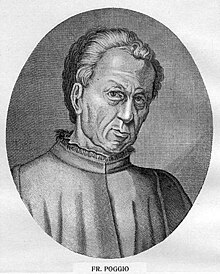
“Poggio never strove after a Ciceronian style or even a grammatically correct Latin; he treated Latin as if it were a living language, and because of that we see him in the last years of his life at feud with the leading spirit of the next generation, Lorenzo Valla.

One day in 1451 Poggio found in a copy of the collection of his letters to Niccoli, of which he was very proud, some critical and ironical comments upon his Latinity, scrawled in the margin by a pupil of Valla’s; he got so angry with Valla, whom he suspected of being the author, that he tried to have him murdered, a dramatic refutation, had he succeeded, of Schopenhauer’s saying that ‘the history of . . . learning and art’ (in contrast to the universal history of the world) ‘is always going on . . . guiltless and without bloodshed.’ But Poggio finally confined himself to a form of retaliation more appropriate in a scholar, a literary invective. Valla, no less pugnacious, replied, and a war of pamphlets, five from each side, ensued, the arguments of which were of a general importance far beyond the trivial cause.”

Image result for poggio vs vallaImage result for poggio vs valla

Impermanence of Youth Etc. Etc.

Giovanni Marrasio, Angelinetum (6):

“Why do you rave, trusting too much in the boldness of youth? With a headlong dive, curved old age comes upon us. Look: the earth is not always clothed in green grass, nor is it always sun-scorched and firm; the land does not always bring forth golden and snowy colors alike along with the purple roses; the lilies often shine redolent with their gentle scent; often the sweet fruits weigh down their branches; the vine often gives us those sweet foods, the grapes. But take any tree you want – it doesn’t always have its fruits. Thus will beautiful, charming youth deceive you, though it’s now compliant with your desires.”

Botticelli-primavera.jpg
Botticelli, Primavera

Ad divam Angelinam.

Quid furis, audaci nimium confisa iuventa?

Praecipiti penna curva senecta venit

Aspice: non semper vestita est terra virenti

Gramine, nec semper solibus usta riget,

Nec semper rutilos producit terra colores

Et niveos pariter purpureasque rosas,

Lilia saepe nitent placido redolentia odore,

Saepe gravant ramos dulcia poma suos,

Dulces saepe cibos dat nobis pampinus uvas;

Non semper fructus quaelibet arbos habet.

Sic te decipiet formosa et blanda iuventus,

Quae nunc est votis obsequiosa tuis.

Reading Like a Scholar (i.e. Like a Boss)

Celio Calcagnini, Letter to Tommaso Calcagnini:

“For my part, whatever I read, whatever I think, I store it in the storehouses of my mind as if I were about to bring it forth for the use of human activity. And since I think that it is too difficult to excerpt everything separately, I put many things into a commentary, or write it separately on a little sheet. But in the margin, I make compendious notes, separate from the text, of everything which seems worth of some notice. If any of these things really stand out as particularly capital or excellent, I place them in the peak (or one might say the crown) of the margin. From this practice springs some utility, allowing me to reconsider several volumes within the space of an hour and a half. I once tried to wrangle Pliny’s Natural History into an epitome, since I always burned with wondrous desire for that author. But undoubtedly I acted the fool, because I ended up copying out almost everything in Pliny.”

CALCAGNINI CELIO

Ego profecto quicquid lego, quicquid meditor, ita omne in arcanis animi recondo, quasi mox ad usum humanarum actionum expositurus. Et quoniam arduum nimis reor omnia seorsum excerpere, multa sane in commentarium refero, aut seorsum in pagella exscribo. Sed in margine compendiose omnia, quae digna sunt aliqua animadversione, sepono: quod siqua praestant, quasi coryphaea et optimatia in summa marginis coronide. Hinc ea mihi utilitas nascitur, ut vel sesquihora multa possim volumina recognoscere. Tentavi aliquando Plinii Naturalem Historiam in epitomen revocare, quando eius autoris mira semper cupidine exarsi: sed rem sine controversia ridiculam feci, qui omnem ferme Plinium exscripserim.

I Have Never Read Anything Worse

J.E. Sandys, A History of Classical Scholarship Vol. II

“Aldus was far more than a printer and bookseller; he rejoiced in rescuing the writings of the ancients from the hands of selfish bibliomaniacs, many of his texts were edited by himself, and he was honoured as a scholar by the foremost scholars of the age. One of the most generous of men, his generosity was appreciated by Erasmus, and by his own countrymen. The editor of the Prefaces to the Ediiiones Principes justly describes ‘the dedications of Aldus as worth all the rest; there is a high and a noble feeling, a self-respect, and simplicity of language about him which is delightful; he certainly had aspiring hopes of doing the world good’. He is probably the only publisher who, in the preface of a work published by himself, ever used such language as the following : — nihil unquam memini me legere deterius, lectuque minus dignum [I don’t recall ever reading anything worse or less worth reading in all my life.]. Such are the terms in which he refers to the Life of Apollonius by Philostratus; but he hastens to add that, as an antidote to the poison, he publishes in the same volume the refutation by Eusebius, translated by the friend to whom he dedicates the work. In the twenty-one years between 1494 and 1515, Aldus produced no less than twenty-seven editiones principes of Greek authors and of Greek works of reference. By the date of his death in 1515, all the principal Greek Classics had been printed. Before 1525 the study of Greek had begun to decline in Italy, but meanwhile an interest in that language had happily been transmitted to the lands beyond the Alps.”

Aldus Manutius - Wikipedia