Maximin’s Health Plan: Wine, Meat, Sweat!

Historia Augusta, Maximini Duo (4):

“It is well established that Maximin often drank a Capitoline amphora of wine in a day, and ate forty pounds of meat (or, as Cordus says, up to sixty). It is also agreed that he always abstained from vegetables and almost always from cold stuff, unless he was under some necessity to drink. He would often collect his sweat in cups or would put it into a little jar so that he could show off two or three pints of his sweat.”

Image result for maximin thrax

Bibisse autem illum saepe in die vini Capitolinam amphoram constat, comedisse et quadraginta libras carnis, ut autem Cordus dicit, etiam sexaginta. quod satis constat, holeribus semper abstinuit, a frigidis prope semper, nisi cum illi potandi necessitas.  sudores saepe suos excipiebat et in calices vel in vasculum mittebat, ita ut duos vel tres sextarios sui sudoris ostenderet.

Cranky about the State of the Country

Cicero, letters to Atticus 375 (11 May 44)

“I have no doubt that our state is looking at war. This affair has been managed with a man’s bravery and a child’s planning. Can’t everyone see that a king was removed but his heir was left on the throne?

What is more ridiculous? To fear this but not to consider that a risk at all! There is still in this moment much which is crooked. That the house of Pontius near Naples is held by the mother of that tyrannicide! Oh!

I should read the “Cato the Elder” I made for you more often. Old age is making me rather cranky. I am annoyed by everything. But, certainly, I have lived. Let the young men see to these things. You will care for my affairs as you do.”

Mihi autem non est dubium quin res spectet ad castra. acta enim illa res est animo virili, consilio puerili. quis enim hoc non vidit, <regem sublatum>,2 regni heredem relictum? quid autem absurdius? ‘hoc metuere, alterum in metu non ponere!’ quin etiam hoc ipso tempore multa ὑποσóλοικα. Ponti Neapolitanum a matre tyrannoctoni possideri! legendus mihi saepius est ‘Cato maior’ ad te missus. amariorem enim me senectus facit. stomachor omnia. sed mihi quidem βεβíωται; viderint iuvenes. tu mea curabis, ut curas.

cranky cicero

The Idle Vanity of Knowing Classical Passages

George Eliot, Middlemarch:

“Certainly this affair of his marriage with Miss Brooke touched him more nearly than it did any one of the persons who have hitherto shown their disapproval of it, and in the present stage of things I feel more tenderly towards his experience of success than towards the disappointment of the amiable Sir James. For in truth, as the day fixed for his marriage came nearer, Mr. Casaubon did not find his spirits rising; nor did the contemplation of that matrimonial garden scene, where, as all experience showed, the path was to be bordered with flowers, prove persistently more enchanting to him than the accustomed vaults where he walked taper in hand. He did not confess to himself, still less could he have breathed to another, his surprise that though he had won a lovely and noble-hearted girl he had not won delight,—which he had also regarded as an object to be found by search. It is true that he knew all the classical passages implying the contrary; but knowing classical passages, we find, is a mode of motion, which explains why they leave so little extra force for their personal application.

Poor Mr. Casaubon had imagined that his long studious bachelorhood had stored up for him a compound interest of enjoyment, and that large drafts on his affections would not fail to be honored; for we all of us, grave or light, get our thoughts entangled in metaphors, and act fatally on the strength of them. And now he was in danger of being saddened by the very conviction that his circumstances were unusually happy: there was nothing external by which he could account for a certain blankness of sensibility which came over him just when his expectant gladness should have been most lively, just when he exchanged the accustomed dulness of his Lowick library for his visits to the Grange. Here was a weary experience in which he was as utterly condemned to loneliness as in the despair which sometimes threatened him while toiling in the morass of authorship without seeming nearer to the goal. And his was that worst loneliness which would shrink from sympathy. He could not but wish that Dorothea should think him not less happy than the world would expect her successful suitor to be; and in relation to his authorship he leaned on her young trust and veneration, he liked to draw forth her fresh interest in listening, as a means of encouragement to himself: in talking to her he presented all his performance and intention with the reflected confidence of the pedagogue, and rid himself for the time of that chilling ideal audience which crowded his laborious uncreative hours with the vaporous pressure of Tartarean shades.”

Image result for scholar reading

Logic Bros: Better to Have No Reason Than Use it for Harm?

Cicero, De Natura Deorum, 3.77–78

“These kind of things belong to poets; we, moreover, want to be philosophers, masters of facts not fables. And yet, these gods of poetry, if they know that these things would be ruinous for their children, would be considered to have sinned in conferring a favor.

It is just as if, according to that thing which Aristo of Chios used to say, that philosophers hurt their audiences when the things they say well are interpreted badly (for it was possible still to leave Aristippus’ school as a profligate or Zeno’s school bitter and angry).

If it is this way, and those who have heard them leave with twisted minds because they understand the philosophers’ arguments incorrectly, then it befits philosophers more to be quiet than cause their audiences harm. In this way, if people pervert the capacity for reason which was given by the gods to provide good council and used it instead for fraud and harm, then it would have been better if it had not been given to the human race at all.”

Poetarum ista sunt, nos autem philosophi esse volumus, rerum auctores, non fabularum. Atque hi tamen ipsi di poetici si scissent perniciosa fore illa filiis, peccasse in beneficio putarentur. Ut si verum est quod Aristo Chius dicere solebat, nocere audientibus philosophos iis qui bene dicta male interpretarentur (posse enim asotos ex Aristippi, acerbos e Zenonis schola exire), prorsus, si qui audierunt vitiosi essent discessuri quod perverse philosophorum disputationem interpretarentur, tacere praestaret philosophos quam iis qui se audissent nocere: sic, si homines rationem bono consilio a dis immortalibus datam in fraudem malitiamque convertunt, non dari illam quam dari humano generi melius fuit. Ut, si medicus sciat eum aegrotum qui iussus sit vinum sumere meracius sumpturum statimque periturum, magna sit in culpa, sic vestra ista providentia reprehendenda, quae rationem dederit

Internet pugilists take the following things very, very seriously. Form triumphs over content!

Image result for fallacy chart

An Address to a Senator Upon His Return to the Government

Cicero, In Catilinam 1.16-17

“But what is this life of yours like now? I shall speak to you in this way so that I do not seem to be moved by hatred but by the pity which you have earned from no one.

A little while ago you entered the senate. Who from that great crowd of your many friends and companions hailed you? If this treatment has affected no other person in human memory, are you waiting for verbal abuse even though you have been rejected by the weightiest judgement of their silence?

What do you make of the fact that the seats emptied at your arrival, that all the former consuls who were signaled for death by you left their seats naked and abandoned when you sat down? With what feelings do you think you should accept this?”

Nunc vero quae tua est ista vita? Sic enim iam tecum loquar, non ut odio permotus esse videar, quo debeo, sed ut misericordia, quae tibi nulla debetur. Venisti paulo ante in senatum. Quis te ex hac tanta frequentia, tot ex tuis amicis ac necessariis salutavit? Si hoc post hominum memoriam contigit nemini, vocis exspectas contumeliam, cum sis gravissimo iudicio taciturnitatis oppressus? Quid, quod adventu tuo ista subsellia vacuefacta sunt, quod omnes consulares qui tibi persaepe ad caedem constituti fuerunt, simul atque adsedisti, partem istam subselliorum nudam atque inanem reliquerunt, quo tandem animo tibi ferendum putas?

Image result for roman senate

Philagros: Angry Philosopher, Bad Father

Philostratus, Lives of the Sophists, 581

“Philagros was shorter than average, his brow was harsh, and his eye watchful. He was quick to get fall into a rage, but he wasn’t ignorant of his own character. When one of his friends asked him why he didn’t enjoy raising children, he said “Because I don’t even enjoy myself.” Some say he died on the sea; others report that he reached the first part of old age in Italy.”

Μέγεθος μὲν οὖν ὁ Φίλαγρος μετρίου μείων, τὴν δὲ ὀφρὺν πικρὸς καὶ τὸ ὄμμα ἕτοιμος καὶ ἐς ὀργὴν ἐκκληθῆναι πρόθυμος, καὶ τὸ ἐν αὐτῷ δύστροπον οὐδ’ αὐτὸς ἠγνόει· ἐρομένου γοῦν αὐτὸν ἑνὸς τῶν ἑταίρων, τί μαθὼν παιδοτροφίᾳ οὐ χαίροι, „ὅτι” ἔφη „οὐδ’ ἐμαυτῷ χαίρω.” ἀποθανεῖν δὲ αὐτὸν οἱ μὲν ἐν τῇ θαλάττῃ, οἱ δὲ ἐν ᾿Ιταλίᾳ περὶ πρῶτον γῆρας.

This Vita seems a bit strange in its characterization. Here’s the introductory segment (578):

“Philagros of Cilicia, a student of Lollianos, was the most volatile and irascible of the sophists.  There’s a story that when a member of his audience dozed off, he struck him with an open hand. He made a start on fame when he was young and did not let off even as he grew old—he achieved enough that he was considered a model of a teacher. After living among many different nations and becoming famous for his management of arguments, he could not control his own anger well in Athens where he fell into a fight with Herodes as if he had come there for that reason.”

η′. Φίλαγρος δὲ ὁ Κίλιξ Λολλιανοῦ μὲν ἀκροατὴς ἐγένετο, σοφιστῶν δὲ θερμότατος καὶ ἐπιχολώτατος, λέγεται γὰρ δὴ νυστάζοντά ποτε ἀκροατὴν καὶ ἐπὶ κόρρης πλῆξαι, καὶ ὁρμῇ δὲ λαμπρᾷ ἐκ μειρακίου χρησάμενος οὐκ ἀπελείφθη αὐτῆς οὐδ’ ὁπότε ἐγήρασκεν, ἀλλ’ οὕτω τι ἐπέδωκεν, ὡς καὶ σχῆμα τοῦ διδασκάλου νομισθῆναι. πλείστοις δὲ ἐπιμίξας ἔθνεσι καὶ δοκῶν ἄριστα μεταχειρίζεσθαι τὰς ὑποθέσεις οὐ μετεχειρίσατο ᾿Αθήνησιν εὖ τὴν αὑτοῦ  χολήν, ἀλλ’ ἐς ἀπέχθειαν ῾Ηρώδῃ κατέστησεν ἑαυτόν, καθάπερ τούτου ἀφιγμένος ἕνεκα.

He should have listened to Plutarch On Controlling Anger 455c

“It is best, as one might gather, to be in control and either to depart and conceal ourselves, anchoring oneself into some quiet place, just as if we perceive that a seizure is beginning, that we might not fall—or rather, that we might not fall on someone else. We most often turn on our friends; for we neither love everyone, nor envy everyone, nor fear everyone to the extent that there is anything that is untouched or untried by anger. We grow angry with enemies, children, parents the gods, by Zeus, with wild animals and even with lifeless tools…”

ἀτρεμεῖν οὖν κράτιστον ἢ φεύγειν καὶ ἀποκρύπτειν καὶ καθορμίζειν ἑαυτὸν εἰς ἡσυχίαν, ὥσπερ ἐπιληψίας ἀρχομένης συναισθανομένους, ἵνα μὴ πέσωμεν μᾶλλον δ’ ἐπιπέσωμεν· ἐπιπίπτομεν δὲ τοῖς φίλοις μάλιστά γε καὶ πλειστάκις, οὐ γὰρ πάντων ἐρῶμεν οὐδὲ πᾶσι φθονοῦμεν οὐδὲ πάντας φοβούμεθα, θυμῷ δ’ ἄθικτον οὐδὲν οὐδ’ ἀνεπιχείρητον, ἀλλ’ ὀργιζόμεθα καὶ πολεμίοις καὶ τέκνοις καὶ γονεῦσι καὶ θεοῖς νὴ Δία καὶ θηρίοις καὶ ἀψύχοις σκεύεσιν…

Image result for Medieval Manuscript anger controlling

F**k Sleep, I’m Going to the Library!

Petrarch, Epistulae Familiares 19.16:

“You know how I eat, and even how I sleep – no fortune could ever persuade me to add anything to these. Rather, I subtract a little every day, and it has reached the point now that only a little bit can be subtracted. Even if some royal fortune befell me, it could not drive frugality from my table or drive me to look for more sleep at night. My bed never holds me if I am healthy and awake, and I never toss in the sheets unless I am sick or sleeping. As soon as sleep departs from me, I depart from the bed, and I will lie enough or even more than enough on a bed of earth or rock.

Thinking about it, I hate my bed and I never return to it but at the urging of necessity, but soon I sense that I am freed from it as from the chains of nature, and without delay I rip myself out of it and flee to the closest library as though it were a citadel. This divorce occurs between me and my bed in the middle of the night: if by chance a shorter night or some late hours drag on, yet certainly dawn never sees us together. Finally, I strive with all my heart to prevent anything from coming between me and my more pleasant concerns, except that which the necessity of nature extracts from me in an imperious way – I mean things like sleep, food, and the short and honorable solace which is just enough for relaxing the body and replenishing the spirit.”

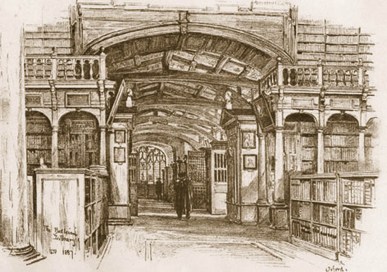
Image result for petrarch library

Victum meum nosti, somnum quoque; his ut addam, nulla michi unquam fortuna suaserit; demo potius aliquid in dies, iamque eo perventum est ut modicum demi possit; denique non si regie opes advenerint, aut e mensa frugalitatem pellere poterunt aut in cubiculum longos somnos arcessere. Nunquam me sanum ac vigilem lectus habet, nunquam nisi eger aut dormiens stratis versor; simul et me somnus et ego lectum desero, et somnum morti et lectulum busto simillimum duco. Cum supremus sopor obrepserit, satis superque satis in cubiculo terreo seu saxeo iacebimus; id meditans lectulum meum odi et ad illum nisi urgente necessitate non redeo, sed ab illo mox ut me nature vinclis explicitum sentio, incuntanter avellor inque bibliothecam illi proximam velut in arcem fugio. Fit hoc inter nos media nocte divortium, quod siquando forte vel nox brevior vel vigilie longiores traxerint, at profecto nunquam simul aurora nos invenit; postremo modis omnibus nitor nequid melioribus curis interveniat, preter id solum quod imperiose necessitas nature exigit, somnum dico et cibum et breve honestumque solatium vegetando corpori refovendoque animo duntaxat ydoneum.  Id enimvero quia pro varietate temporum ac locorum variari oportet, et quale michi nunc sit nisi audias nosse non potes, dicam. Amo solitudinem ut soleo sectorque silentium nisi inter amicos, inter quos nemo me loquacior, hanc reor ob causam quod amicorum presentia solito rarior nunc est; raritas autem desiderium accendit. Sepe igitur annuum silentium diurna loquacitate compenso rursumque amicis abeuntibus mutus fio; importunum negotium cum vulgo loqui aut omnino cum homine quem non amor tibi seu doctrina conciliet.

Aristotle Knew Everything

Petrarch, Epistulae Familiares 4.15:

“It is difficult to say how much re-reading your letter two or three times soothed my ears, which were so worn down by the noise of the rabble. Even if this letter seemed verbose to you (as I learned from its ending), I find nothing to accuse you of but terseness. And so, I looked on the final threat, in which you claimed that you would write more briefly in the future, with unwilling eyes. I would have you be more prolix. As you will – you’re the father. It is right for me to accommodate my ways to you, and not the other way around. But will the whole business not be in your hands? Or do you not know that quite often the actual event differs from the plan? Perhaps you will hear what forces even one who is eager for silence to talk. You want me to fulfill the threats which I seem to be making now?

I stand as a witness, in the first place, that I have the same opinion of you which Macrobius had of Aristotle (whether it be love or the truth which gave rise to it). That is, I hardly think that you could not know something. If something has slipped your lips which seems to be contrary to the truth, I suspect that you either have not thought it out far enough, or just as Macrobius says of Aristotle, I suspect that you are playing around.”

Dictu difficile est quantum aures meas, vulgari fessas strepitu, epystola tua bis terque relecta permulserit; que quanquam tibi verbosa videretur, ut ex fine cognovi, ego tamen in ea nil preter breviloquium accusavi. Itaque comminationem illam ultimam, quod deinceps compendiosior sis futurus, invitus aspexi; mallem prolixior. Ut libet tamen; tu pater; non te michi, sed me tibi morem gerere dignum est. Sed ita ne totum in tua manu positum erit? an ignoras quod sepe consilio dissimilis est eventus? Audies forte quod vel silentii avidum loqui cogat. Vis quod minitari videor, iam nunc rebus impleam?

Testor in primis eandem me de te opinionem gerere, quam de Aristotile Macrobius, seu illam amor, seu veritas genuerit: vix te aliquid “ignorare posse” arbitror; siquid autem vero adversum tibi excidit, aut minus providisse aut, quod de eodem ait idem, lusisse te suspicor.

Image result for petrarch

Bellum Incivile: Manicula and the Puppet Master

Another text tentatively attributed to Caesar was discovered along with the fragments of the De Silvis and an appendix to De Bello Gallico. This is almost surely from the lost Bellum Incivile. Edited by Dani Bostick.

9.32  An investigation was opened into Manicula because they thought he was working against the republic as an agent of an enemy nation. It was known that Manicula was meeting secretly with Puppet Master, the leader of Russia, who was taking advantage of Manicula’s extreme ignorance and immorality for the benefit of his own kingdom and believed everything was for sale in the republic because of Manicula’s greed. For this reason, they did not yet know what plans Manicula had made; how Puppet Master had brought it about that Manicula would act in the interests of the kingdom of Russia rather than in the interests of his homeland; and, whether Puppet Master had actually taken control of our nation.

9.32 De Manicula quaestionem habent propterea quod hunc ministrum hostium contra rem publicam facere existimabant. Maniculam cum Pupuli Ero, Sarmatiae imperatore, qui eius summam ignorantiam ac animi foeditatem regno suo haberet omniaque venalia propter eius avaritiam in re publica esse credidit, clam loqui cognitum est. Qua de causa nondum intellexerunt quae consilia Manicula cepisset, quomodo P. Erus effecisset ut Manicula regno Samaritiae quam suae patriae consuleret, num vero P. Erus imperium nostrae civitatis obtinuisset. 


Arrogance, More Words

Demosthenes, Third Philippic, 1

“We must speak and act to ensure that he relents from his arrogance and is punished.”

…λέγειν δεῖν καὶ πράττειν ὅπως ἐκεῖνος παύσεται τῆς ὕβρεως καὶ δίκην δώσει


Aeschylus, Prometheus Bound, 436-438

“Don’t imagine I am silent because
Of self-regard or arrogance—I having been eating
My own heart with my thoughts
As I see myself abused in this way.”

μήτοι χλιδῇ δοκεῖτε μήτ᾿ αὐθαδίᾳ
σιγᾶν με· συννοίᾳ δὲ δάπτομαι κέαρ
ὁρῶν ἐμαυτὸν ὧδε προυσελούμενον.


Isocrates, On the Peace 119

“If you go through these things and those like them, you will discover that a lack of control and arrogance are the cause of our suffering while careful thought has produced our success.”

ἢν γὰρ ταῦτα καὶ τὰ τοιαῦτα διεξίητε πρὸς ὑμᾶς αὐτούς, εὑρήσετε τὴν μὲν ἀκολασίαν καὶ τὴν ὕβριν τῶν κακῶν αἰτίαν γιγνομένην, τὴν δὲ σωφροσύνην τῶν ἀγαθῶν.


Seneca, De Ira 31

“So, either arrogance or an ignorance of affairs makes people inclined to rage.”

Itaque nos aut insolentia iracundos facit aut ignorantia rerum

Cicero, De Inventione 43

“Hatred emerges from arrogance; arrogance comes from pride.”

Ex arrogantia odium, ex insolentia arrogantia


Seneca the Elder, Suasoriae 6.3

“You will see eyes burning with cruelty and arrogance at the same time. You won’t see the face of a man but one of civil war”

Videbis ardentes crudelitate simul ac superbia oculos; videbis illum non hominis sed belli civilis vultum

Publilius Syrus, 109

“Arrogance’s bragging turns quickly to shame”

Cito ignominia fit superbi gloria.


Marcus Aurelius, Meditations 33

“Accept without being arrogant; give in without reluctance.”

Ἄτύφως μὲν λαβεῖν, εὐλύτως δὲ ἀφεῖναι

arrogant cicero