Some Advice for Dinner Companions: Philosophize Appropriately

Macrobius, Saturnalia 16

“For, just as those who believe it a type of exercise when they dance in the middle of feasts will chase away companions who dare them to footrace or box because it is better exercise, in the same way when at the table a fool is given some space by the alacrity of his companion, it is permitted that one can philosophize at dinner but in the appropriate manner, since you temper the bowl which is mixed for happiness not just with the Nymphs but with the Muses too.”

nam sicut inter illos qui exercitii genus habent in mediis saltare conviviis, si quis ut se amplius exerceat vel ad cursum vel ad pugilatum sodales lacessiverit, quasi ineptus relegabitur ab alacritate consortii, sic apud mensam quando licet aptis philosophandum est, ut crateri liquoris ad laetitiam nati adhibeatur non modo Nympharum sed Musarum quoque admixtione temperies.

peculum humanae salvationis, London, 1485-1509; British Library, Harley MS 2838, f.45r.

Strange Histories of Jupiter Ammon

Servius, Commentary to Vergil’s Aeneid 4.196

Iarbas: the son of Jupiter Ammon. When Bacchus (or, as others say, Hercules) was attempting an attack on the Indians, and was leading his army through Libya (that is, through Xerolybia), he was worn out by thirst and so begged for help from his father Jupiter. Jupiter showed him a ram, following which Bacchus arrived at a certain spot, in which the ram dug out some earth with its foot, and from this place a fountain flowed forth. Whence it happened that a temple holding a statue with a ram’s horns was established for Jupiter Ammon, who derived his name from the ‘sand’. This story has been contrived either because the god’s responses are sufficiently intricate, or because the Libyans call the ram ‘Ammon’. Others say that this Ammon was born in another place, where there had been a lone sheep, and where he was discovered by some nearby people. He was believed to have been born of Jupiter and the sheep, and named Ammon from the sand, because that is the nature of the ground there. Others say that there is a place between Cyrene and Carthage in which pastors found a boy distinguished by ram horns sitting in the sand and delivering prophecies. When they picked him up, he was silent; when they set him back down, he began to speak again. Soon, when he withdrew from the sight of humans, he was believed to be a god. From that time, they began to cultivate Jupiter with the name Ammon because he had been seen in the sand.

IARBAM: filium Iovis Ammonis. Liber, vel ut alii dicunt, Hercules, cum Indos peteret, et per deserta Libyae, hoc est per Xerolibyam, exercitum duceret, fatigatus siti Iovis patris imploravit auxilium: cui ille arietem ostendit, quem secutus ille pervenit ad locum quendam, in quo aries terram pede suo scalpsit, e quo loco fons manavit. unde factum est, ut Iovi Ammoni, ab arenis dicto, templum cum simulacro cum cornibus arietinis constitueretur: quod ideo fingitur, quia satis eius sunt involuta responsa, aut quia Libyes Ammonem arietem appellant. alii hunc Ammonem in loco natum, ubi sola ovis fuerat, a finitimis inventum dicunt, creditumque ex Iove et ove natum appellatumque Ammonem ab arena, quia ibi tale solum est. alii inter Cyrenas atque Carthaginem locum tradunt fuisse, in quo pastores puerum arietinis cornibus insignem, in arena sedentem ac vaticinantem deprehenderunt. hic sublatus tacebat, repositus loquebatur: mox cum e conspectu hominum subito recessisset, creditus est deus: unde Iovem ideo ibi colere coeperunt, nomine Ammonem, quod in arena fuerat visus.

Image result for ammon

Pliny’s Guidelines for A Retirement Well-Spent

Pliny, Letters 3.1 to Calvisius Rufus

“I am incapable of recalling a time I spent as pleasantly as I just did when I went to see Spurinna—and, in fact, I cannot imagine anyone I would rather imitate more in my old age, should I be allowed to grow old. For no way of living is better designed than his. A well-planned life pleases me as much as the circuit of the stars. This is especially true when it comes to the old—for while a limited amount of chaos and excitement is not inappropriate for the young, a completely calm and ordered life is better for the elderly. Their public service is over and any aims for advancement is perverse at this point.

Spurinna insistently follows this rule and even in small things—minor if they did not happen daily—he follows a plan as if an orbiting body. He lies abed a bit every morning but then asks for his shoes in the second hour and takes a three-mile walk to exercise his mind no less than his body. If his friends are present, they have the most earnest conversations. If they are not there, he has a book read—something he also does at times when his friends are there if it will not annoy them too much. Then, once he sits down, the book is read again or, even better, the conversation continues. Then he climbs into his carriage and takes his wife—a model of her gender—or some friend—recently, me!—along with him.

How fine it is, how sweet a secret! How much of the past one finds there—what deeds and what heroes you hear of! What principles you absorb! He bows to his own modesty, however, and does not seem to give orders. After he has been driven seven miles or so, he walks another mile, and then returns to sit again or he goes back to his writing. For then he writes the most learned lyric lines in both Latin and Greek—they are amazingly sweet and impressive as well for their charm, humor, and grace which the taste of the one who writes them only increases.”

Nescio an ullum iucundius tempus exegerim, quam quo nuper apud Spurinnam fui, adeo quidem ut neminem magis in senectute, si modo senescere datum est, aemulari velim; nihil est enim illo vitae genere distinctius. Me autem ut certus siderum cursus ita vita hominum disposita delectat. Senum praesertim: nam iuvenes confusa adhuc quaedam et quasi turbata non indecent, senibus placida omnia et ordinata conveniunt, quibus industria sera turpis ambitio est.

Hanc regulam Spurinna constantissime servat; quin etiam parva haec—parva si non cotidie fiant—ordine quodam et velut orbe circumagit. Mane lectulo continetur, hora secunda calceos poscit, ambulat milia passuum tria nec minus animum quam corpus exercet. Si adsunt amici, honestissimi sermones explicantur; si non, liber legitur, interdum etiam praesentibus amicis, si tamen illi non gravantur. Deinde considit, et liber rursus aut sermo libro potior; mox vehiculum ascendit, adsumit uxorem singularis exempli vel aliquem amicorum, ut me  proxime. Quam pulchrum illud, quam dulce secretum! quantum ibi antiquitatis! quae facta, quos viros audias! quibus praeceptis imbuare! quamvis ille hoc temperamentum modestiae suae indixerit, ne  praecipere videatur. Peractis septem milibus passuum iterum ambulat mille, iterum residit vel se cubiculo ac stilo reddit. Scribit enim et quidem utraque lingua lyrica doctissima; mira illis dulcedo. mira suavitas, mira hilaritas, cuius gratiam cumulat sanctitas scribentis.

Image result for pliny the younger

Going Hunting? Don’t Forget Your Notebooks

Pliny, Letters To Cornelius Tacitus 6

“You will laugh—and it is right to laugh. I, that friend of yours, have gotten three boars and they’re really great ones too. “That guy?” You ask. Yes, this guy, and I did it without taking a break from my rest and relaxation. I was just sitting by the hunting nets and next to me weren’t spear or lance but my pen and notes because I was thinking about something and was trying to write a bit, supposing that even if I returned with empty hands I would still have full notebooks.

There’s no reason to scoff at this kind of research—for it is a wonder how the mind is inspired by the agitation and movement of the body. For solitude somewhere in the woods and the silence needed for hunting bring many opportunities for thought. So, whenever you are hunting next, take me as an authority and bring your notebooks with your picnic basket and your flask. You will discover that Minerva wanders the hills no less than Diana does.”

Ridebis, et licet rideas. Ego, ille quem nosti, apros tres et quidem pulcherrimos cepi. “Ipse?” inquis. Ipse; non tamen ut omnino ab inertia mea et quiete discederem. Ad retia sedebam; erat in proximo non venabulum aut lancea, sed stilus et pugillares; meditabar aliquid enotabamque, ut si manus vacuas, plenas tamen ceras reportarem. Non est quod contemnas hoc studendi genus; mirum est ut animus agitatione motuque corporis excitetur; iam undique silvae et solitudo ipsumque illud silentium quod venationi datur, magna cogitationis incitamenta sunt. Proinde cum venabere, licebit auctore me ut panarium et lagunculam sic etiam pugillares feras: experieris non Dianam magis montibus quam Minervam inerrare. Vale.

Image result for ancient roman epistles pliny

Some Brief Words on How to Live

Cornelius Nepos, Atticus 25.11

“It is difficult to explain everything and not really necessary. But I do want to make this one thing clear, that his generosity was not offered at advantageous moments or with specific calculation. This can be evaluated from the events and times themselves, because he never ministered to those in power but always rushed to help those in need.”

Difficile est omnia persequi et non necessarium. Illud unum intellegi volumus, illius liberalitatem neque temporariam neque callidam fuisse. Id ex ipsis rebus ac temporibus iudicari potest, quod non florentibus se venditavit, sed afflictis semper succurrit; qui quidem Serviliam,


Marcus Aurelius, Meditations 6.47

“So one thing is worth much: to keep on living with truth and justice and in good will even among liars and unjust men”

Ἓν ὧδε πολλοῦ ἄξιον, τὸ μετ᾿ ἀληθείας καὶ δικαιοσύνης εὐμενῆ τοῖς ψεύσταις καὶ ἀδίκοις διαβιοῦν.

Image result for medieval hellmouth
Hellmouth from ‘The Hours of Catherine of Cleves (c. 1440)

Better citation from twitter:

Bellum Incivile: Manicula’s Speech to the Nation

Another text tentatively attributed to Caesar was discovered along with the fragments of the De Silvis and an appendix to De Bello Gallico. This is almost surely from the lost Bellum Incivile.

14.3 When Manicula communicated to the people, he usually read from a script because he was so unrefined and boorish in his manner of speaking. He failed to follow the rules of the language on account of his restricted vocabulary and unusual sentence structure to such a degree that his thoughts were often not intelligible and it was not possible to follow him. He would repeat all of the insults he received in all occasions from his enemies with the same exact words and he would brag about himself excessively and express contempt for others with the outcome that he made himself out to be smaller instead of greater.

He proclaimed that he was the only source of knowledge, but no stone was more stupid. Through his false words, he led the citizens to believe that an enemy was invading our territory and openly attacking the whole republic; and that he alone was able to keep the republic safe by building a wall and to liberate it from this scourge. Most people did not believe him, but when they said what they were thinking, the Republicans refused to diminish the power of Manicula, acting as if he were a normal leader.

14.3  Cum Manicula ad cives contionem haberet, scripta verba legere solebat propterea quod in dicendo tam illepidus et infacetus erat. Ob magnam verborum inopiam contextumque sermonis inusitatum dicendi regula ita non custodiebat ut sententiae saepe non intellegeruntur intentionemque prosequi non posset. Omnium temporum iniurias inimicorum eisdem verbis in se iterabat; se supra modum iactabat certerosque dispiciebat ut se minorem quam maiorem faceret.

Se solam scientiae fontem praedicebat, sed vero nullum hoc stolidius erat saxum. Cuius verbis falsis cives ad credendum duxit hostes in fines nostros incursionem facere aperteque rem publicam universam petere; se solum salutem rei publicae muro conficiendo adferre atque rem publicam peste liberare posse. Plerique ei non crediderunt, sed cum quae senserunt dicerunt, Republicani potestatem Maniculae, velut si sanus consul esset, reprimere recusaverunt.

534be-20180225epicurus_nuremberg_chronicle

“Come, Let Us Build Walls”

Pindar, Fr. 194

“Come, let us build walls now,
A speaking, intricate, construction of words”

εἶα τειχίζωμεν ἤδη ποικίλον
κόσμον αὐδάεντα λόγων

Dio Chrysostom, Diogenes, Or On Tyranny (6.37)

“And still when he was awake, he would pray to be asleep to forget his fears. But when he was asleep, he jumped up as soon as possible because he believed he was being killed by his dreams, that the golden-plane tree, all the mansions of Semiramis, and the walls of Babylon were useless to him”

ἔτι δὲ ἐγρηγορότα μὲν εὔχεσθαι καθυπνῶσαι ὅπως ἐπιλάθηται τῶν φόβων, κοιμώμενον δὲ ἀναστῆναι τὴν ταχίστην, ἅτε ὑπ᾿ αὐτῶν τῶν ἐνυπνίων ἀπολλύμενον, τῆς δὲ χρυσῆς αὐτῷ πλατάνου καὶ τῶν Σεμιράμιδος οἰκοδομημάτων καὶ τῶν ἐν Βαβυλῶνι τειχῶν μηδὲν ὄφελος γιγνόμενον.

Diogenes Laertius, Antisthenes 13

“[Antisthenes used to say] “rational thought is the mightiest wall. It never falls apart or betrays you. We must build walls in our own unconquerable calculations.”

Τεῖχος ἀσφαλέστατον φρόνησιν· μήτε γὰρ καταρρεῖν μήτε προδίδοσθαι. τείχη κατασκευαστέον ἐν τοῖς αὑτῶν ἀναλώτοις λογισμοῖς.

Marcus Aurelius, Meditations 3.7

“Value nothing which compels you to break your promise, to abandon your honor, to hate, suspect or curse anyone, to be a hypocrite, or to lust after anything which needs walls or decorations.”

Μὴ τιμήσῃς ποτὲ ὡς συμφέρον σεαυτοῦ, ὃ ἀναγκάσει σέ ποτε τὴν πίστιν παραβῆναι, τὴν αἰδῶ ἐγκαταλιπεῖν, μισῆσαί τινα, ὑποπτεῦσαι, καταράσασθαι, ὑποκρίνασθαι, ἐπιθυμῆσαί τινος τοίχων καὶ παραπετασμάτων δεομένου.

Aristotle, Politics 1276a

“Imagine that a set of people inhabit the same place, what should make us believe that they inhabit a single state? For, it could not be walls since it would certainly be possible to build a wall around all of the Peloponnese.”

ὁμοίως δὲ καὶ12 τῶν τὸν αὐτὸν τόπον κατοικούντων ἀνθρώπων πότε δεῖ νομίζειν μίαν εἶναι τὴν πόλιν; οὐ γὰρ δὴ τοῖς τείχεσιν, εἴη γὰρ ἂν Πελοποννήσῳ περιβαλεῖν ἓν τεῖχος·

Dio Chrystostom, The Euboean Discourse 50

“But you will give us a home there, or how will we be able to survive the cold? You have many homes in your walls left empty. One of them is enough for us.”

ἀλλ᾿ ὅπως δώσετε ἡμῖν ἐνθάδε οἰκίαν· ἢ πῶς ὑπενεγκεῖν δυνησόμεθα τοῦ χειμῶνος; ἔστιν ὑμῖν οἰκήματα πολλὰ ἐντὸς τοῦ τείχους, ἐν οἷς οὐδεὶς οἰκεῖ· τούτων ἡμῖν ἓν ἀρκέσει.

Cicero, Republic, 1.19

“Don’t you think that we should know what affects our homes—what is happening and what occurs in a home which is not bounded by our walls but is instead the whole world, the dwelling and homeland the gods gave us to share, since, especially, if we are ignorant of these things, we must be ignorant of many other weighty matters too?”

An tu ad domos nostras non censes pertinere scire, quid agatur et quid fiat domi, quae non ea est, quam parietes nostri cingunt, sed mundus hic totus, quod domicilium quamque patriam di nobis communem secum dederunt, cum praesertim, si haec ignoremus, multa nobis et magna ignoranda sint?

[for the the theme of being a citizen of the world, see this post]

wall

Seneca, De Tranquillitate Animi 4-5

“We do not shut ourselves up in the walls of a single city as proof of our great souls, but instead we enter into exchange with the whole world and claim the world as our homeland so that we are allowed to give our virtue a wider field.”

Ideo magno animo nos non unius urbis moenibus clusimus, sed in totius orbis commercium emisimus patriamque nobis mundum professi sumus, ut liceret latiorem virtuti campum dare.

Wall Hating

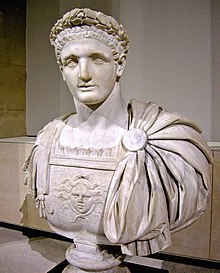
Tawdry Tuesday, Imperial Edition: Fun with Domitian

Suetonius, Life of Domitian 22

He was a man of extreme lust: he used to refer to his endless intercourse as “bed-wrestling”, as if it were a type of exercise. There was a rumor that he used to depilate his concubines himself and that he used to go swimming with street prostitutes. Even though he repeatedly refused a wedding to his brother’s daughter who was offered to him for marriage when she was still a virgin because he was overcome with the Domitia affair, he seduced her not long after she was married to someone else and while Titus was still alive. But, soon, he loved her openly and with the utmost passion once she was deprived of father and husband, to the point that he was the reason for her death when she was forced to abort a child conceived with him.”

XXII. Libidinis nimiae, assiduitatem concubitus velut exercitationis genus clinopalen vocabat; eratque fama, quasi concubinas ipse develleret nataretque inter vulgatissimas meretrices. Fratris filiam adhuc virginem oblatam in matrimonium sibi cum devinctus Domitiae nuptiis pertinacissime recusasset, non multo post alii conlocatam corrupit ultro et quidem vivo etiam tum Tito; mox patre ac viro orbatam ardentissime palamque dilexit, ut etiam causa mortis exstiterit coactae conceptum a se abigere.

Image result for Domitian

Writing Addiction

Petrarch, Epistulae 13.7:

“My friend said, ‘Give me the keys to your cabinet.’ When I, wondering, had given them to him, he straightaway enclosed all of my books and all of my writing instruments, carefully locked it and left. He said, ‘I declare a ten-day holiday for you and therefore order you not to read or write anything during that time.’ I understood the game, and while I seemed to be at rest to him, I felt that I had been mangled. What do you expect? That day felt longer than a year, and was not without tedium. The next day, I had a had a headache from morning ‘til night. The third day arrived and I felt some little shakes from the fever. He returned when he learned of this, and gave me back the keys. So, I suddenly became better. Since he saw that I was afterward nourished by labor, he refrained from a similar attempt. What can I say? Is it true, as the satirist says, that the addiction to writing – as with all other things – is incurable? I would add – is it also contagious? How many do you think that I, who speak with you, have infected with the contagion of this disease? It used to be, within our lifetime, that almost no one wrote this stuff. Now, there is no one who doesn’t write.”

Image result for petrarch writing

«Da» inquit, «michi claves armarii tui». Quas cum dedissem admirans, ibi protinus libros omnes meos atque omnia ad scribendum instrumenta conclusit obseravitque solicite atque abiit, et: «Decem» inquit, «tibi dierum ferias indico et ex facto iubeo nequid hoc tempore legas aut scribas». [6] Agnovi ludum: otiosus sibi, mancus michi remanere visus eram. Quid expectas? transiit dies ille anno longior non sine tedio; die altero dolorem capitis a mane ad vesperam passus sum; tertius dies illuxerat: quasdam febris motiunculas sentire ceperam. Rediit ille re cognita clavesque restituit; ita ego repente convalui et ipse postmodum me laboribus ali videns, ut dicebat, a simili se prece continuit. [7] Quid igitur dicam? ita ne verum est ut, sicut ceterarum rerum, sic scribendi “cacoethes insanabile”, quod ait Satyricus; quod ego addo, contagiosus etiam morbus sit? Quam multos enim putas me, qui tecum loquor, morbi huius contagiis infecisse? solebant in memoria nostra rari esse qui hoc scriberent.


The Ideal Friend According to Ennius

Gellius, Attic Nights 12.4

“Some verses are quoted from the seventh book of Quintus Ennius’ Annals in which the character and behavior of a lower ranked man towards a socially superior friend is depicted and defined”

In the seventh book of the Annals we find Quintus Ennius  clearly and learnedly describing and defining in the story of Geminius Servilius, a nobleman, with what character, attitude, humility, trust, control over speech, context for speaking, with which knowledge of ancient things and old and new manners, with how much effort for guarding secret belief, and what kinds of treatments there are against the annoyances of life which are necessary aids for a friend of a man who is superior by birth and fortune to have.

I judge these verses to be no less worthy of frequent and constant remembrance than the philosophers’ sayings about responsibilities. In addition to this, the savor of antiquity in these verses must be so revered, its sweetness is so simple and removed from every kind of contamination, that my belief is that they must be remembered, and considered, and cultivated in the place just as ancient and sacred laws of friendship

Versus accepti ex Q. Enni septimo Annalium, quibus depingitur finiturque ingenium comitasque hominis minoris erga amicum superiorem.

Descriptum definitumque est a Quinto Ennio in Annaliseptimo graphice admodum sciteque sub historia Gemini Servili, viri nobilis, quo ingenio, qua comitate, qua modestia, qua fide, qua linguae parsimonia, qua loquendi opportunitate, quanta rerum antiquarum morumque veterum ac novorum scientia quantaque servandi tuendique secreti religione, qualibus denique ad muniendas vitae molestias fomentis,
levamentis, solacis amicum esse conveniat hominis genere et fortuna superioris.

Eos ego versus non minus frequenti adsiduoque memoratu dignos puto quam philosophorum de officiis decreta. Ad hoc color quidam vestustatis in his versibus tam reverendus est, suavitas tam inpromisca tamque a fuco omni remota est, ut mea quidem sententia pro antiquis sacratisque amicitiae legibus observandi, tenendi colendique sint. Quapropter adscribendos eos existimavi, si quis iam statim desideraret:

Ennius, Annals 7 fr.12

Once he said these things, he calls for a man with whom he often, happily, and freely
Shared a table and conversations about his own private affairs
When he found himself worn thin after the greater part of the day
From ruling the most important affairs of the state:
Advice grated in the form and in the sacred Senate.
To this man he would speak boldly on matters small and great
And tell jokes and empty himself of evil and good concerns
Through speech if he wanted to and know they are safe.
This man with whom he shares much pleasure
Communicating both secret and public joys
Whose nature no mere saying of evil sways
So that he might commit a lightly considered or evil deed.
A learned, trusty, kind, pleasurable, happy man content with his life,
Understanding, offering the right word at the right time,
Friendly but of few words, possessing much knowledge of antiquity
Buried by time, mastering customs new and old
The laws of many gods and men of antiquity,
A wise man, who can speak or be silent on what has been spoken.
In the middle of the fight Servilius addresses this man.

They claim that Lucius Aelius Stilo used to say that Ennius composed these words about him and that this was actually the detail of Ennius’ own character and customs.”

Haece locutus vocat quocum bene saepe libenter
Mensam sermonesque suos rerumque suarum
Comiter inpertit, magnam cum lassus diei
Partem fuisset, de summis rebus regundis
Consilio indu foro lato sanctoque senatu;
Cui res audacter magnas parvasque iocumque
Eloqueretur sed cura malaque et bona dictu
Evomeret, si qui vellet, tutoque locaret,
Quocum multa volup ac gaudia clamque
palamque;
Ingenium cui nulla malum sententia suadet
Ut faceret facinus levis aut malus; doctus, fidelis,
Suavis homo, facundus, suo contentus, beatus,
Scitus, secunda loquens in tempore, commodus,
verbum
Paucum, multa tenens antiqua sepulta, vetustas
Quem facit et mores veteresque novosque tenentem,
Multorum veterum leges divumque hominumque;
Prudenter qui dicta loquive tacereve posset;
Hunc inter pugnas conpellat Servilius sic.

Image result for Ennius
Ennius from Wikipedia