“When he was at the beginning of adolescence and learned that his father lived in the country because of a terrible marriage…Although when he was recalled from Athens by Nero he was included among his group of friends and even honored with a quaestorship, he still did not remain in his good graces.
Because he took it badly when Nero suddenly left while he was giving a reading for the sake of holding a senate meeting but for no other real reason accept for chilling the reading, he did not later on restrain himself from either words or deeds against the prince, some of which are well-known.
For instance, once when he was in the public restrooms, he followed a rather clear and loud fart to empty his bowels with a half-line written by Nero as the great crowd of those around him fled: “you could believe that it thundered beneath the earth.”
Hic initio adolescentiae, cum ob infestum matrimonium patrem suum ruri agere longissime cognovisset*** Revocatus Athenis a Nerone cohortique amicorum additus atque etiam quaestura honoratus, non tamen permansit in gratia. Siquidem aegre ferens, recitante se subito ac nulla nisi refrigerandi sui causa indicto senatu recessisse, neque verbis adversus principem neque factis exstantibus post haec temperavit, adeo ut quondam in latrinis publicis clariore cum strepitu ventris emissi hemistichium Neronis magna consessorum fuga pronuntiarit: Sub terris tonuisse putes.
“When she has placed her left flank to my right side she is Ilia and Egeria – I give whatever name to her. Nor do I fear that, while I’m mid-fuck, her husband will come back from the country, the door will be broken, the dog will bark, and from every corner the house will resound with a great clatter while my pale lady jumps from the bed and screams that she is wretched and fears for her legs as she grabs her ‘dowry’ as I cover myself. I would have to flee unbelted and barefoot lest I suffer the loss of my coins, or my ass, or my reputation! It’s a miserable thing to be caught: I would carry this point even if Fabius the Stoic were the judge.”
haec ubi supposuit dextro corpus mihi laevom,
Ilia et Egeria est; do nomen quodlibet illi.
nec vereor, ne, dum futuo, vir rure recurrat,
ianua frangatur, latret canis, undique magno
pulsa domus strepitu resonet, vepallida lecto
desiliat mulier, miseram se conscia clamet,
cruribus haec metuat, doti deprensa, egomet mi.
discincta tunica fugiendum est et pede nudo,
ne nummi pereant aut puga aut denique fama.
deprendi miserum est: Fabio vel iudice vincam.
Brandeis University Commencement is today. We say farewell to our graduating students. And now is a time for my confession….
Solon, fr. 18
“I grow old, always learning many things.”
γηράσκω δ’ αἰεὶ πολλὰ διδασκόμενος·
Kim Stanley Robinson The Years of Rice and Salt (2003: 758)
“Over time, Bao came to understand that teaching too was a kind of reincarnation, in that years passed and students came and went, new young people all the time, but always the same age, taking the same class; the class under the oak trees, reincarnated. He began to enjoy that aspect of it. He would start the first class by saying, “Look, here we are again.” They never knew what to make of it; same response, every time.
He learned, among other things, that teaching was the most rigorous form of learning. He learned to learn more from his students than they did from him; like so many other things, it was the reverse from what it seemed to be, and colleges existed to bring together groups of young people to teach some chosen few of their elders the things that they knew about life, that the old teachers had been in danger of forgetting.”
Seneca, Moral Epistles 76.3-5
“People of every age enter this classroom. “Do we grow old only to follow the young?” When I go into the theater as an old man and I am drawn to the racetrack and no fight is finished without me, shall I be embarrassed to go to a philosopher?
You must learn as long as you are ignorant—if we may trust the proverb, as long as you live. And nothing is more fit to the present than this: as long as you live you must learn how to live. Nevertheless, there is still something which I teach there. You ask, what may I teach? That an old man must learn too.”
Omnis aetatis homines haec schola admittit. “In hoc senescamus, ut iuvenes sequamur?” In theatrum senex ibo et in circum deferar et nullum par sine me depugnabit ad philosophum ire erubescam?
Tamdiu discendum est, quamdiu nescias; si proverbio credimus, quamdiu vivas. Nec ulli hoc rei magis convenit quam huic: tamdiu discendum est, quemadmodum vivas, quamdiu vivas. Ego tamen illic aliquid et doceo. Quaeris, quid doceam? Etiam seni esse discendum.
Seneca, Moral Epistles 7.8-9
“Both habits, moreover, should be avoided. Don’t imitate bad people, because there are many of them, nor hate the many, because you aren’t like them. Take shelter in yourself, whenever you can. Spend time with people who will make you a better person. Embrace those whom you can make better. Such improvement is a partnership, for people learn while they teach.”
Utrumque autem devitandum est; neve similis malis fias, quia multi sunt, neve inimicus multis, quia dissimiles sunt. Recede in te ipsum, quantum potes. Cum his versare, qui te meliorem facturi sunt. Illos admitte, quos tu potes facere meliores. Mutuo ista fiunt, et homines, dum docent, discunt.
“But, truly, the knowledge of many disciplines is pleasurable”. Ok, then, let’s keep only what is necessary from these arts. Do you think that the person who considers superficial matters equal to useful ones and for this reason makes his home a museum of expensive products is reprehensible but not the man who is obsessed with the superfluous aspects of academia? To want to know more than is enough is a kind of excessive delusion.
Why? Well, this extreme pursuit of the liberal arts makes people annoying, wordy, bad-mannered, and overly self-satisfied, even though they have not learned the basics because they pursue the useless.
The scholar Didymus wrote four thousand books. I would pity him if had only read that many useless works. In these books he searched for Homer’s homeland, the real mother of Aeneas, whether Anacreon is more licentious or just drunk, whether Sappho was promiscuous and other various questions which, if you learned them, would have been necessarily forgotten. Go on, don’t say life is long. No, when you turn to your own people too, I will show you many things which should be pruned back with an ax.”
“At enim delectat artium notitia multarum.” Tantum itaque ex illis retineamus, quantum necessarium est. An tu existimas reprendendum, qui supervacua usibus conparat et pretiosarum rerum pompam in domo explicat, non putas eum, qui occupatus est in supervacua litterarum supellectile? Plus scire velle quam sit satis, intemperantiae genus est.
Quid? Quod ista liberalium artium consectatio molestos, verbosos, intempestivos, sibi placentes facit et ideo non discentes necessaria, quia supervacua didicerunt. Quattuor milia librorum Didymus grammaticus scripsit. Misererer, si tam multa supervacua legisset. In his libris de patria Homeri quaeritur, in his de Aeneae matre vera, in his libidinosior Anacreon an ebriosior vixerit, in his an Sappho publica fuerit, et alia, quae erant dediscenda, si scires. I nunc et longam esse vitam nega. Sed ad nostros quoque cum perveneris, ostendam multa securibus recidenda.
These are themes close to the old man’s heart, elsewhere too:
Seneca, De Brevitate Vitae 13
“This sickness used to just afflict the Greeks, to discover the number of oars Odysseus possessed, whether the Iliad was written before the Odyssey, whether the poems belong to the same author, and other matters like this which, if you keep them to yourself, cannot please your private mind; but if you publish them, you seem less learned than annoying.”
Graecorum iste morbus fuit quaerere, quem numerum Ulixes remigum habuisset, prior scripta esset Ilias an Odyssia, praeterea an eiusdem essent auctoris, alia deinceps huius notae, quae sive contineas, nihil tacitam conscientiam iuvant sive proferas, non doctior videaris sed molestior.
Seneca, Moral Epistle 108
“But some error comes thanks to our teachers who instruct us how to argue but not how to live; some error too comes from students, who bring themselves to teachers not for the nourishing of the soul, but the cultivation of our wit. Thus what was philosophy has been turned into philology.”
Sed aliquid praecipientium vitio peccatur, qui nos docent disputare, non vivere, aliquid discentium, qui propositum adferunt ad praeceptores suos non animum excolendi, sed ingenium. Itaque quae philosophia fuit, facta philologia est.
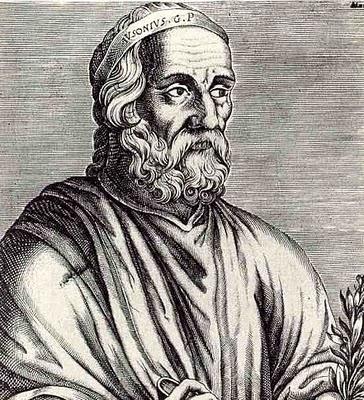
J.E. Sandys, A History of Classical Scholarship (Ausonius)
“It is difficult to imagine that a man capable of writing such trifles as these (not to mention his lines on the Caesars and on celebrated cities) had some ten years previously (in 378 a.d.) filled the splendid position of praetorian praefect of the provinces of Gaul (an official whose sway extended even over Spain and the opposite coast of Africa, and over the southern part of Britain), and, in the four years between 376 and 380, had seen his father honorary praefect of lllyricum, his son and son-in-law proconsuls of Africa, and his nephew praefect of Rome. It seems as if, on his return to the scenes of his early work as a professor at Bordeaux, the praefect relapsed into the ‘ grammarian ‘, spending his time on learned trifles, which are among the least important products of scholarship, and consoling himself in his tedious task by recalling Virgil’s famous phrase: — ‘in tenui labor, at tenuis non gloria’. We may regret that Ausonius does not appear to have used his great opportunities for reforming the educational system which prevailed in the schools of the Western Empire, and thus rendering a lasting service to the cause of learning; but we may allow him the credit of having possibly inspired the memorable decree promulgated by Gratian in 376, which improved the status of public instructors by providing for the appointment of teachers of rhetoric and of Greek and Latin ‘ grammar ‘ in the principal cities of Gaul, and fixing the amount of their stipends ‘. “
Fronto to Praecilius Pompeianus [Ad Amicos, i. 15 (Naber, p. 184).]
“In the intervening period, the neuritis overtook me even more powerful than usual, and it has lasted longer and been harder to bear than is typical. I am not able to pay any attention to letters that need to be written and read when my limbs hurt so much. And I have not as yet dared to expect so much from myself.
When those magnificent specimens of philosophers make the claim that the wise man would still be happy even if he were trapped in the Bull of Phalaris, it is easier for me to believe that he could be happy than he would be able to think carefully about some introduction or turn a pithy phrase all while roasting within the brass.”
Interea nervorum dolor solito vehementior me invasit, et diutius ac molestius solito remoratus est. Nec possum ego membris cruciantibus operam ullam litteris scribendis legendisque impendere; nec umquam istuc a me postulare ausus sum. Philosophis etiam mirificis hominibus dicentibus, sapientem virum etiam in Phalaridis tauro inclusum beatum nihilominus fore, facilius crediderim beatum eum fore quam posse tantisper amburenti in aheno prohoemium meditari aut epigrammata scribere.
“The poisoning-court, once unknown to Roman customs and laws, was instituted after many Roman matrons had been implicated in the crime. After these women in question had poisoned their husbands in a secret plot, they were indicted based on the testimony of a single serving-girl. A number of one hundred and seventy were condemned to death by the court.”
Veneficii quaestio, et moribus et legibus Romanis ignota, complurium matronarum patefacto scelere orta est. quae, cum viros suos clandestinis insidiis veneno perimerent, unius ancillae indicio protractae, pars capitali iudicio damnatae centum et septuaginta numerum expleverunt.
“The man who has hoped for the fasces longs to put them down once he gets them and says constantly, “When will this year be over?” This man sponsors games which he once valued as a great opportunity for him, yet he says “When can I get away from them?” A lawyer is raised up by the whole forum and with full crowd beyond where he can be heard, but he complains “When will we have a break?” Everyone speeds their own life along and suffers for a desire for the future and boredom with the present.
But the person who portions out every moment to his own use, who schedules out every day like it is the last, neither hopes for nor fears tomorrows. For what kind of new pleasure is any hour alone capable of bringing? Everything is known and has been enjoyed fully. Fortune may by chance bring out something else, but life is already safe. Something can be added; nothing can be subtracted, and he will accept anything which is added like someone who is already satisfied and full will take some food he does not desire.
Therefore, it is not right to think that anyone has lived long because of grey hair or wrinkles. He has not lived a while, but he has existed a while. Certainly, what if you thought that he had traveled far whom a terrible storm grabbed in the harbor and dragged here and there in turns of winds raging from different directions and drove him over the same space in a circle? He did not travel far, but he was tossed around a lot.”
Adsecutus ille quos optaverat fasces cupit ponere et subinde dicit: “Quando hic annus praeteribit?” Facit ille ludos, quorum sortem sibi optingere magno aestimavit: “Quando,” inquit, “istos effugiam?” Diripitur ille toto foro patronus et magno concursu omnia ultra, quam audiri potest, complet: “Quando,” inquit, “res proferentur?” Praecipitat quisque vitam suam et futuri desiderio laborat, praesentium taedio. At ille qui nullum non tempus in usus suos confert, qui omnem diem tamquam ultimum ordinat, nec optat crastinum nec timet. Quid enim est, quod iam ulla hora novae voluptatis possit adferre? Omnia nota, omnia ad satietatem percepta sunt. De cetero fors fortuna, ut volet, ordinet; vita iam in tuto est. Huic adici potest, detrahi nihil, et adici sic, quemadmodum saturo iam ac pleno aliquid cibi, quod nec desiderat et capit. Non est itaque quod quemquam propter canos aut rugas putes diu vixisse; non ille diu vixit, sed diu fuit. Quid enim si illum multum putes navigasse, quem saeva tempestas a portu exceptum huc et illuc tulit ac vicibus ventorum ex diverso furentium per eadem spatia in orbem egit? Non ille multum navigavit, sed multum iactatus est.
“Sotion the Peripatetic, certainly a man of decent reputation, wrote a book full of many varied investigations, which he called the ‘Horn of Amalthea,’ which has roughly the same sense as ‘Cornucopia.’ In that book we find this story written about the orator Demosthenes and the courtesan Lais. He writes: ‘Lais the Corinthian earned a great deal of money on account of the elegance and loveliness of her form, and a throng of rich and well-known men rushed to her from all of Greece, but were not admitted unless they gave her what she demanded. She was in the habit, however, of asking too much.’ Here he says that this is the origin of the old Greek adage, not every man’s vessel makes it into Corinth, because he who was unable to give to Lais what she demanded had come to her in vain.
‘Demosthenes came to her in secret and asked that she give him something of her bounty. But Lais demanded 10,000 drachmas,’ (which amounts to ten thousand denarii.) ‘Demosthenes was struck by the woman’s impudence and the greatness of the sum demanded. He was struck pale, turned away, and said as he was leaving, I would not pay so much for regret.’”
Sotion ex peripatetica disciplina haut sane ignobilis vir fuit. Is librum multae variaeque historiae refertum composuit eumque inscripsit keras Amaltheias. 2 Ea vox hoc ferme valet, tamquam si dicas “cornum Copiae”. In eo libro super Demosthene rhetore et Laide meretrice historia haec scripta est: “Lais” inquit “Corinthia ob elegantiam venustatemque formae grandem pecuniam demerebat, conventusque ad eam ditiorum hominum ex omni Graecia celebres erant, neque admittebatur, nisi qui dabat, quod poposcerat; poscebat autem illa nimium quantum.” Hinc ait natum esse illud frequens apud Graecos adagium: ou pantos andros es Korinthon esth’ho plous quod frustra iret Corinthum ad Laidem, qui non quiret dare, quod posceretur. “Ad hanc ille Demosthenes clanculum adit et, ut sibi copiam sui faceret, petit. At Lais myrias drachmas poposcit”, hoc facit nummi nostratis denarium decem milia. “Tali petulantia mulieris atque pecuniae magnitudine ictus expavidusque Demosthenes avertitur et discedens “ego” inquit “paenitere tanti non emo”.
J.E.B. Mayor, Preface to Thirteen Satires of Juvenal:
“I often think that much of the labour spent on editing the classics is wasted; at least the same amount of time might be invested to far greater profit. For example, if one of the recent editors of Persius had devoted but three weeks to the preparation of a Lexicon Persianum, he would have produced a κτῆμα ἐς ἀεί, a permanent addition to classical learning. We sorely need lexicons e.g. to Cicero (except his speeches), Varro, Livy, the two Senecas, Quintilian’s declamations, Valerius Flaccus, Silius, the Latin anthology, Macrobius, Tertullian, Augustine, Jerome; to technical authors in general, e.g. agricultural, grammatical, mathematical, medical, military, musical, rhetorical: in Greek to the early Christian literature, Diogenes Laertius, Josephus, Philo, Galen, Stobaeus, Clement of Alexandria, Origon, Chrysostom, Cyril. If every editor would choose, in addition to his author and to the books commonly read in college, one ancient author and one modern critic, as his specialty, commentaries would be far more original than they are. The universities might issue variorum editions, not on the Dutch plan, not like Halm’s Latin editions of Cicero, or Dindorf’s of Greek authors, but more concise and more comprehensive at the same time. Two or three might combine, say, to edit the commentaries on an author, as Livy, Petronius, Suetonius, or Apuleius. A commentary which takes rank as ‘classical’, e.g. Casaubon’s on Suetonius, Persius, Athenaeus, Strabo, should be given almost entire, and form the nucleus, other notes being carefully sifted, and repetitions cleared away. One colleague might he responsible for all editions of the author; while two others ransacked periodical and occasional literature, variae lectiones, adversaria cet. Madvig says, one is ashamed to be called a philologer, when one looks at the obsolete medley brought together by Moser on the Tusculans; in far narrower compass all that is valuable there, and much that is omitted, might be stored for all time. By such a process books like Rader’s Martial, now no doubt, as Prof. Friedlander says, for most of us, ‘völlig veraltet,’ would once more yield their treasures to the ordinary student; Marcile too and Harault would no longer be mere names”




![Johannes von Gmunden: Calendar, [Nuremberg], 1496](https://commons.wikimedia.org/wiki/File:Johannes_von_Gmunden_Calendar_1.png)