The Irishman is in many ways Scorsese’s saddest film. Its central tragic conflict centers on people who, while engaged in violent and heady power struggles throughout their lives, prove wholly incapable of managing basic human relationships and living through the utter ordinariness of life.
Scorsese lays the blame for Hoffa’s downfall upon his haughty and insolent behavior in and immediately following his jail sentence. His poorly disguised disdain for his fellow prisoner Tony Pro escalates when they have both finished their sentences, and Hoffa asks Tony for support in his attempt to regain control of the union:
Tony: He said he’ll take care of it, no questions asked. You wouldn’t do that but he will. I meant the other thing.
Hoffa: What other thing?
Tony: You know.
Hoffa: I don’t know.
Tony: Your apology.
Hoffa: My apology? My apology for what?
Tony: For what you said when you were sitting there eating your ice cream like some fucking king.
Hoffa’s inability to strike a conciliatory tone mirrors the attitudes of both Agamemnon and Achilles in their quarrel at the beginning of the Iliad. Unable to make even slight conciliatory gestures to the opposite party, each of these characters brings ruin upon himself when a simple ‘sorry’ would have yielded dividends. As narrator, Frank points to Hoffa’s time in jail as the beginning of everything falling apart.
Tragedy is the result of individual choices, but in some ways the saddest part of life is the inexorable fate which awaits us all, brought on by the ravages of time. I felt genuinely sad watching Joe Pesci’s hands shake as he denied that he was able to eat bread any more due to his advanced age and failing health. He was introduced and maintained his presence throughout the film as one of its most powerful operators, but he was rendered wholly unable to eat the bread and wine which he and Frank had bonded over during their first shared meal. While this may be a mechanism for heightening the pathos and hinting that Russell, unable to eat the bread, is thus separated from the possibility of communion and redemption, it also strongly suggests the spirit underlying Tennyson’s Ulysses when he says
Tho’ much is taken, much abides; and tho’
We are not now that strength which in old days
Moved earth and heaven, that which we are, we are.
In his final scene, Russell says that he is going to church and tells Frank not to laugh. How far degraded from the power broker he once was. Frank, however, has the misfortune to survive his time in jail and struggle to adapt to a dull and ordinary life, spurned by his daughters, and abandoned to the care of the nursing home.
The inability to return to a boring life of plain domesticity is characteristic both of the tragic figures drawn from the Trojan cycle who return home, as well as of the criminal figures whom Scorsese so often profiles. In Goodfellas, Henry Hill tells us, “As far back as I can remember, I always wanted to be a gangster.” By the end of the movie, Henry is no longer a gangster, but a washed up loser and a rat. Similarly, in The Irishman, everyone either ends up dead or, like Frank, forced to reckon with the mundane tragedy of everyday existence once the high times have ended. Menelaus and Nestor seem to do well enough, but Agamemnon is murdered when he returns home, and, if any of the post-Odyssey stories hold any weight, the comforts of home actually had little to offer Odysseus.
At the close of the movie, Frank waxes Nestorian when his nurse asks about a picture of his daughter Peggy posing with Jimmy Hoffa.
Nurse: Who’s that with her?
Frank: You don’t know who that is?
Nurse: No.
Frank: Jimmy Hoffa.
Nurse: Oh, yeah.
Frank: Yeah, right, “Oh, yeah.” You don’t know who he is.
Nurse: Okay, I don’t.
Frank: Yeah. Oh, boy, you don’t know how fast time goes by until you get there.
It is fashionable to make fun of Nestor for being so sentimentally nostalgic for a lost time when men were better and more heroic, but this is the very nostalgia on which heroic poetry itself was based. Similarly, Scorsese’s films often exude a kind of wistful nostalgia, especially for the middle of the 20th century. As the narrator, Frank is well aware of the fact that people now don’t really know much or care much about Jimmy Hoffa. His comments on this score are a metapoetic conceit whereby Scorsese, who surely dove deep into Hoffa history, is able to nudge the audience slyly about his own choice of subject, while simultaneously reflecting upon the transience of time. Hoffa may have been a minor king in his own day, but time and folly robbed him of his power and his fame, as he has now been abandoned to the curio cabinet of history.
To what base uses we may return, Horatio! Why may
not imagination trace the noble dust of Alexander,
till he find it stopping a bung-hole? (Hamlet 5.1)
Many of the other power players and potentates who appear throughout the film appear with captions below them at their first appearance, providing information on their date and manner of death. These have the effect of cinematic footnotes, and suggest that all of these characters are now just that – footnotes in a largely forgotten history. The movie itself is a real triple decker (at three and a half hours), and though it goes by quickly (as Frank himself suggested), one cannot help but feel that the slow burn of the film is meant to thumb the nose at fleeting time itself.
The gangsters who died in the middle of mob activity are the most Achillean of the characters, if for no other reason than in each case, an early death cut one off from the possibility of old age, drab disappointment, and lonely domesticity. Hoffa’s death is like that of Agamemnon: murdered by someone he trusted after withdrawing (or rather, being forced out) from the scene of glory. Frank, however, is something more like Odysseus: his involvement in a particular conflict had become such an integral part of his character and worldview that he was wholly unsuited for domestic personal relationships. As Alyssa Rosenberg wrote, the most important scene in Frank’s narrative arc is not killing Hoffa, but being wholly rejected by his daughter Peggy. In a subsequent scene, another of his daughters reveals to him just how entirely isolated from his family he has been for his entire life.
There is a tendency to think that tragedy occurs in the middle of great and impressive action, but a fair number of tragic figures simply cannot manage the everyday details of basic human life: being happy at home, content with enough, conceding a small piece of your vanity and apologizing to defuse a tense situation. George Eliot managed to spin an entire novel out of the tragedy and the heroism of quiet, unglamorous, everyday life. We should not be too take in by the grand setting and weighty backdrop of so many of our narratives: in the end, they’re all just about living.
“Just about anybody can face a crisis. It’s that everyday living that’s rough.” (Bing Crosby in The Country Girl, 1954)
“Oh! citizens of Argos, do you hear what he says? You dare to compare yourself to Themistocles, who found our city half empty and left it full to overflowing, who one day gave us the Piraeus for dinner, and added fresh fish to all our usual meals. You, on the contrary, you, who compare yourself with Themistocles, have only sought to reduce our city in size, to shut it within its walls, to chant oracles to us. And Themistocles goes into exile, while you gorge yourself on the most excellent fare”
Thucydides, History of the Peloponnesian War, 1.93.3-5
“Themistocles likewise persuaded them to build up the rest of Piraeus, for it was begun in the year that he himself was archon of Athens, because he conceived the place both beautiful, in that it had three natural havens, and, also that, since the Athenians were now seamen, it would very much advance the enlargement of their power. For he was indeed the first man that dared tell them that they ought to take upon them the command of the sea, and then immediately helped them in the obtaining it. By his counsel also it was that they built the wall of that breadth about Piraeus which can now be seen.”
The journey begins at Omonoia Square, one of the most recognizable landmarks of modern Athens, built in the 19th century after the birth of the modern Greek state, and also iconic to the turbulent history of the country: Included in the initial urban plan of Athens (1833), it’s been renamed many times, as many as it has been renovated, rebuilt, destroyed and remade. A witness to the city’s modernization, once the site of the neoclassical architecture that has characterized central Athens (the body politic’s desire to mimic a grandiose past), it was once regarded as an icon of multiculturalism, in the same way that it is now despised for the same reason.
The rather derelict area is now traditionally known as a gray area for foreign workers, low cost retail (and drugs) and most recently, a site of contestation of European identities with the refugee tents going up in the area, making inescapably visible the plight of human rights and the failure of international law to protect those who need it most. As the square watched the refugees of the Asia Minor arrive in Athens from the port of Piraeus to rebuild their lives in Greece, it has now watched refugees from imperialist wars in the Middle East flock into Europe, but with little hope to rebuild anything.
Yet this image of Omonoia Square with the tents (just a stone’s throw from the Greek parliament), has a tendency to fade quickly. In a kind of white flight that saw the wealthy abandon the city center as it became progressively impoverished—a situation that paradoxically gave it its multicultural character. But a recent change of government has put forward plans for the reclamation of the city center by investor capital. Will the square be cleaned from its intangible history of migrations?
It remains to be seen. But it is significant that here we begin the journey towards “Piraeus/Heterotopia”, a participatory theater project by Japanese artist Akira Takayama that took place in 2017 (as a part of the Fast Forward Festival, organized by the Onassis Cultural Center), and is now dormant but latent since I was able to “awaken” it, during a visit to Athens in May. The project consists basically of an unusual walking tour of the port area, armed with a smartphone app and a map, with several stops selected based on the hidden (or at least not apparent right now) history of the area, unlocking a speculative oral history: At every stop, visitors listen to a story (it’s necessary to reach the spot physically to unlock the sound audio in the app) written by commissioned writers from different countries.
Akira Takayama, Piraeus / Heterotopia, Fast Forward Festival 4, Onassis Cultural Center
The story being told ‘might’ have happened there, and it’s written based on detail research of the history and possible connotations associated with the specific spot. Here we introduce the idea of a para-fiction: It’s both true and fictional. Starting with Ancient Greece, all the way to the current refugee crisis and the Asia Minor catastrophe in between, “Heterotopia” highlights the important role of this area as a space of transition, overturning the current European idea of migration from a state of exception, to an essential aspect of human history.
This “strange land”, is for Takayama an ‘heterotopia’ following from Foucault’s use of the term, as a space of otherness that is larger than the sum of its parts. The urban and economic history of modern Athens has been nothing but strange combination of randomness and neglect, so that the port with its privileged location stands far beyond the metropolitan heart of Athens (centered around the Acropolis), and is not necessarily part of the self-image of Athens today, but it reappears in this project as an epicenter of mobility and demographic change. In what follows, I will stay loyal to the spirit of the project, leaving the oral stories alone, for they need to be experienced in person (the app is still functional and it is possible to do the walking tour).
I will focus on a few spots in the project, attempting to unmask the presence of the past – classical and otherwise, and make it present. At a time of infinite powerlessness before our current condition, with the global erosion of the liberal democratic project, these places of ‘otherness’, at the borders of European capitals (and particularly for Athens, an alleged monument to the Western tradition), remind us of the porousness of history, and therefore, of the tragic but nonetheless pluralistic experiences that have shaped the birth of modern polities.
The arrival in Piraeus is a continuation of the fragile multiculturalism of Omonoia (something that truly stands out in a country like Greece, built along the lines of 19th century ethno-states and largely self-identifying as white, by association with the classical past of Europe), with wares being sold in many languages and crowds of tourists rushing to catch the ferries to the Greek islands. As we know from ancient writers, particularly Thucydides, Piraeus was developed in the 5th century BCE under the statesman Themistocles, who in 493 BCE initiated the works of a fort in Piraeus, and in 483 BCE, the Athenian fleet left their order port in Phaleron, and relocated to Piraeus, a move that would be decisive in the battle of Salamis.
Phaleron, the old harbor, now the district of Palaio Faliro, is also the site of fascinating history: One of the most important archaeological findings of recent years was the mass grave in Faliro Delta, furnishing valuable information—and many new questions—about a rather obscure period of Greek history, the 7th century BCE. The find was the subject of another Japanese artist’s work, when Hikaru Fujii presented his video/performance work “The Primary Fact”, once again at the Onassis Cultural Center’s Fast Forward in 2018, that I wrote about.
Hikaru Fujii, “The Primary Fact”, Fast Forward Festival 5, Onassis Cultural Center
The archaeological site was revealed during the construction of a complex for the Stavros Niarchos Foundation, now housing the national library and the national opera, highlighting the hybrid situation of Greece where these long-established shipping families such as Onassis and Niarchos act as a kind of para-state; not unlike the rule of the oligarchs, mentioned by Plato in the opening portion of his “Seventh Letter”. But returning to Piraeus, its story is long and complicated: Athens and Piraeus were connected through a pathway between the two walled cities (the Themistoclean Walls were completed in 471 BCE), but it declined after being destroyed by the Romans. What follows for Piraeus is a long dormant period during Byzantine and Ottoman rule, and later revival when Athens was designated the Greek capital under Bavarian Otto I.
To what degree was the revival of Piraeus part of the European antiquarianism regarding Greece? It would be difficult to answer. The current station building goes back to 1920s, a period of intense conflict in Greece with their loss in the war against the new Turkish republic, along the way forfeiting claim to the historical Greek Smyrna, and receiving thousands of Greek refugees from the Asia Minor, reluctantly welcomed into a country still very poor and largely undeveloped. It was from Piraeus that Greek migrants left to pursue the American dream, and it was also from there that the Nazis occupied Greece.
Different generations of migrants have settled in the area temporarily before moving on (during the research for Heterotopia, Takayama and his team also spoke with refugees from Syria in the refugee camp of the Piraeus port), but postclassical history seems to capture little of the imagination in Greek historiography, where the only path to connect a grandiose classical past with the birth of the modern republic, is the silencing of everything else. In this way, Greeks both reconnect with the European tradition and lay claim to their ‘whiteness’ (opposed to the people of the former multicultural Near East), and replace complexity with a traditional nation state.
Getting to Hell is supposed to be easy. Yet, if one were to take a survey of popular culture, it seems rather a difficult task. A not insignificant part of this difficulty is the necessity of knowing Latin to get there.
At the beginning of Christopher Marlowe’s Tragedy of Dr. Faustus, we find Faustus in his study surfeited with the sorts of learning available to mere humans. Opening up books of theology, medicine, and law, he casts them aside and, having first claimed that Aristotle’s Analytics had ravished him, changes tack and says that it is magic and necromancy which occupy his soul.
Perhaps we should be more inclined to think that his famous bargain had already been struck in order to outfit him with the kind of heroic polymathy which could encompass three such disparate and apparently endless subjects. But Faustus is tired of the merely human, and decided to consult with Cornelius and Valdes, two dabblers in the demonic, about the procedure for summoning spirits from Hell. These two characters equip him with the requisite conjuring knowledge, but it is surprising that someone of such apparently limitless erudition would require help to be initiated into this art. Nevertheless, they provide him with the necessary incantatory formula, and later than night, Faustus expends a fair amount of breath on his Latin invocation of Mephistopheles:
Sint mihi dei Acherontis propitii! Valeat numen triplex Jehovoe! Ignei, aerii, aquatani spiritus, salvete! Orientis princeps Belzebub, inferni ardentis monarcha, et Demogorgon, propitiamus vos, ut appareat et surgat Mephistophilis, quod tumeraris: per Jehovam, Gehennam, et consecratam aquam quam nunc spargo, signumque crucis quod nunc facio, et per vota nostra, ipse nunc surgat nobis dicatus Mephistophilis!
We, in our own state of enlightenment, know that the Demogorgon invoked by Faustus is an entirely fictive deity, conjured into existence by a scribal error for demiourgon. Perhaps Faustus should not have abandoned book learning so early. But to return to the point: Mephistopheles appears after this lengthy invocation, but informs Faustus that the incantation was merely incidental to his appearance – the real trick being to abjure God and the Trinity:
MEPHIST. That was the cause, but yet per accidens;
For, when we hear one rack the name of God,
Abjure the Scriptures and his Saviour Christ,
We fly, in hope to get his glorious soul;
Nor will we come, unless he use such means
Whereby he is in danger to be damn’d.
Therefore the shortest cut for conjuring
Is stoutly to abjure the Trinity,
And pray devoutly to the prince of hell.
There is something slightly suspicious in this claim, given that Faustus first needed to seek out two known conjurers to learn the incantation, and received no visit from Mephistopheles earlier despite making clear his intentions to indulge in necromantic art at the potential price of his soul. Later, when Faustus is waiting for the return of Mephistopheles, he bids him to come, but Mephistopheles only arrives after Faustus delivers the command in Latin:
FAUSTUS. Of wealth!
Why, the signiory of Embden shall be mine.
When Mephistopheles shall stand by me,
What god can hurt thee, Faustus? thou art safe
Cast no more doubts.—Come, Mephistopheles,
And bring glad tidings from great Lucifer;—
Is’t not midnight?—come, Mephistopheles,
Veni, veni, Mephistophile!
Enter MEPHISTOPHELES.
Given that he conversed with Faustus earlier in English, the problem cannot simply be chalked up to a linguistic barrier. Devils, demons, and spirits appear to respond far more readily to Latin invocations. Though Mephistopheles claimed that abjuring God would suffice, he yet does seem to be a stickler for the niceties of a learned language.
In the utterly execrable film, The Ninth Gate, rare book detective Bob Corso is enlisted by antiquarian and Satan enthusiast Boris Balkan to validate the authenticity of his demon summoning tome:
BALKAN: Nemo pervenit qui non legitime certaverit.
CORSO: You only succeed if you fight by the rules?
BALKAN: More or less. Ever heard of the Delomelanicon?
CORSO: Heard of it, yes. A myth, isn’t it? Some horrific book reputed to have been written by Satan himself.
BALKAN: No myth. That book existed. Torchia actually acquired it. The engravings you’re now admiring were adapted by Torchia from the Delomelanicon. They’re a form of satanic riddle. Correctly interpreted with the aid of the original text and sufficient inside information, they’re reputed to conjure up the Prince of Darkness in person.
Here we have all of the prerequisites for talking about the demonic: a little bit of Latin, a book of incantations with some fictive erudition to trace its history, and a couple of assholes engaged in dialogue which would embarrass even the most pretentious undergraduate. (Why would two people with fluent understanding of Latin would translate it to each other like they’re in an intermediate reading class?) The plot of the movie is ridiculous and in no way worth recounting, but much time and money has been spent and many lives have been lost before Corso finally has the engravings necessary for conjuring the Devil himself. But why should it be so hard?
Of all the cinematic or literary treatments of soul selling, only The Simpsons has caught the true spirit of the enterprise. One day, Bart casually remarks that he would sell his soul for a Formula 1 race car, at which point the Devil appears and tells him that it can be arranged. That’s it. No book hunting, no incantations, no experts on demonology, and most importantly no Latin.
We are reliably informed that the Devil is preeminently concerned with enlarging his kingdom as much as possible by ensnaring souls to drag to Hell. Indeed, in certain lines of Christian thought, going to Hell is for all practical purposes the default fate for most of humanity. And so, it strikes me as peculiar that admission to Hell is guarded by something resembling an entrance exam to an elite college in the 19th century: the formulaic repetition of recondite knowledge couched in a learned language. Surely, the Devil is multilingual, or at least has a translation team at hand. Indeed, if the plan were to ensnare souls, one would expect that there would have been a shift away from official demoniacal use of Latin to guarantee broader and more democratic access to eternal damnation. Maybe Satan should have taken a cue from Vatican II.
As it stands, there are still firm believers in Latin both on this earth and below. Consider this little bit of pompously introspective douchebaggery from The National Catholic Register:
I felt like a bit of a fraud that day. Any idiot can pray in their native tongue. And given the panoply of televangelists, it seems like many idiots do. Moreover: our Church HAS an official language: Latin—hence the term, “The Latin Church.”
[…]
“Well, so what?” a reader might well ask. Well, for one thing: it takes effort to pray the Office in Latin. The pre-Vatican II Liturgical Hours are all longer than the post-Vatican II vernacular version (and there are more of them), so more time is spent in prayer.
Plus, I think God appreciates effort. […]
I am no more conversant in Latin today than I was the first day I picked up the Latin-English Little Office. However, I am convinced that the Devil, whom we are constantly being told does not exist, must truly hate anyone who, with a sincere heart and extra effort, prays in the official language of the Church—a language which traces itself back to the great Fathers of The Church and their inestimable writings. For that matter, I’m pretty confident that the Devil hates prayer in language of any sort, but I like to think Latin drives him absolutely crazy—and keeps him away.
Well buddy, I have some bad news for you: it seems that the Devil appreciates the extra effort, too. All of the Latin one learns for hymnals and the Vulgate is really just jeopardizing young souls who could easily turn conjugations in to conjurations. Worse still, they could then read all of the smutty parts in Ovid. Perhaps we ought to counsel an abstinence-only educational approach to ancient languages. Indeed, if its effectiveness for sexual education is a reliable indicator, we may still be able to save most university Classics programs by letting high school students know that the only way to safely avoid bodily and spiritual damnation is to avoid studying Latin. This has the inestimable benefit of not even being a lie.
Latin’s association with both the liturgical and the demoniacal is likely too firmly rooted now ever to be shaken, and I suspect that as Latin recedes farther and farther both from public life and from general educational accessibility, its association with the dark arts will likely become stronger. When Jerome translated the Bible into Latin for his Vulgate edition, Latin was still a living, vital, spoken language. Consequently, there was no sense at the time that Latin was the particular language of the Devil and his dark arts. Indeed, it is only after Latin ceased to be a language for daily speech and began to be used only among ecclesiastics and other highly learned functionaries that it took on its associations as especially apt for liturgy, exorcism, and conjuration. The farther Latin recedes into dusty obscurity among the archives of arcana, the more potent its current cultural associations will become. For those of us who have taken the time to master it, we can take comfort in the fact that we have earned ourselves a special spot in Hell.
The Junior Classical League purports to foster interest in the civilizations of ancient Greece and Rome and is one of the largest academic clubs in the world with 50,000 members and 1,200 chapters. For the last six decades, JCL has also supported mock slave auctions as a source of entertainment. Humor derived from dehumanization and degradation have no place in our society, especially given our country’s shameful history of enslavement and other forms of systemic racism.
My essay should end here. Ideally, the notion of mock slave auctions in an organization sponsored by the American Classical League should prompt outrage, activism, and sustained action. Too often, though, this kind of racism is tolerated and normalized by those both inside and outside of secondary classics. Latin teachers and other stakeholders, even those who purport to care about social justice, often protect the field over individuals marginalized and harmed by patterns of racism and hostility in secondary Latin.
We can no longer afford to turn a blind eye to the state of secondary Classics. We are in dire need of reform.
The Junior Classical League is a space so insulated from the realities of racism that slave auctions have been a common source of entertainment and fun for decades. In 2016, a story about a mock slave auction went viral after black audience members were subjected to this racist spectacle at an Illinois Junior Classical League convention. In a demonstrably deceitful response, the National Junior Classical League and the American Classical League claimed they “regret to hear of the incident” and that “this incident in no way reflects the values we have as an organization.”
The Junior Classical League did not “hear of the incident,” they have organized, promoted and sponsored similar events for the better part of a century. In the 1950s, a teacher wrote in Classical Outlook, “One boy bought a pretty girl just to have her following him around… The club has been asked to repeat the auction in assembly before the whole school.”
Slave auctions continue in the Junior Classical League, often sanitized with the branding “Rent-a-Roman.” The 2011-2012 National Junior Classical League scrapbook contains a picture of a “slave” posing with her “master at the annual Rent-a-Roman.” In 2012, an event affiliated with the California Junior Classical League included this description: “You can offer yourself up for sale or bid on the merchandise to purchase a companion/ money-servant for the rest of the lunch hour.” In 2014, a write up in the newsletter of the Classical Association of the Midwest and South include a teacher touting activities that included a “master/slave program.” The 2017 California Junior Classical League constitution included a reference to slave auctions as a fundraising opportunity: “Should a slave auction be held at the state convention, the money acquired shall go to the state scholarship fund.” In 2018, the Pennsylvania Junior Classical League newsletter contained a report on a Saturnalia event where club leaders are “auctioned off to serve as ‘slaves’ for the night… these individuals will be ordered around by their new masters to fetch food, sing, dance, and entertain.”
Mock slave auctions are just one example of a much larger, pervasive problem in secondary Classics that includes trivializing slavery and turning oppression, and the oppressed, into a source of humor. In 2017, Erik Robinson documented problematic portrayals of slavery in secondary text books. The National Latin Exam, which over 140,000 students take, is notorious for their regressive treatment of slavery and other forms of oppression (e.g. sexual assault). There are too many examples to list here, but one recent question echoed the racist myth of the loyal slave. Loyalty is predicated on autonomy and feelings of allegiance, which mitigates the culpability of enslavers and misrepresents the realities of slavery.
It is beyond the scope of this article to explain why slave auctions are racist and how this kind of humor, even in the context of ancient Rome, supports the messaging and strategies of white supremacy groups. Suffice it to say, these kinds of events are unethical and harmful. Recently, the New York attorney general’s office investigated a school for holding a slave auction, finding “that the teacher’s re-enactments in the two classes had a profoundly negative effect on all of the students present — especially the African American students — and the school community at large.” A student who witnessed the Illinois JCL slave auction told the Washington Post, “Since JCL is primarily white, they are so into their, like, white privilege, I guess, that they don’t know how they can affect minorities.”
The Junior Classical League has abused its monopoly and imposed a twisted value system on its members. JCL membership appeals to students looking to build their college resumes. And, many teachers are contractually required to sponsor a chapter. Our dues should not support this kind of culture. We should not cultivate students’ interest in this distortion of Classics.
The American Classical League has hired a diversity consultant, and in most of my correspondence with them, I am reminded of this fact. It is a positive step for the ACL to obtain the services of an outside expert, but a diversity consultant should be a small part of a larger strategy to eradicate racism from secondary Classics, not a standalone solution. As long as stakeholders in secondary Classics and our post-secondary colleagues protect the status quo through both action and inaction, this culture will persist and become even more toxic.
Concern for people affected by these systemic failures must trump the defense of the organization. ACL, JCL, NLE, and other affiliates exist to promote Classics. Nothing in the promotion of Classics should also include the promotion of racism and white supremacy, especially when hundreds of thousands of children are affected by the way the ACL has shaped the field.
It is time for decisive action and commitment to change.
The co-chair of the National Latin Exam accused me in a late-night Twitter direct message of wanting a spectacle. I do not want a spectacle. (Perhaps that accusation was wishful thinking.) I want the culture of secondary Latin to stop supporting racism and narratives of white dominance.
This goal will take work, not just words. If you are interested in advocating against racism in Classics and want to know how to help, feel free to email me at dani.bostick@gmail.com
Meanwhile, here are a few ways the American Classical League and its affiliates can begin to change the culture in secondary Classics. This list is far from exhaustive:
1) Apologize for your role in perpetuating white supremacy and racism. Stop treating each instance of problematic content and practices as some sort of aberration.
2) Remove leaders and volunteers who have aggressively defended and perpetuated the status quo and who prioritize the interests and image of the organization over the well-being and safety of students.
3) Provide information to teachers about how to talk about white supremacy and dangerous appropriations of Classics. Our field has supported racist ideas and is used to legitimize hate and violence. We have a responsibility to equip students to recognize and counter these appropriations, even when they come from within our own field.
4) Remove all content immediately that is incompatible with the goal of “Classics for All” and release an accompanying statement that explains why the material was harmful. Do not legitimize offensive content and practices by engaging in a ‘both sides discussion’ and hiding behind procedure and tradition. Swift action and adherence to procedures are not mutually exclusive.
Colleagues in post-secondary Classics. Here are a few calls to action and points to consider:
1) Find out if JCL held a mock slave auction on your campus. If so, apologize. Do not allow them on your campus. Fraternities have been suspended for holding slave auctions. It is even worse when they are held as entertainment in the context of an academic program for children.
2) Formally condemn the practice of slave auctions and call on the Junior Classical League and, more broadly, the American Classical League, to own its uncomfortable past and repair the damage it has done through events like these and the culture they reflect.
3) If you publish a newsletter or promote activities in secondary Latin, vet them before you provide a platform for abhorrent practices. There is no excuse for a “master/slave” activity to have been featured in a CAMWS publication (or any publication).
4) Stay informed about what is going on in secondary Classics and hold organizations accountable for failures that affect both current students and the future of the field.
We are happy to have this guest-post by Idone Rhodes (bio below) reflecting on classical texts and lives lived outside of them
“Bind my hands in chains (as they merited fetters),
Until all madness departs, if any friend is present:
For madness brought thoughtless arms against my mistress;
She cries, injured by my frenzied hands.”
Adde manus in vincla meas (meruere catenas),
dum furor omnis abit, siquis amicus ades:
nam furor in dominam temeraria bracchia movit;
flet mea vaesana laesa puella manu.
Ovid’s Amores 1.7 starts out with Ovid’s apparent guilt over beating his lover. He details the “madness” that drove his “thoughtless arms” against his mistress and now proclaims that his hands “merited fetters” for the crime of passion.
As we find out later on, this behavior stemmed from his desire for sex and his lover’s unwillingness to provide that. Although readers hear Ovid apologize for this behavior straight off the bat, this first passage reeks of the poet’s trying to make himself feel better for what he did, as opposed to an actual recognition of the error behind his actions and a genuine expression of contrition. This understanding shines through particularly in his parenthetical, “(they [have] merited fetters).”
A response like this one is not uncommon in modern examples of domestic abuse. The abuser will promise to get better, to mend his ways, as a way to get back into the good graces of his partner. Moreover, he will blame his behavior on “madness” and claim that it wasn’t the “real him” doing such things. “Abusers often apologize a lot and buy gifts and make big, sweeping excuses, and promise things will be different. And maybe they mean it, or it least it feels like they mean it. Some even try to seek help for their abusive behaviors. But it’s also important to remember that apologies can be part of the manipulation cycle,” as one Bustlearticle by Teresa Newsome points out. By outlining his abuse and his penance in this way (articulating that he deserves to be locked up while also ascribing his crime to furor), his victim (or a victimized reader) might take his apology at face value and forgive him.
***
Each day she wakes up, showers, and heads downstairs to make her son breakfast. Bustling around her, other mothers do the same for their young children, who remain fast asleep in their apartments above. She rouses her son from bed, dresses him, and finishes getting ready for the day. The woman and her two-year-old walk 25 minutes to the nearest bus stop. Hopping off the bus a few stops later, she leaves her son at his daycare and heads to her GED program. At the end of the day, she picks him up, and they return home.
As in the morning, a flock of mothers swarms the kitchen at six pm, but this time children dance around them, yelling and playing. After dinner, the woman meets with her career counselor while volunteers watch her son in the play room. This is the daily the life of a survivor of domestic violence, and her son bore witness to the events that brought them to need the services of this shelter. Her story—and his—is certain to be as old as civilization.
In recent years in the United States, the conversation about domestic violence and abuse (defined by the National Domestic Violence Hotline as “a pattern of behaviors used by one partner to maintain power and control over another partner in an intimate relationship”) has become more public, and laws have evolved—though not everywhere—to further protect victims and survivors of intimate partner violence. New York State’s Family Protection and Domestic Violence Intervention Act of 1994 finally recognized “domestic violence as a violent crime” and “protects victims of domestic violence by creating mandatory arrest policies and requirements that police responding to domestic violence complaints prepare and file incident reports.”[1]
In many states, standards have existed and still exist which require that a victim’s injuries be visible or permanent at the time of her trial in order for any case to be brought against her abuser; no bruises, no conviction, as one Atlantic article by Rachel Louise Snyder notes. Not only does this practice discount non-physical forms of abuse, such as mental or emotional manipulation, it doesn’t consider the fact that these trials often occur weeks, months, or even years after a woman has left her abusive situation.
Nonetheless, stigma around the issue (arising in large part from societal expectations about gender roles and the nuclear family) often dissuades or downright prevents victims from coming forward or leaving abusive relationships. Victims would rather endure their abuse than potentially disrupt their expected family role (as an obedient and loyal wife, for instance, or, more complicatedly, as the primary caregiver), as well as their family’s reputation in general.[2]Loveisrespect, an organization that works with young people to raise awareness for domestic violence, lists “believing abuse is normal,” “cultural/religious reasons,” and “pregnancy/parenting” as some of the deciding factors for remaining in an abusive relationship.
The normalization of violence against women is deeply ingrained in our society, and it’s become tough for women to disrupt the pretense of a “perfect” family and risk facing the perceived shame of coming forward. According to the National Coalition Against Domestic Violence, “On average, nearly 20 people per minute are physically abused by an intimate partner in the United States. During one year, this equates to more than 10 million women and men.” We all likely know people from all of our communities who have dealt with domestic abuse, but the issue is still considered so taboo that it goes undiscussed, remains hidden in the shadows.
As a volunteer and youth board member at an organization working to end domestic violence and aid those affected by it and as a student of the Classics, I found myself curious about the antiquity of domestic violence as a concept, as a part of cultural grammar. I wanted to see how ancient sources revealed the experiences of survivors, not just of physical violence, but also of psychological abuse in all its forms.
I have long turned to Classical literature when searching for a better understanding of a modern issue. For instance, when learning about democracy in the present, I look back to Ancient Greece to understand how the notion and practice of dêmokratia has evolved over time. In many ways, these stories represent a previous iteration of where and who we are now. By struggling with works from antiquity, we have the opportunity to grapple with what has changed and what needs to change between then and the present; we might see how domestic violence, rather than actually evolving out of society, has just grown into it to such a point that abuse is no longer a recognized issue.
Before I dive in, I want to add a caveat to my article. I would like to fully acknowledge that men, just like women or any other person, can and do experience domestic violence. In fact, one in nine men are reported to experience such abuse. Moreover, domestic violence impacts LGBTQ relationships as well, with the compounded factor of finding safety in communities or families that are not accepting. For example, the National Intimate Partner and Sexual Violence Survey found that 44% of lesbians and 61% of bisexual women have suffered “rape, physical violence, and/or stalking by an intimate partner,” in contrast to the 35% of heterosexual women. Ancient examples, however, almost exclusively feature female victims and male perpetrators, so that dynamic will occupy much of this discussion.
Given my interest in the civic life of Athens, which is often hailed, rightly and wrongly, as a model of American civic and political life, I figured I’d start there. While tragedy is a more obvious choice in looking for examples of violence, I’ve started with comedy, as it connects more closely with the how society can hide (from) and rationalize domestic abuse.
Lysistrata: οὐ γὰρ γρύζειν εἰᾶθ᾽ ἡμᾶς. καίτοὐκ ἠρέσκετέ γ᾽ ἡμᾶς.
For you did not allow us to mutter, and you do not appease us.
Magistrate: κἂν ᾤμωζές γ᾽, εἰ μὴ ᾽σίγας.
You would cry out in pain, unless you kept silent.
As Llewellyn-Jones points out, the reference to domestic violence is obvious in this excerpt from Aristophanes’ Lysistrata, an Ancient Greek comedy giving insight into the ways women “control” Athenian politics.[3] Lysistrata illustrates that, although Athenian men do not please their wives, the wives voice no complaints about their treatment. In most circumstances, a situation like this might indicate only a dysfunctional relationship, not an abusive one; however, the use of the verb ἐάω (to allow) indicates that these women have not chosen to remain silent; they simply have no other option. The magistrate further drives home this reality with his response, where he essentially suggests that if women were to say something out of turn to their husbands, they would face some sort of physical attack. By pointing out her husband’s error, Lysistrata would undermine his authority; by speaking at all, she has challenged his masculinity by feeling she has the right to voice her mind, so he responds violently. He further perpetuates a cycle of psychological abuse by “stealing” her voice, and he attempts to gaslight her by suggesting that her prevention from speaking is actually for her own benefit! Looking back on Latin and Ancient Greek texts reveals a culture accepting of domestic violence, a situation which can be expected from a society deeply committed to patriarchy.[4]
Today silence, or lack thereof, can play a similarly integral role in domestic abuse. As much as we like to believe we’ve progressed culturally since antiquity, our understanding of gender roles has actually not much changed. A woman who is too loud or “mouthy” or open with her opinions is seen as a threat to the men around her, especially in a situation when she is seen as in danger of equaling, let alone outstripping, her husband or partner.
In short, women in abusive relationships learn to keep silent to avoid upsetting their partners in a way that might incite violence or repercussions. This cycle creates a situation in which the woman loses her autonomy (as the man becomes her mouthpiece). I have observed that some of the women I work with have found opportunities for education only after leaving their abusive homes; their partners or situations inhibited them from educating themselves, possibly as a means of keeping these women quiet and unable to speak for themselves, just like the women of Lysistrata.
Moreover, as Kristen Lewis writes in an article for the Huffington Post, “victims often have family ties to or are financially dependent on their abusers,” as was certainly the case during the time period in which Lysistrata was written.[5] The silence extends beyond the relationship as woman has nowhere to turn to for aid or assistance. Her grievances fall on deaf ears conditioned by the belief that a man has ownership over, and can therefore do whatever he wants to, his wife. Although there are many more laws now protecting victims of domestic abuse (as opposed to the nearly zero laws regarding the issue in Ancient Greece and Rome), the learned pattern of silence creates an isolation tank, out of which many do not emerge for fear that they might lose resources from their partner or face harsher violence if the partner were to find out.
With so many sources depicting so many aspects of intimate relationships in the ancient world, Classicists have the opportunity, as well as the responsibility, to detect the indications and representations of abuse in these materials; by understanding this phenomenon’s roots in the past, we can equip ourselves with a more keen and precise lens for preventing, detecting, and combating intimate partner violence in the world around us today.
My name is Idone Rhodes. I am an 18-year-old senior at Milton Academy. Feel free to contact me at rhodesidone@gmail.com.
I would like to give acknowledgment and many thanks to @dreadfulprof for his guidance and editorial recommendations in the creation of this article.
Notes
[1] Nolder, Michelle J. “The Domestic Violence Dilemma: Private Action in Ancient Rome and America.” Boston University Law Review, vol. 81, 2001, pp. 1119–1147.
[2] “3. Causes and Complicating Factors.” SVAW – Domestic Violence: Explore the Issue, Minnesota Advocates for Human Rights, 2003, hrlibrary.umn.edu/svaw/domestic/explore/3causes.htm.
[3] Llewellyn-Jones, Lloyd. “Domestic Abuse And Violence Against Women In Ancient Greece.” Sociable Man, 2011, pp. 231–266., doi:10.2307/j.ctvvn9fm.16.
There is an old anecdote about John Dryden, illustrating both his bookish ways and his casual and malicious disregard for his wife:
Dryden himself told us that he was of a grave cast and did not much excel in sallies of humour. One of his bon mots, however, has been preserved. He does not seem to have lived on very amicable terms with his wife, Lady Elizabeth, whom, if we may believe the lampoons of the time, he was compelled by one of her brothers to marry. Thinking herself neglected by the bard, and that he spent too much time in his study, she one day exclaimed, ‘Lord, Mr. Dryden, how can you always be poring over those musty books? I wish I were a book, and then I should have more of your company.’ ‘Pray, my dear,’ replied old John, ‘if you do become a book let it be an almanack, for then I shall change you every year.’ [Oxford Book of Literary Anecdotes, p.49]
As I considered telling my students this anecdote, I realized that while the reference to Dryden was likely to be incomprehensible to them, the joke itself would fall flat because they likely do not know what an almanac is. (Lest this seem too much of a stretch for my readers who do not work with teenagers, many of these students cannot tell time on an analog clock, have no knowledge of Roman numerals, and get entirely stumped by lexical curiosities such as pejorative or gubernatorial.)
The almanac is today both charmingly obsolete and quaint to the point of absurdity. To be sure, I have seen The Old Farmer’s Almanac for sale in the check-out lane at the hardware store every year, but I could not imagine people purchasing them for serious consultation. Nevertheless, I find that a fair number of online reviews for the 2020 edition of The Old Farmer’s Almanac combine a curious enthusiasm for its outmoded practicality with a sentimental nostalgia about the publication’s venerable old age.
Obsolescence occurs in two ways. The first may be readily observed in the world of classical scholarship by the rapid obsolescence of traditional dictionaries. Though I wrote before of my own tendency to fetishize the dictionary as a physical object, I nevertheless rarely use a physical lexicon anymore because I find Logeion so powerful and effective. But electronic lexical resources have not made dictionaries themselves obsolete – merely their physical forms. An online dictionary may aggregate entries from various lexica, but the basic premise of recording the definitions and uses of individual words in one place, used as a reference, remains fundamentally the same.
A more profound form of obsolescence occurs when the world itself changes in such a way as to make something wholly irrelevant or useless. Phone books, and even publicly available phone directories, are no longer necessary in an age of cheap web hosting, constant internet access, and efficient search engines; moreover, the evanescence and rapid mutability of cell phone numbers would render such a directory entirely unmanageable. Indeed, one need not be surprised that the Terminator, in the 1984 film of that name, was unable to kill Sara Connor – it looked her up in a phone book. Did the AI which orchestrated human extinction really have no better way of seeking her out? At any rate, it is clear enough that our timeline diverged sharply from that imagined future, since we have been treated to an endless string of increasingly horrible sequels, revealing that Skynet’s plan was actually just to bore us to death.
Occasionally I hear authors and critics speculate (usually with some show of ambivalent feeling) about the end of literary fiction. Closer to home, I know that it is fashionable to speculate about the end of Classics. The sense, in both cases, is that neither of these disciplines is particularly suited to a rapidly changing world, in which the memeification of culture has rendered attention, critical thought, and even history itself apparently irrelevant. My own students have told me that they would much rather spend ten seconds fully absorbing a post on Instagram than reading a book, because it is so “short and to the point.” I suppose that one cannot blame them, considering that the orange, suppurating mass which currently fills out a suit and a chair in the White House has bragged about his entire estrangement from books, which he thinks could be much more readily digested as sound-bite summaries.
Tweets and Instagram posts may be “short and to the point,” but so are aphorisms and epigrams. Nevertheless, I don’t see that anyone is lining up to buy copies of Martial. The appeal of these social media is not their brevity, as is made clear by the fact that no one reads old posts with any enthusiasm or fervor. Rather, social media creates a kind of Heraclitean horror show – an ever fluid and dynamic present in which we cannot even step into the same river once. In truth, nothing good actually happens on the internet, but I like many people often find myself transfixed, refreshing for the latest updates, most of which I gloss over entirely. This frenzied update and consumption cycle not only produces the impression that events in our world are occurring more rapidly than they used to, but also causes them to occur at a more rapid rate. News does not become obsolete because a story has been fully investigated or dealt with. Rather, it becomes obsolete because the very act of engaging with the news on social media (especially if it is powerful people who are engaging with it) in itself triggers more news. Even apparently “timeless” content like photos of cute dogs or silly cats has an internet shelf life of a day at the most. All of those dog videos just washed along by the endless stream of other dog videos.
To return to the outmoded almanac. While it would be tempting to say that these manuals have undergone the first kind of obsolescence thanks to real-time weather updates accessible on the internet, it is unfortunately the case that they have fallen victim just as much to the second form of obsolescence, in which the rapidly changing patterns of our planet’s climate have rendered traditional wisdom and climactic prognostication largely futile. Much the same can be said of traditional punditry. In an age of chaos, it seems frightfully masturbatory and absurd to sit behind a glass desk and deliver Pythian proclamations about the political landscape of next year when the entire geopolitical landscape is drastically altered every few hours, usually in response to something posted on a certain someone’s social media feed.
An old friend of mine used to say that he considered all literature published before the 20th century irrelevant. As repugnant as I found the notion, I could see that he had some point. Virginia Woolf once observed that, ”on or about December 1910 human character changed,” and a facile reading of the classics (whether construed as the Greek and Roman canon or old books more generally) may suggest that they have little to offer to someone after trench warfare, the Holocaust, the nuclear arms race, or any of the other horrors of the 20th century. If some of the horrors of the 21st seem less blatantly aggressive and horrific than those of the 20th, it may be because our passive acceptance of and complicity in them renders them so much harder to confront honestly. Yet it is perhaps because of the new existential horror of these two centuries that our older literature will not be rendered obsolete. As a classic example, Jonathan Shay’s Achilles in Vietnamdraws on Homer to make sense of PTSD. One of my professors once sold his Greek and Roman civilization courses by arguing that anyone who had read ancient history could open the newspaper any day and say, “I’ve seen this bullshit before.”
But the chief value of literature (old and new) is its ability to allow us to engage with what is human. Ostensibly, social media presents us with our most human selves, but really it just aggregates a pullulating mass of swollen id shouting into the vacuous ether of a present which has already been lost. In a curious way, constant engagement with the present is the firmest assurance that we will never experience the present at all. Rather, a meaningful engagement with all of human experience – including its past, even or especially when mediated through the artificiality of literature – is essential to making sense of an accelerating and vanishing present.
People used to change their almanacs out every year, and the malice of Dryden’s joke is his suggestion that he would do the same to a person. Yet this is, in effect, what we do both to our culture and the people with whom we interact. I have inadvertently jettisoned a number of friends from my life by first turning them into social media correspondents and then simply forgetting to put in the minimal and largely passive effort of “keeping in touch.” So, too, relating with people personally or “IRL” has in some sense degenerated to friends asking each other whether they had seen the latest thing online. From Descartes on, philosophers were terrified by the fact that we have no immediate access to reality; in the 21st century, we have responded to this terror by adding new layers of mediation to it, which may explain why it all feels so unreal.
This is not meant as a manifesto, or a rallying cry for Classics, or even for literature more generally. Despite the apparently strident and indignant tone of what may be observed above, this screed ends with something in the old confessional mode. I find myself every day drawn more and more by the Siren song of nostalgia. Indeed, I find the continued viability of a published Farmer’s Almanac not just charming, but somehow deeply comforting. Reading actual books feels better as media update faster; older films and even old television attract me far more as YouTube gets better at predicting what kinds of mindless and insipid trash might seize my attention for a few minutes; and as the very idea of civilization seems to be collapsing into the dark and abysmal nullity of hypercapitalist moral and intellectual corruption, it is nice to remember that human civilization was once a thing, and that for all of its problems it occasionally produced things which were poignant or profound or beautiful. By the time we feel it, our step into the river has already been taken, but we can pause for a moment and watch as the water rushes on.
“When asked where he came from, he said, ‘I am a citizen of the world.’”
ἐρωτηθεὶς πόθεν εἴη, “κοσμοπολίτης,” ἔφη.
Diogenes Laertius, 6.63
One could not with any propriety call what Victor Davis Hanson does “essay writing.” His preferred mode now appears to be something between posting on Twitter and old man yells at cloud. In his latest piece of sputtering semi-literacy, Hanson writes:
It is eerie how such current American retribalization resembles the collapse of Rome, as Goths, Huns, and Vandals all squabbled among themselves over what was left of 1,200 years of Roman citizenship — eager to destroy what they could neither create nor emulate.
Eerie, eh? This guy needs to slow his fucking roll, because it’s not even October yet and he apparently already has Monster Mash playing an endless loop in his head. But seriously – we wouldn’t let a freshman in an introductory survey class get away with such an egregious whopper as this. Collapse is a rather dramatic word for gradual decentralization of power. Hanson conveniently elides the difference between 1,200 years of citizenship and 1,200 years of imperial rule imposed by the sword. Many people living within the borders of Roman-controlled territory were not, legally speaking, citizens at all. Moreover, it is not clear that the concept of citizenship is even meaningful for the inhabitants of the more far-flung regions of any extensive empire, and one would be hard pressed to believe that the deposition of Romulus Augustulus in 476 made any immediate substantial difference in the lives of most people outside the senate or the army.
This would not be a VDH article if he didn’t mount some kind of concerted attack on his old enemy:
Multiculturalism has reduced the idea of e pluribus unum to a regressive tribalism. Americans often seem to owe their first allegiance to those who look like they do. Citizens cannot even agree over once-hallowed and shared national holidays such as Christmas, Thanksgiving, and the Fourth of July.
“Tribalism” is quite the fashionable word among conservatives today, the kind of thing that would inspire David Brooks’ wettest dreams. It signals that its user is dispassionate, objective, and serenely rational – a fount of reasonable analysis unclouded by dogma, ideology, or emotion. At the same time, we know what it is meant to evoke: the grim specter of the tribal, the uncivilized, the savage. That is, the word tribalism has become like so many other parts of conservative discourse just another racist dog whistle. Men like Hanson were at least astute enough to realize that glasses and an ill-fitting suit will capture a much wider audience than a white hood and robe, and so we see a parade of villains like Hanson, Steve Bannon, Stephen Miller, Richard Spenser, and the rest getting written up in “papers of record” as “intellectuals” while old David Duke has to rest content with a mere presidential endorsement. [As a side note: what the hell does he mean about citizens disagreeing over Christmas, Thanksgiving, and the Fourth? I have never witnessed a “disagreement about” these holidays. This guy has gone totally off the rails.]
Hanson here mentions the Goths, Huns, and Vandals to invoke dread among the other old white men reading The National Review because each of those ethnonyms has been received in our own language as a symbol for a violent and destructive behavior. The administrative talents of Gothic generals like Stilicho helped to keep the rotten corpse of the empire animated, and even Attila the Hun (the scourge of God himself) spared Rome at Leo I’s urging.
It is singularly disingenuous to invoke the fear of these peoples and their role in the fragmentation of Rome’s empire without considering the atrocities which the Romans perpetrated in acquiring it in the first place. Of course, a reactionary like Hanson has a fair amount of practice in this form of smug hypocrisy, since he seems to think that God himself drew the map of the U.S. without an ounce of suffering paid. It follows as a natural consequence of this curious admixture of Calvinism and Manifest Destiny that anyone born here would be in possession of a singular privilege which ought to be denied to everyone else.
Any narrative which frames the “collapse” of the Roman Empire as a bad thing is so deeply imperialist that it is hard to find a way to argue against it productively. Gibbon’s dark legacy was bequeathing to us a worldview in which the Roman Empire represented humanity’s most spectacular governmental achievement. Indeed, Gibbon himself fixed the period from Nerva’s reign to the death of Marcus Aurelius as the happiest in human history. Barbarians come in for their share of blame in Gibbon, but any perceptive reader of The Decline and Fall of the Roman Empire knows that Gibbon chiefly blamed the corruption and decadence of the emperors themselves for much of the empire’s decline. Amidst his broader reflections upon the human propensity for vice and degradation when given absolute power, he rails on at length against venal flatterers and courtiers – the type who might write An Encomium to Shitler. The supreme irony of Hanson’s hard-on for Roman imperialism is his scorn for the EU – the only organization, other than the Catholic Church, to have exerted a unifying influence over Europe similar to that of Roman conquest.
Because he is credentialed as a Classicist (though we all know that he clearly hasn’t read Greek or Latin in decades), Hanson’s point about the collapse of Rome is the most notable of his blunders, but it is also the only moderately coherent point he makes throughout the entire write-up. The rest is composed of strange ravings: people disagreeing about holidays, Brett Kavanaugh being bullied, people being denied their human rights because it was difficult to purchase ammo at Wal-Mart.
In a globalized world, the concept of citizenship is just one of a million bureaucratic fictions which we reify out of some admixture of habitual and hostile behavior. The most serious problems which face any individual country today are those which threaten humanity as a whole. We live in an age of global threats, an age in which human life will either be rendered wholly meaningless or wholly nonexistent by technology and greed. Arguing over lines on maps and turning them into actual physical barriers should automatically disqualify someone from contributing to discussions about the problems of today. Moreover, (and I wish that I could put this more eloquently), you have to be a vile piece of shit for the accident of someone’s birthplace to affect your ability to feel compassion for them. But perhaps it is time that we get off of Hanson’s lawn and leave him to continue his conversation with the clouds.
Getting to Hell is supposed to be easy. Yet, if one were to take a survey of popular culture, it seems rather a difficult task. A not insignificant part of this difficulty is the necessity of knowing Latin to get there.
At the beginning of Christopher Marlowe’s Tragedy of Dr. Faustus, we find Faustus in his study surfeited with the sorts of learning available to mere humans. Opening up books of theology, medicine, and law, he casts them aside and, having first claimed that Aristotle’s Analytics had ravished him, changes tack and says that it is magic and necromancy which occupy his soul.
Perhaps we should be more inclined to think that his famous bargain had already been struck in order to outfit him with the kind of heroic polymathy which could encompass three such disparate and apparently endless subjects. But Faustus is tired of the merely human, and decided to consult with Cornelius and Valdes, two dabblers in the demonic, about the procedure for summoning spirits from Hell. These two characters equip him with the requisite conjuring knowledge, but it is surprising that someone of such apparently limitless erudition would require help to be initiated into this art. Nevertheless, they provide him with the necessary incantatory formula, and later than night, Faustus expends a fair amount of breath on his Latin invocation of Mephistopheles:
Sint mihi dei Acherontis propitii! Valeat numen triplex Jehovoe! Ignei, aerii, aquatani spiritus, salvete! Orientis princeps Belzebub, inferni ardentis monarcha, et Demogorgon, propitiamus vos, ut appareat et surgat Mephistophilis, quod tumeraris: per Jehovam, Gehennam, et consecratam aquam quam nunc spargo, signumque crucis quod nunc facio, et per vota nostra, ipse nunc surgat nobis dicatus Mephistophilis!
We, in our own state of enlightenment, know that the Demogorgon invoked by Faustus is an entirely fictive deity, conjured into existence by a scribal error for demiourgon. Perhaps Faustus should not have abandoned book learning so early. But to return to the point: Mephistopheles appears after this lengthy invocation, but informs Faustus that the incantation was merely incidental to his appearance – the real trick being to abjure God and the Trinity:
MEPHIST. That was the cause, but yet per accidens;
For, when we hear one rack the name of God,
Abjure the Scriptures and his Saviour Christ,
We fly, in hope to get his glorious soul;
Nor will we come, unless he use such means
Whereby he is in danger to be damn’d.
Therefore the shortest cut for conjuring
Is stoutly to abjure the Trinity,
And pray devoutly to the prince of hell.
There is something slightly suspicious in this claim, given that Faustus first needed to seek out two known conjurers to learn the incantation, and received no visit from Mephistopheles earlier despite making clear his intentions to indulge in necromantic art at the potential price of his soul. Later, when Faustus is waiting for the return of Mephistopheles, he bids him to come, but Mephistopheles only arrives after Faustus delivers the command in Latin:
FAUSTUS. Of wealth!
Why, the signiory of Embden shall be mine.
When Mephistopheles shall stand by me,
What god can hurt thee, Faustus? thou art safe
Cast no more doubts.—Come, Mephistopheles,
And bring glad tidings from great Lucifer;—
Is’t not midnight?—come, Mephistopheles,
Veni, veni, Mephistophile!
Enter MEPHISTOPHELES.
Given that he conversed with Faustus earlier in English, the problem cannot simply be chalked up to a linguistic barrier. Devils, demons, and spirits appear to respond far more readily to Latin invocations. Though Mephistopheles claimed that abjuring God would suffice, he yet does seem to be a stickler for the niceties of a learned language.
In the utterly execrable film, The Ninth Gate, rare book detective Bob Corso is enlisted by antiquarian and Satan enthusiast Boris Balkan to validate the authenticity of his demon summoning tome:
BALKAN: Nemo pervenit qui non legitime certaverit.
CORSO: You only succeed if you fight by the rules?
BALKAN: More or less. Ever heard of the Delomelanicon?
CORSO: Heard of it, yes. A myth, isn’t it? Some horrific book reputed to have been written by Satan himself.
BALKAN: No myth. That book existed. Torchia actually acquired it. The engravings you’re now admiring were adapted by Torchia from the Delomelanicon. They’re a form of satanic riddle. Correctly interpreted with the aid of the original text and sufficient inside information, they’re reputed to conjure up the Prince of Darkness in person.
Here we have all of the prerequisites for talking about the demonic: a little bit of Latin, a book of incantations with some fictive erudition to trace its history, and a couple of assholes engaged in dialogue which would embarrass even the most pretentious undergraduate. (Why would two people with fluent understanding of Latin would translate it to each other like they’re in an intermediate reading class?) The plot of the movie is ridiculous and in no way worth recounting, but much time and money has been spent and many lives have been lost before Corso finally has the engravings necessary for conjuring the Devil himself. But why should it be so hard?
Of all the cinematic or literary treatments of soul selling, only The Simpsons has caught the true spirit of the enterprise. One day, Bart casually remarks that he would sell his soul for a Formula 1 race car, at which point the Devil appears and tells him that it can be arranged. That’s it. No book hunting, no incantations, no experts on demonology, and most importantly no Latin.
We are reliably informed that the Devil is preeminently concerned with enlarging his kingdom as much as possible by ensnaring souls to drag to Hell. Indeed, in certain lines of Christian thought, going to Hell is for all practical purposes the default fate for most of humanity. And so, it strikes me as peculiar that admission to Hell is guarded by something resembling an entrance exam to an elite college in the 19th century: the formulaic repetition of recondite knowledge couched in a learned language. Surely, the Devil is multilingual, or at least has a translation team at hand. Indeed, if the plan were to ensnare souls, one would expect that there would have been a shift away from official demoniacal use of Latin to guarantee broader and more democratic access to eternal damnation. Maybe Satan should have taken a cue from Vatican II.
As it stands, there are still firm believers in Latin both on this earth and below. Consider this little bit of pompously introspective douchebaggery from The National Catholic Register:
I felt like a bit of a fraud that day. Any idiot can pray in their native tongue. And given the panoply of televangelists, it seems like many idiots do. Moreover: our Church HAS an official language: Latin—hence the term, “The Latin Church.”
[…]
“Well, so what?” a reader might well ask. Well, for one thing: it takes effort to pray the Office in Latin. The pre-Vatican II Liturgical Hours are all longer than the post-Vatican II vernacular version (and there are more of them), so more time is spent in prayer.
Plus, I think God appreciates effort. […]
I am no more conversant in Latin today than I was the first day I picked up the Latin-English Little Office. However, I am convinced that the Devil, whom we are constantly being told does not exist, must truly hate anyone who, with a sincere heart and extra effort, prays in the official language of the Church—a language which traces itself back to the great Fathers of The Church and their inestimable writings. For that matter, I’m pretty confident that the Devil hates prayer in language of any sort, but I like to think Latin drives him absolutely crazy—and keeps him away.
Well buddy, I have some bad news for you: it seems that the Devil appreciates the extra effort, too. All of the Latin one learns for hymnals and the Vulgate is really just jeopardizing young souls who could easily turn conjugations in to conjurations. Worse still, they could then read all of the smutty parts in Ovid. Perhaps we ought to counsel an abstinence-only educational approach to ancient languages. Indeed, if its effectiveness for sexual education is a reliable indicator, we may still be able to save most university Classics programs by letting high school students know that the only way to safely avoid bodily and spiritual damnation is to avoid studying Latin. This has the inestimable benefit of not even being a lie.
Latin’s association with both the liturgical and the demoniacal is likely too firmly rooted now ever to be shaken, and I suspect that as Latin recedes farther and farther both from public life and from general educational accessibility, its association with the dark arts will likely become stronger. When Jerome translated the Bible into Latin for his Vulgate edition, Latin was still a living, vital, spoken language. Consequently, there was no sense at the time that Latin was the particular language of the Devil and his dark arts. Indeed, it is only after Latin ceased to be a language for daily speech and began to be used only among ecclesiastics and other highly learned functionaries that it took on its associations as especially apt for liturgy, exorcism, and conjuration. The farther Latin recedes into dusty obscurity among the archives of arcana, the more potent its current cultural associations will become. For those of us who have taken the time to master it, we can take comfort in the fact that we have earned ourselves a special spot in Hell.
Seneca, that champion essayist of antiquity, began his collection of moral epistles to Lucullus with an urgent plea:
Persuade yourself that the matter stands as I write: some time is stolen from us, some is drawn off, and some just flows away. The most shameful loss, though, is the one which occurs through negligence. If you wish to take note, you will see that a large part of life slips away from those who act badly, the greatest portion slips away from those who do nothing, and all of life slips away from those who are busy doing something else. What person can you cite who places a price upon his time, who takes an account of the day, who understands that he is dying every day? We are deceived in this, that we look forward to death: a large part of it has already gone by, and whatever part of our lives is in the past is death’s property now. Therefore, act as you claim to do, and embrace every hour; thus it will happen that you weigh out less of tomorrow, if you throw your hand upon today. Life runs away when it is delayed. All things, my Lucilius, are foreign to us: time alone is ours. Nature has granted us the possession of this one fleeting, slippery thing, from which she expels whoever wishes it. The stupidity of humans is so great that they allow the smallest, most worthless things (certainly, those which can be retrieved) to be added to their account when they have accomplished them, but no one thinks that he owes any debt when he receives time, though this is the one thing which no one is able to pay back readily. [Moral Epistles, 1.1]
If Seneca’s advice sounds modern and well-fitted to our age, it is perhaps only because one could easily imagine hearing it from any of today’s podiums of self-righteous assholery, from the TED stage to a podcast. Seneca was not, however, addressing a generation born into wage prostitution. Readers and audiences may be fascinated by accounts of the pleasure/utility maximizing routines of tech and finance bros, and Stoicism may have taken off among the aforementioned douchenozzles, but Stoicism as a practice can only ever really appeal to the wealthy. Anyone who can practice abstinence and denial must necessarily exist among some kind of surplus.
But to return to Seneca and that invidious monster, time. There is no doubt that many of us are wasting our time in the sense that we are employing it upon activities which we would not freely choose. Though we may have some apparent choice about what we do (though far less than we ostensibly do), the fact is that we must have jobs which will require a certain amount of time (not production) from us. As a teacher, I have sold my time to the school, and am paid regardless of how much students learn (or don’t) on the basis of the fact that I am there during my contract hours. Other career options may lie open, but how many of them would differ from my current job in this crucial respect?
Moreover, the very idea of the wage system is based upon the premise that no one would work entirely of their own accord. Consider this exchange from the most important cinematic creation of all time, Office Space:
PETER: Our high school guidance counselor used to ask us what you would do if we had a million dollars and didn’t have to work. And invariably, whatever we would say, that was supposed to be our careers. If you wanted to build cars, then you’re supposed to be an auto mechanic.
SAMIR: So what did you say?
PETER: I never had an answer. I guess that’s why I’m working at Initech.
MICHAEL: No, you’re working at Initech because that question is bullshit to begin with. If that quiz worked, there would be no janitors, because no one would clean shit up if they had a million dollars.
Elsewhere, Peter claims that if he had a million dollars, he would do nothing. Though many of us can surely think of something which we would do if freed from the dread bondage of working life, I doubt that many people would continue to work at their jobs if they did not have to. Seneca himself was rich, and though he held various official positions, these were not strictly necessary to his pecuniary survival. Seneca could afford for all of his time to remain his own. Moreover, Seneca’s leisure was built upon a system of brutal slavery, and so his life may not serve as the most edifying model.
Yet, independent of class concerns, the old clichés about time so popular among the old Roman elites are perhaps even more salient today than they were in antiquity. Consider for a moment those famous lines of our main man Horace:
Cut back long hope. While we speak, a hateful age will have escaped. Seize the day, trusting as little as possible to tomorrow.
spem longam reseces. Dum loquimur, fugerit invida
aetas: carpe diem, quam minimum credula postero. [Odes, 1.11]
This has always been good advice in light of the brevity of human life, but how much more compelling is it at the end of civilization? The further we stumble into the future, the more dire the warnings about the earth’s future inability to support human life become. That is of course wholly independent of the geopolitical shitshow in which any misstep in the carefully calibrated shit choreography could instantly precipitate a war of global extinction. In an increasingly globalized yet simultaneously fragmented world, one in which democracy is rapidly being subverted by authoritarianism and oligarchy, perhaps Seneca’s claim is true – perhaps the only thing which is truly ours is our time.
Thus it is that I declare myself a Plus-Temporist. What is Plus-Temporism? A general sense that in addition to rectifying other social injustices inflicted by capitalism, we should as a society reclaim our time – from employers, from advertisers, from the hucksters selling us time-sucking but vacuous entertainments. Computerization and, more recently, wholesale automation promised a reduction in human labor, but have instead resulted in greater working hours for those people with traditional jobs (i.e. not gigs), as they struggle to stave off the threat of being replaced entirely by soulless automata.
For my own part, I used to assign homework to my students on occasion, but I recently told them that I had come to the conclusion that homework is immoral. As it stands, they spend eight hours in school every day – is that not enough? Seneca oversimplifies the solution by suggesting that one should simply opt out and reclaim their time on their own, but the individual retreat from impositions on one’s time is a privilege exclusively reserved for the rich. Is the forty hour (or worse) work week not just an absurd anachronism? And so, perhaps we should make a larger cooperative effort to reduce the amount of time which people have taken from them. We may not know what tomorrow will bring, but once it arrives, we know that today has departed and taken with it another twenty four hours of our limited lives.
“For, that which is instilled into young minds will set deep roots, and will not easily be removed by any force afterward.”
Nam quod teneris mentibus insitum est, alte radices mittit, nec facile postea divelli ulla vi potest
Vergerio, de ingenuis moribus et liberalibus adulescentiae studiis, XLIX
A few years ago, Amy Pistone emailed me during the aftermath of yet another mass shooting to ask if I knew of anything in ancient Greek literature to respond to this all-too-frequent terror. I threw together a collection of passages which didn’t really get to the heart of the issue: the absolute horror of people suddenly killing scores of others, compounded by the practically criminal failure of our public officials to respond with anything more than stock phrases and empty gestures.
I have spent a lot of my life jousting with depression, death anxiety, and the ups and downs of facing up to (and sometimes failing to meet) the challenges of everyday life. For most of my adult life—and a good portion of my formative years—I found refuge and comfort in books, poetry, music and other forms of narrative art. For the past few decades, Homeric poetry and Greek literature in general have helped me guide my life, if not save it. But no matter how much I comb through the remnants of the past looking for that perfect quotation which will unlock the secrets of the universe, nothing seems to match up to the stupidity, the craven profiteering, and the visceral wrongness of children being gunned down in their schools, families executed in their place of worship, or communities torn apart by sudden and public demonstrations of raw, unforgiving violence.
And then, a few weeks ago, Aislinn Melchior sent me a message asking if I could remember a story of “the last hero…the wrestler who pulls down the building on top of his hometown’s school children.” To be honest, I didn’t know the tale, so I did what one does and I asked #ClassicsTwitter. Within a few hours, someone sent me the first passage I posted yesterday from Pausanias. After some simple searches, I found the others. Here’s the main translation again:
Pausanias, 6.9.6-9
“In the Olympiad before that one they say that Kleomêdês the Astupalaian killed the Epidaurian Hippos while boxing him. When he was charged by the referees with cheating and was deprived of the victory, he went out of his mind with grief and returned to Astupalaia.
There, he attacked a school there which held as many as sixty children and knocked down the pillar which supported the roof. After the roof fell on the children, the citizens threw stones at Kleomêdês and he fled into the Temple of Athena. Inside, he climbed into a chest and closed the lid over him.
The Astupalaians wore themselves out trying to open or break the chest. When they finally broke open the chest and did not find Kleomêdês there dead or alive, they send representatives to Delphi to ask what kind of thing had happened with Kleomêdês. The Pythia is said to have given the oracle that:
Kleomêdês the Astupalaian was the last of the heroes—
Honor him with sacrifices since he is no longer mortal.”
For this reason the Astupalaians have honored Kleomêdês as a hero since that time.
The story is short, simple, and strange. Yet in this brevity and strangeness it engages not just with the central problems of Greek heroism, but it also forces us to think about how narrative functions and to revisit our assumptions about this word hero. The more I have thought about these connections, the more I have come to believe that the story of Kleomêdês has something to say about what forces make a mind capable and compelled to slaughter children. To be honest, I have also been thinking about parts of this for years, in particular about the damage perpetuated by our simplistic idea of the heroic narrative. So, this might take me a few words to get through. But I’m going to try.
The Problem with Heroes: To Suffer and Cause Suffering
“I am called Odysseus for evil deeds correctly: / For many who have been my enemy hate me.”
A starting point is that the story of Kleomêdês the Astupalaian is not an exceptional heroic narrative. He flies into a fit of rage when he does not receive the portion of honor he believes his community owes him and then separates himself from that community. Subsequently, he commits an act of violence against an exposed portion of his community in order to gain vengeance for his perceived suffering. Although the community mobilizes against him, he is ultimately recompensed for his lost position through fame. Kleomêdês receives eternal rites as a hero. But—and this is important—the people of Astupalaia record that he is the final one.
While Kleomêdês appears exceptional for that last assertion, the rest of his tale resonates clearly with that of other better known heroes. Both Achilles and Odysseus separate from their communities and commit (or have committed) acts of violence in order to return and gain greater renown than before. Achilles prays for his people to die in the first book of the Iliad; Odysseus slaughters 108 of the suitors upon his return home. Both of them ultimately receive immortal kleos, despite (or perhaps because of) their complex and harmful nature.
It is the simplistic way we talk about heroism rather than anything true about ancient myth and literature that might make us surprised to realize that these two most famous of Homeric heroes could be seen as monsters who murder their own people. But the capacity to suffer or causesuffering is central to the identity of Greek heroes, as Erwin Cook argues well, and central perhaps even to the ambiguity of their names: “Achilles” has been analyzed as “woe for the people” and Odysseus’ named has been folk-etymologized since antiquity as the “hateful one” (who delivers or receives hate). The most heroic hero, Herakles, is also essentially anti-social: he murders his own wife and children and, among his labors, commits many horrors absent any kind of virtue.
When Kleomêdês is called a hero, then, it is not ironic nor is it transgressive. His murdering of children is a regular entry in the heroic CV. The overwhelming force of heroic power is matched by an overweening sense of entitlement and rage at the denial of an expected reward.
The Problem with Stories 1: The Heroic pattern and Metonymic Algorithms
“The first point is that it is not only poets who used myths, but cities and lawmakers did too for the sake of their usefulness, once they noted the native disposition of the story-oriented animal. For humans love to learn; loving stories is a prelude to this. This is why children start by listening and making a common ground in stories.”
Part of what people miss by just reading collections of myth or skimming the Iliad is that early Greek poetry is not just ambivalent about ‘heroes’, it is highly engaged with criticizing conventional heroic qualities. We labor in part with the misunderstanding of what the word hero means. And there is dangerous beneath that cornerstone of every college myth class, “the heroic pattern”, perhaps most well-known popularly in the form of Joseph Campbell’s monomyth, the heroic journey. The “heroic pattern” is a crass oversimplification of narrative myth and a naive perpetuation of its limitations
Now, this is probably not the right place—or time—to unpack the problems of the heroic pattern completely, but understanding the impact of two of its features influences the way I think about the modern function of myth and storytelling. First, though, the basic definition: the “heroic pattern” is a narrative plot sequence shared by many stories, from Gilgamesh and Herakles, through the Gospel’s Jesus and to more recent characters like Luke Skywalker and Harry Potter. Authors like Joseph Campbell argue that, in a sense, the monomyth is the one true story at the base of all others while more sensitive readers like Sigmund Freud and Carl Jung (who certainly influenced Campbell) saw the repeated narrative pattern as evidence of human psychology from experience (Freud’s “family drama”) reflected in turn in social patterns and expectations (Jung’s “archetypes”).
A general issue worth noting is that there is slippage here between descriptive and prescriptive treatments of the pattern. What I mean by this is that folklorists who work with similar concepts record the pattern as an observable phenomenon in the world and use the observation as part of a framework of thinking about how the stories work in the world. While psychoanalysts like Freud and Jung may start from the descriptive perspective, their treatment of human beings and communities becomes reductive and prescriptive when the pattern is used to interpret complex situations too narrowly.
The mythic pattern is already implicitly prescriptive as part of the shared narrative material that shapes our lives (or, from a post-modern perspective, discourse); but it is then made doubly prescriptive when culture salesmen like Campbell (and more recent televangelists like J. Peterson) offer it as a panacea. It becomes supercharged as a commodity: there are businesses that specialize in making sure that your movie script follows the monomyth. There is also no shortage of books to help you write the next film version of the Hero’s Journey.
Two fundamental problems that emerge from this are the monomyth’s content and form. Because the heroic pattern is reflective of latent and immanent social relationships and structures, it enforces damaging stereotypes. Women, for example, have little space to act as independent agents in its plot and heteronormative male sexuality is almost always a dominant structuring force even if it is not explicit (of course, there are multiple angles to a feminist critique of the hero’s journey.) So, the heroic pattern is simply harmful to audiences who are incapable of conforming to the external identity of the ‘hero’—it constrains who they think they can be and implicitly communicates that the best option is to work in service of someone else’s narrative.
But even for audiences who can see themselves as subjects of the hero’s journey, nearly all modern versions of it are deficient because the pattern generally says little about what happens after the hero’s return to his community. When I teach ancient myth, I emphasize that post-heroic narratives like those after the Odyssey or the stories of heroes who fail (e.g. Oedipus and Bellerophon) are critical moments in the continuation of the heroic pattern: they illustrate to their audiences that the heroic life ends and transforms. This, rather than the entertainment of an adventure tale, should be the true therapeutic goal of an exploration of the hero’s journey because it shows that there is value in putting up your sword, in joining a community, in having a family, and figuring out how to live a life of meaning once your youthful strength has gone.
Narratives that fail to explore this greater percentage of human life do us a terrible disservice. Ancient Greek myth, by focusing on what Gregory Nagy has called “the unseasonal nature of the hero,” reconciles the exceptional figure to the life cycle and the community through death and its attendant rituals. This is one reason kleos (“fame, glory”) can function as recompense for actual life lost, but the promise of fame itself distorts again the relationship between individuals and the process of life.
So far, these criticisms are about the content of the conventional heroic pattern. One might profitably suggest that by adjusting aspects of the content (say the gender or race of the participants, the emphasis on what happens after heroic deeds), one can preserve the value of the form. But I worry too that the way we talk about the form is damaging. When we talk about the heroic pattern we use, I think, a linguistic metaphor that seems to imply something discrete, concrete, and predictable. Now, while there is a difference between metaphor and reality, when we use metaphors to talk about something as ineffable and mysterious as the functioning of human minds, the metaphor can shape the development of our concepts about the things they are meant to describe.
As a metaphor, a “pattern” connotes something preset and knowable. The discrete steps and stages of the Campbellian popular version simplifies and “dilutes” the complexity of heroic narrative. But the manner of speaking and the way we treat the “pattern” has the added impact of curtailing how we think narrative and myth work. As a metaphor, the “pattern” or staged journey almost too easily slips into the language of programming. But this simplistic metaphor leads to many people thinking that storytelling and human actions are simply an issue of inputting a code and pressing “execute”.
If coding is the right metaphor for narrative—a thing which I highly doubt—it is much better to conceive of a generative and learning algorithm, one with potential codes which emerge depending on the environment and context. Here, I actually find it better to think about narrative in terms of viral DNA. Stories and narrative function much more like a living organism, with vestigial characteristics, combining and recombining and showing different traits under different epigenetic traditions. Similar narrative responses are triggered by similar contexts and environments.
But even this metaphor occludes the most important part of the way narrative and discourse work: these descriptions miss out on the fact that the audience shapes the tale and that the elements of the patterns in the complex engagement between story and audience necessarily contain their opposite. Each story and element of the story is a compact metonym which can be expanded or reduced and which will shift and evolve in response to audiences.
So, while approaches to heroic patterns from folklore through psychoanalysis to the pop-cultural hit-making of the hero’s journey understand that the pattern is attractive to audiences, they fail to acknowledge that the pattern is shaped in response to an audience whose expectations and beliefs have been shaped by the pattern. There is a perilous circuity to this process as the repetition of the pattern accentuates its extremities even while attenuating the possibility that there are other narrative moves to make.
The Problem with Stories 2: The Heroic Pattern and Toxic Masculinity
“For as long as he lives, a man has no greater glory / than that which he wins with his own hands and feet”
What does this have to do with the tale of Kleomêdês and the end of heroism? When I read his story now, I see both Pausanias’ and Plutarch’s accounts as showing an individual trapped into a series of actions by the stories he has heard and a community struggling to deal with the consequences of its narrative traditions. If we imagine Kleomêdês as a real person, he imitates and performs the roles he has absorbed; if we see him as fictional or a ritualized narrative, he helps the people who tell his stories to explore the the limits of the story he embodies.
Among these options is the very real possibility that ancient Greek communities understood the power of their myths to shape their lives, While this process is not as simple as a choose-your-own-adventure story, it does constrain us to certain modes of action in certain contexts. We all play social roles; our lives and senses of self are shaped by patterned assumptions about what these roles can and should do; when there is a mismatch between our expectations and our experiences, we feel a deep kind of grief, a crisis of belonging, even existential angst.
When the cultural messages we have received have not taught us humility, compromise, or to accept complexity—indeed, when they have formed us instead to expect reward, a clear place in society, and an expression of value through access to sex, adulation, and freedom to do as we wish—we are ill-fit to respond to different contexts and new information. Some people adapt and thrive; the vast majority struggle emotionally. Many fantasize about different possibilities, about breaking the system that disappointed them. A small few turn brutally, unforgivably, and irrevocably nihilistic. And this turn is embedded in heroic narrative itself: if you cannot be the avenging hero or the savior, you can still be the suffering rogue or the tragic king. One city’s savior is another’s slaughtering demon. And when there is no city to save, what remains?
I don’t mean to say anything as simple as mass murder is caused by the stories we tell, whether they appear in movies, books, video games, music etc. But there is a formative and cyclical relationship between the immanent narrative forces in our culture and the extreme actions some members of our culture take. When we flatten out narratives and don’t explore them in their entirety, we refuse to acknowledge the complexity and range of messages conveyed in even the simplest tale. Heroes are about excess: ancient Greek heroes eat excessively, reproduce excessively, suffer excessively, and, when left without recourse, kill to excess.
A few years ago, Malcolm Gladwell explored the influence of popular narrative on school shootings in the New Yorker (“Thresholds of Violence,” Oct. 19, 2015). In it, he uses the social economist Mark Granovetter’s work on “behavior thresholds” to explore the basic proposal that school shootings over time are akin to behavior in mob violence, that one’s limit or “threshold” for behaving extremely is lowered when surrounded by examples of extreme behavior.
I have found this idea attractive for some time insofar as it avoids pathologizing individuals and instead examines how aggregate individual choices over time can in part be understood as a function of collective identity and the common repository of possible avenues for behavior. In essence, the argument is a statistical one about marginal behavior: marginalized individuals may be more likely to engage in socially destructive behavior; if they can regain some of their lost ‘rightful’ honor or glory through it and they have observed others glorified for it, then their threshold for engaging in such behavior can drop low enough to initiate action. This, in part, helps to explain the tendency in the US for mass killers to be white and male in a certain age group. This violence is an expression of assumed privilege denied.
But I hesitate when thinking through this explanation because it seems just a little too reductive, a modern form of Plato’s insistence that poetry is dangerous because most people are just too dumb to understand that it is allegory and they extract the wrong lesson from it. This is not to say that there is no truth to the proposal that the stories we experience in the world have a paradigmatic effect on what we think is possible—indeed, if we did not grant fame to mass murderers, there would likely be fewer mass murders.
(And Gladwell’s interpretation of Granovetter’s work seems to be something of a leap from the context and intention of the original work. I have read the latter’s articles and find some of the former’s inferences a bit maddening. This is not to say the conclusions are not powerful, but that they might be better supported with discourse analysis from Durkheim on up through post-modern theory.)
The threshold explanation, however, by focusing on some of the problem ignores the complex causes that put people in a situation in which they feel compelled to choose what the commentariat can only explain as the action of the “mentally ill”. There is, I think, an essential connection between the severe individualism that desires fame so desperately and the essential ‘maleness’ of heroes and ‘the heroic pattern’. The term toxic masculinity has emerged over the past few years to describe part of this. But like the term white fragility, its ability to indicate a basically true set of phenomena is countered by the nearly violent emotive response it elicits from the very people who best exhibit its traits.
Both of these terms describe the range of irritations to paroxysms of fear and violence that ensue when the assumed place of honor granted to an individual or group is ‘threatened’ by new social realities. Now, this might seem like a bit of a digression from where I started, but I think that part of this sense of dislocation and an additional piece to the puzzle of the problem of mass killings comes from our cultural discourse about who we are combined with the stories we tell.
We have a general cultural belief in intrinsic, individual identities which remain largely unchanged through life. Even if this belief falls apart when tested, we can see how it is reflected—and projected—in our political/economic focus on individual responsibility and our political/judicial focus on punishment and incarceration over rehabilitation. The late therapist Michael White, following the cognitive psychologist Jerome Bruner, argues that such a view of a person limits our sense of agency in the world: he calls it “internal state psychology” because it assumes that we have a specific and mostly unchanging set of characteristics which lock us into certain courses of action.
Even if this is in some sense ‘true’—or, perhaps, more true than not—the belief in such a model of personhood has deleterious effects because it makes us believe that we—and others—cannot change. This framework is a type of psychological determinism, and it limits our sense of agency in the world and insists that some paths are closed off to us. The assumption of the internal state traps us in a deterministic world view. A hero must have honor and must gain it through extreme behavior; when the promised reward is not provided, a different narrative step slides into place. A paradigmatic act of violence both performs this determinism and gives the actor the illusion of breaking with the system.
While I have written elsewhere about Michael White’s emphasis on developing an “intentional state” psychology through therapy to facilitate positive change and break destructive patterns, the concept of “internal state” psychology also demonstrates how a concrete concept of identity, dependent on external markers of esteem and ‘patterns’ of behavior, is ‘strong’ up until the moment it crumbles completely. It is a house of concrete cards: when it falls, its pieces crush everything around them.
The Last of the Heroes and the end of Toxic Myth
“It is hard for a man to be truly good, built evenly with hands, feet and mind without blame.”
Is it too much to see in the collapsing school at Astyupalaia a metaphor for the elaborate interdependence and ultimately fragility of a community built together through narrative? Perhaps, but the tale of Kleomêdês the Astupalaian is one of many set at the join between history and myth to emphasize not just the end of the heroic age but to reiterate its justification. The “hero” is opposed to the community structurally (he fights them) and symbolically (he kills the future). The nameless citizens band together only after realizing the damage he has done—they are not free of blame themselves because he was part of their community. The oracle’s instruction to honor Kleomêdês with sacrifices is a type of expiation and the preservation of the memory of what happened. Where later Christian authors like Origin and Eusebius criticize the account for showing how “pagans” would make anyone into a god, I think that the rites afforded to Kleomêdês are really about preserving the social memory of the damage that heroes can do while also marking out that he was the last one.
So the narrative of Kleomêdês in part functions to put the heroic narrative to bed, to consign it to the past, and to offer its final interpretation. In the two variants we have for the oracular line “the last of the heroes”, we find both the temporal and the spatial aspects of this finality marked out. Pausanias’ temporal hustatos (ὕστατος ἡρώων) plots this experience as coming most recently; Plutarch’s spatial eskhatos (Ἔσχατος ἡρώων) puts the hero at the end of a sequence but far away. And I don’t think there is any accident in the fact that eskhatos can also describe extreme actions and the world of the dead. The oracle marks the heroic age as definitively over and leaves this last of heroes as an unambiguous cautionary tale.
Such a narrative, I suspect, is evidence of the complexity of critical thought endemic to the living performance and reception of myth in the ancient Greek world. As I stated earlier, this implicit critical treatment of what a hero is or may be is part of the point of the Iliad and the Odyssey and no less central to the tragic stage in Athens. Indeed, I think that one would be hard-pressed to find an uncritical examination of heroic figures in most of what we have received from antiquity. (Or even in the better heroic tales we consume today.)
Simplistic lessons, constrained senses of self, lost opportunities for belonging—these are all important aspects of why the heroic pattern is insufficient for the complex lives we live and why someone like Kleomêdês turns to violence against his own people. Even to this day, members of our population are raised with expectations based on incomplete or childish narrative patterns which are sharpened and weaponized by a cultural message that our value is intrinsic, individualistic, and based on what we do alone. When the paradigms we are offered let us be saviors or destroyers, how can we be anything else?
Kleomêdês’ individual response represents the internalization of cultural narratives and beliefs; cultural narratives are the structural and institutional forces that act upon individuals and emerge from them in the aggregate. When the experience of the individual clashes with the structural, it creates crisis. We can engage with narrative patterns and alter them over time. But sequestering the tools of mass violence is the most effective way to preserve lives.
And I want to emphasize here again that this is not about pathologizing individuals. This is not about anyone’s personal mental health. This is a cultural problem of dysfunction and social organization that has neither simple explanation nor simple solution. We need to change the stories we tell about ourselves and each other; we need to educate our community from birth about how our minds work and how narratives can condition us; we need to break the restriction of narrative identities and lives lived imposed by biological gender, sex identity, and physical ability; we need to think about whether or not our social organization allows people to live with meaning and a sense of belonging. But, in the meantime, let’s not build schools on single pillars; let’s not give hopeful heroes weapons of mass murder.
As I explore when I teach myth and have over time come to understand as central to the importance of epic, the ancient Greek narrative and performative context was deeply sensitive to a need for storytelling complexity and richness of thought. The long-term engagement with sophisticated ideas provided by myth and poetry invited audiences into a dialogue of generations and ideas at the center of which was their own creation of narratives about themselves and their world, that blend between the stories they heard and the ones they experienced. I deeply believe that this process was in part therapeutic and that one of the reasons Greek epic is so shifty and challenging is that it comes at the end point of generations wrangling over difficult ideas like how a person is valued in their community, how communities govern themselves, and what makes a life worth living.
Literature in its context—and even outside of it—resists simplistic patterning and reduction and provides deep and ambiguous opportunities for engagement with audiences. It does not offer a simple map of directions or a simplistic path to completion because life itself is not a linear game. While we do have milestone moments which socially mark our moves from one “level” or “stage” of life to another, these are social constructions that give us context as we move through the most dangerous stages of adolescence and transition from one family group into another.
Any narrative that does not help us conceive of what happens next, however, is potentially disastrous. The heroic pattern leaves us no paradigm for how to live life when there are no great challenges, how to navigate the world when we are not the strongest or fastest, how to age, bear children, face weakness, and live with imperfect others without killing them.
The story of Kleomêdês takes the heroic tale to what is actually a logical end: it unmasks its toxic core and may even hint at the damaging nature of kleos (epic “fame”) itself. Kleomêdês’ murder of the children is the destruction of his community and a symbolic attempt to outlive it. The fame he gains through heroic rites are forbidden to others by the Oracle at Delphi, but this doesn’t stop people from trying.


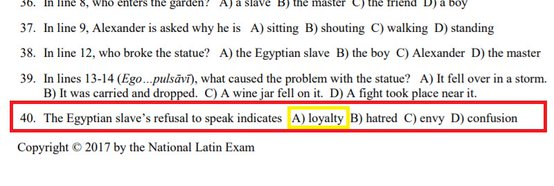





.jpg)