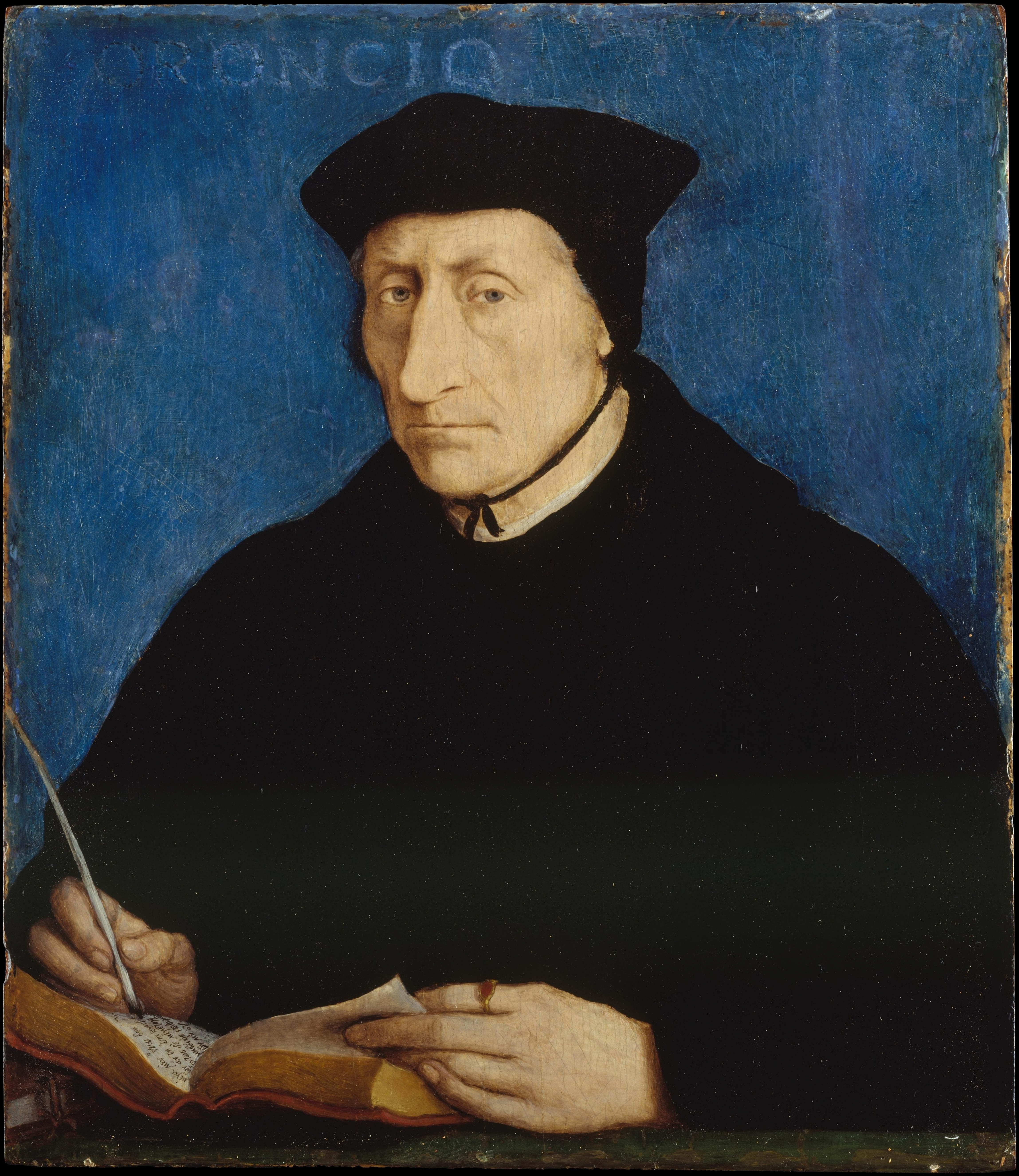
The Dangers of Epitomes and Commonplace Books

Roger Ascham: The Scholemaster

“This is a way of studie, belonging, rather to matter, than to wordes: to memorie, than to vtterance: to those that be learned alreadie, and hath small place at all amonges yong scholers in Grammer scholes. It may proffet priuately some learned men, but it hath hurt generallie learning it selfe, very moch. For by it haue we lost whole Trogus, the best part of T. Liuius, the goodlie Dictionarie of Pompeius festus, a great deale of the Ciuill lawe, and other many notable bookes, for the which cause, I do the more mislike this exercise, both in old and yong.

Epitome, is good priuatelie for himselfe that doth worke it, but ill commonlie for all other that vse other mens labor therein: a silie poore kinde of studie, not vnlike to the doing of those poore folke, which neyther till, nor sowe, nor reape themselues, but gleane by stelth, vpon other mens growndes. Soch, haue emptie barnes, for deare yeares. Grammer scholes haue fewe Epitomes to hurt them, except Epitheta Textoris, and such beggarlie gatheringes, as Horman, whittington, and other like vulgares for making of latines: yea I do wishe, that all rules for yong scholers, were shorter than they be. For without doute, Grammatica it selfe, is sooner and surer learned by examples of good authors, than by the naked rewles of Grammarians. Epitome hurteth more, in the vniuersities and studie of Philosophie: but most of all, in diuinitie it selfe.

In deede bookes of common places be verie necessarie, to induce a man, into an orderlie generall knowledge, how to referre orderlie all that he readeth, ad certa rerum Capita, and not wander in studie. And to that end did P. Lombardus the master of sentences and Ph. Melancthon in our daies, write two notable bookes of common places.

But to dwell in Epitomes and bookes of common places, and not to binde himselfe dailie by orderlie studie, to reade with all diligence, principallie the holyest scripture and withall, the best Doctors, and so to learne to make trewe difference betwixt, the authoritie of the one, and the Counsell of the other, maketh so many seeming, and sonburnt ministers as we haue, whose learning is gotten in a sommer heat, and washed away, with a Christmas snow againe: who neuerthelesse, are lesse to be blamed, than those blind bussardes, who in late yeares, of wilfull maliciousnes, would neyther learne themselues, nor could teach others, any thing at all.”

“We weren’t learning anyway!”


How Lady Jane Grey Became So Learned

Roger Ascham, The Scholemaster:

“And one example, whether loue or feare doth worke more in a child, for vertue and learning, I will gladlie report: which maie be hard with some pleasure, and folowed with more profit. Before I went into Germanie, I came to Brodegate in Lecetershire, to take my leaue of that noble Ladie Iane Grey, to whom I was exceding moch beholdinge. Hir parentes, the Duke and Duches, with all the houshould, Gentlemen and Gentlewomen, were huntinge in the Parke: I founde her, in her Chamber, readinge Phaedon Platonis in Greeke, and that with as moch delite, as som ientleman wold read a merie tale in Bocase. After salutation, and dewtie done, with som other taulke, I asked hir, whie she wold leese soch pastime in the Parke? smiling she answered me: I wisse, all their sporte in the Parke is but a shadoe to that pleasure, that I find in Plato: Alas good folke, they neuer felt, what trewe pleasure ment. And howe came you Madame, quoth I, to this deepe knowledge of pleasure, and what did chieflie allure you vnto it: seinge, not many women, but verie fewe men haue atteined thereunto. I will tell you, quoth she, and tell you a troth, which perchance ye will meruell at. One of the greatest benefites, that euer God gaue me, is, that he sent me so sharpe and seuere Parentes, and so ientle a scholemaster. For when I am in presence either of father or mother, whether I speake, kepe silence, sit, stand, or go, eate, drinke, be merie, or sad, be sowyng, plaiyng, dauncing, or doing anie thing els, I must do it, as it were, in soch weight, mesure, and number, euen so perfitelie, as God made the world, or else I am so sharplie taunted, so cruellie threatened, yea presentlie some tymes, with pinches, nippes, and bobbes, and other waies, which I will not name, for the honor I beare them, so without measure misordered, that I thinke my selfe in hell, till tyme cum, that I must go to M. Elmer, who teacheth me so ientlie, so pleasantlie, with soch faire allurementes to learning, that I thinke all the tyme nothing, whiles I am with him. And when I am called from him, I fall on weeping, because, what soeuer I do els, but learning, is ful of grief, trouble, feare, and whole misliking vnto me: And thus my booke, hath bene so moch my pleasure, & bringeth dayly to me more pleasure & more, that in respect of it, all other pleasures, in very deede, be but trifles and troubles vnto me. I remember this talke gladly, both bicause it is so worthy of memorie, & bicause also, it was the last talke that euer I had, and the last tyme, that euer I saw that noble and worthie Ladie.”

Greek is More Important

J.E. Sandys, A History of Classical Scholarship Vol. II:

“The author’s [Guillaume Bude’s] learning was generously recognised by Scaliger, and much of the material stored in his pages was incorporated in the Greek Thesaurus of Henri Estienne. The little volume De Philologia (1530) is a plea for the public recognition of classical scholarship, in the form of a dialogue between Budaeus and Francis I. In his far more extensive work De Transitu Hellenismi ad Christianismum (1534) he describes the philosophy of Greece as a preparation for Christianity, and defends the study of Greek from the current imputation of ‘ heresy ‘. His French treatise, De l’Institution du Prince, written in 1516, was not printed until 1547. He here declares that ‘every man, even if he be a king, should be devoted to philology’, which is interpreted as ‘the love of letters and of all liberal learning’. Such learning, he adds, can only be attained through Greek and Latin, and of these Greek is the more important.”

“Not to Know Greek Was to Know Nothing”

J.E. Sandys, A History of Classical Scholarship Vol. 2:

“Joseph Justus Scaliger (1540— 1609) was of Italian descent.  At Agen on the Garonne, he was the constant companion of his father, Julius Caesar Scaliger, during the last four years of that father’s life. Between the ages of fourteen and eighteen, he was required to produce daily a short Latin declamation, and also to keep a written record of the perennial flow of his father’s Latin Verse. It was thus that he acquired his early mastery of Latin. But he was already conscious that ‘not to know Greek, was to know nothing’. Hence, on his father’s death, he went to Paris to attend the lectures of Turnebus; but finding these too advanced for his purpose, he was compelled to be his own teacher. With the aid of a Latin translation, he worked through the whole of Homer in twenty-one days; and, in four months, he perused all the Greek poets.”

Don’t Speak Latin!

Roger Ascham, The Scholemaster:

“All this while, by mine aduise, the childe shall vse to speake no latine: For, as Cicero saith in like mater, with like wordes, loquendo, male loqui discunt [by speaking, they learn to speak badly]. And, that excellent learned man, G. Budaeus, in his Greeke Commentaries, sore complaineth, that whan he began to learne the latin tonge, vse of speaking latin at the table, and elsewhere, vnaduisedlie, did bring him to soch an euill choice of wordes, to soch a crooked framing of sentences, that no one thing did hurt or hinder him more, all the daies of his life afterward, both for redinesse in speaking, and also good iudgement in writinge.”

Greek and Latin, Those Learned Tongues

Roger Ascham, The Scholemaster:

“Yet neuerthelesse, the rudenes of common and mother tonges, is no bar for wise speaking. For in the rudest contrie, and most barbarous mother language, many be found can speake verie wiselie: but in the Greeke and latin tong, the two onelie learned tonges, which be kept, not in common taulke, but in priuate bookes, we finde alwayes, wisdome and eloquence, good matter and good vtterance, neuer or seldom a sonder. For all soch Authors, as be fullest of good matter and right iudgement in doctrine, be likewise alwayes, most proper in wordes, most apte in sentence, most plaine and pure in vttering the same.

And contrariwise, in those two tonges, all writers, either in Religion, or any sect of Philosophie, who so euer be founde fonde in iudgement of matter, be commonlie found as rude in vttering their mynde. For Stoickes, Anabaptistes, and Friers: with Epicures, Libertines and Monkes, being most like in learning and life, are no fonder and pernicious in their opinions, than they be rude and barbarous in their writinges. They be not wise, therefore that say, what care I for a mans wordes and vtterance, if his matter and reasons be good. Soch men, say so, not so moch of ignorance, as eyther of some singular pride in themselues, or some speciall malice or other, or for some priuate & perciall matter, either in Religion or other kinde of learning. For good and choice meates, be no more requisite for helthie bodies, than proper and apte wordes be for good matters, and also plaine and sensible vtterance for the best and depest reasons: in which two pointes standeth perfite eloquence, one of the fairest and rarest giftes that God doth geue to man.

Ye know not, what hurt ye do to learning, that care not for wordes, but for matter, and so make a deuorse betwixt the tong and the hart. For marke all aiges: looke vpon the whole course of both the Greeke and Latin tonge, and ye shall surelie finde, that, whan apte and good wordes began to be neglected, and properties of those two tonges to be confounded, than also began, ill deedes to spring: strange maners to oppresse good orders, newe and fond opinions to striue with olde and trewe doctrine, first in Philosophie: and after in Religion: right iudgement of all thinges to be peruerted, and so vertue with learning is contemned, and studie left of: of ill thoughtes cummeth peruerse iudgement: of ill deedes springeth lewde taulke. Which fower misorders, as they mar mans life, so destroy they good learning withall.”

The Faults Not Plucked Away in Age

Roger Ascham, The Scholemaster:

“After the childe hath learned perfitlie the eight partes of speach, let him then learne the right ioyning togither of substantiues with adiectiues, the nowne with the verbe, the relatiue with the antecedent. And in learninge farther hys Syntaxis, by mine aduice, he shall not vse the common order in common scholes, for making of latines: wherby, the childe commonlie learneth, first, an euill choice of wordes, (and right choice of wordes, saith Caesar, is the foundation of eloquence) than, a wrong placing of wordes: and lastlie, an ill framing of the sentence, with a peruerse iudgement, both of wordes and sentences. These faultes, taking once roote in yougthe, be neuer, or hardlie, pluckt away in age. Moreouer, there is no one thing, that hath more, either dulled the wittes, or taken awaye the will of children from learning, then the care they haue, to satisfie their masters, in making of latines.

For, the scholer, is commonlie beat for the making, when the master were more worthie to be beat for the mending, or rather, marring of the same: The master many times, being as ignorant as the childe, what to saie properlie and fitlie to the matter.”

“Ability, Practice, and Time”: Some Ancient Sayings about Education

These sayings [‘Apophthegmata’] are drawn from the Gnomologium Vaticanum. Most are apocryphal.


24: “Aristippos used to say the he took money from students not in order to straighten their lives but how so they might learn to spend their money on fine things.”

῾Ο αὐτὸς παρὰ τῶν μαθητῶν λαμβάνειν ἔφασκε μισθόν, οὐχ ὅπως τὸν βίον ἐπανορθώσῃ, ἀλλ’ ὅπως ἐκεῖνοι μάθωσιν εἰς τὰ καλὰ δαπανᾶν.


50: “Aristotle said that education is a decoration for the lucky but a refuge for the unfortunate.”

῾Ο αὐτὸς ἔφη τὴν παιδείαν εὐτυχοῦσι μὲν εἶναι κόσμον, ἀτυχοῦσι δὲ καταφύγιον.


87: “When he was asked whom he loved more, Phillip or Aristotle, Alexander said “both the same—for the first gave me the gift of life and the second taught me to live well.”

῾Ο αὐτὸς ἐρωτηθεὶς τίνα μᾶλλον ἀγαπᾷ, Φίλιππον ἢ ᾿Αριστοτέλην, εἶπεν· „ὁμοίως ἀμφοτέρους· ὁ μὲν γάρ μοι τὸ ζῆν ἐχαρίσατο, ὁ δὲ τὸ καλῶς ζῆν ἐπαίδευσεν.”


164: “Glukôn the philosopher called education a sacred refuge.”

Γλύκων ὁ φιλόσοφος τὴν παιδείαν ἔλεγεν ἱερὸν ἄσυλον εἶναι.


259: “When Demetrios [of Phalerus] was asked what was the noblest of animals he said “A human adorned by education.”

῾Ο αὐτὸς ἐρωτηθεὶς τί τῶν ζώων κάλλιστόν ἐστιν εἶπεν· „ἄνθρωπος παιδείᾳ κεκοσμημένος”.


302: “[Zeno the Stoic] used to say that education was sufficient for happiness”

῾Ο αὐτὸς ἔφη τὴν παιδείαν πρὸς εὐδαιμονίαν αὐτάρκη.


314: “Heraclitus used to say that learning is a second sun for the educated”

῾Ηράκλειτος τὴν παιδείαν ἕτερον ἥλιον εἶναι τοῖς πεπαιδευμένοις ἔλεγεν.


439: [Plato] used to say that someone being educated needs three things: ability, practice and time.”

῾Ο αὐτὸς ἔλεγεν ὅτι ὁ παιδευόμενος τριῶν τούτων χρῄζει· φύσεως, μελέτης, χρόνου.


469: “[Protagoras] used to say “knowing a lot helps a lot and hurts a lot.”

῾Ο αὐτὸς ἔφη· „πολυμαθίη κάρτα μὲν ὠφελέει, κάρτα δὲ βλάπτει”.

Image result for ancient greek education

“To Have an Oar in Every Man’s Boat”

From Robert Burton’s Anatomy of Melancholy:

“I have lived a silent, sedentary, solitary, private life, mihi et musis in the University, as long almost as Xenocrates in Athens, ad senectam fere to learn wisdom as he did, penned up most part in my study. For I have been brought up a student in the most flourishing college of Europe, augustissimo collegio, and can brag with Jovius, almost, in ea luce domicilii Vacicani, totius orbis celeberrimi, per annos multa opportunaque didici; for thirty years I have continued (having the use of as good libraries as ever he had) a scholar, and would be therefore loath, either by living as a drone, to be an unprofitable or unworthy member of so learned and noble a society, or to write that which should be any way dishonourable to such a royal and ample foundation. Something I have done, though by my profession a divine, yet turbine raptus ingenii, as he said, out of a running wit, an unconstant, unsettled mind, I had a great desire (not able to attain to a superficial skill in any) to have some smattering in all, to be aliquis in omnibus, nullus in singulis, which Plato commends, out of him Lipsius approves and furthers, as fit to be imprinted in all curious wits, not to be a slave of one science, or dwell altogether in one subject, as most do, but to rove abroad, centum puer artium, to have an oar in every man’s boat, to taste of every dish, and sip of every cup, which, saith Montaigne, was well performed by Aristotle, and his learned countryman Adrian Turnebus. This roving humour (though not with like success) I have ever had, and like a ranging spaniel, that barks at every bird he sees, leaving his game, I have followed all, saving that which I should, and may justly complain, and truly, qui ubique est, nusquam est, which Gesner did in modesty, that I have read many books, but to little purpose, for want of good method; I have confusedly tumbled over divers authors in our libraries, with small profit, for want of art, order, memory, judgment.”

Phryne Seduces the Philosopher Xenocrates by Angelica Kauffman

Writing for Vanity, Sanity, and Perhaps the Common Good

Robert Burton, The Anatomy of Melancholy (Prologue)

“To this end I write, like them, saith Lucian, that recite to trees, and declaim to pillars for want of auditors: as Paulus Aegineta ingenuously confesseth, not that anything was unknown or omitted, but to exercise myself, which course if some took, I think it would be good for their bodies, and much better for their souls; or peradventure as others do, for fame, to show myself (Scire tuum nihil est, nisi te scire hoc sciat alter). I might be of Thucydides’ opinion, to know a thing and not to express it, is all one as if he knew it not. When I first took this task in hand, et quod ait ille, impellents genio negotium suscepi, this I aimed at; vel ut lenirem animum scribendo, to ease my mind by writing; for I had gravidum cor, foetum caput, a kind of imposthume in my head, which I was very desirous to be unladen of, and could imagine no fitter evacuation than this. Besides, I might not well refrain, for ubi dolor, ibi digitus, one must needs scratch where it itches. I was not a little offended with this malady, shall I say my mistress Melancholy, my Aegeria, or my malus genius? and for that cause, as he that is stung with a scorpion, I would expel clavum clavo, comfort one sorrow with another, idleness with idleness, ut ex vipera Theriacum, make an antidote out of that which was the prime cause of my disease. Or as he did, of whom Felix Plater speaks, that thought he had some of Aristophanes’ frogs in his belly, still crying Brecececec, coax, coax, oop, oop, and for that cause studied physic seven years, and travelled over most part of Europe to ease himself. To do myself good I turned over such physicians as our libraries would afford, or my private friends impart, and have taken this pains. And why not? Cardan professeth he wrote his book, De Consolatione after his son’s death, to comfort himself; so did Tully write of the same subject with like intent after his daughter’s departure, if it be his at least, or some impostor’s put out in his name, which Lipsius probably suspects. Concerning myself, I can peradventure affirm with Marius in Sallust, that which others hear or read of, I felt and practised myself; they get their knowledge by books, I mine by melancholising. Experto crede Roberto. Something I can speak out of experience, aerumnabilis experientia me docuit; and with her in the poet, Haud ignara mali miseris succurrere disco; I would help others out of a fellow-feeling; and, as that virtuous lady did of old, being a leper herself, bestow all her portion to build an hospital for lepers, I will spend my time and knowledge, which are my greatest fortunes, for the common good of all.”