Homeric Fantasy (Baseball)

I don’t want to attract the enmity of one part of the world even for the potential devotion of the other, but I have been a Red Sox fan as long as I can remember. In fact, I really can split my life up into four basic periods: before 1986, from 1986-2003; 2003-2007; and post 2007.

But, beyond a particularly pathological obsession with a single team, I really love do baseball. One of my greatest regrets for my life is that I was not blessed with a good eye and fast hands: I did not record a single hit in my entire little league career.

Spring is the season of rebirth when baseball returns! We somehow forget 162 or so bullpen implosions; we suppress the wild expenditures and strange pace of game; we endure the cost of live television and the countless commercials as we wait for those moments of frustration, joy, and, sometimes, relief.

Yesterday, the author Guy Gavriel Kay (who has harassed me before for loving the Red Sox) was discussing the highs and lows of fantasy baseball on Twitter. I cannot play fantasy baseball because I can’t handle the stress. Somehow, our brief discussion turned into a contemplation of Homeric heroes as baseball players.

This conversation combines two things I love (Homer and baseball). It also comes close to an activity I wanted to run a few years back in a leadership course. My idea was that we would have students play basketball together in teams but in the personae of Homeric heroes. (The activity name was “Hero-Ball”.) Some ‘refs’ were going to randomly impose rules (gods); there would be fans, etc. The reasoning behind this lark was that we too often fail to think about how who we think we are shapes the way we engage with others.

(The activity was vetoed by my department chair at the time as exposing the university to too much liability. I have similarly considered a D&D style role playing game).

So, I spent all day trying to do other work and thinking about this absurd topic. Here’s what I have. First, if we try to select the best heroes from each side and give them positions somewhat akin to their ‘skills’, the Achaeans are clearly ‘stacked’. I made Odysseus a starting pitcher, but I am open to changing him out. The Achaeans have a DH, because they come from a wealthier, younger league.

[N.B. For baseball haters or agnostics: one could play this game with any sport!]

Team Achaeans

SP Agamemnon
SP Odysseus

Closer Teucer
1B Diomedes
2B Thoas
SS Oilean Ajax
3B Ajax
RF Sthenelos
LF Patroclus
CF Achilles
DH Idomeneus

Catcher: Menelaos
Bullpen: Thersites
Disabled List: Protesilaus, Philoctetes

Bench: The Myrmidons; Epeios (PH), Antilochus (INF/OF)

Coach: Nestor; Pitching Coach: Calchas


Some details and justifications: I generally made those famed for missiles (archery or spears) into pitchers. Odysseus, as I tweeted, reminds me of a wily veteran who leans on junk and the knuckleball but can bend your knees and break your back when he wants to. Agamemnon, on the other hand, is a player coach who throws only garbage but thinks he’s got both power and finesse. The archer Teucer is, obviously, their best option for closer. Thersites is in the bullpen as a crazy specialist.

The hitters are as follows: Achilles, Idomeneus, Ajax, and Diomedes all have obvious power and are distributed according to strength and speed. Patroclus might not be a natural left-fielder, but he’s not standing any where but near Achilles. Sthenelos is a poor man’s Patroclus and Oilean Ajax is sneaky, nasty, and fast, so an obvious shortstop. Menelaos? Well, he is in the middle of everything, thinks he’s in charge, and is the only person the other Atreid will pitch to.

The Trojans have some heavy hitters and one high-priced free agent (Sarpedon), but their team is overwhelmingly stocked with sons and relatives of Priam.

Team Trojans

SP Paris
Closer Teucer

1B Hektor
2B Deiphobus
SS Dolon
3B Sarpedon
RF Glaukos
LF Polydamas
CF Aeneas

Catcher: Helenos

Manager: Priam
Bullpen: Asius, Lykaon, Pandaros

Bench: Sons and Sons-in-Law of Priam

Pitching Coach: Antenor

Disabled List: Troilus, Rhesus, Rhesus’ men

Batboys: Astyanax, Ascanius, Polites


The Trojans have some power with Hektor at 1B (after a shift from Center field to prolong his career), Sarpedon at 3B, and Aeneas in Center. Glaukos and Polydamas are good players, but I don’t see them making the HOF. Dolon, like his Achaean counterpart, is fast and smart. When he goes down with a ‘collision’ injury after facing Diomedes in the basepaths, the Trojans are going to have to put some random son of Priam in there. This won’t work out so well: Deiphobus is already second, but that was Helen’s decision. At Catcher we find Helenos–he sees everything on the field and calls it like it is (often spending the time on the bench talking over signs with his sister Kassandra).

The real Trojan weakness is pitching. Paris “The Prince of Troy” Alexandros throws the prettiest curve ball this side of the Skamander. His fastball is there too–but he can’t seem to keep his focus on the field, he really kills team morale, and sometimes he disappears in between innings. Their bullpen is strong, but just wait until Achilles gets a chance to face Lykaon with the bases loaded. I am going to call that shot for him.

https://twitter.com/MiamiOHClassics/status/979780185758236673

Lineups: (This is an issue of contention: Achilles wants to bat 4th and wants Ajax in the game. Agamemnon has different ideas: he wants to put Achilles in his proper place for his speed.) Note: The Achaeans use a DH because they have a younger league and more men.

Achilles (CF)
Diomedes (1B)
Menelaos (3B)
Agamemnon (Catcher)
Idomeneus (DH)
Oilean Ajax (SS)
Thoas (2B)
Sthenelos (RF)
Patroclus (LF)

Bench: Ajax

Team Trojan

The Trojans just don’t have the late game flexibility of their opponents. They top the lineup with some shifty speed, followed by an unknown quantity, and then a trio of power who would intimidate anyone smarter than Agamemnon. The problem with their power-trio is that it is really hard to keep them on the field at the same time. Sarpedon and Hektor get injured; Aeneas’ mother keeps pulling him out of games.

Dolon (SS)
Deiphobos (2B)
Aeneas (CF)
Hektor (1B)
Sarpedon (3B)
Glaukos (RF)
Polydamas (LF)
Helenos (Catcher)

Paris (P)

Now who would like to give me a box score for this game?

Some tweets

https://twitter.com/Eliot_ISD/status/979759313177726976

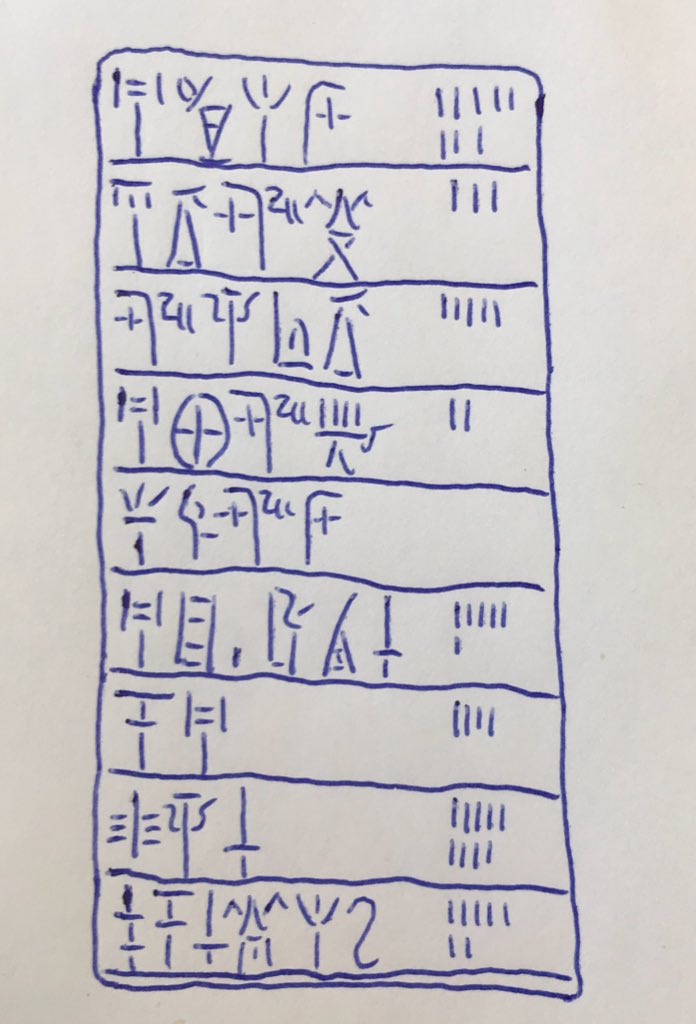
The Achaean lineup in Linear B, Courtesy of .@e_pe_me_ri on Twitter
 

Thanks to everyone playing along on twitter with #HomericBaseball. I am sorry I did not include all of your contributions. @ Me and I will add you!

Fronto for a Friday

Fronto, Epistulae ad M. Caesarem 3.1

[Fronto addresses Marcus Aurelius on the subject of imperial eloquence.]

“A speech, unless it be ennobled by the gravity of its words, becomes plainly impudent and shameless. Then, likewise, when something was to be said in the senate or an assembly, you used no overly recondite language, no obscure or baffling figure of speech. Indeed, you spoke as one who knows that the eloquence of Caesar should be similar to a trumpet and not the pipes which, though they are more difficult, produce less of a sound.”

fronto1

Sex and Gossip Advice from Epictetus

Epictetus, Encheiridion 8-9

“As much as it is in your power, keep yourself clean regarding sexual activities before marriage. If you sample these things, you must pursue what is lawful. But do not be annoying to people who do engage in sex nor disapproving. And don’t offer up the fact that you don’t have sex [or not].

If someone tells you that some person is saying awful things about you, don’t get defensive about what he’s said. But answer: “Ah, he doesn’t know the rest of my nagging faults—otherwise, he wouldn’t be gossiping about only these!”

Περὶ ἀφροδίσια εἰς δύναμιν πρὸ γάμου καθαρευτέον· ἁπτομένῳ δὲ ὧν νομιμόν ἐστι μεταληπτέον. μὴ μέντοι ἐπαχθὴς γίνου τοῖς χρωμένοις μηδὲ ἐλεγκτικός· μηδὲ πολλαχοῦ τὸ ὅτι αὐτὸς οὐ χρῇ, παράφερε.

Ἐάν τίς σοι ἀπαγγείλῃ ὅτι ὁ δεῖνά σε κακῶς λέγει, μὴ ἀπολογοῦ πρὸς τὰ λεχθέντα, ἀλλ᾿ ἀποκρίνου διότι “ἠγνόει γάρ τὰ ἄλλα τὰ προσόντα μοι κακά, ἐπεὶ οὐκ ἂν ταῦτα μόνα ἔλεγεν.”

Image result for medieval manuscript gossiping monks
Miniatura de la rúbrica “De adulterio et abrupto”

Augustus Caesar, Maybe Not the Nicest Guy

Suetonius, Divus Augustus 15

“Following the capture of Perusia, [Augustus] turned his mind to vengeance on many people—facing those who were trying to beg forgiveness or make an excuse with one response: “you must die.”

Some authors record that three hundred people from both orders were picked out from the war-prisoners and slaughtered like sacrificial animals at the altar built to Divine Julius on the Ides of March. There are those who report that he turned to war with a specific plan, namely to trap his secret adversaries and those whom fear rather than willingness constrain and, once the model of Lucius Antonius* was offered, to pay the bonuses promised to veterans once he had conquered his enemies and liquidated their assets.”

Perusia capta in plurimos animadvertit, orare veniam vel excusare se conantibus una voce occurrens “moriendum esse.” Scribunt quidam trecentos ex dediticiis electos utriusque ordinis ad aram Divo Iulio exstructam Idibus Martiis hostiarum more mactatos. Exstiterunt qui traderent conpecto eum ad arma isse, ut occulti adversarii et quos metus magis quam voluntas contineret, facultate L. Antoni ducis praebita, detegerentur devictisque iis et confiscatis promissa veteranis praemia solverentur.

*Lucius (Marcus Antonius’ brother) had been a target of the siege at Perusia. Octavian [Augustus] let him live and sent him to serve as governor in what is now Spain.

Image result for ancient roman augustus perugia
Augustus as Pontifex Maximus, A Righteous and Religious Man

A Daily Pep Talk for the Ascetic Life of the Mind

Epictetus, Encheiridion 22

 “If you desire to study philosophy, prepare to be mocked because many people will ridicule you, declaring “you come here again as a philosopher among us” and “where did you get this brow?”

But do not hold you brow high. Hold on as tight to those things that seem best to you as a man who has been stationed to this place by a god. Remember then that if you hold fast to these ideas, those who used to laugh at you will behold you later in wonder. But if you fail them, you will make yourself a double joke.”

  1.  Εἰ φιλοσοφίας ἐπιθυμεῖς, παρασκευάζου αὐτόθεν ὡς καταγελασθησόμενος, ὡς καταμωκησομένων σου πολλῶν, ὡς ἐρούντων ὅτι “ἄφνω φιλόσοφος ἡμῖν ἐπανελήλυθε” καὶ “πόθεν ἡμῖν αὕτη ἡ ὀφρύς;” σὺ δὲ ὀφρὺν μὲν μὴ σχῇς· τῶν δὲ βελτίστων σοι φαινομένων οὕτως ἔχου, ὡς ὑπὸ τοῦ θεοῦ τεταγμένος εἰς ταύτην τὴν χώραν· μέμνησό τε διότι, ἐὰν μὲν ἐμμείνῃς τοῖς αὐτοῖς, οἱ καταγελῶντές σου τὸ πρότερον οὗτοί σε ὕστερον θαυμάσονται, ἐὰν δὲ ἡττηθῇς αὐτῶν, διπλοῦν προσλήψῃ καταγέλωτα.
  2. Image result for medieval manuscript ascetic monk

Horatian Strongmen: Achilles and Augustus

Horace, Epistles 2.2:

“It fell to my lot to be brought up in Rome and to be taught how much the angry Achilles harmed the Greeks. Athens added a little bit more of the good art, at least enough to make me want to distinguish straight from curved and to seek the truth among the groves of Academus. But hard times moved me from that pleasing spot, and the tide of civil war brought me, an amateur, into arms which would not respond to the muscular grip of Augustus Caesar.”

Romae nutriri mihi contigit atque doceri
iratus Grais quantum nocuisset Achilles.
Adiecere bonae paulo plus artis Athenae,
scilicet ut uellem curuo dinoscere rectum
atque inter siluas Academi quaerere uerum.
Dura sed emouere loco me tempora grato
ciuilisque rudem belli tulit aestus in arma
Caesaris Augusti non responsura lacertis.

Madness or Strength of Spirit?

In earlier posts we ave looked at different signs of melancholy, which is generally the ancient diagnosis that best corresponds to madness or depression. In this letter, Hippocrates seems to describe a manic dedication to one thing paired with other antisocial symptoms.


Hippocrates, Epistles 12

“We might encounter good fortune and then we will arrive, as we imagine, with better hopes as was made clear in the letter, if the case is that the man is not displaying madness but instead some overwhelming strength of spirit—this despite the fact that he is considering neither children nor wife nor relatives nor any other thing at all—and he has spent day and night by himself staying alone, for the most part in caves or deserted places or under the shadow of trees or in soft grasses or alongside the quiet flows of water.

It is many times the case for those suffering from melancholy to exhibit these kinds of behaviors. Such people are sometimes quiet and solitary and love isolation too. They keep themselves apart from people and consider their own tribe to be a foreign sight.

But it is not unreasonable for those who have been dedicated to education to shake off other thoughts because of a single category in wisdom. For, just as slaves and slavewomen who are yelling and fighting in their homes, when their mistress suddenly appears, step apart in quiet because they are afraid, in the same way too the rest of the thoughts of in human minds are servants of evils; but when the sight of wisdom made itself seen, the rest of the sufferings have retreated like slaves.

It is not only the insane who desire caves and peace at all, but many people who have contempt for human affairs do too because of a desire not to be troubled. For whenever the mind, struck by external thoughts, longs to rest the body, then it returns to peace as soon as possible and, standing straight up, searches in a circle in himself for the land of truth in which there is no father, mother, wife, child, brother, relative, slaves, nor chance, nor at all any of those things which create a disturbance.”

῎Ελθοιμεν δ’ ἂν αἰσίῃ τύχῃ, καὶ ἀφιξόμεθα ὡς ὑπολαμβάνομεν χρηστοτέρῃσιν ἐλπίσιν [ἢ] ὡς ἐν τῇ γραφῇ παραδεδήλωται, οὐ μανίην ἀλλὰ ψυχῆς τινὰ ῥῶσιν ὑπερβάλλουσαν διασαφηνέοντος τοῦ ἀνδρὸς, μήτε παίδων μήτε γυναικὸς μήτε ξυγγενέων μήτε οὐσίης μήτε τινὸς ὅλως ἐν φροντίδι ἐόντος, ἡμέρην δὲ καὶ εὐφρόνην πρὸς ἑωυτῷ καθεστεῶτος καὶ ἰδιάζοντος, τὰ μὲν πολλὰ ἐν

ἄντροισι καὶ ἐρημίῃσιν ἢ ἐν ὑποσκιάσεσι δενδρέων, ἢ ἐν μαλθακῇσι ποίῃσιν, ἢ παρὰ συχνοῖσιν ὑδάτων ῥείθροισιν. Συμβαίνει μὲν οὖν τὰ πολλὰ τοῖσι μελαγχολῶσι τὰ τοιαῦτα· σιγηροί τε γὰρ ἐνίοτε εἰσὶ καὶ μονήρεες, καὶ φιλέρημοι τυγχάνουσιν· ἀπανθρωπέονταί τε ξύμφυλον ὄψιν ἀλλοτρίην νομίζοντες· οὐκ ἀπεοικὸς δὲ καὶ τοῖσι περὶ παιδείην ἐσπουδακόσι τὰς ἄλλας φροντίδας ὑπὸ μιῆς τῆς ἐν σοφίῃ διαθέσιος σεσοβῆσθαι.

῞Ωσπερ γὰρ δμῶές τε καὶ δμωΐδες ἐν τῇσιν οἰκίῃσι θορυβέοντες καὶ στασιάζοντες, ὁκόταν ἐξαπιναίως αὐτοῖσιν ἡ δέσποινα ἐπιστῇ, πτοηθέντες ἀφησυχάζουσι, παραπλησίως καὶ αἱ λοιπαὶ κατὰ ψυχὴν ἐπιθυμίαι ἀνθρώποισι κακῶν ὑπηρέτιδες· ἐπὴν δὲ σοφίης ὄψις ἑωυτέην ἐπιστήσῃ, ὡς δοῦλα τὰ λοιπὰ πάθεα ἐκκεχώρηκεν.

Ποθέουσι δ’ ἄντρα καὶ ἡσυχίην οὐ πάν- τως οἱ μανέντες, ἀλλὰ καὶ οἱ τῶν ἀνθρωπίνων πρηγμάτων ὑπερφρονήσαντες ἀταραξίης ἐπιθυμίῃ· ὁκόταν γὰρ ὁ νοῦς ὑπὸ τῶν ἔξω φροντίδων κοπτόμενος ἀναπαῦσαι θελήσῃ τὸ σῶμα, τότε ταχέως ἐς ἡσυχίην μετήλλαξεν, εἶτα ἀναστὰς ὄρθριος ἐν ἑωυτῷ περιεσκόπει κύκλῳ χωρίον ἀληθείης, ἐν ᾧ οὐ πατὴρ, οὐ μήτηρ, οὐ γυνὴ, οὐ τέκνα, οὐ κασίγνητος, οὐ ξυγγενέες, οὐ δμῶες, οὐ τύχη, οὐχ ὅλως οὐδὲν τῶν θόρυβον ἐμποιησάντων·

Image result for medieval manuscript insane person
Medieval Manuscript Images, Pierpont Morgan Library, Hours of Anne of France. MS M.677 fol. 211r

Galen on the Judicious Use of Narcotics

We are in a public health crisis centering around the abuse of opium derivatives. The danger of such drugs was not unknown to ancient medical authors. Galen, for example, knew clearly that they could kill. But medical authors also understood that the relationship between the doctor and patient (and the doctor’s final aims) impacts treatment.

Method of Medicine 816k

“There is, therefore, a safe limit of medical treatment for one struggling admirably according to the practice of medicine against a sickness—and it is also the safeguard of ability for the one who is trying to soothe the pain. Beyond this is the work of a poor doctor, resulting in the end of the patient’s life with the sickness.

It is a flatterer’s act to try to please the patient, because this places pleasure not health as the primary aim. Practitioners descend into these kinds of extremes in many ways but especially in different types of treatments among which are chiefly the so-called anodyne medicines which are made from the poppy or seed of henbane, the root of mandrake, the storax or any other kind of thing.

Doctors who yield to the sick and use too much of these sorts of drugs destroy their patients with the pains as much as those who give them at the wrong time, in the wrong measure, or not at all.

Therefore, just as in everything else in life—in habits an actions—here the appropriate guideline to take is “nothing in excess”. The appropriate marker is the health of the sick…”

ὅρος οὖν ἐπὶ καμνόντων τῷ κατὰ τὸν λόγον τῆς τέχνης ἀγωνιζομένῳ γενναίως πρὸς τὸ νόσημα τὸ τῆς Kἰάσεως | ἀσφαλές· ὥσπερ γε καὶ τῷ πραΰνοντι τὰς ὀδύνας ἡ τῆς δυνάμεως φυλακή. τὸ δ᾿ ἐπέκεινα τῶνδε σκαιοῦ μὲν ἀνδρὸς ἔργον ἐστίν, ἅμα τῷ νοσήματι καὶ τὴν ζωὴν ἀφελέσθαι τὸν ἄνθρωπον· κόλακος δὲ τὸ χαρίζεσθαι τῷ νοσοῦντι, σκοπὸν ὧν πράττει θέμενον ἡδονήν, οὐχ ὑγείαν. ἐμπίπτουσι δ᾿ εἰς τὰς τοιαύτας ὑπερβολὰς ἐν πολλαῖς μὲν καὶ ἄλλαις ὕλαις βοηθημάτων οἱ ἰατροί, μάλιστα δ᾿ ἐν τοῖς καλουμένοις ἀνωδύνοις φαρμάκοις, ὅσα δι᾿ ὀποῦ μήκωνος, ἢ ὑοσκυάμουσπέρματος, ἢ μανδραγόρου ῥίζης, ἢ στύρακος, ἤ τινος τοιούτου συντιθέασιν. οἵ τε γὰρ χαριζόμενοι τοῖς νοσοῦσι πλεονάζουσιν ἐν τῇ χρήσει τῶν τοιούτων φαρμάκων, οἵ τ᾿ ἀκαίρως καὶ ἀμέτρως γενναῖοι μηδ᾿ ὅλως χρώμενοι διαφθείρουσιν ὀδύναις τοὺς κάμνοντας. ὥσπερ οὖν ἐν ἁπάσαις ταῖς καθ᾿ ὅλον τὸν βίον ἕξεσί τε καὶ πράξεσιν, οὕτω κἀνταῦθα τὸ μηδὲν ἄγαν αἱρετέον, ὅρον ἔχοντα τὴν ὠφέλειαν τοῦ κάμνοντος.

Image result for medieval manuscript opium

Drugs of Death and Madness; Also, How Boars Get High

Galen, De Simpl. Med. 11.752.3

“For this reason, mandrake, hemlock, henbane and poppies, those types of substances I was just mentioning, if someone uses them moderately, then they become rather concentrated in their faculties. But if they take more, they are not only compressed but already a bit numb. If they take the maximum sample, they are no longer numb, but already necrotic.”

διὸ καὶ μανδραγόρας καὶ κώνειον, ὑοσκύαμός τε καὶ μήκων, αὐτὰς δὲ λέγω νῦν τὰς πόας, εἰ μὲν μετρίως τις χρήσαιτο, πυκνωτικαὶ ταῖς δυνάμεσιν ὑπάρχουσιν· εἰ δ’ ἐπὶ πλέον, οὐ πυκνωτικαὶ μόνον, ἀλλ’ ἤδη καὶ ναρκωτικαί· εἰ δ’ ἐπὶ πλεῖστον, οὐκέτι ναρκωτικαὶ μόνον, ἀλλ’ ἤδη καὶ νεκρωτικαί.


Plutarch, Table Talk III 649B

“The condition [ivy mixed with wine] induces in those who drink it is not drunkenness but a disruption and madness, just many other substances of this sort like henbane make the mind move manically.”

ὃ γὰρ ἐμποιεῖ τοῖς πιοῦσι πάθος οὐ μέθην ἄν τις εἴποι, ταραχὴν δὲ καὶ παραφροσύνην, οἷον ὑοσκύαμος  ἐμποιεῖ καὶ πολλὰ τοιαῦτα κινοῦντα μανικῶς τὴν διάνοιαν.


Aelian, Varia Historia 1.7

“There are boars in the wild who are also not uninformed about the art of medicine. These animals, as it seems, whenever they forget themselves and eat henbane, they drag themselves backwards in their weakness. Even though they are experiencing spasms, they still make it to the water and there they grab crabs and eat them eagerly. These creatures are the antidote for their suffering and they make themselves healthy again.”

Ἦσαν ἄρα οἱ σῦς οἱ ἄγριοι καὶ θεραπείας ἅμα καὶ ἰατρικῆς οὐκ ἀπαίδευτοι. οὗτοι γοῦν ὅταν αὑτοὺς λαθόντες ὑοσκυάμου φάγωσι, τὰ ἐξόπισθεν ἐφέλκουσι, παρειμένως ἔχοντες [οὕτως] αὐτῶν. εἶτα σπώμενοι ὅμως ἐπὶ τὰ ὕδατα παραγίνονται, καὶ ἐνταῦθα τῶν καρκίνων ἀναλέγουσι καὶ ἐσθίουσι προθυμότατα. γίνονται δὲ αὐτοῖς οὗτοι τοῦ πάθους φάρμακον καὶ ἐργάζονται ὑγιεῖς αὐτοὺς αὖθις.

Image result for medieval manuscript crazy boar
The Wild Boar of Erymanthus by Tomislav Tomi´c


Nothing More than an Epilogue?

From (Ps.) Longinus On the Sublime, 9.11-13

“Nevertheless, all through the Odyssey, which must be examined for many reasons, Homer reveals that as great inspiration fades away, storytelling becomes the dominant attribute of old age. For it is clear in many ways that this epic was composed second. Throughout the Odyssey we find episodes modeled on scenes from the Iliad, and, by Zeus, he apportions his heroes grief and misery as if these tales were long already known. The Odyssey is nothing other than an epilogue to the Iliad:

There lies fierce Ajax; here lies Achilles
There likes Patroklos, an advisor equal to the gods,
There lies my own dear son. (Od. 3.109-111)

The cause of this fact, I imagine, is that when the Iliad was being written at the peak of his strength, Homer imbued the whole work with dramatic power and action; when he was composing the Odyssey, however, he made it more of a narrative, as appropriate for old age. For this reason, you can compare the Odyssey’s Homer to a setting sun: the magnitude remains without its power. Since, in it, he no longer preserves the same power of the Iliad, that overwhelming consistency which never ebbs, nor the same rush of changing experiences, the variety and reality of it, packed full with things from true experience.

It is as if the Ocean were to withdraw into itself, quietly watching its own measure. What remains for us is the retreating tide of Homer’s genius, his wandering in storytelling and unbelievable things. When I claim this, I am not forgetting the storms in the Odyssey and the events placed near the Kyklopes and elsewhere—I am indicating old age, but it is still Homer’s old age. And, yet, the mythical overpowers in every one of these scenes.”

δείκνυσι δ’ ὅμως διὰ τῆς ᾿Οδυσσείας (καὶ γὰρ ταῦτα πολλῶν ἕνεκα προσεπιθεωρητέον), ὅτι μεγάλης φύσεως ὑποφερομένης ἤδη ἴδιόν ἐστιν ἐν γήρᾳ τὸ φιλόμυθον. δῆλος γὰρ ἐκ πολλῶν τε ἄλλων συντεθεικὼς ταύτην δευτέραν τὴν ὑπόθεσιν, ἀτὰρ δὴ κἀκ τοῦ λείψανα τῶν ᾿Ιλιακῶν παθημάτων διὰ τῆς ᾿Οδυσσείας

ὡς ἐπεισόδιά τινα [τοῦ Τρωικοῦ πολέμου] προσεπεισφέρειν, καὶ νὴ Δί’ ἐκ τοῦ τὰς ὀλοφύρσεις καὶ τοὺς οἴκτους ὡς πάλαι που προεγνωσμένοις τοῖς ἥρωσιν ἐνταῦθα προσαποδιδόναι. οὐ γὰρ ἀλλ’ ἢ τῆς ᾿Ιλιάδος ἐπίλογός ἐστιν ἡ ᾿Οδύσσεια·

ἔνθα μὲν Αἴας κεῖται ἀρήιος, ἔνθα δ’ ᾿Αχιλλεύς,
ἔνθα δὲ Πάτροκλος, θεόφιν μήστωρ ἀτάλαντος·
ἔνθα δ’ ἐμὸς φίλος υἱός.

ἀπὸ δὲ τῆς αὐτῆς αἰτίας, οἶμαι, τῆς μὲν ᾿Ιλιάδος γραφομένης ἐν ἀκμῇ πνεύματος ὅλον τὸ σωμάτιον δραματικὸν ὑπεστήσατο καὶ ἐναγώνιον, τῆς δὲ ᾿Οδυσσείας τὸ πλέον διηγηματικόν, ὅπερ ἴδιον γήρως. ὅθεν ἐν τῇ ᾿Οδυσσείᾳ παρεικάσαι τις ἂν καταδυομένῳ τὸν ῞Ομηρον ἡλίῳ, οὗ δίχα τῆς σφοδρότητος παραμένει τὸ μέγεθος. οὐ γὰρ ἔτι τοῖς ᾿Ιλιακοῖς ἐκείνοις ποιήμασιν ἴσον ἐνταῦθα σῴζει τὸν τόνον, οὐδ’ ἐξωμαλισμένα τὰ ὕψη καὶ ἱζήματα μηδαμοῦ λαμβάνοντα, οὐδὲ τὴν πρόχυσιν ὁμοίαν τῶν ἐπαλλήλων παθῶν, οὐδὲ τὸ ἀγχίστροφον καὶ πολιτικὸν καὶ ταῖς ἐκ τῆς

ἀληθείας φαντασίαις καταπεπυκνωμένον· ἀλλ’ οἷον ὑποχωροῦντος εἰς ἑαυτὸν᾿Ωκεανοῦ καὶ περὶ τὰ ἴδια μέτρα †ἐρημουμένου τὸ λοιπὸν φαίνονται τοῦ μεγέθους ἀμπώτιδες κἀν τοῖς μυθώδεσι καὶ ἀπίστοις πλάνος. λέγων δὲ ταῦτ’ οὐκ ἐπιλέλησμαι τῶν ἐν τῇ ᾿Οδυσσείᾳ χειμώνων καὶ τῶν περὶ τὸν Κύκλωπα καί τινων ἄλλων, ἀλλὰ γῆρας διηγοῦμαι, γῆρας δ’ ὅμως ῾Ομήρου· πλὴν ἐν ἅπασι τούτοις ἑξῆς τοῦ πρακτικοῦ κρατεῖ τὸ μυθικόν.

While Longinus sees many moments in the Odyssey as modeled after the Iliad, others have suggested that the Odyssey does not refer to the main events in our Iliad. [This is called Monro’s Law.] Instead, it refers generally to events which occur outside the Iliad in the Trojan War in general. Rather than indicating that the Iliad and the Odyssey did not know of one another, many interpreters have instead suggested that such nonconvergence is pointed and indicative of deep mutual knowledge.