Conference Got You Down? Even Plato Switched Careers

Aelian, Varia Historia 2.30

“Plato, the son of Ariston, at first pursued poetry and used to write heroic verse. But he soon burned it all because he despised it, since he reckoned that his poetry was far inferior when compared to Homer’s. He then tried tragedy and even completed a tetralogy, and he was about to enter the competition, even to the point of giving the verses to actors. But right before the Dionysia, he went and heard Socrates; and once he was seized by that Siren, he not only withdrew from the competition, but he also gave up the writing of tragedy for good to immerse himself in philosophy.”

Πλάτων ὁ ᾿Αρίστωνος τὰ πρῶτα ἐπὶ ποιητικὴν ὥρμησε, καὶ ἡρωϊκὰ ἔγραφε μέτρα• εἶτα αὐτὰ κατέπρησεν ὑπεριδὼν αὐτῶν, ἐπεὶ τοῖς ῾Ομήρου αὐτὰ ἀντικρίνων ἑώρα κατὰ πολὺ ἡττώμενα. ἐπέθετο οὖν τραγῳδίᾳ, καὶ δὴ καὶ τετραλογίαν εἰργάσατο, καὶ ἔμελλεν ἀγωνιεῖσθαι, δοὺς ἤδη τοῖς ὑποκριταῖς τὰ ποιήματα. πρὸ τῶν Διονυσίων δὲ παρελθὼν ἤκουσε Σωκράτους, καὶ ἅπαξ αἱρεθεὶς ὑπὸ τῆς ἐκείνου σειρῆνος, τοῦ ἀγωνίσματος οὐ μόνον ἀπέστη τότε, ἀλλὰ καὶ τελέως τὸ γράφειν τραγῳδίαν ἀπέρριψε, καὶ ἀπεδύσατο ἐπὶ φιλοσοφίαν.

Head Platon Glyptothek Munich 548.jpg

Frenemies Make for Awkward Conference Panels

Aelian, Varia Historia 3.19

“It is reported that the first difference between Plato and Aristotle developed for the following reasons. Plato was displeased with Aristotle’s life, and in the clothing he selected. See, Aristotle dressed in well-made clothes and shoes; he also had his haircut in a manner disliked by Plato; he also took pride in wearing many rings. His face, moreover, bore a certain aspect of derision; and within this face, an untimely talkativeness brought his character into question too. All these characteristics are obviously foreign to a philosopher. When Plato saw them, he was repelled by the man and preferred Xenocrates, Speusippos, Amykles, and others. These men received his respect and regular conversation.

When Xenocrates was out of town to visit his home, Aristotle set upon Plato and made a chorus of his companions around him with Mnason of Phocis and other similar men. Speusippus was ill and was incapable of walking with Plato who was already eighty years old. Thanks to his age, he had lost some parts of his memory. Aristotle plotted against him and set upon him: he questioned him rather aggressively and in the manner of refutation, which was clearly unjust and unsympathetic. Because of this, Plato stopped going for his walk outside; he walked inside with his friends.”

Λέγεται τὴν διαφορὰν ᾿Αριστοτέλους πρὸς Πλάτωνα τὴν πρώτην ἐκ τούτων γενέσθαι. οὐκ ἠρέσκετο τῷ βίῳ αὐτοῦ ὁ Πλάτων οὐδὲ τῇ κατασκευῇ τῇ περὶ τὸ σῶμα. καὶ γὰρ ἐσθῆτι ἐχρῆτο περιέργῳ ὁ ᾿Αριστοτέλης καὶ ὑποδέσει, καὶ κουρὰν δὲ ἐκείρετο καὶ ταύτην ἀήθη Πλάτωνι, καὶ δακτυλίους δὲ πολλοὺς φορῶν ἐκαλλύνετο ἐπὶ τούτῳ· καὶ μωκία δέ τις ἦν αὐτοῦ περὶ τὸ πρόσωπον, καὶ ἄκαιρος στωμυλία λαλοῦντος κατηγόρει καὶ αὕτη τὸν τρόπον αὐτοῦ. πάντα δὲ ταῦτα ὡς ἔστιν ἀλλότρια φιλοσόφου, δῆλον. ἅπερ οὖν ὁρῶν ὁ Πλάτων οὐ προσίετο τὸν ἄνδρα, προετίμα δὲ αὐτοῦ Ξενοκράτην καὶ Σπεύσιππον καὶ ᾿Αμύκλαν καὶ ἄλλους, τῇ τε λοιπῇ δεξιούμενος αὐτοὺς τιμῇ καὶ οὖν καὶ τῇ κοινωνίᾳ τῶν λόγων.

ἀποδημίας δὲ γενομένης ποτὲ τῷ Ξενοκράτει ἐς τὴν πατρίδα, ἐπέθετο τῷ Πλάτωνι ὁ ᾿Αριστοτέλης, χορόν τινα τῶν ὁμιλητῶν τῶν ἑαυτοῦ περιστησάμενος, ὧν ἦν Μνάσων τε ὁ Φωκεὺς καὶ ἄλλοι τοιοῦτοι. ἐνόσει δὲ τότε ὁ Σπεύσιππος, καὶ διὰ ταῦτα ἀδύνατος ἦν συμβαδίζειν τῷ Πλάτωνι. ὁ δὲ Πλάτων ὀγδοήκοντα ἔτη ἐγεγόνει, καὶ ὁμοῦ τι διὰ τὴν ἡλικίαν ἐπελελοίπει τὰ τῆς μνήμης αὐτόν. ἐπιθέμενος οὖν αὐτῷ καὶ ἐπιβουλεύων ὁ ᾿Αριστοτέλης, καὶ φιλοτίμως πάνυ τὰς ἐρωτήσεις ποιούμενος καὶ τρόπον τινὰ καὶ ἐλεγκτικῶς, ἀδικῶν ἅμα καὶ ἀγνωμονῶν ἦν δῆλος· καὶ διὰ ταῦτα ἀποστὰς ὁ Πλάτων τοῦ ἔξω περιπάτου, ἔνδον ἐβάδιζε σὺν τοῖς ἑταίροις.

Aelian, Varia Historia 4.9

“Plato used to call Aristotle Pôlos [the Foal]. What did he wish with that name? Everyone knows that a foal, when it has had its fill of baby’s milk, kicks its mother. Thus Plato was signaling a certain ingratitude on Aristotle’ part. Indeed, Aristotle received the greatest seeds of Philosophy from Plato and then, though he was filled to the brim with the best ideas, he broke with Plato rebelliously. He founded his own house, took his friends on Plato’s walk, and set himself up to be Plato’s rival.”

῾Ο Πλάτων τὸν ᾿Αριστοτέλη ἐκάλει Πῶλον. τί δὲ ἐβούλετο αὐτῷ τὸ ὄνομα ἐκεῖνο; δηλονότι ὡμολόγηται τὸν πῶλον, ὅταν κορεσθῇ τοῦ μητρῴου γάλακτος, λακτίζειν τὴν μητέρα. ᾐνίττετο οὖν καὶ ὁ Πλάτων ἀχαριστίαν τινὰ τοῦ ᾿Αριστοτέλους. καὶ γὰρ ἐκεῖνος μέγιστα ἐς φιλοσοφίαν παρὰ Πλάτωνος λαβὼν σπέρματα καὶ ἐφόδια, εἶτα ὑποπλησθεὶς τῶν ἀρίστων καὶ ἀφηνιάσας, ἀντῳκοδόμησεν αὐτῷ διατριβὴν καὶ ἀντιπαρεξήγαγεν ἐν τῷ περιπάτῳ ἑταίρους ἔχων καὶ ὁμιλητάς, καὶ ἐγλίχετο ἀντίπαλος εἶναι Πλάτωνι.

Image result for aristotle and plato

Courtly Fruit Lobbing

Or, how not to slide into a lady’s DMs.

Diogenes Laertius Vita Phil 1.3 (32)= Greek Anthology 5.79

“I am tossing you an apple. If you willingly love me,
Take it and share with me your virginity.
But if the worst should happen and you retreat.
Take the apple and think: its ripeness is preciously brief.”

Τῷ μήλῳ βάλλω σε· σὺ δ᾽ εἰ μὲν ἑκοῦσα φιλεῖς με,
δεξαμένη τῆς σῆς παρθενίης μετάδος·
εἰ δ᾽ ἄρ᾽, ὃ μὴ γίγνοιτο, ὀκνεῖς, τοῦτ᾽ αὐτὸ λαβοῦσα
σκέψαι τὴν ὥρην ὡς ὀλιγοχρόνιος.

Diogenes attributes a companion couplet to Plato as well; the Greek Anthology gives it to Philodemos. How do you like those, um, apples?

Greek Anthology 5.80

 “I’m an apple. Someone who fancies you sent me your way.
Nod your head, Xanthippê. You and I are both starting to fade.”

Μῆλον ἐγώ· πέμπει με φιλῶν σέ τις. ἀλλ᾽ ἐπίνευσον,
Ξανθίππη· κἀγὼ καὶ σὺ μαραινόμεθα.

Ah, those virgins who make little of apples and much of time. What would Robert Herrick say?

Image result for medieval manuscript apple
A very different apple for a very different day.

This is essentially like saying:

I have sent you some fruit
So I can have sex with you.
So take of your top
Before my gift rots
Cause we both know that you’re rotting too.

Bad Manners, Worse Quotations: Some More Fake Socrates

In this week’s Globe Magazine piece “Why Kids Today are So Rude…” by Nicole Graev Lipson, we find a pretty piquant line uncritically attributed to Socrates.socrates (2)

Surprise! This does not actually come from ancient Greece.

The earliest attestation of this quotation I could find with a google search appears in The Massachusetts Teacher, volume 3 (1923), but quote investigator traces this back to 1907.

Luxury 1923

After this, it begins to appear widely in educational writing after the 1950s. The phrase certainly has words that occur in English translations of Plato with some frequency (“tyrant, Luxury” etc.). But essential ideas of disrespect in the passage such as crossing legs or not rising to greet  parents are wholly modern.

I searched a bit through Plato and there is a chance that something like this is somewhere, but for now this seems to be total nonsense. Bartleby got to that point, but buried the lede.

luxury 2

It is disappointing that there was no fact-checking on this one. The Boston area just might host the greatest density of Classicists in the United States. How hard would it be to reach out to someone about Classical quotations?


h/t to the peerless .@professormortis for pointing this out

Politics is Horrifying: Plato on Lykanthropy

Werewolf week continues

From Plato’s Republic, Book 8 (565d)

“What is the beginning of the change from guardian to tyrant? Isn’t clear when the guardian begins to do that very thing which myth says happened at the shrine of Lykaion Zeus in Arcadia?

Which is? He said.

That once someone tastes a bit of human innards mixed up with the other sacrifices he becomes a wolf by necessity? Haven’t you heard this tale?

I have.

Is it not something the same with a protector of the people? Once he controls a mob that obeys him, he cannot restrain himself from tribal blood, but he prosecutes unjustly, the sorts of things men love to do, and brings a man into court for murder, eliminating the life of a man—and with tongue and unholy mouth that have tasted the murder of his kind, he exiles, kills, and promises the cutting of debts and the redistribution of land. Is it not by necessity that such a man is fated either to be killed by his enemies or to become a tyrant, to turn into a wolf from a man?”

werewolf-1

Τίς ἀρχὴ οὖν μεταβολῆς ἐκ προστάτου ἐπὶ τύραννον; ἢ δῆλον ὅτι ἐπειδὰν ταὐτὸν ἄρξηται δρᾶν ὁ προστάτης τῷ ἐν τῷ μύθῳ ὃς περὶ τὸ ἐν ᾿Αρκαδίᾳ τὸ τοῦ Διὸς τοῦ Λυκαίου ἱερὸν λέγεται;

Τίς; ἔφη.

῾Ως ἄρα ὁ γευσάμενος τοῦ ἀνθρωπίνου σπλάγχνου, ἐν ἄλλοις ἄλλων ἱερείων ἑνὸς ἐγκατατετμημένου, ἀνάγκη δὴ τούτῳ λύκῳ γενέσθαι. ἢ οὐκ ἀκήκοας τὸν λόγον;

῎Εγωγε.

῏Αρ’ οὖν οὕτω καὶ ὃς ἂν δήμου προεστώς, λαβὼν σφόδρα πειθόμενον ὄχλον, μὴ ἀπόσχηται ἐμφυλίου αἵματος, ἀλλ’ ἀδίκως ἐπαιτιώμενος, οἷα δὴ φιλοῦσιν, εἰς δικαστήρια ἄγων μιαιφονῇ, βίον ἀνδρὸς ἀφανίζων, γλώττῃ τε καὶ στόματι ἀνοσίῳ γευόμενος φόνου συγγενοῦς, καὶ ἀνδρηλατῇ καὶ ἀποκτεινύῃ καὶ ὑποσημαίνῃ χρεῶν τε ἀποκοπὰς καὶ γῆς ἀναδασμόν, ἆρα τῷ τοιούτῳ ἀνάγκη δὴ τὸ μετὰ τοῦτο καὶ εἵμαρται ἢ ἀπολωλέναι ὑπὸ τῶν ἐχθρῶν ἢ τυραννεῖν καὶ λύκῳ ἐξ ἀνθρώπου γενέσθαι;

In ancient Greek myth, Lykaon (Lycaon, related to lúkos, “wolf”) was a king of Arcadia. According to Pausanias (8.31-5) , Lykaon sacrificed a newborn child to Zeus. In other sources he offers the infant mixed up with other food to test Zeus’ divinity (although some attribute the deed to his sons, see Apollodorus, 3.8.1). Zeus killed the sons with lightning; Lykaon was transformed into a wolf. Stay tuned for more of this in coming days.

There may actually be physical evidence of human sacrifice in Arcadia now.

Choosing a Captain on the Ship of Fools

Plato, Republic 6 488a7-89a2

[This was inspired by a”Ship of Fools” post at LitKicks]

Consider this how this could turn out on many ships or even just one: there is a captain of some size and strength beyond the rest of the men in the ship, but he is deaf and similarly limited at seeing, and he knows as much about sailing as these qualities might imply. So, the sailors are struggling with one another about steering the ship, because each one believes that he should be in charge, even though he has learned nothing of the craft nor can indicate who his teacher was nor when he had the time to learn. Some of them are even saying that it is not teachable, and that they are ready to cut down the man who says it can be taught.

They are always hanging all over the captain asking him and making a big deal of the fact that he should entrust the rudder to them. There are times when some of them do not persuade him, and some of them kill others or kick them off the ship, and once they have overcome the noble captain through a mandrake, or drugs, or something else and run the ship, using up its contents drinking, and partying, and sailing just as such sort of men might. In addition to this, they praise as a fit sailor, and call a captain and knowledgeable at shipcraft the man who is cunning at convincing or forcing the captain that they should be in charge. And they rebuke as useless anyone who is not like this.

Such men are unaware what a true helmsman is like, that he must be concerned about the time of year, the seasons, the sky, the stars, the wind and everything that is appropriate to the art, if he is going to be a leader of a ship in reality, how he might steer the ship even if some desire it or not, when they believe that it is not possible to obtain art or practice about how to do this, something like an art of ship-steering. When these types of conflicts are occurring on a ship, don’t you think the one who is a true helmsman would be called a star-gazer, a blabber, or useless to them by the sailors in the ships organized in this way?


νόησον γὰρ τοιουτονὶ γενόμενον εἴτε πολλῶν νεῶν πέρι εἴτε μιᾶς· ναύκληρον μεγέθει μὲν καὶ ῥώμῃ ὑπὲρ τοὺς ἐν τῇ νηὶ πάντας, ὑπόκωφον δὲ καὶ ὁρῶντα ὡσαύτως βραχύ τι καὶ γιγνώσκοντα περὶ ναυτικῶν ἕτερα τοιαῦτα, τοὺς δὲ ναύτας στασιάζοντας πρὸς ἀλλήλους περὶ τῆς κυβερνήσεως, ἕκαστον οἰόμενον δεῖν κυβερνᾶν, μήτε μαθόντα πώποτε τὴν τέχνην μέτε ἔχοντα ἀποδεῖξαι διδάσκαλον ἑαυτοῦ μηδὲ χρόνον ἐν ᾧ ἐμάνθανεν, πρὸς δὲ τούτοις φάσκοντας μηδὲ διδακτὸν εἶναι, ἀλλὰ καὶ τὸν λέγοντα ὡς διδακτὸν ἑτοίμους κατατέμνειν, αὐτοὺς δὲ αὐτῷ ἀεὶ τῷ ναυκλήρῳ περικεχύσθαι δεομένους καὶ πάντα ποιοῦντας ὅπως ἂν σφίσι τὸ πηδάλιον ἐπιτρέψῃ, ἐνίοτε δ’ ἂν μὴ πείθωσιν ἀλλὰ ἄλλοι μᾶλλον, τοὺς μὲν ἄλλους ἢ ἀποκτεινύντας ἢ ἐκβάλλοντας ἐκ τῆς νεώς, τὸν δὲ γενναῖον ναύκληρον μανδραγόρᾳ ἢ μέθῃ ἤ τινι ἄλλῳ συμποδίσαντας τῆς νεὼς ἄρχειν χρωμένους τοῖς ἐνοῦσι, καὶ πίνοντάς τε καὶ εὐωχουμένους πλεῖν ὡς τὸ εἰκὸς τοὺς τοιούτους, πρὸς δὲ τούτοις ἐπαινοῦντας ναυτικὸν μὲν καλοῦντας καὶ κυβερνητικὸν καὶ ἐπιστάμενον τὰ κατὰ ναῦν, ὃς ἂν συλλαμβάνειν δεινὸς ᾖ ὅπως ἄρξουσιν ἢ πείθοντες ἢ βιαζόμενοι τὸν ναύκληρον, τὸν δὲ μὴ τοιοῦτον ψέγοντας ὡς ἄχρηστον, τοῦ δὲ ἀληθινοῦ κυβερνήτου πέρι μηδ’ ἐπαΐοντες, ὅτι ἀνάγκη αὐτῷ τὴν ἐπιμέλειαν ποιεῖσθαι ἐνιαυτοῦ καὶ ὡρῶν καὶ οὐρανοῦ καὶ ἄστρων καὶ πνευμάτων καὶ πάντων τῶν τῇ τέχνῃ προσηκόντων, εἰ μέλλει τῷ ὄντι νεὼς ἀρχικὸς ἔσεσθαι, ὅπως δὲ κυβερνήσει ἐάντε τινες βούλωνται ἐάντε μή, μήτε τέχνην τούτου μήτε μελέτην οἰόμενοι δυνατὸν εἶναι λαβεῖν ἅμα καὶ τὴν κυβερνητικήν. τοιούτων δὴ περὶ τὰς ναῦς γιγνομένων τὸν ὡς ἀληθῶς κυβερνητικὸν οὐχ ἡγῇ ἂν τῷ ὄντι μετεωροσκόπον τε καὶ ἀδολέσχην καὶ ἄχρηστόν σφισι καλεῖσθαι ὑπὸ τῶν ἐν ταῖς οὕτω κατεσκευασμέναις ναυσὶ πλωτήρων;

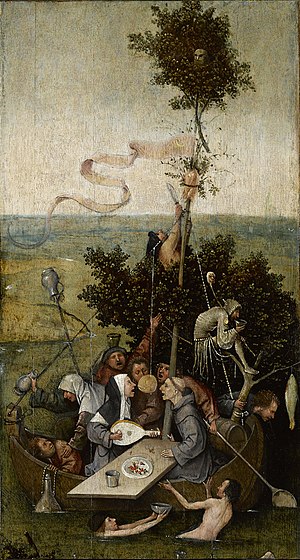
Image result for ship of fools
Hieronymus Bosch, “Ship of Fools”

Failed Poet, Philosopher Prince

Aelian, Varia Historia 2.30

“Plato, the son of Ariston, at first pursued poetry and used to write heroic verse. But he soon burned it all because he despised it, since he reckoned that his poetry was far inferior when compared to Homer’s. He then tried tragedy and even completed a tetralogy, and he was about to enter the competition, even to the point of giving the verses to actors. But right before the Dionysia, he went and heard Socrates; and once he was seized by that Siren, he not only withdrew from the competition, but he also gave up the writing of tragedy for good to immerse himself in philosophy.”

Πλάτων ὁ ᾿Αρίστωνος τὰ πρῶτα ἐπὶ ποιητικὴν ὥρμησε, καὶ ἡρωϊκὰ ἔγραφε μέτρα• εἶτα αὐτὰ κατέπρησεν ὑπεριδὼν αὐτῶν, ἐπεὶ τοῖς ῾Ομήρου αὐτὰ ἀντικρίνων ἑώρα κατὰ πολὺ ἡττώμενα. ἐπέθετο οὖν τραγῳδίᾳ, καὶ δὴ καὶ τετραλογίαν εἰργάσατο, καὶ ἔμελλεν ἀγωνιεῖσθαι, δοὺς ἤδη τοῖς ὑποκριταῖς τὰ ποιήματα. πρὸ τῶν Διονυσίων δὲ παρελθὼν ἤκουσε Σωκράτους, καὶ ἅπαξ αἱρεθεὶς ὑπὸ τῆς ἐκείνου σειρῆνος, τοῦ ἀγωνίσματος οὐ μόνον ἀπέστη τότε, ἀλλὰ καὶ τελέως τὸ γράφειν τραγῳδίαν ἀπέρριψε, καὶ ἀπεδύσατο ἐπὶ φιλοσοφίαν.

Although he did not master poetry, Plato could still deal out a sick burn:

Aelian 4.9

“Plato used to call Aristotle Pôlos [the Foal]. What did he wish with that name? Everyone knows that a foal, when it has had its fill of baby’s milk, kicks its mother. Thus Plato was signaling a certain ingratitude on Aristotle’ part. Indeed, Aristotle received the greatest seeds of Philosophy from Plato and then, though he was filled to the brim with the best ideas, he broke with Plato rebelliously. He founded his own house, took his friends on Plato’s walk, and set himself up to be Plato’s rival.”

῾Ο Πλάτων τὸν ᾿Αριστοτέλη ἐκάλει Πῶλον. τί δὲ ἐβούλετο αὐτῷ τὸ ὄνομα ἐκεῖνο; δηλονότι ὡμολόγηται τὸν πῶλον, ὅταν κορεσθῇ τοῦ μητρῴου γάλακτος, λακτίζειν τὴν μητέρα. ᾐνίττετο οὖν καὶ ὁ Πλάτων ἀχαριστίαν τινὰ τοῦ ᾿Αριστοτέλους. καὶ γὰρ ἐκεῖνος μέγιστα ἐς φιλοσοφίαν παρὰ Πλάτωνος λαβὼν σπέρματα καὶ ἐφόδια, εἶτα ὑποπλησθεὶς τῶν ἀρίστων καὶ ἀφηνιάσας, ἀντῳκοδόμησεν αὐτῷ διατριβὴν καὶ ἀντιπαρεξήγαγεν ἐν τῷ περιπάτῳ ἑταίρους ἔχων καὶ ὁμιλητάς, καὶ ἐγλίχετο ἀντίπαλος εἶναι Πλάτωνι.

Image result for aristotle and plato

Students without Teaching: Against Illiterate Literacy

Plato, Phaedrus 274e-275a (go here for the full dialogue)

Socrates is telling a story of the invention of writing in Egypt

“When it came to the written letters, Theuth said, ‘This training, King, will make Egyptians wiser and will give them stronger memories: for it is a drug for memory and wisdom!’ But the king replied, “Most inventive Theuth, one man is able to create technology, but another judges how much harm and benefit it brings to those who use it. Just so now you, who are father of letters, declare the opposite of what they are capable because of your enthusiasm.

This craft will engender forgetfulness in the minds of those who learn it from the disuse of the memory since they will trust external writing struck by others, no longer recalling their own thoughts within them. You have discovered a drug for reminding, not one for memory; you will offer students the reputation of wisdom but not the true thing. For many who become students without instruction will seem to know a lot when they are mostly ignorant and difficult to be around, since they have become wise for appearance instead of wise in truth.’

Ph. Socrates, you can easily make up any story about Egypt that you want to…”

ἐπειδὴ δ’ ἐπὶ τοῖς γράμμασιν ἦν, Τοῦτο δέ, ὦ βασιλεῦ, τὸ μάθημα, ἔφη ὁ Θεύθ,

σοφωτέρους Αἰγυπτίους καὶ μνημονικωτέρους παρέξει, μνήμης τε γὰρ καὶ σοφίας φάρμακον εὑρέθη. ῾Ο δ’ εἶπεν, ῏Ω τεχνικώτατε Θεύθ, ἄλλος μὲν δυνατὸς τεκεῖν τὰ τέχνης, ἄλλος δὲ κρῖναι, τίν’ ἔχει μοῖραν βλάβης τε καὶ ὠφελείας τοῖς μέλλουσι χρῆσθαι. Καὶ νῦν σὺ πατὴρ ὢν γραμμάτων δι’ εὔνοιαν τοὐναντίον εἶπες ἢ δύναται. Τοῦτο γὰρ τῶν μαθόντων λήθην μὲν ἐν ψυχαῖς παρέξει, μνήμης ἀμελετησίᾳ, ἅτε διὰ πίστιν γραφῆς ἔξωθεν ὑπ’ ἀλλοτρίων τύπων, οὐκ ἔνδοθεν αὐτοὺς ὑφ’ αὑτῶν ἀναμιμνησκομένους. Οὐκοῦν οὐ μνήμης ἀλλ’ ὑπομνήσεως φάρμακον εὗρες, σοφίας δὲ τοῖς μαθηταῖς δόξαν οὐκ ἀλήθειαν πορίζεις. πολυήκοοι γάρ σοι γενόμενοι ἄνευ διδαχῆς πολυγνώμονες εἶναι δόξουσιν, ἀγνώμονες ὡς ἐπὶ πλῆθος ὄντες καὶ χαλεποὶ ξυνεῖναι, δοξόσοφοι γεγονότες ἀντὶ σοφῶν.

ὦ Σώκρατες, ῥᾳδίως σὺ Αἰγυπτίους καὶ ὁποδαποὺς ἂν ἐθέλῃς λόγους ποιεῖς.

Image result for Ancient Egyptian writing

Men Quote When They Have Nothing to Say

This quotation is huge online. But, like most things that look big on the internet, its actual size leaves something to be desired. I started poking around (by which I mean googling) and found pretty quickly that this line has already been called into doubt. It seems to have entered the popular discourse through the usual route, a quote book from the 19th century (1891). The sentiment appears in different collections with some intensity a decade later in 1901, 1903, and 1904.

Proverbial wisdom that uses knowing when to speak as the distinction between wise people and fools is pretty common: check out quoteinvestigator’s overview of the ubiquitous “Better to remain silent and be thought a fool than to speak and to remove all doubt” attributed apocryphally to both Mark Twain and Abraham Lincoln.

Based on my own new rating system, this quotation is Peisistratos Fake: it draws on ancient ideas, but has no real antiquity to it.

Discerning when to be silent and when to speak is also a regular trope in ancient literature (which is alive and well in the Renaissance too, with entries on this from Piccolomini and Vergerio). Plutarch models Odysseus as the type of sage who shows his wisdom by selecting the right moments for speech (and Aulus Gellius says something similar and Macrobius too). It is also very common to use the figures of the fool and the wise person in antithesis

Gnomologia Vaticanum

58 “When Aristotle was asked what the most burdensome thing in life is he said “staying silent.”

῾Ο αὐτὸς ἐρωτηθείς, τί δυσκολώτατόν ἐστιν ἐν βίῳ, εἶπε· „τὸ σιωπᾶν”.

[Psst: the quotation I just provided falls somewhere between Rhetorica ad Fictum and Cylon-Helen]

Emerson Admirable
Ralph Waldo Emerson. H/T to Hannah Čulík-Baird for quoting this so I could quote it

Plato’s Sister and the Women Among His Students

Diogenes Laertius IV.1

“These facts are as accurate details about Plato as we are able to gather in our laborious research of the things said about him. Speusippus, an an Athenian son of Eurymedon, took over for him. He was from the deme of Myrrhinos and was the son of Plato’s sister, Pôtônê.

Speusippos was the leader of the school for eight years, and he began after the 108th Olympiad. He had statues of the Graces dedicated in the Museion which Plato built in the Academy. Although he remained an adherent to Plato’s theories, he was not like him at all in his character.  For he was quick to anger and easily induced by pleasures. People say that he threw a little dog into a well in a rage and he went to Macedonia to the marriage of Kassander thanks to pleasure.

Two women, Lastheneia of Mantinea and Aksiothea of Phlios, were students of Plato who are said to have heard Speusippus speak. Writing at the time, Dionysus says mockingly: “It is possible to evaluate your wisdom from your Arcadian girl of a student.” And, while Plato made everyone who came to him exempt from tuition, you “send everyone a bill and take money from the willing and unwilling alike!”

Τὰ μὲν περὶ Πλάτωνος τοσαῦτα ἦν ἐς τὸ δυνατὸν ἡμῖν συναγαγεῖν, φιλοπόνως διειλήσασι τὰ λεγόμενα περὶ τἀνδρός. διεδέξατο δ᾿ αὐτὸν Σπεύσιππος Εὐρυμέδοντος Ἀθηναῖος, τῶν μὲν δήμων Μυρρινούσιος, υἱὸς δὲ τῆς ἀδελφῆς αὐτοῦ Πωτώνης. καὶ ἐσχολάρχησεν ἔτη ὀκτώ, ἀρξάμενος ἀπὸ τῆς ὀγδόης καὶ ἑκατοστῆς Ὀλυμπιάδος· Χαρίτων τ᾿ ἀγάλματ᾿ ἀνέθηκεν ἐν τῷ μουσείῳ τῷ ὑπὸ Πλάτωνος ἐν Ἀκαδημείᾳ ἱδρυθέντι. καὶ ἔμεινε μὲν ἐπὶ τῶν αὐτῶν Πλάτωνι δογμάτων· οὐ μὴν τό γ᾿ ἦθος διέμεινε τοιοῦτος. καὶ γὰρ ὀργίλος καὶ ἡδονῶν ἥττων ἦν. φασὶ γοῦν αὐτὸν ὑπὸ θυμοῦ τὸ κυνίδιον εἰς τὸ φρέαρ ῥῖψαι καὶ ὑφ᾿ ἡδονῆς ἐλθεῖν εἰς Μακεδονίαν ἐπὶ τὸν Κασάνδρου γάμον.

Ἐλέγοντο δὲ αὐτοῦ καὶ αἱ Πλάτωνος ἀκούειν μαθήτριαι, Λασθένειά τε ἡ Μαντινικὴ καὶ Ἀξιοθέα ἡ Φλιασία. ὅτε καὶ Διονύσιος πρὸς αὐτὸν γράφων τωθαστικῶς φησι· “καὶ ἐκ τῆς Ἀρκαδικῆς σου μαθητρίας ἔστι καταμαθεῖν τὴν σοφίαν. καὶ Πλάτων μὲν ἀτελεῖς φόρων τοὺς παρ᾿ αὐτὸν φοιτῶντας ἐποίει· σὺ δὲ δασμολογεῖς καὶ παρ᾿ ἑκόντων καὶ ἀκόντων λαμβάνεις.”

Image result for plato women school