“This has been said against the arguments; now I must speak against the witnesses. Euphorus’ authority need not be attacked with a great effort—he is a historian. Some of these types gain commendation by telling of incredible things and they excite a reader with something amazing when he would probably do something else if he were guided through more common events.”
Some historians believe anything; others overlook much. Some are unaware of a lie; but others find it pleasing. The first type do not avoid misinformation while the second seek it out. That’s enough about the whole nation of historians who do not think that their own work can be praised and achieve popularity unless they spice it up with lies. Indeed, Euphorus is not one of ‘religious’ fidelity. Often he is deceived, and often he deceives.”
Contra argumenta dictum est, contra testes dicendum est. Nec magna molitione detrahenda est auctoritas Ephoro: historicus est. Quidam incredibilium relatu commendationem parant et lectorem, aliud acturum si per cotidiana ducetur, miraculo excitant; quidam creduli, quidam neglegentes sunt; quibusdam mendacium obrepit, quibusdam placet; illi non evitant, hi appetunt. Haecin commune de tota natione, quae approbari opus suum et fieri populare non putat posse, nisi illud mendacio aspersit. Ephorus vero non est religiosissimae fidei; saepe decipitur, saepe decipit.
Clement of Alexandria was an early church father who wrote a book of miscellany entitled the Stromata (“turnings”). In book 6, he takes on Greek plagiarism.
“Come on, let us put forth the Greeks as witnesses against themselves for their theft. For when they steal their material from one another they show that they are thieves and they illustrate, even if unwillingly, how they secretly expropriate the truth from us to their own tribes. If they do not spare themselves, they will hardly spare us.
I will not mention the beliefs of philosophers, since they all agree in writing—lest they appear ungrateful—that they have gathered the precepts of their beliefs from those that hold the greatest authority through Socrates.
Once I have offered a few testimonies of the authors most famous and most frequented among the greats and I have unveiled their thieving ways—and after I have done this through a few periods—I will turn to what remains.”
After Orpheus wrote “There is nothing more doglike and frightening than a woman” and Homer wrote in the same way “there is nothing more dreadful and doglike than a woman”. After Musaios wrote “Since craft is much better than strength”, Homer wrote “the woodcutter is much better by wit than by force”.
Again, after Musaios wrote:
In the same way that the fertile field grows plants,
Some fall from the ash-trees and in turn others grow.
So too the tribe and race of man twists and turns.
And then Homer wrote later
The wind makes some leaves fall to the ground and tree
Blooms and grows others, when the spring’s season comes
That’s the way it is with the race of men: one grows, another dies.
And after Homer said: “It ain’t right to boast over men who have been killed.” Arkhilokhos and Kratinos said, “it is not noble to brag over men who have died.”
“This is how he increases attention by creating expectation, which is a device one might use in a proem. For it is necessary that he acquire the goodwill of his audience for himself and attention for his speech so that they might welcome him as he speaks and they might internalize the things he says of the deeds and they might learn in what way Odysseus handled [everything] in general as he both praises himself but also demonstrates the number and strangeness of his experiences—this clarifies his purpose, from where he was present, and what he wants. This is why he begins the material of the longer narrative with “bringing me from Troy….”
“He always rushes to the action and steals
His audience to the story as if it is already known…”
semper ad eventum festinat et in medias res
non secus ac notas auditorem rapit
Dio Chrysostom, Oration 11.25-26
“For once he tried to describe the war which happened between the Achaians and Greeks, he did not begin from the beginning, but from wherever he chanced. This is what nearly all liars do, as they embellish and re-weave their tales, never wishing to speak in the order of events.
For, they are less than clear in this way; otherwise, they would be shown false by the tale itself. This can be seen happening now in the courts of law and other places where men lie with skill. But people who wish to show what has happened, as each thing occurred, report in this way: first thing first, second thing second and everything else in order.
This is one explanation for why Homer does not begin his poem naturally; another is that he wished to obscure the beginning and the end the most and to obtain the opposite belief about these things. This is why he does not dare to narrate the beginning and the end clearly, nor does he promise to say anything about them. If he does mention them at all it is in passing and brief and it his clear he is mixing it all up. For he does not dare nor was he able to address these things readily.
This is what happens with liars especially, when someone is saying many different things about a matter and going on about them, because they want to hide some part of it the most, they don’t speak in an organized way or appeal to their audience by ordering things in the same place but where they are most deceptive. This is because they are ashamed to lie and hesitate to proceed, especially when it is about something serious. For this reason, liars do not speak in a loud voice when they come to this moment. Some people stutter and speak unclearly; others act as if they don’t know the truth but heard this from others.
Whoever speaks something true does it fearing nothing. Nor then has Homer spoken about the abduction of Helen or even about the sack of the city simply or in a free manner. Instead, as I was saying, even though he was so very bold, he stumbled and swooned because he knew he was speaking the opposite to the truth and was lying about the very substance of his affair.”
“And you yourself, bestie Geminus, were clear in holding the same opinion about the man in your letter in which you write verbatim: “in other types of composition it is easy to fall somewhere between praise and blame—but in ornament, what does not succeed, fails completely. For this reason, it seems right to me not to interrogate these men for their few failures but for the greater number of their successes.”
And later after this you say these things an addition: “Even though I am able to mount a defense for all of these passages or most of them, I do not dare to speak against you. But I do take this one point hard—that it is not possible to succeed impressively in every way unless you take these kind of risks and enter those situations in which it is necessary to stumble”.
We don’t diverge from one another—for you agree that it is necessary that one who has great aims sometimes stumbles while I say that Plato in reaching for sublime, magnificent, and surprising phrases did not succeed all the time, but that his mistakes occupy only a small portion of his total attempts. I also add that this is one way in which Plato is less than Demosthenes—for his heightened style at times slips into emptiness and unpleasantry; for Demosthenes this happens never or rarely at all. That’s enough about Plato.”
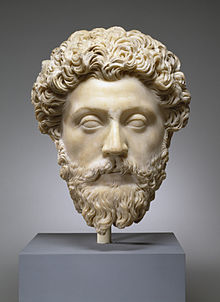
“Am I supposed to study when you are in pain—especially when you are in pain because of me? Should I not voluntarily punish myself with every kind of discomfort? It is deserved, by Hercules. What other person caused the pain in your knee which you wrote increased last night, except for Centumcellae, except for me? What can I do when I cannot see you and I am tortured with worry? And, in addition, even if I could study, the courts prohibit it since, as those who know say, they consume whole days.
Nevertheless, I sent you today’s maxim and yesterday’s commonplace. We traveled on the road the whole day yesterday. Today it is difficult to do anything but the evening maxim. Do you, you say, sleep so long a night? I certainly can sleep, for I am big on sleep. But it is so cold in my room that I can barely reach my hand from my clothes!
In all honesty, what distracted my mind the most from studies especially was that, because I love literature too much, I was a burden for you at the Harbor, as events proved. So, then, goodbye to all the Catos, the Ciceros, and the Sallusts, provided that you are well and that I may see you healthy even without books.
Farewell, my greatest joy, my sweetest teacher.
Egone ut studeam quom tu doleas, praesertim quom mea causa doleas? Non me omnibus incommodis sponte ipse adflictem? Merito hercule. Quis enim tibi alius dolorem genus, quem scribis nocte proxima auctum, quis alius eum suscitavit, nisi Centumcellae, ne me dicam? Quid igitur faciam, qui nec te video et tanto angore | discrucior? Adde eo quod etiamsi libeat studere, iudicia prohibent, quae, ut dicunt qui sciunt, dies totos eximent. Misi tamen hodiernum γνώμην et nudiustertianum locum communem. Heri totum diem in itinere adtrivimus. Hodie difficile est ut praeter vespertinam γνώμην quicquam agi possit. Nocte, inquis, tam longa dormis? Et dormire quidem possum, nam sum multi somni; sed tantum frigoris est in cubiculo meo, ut manus vix exseri possit. Sed re vera illa res maxime mih-animum a studiis depulit, quod, dum nimium litteras amo, tibi incommodus apud Portum fui, ut res ostendit. Itaque valeant omnes Porcii et Tullii et Crispi, dum tu valeas, et te vel sine libris firmum tamen videam. Vale, praecipuum meum gaudium, magister dulcissime.
M. Cornelius Fronto to Marcus Aurelius (c. 139 CE) 1.3
“Up to now, you have perhaps been wondering in what number I might place Marcus Cicero who is the peak and the origin of Roman eloquence. I think that he used the most beautiful words all the time and that he was ahead of all other orators in making magnificent whatever topic he wished to illustrate. But, he seems to be to have been less than scrupulous in selecting his words—either because of the hugeness of his mind, in avoidance of extra work, or because of a trust that without even seeking it he would find present what barely appears when others search for it.
And so, as someone who has repeatedly read all of his writings most carefully, I believe that I have sensed that he managed every kind of word most effectively—direct words, metaphors, simple and compound words—and what shines through everywhere in his writings, noble words and often quite charming ones. But still, in all of his speeches you will discover very few works which are uncommon or unexpected, the types of words which cannot be hunted down without study, and concern, and work, and a great memory of old poems.
I am calling an uncommon and unexpected word one which is offered beyond the hope or expectation of those reading or listening so that, if you take it away and ask the reader to finish the meaning, he would discover no other word or at least none so well matched to what the phrase means.”
3. Hic tu fortasse iamdudum requiras quo in numero locem M. Tullium, qui caput atque fons Romanae eloquentiae cluet. Eum ego arbitror usquequaque verbis pulcherrimis elocutum et ante omnes alios oratores ad ea, quae ostentare vellet, ornanda magnificum fuisse. Verum is mihi videtur a quaerendis scrupulosius verbis procul afuisse vel magnitudine animi vel fuga laboris vel fiducia, non quaerenti etiam sibi, quae vix aliis quaerentibus subvenirent, praesto adfutura. Itaque comperisse videor, ut qui eius scripta omnia studiosissime lectitarim, cetera eum genera verborum copiosissime uberrimeque tractasse, verba propria translata simplicia composita et, quae in eius scriptis ubique dilucent, verba honesta, saepenumero etiam amoena: quom tamen in omnibus eius orationibus paucissima admodum reperias insperata atque inopinata verba, quae non nisi cum studio atque cura atque vigilia atque Vat.145multa veterum carminum memoria indagantur. | Insperatum autem atque inopinatum verbum appello, quod praeter spem atque opinionem audientium aut legentium promitur, ita ut, si subtrahas atque eum qui legat quaerere ipsum iubeas, nullum aut non ita significando adcommodatum verbum aliud reperiat.
“Let the reader not be persuaded as a matter of course that everything the best authors said is perfect. For they slip at times, they give in to their burdens, and they delight in the pleasure of their own abilities. They do not always pay attention; and they often grow tired. Demosthenes seems to doze to Cicero; Homer naps for Horace. Truly, they are great, but they are still mortals and it happens that those who believe that whatever appears in these authors should be laws for speaking often imitate their lesser parts, since this is easier—and they believe they are enough like them if they emulate the faults of great authors.
Still, one must pass judgment on these men with modesty and care to avoid what often happens when people condemn what they do not understand. If it is necessary to err in either part, I would prefer readers to enjoy everything in these authors rather than dismiss much.”
Neque id statim legenti persuasum sit, omnia quae summi auctores dixerint utique esse perfecta. Nam et labuntur aliquando et oneri cedunt et indulgent ingeniorum suorum voluptati, nec semper intendunt animum, nonnumquam fatigantur, cum Ciceroni dormitare interim Demosthenes, Horatio vero etiam Homerus ipse videatur. Summi enim sunt, homines tamen, acciditque iis qui quidquid apud illos reppererunt dicendi legem putant ut deteriora imitentur (id enim est facilius), ac se abunde similes putent si vitia magnorum consequantur. Modesto tamen et circumspecto iudicio de tantis viris pronuntiandum est, ne, quod plerisque accidit, damnent quae non intellegunt. Ac si necesse est in alteram errare partem, omnia eorum legentibus placere quam multa displicere maluerim.
“Atacinus Varro acquired his name as a translator of other’s work—he certainly shouldn’t be dismissed, but in truth he has little to commend for improving an ability in speaking. Ennius, we should adore as we would groves sacred with age whose ancient trees have less beauty than they have religious awe. Others are closer to this time and are more useful for our subject. Ovid is certainly indulgent in his epic verse and too in love with his own genius, but still should be praised for some things. Cornelius Severus, moreover, even if he was a better metrician than a poet, still would have claimed second place for himself if he had finished his Sicilian War to the standard of his first book.
An early death kept Serranus from reaching his potential, yet his youthful works demonstrate special ability and a desire for correct form that is especially admirable in one so young. We recently lost a lot in Valerius Flaccus. Saleius Bassus had a forceful poetic ability—it did not improve with age. Rabirius and Pedo are worth a read, if you have extra time. Lucan is forceful, intense, and famous for his quotability, but, if I may say what I really think, a model more for orators than poets.
I am listing these authors because care for the lands of the earth has distracted Germanicus Augustus [Domitian] from the pursuits he began—it seemed insufficient to the gods that he be the greatest of poets. But, still, what could appear more sublime, more learned, and more outstanding by every account than the works of this young man who put the empire aside? Who could sing of wars better than the one who wages them in this way? Whom would the deities of these arts heed more closely? To whom would Minerva more easily unveil her own arts? Future generations will explain these things more fully, for now this praise is constrained by the glare of his other virtues.”
Atacinus Varro in iis per quae nomen est adsecutus interpres operis alieni, non spernendus quidem, verum ad augendam facultatem dicendi parum locuples. Ennium sicut sacros vetustate lucos adoremus, in quibus grandia et antiqua robora iam non tantam habent speciem quantam religionem. Propiores alii atque ad hoc de quo loquimur magis utiles. Lascivus quidem in herois quoque Ovidius et nimium amator ingenii sui, laudandus tamen partibus. Cornelius autem Severus, etiam si sit versificator quam poeta melior, si tamen (ut est dictum) ad exemplar primi libri bellum Siculum perscripsisset, vindicaret sibi iure secundum locum. Serranum consummari mors inmatura non passa est, puerilia tamen eius opera et maximam indolem ostendunt et admirabilem praecipue in aetate illa recti generis voluntatem. Multum in Valerio Flacco nuper amisimus. Vehemens et poeticum ingenium Salei Bassi fuit, nec ipsum senectute maturuit. Rabirius ac Pedo non indigni cognitione, si vacet. Lucanus ardens et concitatus et sententiis clarissimus et, ut dicam quod sentio, magis oratoribus quam poetis imitandus. Hos nominamus quia Germanicum Augustum ab institutis studiis deflexit cura terrarum, parumque dis visum est esse eum maximum poetarum. Quid tamen his ipsis eius operibus in quae donato imperio iuvenis secesserat sublimius, doctius, omnibus denique numeris praestantius? Quis enim caneret bella melius quam qui sic gerit? Quem praesidentes studiis deae propius audirent? Cui magis suas artis aperiret familiare numen Minerva? Dicent haec plenius futura saecula, nunc enim ceterarum fulgore virtutum laus ista praestringitur. Nos tamen sacra litterarum colentis feres, Caesar, si non tacitum hoc praeterimus et Vergiliano certe versu testamur
Clement of Alexandria was an early church father who wrote a book of miscellany entitled the Stromata (“turnings”). In book 6, he takes on Greek plagiarism.
“Come on, let us put forth the Greeks as witnesses against themselves for their theft. For when they steal their material from one another they show that they are thieves and they illustrate, even if unwillingly, how they secretly expropriate the truth from us to their own tribes. If they do not spare themselves, they will hardly spare us.
I will not mention the beliefs of philosophers, since they all agreeing in writing—lest they appear ungrateful—that they have gathered the precepts of their beliefs from those that hold the greatest authority through Socrates.
Once I have offered a few testimonies of the authors most famous and most frequented among the greats and I have unveiled their thieving ways—and after I have done this through a few periods—I will turn to what remains.”
After Orpheus wrote “There is nothing more doglike and frightening than a woman” and Homer wrote in the same way “there is nothing more dreadful and doglike than a woman”. After Musaios wrote “Since craft is much better than strength”, Homer wrote “the woodcutter is much better by wit than by force”.
Again, after Musaios wrote:
In the same way that the fertile field grows plants,
Some fall from the ash-trees and in turn others grow.
So too the tribe and race of man twists and turns.
And then Homer wrote later
The wind makes some leaves fall to the ground and tree
Blooms and grows others, when the spring’s season comes
That’s the way it is with the race of men: one grows, another dies.
And after Homer said: “It ain’t right to boast over men who have been killed.” Arkhilokhos and Kratinos said, “it is not noble to brag over men who have died.”
“But this is clear: those who wish to compose or write anything that is cherished popularly need to seek out not the most beneficial types of speech but the most mythical. For people take pleasure in listening to these types of tales and when they witness contests and struggles. For this reason, it is right to wonder at the poetry of Homer and the first tragedians—because they recognize human nature, they have imbued their poetry with both of these powers. Homer has told tales of the struggles and wars of the demigods while the tragedians have worked the myths into competitions and actions so that we are not just listeners but eyewitnesses as well. Given these types of prior examples, then, it is necessary that those who desire to keep our attention should avoid warning and counseling and should focus instead on those things which they know effectively pleases the crowd.”
“I suspect that even Homer’s poetry acquired a greater reputation because he gloriously promoted the men who fought against the barbarians and thanks to this our forefathers made his art honored in our musical competitions and in the education of the youth so that by hearing his poems often we might learn the ancient enmity towards them and, because we admire the excellence of those who went to war, we might pursue the same deeds.”