The Mind Rules All (Or Fails…)

Sallust, Bellum Jugurthinum 1

“The race of man complains wrongly about its nature, namely the fact that it is feeble in strength, limited in years and ruled more by chance than virtue. To the contrary, you can realize through contemplation that nothing else is greater or more extraordinary—that human nature lacks only perseverance instead of strength or time.

The leader and ruler of mortal life is the mind. When it proceeds to glory along virtue’s path, it is fully powerful, potent and famous; it does not need fortune since fortune cannot grant or revoke honesty, perseverance, or any other good quality from any man.

But a mind seized by desires is dedicated to laziness and worn by obedience to physical pleasure; accustomed to ruinous temptation for too long, when, thanks to sloth, strength, age and wit have diminished, only then is the weakness of nature at fault. Every man shifts his own responsibility to his circumstances.”

[1] Falso queritur de natura sua genus humanum, quod inbecilla atque aevi brevis forte potius quam virtute regatur. Nam contra reputando neque maius aliud neque praestabilius invenias magisque naturae industriam hominum quam vim aut tempus deesse. Sed dux atque imperator vitae mortalium animus est. Qui ubi ad gloriam virtutis via grassatur, abunde pollens potensque et clarus est neque fortuna eget, quippe quae probitatem, industriam aliasque artis bonas neque dare neque eripere cuiquam potest. Sin captus pravis cupidinibus ad inertiam et voluptates corporis pessum datus est, perniciosa libidine paulisper usus, ubi per socordiam vires tempus ingenium diffluxere, naturae infirmitas accusatur: suam quisque culpam auctores ad negotia transferunt.

BH- Zeus Olympia


Debate Me Boys, Take Note: Better to Have No Reason Than Use it for Harm

Cicero, De Natura Deorum, 3.77–78

“These kind of things belong to poets; we, moreover, want to be philosophers, masters of facts not fables. And yet, these gods of poetry, if they know that these things would be ruinous for their children, would be considered to have sinned in conferring a favor.

It is just as if, according to that thing which Aristo of Chios used to say, that philosophers hurt their audiences when the things they say well are interpreted badly (for it was possible still to leave Aristippus’ school as a profligate or Zeno’s school bitter and angry).

If it is this way, and those who have heard them leave with twisted minds because they understand the philosophers’ arguments incorrectly, then it befits philosophers more to be quiet than cause their audiences harm. In this way, if people pervert the capacity for reason which was given by the gods to provide good council and used it instead for fraud and harm, then it would have been better if it had not been given to the human race at all.”

Poetarum ista sunt, nos autem philosophi esse volumus, rerum auctores, non fabularum. Atque hi tamen ipsi di poetici si scissent perniciosa fore illa filiis, peccasse in beneficio putarentur. Ut si verum est quod Aristo Chius dicere solebat, nocere audientibus philosophos iis qui bene dicta male interpretarentur (posse enim asotos ex Aristippi, acerbos e Zenonis schola exire), prorsus, si qui audierunt vitiosi essent discessuri quod perverse philosophorum disputationem interpretarentur, tacere praestaret philosophos quam iis qui se audissent nocere: sic, si homines rationem bono consilio a dis immortalibus datam in fraudem malitiamque convertunt, non dari illam quam dari humano generi melius fuit. Ut, si medicus sciat eum aegrotum qui iussus sit vinum sumere meracius sumpturum statimque periturum, magna sit in culpa, sic vestra ista providentia reprehendenda, quae rationem dederit

picture of socrates sitting at a table with Aspasia. Alcibiades looms behind him

Nicolas-André Monsiau “The Debate of Socrates and Aspasia ” 1800


Are You Down with O.P.P. (Other Peoples’ Pimples)?

Seneca, De Vita Beata 27

“You have the free time to track down everyone else’s faults and pass judgment on anyone you please? ‘Why does this philosopher have such a big home? Why does that one eat so richly?’ These are the things you say. You stare at other people’s pimples when you’re afflicted with oozing sores!

This is the same thing as if someone who is covered by a gross disease points and laughs at blemishes and warts on the most beautiful bodies. Attack Plato because he looked for money, Aristotle because he took it, Democritus because he ignored it, and Epicurus because he spent it all!

Sure, yell at me about Alcibiades and Phaedrus even though it would be the happiest day in your life if you copied my vices!”

Vobis autem vacat aliena scrutari mala et sententias ferre de quoquam? “Quare hic philosophus laxius habitat? Quare hic lautius cenat?” Papulas observatis alienas, obsiti plurimis ulceribus. Hoc tale est, quale si quis pulcherrimorum corporum naevos aut verrucas derideat, quem foeda scabies 5depascitur. Obicite Platoni, quod petierit pecuniam Aristoteli, quod acceperit, Democrito, quod neglexerit, Epicuro, quod consumpserit; mihi ipsi Alcibiadem et Phaedrum obiectate, evasuri maxime felices, cum primum vobis imitari vitia nostra contigerit!

Paolo Veronese, “Young Man between Vice and Virtue” c. 1581

I hate Education: Let Me Compose a Poem About It

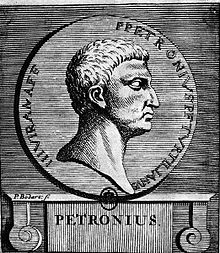
Petronius, Satyricon 4

“The fact is this: if they would tolerate the work advancing by stages, so that the studious youth were were steeped in strict reading, they shaped their minds with the sayings the wise, they were digging out words with a tireless pen, they were listening at length to words they want to imitate, and they believed that what was pleasing to children was never truly exceptional, then that old style of oratory would have the weight of its majesty.

As it is now, children play at school and our youths are mocked in public. And what is more disgusting than this, no one is willing to admit in old age whatever nonsense they learned before. But, please don’t think that I am attacking a tenet of Lucilian humility. I will put what I believe in a poem.”

Quod si paterentur laborum gradus fieri, ut studiosi iuvenes lectione severa irrigarentur, ut sapientiae praeceptis animos componerent, ut verba atroci stilo effoderent, ut quod vellent imitari diu audirent, <ut persuaderent>2 sibi nihil esse magnificum, quod pueris placeret: iam illa grandis oratio haberet maiestatis suae pondus. Nunc pueri in scholis ludunt, iuvenes ridentur in foro, et quod utroque turpius est, quod quisque perperam didicit, in senectute confiteri non vult. Sed ne me putes improbasse schedium Lucilianae humilitatis, quod sentio, et ipse carmine effingam:

Petronius Arbiter by Bodart 1707.jpg

On Using “Leftover Time” for Writing Projects

Cicero, Laws 1.8-10

M. I do understand that I have been promising this work for a long time now, Atticus. It is something I would not refuse if any bit of open and free time were allotted to me. A work as momentous as this cannot be taken up when one’s efforts are occupied and his mind is elsewhere. It is really necessary to be free from worry and business.

A. What about the other things you have written more of than any of our people? What free time did you have set aside then?

M. These ‘leftover moments’ occur and I will not suffer wasting them—as when there are some days set aside for going to the country, I write something equal to what the number of days allow. But a history cannot be begun unless there is dedicated time and it can’t be completed in a short time. I habitually weigh down my thought when, once I have started, I am distracted by something else. And once a project is interrupted, I do not finish what was started easily.”

M. Intellego equidem a me istum laborem iam diu postulari, Attice; quem non recusarem, si mihi ullum tribueretur vacuum tempus et liberum; neque enim occupata opera neque inpedito animo res tanta suscipi potest; utrumque opus est, et cura vacare et negotio.

A. Quid ad cetera. quae scripsisti plura quam quisquam e nostris? quod tibi tandem tempus vacuum fuit concessum?

M. Subsiciva quaedam tempora incurrunt, quae ego perire non patior, ut, si qui dies ad rusticandum dati sint, ad eorum numerum adcommodentur quae scribimus. historia vero nec institui potest nisi praeparato otio nec exiguo tempore absolvi, et ego animi pendere soleo, cum semel quid orsus sum,1 si traducor alio, neque tam facile interrupta contexo quam absolvo instituta.

Intention and Not Knowing the Self

Seneca, De Beneficiis 4.6

“What did I want? What have I gained from my good intention?” I gain even in torture; I gain the fire. Even if the fire consumes my limbs bit by bit and overcomes my whole body, even as my heart is filled up with good conscience yet still drips blood, it will be delighted by the flame whose light proves its pure intention.”

‘Quid mihi volui? Quid nunc mihi prodest bona voluntas?’” Prodest et in eculeo, prodest et in igne; qui si singulis membris admoveatur et paulatim vivum corpus circumeat, licet ipsum cor plenum bona conscientia stillet: placebit illi ignis, per quem bona fides conlucebit.


Seneca, De tranquilitate animi 15-16

“Although I should not give too much information, I am stalked by the weakness of good intention in all things. This worry, that I am slowly slipping behind or–what I fear more–that I am wavering like someone who is always just about to fall and may actually be much worse off than I can sense. We tend to look favorably upon our own affairs and this inclination impedes our judgment.

I imagine many people would have made it up that hill to wisdom if they had not already imagined they had already arrived, if they had not told themselves lies about their own character, as if they passed by everyone with eyes firmly shut. There’s no good reason to think that other people’s praise is more harmful to us than our own. Who is so daring as to tell themselves the truth?”

Ne singula diutius persequar, in omnibus rebus haec me sequitur bonae mentis infirmitas. Quin ne paulatim defluam vereor, aut quod est sollicitius, ne semper casuro similis pendeam et plus fortasse sit quam quod ipse pervideo; familiariter enim domestica aspicimus et semper iudicio favor officit.

Puto multos potuisse ad sapientiam pervenire, nisi putassent se pervenisse, nisi quaedam in se dissimulassent, quaedam opertis oculis transiluissent. Non est enim, quod magis aliena iudices adulatione nos perire quam nostra. Quis sibi verum dicere ausus est?

Know yourself – Youth between Vice and Vertu, attributed to Jacob Jordaens

Cicero Needs Nothing So Much as a Friend

Cicero can seem an insufferable windbag in some of his speeches–but some of his letters humanize him.

Cicero to Atticus 1.18 20 Jan 60

“Know that I need nothing so much as a person to whom I can explain the things I worry about, someone who cares about me, who is wise, to whom I may speak and fabricate nothing, lie about nothing, and hold nothing back.

My brother is away, the most honest and beloved man. Metellus is not a man but instead is “shore and air” and “only solitude”. You, moreover, who most wisely lightens by concern and anxiety of spirit with conversation and counsel, you are my companion in public affairs and my confidant in private matters, and who are usually a companion of all my speeches and plans, where are you? I am so completely isolated that I only have as much relaxation as those moments spend with my wife, my little girl and my sweetest Marcus.

For my ambitious and convenient friendships have a certain shine in public affairs, but they bear no domestic fruit. My home is so full with a crowd in the morning but when I go to the forum with flocks of friends, I can’t find a single person in the great crowd to share a joke with or to whisper familiarly.

This is why I am looking for you, why I miss you, and I am also now calling you home. Many things really trouble me and make me anxious—but these are things which I think I can get off my chest once I have your ears for a talk during a single walk.”

Nihil mihi nunc scito tam deesse quam hominem eum quocum omnia quae me cura aliqua adficiunt una communicem, qui me amet, qui sapiat, quicum ego cum loquar nihil fingam, nihil dissimulem, nihil obtegam. abest enim frater ἀϕελέστατος et amantissimus. †Metellus† non homo sed ‘litus atque aër’ et ‘solitudo me<r>a.’ tu autem qui saepissime curam et angorem animi mei sermone et consilio levasti tuo, qui mihi et in publica re socius et in privatis omnibus conscius et omnium meorum sermonum et consiliorum particeps esse soles, ubinam es? ita sum ab omnibus destitutus ut tantum requietis habeam quantum cum uxore et filiola et mellito Cicerone consumitur. nam illae ambitiosae nostrae fucosaeque amicitiae sunt in quodam splendore forensi, fructum domesticum non habent. itaque cum bene completa domus est tempore matutino, cum ad forum stipati gregibus amicorum descendimus, reperire ex magna turba neminem possumus quocum aut iocari libere aut suspirare familiariter possimus. qua re te exspectamus, te desideramus, te iam etiam arcessimus. multa sunt enim quae me sollicitant anguntque, quae mihi videor auris nactus tuas unius ambulationis sermone exhaurire posse.

Image result for medieval manuscript cicero letter to a friend
Enter a caption

“Their Only God is Money”

The following is a spurious letter from the wild Historia Augusta. This is filled with religious confusion, some hate, and an odd detail about cups.

Historia Augusta, 29.7

“Hadrianus Augustus greets Servianus the Consul.

Dearest Servianus, that Egypt you were praising to me is completely light of learning, volatile, and swinging toward every little rumor. The people there who follow Serapis are Christians and those who claim to be followers of Christ are actually worshipers of Serapis. There’s no one in charge of the synagogue of the Jews, there’s no Samaritans, no Christian presbyter who is not also an astrologer, a psychic or some baptist. Even the Patriarch, when he has come to Egypt, is made to worship Serapis by some and Christ by others.

These people are the most traitorous, the most vain, most likely to injure while their state is wealthy, showy, fertile and a place where no one is without work. Some people blow glass; paper is made by others; everyone weaves some kind of linen or are part of some kind of craft. The lame have things they do; eunuchs have things they do as do the blind and even those with crippled hands are not without work among them.

Money is their only god—Christians, Jews, every people and race worship him. I wish that this place had a better nature, for it is truly worthy because of its size and richness to be the chief place of all Egypt. I conceded everything to it; I returned its ancient rights and added new ones so that the people thanked me while I was there. But, then, the moment I left, they said many things against my son Verus and I believe that you have learned what they said about Antinoos.

I wish nothing for them except that they live on their own chickens which they raise in a way that is shameful to speak. I am sending you some cups which are decorated with changing colors and were given to me by the priest of a temple but are now dedicated to you and my sister. I want you to use them on feast days. Be careful that our companion Africanus does not use them as he wants.”

VIII. “Hadrianus Augustus Serviano consuli salutem. Aegyptum, quam mihi laudabas, Serviane carissime, totam didici levem, pendulam et ad omnia famae momenta volitantem. illic3 qui Serapem colunt Christiani sunt, et devoti sunt Serapi qui se Christi episcopos dicunt. nemo illic archisynagogus Iudaeorum, nemo Samarites, nemo Christianorum presbyter non mathematicus, non haruspex, non aliptes. ipse ille patriarcha cum Aegyptum venerit, ab aliis Serapidem adorare, ab aliis cogitur Christum. genus hominum seditiosissimum, vanissimum, iniuriosissimum; civitas opulenta, dives, fecunda, in qua nemo vivat otiosus. alii vitrum conflant, aliis charta conficitur, omnes certe linyphiones aut cuiuscumque artis esse videntur; et habent podagrosi quod agant, habent praecisi quod agant, habent caeci quod faciant, ne chiragrici quidem apud eos otiosi vivunt. unus illis deus nummus est. hunc Christiani, hunc Iudaei, hunc omnes venerantur et gentes. et utinam melius esset morata civitas, digna profecto quae pro sui fecunditate, quae pro sui magnitudine totius Aegypti teneat principatum. huic ego cuncta concessi, vetera privilegia reddidi, nova sic addidi ut praesenti gratias agerent. denique ut primum inde discessi, et in filium meum Verum multa dixerunt, et de Antinoo quae dixerint comperisse te credo. nihil illis opto, nisi ut suis pullis alantur, quos quemadmodum fecundant, pudet dicere. calices tibi allassontes versicolores transmisi, quos mihi sacerdos templi obtulit, tibi et sorori meae specialiter dedicatos; quos tu velim festis diebus conviviis adhibeas. caveas tamen ne his Africanus noster indulgenter utatur.”

Chance, Virtue, and Evil Deeds

Boethius, Consolation of Philosophy 4 145-155

“It does often turn out that the conduct of the most important affairs is entrusted to good people, that overwhelming corruption may be restrained. Chance apportions a proper mix of bad and good luck to some people based on the quality of their souls so they don’t exult in excess thanks to prolonged happiness. It lets other people suffer more, so that their minds’ virtues gain strength from the use and habit of patience.

Some people fear more than they need to about how much they can take while others are not serious enough about what they cannot. No few purchase a name the world honors at the price of a glorious death; others provide in their tortures an example to the rest of human kind that virtue cannot be conquered by evil deeds.”

Fit autem saepe, uti bonis summa rerum regenda deferatur, ut exuberans retundatur improbitas. Aliis mixta quaedam pro animorum qualitate distribuit; quosdam remordet ne longa felicitate luxurient, alios duris agitari ut virtutes animi patientiae usu atque exercitatione confirment. Alii plus aequo metuunt quod ferre possunt, alii plus aequo despiciunt quod ferre non possunt; hos in experimentum sui tristibus ducit. Nonnulli venerandum saeculi nomen gloriosae pretio mortis emerunt: quidam suppliciis inexpugnabiles exemplum ceteris praetulerunt invictam malis

Boethius Imprisoned

Changing Your Mind is the Point of Research

Quintilian, Inst. Orat. 3.6.

“I admit that I now have a bit of a different opinion from what I believed before. Perhaps it would be safest for my reputation to change nothing which I not only believed but also approved for many years. But I cannot endure knowing that I misrepresent myself, especially in this work which I compose as some help for our good students. For even Hippocrates, famous still for his skill in medicine, seems to have conducted himself very honorably when he admitted his own errors so his followers would not make a mistake. Marcus Tullius did not hesitate to condemn some of his own books in subsequent publications, the Catulus and Lucullus, for example.

Prolonged effort in research would certainly be useless if we were not allowed to improve upon previous opinions. Nevertheless, nothing of what I taught then was useless. These things I offer now, in fact, return us to basic principles. Thus it will cause no one grief to have learned from me. I am trying only to collect and lay out the same ideas in a slightly more sensible fashion. I want it made known to all, moreover, that I am showing this to others no later than I have convinced myself.”

Ipse me paulum in alia quam prius habuerim opinione nunc esse confiteor. Et fortasse tutissimum erat famae modo studenti nihil ex eo mutare quod multis annis non sensissem modo verum etiam adprobassem. Sed non sustineo esse conscius mihi dissimulati, in eo praesertim opere quod ad bonorum iuvenum aliquam utilitatem componimus, in ulla parte iudicii mei. Nam et Hippocrates clarus arte medicinae videtur honestissime fecisse quod quosdam errores suos, ne posteri errarent, confessus est, et M. Tullius non dubitavit aliquos iam editos libros aliis postea scriptis ipse damnare, sicut Catulum atque Lucullum et… Etenim supervacuus foret in studiis longior labor si nihil liceret melius invenire praeteritis. Neque tamen quicquam ex iis quae tum praecepi supervacuum fuit; ad easdem enim particulas haec quoque quae nunc praecipiam revertentur. Ita neminem didicisse paeniteat: colligere tantum eadem ac disponere paulo significantius conor. Omnibus autem satis factum volo non me hoc serius demonstrare aliis quam mihi ipse persuaserim.

Mind Change real