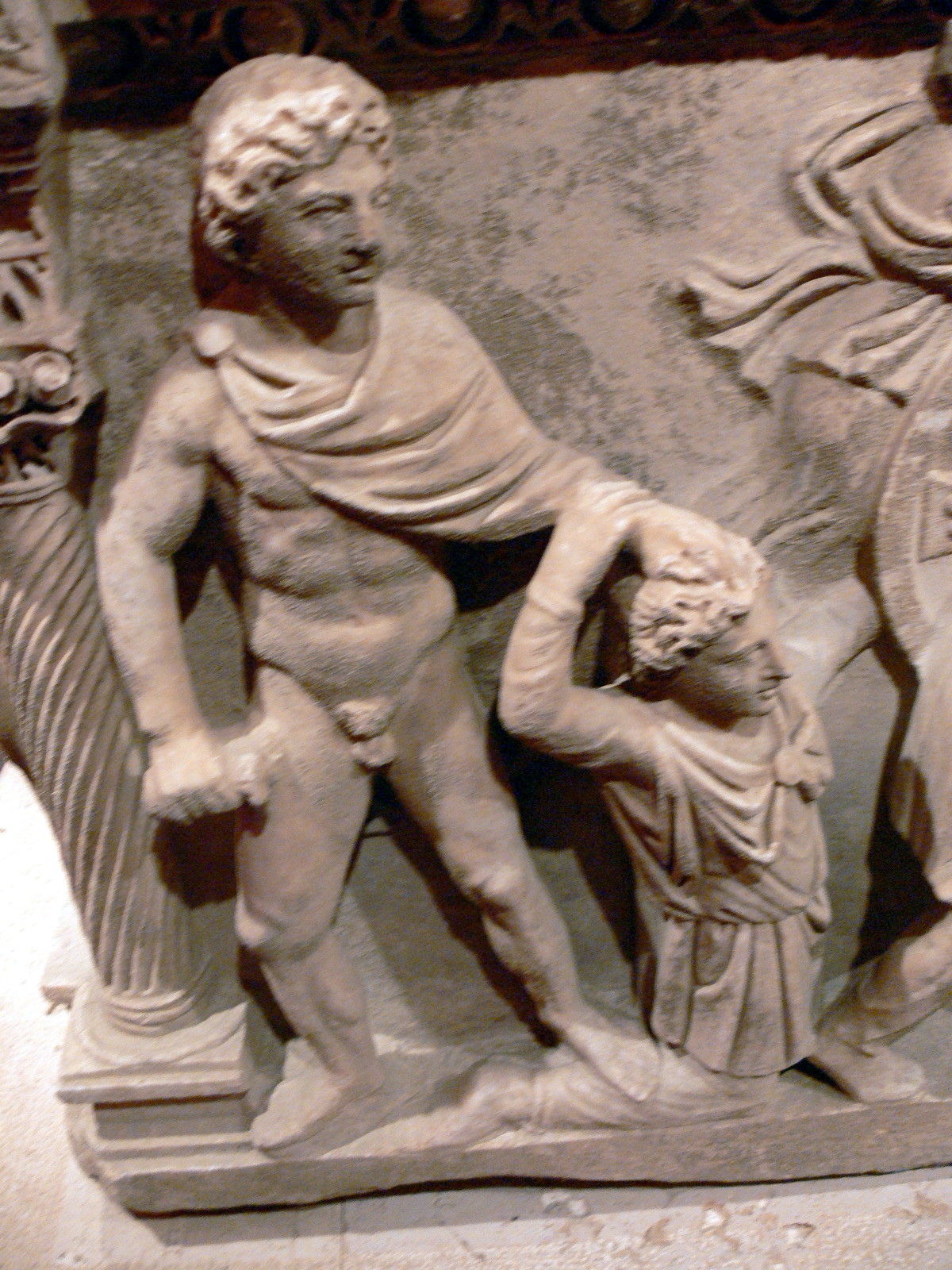
Words and Deeds: The Hero is Opposed to Inaction

Homer, Iliad 1.488–492

“But he sat there raging among the swift-wayed ships,
The godly son of Peleus, swift-footed Achilles.
He was not ever going into the man-ennobling assembly,
Nor into battle, but he was eating up his dear heart
Waiting there, desiring the war-cry and battle.”

Αὐτὰρ ὃ μήνιε νηυσὶ παρήμενος ὠκυπόροισι
διογενὴς Πηλῆος υἱὸς πόδας ὠκὺς ᾿Αχιλλεύς·
οὔτέ ποτ’ εἰς ἀγορὴν πωλέσκετο κυδιάνειραν
οὔτέ ποτ’ ἐς πόλεμον, ἀλλὰ φθινύθεσκε φίλον κῆρ
αὖθι μένων, ποθέεσκε δ’ ἀϋτήν τε πτόλεμόν τε.

Schol. A ad Il. 1.488 notes that the Alexandrian editor Zenodotus athetized this entire passage.

Schol. bT ad Il. 1.490-1b

“he was no longer frequenting the man-ennobling assembly / nor into war”: he knows that these are the two virtues of men, action and speech. And he judges speech to be more important”

ex. <οὔτέ ποτ’ εἰς ἀγορὴν πωλέσκετο κυδιάνειραν /> οὔτέ ποτ’ ἐς πόλεμον: δύο οἶδεν ἀνδρῶν ἀρετάς, πρᾶξιν καὶ λόγον. προκρίνει δὲ τὸν λόγον.

Schol A ad Il. 1.492

“He was longing”: For the hero is opposed to inaction. He is especially desirous of honors for deeds.
ex. <ποθέεσκε:> ἐχθρὸς γὰρ τῆς ἀργίας ὁ ἥρως, φιλότιμος δὲ περὶ τὰς πράξεις. A

Image result for Ancient Greek Achilles

Beginning the Iliad and Ilium

 This is the first thing I ever memorized in Ancient Greek (Iliad 1.1–7)

Μῆνιν ἄειδε θεὰ Πηληϊάδεω ᾿Αχιλῆος
οὐλομένην, ἣ μυρί’ ᾿Αχαιοῖς ἄλγε’ ἔθηκε,
πολλὰς δ’ ἰφθίμους ψυχὰς ῎Αϊδι προΐαψεν
ἡρώων, αὐτοὺς δὲ ἑλώρια τεῦχε κύνεσσιν
οἰωνοῖσί τε πᾶσι, Διὸς δ’ ἐτελείετο βουλή,
ἐξ οὗ δὴ τὰ πρῶτα διαστήτην ἐρίσαντε
᾿Ατρεΐδης τε ἄναξ ἀνδρῶν καὶ δῖος ᾿Αχιλλεύς.

“Goddess, sing the rage of Pelias’ son Achilles,
Destructive, how it gave the Achaeans endless pain
And send many brave souls of heroes to Hades—
And it made them food for the dogs
And all the birds as Zeus plan was being fulfilled.
Start from when those two first diverged in strife,
The lord of men Atreus’ son and godly Achilles.”

Compare The Beginning of Dan Simmons’ Ilium:

Rage.

Sing, O Muse, of the rage of Achilles, of Peleus’ son, murderous, man-killer, fated to die, sing of the rage that cost the Achaeans so many good men and sent so many vital, hearty souls down to the dreary House of Death. And while you’re at it, O Muse, sing of the rage of the gods themselves, so petulant and so powerful here on their new Olympos, and of the rage of the post-humans, dead and gone though they might be, and of the rage of those few true humans left, self-absorbed and useless though they may have become. While you are singing, O Muse, sing also of the rage of those thoughtful, sentient, serious but not-so-close-to-human beings out there dreaming under the ice of Europa, dying in the sulfur-ash of Io, and being born in the cold folds of Ganymede.

Oh, and sing of me, O Muse, poor born-again-against-his-will Hockenberry—poor dead Thomas Hockenberry, Ph.D., Hockenbush to his friends, to friends long since turned to dust on a world long since left behind. Sing of my rage, yes, of my rage, O Muse, small and insignificant though that rage may be when measured against the anger of the immortal gods, or when compared to the wrath of the god-killer, Achilles.

On second thought, O Muse, sing of nothing to me. I know you. I have been bound and servant to you, O Muse, you incomparable bitch. And I do not trust you, O Muse. Not one little bit.

This continues throughout the first part of chapter 1, culminating in a memorable dismissal: “Fuck all these heroes and the wooden chariots they rode in on.”

Other Iliads

The manuscript traditions of the Iliad provide in addition to the well-known 9 line proem, a few shorter, alternate beginnings:

“An Iliad which appears to be ancient, called Apellicon’s, has this proem:

I sing of the Muses and Apollo, known for his bow…

This is recorded by Nikanôr and Crates in his Critical Notes on the Text of the Iliad. Aristoxenus in the first book of his Praxidamanteia says that some had as the first lines:

Tell me now Muses who have Olympian Homes

How rage and anger overtook Peleus’ son

And also the shining son of Leto. For the king was enraged…”

ἡ δὲ δοκοῦσα ἀρχαία ᾿Ιλιάς, λεγομένη δὲ ᾿Απελλικῶνος, προοίμιον ἔχει τοῦτο·

Μούσας ἀείδω καὶ ᾿Απόλλωνα κλυτότοξον

ὡς καὶ Νικάνωρ μέμνηται καὶ Κράτης ἐν τοῖς διορθωτικοῖς. ᾿Αριστόξενος
δ’ ἐν α′ Πραξιδαμαντείων φησὶν κατά τινας ἔχειν·

῎Εσπετε νῦν μοι, Μοῦσαι ᾿Ολύμπια δώματ’ ἔχουσαι,
ὅππως δὴ μῆνίς τε χόλος θ’ ἕλε Πηλεΐωνα,
Λητοῦς τ’ ἀγλαὸν υἱόν· ὁ γὰρ βασιλῆι χολωθείς.

Obviously, these variant beginnings don’t signal a different poem, but they do set up the audience in different ways. The latter variants especially point to a greater emphasis (perhaps) on Apollo.

This information is crammed in the critical apparatus of Allen’s edition of the Iliad (1931):Allen Iliad 1

It is also to be found in West’s more recent edition (1998):

West Iliad 1

Letters Like Thersites’ Speech: Libanius Throws Some Epistolary Shade

Libanius, Letter 81

To Anatolios

“You used to insist that I be free in my speech because you would endure whatever might come from my mouth. But Aeschylus has changed my mind by saying that it is not right for lesser men to speak boldly. But Euripides also says that powerful men take the words of their inferiors badly. But, still, since you ask for responses, I will accede both to you and the poets by not revealing everything to them nor hiding everything from you.

First,  I have this to say about the length of our letters. You are angry about the brevity of mine, and I despise the length of yours. Sparta inspires mine, and you have called it the “Laconic letter”. But, remind me of the models for your nonsense. You have none but that unmeasured man* who bawled during the Achaeans’ assembly.”

Ἀνατολίῳ

Σὺ μὲν παρεκάλεις με πρὸς παρρησίαν ὡς πᾶν οἴσων ὅ τι ἂν ἐξ ἐμοῦ λέγηται, Αἰσχύλος δὲ ἀποτρέπει λέγων μὴ δεῖν τοὺς ἥττους θρασυστομεῖν. ἀλλὰ καὶ Εὐριπίδης φησίν, ὡς οἱ μεγάλα πνέοντες, περὶ ὑμῶν δή που λέγων, πικρῶς φέρουσι λόγους παρ᾿ ἐλαττόνων κρείσσονας. ὅμως φέρουσι λόγους παρ’ ἐλαττόνων κρείσσονας. ὅμως δέ, ἐπειδὴ τῶν ἀμοιβαίων ἐπιθυμεῖς, σοί τε χαριοῦμαι καὶ τοῖν ποιηταῖν, τοῖς μὲν οὐ πάντα εἰπών, σοὶ δὲ οὐ πάντα κρύψας.

πρῶτον μὲν οὖν περὶ τοῦ μέτρου τῶν γραμμάτων ἐκεῖνο λέγω, ὅτι σὺ μὲν τῶν ἐμῶν τὴν βραχύτητα δυσχεραίνεις, ἐγὼ δὲ τῶν σῶν τὸ μῆκος. τὸ μὲν οὖν ἐμὸν ἡ Σπάρτη παραμυθεῖται, καὶ σὺ προσείρηκας Λακωνικὴν τὴν ἐπιστολήν, τῆς δὲ σῆς φλυαρίας εἰπὲ τοὺς ἡγεμόνας· ἀλλ᾿ οὐκ ἂν ἔχοις πλὴν εἰ τὸν ἀκριτόμυθον τὸν ἐπὶ τῆς ἐκκλησίας τῶν Ἀχαιῶν κλάοντα.

*Thersites; an allusion to Il. 2.246 Θερσῖτ’ ἀκριτόμυθε, λιγύς περ ἐὼν ἀγορητής.


Image result for Ancient Greek Thersites

Speaking of Centaurs…Nestor’s Tale in Iliad 1

In the first book of the Iliad, Nestor attempts to intervene in the conflict between Achilles and Agamemnon. He eventually tells both men to simmer down—Achilles should act insubordinately and Agamemnon shouldn’t take Briseis. Neither of them listen to him. The reason—beyond the fact that neither of them are in a compromising state of mind—may in part be because of the story Nestor tells.

Il. 1.259–273

“But listen to me: both of you are younger than me; for long before have I accompanied men better than even you and they never disregarded me. For I never have seen those sort of men since, nor do I expect to see them; men like Perithoos and Dryas, the shepherd of the host, and Kaineus and Exadios and godly Polyphemos and Aigeus’ son Theseus, who was equal to the gods; indeed these were the strongest of mortal men who lived—they were the strongest and they fought with the strongest, mountain-inhabiting beasts, and they destroyed them violently. And I accompanied them when I left Pylos far off from a distant land when they summoned me themselves; and I fought on my own. No one could fight with them, none of those mortals who now are on the earth. Even they listened to my counsel and heeded my speech.”

ἀλλὰ πίθεσθ’· ἄμφω δὲ νεωτέρω ἐστὸν ἐμεῖο·
ἤδη γάρ ποτ’ ἐγὼ καὶ ἀρείοσιν ἠέ περ ὑμῖν
ἀνδράσιν ὡμίλησα, καὶ οὔ ποτέ μ’ οἵ γ’ ἀθέριζον.
οὐ γάρ πω τοίους ἴδον ἀνέρας οὐδὲ ἴδωμαι,
οἷον Πειρίθοόν τε Δρύαντά τε ποιμένα λαῶν
Καινέα τ’ ᾿Εξάδιόν τε καὶ ἀντίθεον Πολύφημον
Θησέα τ’ Αἰγεΐδην, ἐπιείκελον ἀθανάτοισιν·
κάρτιστοι δὴ κεῖνοι ἐπιχθονίων τράφεν ἀνδρῶν·
κάρτιστοι μὲν ἔσαν καὶ καρτίστοις ἐμάχοντο
φηρσὶν ὀρεσκῴοισι καὶ ἐκπάγλως ἀπόλεσσαν.
καὶ μὲν τοῖσιν ἐγὼ μεθομίλεον ἐκ Πύλου ἐλθὼν
τηλόθεν ἐξ ἀπίης γαίης· καλέσαντο γὰρ αὐτοί·
καὶ μαχόμην κατ’ ἔμ’ αὐτὸν ἐγώ· κείνοισι δ’ ἂν οὔ τις
τῶν οἳ νῦν βροτοί εἰσιν ἐπιχθόνιοι μαχέοιτο·
καὶ μέν μευ βουλέων ξύνιεν πείθοντό τε μύθῳ·

lapiths-and-centaurs

Ancient commentators praise Nestor elsewhere for his ability to apply appropriate examples in his persuasive speeches:

Schol. Ad Il. 23.630b ex. 1-6: “[Nestor] always uses appropriate examples. For, whenever he wants to encourage someone to enter one-on-one combat, he speaks of the story of Ereuthaliôn (7.136-56); when he wanted to rouse Achilles to battle, he told the story of the Elean war (11.671¬–761). And here in the games for Patroklos, he reminds them of an ancient funeral contest.”

ex. ὡς ὁπότε κρείοντ'<—᾿Επειοί>: ἀεὶ οἰκείοις παραδείγμασι χρῆται· ὅταν μὲν γάρ τινα ἐπὶ μονομάχιον ἐξαναστῆσαι θέλῃ, τὰ περὶ ᾿Ερευθαλίωνα (sc. Η 136—56) λέγει, ὅταν δὲ ᾿Αχιλλέα ἐπὶ τὴν μάχην, τὰ περὶ τὸν ᾿Ηλειακὸν πόλεμον (sc. Λ 671—761)·
καὶ ἐν τοῖς ἐπὶ Πατρόκλῳ ἄθλοις παλαιοῦ ἐπιταφίου μέμνηται ἀγῶνος.
b(BCE3E4)T

The scholia also assert that such use of stories from the past is typical of and appropriate to elders:

Schol. ad Il. 9.447b ex. 1-2 : “The elderly are storytellers and they persuade with examples from the past. In other cases, the tale assuages the anger…”

μυθολόγοι οἱ γέροντες καὶ παραδείγμασι παραμυθούμενοι. ἄλλως τε ψυχαγωγεῖ τὴν ὀργὴν ὁ μῦθος.

Continue reading “Speaking of Centaurs…Nestor’s Tale in Iliad 1”

“How Does a Stone Mourn”? Achilles, Priam and Niobe

In the final book of the Iliad, Achilles tells Priam a story about the death of the Niobids. The story he tells is a bit strange–but the reaction of ancient scholars may be a bit tone-deaf.

Iliad 24.596-620

“And then shining Achilles went back into his dwelling
And sat on the finely decorated bench from where he had risen
near the facing wall. Then he began his speech [muthon] to Priam:

‘Old man, your son has been ransomed as you were pleading—he
Lies now on the platform. You will see him at dawn yourself
When you lead him away. But now, we should remember our meal.
For fair-tressed Niobê, too, remembered to eat,
Even though her twelve children perished at home.
Six daughters and six sons.
Apollo killed them with his silver bow
Because he was angry at Niobê, and Artemis helped too,
Because their mother had considered herself equal to fair-cheeked Leto.
She claimed that Leto birthed two children while she had many.
And so those mere two ended the lives of many.
They lingered in their gore for nine days and no one went
To bury them—Kronos’ son turned the people into stone.
On the tenth day, the Olympian gods buried them.
And she remembered to eat, after she wore herself out shedding tears.
And now somewhere in the isolated crags on the mountains
Of Sipylus where men say one finds the beds of goddesses,
Of the nymphs who wander along the Akhelôis,
She turns over the god-sent sufferings, even though she remains a stone.
So, come, now, shining old man, let’s the two of us remember
Our meal. You can mourn your dear son again
After you take him to Troy—he will certainly be much-wept.”

῏Η ῥα, καὶ ἐς κλισίην πάλιν ἤϊε δῖος ᾿Αχιλλεύς,
ἕζετο δ’ ἐν κλισμῷ πολυδαιδάλῳ ἔνθεν ἀνέστη
τοίχου τοῦ ἑτέρου, ποτὶ δὲ Πρίαμον φάτο μῦθον·
υἱὸς μὲν δή τοι λέλυται γέρον ὡς ἐκέλευες,
κεῖται δ’ ἐν λεχέεσσ’· ἅμα δ’ ἠοῖ φαινομένηφιν
ὄψεαι αὐτὸς ἄγων· νῦν δὲ μνησώμεθα δόρπου.
καὶ γάρ τ’ ἠΰκομος Νιόβη ἐμνήσατο σίτου,
τῇ περ δώδεκα παῖδες ἐνὶ μεγάροισιν ὄλοντο
ἓξ μὲν θυγατέρες, ἓξ δ’ υἱέες ἡβώοντες.
τοὺς μὲν ᾿Απόλλων πέφνεν ἀπ’ ἀργυρέοιο βιοῖο
χωόμενος Νιόβῃ, τὰς δ’ ῎Αρτεμις ἰοχέαιρα,
οὕνεκ’ ἄρα Λητοῖ ἰσάσκετο καλλιπαρῄῳ·
φῆ δοιὼ τεκέειν, ἣ δ’ αὐτὴ γείνατο πολλούς·
τὼ δ’ ἄρα καὶ δοιώ περ ἐόντ’ ἀπὸ πάντας ὄλεσσαν.
οἳ μὲν ἄρ’ ἐννῆμαρ κέατ’ ἐν φόνῳ, οὐδέ τις ἦεν
κατθάψαι, λαοὺς δὲ λίθους ποίησε Κρονίων·
τοὺς δ’ ἄρα τῇ δεκάτῃ θάψαν θεοὶ Οὐρανίωνες.
ἣ δ’ ἄρα σίτου μνήσατ’, ἐπεὶ κάμε δάκρυ χέουσα.
νῦν δέ που ἐν πέτρῃσιν ἐν οὔρεσιν οἰοπόλοισιν
ἐν Σιπύλῳ, ὅθι φασὶ θεάων ἔμμεναι εὐνὰς
νυμφάων, αἵ τ’ ἀμφ’ ᾿Αχελώϊον ἐρρώσαντο,
ἔνθα λίθος περ ἐοῦσα θεῶν ἐκ κήδεα πέσσει.
ἀλλ’ ἄγε δὴ καὶ νῶϊ μεδώμεθα δῖε γεραιὲ
σίτου· ἔπειτά κεν αὖτε φίλον παῖδα κλαίοισθα
῎Ιλιον εἰσαγαγών· πολυδάκρυτος δέ τοι ἔσται.

niobid-vase

Some Scholia on this passage:
bT ad Il. 24.601 “now—dinner”: not in the midst of pain, but as a general rule.
The length of the narrative is persuasive. For the comparison of the suffering makes [Priam’s suffering] lighter”
ex. νῦν—δόρπου: οὐκ ἐν τῷ πένθει, ἀλλὰ καθόλου.
b(BCE3E4)T παραμυθητικὸν δὲ τὸ τῆς διηγήσεως μῆκος (sc. Ω 602—17)· ἐπικουφίζεται γὰρ τὰ πάθη πρὸς ἀλλοτρίας συμφορὰς συγκρινόμενα. b(BE3E4)T

bT ad. 24.602a ex

“Some say that this Niobê is the daughter of Pelops; others say she is the daughter of Tantalos. Others claim that she is the wife of Amphion or of Zethus. Still more claim that she is the wife of Alalkomeneus. Among the Lydians she is called Elumê. And this event occurred, as some claimed, in Lydia; or, as some claim, in Thebes. Sophokles writes that the children perished in Thebes and that she returned to Lydia afterwards. And she perished, as some claim, after she swore a false oath about the dog of Pandareus because [….] or later when she had been ambushed by the Spartoi in Kithaira. There were two Niobes, one of Pelops and one of Tantalus. He explains the whole tale because the story is Theban and unknown to Priam.”

ex. | ex. <καὶ γάρ τ’ ἠΰκομος Νιόβη:> τὴν Νιόβην οἱ μὲν Πέλοπος, οἱ δὲ Ταντάλου· γυναῖκα δὲ οἱ μὲν ᾿Αμφίονος, οἱ δὲ Ζήθου, [οἱ δὲ] ᾿Αλαλκομένεω. ἐκαλεῖτο δὲ παρὰ Λυδοῖς ᾿Ελύμην. ἡ δὲ συμφορὰ αὐτῆς, ὡς μέν τινες, ἐν Λυδίᾳ, ὡς δὲ ἔνιοι, ἐν Θήβαις. Σοφοκλῆς (cf. T.G.F. p. 228 N.2; II p. 95 P.) δὲ τοὺς μὲν παῖδας ἐν Θήβαις ἀπολέσθαι, νοστῆσαι <δὲ> αὐτὴν εἰς Λυδίαν. ἀπώλετο [δέ], ὥς τινες, συνεπιορκήσασα Πανδάρ[εῳ] περὶ τοῦ κυνός, ὡς δὲ [..], ἐνεδρευθεῖσα ὑπὸ τῶν Σπαρτῶν ἐν Κιθαιρῶ[νι]. οἱ δὲ δύο Νιόβας, Πέλοπος καὶ Ταντάλου. T | ὡς Θηβαῖον ὄντα τὸν μῦθον καὶ ἀγνοούμενον Πριάμῳ ἐπεξεργάζεται. b(BE3E4)T
bT ad. 605b ex

“He expands the narrative rhetorically, essentially “eat, for Niobê ate. Who was she? She lost twelve children. Because of whom? Apollo and Artemis. Why? Because of arrogance.”

ex. τοὺς μὲν ᾿Απόλλων <πέφνεν>: ῥητορικῶς ἀνέστρεψε τὴν διήγησιν· φάγε· καὶ γὰρ Νιόβη. τίς αὕτη; ἀπολέσασα δώδεκα παῖδας. ὑπὸ τίνος; ὑπὸ ᾿Απόλλωνος καὶ ᾿Αρτέμιδος. διὰ τί; δι’ ὑπερηφανίαν. b(BCE3E4)T

Continue reading ““How Does a Stone Mourn”? Achilles, Priam and Niobe”

Variants for the Iliad’s Proem

The manuscript traditions of the Iliad provide in addition to the well-known 9 line proem, a few shorter, alternate beginnings:

“An Iliad which appears to be ancient, called Apellicon’s, has this proem (available in West 2003’s Loeb as Appendix Romana B; D Scholia Prolegomenon in Rom. Bibl. Nat gr. 6):

I sing of the Muses and Apollo, known for his bow…

This is recorded by Nikanôr and Crates in his Critical Notes on the Text of the Iliad. Aristoxenus in the first book of his Praxidamanteia says that some had as the first lines:

Tell me now Muses who have Olympian Homes

How rage and anger overtook Peleus’ son

And also the shining son of Leto. For the king was enraged…”

ἡ δὲ δοκοῦσα ἀρχαία ᾿Ιλιάς, λεγομένη δὲ ᾿Απελλικῶνος, προοίμιον ἔχει τοῦτο·

Μούσας ἀείδω καὶ ᾿Απόλλωνα κλυτότοξον

ὡς καὶ Νικάνωρ μέμνηται καὶ Κράτης ἐν τοῖς διορθωτικοῖς. ᾿Αριστόξενος
δ’ ἐν α′ Πραξιδαμαντείων φησὶν κατά τινας ἔχειν·

῎Εσπετε νῦν μοι, Μοῦσαι ᾿Ολύμπια δώματ’ ἔχουσαι,
ὅππως δὴ μῆνίς τε χόλος θ’ ἕλε Πηλεΐωνα,
Λητοῦς τ’ ἀγλαὸν υἱόν· ὁ γὰρ βασιλῆι χολωθείς.

Obviously, these variant beginnings don’t signal a different poem, but they do set up the audience in different ways. The latter variants especially point to a greater emphasis (perhaps) on Apollo.

This information is crammed in the critical apparatus of Allen’s edition of the Iliad (1931):Allen Iliad 1

It is also to be found in West’s more recent edition (1998):


West Iliad 1

Often Engaged, but Never a Bride: Kassandra

Hesychius: “Kassandra: Alexandra in Lakedaimonia”

Κασσάνδρα· ᾿Αλεξάνδρα ἐν Λακεδαιμονίᾳ


Earlier I posted some etymologies for Kassandra. Her name appears on ceramic fragments in Lakonia where, according to some, she was worshiped before Agamemnon and that he received cult-rites because of his connection with her.  There are also suggestions that her name in Sparta, rather than meaning “defender of men” as Aleks-andros is usually identified, was understood as “defender-against-men”, marking out her ability to resist marriage.  In this capacity, she may have been a patron heroine of unwed girls looking to avoid marriage.

Echoes of Kassandra as someone often sought but never married appear as early as Homer and as late as Pausanias. The three potential bridegrooms below do not,of course, include her rapist Ajax son of Oileus or her temporary ‘owner’, Agamemnon (with whom some allege she bore twins).
Homer, Il. 13.361-369

“There, though his hair was partly grey, Idomeneus called
Out to the Danaans and drove the Trojans to retreat as he leapt.
For he killed Othryoneus who was there from Kabesos—
He had just arrived in search of the fame of war.
He asked for the most beautiful of Priam’s daughter’s
Kassandra, without a marriage-price, and he promised a great deed,
That he would drive the sons of the Achaians from Troy unwilling.
Old Priam promised this to him and nodded his head
That he would do this. Confident in these promises, he rushed forth.”

῎Ενθα μεσαιπόλιός περ ἐὼν Δαναοῖσι κελεύσας
᾿Ιδομενεὺς Τρώεσσι μετάλμενος ἐν φόβον ὦρσε.
πέφνε γὰρ ᾿Οθρυονῆα Καβησόθεν ἔνδον ἐόντα,
ὅς ῥα νέον πολέμοιο μετὰ κλέος εἰληλούθει,
ᾔτεε δὲ Πριάμοιο θυγατρῶν εἶδος ἀρίστην
Κασσάνδρην ἀνάεδνον, ὑπέσχετο δὲ μέγα ἔργον,
ἐκ Τροίης ἀέκοντας ἀπωσέμεν υἷας ᾿Αχαιῶν.
τῷ δ’ ὁ γέρων Πρίαμος ὑπό τ’ ἔσχετο καὶ κατένευσε
δωσέμεναι· ὃ δὲ μάρναθ’ ὑποσχεσίῃσι πιθήσας.


Pausanias 10.27.1-2 (see Benarbe Il. Parvae 15)

“Koroibos came to seek a marriage with Kassandra, but he died. According to a greater tale, she was taken by Neoptolemus; but Lesches gave her to Diomedes.”
ἀφίκετο μὲν δὴ ἐπὶ τὸν Κασσάνδρας ὁ Κόροιβος γάμον, ἀπέθανε δέ, ὡς μὲν ὁ πλείων λόγος, ὑπὸ Νεοπτολέμου, Λέσχεως δὲ ὑπὸ Διομήδους ἐποίησεν.


Alcimadas, Rhetor fr. 16.72-7 (4th Century BCE) This is an imagined speech performed by Odysseus prosecuting Palamedes. In myth, it was Palamedes who revealed that Odysseus was just pretending to be crazy to avoid going to war. Odysseus held a grudge and framed Palamedes as a traitor when they arrived in Troy by planting gold and a letter in his dwelling.

“After calling Sthenelos and Diomedes to witness, I was showing them the contents. The letter clearly said these things:

“Alexandros [writes] to Palamedes. You will have all the things promised to Telephos and my father will give you Kasandra as a wife, just as you asked. But do those things you offered quickly.”

These were the things which were written, and when you approached me and witnessed it you took the bow.”

πράγματι, προσκαλεσάμενος Σθένελόν τε καὶ Διομήδη ἐδείκνυον αὐτοῖς τὰ ἐνόντα. ἡ δὲ γραφὴ ἐδήλου τάδε· ‘᾿Αλέξανδρος Παλαμήδει. ὅσα συνέθου Τηλέφῳ, πάντα σοι ἔσται, ὅ τε πατὴρ Κασάνδραν γυναῖκα δίδωσί σοι, καθάπερ ἐπέστειλας· ἀλλὰ τὰ ἀπὸ σοῦ πραττέσθω διὰ τάχους.’ ἐνεγέγραπτο μὲν ταῦτα· καί μοι προσελθόντες μαρτυρήσατε οἱ λαβόντες τὸ τόξευμα.

Kassandra
Though the story is old, Homer does not mention the rape…

Erikhthonios and Erekhtheus: Folk-Etymology and Premature Ejaculation

Eratosthenes, Catasterismi 1.13

“Euripides also speaks of [Erikhthonios’] birth in this way. Because he was filled with lust for her, Hephaistos wanted to have sex with Athena. But when she turned away—because she preferred her virginity—she hid herself in a certain part of Attica which they say is also named “the Hephaisteion” after him. He thought that he could overpower her but when he attacked he was struck by her spear and ejaculated—his semen fell on the earth. They say that a child was born from it, and that he was named Erikhthonius for that reason…”

λέγει δὲ καὶ Εὐριπίδης περὶ τῆς γενέσεως αὐτοῦ τὸν τρόπον τοῦτον· ῞Ηφαιστον ἐρασθέντα ᾿Αθηνᾶς βούλεσθαι αὐτῇ μιγῆναι, τῆς δὲ ἀποστρεφομένης καὶ τὴν παρθενίαν μᾶλλον αἱρουμένης ἔν τινι τόπῳ τῆς ᾿Αττικῆς κρύπτεσθαι, ὃν λέγουσι καὶ ἀπ’ ἐκείνου προσαγορευθῆναι ῾Ηφαιστεῖον· ὃς δόξας αὐτὴν κρατήσειν καὶ ἐπιθέμενος πληγεὶς ὑπ’ αὐτῆς τῷ δόρατι ἀφῆκε τὴν ἐπιθυμίαν, φερομένης εἰς τὴν γῆν τῆς σπορᾶς· ἐξ ἧς γεγενῆσθαι λέγουσι παῖδα, ὃς ἐκ τούτου ᾿Εριχθόνιος ἐκλήθη…

The name Erikhthonios had folk etymologies in the ancient world based on the narratives surrounding him and the sound. One interpretation, “rich-earth” (eri-khthonios), points to his autochthonous character and his association with Athenian prosperity. Another (“strife-land”; eris-khthonios) draws possibly on the struggle between Poseidon-Erekhtheus and Athena. A third traces the root of the first half to wool” (erion) perhaps reflecting Athena’s association with weaving and occurring as a reflex in the version of the tale where Athena uses wool to wipe off Hephaistos’ premature ejaculation (Apollodorus records that it was this semen-sponge that impregnated Gaia).

Athena
The Birth of Erikhthonios

Here’s what a Byzantine Etymological Dictionary has to say:

Etymologicum Magnum

“Erekhteus: He is called Epikhthonios because he was engendered [espasthai] in lust; Or from Hephaistos desire [orekseôs], or from “breaking” [ereikô], Erekhtheus’ power; from the fact that he brought apart the earth and was born from Hephaistos’ semen when Athena hid it in the earth, he is also called Erikhthonios.”

᾿Ερεχθεύς: ῾Ο ᾿Επιχθόνιος καλούμενος, ἀπὸ τοῦ ἐσπᾶσθαι εἰς τὴν ἔραν· ἢ ἀπὸ τῆς ὀρέξεως τοῦ ῾Ηφαίστου· ἢ παρὰ τὸ ἐρείκω, ᾿Ερεχθεὺς κύριον· παρὰ τὸ διασχίσαι αὐτὸν τὴν γῆν καὶ γεννηθῆναι ἀπὸ τοῦ σπέρματος ῾Ηφαίστου, ἡνίκα ἔκρυψεν αὐτὸ ἡ ᾿Αθηνᾶ ἐν τῇ γῇ, ὁ αὐτὸς δὲ λέγεται καὶ ᾿Εριχθόνιος.

According to Homer (Il. 2.546-51) Erekhtheus, nearly identical to Erikhthonios in early narratives only to be disambiguated in royal genealogies by the classical period, was born from Gaia and raised by Athena. The name Erekhtheus may be derived from the verb erekhthô which means “to tear or smash” and may be associated with Poseidon the “earthshaker”.


Iliad 2.546-551:

“Then came the men who occupied the well-built city of Athens, the people of great-hearted Erekhtheus, whom Athena the daughter of Zeus raised after the fertile earth gave birth to him, the one Athena brought into her own wealthy temple. There the sons of Athens worship him every new year with bulls and lambs. Menestheus, the son of Peteos led them. No earth-born man ever was his equal at marshaling the cavalry and spear-holding men.”

Οἳ δ’ ἄρ’ ᾿Αθήνας εἶχον ἐϋκτίμενον πτολίεθρον
δῆμον ᾿Ερεχθῆος μεγαλήτορος, ὅν ποτ’ ᾿Αθήνη
θρέψε Διὸς θυγάτηρ, τέκε δὲ ζείδωρος ἄρουρα,
κὰδ δ’ ἐν ᾿Αθήνῃς εἷσεν ἑῷ ἐν πίονι νηῷ·
ἔνθα δέ μιν ταύροισι καὶ ἀρνειοῖς ἱλάονται
κοῦροι ᾿Αθηναίων περιτελλομένων ἐνιαυτῶν·
τῶν αὖθ’ ἡγεμόνευ’ υἱὸς Πετεῶο Μενεσθεύς.
τῷ δ’ οὔ πώ τις ὁμοῖος ἐπιχθόνιος γένετ’ ἀνὴρ
κοσμῆσαι ἵππους τε καὶ ἀνέρας ἀσπιδιώτας·

There are some interesting echoes here from stories we learn later about Erikhthonios. Note (1) the closeness between Athena and Erekhtheus (implying no strife or suppressing it); (2) the early evidence for co-worship of the two; and (3) the possible—though not probable—echo of Erikhthonios in the adjective epikhthonios (“earth-born”).

Of some interest: According to Pausanias (1.28.10) it was Erekhtheus (the king) who first offered animal sacrifices at the Bouphonia (“Cow-slaughter” festival). In his commentary on the Iliad G. S. Kirk (1985, 206) suggests that the annual festival (περιτελλομένων ἐνιαυτῶν, here translated rather feebly as “every new year”) may be a form of the Panathenaia.

Sources:

OCD3

Walter Burkert. Greek Religion. Cambridge, 1985.

L. R. Farnell. The Cults of the Greek City States. 1895.

Timothy Gantz. Early Greek Myth. Baltimore, 1993.

Simon Price. Religions of the Ancient Greeks. Cambridge, 1999.

Dog-Gone Fun With Scholia: The D-Scholia and the Dog-Star

Dionysus, Ikarios and a Daughter’s Dog ( D Scholia, Il. 22.29)


ὅν τε κύν’ ᾿Ωρίωνος ἐπίκλησιν καλέουσι, Il. 22.29

‘Which they call by the name ‘the dog of Orion’ ”

dogs
Sirius, the Dog-Star, is not Just about Satellite Radio.

Of Orion: [Homer] calls this, then, the dog-star. Some say that this dog transformed into a star is not Orion’s but instead is Erigonê’s, and that it was made into a star for the following reason. There was a man named Ikarios, an Athenian, who had a daughter named Erigonê. She raised a dog from a puppy. When Ikarios once entertained Dionysus, he received from him wine and a shoot of grapes. According to the commandments of the god, he wandered the earth proclaiming the grace of Dionysus and he took the dog with him. When he appeared outside a city, he offered wine to cow-herds. After they sampled it excessively, they fell into a deep sleep. Later, when they woke up, because they believed they had been drugged, they killed Ikarios. The dog returned to Erigonê and told her what had happened by barking. When she learned the truth, she hanged herself. For this reason a plague befell Athens—And the Athenians in obedience to an oracle offered annual rites to both Ikarios and Erigonê. Once they were sanctified as stars, Ikarios was named Boôtês and Erigonê was called the Maiden. But the dog kept his own name. This is the story Eratosthenes tells us.”

᾿Ωρίωνος. Τὸν ἀστρῶον κύνα οὕτως ἔφη.
ἔνιοι δέ φασι τόνδε τὸν κατηστερισμένον
κύνα, οὐκ ᾿Ωρίωνος, ἀλλὰ ᾿Ηριγόνης ὑπάρ-
χειν, ὃν κατηστερισθῆναι διὰ τοιαύτην
αἰτίαν. ῾Ικάριος γένος μὲν ἦν ᾿Αθηναῖος
ἔσχε δὲ θυγατέρα ᾿Ηριγόνην, ἥτις κύνα
νήπιον ἔτρεφε. ξενίσας δέ ποτε ὁ ῾Ικάριος
Διόνυσον, ἔλαβε παρ’ αὐτοῦ οἶνόν τε καὶ
ἀμπέλου κλῆμα. κατὰ δὲ τὰς τοῦ θεοῦ
ὑποθήκας, περιῄει τὴν γῆν προφαίνων τὴν
τοῦ Διονύσου χάριν, ἔχων σὺν ἑαυτῷ καὶ
τὸν κύνα. γενόμενος δὲ ἐκτὸς τῆς πόλεως,
βουκόλοις οἶνον παρέσχε. οἱ δὲ ἀθρόως ἐμ-
φορησάμενοι, οἱ μὲν εἰς βαθὺν ὕπνον
ἐτράπησαν. ὀψέ τε ἐγερθέντες, καὶ νομί-
σαντες πεφαρμάχθαι, τὸν ῾Ικάριον ἀπέ-
κτειναν. ὁ δὲ κύων ὑποστρέψας πρὸς τὴν
᾿Ηριγόνην, δι’ ὠρυγμοῦ ἐμήνυσεν αὐτῇ τὰ
γενόμενα. ἡ δὲ μαθοῦσα τὸ ἀληθὲς, ἑαυ-
τὴν ἀνήρτησε. νόσου δὲ ἐν ᾿Αθήναις γενο-
μένης, κατὰ χρησμὸν ᾿Αθηναῖοι τόν τε
῾Ικάριον καὶ τὴν ᾿Ηριγόνην ἐνιαυσιαίαις
ἐγέραιρον τιμαῖς. οἳ καὶ κατηστερισθέν-
τες, ῾Ικάριος μὲν Βοώτης ἐκλήθη, ᾿Ηρι-
γόνη δὲ παρθένος. ὁ δὲ κύων τὴν αὐτὴν
ὀνομασίαν ἔσχεν. ῾Ιστορεῖ ᾿Ερατοσθένης.

Eratosthenes of Cyrene was an Astronomer to whom a collection of Constellation Myths is attributed.

Homeric Love Advice: After Sex, Tell a Story

Odyssey, 23.300-309

“After they had their fill of lovely sex,
they took pleasure in their stories, narrating for one another.
She told him everything she endured as a woman
watching the ruinous throng of suitors in their home,
slaughtering so many bulls and fat sheep,
and draining down so much wine.
And godly Odysseus told her all the grief he caused men
and how much he suffered himself in his efforts.
He told her everything. And she enjoyed hearing it—
sleep would not alight upon her brows before he told every bit.”

τὼ δ’ ἐπεὶ οὖν φιλότητος ἐταρπήτην ἐρατεινῆς,
τερπέσθην μύθοισι, πρὸς ἀλλήλους ἐνέποντες,
ἡ μὲν ὅσ’ ἐν μεγάροισιν ἀνέσχετο δῖα γυναικῶν
ἀνδρῶν μνηστήρων ἐσορῶσ’ ἀΐδηλον ὅμιλον,
οἳ ἕθεν εἵνεκα πολλά, βόας καὶ ἴφια μῆλα,
ἔσφαζον, πολλὸς δὲ πίθων ἠφύσσετο οἶνος·
αὐτὰρ διογενὴς ᾿Οδυσεύς, ὅσα κήδε’ ἔθηκεν
ἀνθρώποισ’ ὅσα τ’ αὐτὸς ὀϊζύσας ἐμόγησε,
πάντ’ ἔλεγ’· ἡ δ’ ἄρα τέρπετ’ ἀκούουσ’, οὐδέ οἱ ὕπνος
πῖπτεν ἐπὶ βλεφάροισι πάρος καταλέξαι ἅπαντα.

There’s not much sex in Homer–epic does not deny the existence of the act–or its power–but it is chaste in describing it. And when it does, the situation is usually a bit, well, awkward. In the Iliad, Aphrodite rescues Paris from a duel with Menelaos and inserts him in his bedchamber.  She tells Helen to go ‘comfort’ him and when Helen balks, Aphrodite threatens. Helen insults Paris a bit, and he responds rather weakly (Il. 3.437-447):

“Paris then answered her with this speech:
“Don’t criticize me with such harsh words, wife.
For now, Menelaos would have overcome me with Athena’s help
Or I would have killed him. Gods support both of us.
Come on, let’s lay down in bad and have sex.
For desire has not ever so clouded my thoughts
Not even when I first took you from beautiful Lakedaimon
And sailed in the sea-going vessels
And I stopped to linger in sex and sleep on the island Kranaes.
This is how much I want you now as this sweet longing takes me.”
That’s what he said as he led her to the bed. His spouse followed.

Τὴν δὲ Πάρις μύθοισιν ἀμειβόμενος προσέειπε·
μή με γύναι χαλεποῖσιν ὀνείδεσι θυμὸν ἔνιπτε·
νῦν μὲν γὰρ Μενέλαος ἐνίκησεν σὺν ᾿Αθήνῃ,
κεῖνον δ’ αὖτις ἐγώ· πάρα γὰρ θεοί εἰσι καὶ ἡμῖν.
ἀλλ’ ἄγε δὴ φιλότητι τραπείομεν εὐνηθέντε·
οὐ γάρ πώ ποτέ μ’ ὧδέ γ’ ἔρως φρένας ἀμφεκάλυψεν,
οὐδ’ ὅτε σε πρῶτον Λακεδαίμονος ἐξ ἐρατεινῆς
ἔπλεον ἁρπάξας ἐν ποντοπόροισι νέεσσι,
νήσῳ δ’ ἐν Κραναῇ ἐμίγην φιλότητι καὶ εὐνῇ,
ὥς σεο νῦν ἔραμαι καί με γλυκὺς ἵμερος αἱρεῖ.
῏Η ῥα, καὶ ἄρχε λέχος δὲ κιών· ἅμα δ’ εἵπετ’ ἄκοιτις.

The scene is not much better in the Iliad’s most famous instance of lovemaking. Hera spends most of book 14 preparing to seduce Zeus so that she can thwart his plans in helping the Trojans. She arrives, with a promise of help from the god Sleep and special cosmetics borrowed from Aphrodite, and Zeus’ response is immediate (14 312-328):

Continue reading “Homeric Love Advice: After Sex, Tell a Story”