Royal Domestic Violence

Earlier, Cambyses marries one sister (3.31) and murders another. This one is unnamed.

Herodotus, Histories 3.32

“There are two stories regarding her death just as in the case of Smerdis. The Greeks report that Cambyses made a puppy fight with a lion cub and that this woman was watching. When the puppy was being defeated, another puppy—its sibling—broke its leash and was helping him. Together, the two puppies overpowered the lion cub.

Cambyses was pleased when he saw this, but she was crying as she sat alongside him. When Cambyses saw that she was crying and asked why she was, she responded that she cried upon seeing the puppy try to avenge his brother because she was thinking of Smerdis and realizing that there was no one who would avenge him.

The Greeks claim that she was executed for Cambyses for this response. The Egyptians, however, say that when the two of them were sitting at a table the woman took up some lettuce, plucked off the leaves, and then asked her husband if the lettuce seemed better plucked or with its leaves still. When he said he liked it more intact, she said that “but you must recall that you have stripped the house of Cyrus just like this lettuce.” In rage over this, he leaped on her even though she was pregnant. She died after miscarrying.”

Ἀμφὶ δὲ τῷ θανάτῳ αὐτῆς διξὸς ὥσπερ περὶ Σμέρδιος λέγεται λόγος. Ἕλληνες μὲν λέγουσι Καμβύσεα συμβαλεῖν σκύμνον λέοντος σκύλακι κυνός, θεωρέειν δὲ καὶ τὴν γυναῖκα ταύτην, νικωμένου δὲ τοῦ σκύλακος ἀδελφεὸν αὐτοῦ ἄλλον σκύλακα ἀπορρήξαντα τὸν δεσμὸν παραγενέσθαι οἱ, δύο δὲ γενομένους οὕτω δὴ τοὺς σκύλακας ἐπικρατῆσαι τοῦ σκύμνου. καὶ τὸν μὲν Καμβύσεα ἥδεσθαι θεώμενον, τὴν δὲ παρημένην δακρύειν. Καμβύσεα δὲ μαθόντα τοῦτο ἐπειρέσθαι δι᾿ ὅ τι δακρύει, τὴν δὲ εἰπεῖν ὡς ἰδοῦσα τὸν σκύλακα τῷ ἀδελφεῷ τιμωρήσαντα δακρύσειε, μνησθεῖσά τε Σμέρδιος καὶ μαθοῦσα ὡς ἐκείνῳ οὐκ εἴη ὁ τιμωρήσων. Ἕλληνες μὲν δὴ διὰ τοῦτο τὸ ἔπος φασὶ αὐτὴν ἀπολέσθαι ὑπὸ Καμβύσεω, Αἰγύπτιοι δὲ ὡς τραπέζῃ παρακατημένων λαβοῦσαν θρίδακα τὴν γυναῖκα περιτῖλαι καὶ ἐπανειρέσθαι τὸν ἄνδρα κότερον περιτετιλμένη ἡ θρίδαξ ἢ δασέα εἴη καλλίων, καὶ τὸν φάναι δασέαν, τὴν δ᾿ εἰπεῖν “Ταύτην μέντοι κοτὲ σὺ τὴν θρίδακα ἐμιμήσαο τὸν Κύρου οἶκον ἀποψιλώσας.” τὸν δὲ θυμωθέντα ἐμπηδῆσαι αὐτῇ ἐχούσῃ ἐν γαστρί, καί μιν ἐκτρώσασαν ἀποθανεῖν.

Possible seal image of Cambyses II

Clean Rivers and Peacock Tongues: Some Cures for the Plague

Diogenes Laertius, Empedocles 8.70

“When a plague struck the Selinuntians thanks to the pollution from a nearby river causing people to die and the women to miscarry, Empedocles recognized the problem and turned two local rivers at his own expense. They sweetened the streams by mixing in with them.

Once the plague was stopped in this way, Empedocles appeared while the Selinuntines were having a feast next to the river. They rose and bowed before him, praying to him as if he were a god. He threw himself into a fire because he wanted to test the truth of his divinity.”

τοῖς Σελινουντίοις ἐμπεσόντος λοιμοῦ διὰ τὰς ἀπὸ τοῦ παρακειμένου ποταμοῦ δυσωδίας, ὥστε καὶ αὐτοὺς φθείρεσθαι καὶ τὰς γυναῖκας δυστοκεῖν, ἐπινοῆσαι τὸν Ἐμπεδοκλέα καὶ δύο τινὰς ποταμοὺς τῶν σύνεγγυς ἐπαγαγεῖν ἰδίαις δαπάναις· καὶ καταμίξαντα γλυκῆναι τὰ ῥεύματα. οὕτω δὴ λήξαντος τοῦ λοιμοῦ καὶ τῶν Σελινουντίων εὐωχουμένων ποτὲ παρὰ τῷ ποταμῷ, ἐπιφανῆναι τὸν Ἐμπεδοκλέα· τοὺς δ’ ἐξαναστάντας προσκυνεῖν καὶ προσεύχεσθαι καθαπερεὶ θεῷ. ταύτην οὖν θέλοντα βεβαιῶσαι τὴν διάληψιν εἰς τὸ πῦρ ἐναλέσθαι.

Historia Augusta, Elagabalus 4, 5

“He had banquet and bedroom furniture made from silver. He often ate camel-heels and cock’s combs removed from birds who were still alive to imitate Apicius, as well as the tongues of peacocks and nightingales because it was said that whoever ate them was safe from the plague.

He also gave the the Palace visitors enormous serving dishes piled with the innards of mullets, flamingo-brains, partridge eggs, the brains of thrushes, and the whole heads of parrots, pheasants, and peacocks.”

Hic solido argento factos habuit lectos et tricliniares et cubiculares. comedit saepius ad imitationem Apicii calcanea camelorum et cristas vivis gallinaceis demptas, linguas pavonum et lusciniarum, quod qui ederet a pestilentia tutus diceretur. exhibuit et Palatinis lances ingentes extis mullorum refertas et cerebellis phoenicopterum et perdicum ovis et cerebellis turdorum et capitibus psittacorum et phasianorum et pavonum.

File:Empedocles. Line engraving after (C. V.). Wellcome V0001768.jpg
Empedocles Line Engraving

Plague Refugees: Kadmos, Danaus and Moses

This passage is interesting for the motif that famous founders of Greece were from Egypt (present in mythographical texts like Apollodorus’ LibraryIt also integrates Jewish origins into the same narrative.

Photios, Bibliotheca, 3801-381b [=Diodorus Siculus Histories 40.3]

“Since we are about to go over the Jewish War, I think this is a good time to go through the origins of the people from the beginning along with their customs.

When a deadly plague happened in ancient Egypt, many laid blame on the divine for their suffering. For there were many foreigners from every place living there, practicing diverse customs concerning religion and sacrifices, and the traditional religious rites were being destroyed. For these reasons, the indigenous people supposed that if they did not get rid of the foreign peoples then there would be no end to their suffering.

The different ethnic groups were expelled immediately. Some who were the most famous and eager for action gathered to leave together, as some claim, to Greece and other places, since they had leaders worthy of repute, among whom the most famous were Kadmos and Danaos. A great number of people fled to the land now called Judea, which is not far from Egypt and was completely deserted at the time. The leader of those refugees was named Moses, distinct from all by his intelligence and bravery.”

ἡμεῖς δὲ μέλλοντες ἀναγράφειν τὸν πρὸς ᾽Ιουδαίους πόλεμον, οἰκεῖον εἶναι διαλαμβάνομεν προδιελθεῖν ἐν κεφαλαίοις τήν τε τοῦ ἔθνους τούτου ἐξ ἀρχῆς κτίσιν καὶ τὰ παρ᾽ αὐτοῖς νόμιμα.  κατὰ τὴν Αἴγυπτον τὸ παλαιὸν λοιμικῆς περιστάσεως γενομένης, ἀνέπεμπον οἱ πολλοὶ τὴν αἰτίαν τῶν κακῶν ἐπὶ τὸ δαιμόνιον· πολλῶν γὰρ καὶ παντοδαπῶν κατοικούντων ξένων καὶ διηλλαγμένοις ἔθεσι χρωμένων περὶ τὸ ἱερὸν καὶ τὰς θυσίας, καταλελύσθαι συνέβαινε παρ᾽ αὐτοῖς τὰς πατρίους τῶν θεῶν τιμάς· ὅπερ οἱ τῆς χώρας ἐγγενεῖς ὑπέλαβον, ἐὰν μὴ τοὺς ἀλλοφύλους μεταστήσωνται, κρίσιν οὐκ ἔσεσθαι τῶν κακῶν.

εὐθὺς οὖν ξενηλατουμένων τῶν ἀλλοεθνῶν, οἱ μὲν ἐπιφανέστατοι καὶ δραστικώτατοι συστραφέντες ἐξερρίφησαν, ὥς τινές φασιν εἰς τὴν ῾Ελλάδα καί τινας ἑτέρους τόπους, ἔχοντες ἀξιολόγους ἡγεμόνας(?), ὧν ἡγοῦντο Δαναὸς καὶ Κάδμος τῶν ἄλλων ἐπιφανέστατοι· ὁ δὲ πολὺς λεὼς ἐξέπεσεν εἰς τὴν νῦν καλουμένην ᾽Ιουδαίαν, οὐ πόρρω μὲν κειμένην τῆς ᾽Αἰγύπτου, παντελῶς δὲ ἔρημον οὖσαν κατ᾽ ἐκείνους τοὺς χρόνους. ἡγεῖτο δὲ τῆς ἀποικίας ὁ προσαγορευόμενος Μωσῆς, φρονήσει τε καὶ ἀνδρείαι πολὺ διαφέρων.

Print, Cadmus Building Thebes, MET

Alex, Don’t Be A Plague

Aelian, Varia Historia 14.11

“Philiskos said to Alexander at some point, “Think about your reputation. Don’t be a plague or some great disease, but peace and health instead.” In saying plague he meant ruling violently and cruelly, seizing cities, and destroying peoples. In mentioning health, he meant planning for the safety of his constituents. These goods can come from peace.”

Φίλισκος πρὸς Ἀλέξανδρον ἔφη ποτέ· “δόξης φρόντιζε, ἀλλὰ μὴ ἔσο λοιμὸς [καὶ μὴ μεγάλη νόσος],ἀλλὰ [εἰρήνη καὶ]ὑγεία,” λέγων τὸ μὲν βιαίως ἄρχειν καὶ πικρῶς καὶ αἱρεῖν πόλεις καὶ ἀπολλύειν δήμους λοιμοῦ εἶναι, τὸ δὲ ὑγιῶς, προνοεῖσθαι τῆς σωτηρίας τῶν ἀρχομένων· εἰρήνης ταῦτα ἀγαθά.

File:Cades, Giuseppe - Alexander the Great Refuses to Take Water - 1792.jpg
Alexander the Great Refuses to Take Water by Giuseppe Cades

Harming the Athenians

Thanks to Dimitri Nakassis for sending me this passage

Thucydides. 7.27

“Thirteen hundred peltasts, Thracian swordsmen from the Dii tribe, also came to Athens the same summer. They were supposed to have traveled to Sicily with Demosthenes. Because they were rather late, the Athenians decided to send them back to Thrace where they came from. For it seemed too expense to retain them for the Decelean War since they each were earning a drachma a day.

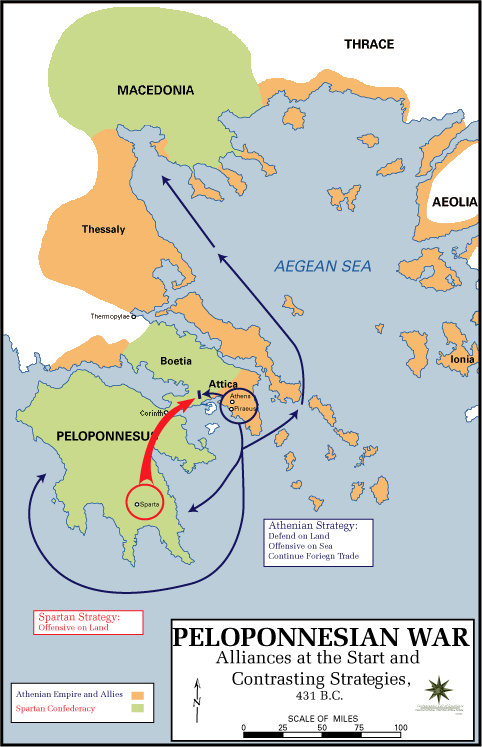
Since Decelea was first invested by the whole enemy army in that summer and later was held by the garrisons coming from different cities coming in turn to ravage the land, it was causing great harm to the Athenians. Indeed, this undermined Athenian affairs first by loss of property and then by the death of men.

Previous attacks were brief and did not keep the Athenians from deriving benefit from their land the rest of the time. But once they were continually invested in Attica and they were sometimes attacking in force and at other times using a single garrison attacking the country and pillaging to supply itself. The Spartan king Agis was also present and he was no slacker in prosecuting the war.

The Athenians were greatly harmed; they were deprived of their whole land. More than twenty thousand slaves freed themselves and a great number of these were craftspeople. All of the sheep and pack animals perished. And the Athenian horses, because the cavalry was deploying every day to attack Decelea and guard the land, either went lame because of working on rocky ground or they were wounded.

ἀφίκοντο δὲ καὶ Θρᾳκῶν τῶν μαχαιροφόρων τοῦ Διακοῦ γένους ἐς τὰς Ἀθήνας πελτασταὶ ἐν τῷ αὐτῷ θέρει τούτῳ τριακόσιοι καὶ χίλιοι, οὓς ἔδει τῷ Δημοσθένει ἐς τὴν Σικελίαν ξυμπλεῖν. [2] οἱ δ᾽ Ἀθηναῖοι, ὡς ὕστεροι ἧκον, διενοοῦντο αὐτοὺς πάλιν ὅθεν ἦλθον ἐς Θρᾴκην ἀποπέμπειν. τὸ γὰρ ἔχειν πρὸς τὸν ἐκ τῆς Δεκελείας πόλεμον αὐτοὺς πολυτελὲς ἐφαίνετο: δραχμὴν γὰρ τῆς ἡμέρας ἕκαστος ἐλάμβανεν. [3] ἐπειδὴ γὰρ ἡ Δεκέλεια τὸ μὲν πρῶτον ὑπὸ πάσης τῆς στρατιᾶς ἐν τῷ θέρει τούτῳ τειχισθεῖσα, ὕστερον δὲ φρουραῖς ἀπὸ τῶν πόλεων κατὰ διαδοχὴν χρόνου ἐπιούσαις τῇ χώρᾳ ἐπῳκεῖτο, πολλὰ ἔβλαπτε τοὺς Ἀθηναίους, καὶ ἐν τοῖς πρῶτον χρημάτων τ᾽ ὀλέθρῳ καὶ ἀνθρώπων φθορᾷ ἐκάκωσε τὰ πράγματα. [4] πρότερον μὲν γὰρ βραχεῖαι γιγνόμεναι αἱ ἐσβολαὶ τὸν ἄλλον χρόνον τῆς γῆς ἀπολαύειν οὐκ ἐκώλυον: τότε δὲ ξυνεχῶς ἐπικαθημένων, καὶ ὁτὲ μὲν καὶ πλεόνων ἐπιόντων, ὁτὲ δ᾽ ἐξ ἀνάγκης τῆς ἴσης φρουρᾶς καταθεούσης τε τὴν χώραν καὶ λῃστείας ποιουμένης, βασιλέως τε παρόντος τοῦ τῶν Λακεδαιμονίων Ἄγιδος, ὃς οὐκ ἐκ παρέργου τὸν πόλεμον ἐποιεῖτο, μεγάλα οἱ Ἀθηναῖοι ἐβλάπτοντο. [5] τῆς τε γὰρ χώρας ἁπάσης ἐστέρηντο, καὶ ἀνδραπόδων πλέον ἢ δύο μυριάδες ηὐτομολήκεσαν, καὶ τούτων τὸ πολὺ μέρος χειροτέχναι, πρόβατά τε πάντα ἀπωλώλει καὶ ὑποζύγια: ἵπποι τε, ὁσημέραι ἐξελαυνόντων τῶν ἱππέων πρός τε τὴν Δεκέλειαν καταδρομὰς ποιουμένων καὶ κατὰ τὴν χώραν φυλασσόντων, οἱ μὲν ἀπεχωλοῦντο ἐν γῇ ἀποκρότῳ τε καὶ ξυνεχῶς ταλαιπωροῦντες, οἱ δ᾽ ἐτιτρώσκοντο.

It would be edifying to write a history of the Peloponnesian War from the perspective of the slaves on either side. At the very least, a selection of all the passages which mentioned slavery and enslaved peoples would change the way we think of the war.

Note from Charles F. Smith on perseus.edu

πλέον  δύο μυριάδες : Boeckh, P. E. p. 55, reckons the number of slaves in Athens in the most flourishing period at 365,000, so that the number here given does not seem incredible.

From wikipedia


In Support of Killing Student Loans: Make Like Solon and Shake it Off

Suda, Sigma 289

“Seisakhtheia: Shaking off burdens. The abolition of public and private debts which Solon introduced. Its name comes from the Athenian habit of having the poor work with their bodies for their creditors. When they finished the debt it was like “shaking [aposeisasthai] off the burden” [akhthos]. For this situation, as Philokhoros sees it, the burden was really “voted off”.

Σεισάχθεια: χρεωκοπία δημοσίων καὶ ἰδιωτικῶν, ἣν εἰσηγήσατο Σόλων. εἴρηται δέ, παρ’ ὅσον ἔθος ἦν ᾿Αθήνησι τοὺς ὀφείλοντας τῶν πενήτων σώματι ἐργάζεσθαι τοῖς χρήσταις· ἀποδόντας δὲ οἱονεὶ τὸ ἄχθος ἀποσείσασθαι· ὡς Φιλοχόρῳ δὲ δοκεῖ, ἀποψηφισθῆναι τὸ ἄχθος.

Suda, Sigma 779

“Solon the law-giver of the Athenians, persuaded by friends who were in debt, introduced the cancellation of debts.”

Σόλων: ὅτι Σόλων ὁ νομοθέτης Ἀθηναίων, φίλων ἡττώμενος ὀφειλόντων, χρεῶν εἰσηγήσατο ἀποκοπάς.

File:Solon, the wise lawgiver of Athens.jpg - Wikimedia Commons

Diogenes Laertius, Lives of the Eminent Philosophers 1.2. 45

“Solon the son of Exekestides, born at Salamis, was the first to introduce the Abolition of Debts for the Athenians. This was a release of bodies and property. For people used to borrow money with their bodies as collateral and many were compelled to work as servants because of poverty. Indeed, he rejected a debt of seven talents due to him because of his father and advised the rest to do what he did. The law is called shaking-off-the-burden for obvious reasons.

Σόλων Ἐξηκεστίδου Σαλαμίνιος πρῶτον μὲν τὴν σεισάχθειαν εἰσηγήσατο Ἀθηναίοις· τὸ δὲ ἦν λύτρωσις σωμάτων τε καὶ κτημάτων. καὶ γὰρ ἐπὶ σώμασιν ἐδανείζοντο καὶ πολλοὶ δι᾿ ἀπορίαν ἐθήτευον. ἑπτὰ δὴ ταλάντων ὀφειλομένων αὐτῷ πατρῴων συνεχώρησε πρῶτος καὶ τοὺς λοιποὺς τὸ ὅμοιον προὔτρεψε πρᾶξαι. καὶ οὗτος ὁ νόμος ἐκλήθη σεισάχθεια· φανερὸν δὲ διὰ τί.

or, just collect the balance in hell

Valerius Maximus, Wondrous Deeds and Sayings 2.6.10

“This ancient custom of the Gauls returns to my mind as I leave their walls: The story goes that they used to loan money which was scheduled to be repaid in the underworld, because they considered human souls to be immortal. I would call them fools if they didn’t believe the same thing wearing pants as Pythagoras did wrapped in his cloak.”

Horum moenia egresso vetus ille mos Gallorum occurrit,quo[s] memoria proditum est pecunias mutuas, quae iis apud inferos redderentur, da<ri soli>tas,  quia persuasum habuerint animas hominum immortales esse. dicerem stultos, nisi idem bracati sensissent quod palliatus Pythagoras credidit.

Virgins and Heroic Bones: Some Responses to Plagues

Ps. Plutarch, Parallela Minora 35, 314C

“When the Spartans were suffering a plague, the god prophesied that they could stop it if they sacrificed a highborn virgin every year. Helen was then selected by lot. When she was being led forward all adorned for the purpose, an eagle flew down, stole away the sword, carried it to the cattle and dropped it on a heifer. For this reason, they stopped the practice of virgin sacrifice.

That’s the story Aristodemos tells in his third Collection of Myth.”

λοιμοῦ κατασχόντος Λακεδαίμονα, ἔχρησεν ὁ θεὸς παύσασθαι, ἐὰν παρθένον εὐγενῆ κατ᾽ ἔτος θύσωσιν. ῾Ελένης δέ ποτε κληρωθείσης καὶ προαχθείσης κεκοσμημένης, ἀετὸς καταπτὰς ἥρπασε τὸ ξίφος καὶ ἐς τὰ βουκόλια κομίσας ἐπὶ δάμαλιν κατέθηκεν· ὅθεν ἀπέσχοντο τῆς παρθενοκτονίας· ὡς ᾽Αριστόδημος ἐν τρίτηι Μυθικῆι Συναγωγῆι.


Schol. To Aristophanes’ Knights 84b

“When the Athenians were enduring a plague, the god prophesied to them that they should bring back the bones of Themistokles. After the Magnesians did not agree to this, the Athenians asked to spend thirty days sacrificing at his grave. Once they set up camp at the spot, they secretly dug up his bones and took them home.”

λοιμωξάντων δὲ ᾽Αθηναίων, ὁ θεὸς εἶπε μετάγειν τὰ ὀστᾶ Θεμιστοκλέους. Μαγνήτων δὲ μὴ συγχωρούντων ᾐτήσαντο ἐπὶ τριάκοντα ἡμέραις ἐναγίσαι τῷ τάφῳ, καὶ περισκηνώσαντες τὸ χωρίον λάθρα κομίζουσιν ἀνορύξαντες τὰ ὀστᾶ.

File:Themistocles Admetus.jpg

Cicero on the “Unforgettable Ides of March”

Cicero, Letters to Atticus (14.4) 10 April 44

“But should all these things befall us, the Ides of March may console. Our heroes too accomplished most gloriously and magnificently everything it was in their power to do. For the rest, we need money and troops, neither of which we have.”

Sed omnia licet concurrant, Idus Martiae consolantur. nostri autem ἥρωες quod per ipsos confici potuit gloriosissime et magnificentissime confecerunt; reliquae res opes et copias desiderant, quas nullas habemus


Cicero, Letters to Brutus  I.15 (23) 14 July 43

“Therefore, come here, by the gods, as fast as possible; Convince yourself that it would do your country no greater good if you come quickly than you did on the Ides of March when you freed your fellow citizens from slavery.”

subveni igitur, per deos, idque quam primum, tibique persuade non te Idibus Martiis, quibus servitutem a tuis civibus depulisti, plus profuisse patriae quam, si mature veneris, profuturum.


Cicero, Letters to Brutus, 1.15 (23) July 43

“After the death of Caesar and your unforgettable Ides of March, Brutus, you will not have lost sight of the the fact that I said that one thing was overlooked by you—how much a storm loomed over the Republic. The greatest disease was warded off thanks to you—a great blight was cleansed from the Roman people—and you won immortal fame for your part. But the mechanism of monarchy fell then to Lepidus and Antonius—one of whom is more erratic, while the other is rather unclean—both fearing peace and ill-fit to idle time.”

Post interitum Caesaris et vestras memorabilis Idus Martias, Brute, quid ego praetermissum a vobis quantamque impendere rei publicae tempestatem dixerim non es oblitus. magna pestis erat depulsa per vos, magna populi Romani macula deleta, vobis vero parta divina gloria, sed instrumentum regni delatum ad Lepidum et Antonium, quorum alter inconstantior, alter impurior, uterque pacem metuens, inimicus otio.

Image result for Ancient Roman death of caesar
The death of Julius Caesar in the Roman Senate by Vincenzo Camuccini


“If it is a girl…”: A Letter about Child Exposure

This letter contains a reference to disposing of a female infant. 

P. Oxy. 120 (1st Century BCE) From Hilarion to Alis

“Hilarion sends sends many, many greetings to his sister along with my lady Berous and Apollonarion. Listen, we are still in Alexandria. Don’t worry about this—if they go home completely, I will stay in Alexandria. I am asking you and begging you to take care of the little child and when we are paid, I will send it to you right away. If you happen to be pregnant again, if it is a boy, leave it; if it is a girl, throw it out.

You have told Aphrodisias “don’t forget me.” How could I possibly forget you? Please, do not be worried….”

Ἱλαρίων{α} Ἄλιτι τῆι ἀδελφῇ πλεῖστα χαίρειν καὶ Βεροῦτι τῇ κυρίᾳ μου καὶ Ἀπολλωνάριν. γίνωσκε ὡς ἔτι καὶ νῦν ἐν Ἀλεξανδρέᾳ ᾿σμεν. μὴ ἀγωνιᾷς· ἐὰν ὅλως εἰσπορεύονται, ἐγὼ ἐν Ἀλεξανδρέᾳ μενῶ. ἐρωτῶ σε καὶ παρακαλῶ σε, ἐπιμελήθ<ητ>ι τῷ παιδίῳ καὶ ἐὰν εὐθὺς ὀψώνιον λάβωμεν ἀποστελῶ σε ἄνω. ἐὰν πολλὰ πολλῶν τέκῃς, ἐὰν ᾖ{ν} ἄρσενον, ἄφες, ἐὰν ᾖ{ν} θήλεα, ἔκβαλε. εἴρηκας δὲ Ἀφροδισιᾶτι ὅτι μή με ἐπιλάθῃς. πῶς δύναμαί σε ἐπιλαθεῖν; ἐρωτῶ σε οὖν ἵνα μὴ ἀγωνιάσῃς.

Image result for medieval manuscript childbirth
Walters Art Museum Illuminated Manuscripts · Osée et Gomer. Birth of Yizréel Cote : Français 10 , Fol. 444 Guiard

An Eyewitness to Useless Prayers

Thucydides 2.47-48

“And when they were in Attica for not very many days the disease first began to develop among the Athenians. It had allegedly emerged in many places before, especially around Lemnos and in other places. But so great a plague with such a high human mortality rate was not recorded as happening anywhere else. For the doctors were of no use at the beginning as caregivers because of ignorance, and they were dying especially because they were attending to sick people the most. And there was no other mortal means to approach it.

All the prayers in the temples and at oracles and those kinds of places amounted to nothing right up to the point they people stopped even trying them because they were overcome by the suffering.

The story goes that the sickness started in the part of Ethiopia above Egypt and then it moved to Egypt and Libya and then over most of the King’s land. When it suddenly fell on Athens, it afflicted people in the Piraeus first and it was there that it was said that the Peloponnesians must be throwing drugs into the cisterns, since there were no streams there. Later it spread to the higher part of the city where many more people begin to die.

Let each person who understands something about this, whether a doctor or a private citizen, speak about what its likely origin was and whatever causes he believes likely of such a great change. I will only say what kind of a disease it was and how someone might recognize it and be able not to be ignorant about it if it should appear again. I will describe it clearly because I was sick myself and I watched others suffering from it too.”

3] καὶ ὄντων αὐτῶν οὐ πολλάς πω ἡμέρας ἐν τῇ Ἀττικῇ ἡ νόσος πρῶτον ἤρξατο γενέσθαι τοῖς Ἀθηναίοις, λεγόμενον μὲν καὶ πρότερον πολλαχόσε ἐγκατασκῆψαι καὶ περὶ Λῆμνον καὶ ἐν ἄλλοις χωρίοις, οὐ μέντοι τοσοῦτός γε λοιμὸς οὐδὲ φθορὰ οὕτως ἀνθρώπων οὐδαμοῦ ἐμνημονεύετο γενέσθαι. [4] οὔτε γὰρ ἰατροὶ ἤρκουν τὸ πρῶτον θεραπεύοντες ἀγνοίᾳ, ἀλλ᾽ αὐτοὶ μάλιστα ἔθνῃσκον ὅσῳ καὶ μάλιστα προσῇσαν, οὔτε ἄλλη ἀνθρωπεία τέχνη οὐδεμία: ὅσα τε πρὸς ἱεροῖς ἱκέτευσαν ἢ μαντείοις καὶ τοῖς τοιούτοις ἐχρήσαντο, πάντα ἀνωφελῆ ἦν, τελευτῶντές τε αὐτῶν ἀπέστησαν ὑπὸ τοῦ κακοῦ νικώμενοι.

  1. ἤρξατο δὲ τὸ μὲν πρῶτον, ὡς λέγεται, ἐξ Αἰθιοπίας τῆς ὑπὲρ Αἰγύπτου, ἔπειτα δὲ καὶ ἐς Αἴγυπτον καὶ Λιβύην κατέβη καὶ ἐς τὴν βασιλέως γῆν τὴν πολλήν. [2] ἐς δὲ τὴν Ἀθηναίων πόλιν ἐξαπιναίως ἐσέπεσε, καὶ τὸ πρῶτον ἐν τῷ Πειραιεῖ ἥψατο τῶν ἀνθρώπων, ὥστε καὶ ἐλέχθη ὑπ᾽ αὐτῶν ὡς οἱ Πελοποννήσιοι φάρμακα ἐσβεβλήκοιεν ἐς τὰ φρέατα: κρῆναι γὰρ οὔπω ἦσαν αὐτόθι. ὕστερον δὲ καὶ ἐς τὴν ἄνω πόλιν ἀφίκετο, καὶ ἔθνῃσκον πολλῷ μᾶλλον ἤδη. [3] λεγέτω μὲν οὖν περὶ αὐτοῦ ὡς ἕκαστος γιγνώσκει καὶ ἰατρὸς καὶ ἰδιώτης, ἀφ᾽ ὅτου εἰκὸς ἦν γενέσθαι αὐτό, καὶ τὰς αἰτίας ἅστινας νομίζει τοσαύτης μεταβολῆς ἱκανὰς εἶναι δύναμιν ἐς τὸ μεταστῆσαι σχεῖν: ἐγὼ δὲ οἷόν τε ἐγίγνετο λέξω, καὶ ἀφ᾽ ὧν ἄν τις σκοπῶν, εἴ ποτε καὶ αὖθις ἐπιπέσοι, μάλιστ᾽ ἂν ἔχοι τι προειδὼς μὴ ἀγνοεῖν, ταῦτα δηλώσω αὐτός τε νοσήσας καὶ αὐτὸς ἰδὼν ἄλλους πάσχοντας.
The Plague of AthensMichiel Sweerts, c. 1652–1654