“Beware the many, if you do not fear the one”

From the Historia Augusta, on the two Maximini, IX

“In order to hide his low birth, he had everyone who knew about it killed—not a few of them were friends who had often given him much because of his pitiable poverty. And there was never a crueler animal on the earth, placing all in his strength as if he could not be killed. Finally, when he believed that he was nearly immortal because of the magnitude of his body and bravery, there was a certain actor whom they report recited some Greek lines when he was present in the theater which had this Latin translation:

Even he who cannot be killed by one is killed by many
The elephant is large and he is killed.
The lion is brave and he is killed
The tiger is brave and he is killed.
Beware the many if you do not fear the one.

And these words were recited while the emperor was there. But when he asked his friends what the little clown had said, they claimed he was singing some old lines written against mean men. And, since he was Thracian and barbarian, he believed this.”

IX. nam ignobilitatis tegendae causa omnes conscios generis sui interemit, nonnullos etiam amicos, qui ei saepe misericordiae paupertatis causa pleraque donaverant. neque enim fuit crudelius animal in terris, omnia sic in viribus suis ponens quasi non posset occidi. denique cum immortalem se prope crederet ob magnitudinem corporis virtutisque, mimus quidam in theatro praesente illo dicitur versus Graecos dixisse, quorum haec erat Latina sententia:

“Et qui ab uno non potest occidi, a multis occiditur.

elephans grandis est et occiditur,
leo fortis est et occiditur,
tigris fortis est et occiditur;
cave multos, si singulos non times.”

et haec imperatore ipso praesente iam dicta sunt. sed cum interrogaret amicos, quid mimicus scurra dixisset, dictum est ei quod antiquos versus cantaret contra homines asperos scriptos; et ille, ut erat Thrax et barbarus, credidit.


Image result for maximinus thrax
I am big. Really big. Everyone is saying that, not me. I mean, look how big I am.

On Revolution and Forgetting

Thucydides, 4.74

“Later, when the allies were released to their cities [Brasidas] also returned and went to Corinth where he was preparing an attack on Thrace, the very place where he was heading first. After the Athenians returned home, those in the city from Megara–however many were especially involved with matters pertaining to the Athenians–departed immediately because they knew they had been discovered. The rest conversed with the friends of exiles and returned those from Pegae after they made them swear with great oaths that they would take no action on previous actions [mnêsikakêsein] but would instead consider what was best for the city.

But, when they took up positions in office and made a review of the hoplites, once they separated the units and chose out around one hundred of their enemies and those who seemed to be most implicated in overtures to the Athenians and they forced the people to vote openly about them, they killed them and established an oligarchy in the city. This change, even though it was achieved by the smallest number during the civil strife, lasted the longest amount of time.”

καὶ ὕστερον ὁ μὲν διαλυθέντων τῶν ξυμμάχων κατὰ πόλεις ἐπανελθὼν καὶ αὐτὸς ἐς τὴν Κόρινθοντὴν ἐπὶ Θρᾴκης στρατείαν παρεσκεύαζεν, ἵνα περ καὶ τὸ πρῶτον ὥρμητο: [2] οἱ δὲ ἐν τῇ πόλει Μεγαρῆς, ἀποχωρησάντων καὶ τῶν Ἀθηναίων ἐπ᾽ οἴκου, ὅσοι μὲν τῶν πραγμάτων πρὸς τοὺς Ἀθηναίους μάλιστα μετέσχον, εἰδότες ὅτι ὤφθησαν εὐθὺς ὑπεξῆλθον, οἱ δὲ ἄλλοι κοινολογησάμενοι τοῖς τῶν φευγόντων φίλοις κατάγουσι τοὺς ἐκ Πηγῶν, ὁρκώσαντες πίστεσι μεγάλαις μηδὲν μνησικακήσειν, βουλεύσειν δὲ τῇ πόλει τὰ ἄριστα. [3] οἱ δὲ ἐπειδὴ ἐν ταῖς ἀρχαῖς ἐγένοντο καὶ ἐξέτασιν ὅπλων ἐποιήσαντο, διαστήσαντες τοὺς λόχους ἐξελέξαντο τῶν τε ἐχθρῶν καὶ οἳ ἐδόκουν μάλιστα ξυμπρᾶξαι τὰ πρὸς τοὺς Ἀθηναίους ἄνδρας ὡς ἑκατόν, καὶ τούτων πέρι ἀναγκάσαντες τὸν δῆμον ψῆφον φανερὰν διενεγκεῖν, ὡς κατεγνώσθησαν, ἔκτειναν, καὶ ἐς ὀλιγαρχίαν τὰ μάλιστα κατέστησαν τὴν πόλιν. [4] καὶ πλεῖστον δὴ χρόνον αὕτη ὑπ᾽ ἐλαχίστων γενομένη ἐκ στάσεως μετάστασις ξυνέμεινεν.

Thucydides, 8.73.5

“Some listened to the soldiers individually and appealed for them not to intervene, not the least the Paralii, all Athenians and free men who were sailing in their ship and always prepared to set upon the Oligarchy, even if it did not exist. Both Leôn and Diomedôn left some ships as guards for them whenever they were sailing elsewhere. Thus, when the three hundred were ready to attack, all of these went to help, but especially the Parali, and the majority Samian party prevailed. They killed thirty of the three hundred and then punished the three most responsible with exile. Because they would not hold a grudge [mnêsikakountes] against the rest, they lived together as a democracy for the remaining time.”

 οἱ δὲ ἀκούσαντες τῶν τε στρατιωτῶν ἕνα ἕκαστον μετῇσαν μὴ ἐπιτρέπειν, καὶ οὐχ ἥκιστα τοὺς Παράλους, ἄνδρας Ἀθηναίους τε καὶ ἐλευθέρους πάντας ἐν τῇ νηὶ πλέοντας καὶ αἰεὶ δήποτε ὀλιγαρχίᾳ καὶ μὴ παρούσῃ ἐπικειμένους: ὅ τε Λέων καὶ ὁ Διομέδων αὐτοῖς ναῦς τινάς, ὁπότε ποι πλέοιεν, κατέλειπον φύλακας.[6] ὥστε ἐπειδὴ αὐτοῖς ἐπετίθεντο οἱ τριακόσιοι, βοηθησάντων πάντων τούτων, μάλιστα δὲ τῶν Παράλων, περιεγένοντο οἱ τῶν Σαμίων πλέονες, καὶ τριάκοντα μέν τινας ἀπέκτειναν τῶν τριακοσίων, τρεῖς δὲ τοὺς αἰτιωτάτους φυγῇ ἐζημίωσαν: τοῖς δ᾽ ἄλλοις οὐ μνησικακοῦντες δημοκρατούμενοι τὸ λοιπὸν ξυνεπολίτευον.

Compare to Thucydides, 3.82.7-8:

“To exact vengeance from someone was thought to be more important than not suffering at all.  If oaths were ever taken in turn, they were strong because each person was at a loss and had no power at all. But as soon as one of them had the advantage, he attacked if he saw anyone unguarded: it was sweeter to take vengeance despite a pledge than to do so openly. It was thought generally to be safe and to have won a prize for intelligence, prevailing by deceit. Many [more] wicked people become famous for being clever than good people do for being ingenuous. We are ashamed by the latter but delight in the former.

To blame for all of these things is the love of power and a love of honor. From both, they fell into a voluntary love of conflict. For those who were in charge of the state each claimed identities for themselves, some the equal rights of the masses, the others the wisdom of the aristocrats; while guarding the common goods in word, they were making them the contest’s prize, competing with one another to be pre-eminent, they dared the most terrible things—and they surpassed them with greater acts of vengeance too. They did not regard either justice or advantage for the city…”

ἀντιτιμωρήσασθαί τέ τινα περὶ πλείονος ἦν ἢ αὐτὸν μὴ προπαθεῖν. καὶ ὅρκοι εἴ που  ἄρα γένοιντο ξυναλλαγῆς, ἐν τῷ αὐτίκα πρὸς τὸ ἄπορον ἑκατέρῳ διδόμενοι ἴσχυον οὐκ ἐχόντων ἄλλοθεν δύναμιν· ἐν δὲ τῷ παρατυχόντι ὁ φθάσας θαρσῆσαι, εἰ ἴδοι ἄφαρκτον, ἥδιον διὰ τὴν πίστιν ἐτιμωρεῖτο ἢ ἀπὸ τοῦ προφανοῦς, καὶ τό τε ἀσφαλὲς ἐλογίζετο καὶ ὅτι ἀπάτῃ περιγενόμενος ξυνέσεως ἀγώνισμα προσελάμβανεν. ῥᾷον δ’ οἱ πολλοὶ κακοῦργοι ὄντες δεξιοὶ κέκληνται ἢ ἀμαθεῖς ἀγαθοί, καὶ τῷ μὲν αἰσχύνονται, ἐπὶ δὲ τῷ ἀγάλλονται. πάντων δ’ αὐτῶν αἴτιον ἀρχὴ ἡ διὰ πλεονεξίαν καὶ φιλοτιμίαν· ἐκ δ’ αὐτῶν καὶ ἐς τὸ φιλονικεῖν καθισταμένων τὸ πρόθυμον. οἱ γὰρ ἐν ταῖς πόλεσι προστάντες μετὰ ὀνόματος ἑκάτεροι εὐπρεποῦς, πλήθους τε ἰσονομίας πολιτικῆς καὶ ἀριστοκρατίας σώφρονος προτιμήσει, τὰ μὲν κοινὰ λόγῳ θεραπεύοντες ἆθλα ἐποιοῦντο, παντὶ δὲ τρόπῳ ἀγωνιζόμενοι ἀλλήλων περιγίγνεσθαι ἐτόλμησάν τε τὰ δεινότατα ἐπεξῇσάν τε τὰς τιμωρίας ἔτι μείζους…

Photius

Mnêsikakein: “to make a reminder of evil deeds”

Μνησικακεῖν: τὸ ὑπομιμνήσκεσθαι τῶν κακῶν.

Aeschines 2.176

“Even though we had it going so well, we waged war against the Spartans again because we were persuaded by the Argives. Eventually, thanks to the war-lust of our politicians, we lost and ended up with a garrison in the city along with the four-hundred and the unholy thirty. We did not make peace, but we were forced by commands. But when we were governed sensibly again and the democracy returned from Phyle—and Arkhinos and Thrasuboulos were leading—they established for us the oath of not holding grudges [to mê mnêsikakein], a thing for which all people judged our city most wise.

From this, the democracy was revived and strong from its foundation. But now people who have been enrolled as citizens against the law and are always attracted to any sickness of the city are pursuing war after war as a political platform. Yet, while they see terrible things in peace and incite our covetous and excessively violent minds, nevertheless they never touch weapons during times of war. No, once they become secretaries and cabinet members—these children of prostitutes, rightfully stripped of their rights for their slander—these men pilot the state into the most extreme dangers. They minister to the name of democracy not with their behavior but with their flattery even as they annihilate peace. Democracy is preserved by peace; they struggle to find wars which bring about democracy’s end.”

καὶ τοσαῦτ᾽ ἔχοντες τἀγαθά, πάλιν πόλεμον πρὸς Λακεδαιμονίους ἐξηνέγκαμεν πεισθέντες ὑπ᾽ Ἀργείων, καὶ τελευτῶντες ἐκ τῆς τῶν ῥητόρων ἁψιμαχίας εἰς φρουρὰν τῆς πόλεως καὶ τοὺς τετρακοσίους καὶ τοὺς ἀσεβεῖς τριάκοντα ἐνεπέσομεν, οὐκ εἰρήνην ποιησάμενοι, ἀλλ᾽ ἐκ προσταγμάτων ἠναγκασμένοι. πάλιν δὲ σωφρόνως πολιτευθέντες, καὶ τοῦ δήμου κατελθόντος ἀπὸ Φυλῆς, Ἀρχίνου καὶ Θρασυβούλου προστάντων τοῦ δήμου, καὶ τὸ μὴ μνησικακεῖν πρὸς ἀλλήλους ἔνορκον ἡμῖν καταστησάντων, ὅθεν σοφωτάτην ἅπαντες τὴν πόλιν ἡγήσαντο εἶναι, κἀνταῦθα ἀναφύντος τοῦ δήμου καὶ πάλιν ἐξ ἀρχῆς ἰσχύσαντος, ἄνθρωποι παρέγγραπτοι γεγενημένοι πολῖται, καὶ τὸ νοσοῦν τῆς πόλεως ἀεὶ προσαγόμενοι, καὶ πόλεμον ἐκ πολέμου πολιτευόμενοι, ἐν μὲν εἰρήνῃ τὰ δεινὰ τῷ λόγῳ προορώμενοι, καὶ τὰς ψυχὰς τὰς φιλοτίμους καὶ λίαν ὀξείας ἐρεθίζοντες, ἐν δὲ τοῖς πολέμοις ὅπλων οὐχ ἁπτόμενοι, ἐξετασταὶ δὲ καὶ ἀποστολεῖς γιγνόμενοι, παιδοποιούμενοι δὲ ἐξ ἑταιρῶν, ἄτιμοι δ᾽ ἐκ συκοφαντίας, εἰς τοὺς ἐσχάτους κινδύνους τὴν πόλιν καθιστᾶσι, τὸ μὲν τῆς δημοκρατίας ὄνομα οὐ τοῖς ἤθεσιν, ἀλλὰ τῇ κολακείᾳ θεραπεύοντες, καταλύοντες δὲ τὴν εἰρήνην, ἐξ ἧς ἡ δημοκρατία σῴζεται, συναγωνιζόμενοι δὲ τοῖς πολέμοις, ἐξ ὧν ὁ δῆμος καταλύεται.

Aeschines 3.208

“Indeed, whenever he says these sorts of things against arguments for specific factions, propose this in return: “Demosthenes, if the people who restored the democracy in exile from Phyle were similar to you, the democracy would never have been re-established. But now they saved the city from great calamities and uttered that finest speech of a cultured mind: “Don’t hold a grudge” [mnêsikakein]” But you rip open wounds: today’s speech matters more to you than the safety of the state.”

But when an oathbreaker takes flight in the faith you put in oaths, mention this to him, that when someone frequently breaks an oath but is always thinking it necessary to procure trust with oaths, one of two options remain to him. Either, he swears by new gods or he finds audiences that are different.”

ὅταν δὴ τὰ τοιαῦτα λέγῃ, πρὸς μὲν τοὺς στασιαστικοὺς λόγους ἐκεῖνο αὐτῷ ὑποβάλλετε: ‘ὦ Δημόσθενες, εἰ ὅμοιοι ἦσαν σοὶ οἱ ἀπὸ Φυλῆς φεύγοντα τὸν δῆμον καταγαγόντες, οὐκ ἄν ποθ᾽ ἡ δημοκρατία κατέστη. νῦν δὲ ἐκεῖνοι μὲν μεγάλων κακῶν συμβάντων ἔσωσαν τὴν πόλιν τὸ κάλλιστον ἐκ παιδείας ῥῆμα φθεγξάμενοι, ‘μὴ μνησικακεῖν’: σὺ δὲ ἑλκοποιεῖς, καὶ μᾶλλόν σοι μέλει τῶν αὐθημερὸν λόγων, ἢ τῆς σωτηρίας τῆς πόλεως.’

ὅταν δ᾽ ἐπίορκος ὢν εἰς τὴν τῶν ὅρκων πίστιν καταφυγγάνῃ, ἐκεῖνο ἀπομνημονεύσατε αὐτῷ, ὅτι τῷ πολλάκις μὲν ἐπιορκοῦντι, ἀεὶ δὲ  μεθ᾽ ὅρκων ἀξιοῦντι πιστεύεσθαι, δυοῖν θάτερον ὑπάρξαι δεῖ,  ἢ τοὺς θεοὺς καινούς, ἢ τοὺς ἀκροατὰς μὴ τοὺς αὐτούς.


Image result for ancient greek war vase

The Greatest Achievement: To Consider Nothing a Sin….

Livy, Ab Urbe Condita 39.8

“Then Hispala divulged the origin of the rituals. First, in the beginning, the shrine was the province of women and no man was permitted to enter. They kept three days set apart in a year when people could be admitted into Bacchic rites during the day. Married women were typically made the priests in turn.

Paculla Annia, priestess from Campania, changed everything at an alleged indication from the gods. For she also initiated men, her own sons, Minius and Herrenius Cerrinius, into the rites and turned it into a nighttime ritual instead of a day one, substituting five days of rituals in a single month for three in a whole year.

Since the time when the rituals were mixed in this way with men and women together and the rituals happening at night, no kind of crime or vice has been omitted from them. There were more rapes of men committed against other men than women. And those who were less eager for assault or rather sluggish to commit crimes, were offered up in the place of sacrificial animals.

To consider nothing a sin, this was the greatest achievement of religion among them. Men who seemed like they were out of their mind would provide prophecies by madly shaking their bodies. Married women in a Bacchant’s dress and with hair untied would run to the Tiber with burning torches in their hands and when they immersed them in the water they would come out still burning because of the treatment of sulfur and calcium upon them.”

Tum Hispala originem sacrorum expromit. primo sacrarium id feminarum fuisse, nec quemquam eo virum admitti solitum; tres in anno dies statos habuisse, quibus interdiu Bacchis initiarentur; sacerdotes in vicem matronas creari solitas. Pacullam Anniam Campanam sacerdotem omnia, tamquam deum monitu, immutasse: nam et viros eam primam filios suos initiasse, Minium et Herennium Cerrinios; et nocturnum sacrum ex diurno, et pro tribus in anno diebus quinos singulis mensibus dies initiorum fecisse. ex quo in promiscuo sacra sint et permixti viri feminis, et noctis licentia accesserit, nihil ibi facinoris nihil flagitii praetermissum. plura virorum inter sese quam feminarum stupra esse. si qui minus patientes dedecoris sint et pigriores ad facinus, pro victimis immolari. nihil nefas ducere, hanc summam inter eos religionem esse. viros, velut mente capta, cum iactatione fanatica corporis vaticinari; matronas Baccharum habitu crinibus passis cum ardentibus facibus decurrere ad Tiberim, demissasque in aquam faces, quia vivum sulpur cum calce insit, integra flamma efferre.

3rd Century AD Sarcophagus, Dionysus

Some Ancient Manners: When In Another’s House….

Historia Augusta, Antonius Pius XII

“When he was seeking honors for himself and his sons he conducted everything as if he were a private citizen. He often even attended the dinners of his own friends himself. Among other stories, this is a special indication of his urbanity.

Once when he was visiting the home of Homullus and was admiring some columns decorated with porphyry, he asked where they were from. When Homullus said to him, “when you are in another’s house, you should be deaf and dumb,” he took this in good humor. He always took the many jokes of Homullus with good humor.”

cum sibi et filiishonores peteret, omnia quasi privatus fecit. Frequentavit et ipse amicοrum suorum convivia. interalia etiam hoc civilitatis eius praecipuum argumentum est quod, cum domum Homulli visens miransque columnas porphyreticas requisisset, unde eas haberet, atque Homullus ei dixisset, “cum in domum alienam veneris, et mutus et surdus esto,” patienter tulit. cuius Homulli multa ioca semper patienter accepit.

Image result for Antoninus Pius
So Pius, so very, very Pius

“Give the Child a Book and Order Them to Read”

Polybius, Histories 10.47 7-12

“There are many other examples which provide proof for this, but the clearest one of all is that from reading. In this case, if someone sets a person who is illiterate and unaccustomed to reading but not a fool and then place next to him a child who can read, give the child a book and order them to read what is written, it is clear that the man would not be able to believe that while reading one must first understand the image of each letter, then the value of its sound, and then the possible combinations with other letters, all things that require a great deal of time.

When he sees the child reading without pausing seven or five lines, he will not easily be able to believe that the child has not read the book before. He will straight out deny it if the reader observes the rhythm, the pauses, the rough breathings and the smooth breathings too. We should not bar for ourselves, then, anything which is useful because it appears to be difficult at first. No, we must use the force of habit, the means by which humans achieve all good things and even more so when it concerns the matters upon which our very safety depends.”

τοῦ δὲ τοιούτου λόγου παραδείγματα μὲν πολλὰ καὶ ἕτερα πρὸς πίστιν, ἐναργέστατον δὲ τὸ γινόμενον ἐπὶ τῆς ἀναγνώσεως. ἐπὶ γὰρ ἐκείνης, εἴ τις παραστησάμενος ἄνθρωπον ἄπειρον μὲν καὶ ἀσυνήθη γραμματικῆς, τἄλλα δ᾿ ἀγχίνουν, κἄπειτα παιδάριον ἕξιν ἔχον παραστήσας καὶ δοὺς βυβλίον κελεύοι λέγειν τὰ γεγραμμένα, δῆλον ὡς οὐκ ἂν δύναιτο πιστεῦσαι διότι <δεῖ> πρῶτον ἐπὶ τὰς ὄψεις τὰς ἑνὸς ἑκάστου τῶν γραμμάτων ἐπιστῆσαι τὸν ἀναγινώσκοντα, δεύτερον ἐπὶ τὰς δυνάμεις, τρίτον ἐπὶ τὰς πρὸς ἄλληλα συμπλοκάς, ὧν ἕκαστον ποσοῦ χρόνου τινὸς δεῖται.διόπερ ὅταν ἀνεπιστάτως θεωρῇ τὸ παιδάριον ὑπὸ τὴν ἀναπνοὴν ἑπτὰ καὶ πέντε στίχους συνεῖρον, οὐκ ἂν εὐχερῶς δύναιτο πιστεῦσαι διότι πρότερον οὗτος οὐκ ἀνέγνωκε τὸ βυβλίον· εἰ δὲ καὶ τὴν ὑπόκρισιν καὶ τὰς διαιρέσεις, ἔτι δὲ δασύτητας καὶ ψιλότητας δύναιτο συσσῴζειν, οὐδὲ τελέως. διόπερ οὐκ ἀποστατέον οὐδενὸς τῶν χρησίμων διὰ τὰς προφαινομένας δυσχερείας, προσακτέον δὲ τὴν ἕξιν, ᾗ πάντα τὰ καλὰ γίνεται θηρατὰ τοῖς ἀνθρώποις, ἄλλως τε καὶ περὶ τῶν τοιούτων, ἐν οἷς πολλάκις κεῖται τὸ συνέχον τῆς σωτηρίας.

Image result for ancient greek child reading

No One Uses Thucydides As A Model

Cicero, Orat. 9.30-32

“Thucydides, however, tells of history, wars and battles, in a noble and strong way, but nothing he writes can be transferred to forensic or political use. Those well-known speeches have so many unclear and odd phrases that they barely make sense, something which is probably the worst offense in public address.

Do humans possess so much perversity that we will eat acorns after grains have been discovered? Is it possible that the human diet could be changed thanks to Athenian invention but not oratory? Who of the Greek orators, moreover, ever used Thucydides’ work as a model? Surely, he’s praised by everyone. I concede this. But he is praised as a wise explainer of events, a no-nonsense, serious man of the kind who did not pursue cases in court but described battles in history. For this reason, he has never been counted as an orator and would not, indeed, have gained any fame if he had not written history, even though he was noble and elected to office.

Still, no one can really imitate the weight of his words and ideas—but when some people articulate a few broken and unrelated statements, which they could have done even without a teacher, they imagine themselves to be a new-born Thucydides.”

Thucydides autem res gestas et bella narrat et proelia, graviter sane et probe, sed nihil ab eo transferri potest ad forensem usum et publicum. Ipsae illae contiones ita multas habent obscuras abditasque sententias vix ut intellegantur; quod est in oratione civili vitium vel maximum. Quae est autem in hominibus tanta perversitas, ut inventis frugibus glande vescantur? An victus hominum Atheniensium beneficio excoli potuit, oratio non potuit? Quis porro unquam Graecorum rhetorum a Thucydide quicquam duxit? At laudatus est ab omnibus. Fateor; sed ita ut rerum explicator prudens, severus, gravis, non ut in iudiciis versaret causas, sed ut in historiis bella narraret. Itaque nunquam est numeratus orator, nec vero, si historiam non scripsisset, nomen eius exstaret, cum praesertim fuisset honoratus et nobilis. Huius tamen nemo neque verborum neque sententiarum gravitatem imitatur, sed cum mutila quaedam et hiantia locuti sunt, quae vel sine magistro facere potuerunt, germanos se putant esse Thucydidas.

Image result for cicero

The Strong and the Weak: Reading Some Thucydides

“These well-known speeches have so many unclear and odd phrases that they barely make sense….”

Ipsae illae contiones ita multas habent obscuras abditasque sententias vix ut intellegantur– Cicero, Orator 9.31

“One could easily count the number of people who are able to understand all of Thucydides, and even these people need to rely on a commentary from time to time.”

εὐαρίθμητοι γάρ τινές εἰσιν οἷοι πάντα τὰ Θουκυδίδου συμβαλεῖν, καὶ οὐδ’ οὗτοι χωρὶς ἐξηγήσεως γραμματικῆς ἔνια –Dionysius of Halicarnassus, On Thucydides 51:

Recently, my friend Mimi Kramer (@nhmeems) was asking about a pretty famous line from the Melian Dialogue. I looked it up and then my brain started hurting. I went to sleep, and looked again. Here are the Athenians speaking to the Melians:

Thucydides, 5.89

“Now, we ourselves will not provide a discreditable length of arguments with noble words that we rule justly because we threw off the Persians or that we are attacking now because we were done wrong by you; nor do we think that you should think you are able to persuade us by claiming either that you did not campaign with the Lakedaimonians when you are their allies or that you did us no harm. No, we each should say what we think is possible to accomplish in truth, because we know that what is just is judged in human reasoning from equal compulsion: those who are in power do what they can and those who are weak allow it.”

ἡμεῖς τοίνυν οὔτε αὐτοὶ μετ᾽ ὀνομάτων καλῶν, ὡς ἢ δικαίως τὸν Μῆδον καταλύσαντες ἄρχομεν ἢ ἀδικούμενοι νῦν ἐπεξερχόμεθα, λόγων μῆκος ἄπιστον παρέξομεν, οὔθ᾽ ὑμᾶς ἀξιοῦμεν ἢ ὅτι Λακεδαιμονίων ἄποικοι ὄντες οὐ ξυνεστρατεύσατε ἢ ὡς ἡμᾶς οὐδὲν ἠδικήκατε λέγοντας οἴεσθαι πείσειν, τὰ δυνατὰ δ᾽ ἐξ ὧν ἑκάτεροι ἀληθῶς φρονοῦμεν διαπράσσεσθαι, ἐπισταμένους πρὸς εἰδότας ὅτι δίκαια μὲν ἐν τῷ ἀνθρωπείῳ λόγῳ ἀπὸ τῆς ἴσης ἀνάγκης κρίνεται, δυνατὰ δὲ οἱ προύχοντες πράσσουσι καὶ οἱ ἀσθενεῖς ξυγχωροῦσιν.

Here are some translations of the last few phrases:

Rex Warner: “the strong do what they have the power to do and the weak accept what they have to accept”.

Benjamin Jowett: “the powerful exact what they can, and the weak grant what they must”.

Thomas Hobbes “They that have odds of power exact as much as they can, and the weak yield to such conditions as they can get”

The recent translation below, to my taste, does a much better job of not forcing a parallelism into the objects of the last two phrases

Johanna Hanink (How to Think about War, 2019: 169): “We need to accomplish what we can on the basis of what we really think, each side fully aware that justice is only a factor in human decisions when the parties are on equal footing. Those in positions of power do what their power permits, while the weak have no choice but to accept it.”

The last phrases cause some fits because there is no clear object for the verb ξυγχωροῦσιν. Warner, Jowett, and Hobbes seem to have taken δυνατὰ with both πράσσουσι and ξυγχωροῦσιν. While Greek (and Thucydides) is certainly capable of implying this, I think Hanink’s translation is much better for this.

When I try to teach Greek prose analysis to students, I do what I learned from Hardy Hansen (yes, the Hardy Hansen): Kola kai kommata! Break the sentences into levels of subordination and try to find the rhythm and parallels. This speech is actually kind of simple on a structural level (for Thucydides). What makes it bedeviling are some of the individual phrases. I have moved a few phrases to show how the sense works:

ἡμεῖς τοίνυν οὔτε αὐτοὶ μετ᾽ ὀνομάτων καλῶν [λόγων μῆκος ἄπιστον παρέξομεν]

ὡς ἢ δικαίως τὸν Μῆδον καταλύσαντες ἄρχομεν

ἀδικούμενοι νῦν ἐπεξερχόμεθα,

οὔθ᾽ ὑμᾶς ἀξιοῦμεν [λέγοντας οἴεσθαι πείσειν]

ἢ ὅτι Λακεδαιμονίων ἄποικοι ὄντες οὐ ξυνεστρατεύσατε

ἢ ὡς ἡμᾶς οὐδὲν ἠδικήκατε

τὰ δυνατὰ δ᾽ ἐξ ὧν ἑκάτεροι ἀληθῶς φρονοῦμεν διαπράσσεσθαι,

ἐπισταμένους πρὸς εἰδότας [=acc. Subj of infinitive διαπράσσεσθαι in indirect discourse]

ὅτι δίκαια μὲν ἐν τῷ ἀνθρωπείῳ λόγῳ ἀπὸ τῆς ἴσης ἀνάγκης κρίνεται,

δυνατὰ δὲ οἱ προύχοντες πράσσουσι καὶ οἱ ἀσθενεῖς ξυγχωροῦσιν.

I am really unsure if it is possible to convey the [forced?] antithesis between δίκαια μὲν and δυνατὰ δὲ in English! (Or what about the repetition τὰ δυνατὰ…δυνατὰ δὲ ?). But, you know, Thucydides is trying to give an idea of the kinds of things people were likely to say….

Thucydides, 1.22

“In respect to however many speeches individuals made, either when they were about to start the war or were already in it, it is hard for me to replicate with precision what was said—and this applies both to the things I heard myself and those from people reported them to me from elsewhere. So the speeches are presented as each speaker would seem to speak most appropriately about the material at hand, and when I am able to, as close as possible to the total sense of what was actually said.”

Καὶ ὅσα μὲν λόγῳ εἶπον ἕκαστοι ἢ μέλλοντες πολεμήσειν ἢ ἐν αὐτῷ ἤδη ὄντες, χαλεπὸν τὴν ἀκρίβειαν αὐτὴν τῶν λεχθέντων διαμνημονεῦσαι ἦν ἐμοί τε ὧν αὐτὸς ἤκουσα καὶ τοῖς ἄλλοθέν ποθεν ἐμοὶ ἀπαγγέλλουσιν· ὡς δ᾿ ἂν ἐδόκουν μοι ἕκαστοι περὶ τῶν αἰεὶ παρόντων τὰ δέοντα μάλιστ᾿ εἰπεῖν, ἐχομένῳ ὅτι ἐγγύτατα τῆς ξυμπάσης γνώμης τῶν ἀληθῶς λεχθέντων, οὕτως εἴρηται·

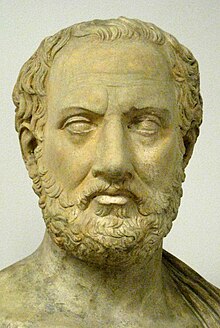
Image result for thucydides

The Illegal, Murderous Rapist: Herodotus Subtweets a Tyrant

I covered a class for a colleague today and read this bit from Herodotus for the first time in many years. It was, well, just a little eerie.

Herodotus 3.80

“Otanês was first urging the Persians to entrust governing to the people, saying these things: “it seems right to me that we no longer have a monarchy. For it is neither pleasing nor good. For you all know about the arrogance of Kambyses and you were a party to the insanity of the Magus. How could monarchy be a fitting thing when it permits an unaccountable person to do whatever he pleases? Even if you put the best of all men into this position he might go outside of customary thoughts. For hubris is nurtured by the fine things present around him, and envy is native to a person from the beginning.

The one who has these two qualities possesses every kind of malice. For one who is overfilled does many reckless things, some because of arrogance and some because of envy. Certainly, it would be right for a man who is a tyrant at least to have no envy at all, since he has all the good things. Yet he becomes the opposite of this towards his citizens: for he envies those who are best around him and live, and he takes pleasure in the worst of the citizens—he is the best at welcoming slanders.

He becomes the most disharmonious of all people—for if you admire him only moderately, then he is upset because you do not support him ardently. But if someone supports him excessively, he is angry at him for being a toady. The worst things are still to be said: he overturns traditional laws, he rapes women, and kills people without reason.”

᾿Οτάνης μὲν ἐκέλευε ἐς μέσον Πέρσῃσι καταθεῖναι τὰ πρήγματα, λέγων τάδε· «᾿Εμοὶ δοκέει ἕνα μὲν ἡμέων μούναρχον μηκέτι γενέσθαι· οὔτε γὰρ ἡδὺ οὔτε ἀγαθόν. Εἴδετε μὲν γὰρ τὴν Καμβύσεω ὕβριν ἐπ’ ὅσον ἐπεξῆλθε, μετεσχήκατε δὲ καὶ τῆς τοῦ μάγου ὕβριος. Κῶς δ’ ἂν εἴη χρῆμα κατηρτημένον μουναρχίη, τῇ ἔξεστι ἀνευθύνῳ ποιέειν τὰ βούλεται; Καὶ γὰρ ἂν τὸν ἄριστον ἀνδρῶν πάντων στάντα ἐς ταύτην τὴν ἀρχὴν ἐκτὸς τῶν ἐωθότων νοημάτων στήσειε. ᾿Εγγίνεται μὲν γάρ οἱ ὕβρις ὑπὸ τῶν παρεόντων ἀγαθῶν, φθόνος δὲ ἀρχῆθεν ἐμφύεται ἀνθρώπῳ. Δύο δ’ ἔχων ταῦτα ἔχει πᾶσαν κακότητα· τὰ μὲν γὰρ ὕβρι κεκορημένος ἔρδει πολλὰ καὶ ἀτάσθαλα, τὰ δὲ φθόνῳ. Καίτοι ἄνδρα γε τύραννον ἄφθονον ἔδει εἶναι, ἔχοντά γε πάντα τὰ ἀγαθά· τὸ δὲ ὑπεναντίον τούτου ἐς τοὺς πολιήτας πέφυκε· φθονέει γὰρ τοῖσι ἀρίστοισι περιεοῦσί τε καὶ ζώουσι, χαίρει δὲ τοῖσι κακίστοισι τῶν ἀστῶν, διαβολὰς δὲ ἄριστος ἐνδέκεσθαι.

᾿Αναρμοστότατον δὲ πάντων· ἤν τε γὰρ αὐτὸν μετρίως θωμάζῃς, ἄχθεται ὅτι οὐ κάρτα θεραπεύεται, ἤν τε θεραπεύῃ τις κάρτα, ἄχθεται ἅτε θωπί. Τὰ δὲ δὴ μέγιστα ἔρχομαι ἐρέων· νόμαιά τε κινέει πάτρια καὶ βιᾶται γυναῖκας κτείνει τε ἀκρίτους.


Image result for medieval manuscript manuscript
Image from here

Royal Domestic Violence

Earlier, Cambyses marries one sister (3.31) and murders another. This one is unnamed.

Herodotus, Histories 3.32

“There are two stories regarding her death just as in the case of Smerdis. The Greeks report that Cambyses made a puppy fight with a lion cub and that this woman was watching. When the puppy was being defeated, another puppy—its sibling—broke its leash and was helping him. Together, the two puppies overpowered the lion cub.

Cambyses was pleased when he saw this, but she was crying as she sat alongside him. When Cambyses saw that she was crying and asked why she was, she responded that she cried upon seeing the puppy try to avenge his brother because she was thinking of Smerdis and realizing that there was no one who would avenge him.

The Greeks claim that she was executed for Cambyses for this response. The Egyptians, however, say that when the two of them were sitting at a table the woman took up some lettuce, plucked off the leaves, and then asked her husband if the lettuce seemed better plucked or with its leaves still. When he said he liked it more intact, she said that “but you must recall that you have stripped the house of Cyrus just like this lettuce.” In rage over this, he leaped on her even though she was pregnant. She died after miscarrying.”

Ἀμφὶ δὲ τῷ θανάτῳ αὐτῆς διξὸς ὥσπερ περὶ Σμέρδιος λέγεται λόγος. Ἕλληνες μὲν λέγουσι Καμβύσεα συμβαλεῖν σκύμνον λέοντος σκύλακι κυνός, θεωρέειν δὲ καὶ τὴν γυναῖκα ταύτην, νικωμένου δὲ τοῦ σκύλακος ἀδελφεὸν αὐτοῦ ἄλλον σκύλακα ἀπορρήξαντα τὸν δεσμὸν παραγενέσθαι οἱ, δύο δὲ γενομένους οὕτω δὴ τοὺς σκύλακας ἐπικρατῆσαι τοῦ σκύμνου. καὶ τὸν μὲν Καμβύσεα ἥδεσθαι θεώμενον, τὴν δὲ παρημένην δακρύειν. Καμβύσεα δὲ μαθόντα τοῦτο ἐπειρέσθαι δι᾿ ὅ τι δακρύει, τὴν δὲ εἰπεῖν ὡς ἰδοῦσα τὸν σκύλακα τῷ ἀδελφεῷ τιμωρήσαντα δακρύσειε, μνησθεῖσά τε Σμέρδιος καὶ μαθοῦσα ὡς ἐκείνῳ οὐκ εἴη ὁ τιμωρήσων. Ἕλληνες μὲν δὴ διὰ τοῦτο τὸ ἔπος φασὶ αὐτὴν ἀπολέσθαι ὑπὸ Καμβύσεω, Αἰγύπτιοι δὲ ὡς τραπέζῃ παρακατημένων λαβοῦσαν θρίδακα τὴν γυναῖκα περιτῖλαι καὶ ἐπανειρέσθαι τὸν ἄνδρα κότερον περιτετιλμένη ἡ θρίδαξ ἢ δασέα εἴη καλλίων, καὶ τὸν φάναι δασέαν, τὴν δ᾿ εἰπεῖν “Ταύτην μέντοι κοτὲ σὺ τὴν θρίδακα ἐμιμήσαο τὸν Κύρου οἶκον ἀποψιλώσας.” τὸν δὲ θυμωθέντα ἐμπηδῆσαι αὐτῇ ἐχούσῃ ἐν γαστρί, καί μιν ἐκτρώσασαν ἀποθανεῖν.

Possible seal image of Cambyses II

Tacitus on Germanic Standards for Women and Child-Rearing

Some of the rhetoric here seems a bit familiar…

Tacitus, Germania 19-20

In that country, no one finds vice amusing; nor is seducing or being seduced celebrated as a sign of the times. Even better are those communities where only virgins marry and a promise is made with the hope and vow of a wife. And so, they have only one husband just as each has one body and one life so that there may be no additional thought of it, no lingering desire, that they may not love the man so much as they love the marriage. It is considered a sin to limit the number of children or to eliminate the later born. There good customs are stronger than good laws.

There are children there naked and dirty in every house growing into the size of limbs and body at which we wonder. Each mother nourishes each child with her own breasts; they are not passed around to maids and nurses.”

nemo enim illic vitia ridet, nec corrumpere et corrumpi saeculum vocatur. melius quidem adhuc eae civitates, in quibus tantum virgines nubunt et cum spe votoque uxoris semel transigitur. sic unum accipiunt maritum quo modo unum corpus unamque vitam, ne ulla cogitatio ultra, ne longior cupiditas, ne tamquam maritum, sed tamquam matrimonium ament. numerum liberorum finire aut quemquam ex agnatis necare flagitium habetur, plusque ibi boni mores valent quam alibi bonae leges.In omni domo nudi ac sordidi in hos artus, in haec corpora, quae miramur, excrescunt. sua quemque mater uberibus alit, nec ancillis aut nutricibus delegantur.

Image result for medieval manuscript Tacitus germania