Really, We Have To Go to War

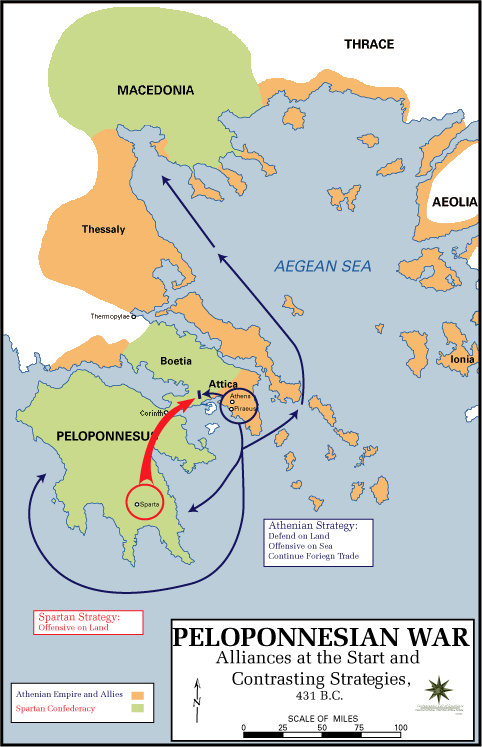
Thucydides, Peloponnesian War 1.144

“I have many other reasons to hope for the outcome if you are willing not to grow your empire by warring more and not to add dangers of your own choosing. For I am much more afraid of our own mistakes than our enemies’ plans.

But these are topics which will be explained in another speech on those matters. For now, let use send them away with these answers, that we will allow the Megarians to use our marketplace and harbors provided that the Spartans do not continue their foreign actions against us or our allies—for nothing stops this action or that one in the treaties we have. In addition, we will leave cities independent if they were independent when we came into contact with them and when those cities did not give in to them, they should be independent too, as each of them desires.

Add as well that we are willing to submit to judgments according to the treaties and we will not begin the war, although we will defend against those who do start it. These answers are just and proper answers for the city. You need to understand that we must go to war—but if we welcome it willingly, we will have less enthusiastic opponents.

Remember also that the greatest honors come both in private and public from the greatest dangers. Didn’t our fathers stand up against the Medes even though they started from so unequal a position? And when they left everything they had behind, they fought off the barbarian with greater intelligence than luck and greater daring than power and raised our state to what it is today. For this reason, we must not fall back, but we must defend against our enemies in every way and strive to give to our descendants a state no weaker at all.”

‘Πολλὰ δὲ καὶ ἄλλα ἔχω ἐς ἐλπίδα τοῦ περιέσεσθαι, ἢν ἐθέλητε ἀρχήν τε μὴ ἐπικτᾶσθαι ἅμα πολεμοῦντες καὶ κινδύνους αὐθαιρέτους μὴ προστίθεσθαι· μᾶλλον γὰρ πεφόβημαι τὰς οἰκείας ἡμῶν ἁμαρτίας ἢ τὰς τῶν ἐναντίων διανοίας. ἀλλ’ ἐκεῖνα μὲν καὶ ἐν ἄλλῳ λόγῳ ἅμα τοῖς ἔργοις δηλωθήσεται· νῦν δὲ τούτοις ἀποκρινάμενοι ἀποπέμψωμεν, Μεγαρέας μὲν ὅτι ἐάσομεν ἀγορᾷ καὶ λιμέσι χρῆσθαι, ἢν καὶ Λακεδαιμόνιοι ξενηλασίας μὴ ποιῶσι μήτε ἡμῶν μήτε τῶν ἡμετέρων ξυμμάχων (οὔτε γὰρ ἐκεῖνο κωλύει ἐν ταῖς σπονδαῖς οὔτε τόδε), τὰς δὲ πόλεις ὅτι αὐτονόμους ἀφήσομεν, εἰ καὶ αὐτονόμους ἔχοντες ἐσπεισάμεθα, καὶ ὅταν κἀκεῖνοι ταῖς ἑαυτῶν ἀποδῶσι πόλεσι μὴ σφίσι [τοῖς Λακεδαιμονίοις] ἐπιτηδείως αὐτονομεῖσθαι, ἀλλ’ αὐτοῖς ἑκάστοις ὡς βούλονται· δίκας τε ὅτι ἐθέλομεν δοῦναι κατὰ τὰς ξυνθήκας, πολέμου δὲ οὐκ ἄρξομεν, ἀρχομένους δὲ ἀμυνούμεθα. ταῦτα γὰρ δίκαια καὶ πρέποντα ἅμα τῇδε τῇ πόλει ἀποκρίνασθαι. εἰδέναι δὲ χρὴ ὅτι ἀνάγκη πολεμεῖν, ἢν δὲ ἑκούσιοι μᾶλλον δεχώμεθα, ἧσσον ἐγκεισομένους τοὺς ἐναντίους ἕξομεν, ἔκ τε τῶν μεγίστων κινδύνων ὅτι καὶ πόλει καὶ ἰδιώτῃ μέγισται τιμαὶ περιγίγνονται. οἱ γοῦν πατέρες ἡμῶν ὑποστάντες Μήδους καὶ οὐκ ἀπὸ τοσῶνδε ὁρμώμενοι, ἀλλὰ καὶ τὰ ὑπάρχοντα ἐκλιπόντες, γνώμῃ τε πλέονι ἢ τύχῃ καὶ τόλμῃ μείζονι ἢ δυνάμει τόν τε βάρβαρον ἀπεώσαντο καὶ ἐς τάδε προήγαγον αὐτά. ὧν οὐ χρὴ λείπεσθαι, ἀλλὰ τούς τε ἐχθροὺς παντὶ τρόπῳ ἀμύνεσθαι καὶ τοῖς ἐπιγιγνομένοις πειρᾶσθαι αὐτὰ μὴ ἐλάσσω παραδοῦναι.’
File:Jean-auguste-dominique ingres, uomo deificato, detto l'apoteosi di omero, 1827, 02.jpg
Detail of J.A.D Ingres’  “Apotheosis of Homer”


Royal Domestic Violence

Earlier, Cambyses marries one sister (3.31) and murders another. This one is unnamed.

Herodotus, Histories 3.32

“There are two stories regarding her death just as in the case of Smerdis. The Greeks report that Cambyses made a puppy fight with a lion cub and that this woman was watching. When the puppy was being defeated, another puppy—its sibling—broke its leash and was helping him. Together, the two puppies overpowered the lion cub.

Cambyses was pleased when he saw this, but she was crying as she sat alongside him. When Cambyses saw that she was crying and asked why she was, she responded that she cried upon seeing the puppy try to avenge his brother because she was thinking of Smerdis and realizing that there was no one who would avenge him.

The Greeks claim that she was executed for Cambyses for this response. The Egyptians, however, say that when the two of them were sitting at a table the woman took up some lettuce, plucked off the leaves, and then asked her husband if the lettuce seemed better plucked or with its leaves still. When he said he liked it more intact, she said that “but you must recall that you have stripped the house of Cyrus just like this lettuce.” In rage over this, he leaped on her even though she was pregnant. She died after miscarrying.”

Ἀμφὶ δὲ τῷ θανάτῳ αὐτῆς διξὸς ὥσπερ περὶ Σμέρδιος λέγεται λόγος. Ἕλληνες μὲν λέγουσι Καμβύσεα συμβαλεῖν σκύμνον λέοντος σκύλακι κυνός, θεωρέειν δὲ καὶ τὴν γυναῖκα ταύτην, νικωμένου δὲ τοῦ σκύλακος ἀδελφεὸν αὐτοῦ ἄλλον σκύλακα ἀπορρήξαντα τὸν δεσμὸν παραγενέσθαι οἱ, δύο δὲ γενομένους οὕτω δὴ τοὺς σκύλακας ἐπικρατῆσαι τοῦ σκύμνου. καὶ τὸν μὲν Καμβύσεα ἥδεσθαι θεώμενον, τὴν δὲ παρημένην δακρύειν. Καμβύσεα δὲ μαθόντα τοῦτο ἐπειρέσθαι δι᾿ ὅ τι δακρύει, τὴν δὲ εἰπεῖν ὡς ἰδοῦσα τὸν σκύλακα τῷ ἀδελφεῷ τιμωρήσαντα δακρύσειε, μνησθεῖσά τε Σμέρδιος καὶ μαθοῦσα ὡς ἐκείνῳ οὐκ εἴη ὁ τιμωρήσων. Ἕλληνες μὲν δὴ διὰ τοῦτο τὸ ἔπος φασὶ αὐτὴν ἀπολέσθαι ὑπὸ Καμβύσεω, Αἰγύπτιοι δὲ ὡς τραπέζῃ παρακατημένων λαβοῦσαν θρίδακα τὴν γυναῖκα περιτῖλαι καὶ ἐπανειρέσθαι τὸν ἄνδρα κότερον περιτετιλμένη ἡ θρίδαξ ἢ δασέα εἴη καλλίων, καὶ τὸν φάναι δασέαν, τὴν δ᾿ εἰπεῖν “Ταύτην μέντοι κοτὲ σὺ τὴν θρίδακα ἐμιμήσαο τὸν Κύρου οἶκον ἀποψιλώσας.” τὸν δὲ θυμωθέντα ἐμπηδῆσαι αὐτῇ ἐχούσῃ ἐν γαστρί, καί μιν ἐκτρώσασαν ἀποθανεῖν.

Possible seal image of Cambyses II

Harming the Athenians

Thanks to Dimitri Nakassis for sending me this passage

Thucydides. 7.27

“Thirteen hundred peltasts, Thracian swordsmen from the Dii tribe, also came to Athens the same summer. They were supposed to have traveled to Sicily with Demosthenes. Because they were rather late, the Athenians decided to send them back to Thrace where they came from. For it seemed too expense to retain them for the Decelean War since they each were earning a drachma a day.

Since Decelea was first invested by the whole enemy army in that summer and later was held by the garrisons coming from different cities coming in turn to ravage the land, it was causing great harm to the Athenians. Indeed, this undermined Athenian affairs first by loss of property and then by the death of men.

Previous attacks were brief and did not keep the Athenians from deriving benefit from their land the rest of the time. But once they were continually invested in Attica and they were sometimes attacking in force and at other times using a single garrison attacking the country and pillaging to supply itself. The Spartan king Agis was also present and he was no slacker in prosecuting the war.

The Athenians were greatly harmed; they were deprived of their whole land. More than twenty thousand slaves freed themselves and a great number of these were craftspeople. All of the sheep and pack animals perished. And the Athenian horses, because the cavalry was deploying every day to attack Decelea and guard the land, either went lame because of working on rocky ground or they were wounded.

ἀφίκοντο δὲ καὶ Θρᾳκῶν τῶν μαχαιροφόρων τοῦ Διακοῦ γένους ἐς τὰς Ἀθήνας πελτασταὶ ἐν τῷ αὐτῷ θέρει τούτῳ τριακόσιοι καὶ χίλιοι, οὓς ἔδει τῷ Δημοσθένει ἐς τὴν Σικελίαν ξυμπλεῖν. [2] οἱ δ᾽ Ἀθηναῖοι, ὡς ὕστεροι ἧκον, διενοοῦντο αὐτοὺς πάλιν ὅθεν ἦλθον ἐς Θρᾴκην ἀποπέμπειν. τὸ γὰρ ἔχειν πρὸς τὸν ἐκ τῆς Δεκελείας πόλεμον αὐτοὺς πολυτελὲς ἐφαίνετο: δραχμὴν γὰρ τῆς ἡμέρας ἕκαστος ἐλάμβανεν. [3] ἐπειδὴ γὰρ ἡ Δεκέλεια τὸ μὲν πρῶτον ὑπὸ πάσης τῆς στρατιᾶς ἐν τῷ θέρει τούτῳ τειχισθεῖσα, ὕστερον δὲ φρουραῖς ἀπὸ τῶν πόλεων κατὰ διαδοχὴν χρόνου ἐπιούσαις τῇ χώρᾳ ἐπῳκεῖτο, πολλὰ ἔβλαπτε τοὺς Ἀθηναίους, καὶ ἐν τοῖς πρῶτον χρημάτων τ᾽ ὀλέθρῳ καὶ ἀνθρώπων φθορᾷ ἐκάκωσε τὰ πράγματα. [4] πρότερον μὲν γὰρ βραχεῖαι γιγνόμεναι αἱ ἐσβολαὶ τὸν ἄλλον χρόνον τῆς γῆς ἀπολαύειν οὐκ ἐκώλυον: τότε δὲ ξυνεχῶς ἐπικαθημένων, καὶ ὁτὲ μὲν καὶ πλεόνων ἐπιόντων, ὁτὲ δ᾽ ἐξ ἀνάγκης τῆς ἴσης φρουρᾶς καταθεούσης τε τὴν χώραν καὶ λῃστείας ποιουμένης, βασιλέως τε παρόντος τοῦ τῶν Λακεδαιμονίων Ἄγιδος, ὃς οὐκ ἐκ παρέργου τὸν πόλεμον ἐποιεῖτο, μεγάλα οἱ Ἀθηναῖοι ἐβλάπτοντο. [5] τῆς τε γὰρ χώρας ἁπάσης ἐστέρηντο, καὶ ἀνδραπόδων πλέον ἢ δύο μυριάδες ηὐτομολήκεσαν, καὶ τούτων τὸ πολὺ μέρος χειροτέχναι, πρόβατά τε πάντα ἀπωλώλει καὶ ὑποζύγια: ἵπποι τε, ὁσημέραι ἐξελαυνόντων τῶν ἱππέων πρός τε τὴν Δεκέλειαν καταδρομὰς ποιουμένων καὶ κατὰ τὴν χώραν φυλασσόντων, οἱ μὲν ἀπεχωλοῦντο ἐν γῇ ἀποκρότῳ τε καὶ ξυνεχῶς ταλαιπωροῦντες, οἱ δ᾽ ἐτιτρώσκοντο.

It would be edifying to write a history of the Peloponnesian War from the perspective of the slaves on either side. At the very least, a selection of all the passages which mentioned slavery and enslaved peoples would change the way we think of the war.

Note from Charles F. Smith on perseus.edu

πλέον  δύο μυριάδες : Boeckh, P. E. p. 55, reckons the number of slaves in Athens in the most flourishing period at 365,000, so that the number here given does not seem incredible.

From wikipedia


Tacitus on Germanic Standards for Women and Child-Rearing

Some of the rhetoric here seems a bit familiar…

Tacitus, Germania 19-20

In that country, no one finds vice amusing; nor is seducing or being seduced celebrated as a sign of the times. Even better are those communities where only virgins marry and a promise is made with the hope and vow of a wife. And so, they have only one husband just as each has one body and one life so that there may be no additional thought of it, no lingering desire, that they may not love the man so much as they love the marriage. It is considered a sin to limit the number of children or to eliminate the later born. There good customs are stronger than good laws.

There are children there naked and dirty in every house growing into the size of limbs and body at which we wonder. Each mother nourishes each child with her own breasts; they are not passed around to maids and nurses.”

nemo enim illic vitia ridet, nec corrumpere et corrumpi saeculum vocatur. melius quidem adhuc eae civitates, in quibus tantum virgines nubunt et cum spe votoque uxoris semel transigitur. sic unum accipiunt maritum quo modo unum corpus unamque vitam, ne ulla cogitatio ultra, ne longior cupiditas, ne tamquam maritum, sed tamquam matrimonium ament. numerum liberorum finire aut quemquam ex agnatis necare flagitium habetur, plusque ibi boni mores valent quam alibi bonae leges.In omni domo nudi ac sordidi in hos artus, in haec corpora, quae miramur, excrescunt. sua quemque mater uberibus alit, nec ancillis aut nutricibus delegantur.

Image result for medieval manuscript Tacitus germania

The Illegal, Murderous Rapist: Herodotus Subtweets a Tyrant

Herodotus 3.80

“Otanês was first urging the Persians to entrust governing to the people, saying these things: “it seems right to me that we no longer have a monarchy. For it is neither pleasing nor good. For you all know about the arrogance of Kambyses and you were a party to the insanity of the Magus. How could monarchy be a fitting thing when it permits an unaccountable person to do whatever he pleases? Even if you put the best of all men into this position he might go outside of customary thoughts. For hubris is nurtured by the fine things present around him, and envy is native to a person from the beginning.

The one who has these two qualities possesses every kind of malice. For one who is overfilled does many reckless things, some because of arrogance and some because of envy. Certainly, it would be right for a man who is a tyrant at least to have no envy at all, since he has all the good things. Yet he becomes the opposite of this towards his citizens: for he envies those who are best around him and live, and he takes pleasure in the worst of the citizens—he is the best at encouraging slanders.

He becomes the most disharmonious of all people—for if you admire him only moderately, then he is upset because you do not support him ardently. But if someone supports him excessively, he is angry at him for being a toady. The worst things are still to be said: he overturns traditional laws, he rapes women, and kills people without reason.”

᾿Οτάνης μὲν ἐκέλευε ἐς μέσον Πέρσῃσι καταθεῖναι τὰ πρήγματα, λέγων τάδε· «᾿Εμοὶ δοκέει ἕνα μὲν ἡμέων μούναρχον μηκέτι γενέσθαι· οὔτε γὰρ ἡδὺ οὔτε ἀγαθόν. Εἴδετε μὲν γὰρ τὴν Καμβύσεω ὕβριν ἐπ’ ὅσον ἐπεξῆλθε, μετεσχήκατε δὲ καὶ τῆς τοῦ μάγου ὕβριος. Κῶς δ’ ἂν εἴη χρῆμα κατηρτημένον μουναρχίη, τῇ ἔξεστι ἀνευθύνῳ ποιέειν τὰ βούλεται; Καὶ γὰρ ἂν τὸν ἄριστον ἀνδρῶν πάντων στάντα ἐς ταύτην τὴν ἀρχὴν ἐκτὸς τῶν ἐωθότων νοημάτων στήσειε. ᾿Εγγίνεται μὲν γάρ οἱ ὕβρις ὑπὸ τῶν παρεόντων ἀγαθῶν, φθόνος δὲ ἀρχῆθεν ἐμφύεται ἀνθρώπῳ. Δύο δ’ ἔχων ταῦτα ἔχει πᾶσαν κακότητα· τὰ μὲν γὰρ ὕβρι κεκορημένος ἔρδει πολλὰ καὶ ἀτάσθαλα, τὰ δὲ φθόνῳ. Καίτοι ἄνδρα γε τύραννον ἄφθονον ἔδει εἶναι, ἔχοντά γε πάντα τὰ ἀγαθά· τὸ δὲ ὑπεναντίον τούτου ἐς τοὺς πολιήτας πέφυκε· φθονέει γὰρ τοῖσι ἀρίστοισι περιεοῦσί τε καὶ ζώουσι, χαίρει δὲ τοῖσι κακίστοισι τῶν ἀστῶν, διαβολὰς δὲ ἄριστος ἐνδέκεσθαι.

᾿Αναρμοστότατον δὲ πάντων· ἤν τε γὰρ αὐτὸν μετρίως θωμάζῃς, ἄχθεται ὅτι οὐ κάρτα θεραπεύεται, ἤν τε θεραπεύῃ τις κάρτα, ἄχθεται ἅτε θωπί. Τὰ δὲ δὴ μέγιστα ἔρχομαι ἐρέων· νόμαιά τε κινέει πάτρια καὶ βιᾶται γυναῖκας κτείνει τε ἀκρίτους.


Image result for medieval manuscript manuscript
Image from here

A Tyranny of Luck and a Stranger

Sallust, Letter to Caesar 2.3

“While the courts just as in previous eras have been run by the three orders, those political factions still rule them: they give and take what they may, giving the innocent the runaround and heaping honors on their own. Neither crime nor shame nor public disgrace disqualifies them from office. They rob, despoil whomever they please. And finally, as if the city has been sacked, they rely on their own lust and excess instead of the laws.

And for me this would only be a source of limited grief if, in their typical fashion, they were pursuing a victory born from excellence. But the laziest of people whose total strength and excellence come from their tongue are arrogantly administering a tyranny gained through luck and from another person! For what treason or civil discord has obliterated so many families? Who whose spirit was ever so hasty and extreme in victory?”

Iudicia tametsi, sicut antea, tribus ordinibus tradita sunt, tamen idem illi factiosi regunt, dant, adimunt quae lubet, innocentis circumveniunt, suos ad honorem extollunt. Non facinus, non probrum aut flagitium obstat, quo minus magistratus capiant. Quos commodum est trahunt, rapiunt; postremo tamquam urbe capta libidine ac licentia sua pro legibus utuntur.

Ac me quidem mediocris dolor angeret, si virtute partam victoriam more suo per servitium exercerent. Sed homines inertissimi, quorum omnis vis virtusque in lingua sita est, forte atque alterius socordia dominationem oblatam insolentes agitant. Nam quae seditio aut dissensio civilis tot tam illustris familias ab stirpe evertit? Aut quorum umquam in victoria animus tam praeceps tamque inmoderatus fuit?


Image result for ancient roman politics

Hated By the People, Plotted Against by Friends

Diodorus Siculus, The Library of History 37.22a

“Sertorius, when he noticed that the uprising among the indigenous people was overwhelming, turned nasty to his allies: he accused some and had them killed; others he threw into prison; but he liquidated the wealth of the richest men. Even though he acquired a great deal of gold and silver this way, he did not put any of it into the public treasury for the war effort, instead he hoarded it for himself. He didn’t use it to pay the soldiers either or even share some of it with his commanders.

When it came to capital cases, he did not consult the council or advisers, but had hearings in private and gave judgments after serving as the solitary judge. He did not consider his commanders worthy of invitations to his banquets and demonstrated no beneficence to his friends. As he was generally driven mad by the worsening state of his own rule, he acted tyrannically toward everyone: he was hated by the people and conspired against by his friends.”

Ὅτι ὁ Σερτώριος θεωρῶν ἀκατάσχετον οὖσαν τὴν ὁρμὴν τῶν ἐγχωρίων πικρῶς προσεφέρετο τοῖς συμμάχοις, καὶ τοὺς μὲν καταιτιώμενος ἀπέκτεινεν, τοὺς δὲ εἰς φυλακὴν παρεδίδου, τῶν δὲ εὐπορωτάτων ἐδήμευε τὰς οὐσίας. πολὺν δὲ ἄργυρον καὶ χρυσὸν ἀθροίσας οὐκ εἰς τὸ κοινὸν τοῦ πολέμου ταμιεῖον κατετίθετο, ἀλλ᾿ ἰδίᾳ ἐθησαύριζεν· οὔτε τοῖς στρατιώταις ἐχορήγει τὰς μισθοφορίας, οὔτε τοῖς ἡγεμόσι μετεδίδου τούτων, οὔτε τὰς κεφαλικὰς κρίσεις μετὰ συνεδρίου καὶ συμβούλων ἐποιεῖτο, διακούων δὲ ἰδίᾳ καὶ μόνον κριτὴν ἑαυτὸν ἀποδείξας ἐποιεῖτο τὰς ἀποφάσεις· εἴς τε τὰ σύνδειπνα τοὺς ἡγεμόνας οὐκ ἠξίου παραλαμβάνειν, οὐδὲ φιλανθρωπίας οὐδεμιᾶς μετεδίδου τοῖς φίλοις. καθόλου δὲ διὰ τὴν ἐπὶ τὸ χεῖρον ἐπίδοσιν τῆς περὶ αὐτὸν ἐξουσίας ἀποθηριωθεὶς τυραννικῶς ἅπασιν προσεφέρετο. καὶ ἐμισήθη μὲν ὑπὸ τοῦ πλήθους, ἐπεβουλεύθη δὲ ὑπὸ τῶν φίλων.


Quintus Sertorius by Gerard van der Kuijl

Harming the Athenians

Thanks to Dimitri Nakassis for sending me this passage

Thucydides. 7.27

“Thirteen hundred peltasts, Thracian swordsmen from the Dii tribe, also came to Athens the same summer. They were supposed to have traveled to Sicily with Demosthenes. Because they were rather late, the Athenians decided to send them back to Thrace where they came from. For it seemed too expense to retain them for the Decelean War since they each were earning a drachma a day.

Since Decelea was first invested by the whole enemy army in that summer and later was held by the garrisons coming from different cities coming in turn to ravage the land, it was causing great harm to the Athenians. Indeed, this undermined Athenian affairs first by loss of property and then by the death of men.

Previous attacks were brief and did not keep the Athenians from deriving benefit from their land the rest of the time. But once they were continually invested in Attica and they were sometimes attacking in force and at other times using a single garrison attacking the country and pillaging to supply itself. The Spartan king Agis was also present and he was no slacker in prosecuting the war.

The Athenians were greatly harmed; they were deprived of their whole land. More than twenty thousand slaves freed themselves and a great number of these were craftspeople. All of the sheep and pack animals perished. And the Athenian horses, because the cavalry was deploying every day to attack Decelea and guard the land, either went lame because of working on rocky ground or they were wounded.

ἀφίκοντο δὲ καὶ Θρᾳκῶν τῶν μαχαιροφόρων τοῦ Διακοῦ γένους ἐς τὰς Ἀθήνας πελτασταὶ ἐν τῷ αὐτῷ θέρει τούτῳ τριακόσιοι καὶ χίλιοι, οὓς ἔδει τῷ Δημοσθένει ἐς τὴν Σικελίαν ξυμπλεῖν. [2] οἱ δ᾽ Ἀθηναῖοι, ὡς ὕστεροι ἧκον, διενοοῦντο αὐτοὺς πάλιν ὅθεν ἦλθον ἐς Θρᾴκην ἀποπέμπειν. τὸ γὰρ ἔχειν πρὸς τὸν ἐκ τῆς Δεκελείας πόλεμον αὐτοὺς πολυτελὲς ἐφαίνετο: δραχμὴν γὰρ τῆς ἡμέρας ἕκαστος ἐλάμβανεν. [3] ἐπειδὴ γὰρ ἡ Δεκέλεια τὸ μὲν πρῶτον ὑπὸ πάσης τῆς στρατιᾶς ἐν τῷ θέρει τούτῳ τειχισθεῖσα, ὕστερον δὲ φρουραῖς ἀπὸ τῶν πόλεων κατὰ διαδοχὴν χρόνου ἐπιούσαις τῇ χώρᾳ ἐπῳκεῖτο, πολλὰ ἔβλαπτε τοὺς Ἀθηναίους, καὶ ἐν τοῖς πρῶτον χρημάτων τ᾽ ὀλέθρῳ καὶ ἀνθρώπων φθορᾷ ἐκάκωσε τὰ πράγματα. [4] πρότερον μὲν γὰρ βραχεῖαι γιγνόμεναι αἱ ἐσβολαὶ τὸν ἄλλον χρόνον τῆς γῆς ἀπολαύειν οὐκ ἐκώλυον: τότε δὲ ξυνεχῶς ἐπικαθημένων, καὶ ὁτὲ μὲν καὶ πλεόνων ἐπιόντων, ὁτὲ δ᾽ ἐξ ἀνάγκης τῆς ἴσης φρουρᾶς καταθεούσης τε τὴν χώραν καὶ λῃστείας ποιουμένης, βασιλέως τε παρόντος τοῦ τῶν Λακεδαιμονίων Ἄγιδος, ὃς οὐκ ἐκ παρέργου τὸν πόλεμον ἐποιεῖτο, μεγάλα οἱ Ἀθηναῖοι ἐβλάπτοντο. [5] τῆς τε γὰρ χώρας ἁπάσης ἐστέρηντο, καὶ ἀνδραπόδων πλέον ἢ δύο μυριάδες ηὐτομολήκεσαν, καὶ τούτων τὸ πολὺ μέρος χειροτέχναι, πρόβατά τε πάντα ἀπωλώλει καὶ ὑποζύγια: ἵπποι τε, ὁσημέραι ἐξελαυνόντων τῶν ἱππέων πρός τε τὴν Δεκέλειαν καταδρομὰς ποιουμένων καὶ κατὰ τὴν χώραν φυλασσόντων, οἱ μὲν ἀπεχωλοῦντο ἐν γῇ ἀποκρότῳ τε καὶ ξυνεχῶς ταλαιπωροῦντες, οἱ δ᾽ ἐτιτρώσκοντο.

It would be edifying to write a history of the Peloponnesian War from the perspective of the slaves on either side. At the very least, a selection of all the passages which mentioned slavery and enslaved peoples would change the way we think of the war.

Note from Charles F. Smith on perseus.edu

πλέον  δύο μυριάδες : Boeckh, P. E. p. 55, reckons the number of slaves in Athens in the most flourishing period at 365,000, so that the number here given does not seem incredible.

From wikipedia


The Jealousy and Play of Alexander the Great

Athenaeus, Deipnosophistae, 7.4.277a

“Chares the Mytilenaian claims that when Alexander found the most beautiful apples in the land of Babylon, he had his ships filled with them and put on an “apple war” from the ships that was a great delight to see.”

Χάρης δ᾽ ὁ Μυτιληναῖος ἱστορεῖ ὡς κάλλιστα μῆλα εὑρὼν ὁ ᾽Αλέξανδρος περὶ τὴν Βαβυλωνίαν χώραν τούτων τε πληρώσας τὰ σκάφη μηλομαχίαν ἀπὸ τῶν νεῶν ἐποιήσατο, ὡς τὴν θέαν ἡδίστην γενέσθαι.

Gnomologium Vaticanum, 78; 10, p. 3

“Alexander, after he arrived at Troy and looked upon the tomb of Achilles, said as he stood there: “Achilles, you obtained the magnificent herald, Homer, because you were so great.” Anaximenes, who was nearby, responded, “King, I too will make you famous”. And Alexander responded, “By the gods, I would prefer to be Homer’s Thersites instead of an Achilles for you.”

ὁ αὐτὸς (sc. ᾽Αλέξανδρος) ἐλθὼν εἰς ῎Ιλιον καὶ θεασάμενος τὸν ᾽Αχιλλέως τάφον στὰς εἶπεν· «ὦ ᾽Αχιλλεῦ, ὡς σὺ μέγας ὢν μεγάλου κήρυκος ἔτυχες ῾Ομήρου». παρόντος δὲ ᾽Αναξιμένους καὶ εἰπόντος· «καὶ ἡμεῖς σε, ὦ βασιλεῦ, ἔνδοξον ποιήσομεν», «ἀλλὰ νὴ τοὺς θεούς», ἔφη, «παρ᾽ ῾Ομήρωι ἐβουλόμην ἂν εἴναι Θερσίτης ἢ παρὰ σοὶ ᾽Αχιλλεύς».

Image result for alexander the great

“Their Only God is Money”

The following is a spurious letter from the wild Historia Augusta. This is filled with religious confusion, some hate, and an odd detail about cups.

Historia Augusta, 29.7

“Hadrianus Augustus greets Servianus the Consul.

Dearest Servianus, that Egypt you were praising to me is completely light of learning, volatile, and swinging toward every little rumor. The people there who follow Serapis are Christians and those who claim to be followers of Christ are actually worshipers of Serapis. There’s no one in charge of the synagogue of the Jews, there’s no Samaritans, no Christian presbyter who is not also an astrologer, a psychic or some baptist. Even the Patriarch, when he has come to Egypt, is made to worship Serapis by some and Christ by others.

These people are the most traitorous, the most vain, most likely to injure while their state is wealthy, showy, fertile and a place where no one is without work. Some people blow glass; paper is made by others; everyone weaves some kind of linen or are part of some kind of craft. The lame have things they do; eunuchs have things they do as do the blind and even those with crippled hands are not without work among them.

Money is their only god—Christians, Jews, every people and race worship him. I wish that this place had a better nature, for it is truly worthy because of its size and richness to be the chief place of all Egypt. I conceded everything to it; I returned its ancient rights and added new ones so that the people thanked me while I was there. But, then, the moment I left, they said many things against my son Verus and I believe that you have learned what they said about Antinoos.

I wish nothing for them except that they live on their own chickens which they raise in a way that is shameful to speak. I am sending you some cups which are decorated with changing colors and were given to me by the priest of a temple but are now dedicated to you and my sister. I want you to use them on feast days. Be careful that our companion Africanus does not use them as he wants.”

VIII. “Hadrianus Augustus Serviano consuli salutem. Aegyptum, quam mihi laudabas, Serviane carissime, totam didici levem, pendulam et ad omnia famae momenta volitantem. illic3 qui Serapem colunt Christiani sunt, et devoti sunt Serapi qui se Christi episcopos dicunt. nemo illic archisynagogus Iudaeorum, nemo Samarites, nemo Christianorum presbyter non mathematicus, non haruspex, non aliptes. ipse ille patriarcha cum Aegyptum venerit, ab aliis Serapidem adorare, ab aliis cogitur Christum. genus hominum seditiosissimum, vanissimum, iniuriosissimum; civitas opulenta, dives, fecunda, in qua nemo vivat otiosus. alii vitrum conflant, aliis charta conficitur, omnes certe linyphiones aut cuiuscumque artis esse videntur; et habent podagrosi quod agant, habent praecisi quod agant, habent caeci quod faciant, ne chiragrici quidem apud eos otiosi vivunt. unus illis deus nummus est. hunc Christiani, hunc Iudaei, hunc omnes venerantur et gentes. et utinam melius esset morata civitas, digna profecto quae pro sui fecunditate, quae pro sui magnitudine totius Aegypti teneat principatum. huic ego cuncta concessi, vetera privilegia reddidi, nova sic addidi ut praesenti gratias agerent. denique ut primum inde discessi, et in filium meum Verum multa dixerunt, et de Antinoo quae dixerint comperisse te credo. nihil illis opto, nisi ut suis pullis alantur, quos quemadmodum fecundant, pudet dicere. calices tibi allassontes versicolores transmisi, quos mihi sacerdos templi obtulit, tibi et sorori meae specialiter dedicatos; quos tu velim festis diebus conviviis adhibeas. caveas tamen ne his Africanus noster indulgenter utatur.”

An image of Serapis, not of Christ
Serapis