“Sweat is The Price of Virtue”: Some Greek Quotes for Labor Day

Plutarch, Perikles 1.4 5-6


“Often and quite contrarily, we look down on a laborer while delighting in his work”


πολλάκις δὲ καὶ τοὐναντίον χαίροντες τῷ ἔργῳ τοῦ δημιουργοῦ καταφρονοῦμεν


Hesiod Works and Days, 289-90


“The gods made sweat the price for virtue.”


τῆς δ’ ἀρετῆς ἱδρῶτα θεοὶ προπάροιθεν ἔθηκαν

ἀθάνατοι·

Pindar, Isthmian 1. 47

“Men find different payment sweet for different work.”


μισθὸς γὰρ ἄλλοις ἄλλος ἐπ’ ἔργμασιν ἀνθρώποις

γλυκύς

Hesiod Works and Days, 303

“Gods and men alike dislike a lazy man.”


τῷ δὲ θεοὶ νεμεσῶσι καὶ ἀνέρες ὅς κεν ἀεργὸς.


Is this an attempt to counter the type of complaint Achilles’  makes in the Iliad (9.320)?


Archilochus fr. 307


The trap does the sleeping fisherman’s work


εὕδοντι δ᾿ αἱρεῖ κύρτος


Euripides, Hippolytus 189-190

“The life of men is wholly grievous, nor is there any release from toil.”


πᾶς δ’ ὀδυνηρὸς βίος ἀνθρώπων
κοὐκ ἔστι πόνων ἀνάπαυσις.
Euripides on Marriage: Misleading Fragments

Euripides, fr. 137 (Andromeda)


“Best of all riches is to find a noble spouse.”


τῶν γὰρ πλούτων ὅδ’ ἄριστος

γενναῖον λέχος εὑρεῖν.


This might be one of the few positive comments about marriage from Classical Greece. But, then again, it comes from a woman in a play about a girl rescued from a sea monster…And the positive comment is really about class…


The following is much more typical:


Euripides, fr. 78 (Alcmeon)


“A wife brings her husband

The greatest aid and the greatest

Sickness.”


γυναῖκα καὶ ὠφελίαν

καὶ νόσον ἀνδρὶ φέρειν

μεγίσταν….


Every sickness contains its own cure?

Two Very Different Fragments from Euripides

Euripides fr. 1065


“I pray for evil wives for my enemies.”


ἐχθροῖσιν εἴη πολεμίαν δάμαρτ’ ἔχειν.


Euripides, fr. 1018


“The mind in each of us is a god.”

ὁ νοῦς γὰρ ἡμῶν ἐστιν ἐν ἑκάστῳ θεός.

Euripides, Helen (Musings on Misfortune)

“It is a difficult thing to focus on one chance and be abused by the gods, but one must bear it all the same.”

ὅστις μὲν οὖν ἐς μίαν ἀποβλέπων τύχην
πρὸς θεῶν κακοῦται, βαρὺ μέν, οἰστέον δ᾽ ὅμως
267-9

“Whenever a man of lofty circumstances fares poorly, he falls harder upon this unaccustomed ground than a man long tried by misfortune.”

…ὅταν δ᾽ ἀνὴρ
πράξῃ κακῶς ὑψηλός, εἰς ἀηθίαν
πίπτει κακίω τοῦ πάλαι δυσδαίμονος.
417-19

“Old Woman: Why do you cover your eyes in tears? To whom do you direct your grief?
Menelaus: To my former happy days.”
Γραῦς: τί βλέφαρα τέγγεις δάκρυσι; πρὸς τίν᾽ οἰκτρὸς εἶ;
Μενελέως: πρὸς τὰς πάροιθεν συμφορὰς εὐδαίμονας.
456-7

“Old Woman: Many people suffer misfortune, not just you alone.”
Γραῦς: πολλοὶ κακῶς πράσσουσιν, οὐ σὺ δὴ μόνος.
464

Some notes on Odysseus’ life and death: Forgotten Family and Falling Feces

“No other Odysseus will ever come home to you”


οὐ μὲν γάρ τοι ἔτ’ ἄλλος ἐλεύσεται ἐνθάδ’ ᾿Οδυσσεύς,


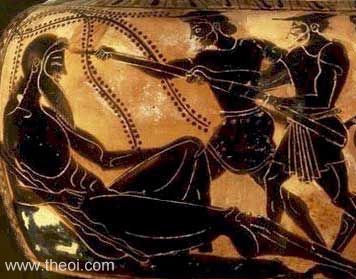
Since it seems we have been obsessed with Odysseus for a while, starting with our concern about whether anyone can ever know the real Odysseus (especially his wife if he follows Agamemnon’s advice and thanks to the various disguises facilitated by Athena), we wanted to put some of them together.  Even though we know we shouldn’t repeat ourselves (say something once, why say it again?), we have learned a few delightful things about are favorite (un)hero.


For one, we learned that Odysseus had a sister named Ktimene! And we’re still waiting for news from anyone else about this one.


In his great exploits, satyrs are by his side (according to Euripides, at least). And though Pindar is convinced his Homeric tales are a pack of lies, all of his tales teach us that suffering has meaning and helps to define who we are.


And how we end our lives is probably more important than how they begin. We already knew that death would come to Odysseus from the sea, but who knew that it would involve falling feces?


Any other strange storiesout there?

Euripides, fr. 1065


“Many words of the ancients still ring true:

Their stories are fine medicine for mortal fear.”


καὶ τῶν παλαιῶν πόλλ’ ἔπη καλῶς ἔχει·

λόγοι γὰρ ἐσθλοὶ φάρμακον φόβου βροτοῖς.


This is nice, right? A new motto for the site? (Well, except for the ”

Here's some medicine for sadness.
Here’s some medicine for sadness.

medicine for fear” thing.’


Euripides, fr. 657 (Protelisaus)


“Anyone who lumps all women together in slander

Is unsubtle and unwise

For among the many women you will find one wicked

And another with a spirit as noble as this one”


ὅστις δὲ πάσας συντιθεὶς ψέγει λόγῳ

γυναῖκας ἑξῆς, σκαιός ἐστι κοὐ σοφός

πολλῶν γὰρ οὐσῶν τὴν μὲν εὑρήσεις κακήν

τὴν δ᾿ ὥσπερ ἥδε λῆμ᾿ ἔχουσαν εὐγενές

Euripides, Iphigenia at Aulis, 1245-6


“Knowledge of evil is native even to children.”


αἴσθημά τοι / κἀν νηπίοις γε τῶν κακῶν ἐγγίγνεται.

Euripides, Iphigenia at Aulis 324


“An unsteady mind is an unjust possession and a mystery to friends”


νοῦς δέ γ᾽ οὐ βέβαιος ἄδικον κτῆμα κοὐ σαφὲς φίλοις.

Timotheus, Life of Euripides


“All of Greece is Euripides’ memorial.”


μνῆμα μὲν Ἑλλὰς ἅπασ᾿ Εὐριπίδου