The Ship of State, Operated by Fools

Schol. ad. Od. 8.17 (On why Odysseus is only responsible for the companions in his particular ship)

“According to the proverb “Common ship, common safety”

κατὰ τὴν παροιμίαν “κοινὴ ναῦς κοινὴ σωτηρία,”

Sophocles, Antigone 175–190 (Creon speaking)

“It is impossible to really learn a man’s
mind, thought and opinion before he’s been initiated
into the offices and laws of the state.
Indeed—whoever attempts to direct the country
but does not make use of the best advice
as he keeps his tongue frozen out of fear
Seems to me to be the worst kind of person now and long ago.

Anyone who thinks his friend is more important than the country,
I say that they live nowhere.
May Zeus who always sees everything witness this:
I could never be silent when I saw ruin
Overtaking my citizens instead of safety.

And I could never make my country’s enemy a friend
For myself, because I know this crucial thing:
The state is the ship which saves us
And we may make friends only if it remains afloat.”

ἀμήχανον δὲ παντὸς ἀνδρὸς ἐκμαθεῖν
ψυχήν τε καὶ φρόνημα καὶ γνώμην, πρὶν ἂν
ἀρχαῖς τε καὶ νόμοισιν ἐντριβὴς φανῇ.
ἐμοὶ γὰρ ὅστις πᾶσαν εὐθύνων πόλιν
μὴ τῶν ἀρίστων ἅπτεται βουλευμάτων,
ἀλλ᾿ ἐκ φόβου του γλῶσσαν ἐγκλῄσας ἔχει,
κάκιστος εἶναι νῦν τε καὶ πάλαι δοκεῖ·

καὶ μείζον᾿ ὅστις ἀντὶ τῆς αὑτοῦ πάτρας
φίλον νομίζει, τοῦτον οὐδαμοῦ λέγω.
ἐγὼ γάρ, ἴστω Ζεὺς ὁ πάνθ᾿ ὁρῶν ἀεί,
οὔτ᾿ ἂν σιωπήσαιμι τὴν ἄτην ὁρῶν
στείχουσαν ἀστοῖς ἀντὶ τῆς σωτηρίας,
οὔτ᾿ ἂν φίλον ποτ᾿ ἄνδρα δυσμενῆ χθονὸς
θείμην ἐμαυτῷ, τοῦτο γιγνώσκων ὅτι
ἥδ᾿ ἐστὶν ἡ σῴζουσα καὶ ταύτης ἔπι
πλέοντες ὀρθῆς τοὺς φίλους ποιούμεθα.

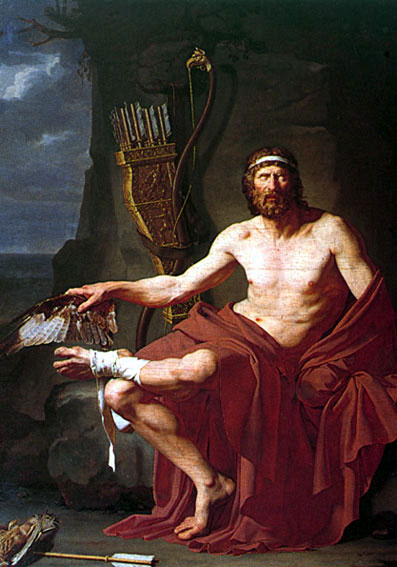
Antigone au chevet de Polynice

Heraclitus the Commentator, in defending the application of allegorical readings to Homer, argues that allegory is of considerable antiquity—used clearly by Archilochus when he compares the troubles of a war (fr. 54) and by Alcaeus when he compares the troubles of a tyranny to a storm at sea. He writes that Alcaeus “compares the troubles of a tyranny to the turmoil of a stormy sea.” (τὰς γὰρ τυραννικὰς ταραχὰς ἐξ ἴσου χειμερίῳ προσεικάζει καταστήματι θαλάττης, Homeric Problems 5.8)

Alcaeus fr. 326

“I cannot make sense of the clash of the winds
One wave whirls from this side,
Another wave comes from the other, and we in the middle
Are borne in our dark ship
Toiling ever on in this great storm.
The swell has taken he mast
And the sail is completely transparent—
There are great tears through it
And the anchors have broken free…”

ἀσυννέτημμι τὼν ἀνέμων στάσιν,
τὸ μὲν γὰρ ἔνθεν κῦμα κυλίνδεται,
τὸ δ’ ἔνθεν, ἄμμες δ’ ὂν τὸ μέσσον
νᾶϊ φορήμμεθα σὺν μελαίναι
χείμωνι μόχθεντες μεγάλωι μάλα·
πὲρ μὲν γὰρ ἄντλος ἰστοπέδαν ἔχει,
λαῖφος δὲ πὰν ζάδηλον ἤδη,
καὶ λάκιδες μέγαλαι κὰτ αὖτο,
χόλαισι δ’ ἄγκυρραι

Alcaeus, fr. 6a [P. Oxy. 1789 1 i 15–19, ii 1–17, 3 i, 12 + 2166(e)4]

“Now this higher wave comes harder than the one before
And will bring us much toil to face
When it overcomes the ship

Let us strengthen the ship’s sides
As fast as we can and hurry into a safe harbor.
Let no weak hesitation take anyone.
For a great contest is clearly before us.
Recall your previous toil.
Today, let every man be dedicated.
And may we never cause shame
To our noble parents who lie beneath the earth”

τόδ’ αὖ]τε κῦμα τὼ π[ρ]οτέρ̣[ω †νέμω
στείχει,] παρέξει δ’ ἄ[μμι πόνον π]όλυν
ἄντλην ἐπ]εί κε νᾶ[ος ἔμβαι
[ ].όμεθ’ ἐ[
[ ]..[..]·[
[ ]

φαρξώμεθ’ ὠς ὤκιστα̣[τοίχοις,
ἐς δ’ ἔχυρον λίμενα δρό[μωμεν,
καὶ μή τιν’ ὄκνος μόλθ[ακος
λάχηι· πρόδηλον γάρ· μεγ[ἀέθλιον·
μνάσθητε τὼ πάροιθα μ[όχθω·
νῦν τις ἄνηρ δόκιμος γε̣[νέσθω.
καὶ μὴ καταισχύνωμεν [ἀνανδρίᾳ
ἔσλοις τόκηας γᾶς ὔπα κε̣[ιμένοις

The text in Heraclitus’ Homeric Problems reads somewhat differently for the first line:

Τὸ δ’ ηὖτε κῦμα τῶν προτέρων ὄνω

Theognis 855-856

“This state has often run to ground like a failing ship
Thanks to the wickedness of its leaders.”

πολλάκις ἡ πόλις ἥδε δι᾿ ἡγεμόνων κακότητα
ὥσπερ κεκλιμένη ναῦς παρὰ γῆν ἔδραμεν.

Plato, Republic 6 488a7-89a2

[This was inspired by a”Ship of Fools” post at LitKicks]

Consider this how this could turn out on many ships or even just one: there is a captain of some size and strength beyond the rest of the men in the ship, but he is deaf and similarly limited at seeing, and he knows as much about sailing as these qualities might imply. So, the sailors are struggling with one another about steering the ship, because each one believes that he should be in charge, even though he has learned nothing of the craft nor can indicate who his teacher was nor when he had the time to learn. Some of them are even saying that it is not teachable, and that they are ready to cut down the man who says it can be taught.

They are always hanging all over the captain asking him and making a big deal of the fact that he should entrust the rudder to them. There are times when some of them do not persuade him, and some of them kill others or kick them off the ship, and once they have overcome the noble captain through a mandrake, or drugs, or something else and run the ship, using up its contents drinking, and partying, and sailing just as such sort of men might. In addition to this, they praise as a fit sailor, and call a captain and knowledgeable at shipcraft the man who is cunning at convincing or forcing the captain that they should be in charge. And they rebuke as useless anyone who is not like this.

Such men are unaware what a true helmsman is like, that he must be concerned about the time of year, the seasons, the sky, the stars, the wind and everything that is appropriate to the art, if he is going to be a leader of a ship in reality, how he might steer the ship even if some desire it or not, when they believe that it is not possible to obtain art or practice about how to do this, something like an art of ship-steering. When these types of conflicts are occurring on a ship, don’t you think the one who is a true helmsman would be called a star-gazer, a blabber, or useless to them by the sailors in the ships organized in this way?

νόησον γὰρ τοιουτονὶ γενόμενον εἴτε πολλῶν νεῶν πέρι εἴτε μιᾶς· ναύκληρον μεγέθει μὲν καὶ ῥώμῃ ὑπὲρ τοὺς ἐν τῇ νηὶ πάντας, ὑπόκωφον δὲ καὶ ὁρῶντα ὡσαύτως βραχύ τι καὶ γιγνώσκοντα περὶ ναυτικῶν ἕτερα τοιαῦτα, τοὺς δὲ ναύτας στασιάζοντας πρὸς ἀλλήλους περὶ τῆς κυβερνήσεως, ἕκαστον οἰόμενον δεῖν κυβερνᾶν, μήτε μαθόντα πώποτε τὴν τέχνην μέτε ἔχοντα ἀποδεῖξαι διδάσκαλον ἑαυτοῦ μηδὲ χρόνον ἐν ᾧ ἐμάνθανεν, πρὸς δὲ τούτοις φάσκοντας μηδὲ διδακτὸν εἶναι, ἀλλὰ καὶ τὸν λέγοντα ὡς διδακτὸν ἑτοίμους κατατέμνειν, αὐτοὺς δὲ αὐτῷ ἀεὶ τῷ ναυκλήρῳ περικεχύσθαι δεομένους καὶ πάντα ποιοῦντας ὅπως ἂν σφίσι τὸ πηδάλιον ἐπιτρέψῃ, ἐνίοτε δ’ ἂν μὴ πείθωσιν ἀλλὰ ἄλλοι μᾶλλον, τοὺς μὲν ἄλλους ἢ ἀποκτεινύντας ἢ ἐκβάλλοντας ἐκ τῆς νεώς, τὸν δὲ γενναῖον ναύκληρον μανδραγόρᾳ ἢ μέθῃ ἤ τινι ἄλλῳ συμποδίσαντας τῆς νεὼς ἄρχειν χρωμένους τοῖς ἐνοῦσι, καὶ πίνοντάς τε καὶ εὐωχουμένους πλεῖν ὡς τὸ εἰκὸς τοὺς τοιούτους, πρὸς δὲ τούτοις ἐπαινοῦντας ναυτικὸν μὲν καλοῦντας καὶ κυβερνητικὸν καὶ ἐπιστάμενον τὰ κατὰ ναῦν, ὃς ἂν συλλαμβάνειν δεινὸς ᾖ ὅπως ἄρξουσιν ἢ πείθοντες ἢ βιαζόμενοι τὸν ναύκληρον, τὸν δὲ μὴ τοιοῦτον ψέγοντας ὡς ἄχρηστον, τοῦ δὲ ἀληθινοῦ κυβερνήτου πέρι μηδ’ ἐπαΐοντες, ὅτι ἀνάγκη αὐτῷ τὴν ἐπιμέλειαν ποιεῖσθαι ἐνιαυτοῦ καὶ ὡρῶν καὶ οὐρανοῦ καὶ ἄστρων καὶ πνευμάτων καὶ πάντων τῶν τῇ τέχνῃ προσηκόντων, εἰ μέλλει τῷ ὄντι νεὼς ἀρχικὸς ἔσεσθαι, ὅπως δὲ κυβερνήσει ἐάντε τινες βούλωνται ἐάντε μή, μήτε τέχνην τούτου μήτε μελέτην οἰόμενοι δυνατὸν εἶναι λαβεῖν ἅμα καὶ τὴν κυβερνητικήν. τοιούτων δὴ περὶ τὰς ναῦς γιγνομένων τὸν ὡς ἀληθῶς κυβερνητικὸν οὐχ ἡγῇ ἂν τῷ ὄντι μετεωροσκόπον τε καὶ ἀδολέσχην καὶ ἄχρηστόν σφισι καλεῖσθαι ὑπὸ τῶν ἐν ταῖς οὕτω κατεσκευασμέναις ναυσὶ πλωτήρων;
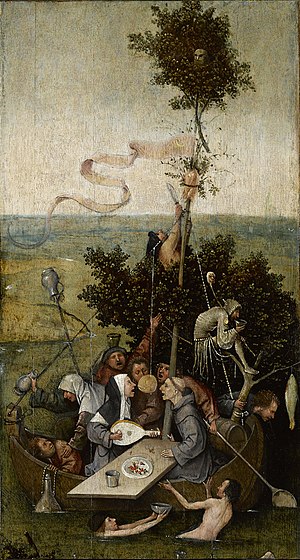
Image result for ship of fools
Hieronymus Bosch, “Ship of Fools”

“If He Survives, He Will Rule the Land”

Aeschylus, Persians 210-214

“For me, this was frightening to see,
And for you to hear. Know well that my child
Would be wondrous to behold if he did well but,
He’s not beholden to the state:
he will rule the land if he merely survives.”

ταῦτ᾿ ἐμοί τε δείματ᾿ εἰσιδεῖν
ὑμῖν τ᾿ ἀκούειν. εὖ γὰρ ἴστε, παῖς ἐμὸς
πράξας μὲν εὖ θαυμαστὸς ἂν γένοιτ᾿ ἀνήρ·
κακῶς δὲ πράξας—οὐχ ὑπεύθυνος πόλει,
σωθεὶς δ᾿ ὁμοίως τῆσδε κοιρανεῖ χθονός.

Euripides, Andromache 391-393

“Won’t you kill him,
The cause of these things? No, you ignore the cause
And just charge against the symptom that came later…”

…οὐ κεῖνον κτενεῖς,
τὸν αἴτιον τῶνδ᾽, ἀλλὰ τὴν ἀρχὴν ἀφεὶς
πρὸς τὴν τελευτὴν ὑστέραν οὖσαν φέρῃ;

Euripides, Andromache 479-485

“When strong winds carry sailors forward
Divergent opinions steering the ship
Or a mob thick with wise men is feebler
Than a single mind with self-control.
In city and under a single
Authority should be one person’s
Whenever we want to find success.”

πνοαὶ δ᾽ ὅταν φέρωσι ναυτίλους θοαί,
κατὰ πηδαλίων δίδυμαι πραπίδων γνῶμαι,
σοφῶν τε πλῆθος ἀθρόον ἀσθενέστερον
φαυλοτέρας φρενὸς αὐτοκρατοῦς.
ἑνὸς ἄρ᾽ ἄνυσις ἀνά τε μέλαθρα
κατά τε πόλιας, ὁπόταν εὑ-
ρεῖν θέλωσι καιρόν.

834-845

“My speech is lacking one thing still.
I wish I had the voice in my limbs
And hands and hair and the march of my feet
Or the skills of Daidalos or some god
So I could completely grasp you by your knees
Wailing, laying about you with every kind of argument.
Master, great hope of life for the Greeks,
Heed me—lend an avenging hand to an old woman
Even if she is nothing at all.
For it is right that a good man serve justice
And always do evil everywhere to evil men.”

ἑνός μοι μῦθος ἐνδεὴς ἔτι·
εἴ μοι γένοιτο φθόγγος ἐν βραχίοσιν
καὶ χερσὶ καὶ κόμαισι καὶ ποδῶν βάσει
ἢ Δαιδάλου τέχναισιν ἢ θεῶν τινος,
ὡς πάνθ᾿ ἁμαρτῇ σῶν ἔχοιτο γουνάτων
κλαίοντ᾿, ἐπισκήπτοντα παντοίους λόγους.
ὦ δέσποτ᾿, ὦ μέγιστον Ἕλλησιν φάος,
πιθοῦ, παράσχες χεῖρα τῇ πρεσβύτιδι
τιμωρόν, εἰ καὶ μηδέν ἐστιν ἀλλ᾿ ὅμως.
ἐσθλοῦ γὰρ ἀνδρὸς τῇ δίκῃ θ᾿ ὑπηρετεῖν
καὶ τοὺς κακοὺς δρᾶν πανταχοῦ κακῶς ἀεί.

Aeschylus, Persians 266-7

“I was present there—not merely hearing other’s words
Persians, I can tell you what kinds of terrible things occurred.”

καὶ μὴν παρών γε κοὐ λόγους ἄλλων κλυών,
Πέρσαι, φράσαιμ᾿ ἂν οἷ᾿ ἐπορσύνθη κακά.


https://commons.wikimedia.org/wiki/File:Greek_Bireme_500BC.jpg

Less Human Apart: Isolation and Civilization in Myth, Science Fiction and RL

I am reposting this entry from early in the pandemic in honor of the panel “The Powers and Perils of Solitude in Greek Literature” at the SCS Annual Meeting. My paper “Being Human, Being Alone: Isolation and Heroic Exceptionality in the Odyssey” draws on it.

Here’s the roster of talks

The Post


Iliad, 2.721–723

“Philoktetes lies there on the island suffering harsh pains
In holy Lemnos where the sons of the Achaeans left him
suffering with an evil wound from a murderous watersnake.”

ἀλλ’ ὃ μὲν ἐν νήσῳ κεῖτο κρατέρ’ ἄλγεα πάσχων
Λήμνῳ ἐν ἠγαθέῃ, ὅθι μιν λίπον υἷες ᾿Αχαιῶν
ἕλκεϊ μοχθίζοντα κακῷ ὀλοόφρονος ὕδρου

Odyssey 5.13–15

“He lies there on the island suffering harsh pains
In the halls of Calypso the nymph who holds him
under compulsion. He is not capable of returning to his paternal land.”

ἀλλ’ ὁ μὲν ἐν νήσῳ κεῖται κρατέρ’ ἄλγεα πάσχων
νύμφης ἐν μεγάροισι Καλυψοῦς, ἥ μιν ἀνάγκῃ
ἴσχει· ὁ δ’ οὐ δύναται ἣν πατρίδα γαῖαν ἱκέσθαι

Isolation. “Philoctetes on the Island of Lemnos,” By Jean Germain Drouais

The figure of the isolated hero in ancient Greek myth and poetry is one who is set apart, on an island, separated from other humans and, by extension, from human culture. The impact of isolation is often communicated through the heroic body, even if it is offered in some way as a cause: Philoktetes’ dehumanization is reflected in the wound whose antisocial attributes cause him to be abandoned (described like a disease in Sophocles’ play). Odysseus seems arguably less human insofar as he is stripped of agency and, until Hermes comes to move him, clearly more an object of interest than a subject of his own.

Indeed, the Odyssey has deep ethnographic concerns, focusing on how people make their livings and how they live their lives. When Odysseus describes the island of the Cyclopes, he remarks on how it might be a good place to live, but the Cyclopes themselves are “arrogant and lawless” (ὑπερφιάλων ἀθεμίστων, 9.106). They aren’t human because of the  way they live (they do not cultivate the land, 108-111). And they are less than human because of how they organize their lives (Odyssey 9.112–115):

 “They don’t have council-bearing assemblies or laws,
But instead they inhabit homes on high hills
In hollow caves, and each one makes laws
For his children and wives—they do not have concern for one another.”

τοῖσιν δ’ οὔτ’ ἀγοραὶ βουληφόροι οὔτε θέμιστες,
ἀλλ’ οἵ γ’ ὑψηλῶν ὀρέων ναίουσι κάρηνα
ἐν σπέεσι γλαφυροῖσι, θεμιστεύει δὲ ἕκαστος
παίδων ἠδ’ ἀλόχων, οὐδ’ ἀλλήλων ἀλέγουσι.

In a way, Odysseus anticipates here the later Greek use of the term idiotês for the person who fails to understand that the commonwealth directly impacts individual possessions—indeed, it makes possible the existence of individual goods. The ancient idiot, in this political sense, is a kind of naïve libertarian who is incapable of conceiving of shared human society as the very thing that makes life possible and also worth living.

*          *          *          *

Current events are forcing us to explore some of the same tensions: inasmuch as some are aghast that we are not willing to die to preserve the economy, the rest of us remain horror stricken at how much our public health and collective good have been sacrificed to prop up the wealth of a very few. Even though my training directs my thoughts consistently to the past for parallels to cope with the present, my own reading history and proclivity for speculative fiction keep taking me to narrative futures. In my impatience to be done with the now, I am busy manufacturing anxieties about what will become of us later.

In Isaac Asimov’s Robot novel The Naked Sun (1957), the detective Elijah Bailey is dispatched to one of the “spacer” worlds to investigate a murder. In Asimov’s world, humankind lives in a mixed future where billions are crowded into cities on earth while a select elite escape to fifty “Spacer” worlds. Over time, the antagonism between Spacer and Earther expands as the former use their greater resources and technology to dominate the latter. And Earthers suffer from a fear of the outside, a reluctance to leave the comfort of their cities.

The Spacers, those libertarian techno-overlords, fear contagion and disease and contact with the human rabble left on earth. When Baily meets with the widow of the murdered scientist on her planet Solaria, Gladia, she will at first only see him through “viewing” (a video screen). Eventually she breaks Solarian taboo and comes to him in person and to help solve the crime. (No spoiler, but it wasn’t a robot.)

Many years later (in our world) Asimov returns to Solaria generations later in his Foundation and Earth (1986). In the intervening years, the Spacer planets were eclipsed by the rapid expansion of the population of Earth into the galaxy, fading quickly into obsolescence and obscurity. The Solaria found here is populated by a few human beings who intentionally developed hermaphroditic qualities so they would never have to encounter other human beings in person again. The Solarian world is expansive—each person lives on massive estates, engaging with others only through mediated viewing and using technology to ritualize isolation.

E. M. Forster in his short story “The Machine Stops” (1909, 1928) puts humankind in a sub-terrestrial, dystopic future. People must live in isolation, in basic rooms from which they engage in the world only through video conferencing. One of the main characters, Vashti, spends a great deal of her time broadcasting her ideas over this ersatz internet, recycling and repackaging ideas for consumption and replacing most human relationship with a distanced presentation of the ‘self’. The main plot of this tale, of course, is about the “machine” which supports all of this life collapsing, but the lingering sense it leaves is one of the panopticon in which the ability to broadcast, to send a message, is traded for being watched and people live separate from one another both out of fear and out of habit.

I have been thinking about both of these speculative narratives over the past few weeks as my work has converted online completely and my social life has blended into it. I “zoom” with colleagues, skype with friends, and merely text-message with my extended family. I watch as my children are habituated to the same kind of mediated existence. There is an hour each day when three of us are on zoom simultaneously, in the same house but in separate rooms, sometimes irked that the sound of another intrudes on our distanced engagement.

We have been living with some of the rapid consequences of these kinds of mediated communication networks for years. Is something as bizarre as pizza-gate possible without facebook or other online fora? Do these media ever produce anything but the strangest and saddest common denominator?

Modern science fiction is no stranger to this too. In his post-apocalpytic Seveneves, Neal Stephenson—an author a bit too libertarian and soft on techo-capitalists generally—puts a surviving remnant of humanity in space, isolated in a network of space capsules connected by a communication network dubbed “spacebook”. In order to survive, these clutches of life have to preserve resources and follow a very basic plan. But paranoia explodes in the social network: one week, a thought leader proposes that in space humans do not need legs, so they should cut them off and eat them to preserve the protein. Soon, a critical number of people depart with precious resources to try to make it to Mars because they convinced themselves in their echo chamber of madness that this was a good plan, despite every bit of evidence to the contrary.

Neal Stephenson's SEVENEVES — Dennis D. McDonald's Web Site

(they all die. A mere handful of people survive their stupidity.)

Of the many ways in which COVID-19 will change our lives, one is how it will accelerate our embrace of life online. Children are having playdates online: ours have had dance classes, piano lessons, and speech therapy in just the last week to go along with 2-3 ‘Montessori’ zoom lessons a day. Although I am deeply grateful to these teachers and instructors for bringing some sense of normalcy to our children’s days, I worry that this will be their baseline: no playgrounds, no playmates, but video-streamed encounters and mediated experiences. They will be open to the supercharged pathways of disinformation that propagate quack cures for plagues and easy arguments for denying collective action against global warming.

Asimov’s Solarians are independent-minded elitists whose fear of disease and love of long lives pushes them further and further apart; Forster’s subterraneans are addicted to the comfort of their regulated lives and distracted by the ability to be ‘experts’ and temporary celebrities in the global machine. Stephenson’s human race barely survives an apocalypse followed by human caused ruin thanks to individual heroics and fantastic evolutionary science. The Coronavirus won’t suddenly turn us into any of these groups, but it may make us just that much less human.

*          *          *          *

Modern studies in narrative emphasize how our identity develops from social relationships and studies in cognitive psychology show how isolation can have damaging effects on us emotionally and mentally. When separated from others we can experience an increase in fear and paranoia (See Andersen et al. 2000, 19.); studies in the impact of solitary confinement on prisoners demonstrate a marked increase in the development of psychopathology under the influence of isolation which can eventuate in neurobiological transformations. The brain of an isolated human being may demonstrate fewer neural connections and correlate with distortions in memory and a deterioration of language abilities. Isolation, to put it simply, can break down those very things that make people who they are. (see Ravindran 2014, Gilmore and Nanon 2014; Kaba et al. 2014)

Ancient Greek myth and poetry seems to communicate this through figures like Philoktetes—who languishes for a decade after being marooned on the island of Lemnos—and Odysseus, who suffers in quasi-isolation for seven years, weeping on the edge of the sea (but having sex with Calypso at night). Odysseus cannot return home directly from this. His journey home requires him to repeatedly tell stories about himself and to reaffirm his identity step-by-step through reunions with the important people in his life. It is Odysseus too who brings Philoktetes back into society in Sophocles’ play.

I think ancient audiences saw the sufferings of both figures as a result from their isolation, from their separation from communion with other human beings. Both Homer’s epic and Sophocles’ play emphasize political themes and social consequences: Odysseus and Philoktetes are at times calculating and full of rage, leaving characters in the poems (and audiences outside them) unsure of if or when they will lash out.

What each narrative emphasizes, however, is that the isolated figure needs fellowship and partnership to return to human society. Odysseus’ return home is not complete until he is recognized—and recognizes himself—in his son, spouse, and father. Philoktetes needs to be persuaded to return, to be cajoled and guided and distracted from the fact he is being used.

This is, perhaps, cold comfort for those of us isolated now. But it does remind us that having other people around us is important and that, when the time comes to reintegrate, it won’t be simple or easy. We will have to tell each other our stories and listen to who we confirm in each other we are.

And perhaps it will force us to think about the world we create for ourselves. The plot which drives Asimov’s Foundation and Earth is a choice about the future of life in the galaxy: whether it will continue on as it has, with everyone charting separate courses of self interest or it will change radically, adopting the life-form model of a planet called Gaia where all inhabitants shared consciousness and fate, yielding some sense of free will.

When I read this choice to its conclusion in the late 80s, I was horrified because it seemed (spoiler alert) that the protagonist was choosing communism! But it did not take many years for the wisdom of this choice to make a little more sense. At the end of the Odyssey, Odysseus returns home and murders 108 suitors. The epic almost ends with a civil war but for the intervention of Athena and Zeus who declare an amnesty, insisting that the Ithakans and Odysseus need to live together (24.486, πλοῦτος δὲ καὶ εἰρήνη ἅλις ἔστω). In this, the individual leader is forced to change his ways; but the people have to submit to forgetting and forgetting the violence and malice which brought a generation to ruin.

What choices will we face? Which ones will we be able to make?

Some things to read

Andersen, H. S., Sestoft, D. D., Lillebæk, T. T., Gabrielsen, G. G., Hemmingsen, R. R., & Kramp, P. P. 2000. “A Longitudinal Study of Prisoners on Remand: Psychiatric Prevalence, Incidence and Psychopathology in Solitary vs. Non-Solitary Confinement.” Acta Psychiatrica Scandinavica, 102:19.

Foundation and Earth (Foundation #5) by Isaac Asimov

Barker, E.T.E. and Christensen J. P. Homer’s Thebes. Washington, D.C. 2019.

Gilmore, Betty and Williams, Nanon M. 2014. The Darkest Hour: Shedding Light on the Impact of Isolation and Death Row in Texas Prisons. Dallas.

Kaba, Fatos et al. 2014. “Solitary Confinement and Risk of Self-Harm Among Jail Inmates.” American Journal of Public Health: March 2014, Vol. 104, No. 3, pp. 442–447.

Ravindran, Shruti 2014. “Twilight in the Box.” Aeon 27.

Shay, Jonathan. 2002. Odysseus in America: Combat Trauma and the Trials of Homecoming. New York.

Thiher, Allen. 1999. Revels in Madness: Insanity in Medicine and Literature. Ann Arbor.

Underwood, Charles. 2018. Mythos and Voice: Displacement, Learning, and Agency in Odysseus’ World. Lanham: Lexington Books

Hey Alex, Don’t Be A Great Plague

Seems like old Alex the son of Phillip the Great is in the news….

Aelian, Varia Historia 14.11

“Philiskos said to Alexander at some point, “Think about your reputation. Don’t be a plague or some great disease, but peace and health instead.” In saying plague he meant ruling violently and cruelly, seizing cities, and destroying peoples. In mentioning health, he meant planning for the safety of his constituents. These goods can come from peace.”

Φίλισκος πρὸς Ἀλέξανδρον ἔφη ποτέ· “δόξης φρόντιζε, ἀλλὰ μὴ ἔσο λοιμὸς [καὶ μὴ μεγάλη νόσος],ἀλλὰ [εἰρήνη καὶ]ὑγεία,” λέγων τὸ μὲν βιαίως ἄρχειν καὶ πικρῶς καὶ αἱρεῖν πόλεις καὶ ἀπολλύειν δήμους λοιμοῦ εἶναι, τὸ δὲ ὑγιῶς, προνοεῖσθαι τῆς σωτηρίας τῶν ἀρχομένων· εἰρήνης ταῦτα ἀγαθά.

File:Cades, Giuseppe - Alexander the Great Refuses to Take Water - 1792.jpg
Alexander the Great Refuses to Take Water by Giuseppe Cades

These sayings come from the Gnomologium Vaticanum


78 “When Alexander arrived in Troy and gazed upon the tomb of Achilles he stopped and said “Achilles, how lucky you were to have Homer as your great herald!” Anaximenes, who was present, said, “but I, lord, will tell your tale.” “By the gods”, Alexander responded, “I’d rather be Homer’s Thersites’ than your Achilles.”

῾Ο αὐτὸς ἐλθὼν εἰς ῎Ιλιον καὶ θεασάμενος τὸν ᾿Αχιλλέως τάφον στὰς εἶπεν· „ὦ ᾿Αχιλλεῦ· ὡς [οὐ] μέγας ὢν μεγάλου κήρυκος ἔτυχες ῾Ομήρου!” παρόντος δὲ ᾿Αναξιμένους καὶ εἰπόντος· „καὶ ἡμεῖς σέ, ὦ βανιλεῦ, ἔνδοξον ποιήσομεν”, „ἀλλὰ νὴ τοὺς θεοὺς”, ἔφη, „παρ’ ῾Ομήρῳ ἐβουλόμην ἂν εἶναι Θερσίτης ἢ παρὰ σοὶ ᾿Αχιλλεύς.”

94 “When some of his friends were encouraging him to wage war against the Amazons, Alexander said “it will not bring me honor to conquer women, but it will bring me dishonor if I lose to them”

῾Ο αὐτὸς παραινούντων αὐτῷ τῶν φίλων στρατεύειν ἐπὶ τὰς ᾿Αμαζόνας εἶπε· „τὸ μὲν νικῆσαι γυναῖκας οὐκ ἔνδοξον τὸ δὲ νικηθῆναι ὑπ’ αὐτῶν ἄδοξον.”

104 “When Diogenes the Cynic was asking Alexander for a drachma he said “this is not a kingly gift.” When he then said, “give me a talent”, Alexander responded “That’s not a Cynic request.”

῾Ο αὐτὸς αἰτήσαντος αὐτὸν Διογένους δραχμὴν ἔφη· „οὐ βασιλικὸν τὸ δῶρον·” τοῦ δὲ εἰπόντος· „καὶ δὸς τάλαντον” εἶπεν· „ἀλλ’ οὐ κυνικὸν τὸ αἴτημα.”

Aulus Gellius, Attic Nights 13.iv

A transcript of a letter from Alexander to his mother Olympias; and what Olympias wrote back to him.

“In the majority of the records of the deeds of Alexander and rather recently in the book of Marcus Varro, which is called “Orestes” or “On Insanity”, we find that Olympias, the wife of Philipp, most cleverly replied to her son. For, when he wrote to his mother, “King Alexander, the son of Zeus Ammon, sends his greetings to his mother Olympias”, she said “My son, hush! lest you defame me or incriminate me before Juno! She will certainly allot me some great harm once you have confessed in your letters that I am her husband’s adultress.”

This courtesy from a wise and prudent woman to a boastful son moderately and elegantly warned him that his puffed-up belief, which he had inflated from great victories, the charms of praise and from successes beyond belief–the idea that he was the offspring of Zeus–ought to be abandoned.”

Descripta Alexandri ad matrem Olympiadem epistula; et quid Olympias festive ei rescripserit.

In plerisque monumentis rerum ab Alexandro gestarum et paulo ante in libro M. Varronis, qui inscriptus est Orestes vel de insania, Olympiadem Philippi uxorem festivissime rescripsisse legimus Alexandro filio. 2 Nam cum is ad matrem ita scripsisset: “Rex Alexander Iovis Hammonis filius Olympiadi matri salutem dicit”, Olympias ei rescripsit ad hanc sententiam: “Amabo”, inquit “mi fili, quiescas neque deferas me neque criminere adversum Iunonem; malum mihi prorsum illa magnum dabit, cum tu me litteris tuis paelicem esse illi confiteris”. 3 Ea mulieris scitae atque prudentis erga ferocem filium comitas sensim et comiter admonuisse eum visa est deponendam esse opinionem vanam, quam ille ingentibus victoriis et adulantium blandimentis et rebus supra fidem prosperis inbiberat, genitum esse sese de Iove.

Plutarch, Life of Alexander 26.4

“When a small box was brought to him—which seem more valuable than the rest of the possessions and baggage they had taken from Dareios, [Alexander] asked his friends what thing seem especially worthy of being put in it. Although many of them made many suggestions, Alexander said that he would keep the Iliad safe by placing it inside. Not a few of the most credible sources claim this.

If, as the Alexandrians say is true—since they believe Herakleides—Homer was no lazy or unprofitable travel companion…”

Κιβωτίου δέ τινος αὐτῷ προσενεχθέντος, οὗ πολυτελέστερον οὐδὲν ἐφάνη τοῖς τὰ Δαρείου χρήματα καὶ τὰς ἀποσκευὰς παραλαμβάνουσιν, ἠρώτα τοὺς φίλους, ὅ τι δοκοίη μάλιστα τῶν ἀξίων σπουδῆς εἰς αὐτὸ καταθέσθαι. πολλὰ δὲ πολλῶν λεγόντων, αὐτὸς ἔφη τὴν ᾿Ιλιάδα φρουρήσειν ἐνταῦθα καταθέμενος· καὶ ταῦτα μὲνοὐκ ὀλίγοι τῶν ἀξιοπίστων μεμαρτυρήκασιν. εἰ δ’, ὅπερ ᾿Αλεξανδρεῖς λέγουσιν ῾Ηρακλείδῃ (fr. 140 W.) πιστεύοντες, ἀληθές ἐστιν, οὔκουν [οὐκ] ἀργὸς οὐδ’ ἀσύμβολος αὐτῷ συστρατεύειν ἔοικεν ῞Ομηρος.

This passage refers to an earlier moment in the Life. Coincidentally, I also sleep the same way…

8.4

“[Alexander] was also naturally a lover of language, a lover of learning, and a lover of reading. Because he believed that the Iliad was a guidebook for military excellence—and called it that too—he took a copy of it which had been edited by Aristotle which they used to refer to as “Iliad-in-a-Box”. He always kept it with his dagger beneath his pillow—as Onêsikritos tells us.

When there were no other books in certain lands, he sent to Harpalos for some more. Then Harpalus sent him Philistos’ books along with some tragedies of Euripides, Sophokles and Aeschylus and the dithyrambs of Telestes and Philoxenos.”

ἦν δὲ καὶ φύσει φιλόλογος καὶ φιλομαθὴς καὶ φιλαναγνώστης, καὶ τὴν μὲν  ᾿Ιλιάδα τῆς πολεμικῆς ἀρετῆς ἐφόδιον καὶ νομίζων καὶ ὀνομάζων, ἔλαβε μὲν ᾿Αριστοτέλους διορθώσαντος ἣν ἐκ τοῦ νάρθηκος καλοῦσιν, εἶχε δ’ ἀεὶ μετὰ τοῦ ἐγχειριδίου κειμένην ὑπὸ τὸ προσκεφάλαιον, ὡς ᾿Ονησίκριτος ἱστόρηκε (FGrH 134 F 38)· τῶν δ’ ἄλλων βιβλίων οὐκ εὐπορῶν ἐν τοῖς ἄνω τόποις, ῞Αρπαλον ἐκέλευσε πέμψαι, κἀκεῖνος ἔπεμψεν αὐτῷ τάς τε Φιλίστου βίβλους καὶ τῶν Εὐριπίδου καὶ Σοφοκλέους καὶ Αἰσχύλου τραγῳδιῶν συχνάς, καὶ Τελέστου καὶ Φιλοξένου διθυράμβους.


Pseudo-Callisthenes, Alexander Romance 3.6-7 (Go here for collated Greek texts and a translation)

Alexander continues his conversation with the gymnosophists in India and ends it with an epic mic-drop.

“He asked again, “What is greater, land or the sea.?” And one responded, “Land, for the sea rests upon the earth.” Then he asked “Which of all the beasts is the most capable?” And another answered, “man…” Then he said to another, “Whom can we not deceive but must always present with the truth?” And he answered, “God: for we cannot deceive one who knows everything?” And then he said to them, “What do you want to ask of me?” And he said “Immortality.” Alexander said, “I do not have this wealth—for I too am merely mortal.” And they said, “Since you are mortal, why do you make so much war? Is it so that you may seize everything and carry it off somewhere? You will leave them to others in turn.”

And Alexander said to them, “These things depend on the will of those above—and we are but servants of their assignment. The sea will not move unless the wind blows. The trees will not dance unless the air strikes them. Man accomplishes nothing without the will of those above. Even though I wish to stop warring, the tyrant of my mind does not allow it.   If we were all in agreement; the universe would be sluggish, the sea would not fill; the land would not be farmed; marriages would not be completed, and there would be no child-bearing.  How many met misfortune in the wars I waged by losing all their possessions? Well, how many profited from their losses? For all who steal from others eventually leave their possessions to others still. Nothing belongs to anyone.” After he said this, Alexander walked away…”

Gymnosophists

εἶπε πάλιν· ‘τί πλεῖον, ἡ γῆ ἢ ἡ θάλασσα;’ εἶπεν· ‘ἡ γῆ· καὶ γὰρ αὐτὴ ἡ θάλασσα ἐπὶ τῆς γῆς ἵδρυται.’ ὁ δὲ εἶπε· ‘τί πάντων τῶν θηρίων πανουργότερον;’ καὶ εἶπεν· ‘ὁ ἄνθρωπος.’ . . . ἑτέρῳ ἔφη· ‘τίνα οὐ δυνάμεθα ψεύσασθαι, ἀλλὰ τὸν ἀληθινὸν λόγον αὐτῷ προσφέρομεν;’ — ‘θεόν· οὐ γὰρ δυνάμεθα ψεύσασθαι τὸν πάντα εἰδότα.’ . . . Εἶπεν αὐτοῖς· ‘τί θέλετε ἐξαιτήσασθαί με;’ οἱ δὲ εἶπον· ‘ἀθανασίαν.’ ὁ δὲ Ἀλέξανδρος εἶπεν· ‘ταύτην ἐγὼ οὐκ ἔχω τὴν ἐξουσίαν· καὶ γὰρ ἐγὼ θνητὸς ὑπάρχω.’ οἱ δὲ εἶπον· ‘τί τοίνυν θνητὸς ὑπάρχων τοσαῦτα πολεμεῖς; ἵνα πάντα ἄρας που ἀπενέγκῃς; σὺ πάλιν αὐτὰ ἑτέροις καταλείψεις.’ καὶ εἶπεν αὐτοῖς ὁ Ἀλέξανδρος· ‘ταῦτα ἐκ τῆς ἄνωθεν προνοίας διοικοῦνται, ἵνα ἡμεῖς [ὑμῖν] διάκονοι γενώμεθα τῆς ἐκείνων ἐπιταγῆς. οὐ γὰρ κινεῖται θάλασσα, εἰ μὴ πνεύσῃ ἄνεμος, οὐδὲ σαλεύεται δένδρα, εἰ μὴ ῥιπίζῃ πνεῦμα, οὐκ ἐνεργεῖται ἄνθρωπος εἰ μὴ ἐκ τῆς ἄνωθεν προνοίας. κἀγὼ δὲ παύσασθαι θέλω τοῦ πολεμεῖν, ἀλλ´ οὐκ ἐᾷ με ὁ τῆς γνώμης μου δεσπότης. εἰ γὰρ πάντες ὁμογνώμονες ἦμεν, ἀργὸς ἐτύγχανεν ὁ κόσμος, θάλασσα οὐκ ἐπλέετο, γῆ οὐκ ἐγεωργεῖτο, γάμοι οὐκ ἐπετελοῦντο, παιδοποιίαι οὐκ ἦσαν. πόσοι γὰρ ἐν τοῖς ὑπ´ ἐμοῦ γενομένοις πολέμοις ἐδυστύχησαν ἀπολέσαντες τὰ ἴδια, ἄλλοι δὲ ηὐτύχησαν ἐκ τῶν ἀλλοτρίων; πάντες γὰρ τὰ πάντων λαμβάνοντες ἑτέροις παραχωροῦμεν καὶ οὐδενὶ οὐδὲν ὑπάρχει.’ Οὕτως εἰπὼν ὁ Ἀλέξανδρος ἀπεχώρει . . .


Foot Ailments and Fools! Save us From Democrates


Aelian, Miscellany 4.5

“Democrates the wrestler also had a foot ailment. When he went to a competition he stood in the arena, drew a circle around himself and dared his opponents to drag him over the line. Those who couldn’t, were defeated. He left crowned victor, having stood his ground strongly.”

Δημοκράτης ὁ παλαιστὴς καὶ αὐτὸς νοσήσας τοὺς πόδας, παριὼν εἰς τοὺς ἀγῶνας καὶ στὰς ἐν τῷ σταδίῳ, περιγράφων ἑαυτῷ κύκλον προσέταττε τοῖς ἀντιπαλαισταῖς ἔξω τῆς γραμμῆς αὐτὸν προέλκειν·οἱ δὲ ἡττῶντο ἀδυνατοῦντες. ὁ δὲ εὖ διαβὰς ἐν τῇ στάσει καὶ ἐγκρατῶς, στεφανούμενος ἀπῄει


Democrates or Heraclitus

“Friendship with a single smart person is better than many fools”

ἑνὸς φιλίη ξυνετοῦ κρέσσων ἀξυνέτων πάντων.


From Brill’s New Pauly, s.v. Democrates

[1] Attic orator of the 4th cent. BC from Aphidna

Attic orator of the 4th cent. BC from Aphidna, probably an older contemporary of Demosthenes [2] (about 338 BC he is called γέρων (gérōn; old man), cf. Stob. Floril. 3,22,43). As the descendant of  Harmodius or  Aristogeiton, he had a claim to free provisions in the Prytaneion (Hyp. 4,3). He belonged to the Pro-Macedonian party (Hyp. 4,2). He is also mentioned in Aeschin. Leg. 2,17 and Isaeus 6,22.

A Letter to the President of UVM on Proposed Budget Cuts

Below is the text of a letter I will be sending to the President of UVM and the Board of Trustees. Please consider signing this petition for Classics and this one for geology. For information see @JPenelope_Evans’ eloquent thread, and her medium post, news reports like this, and the coverage on IHE

Dear President Garimella,

I am writing to express my shock and deep concern for the proposal Dean Falls of the Colleges of Arts and Sciences has produced to cut the University of Vermont’s programs in Geology, Classics, Religion, Asian studies, Latin American and Caribbean studies, and Italian studies. This proposal represents a betrayal of UVM’s historical mission and its responsibility to its community and, in addition, an outright attack on shared governance. It threatens the standing of the University as an institution of higher learning and it sets a disastrous example of educational leadership in a time of crisis.

I write first as a native New Englander who had to leave my home state of Maine to study Classics because my state system did not offer the degree. Your University fulfills a vital role in serving the people of Vermont and neighboring states. During my childhood, my dentist, pediatrician, and many of my teachers graduated from UVM. They were deeply caring and engaged members of our community because they had an education grounded in the Liberal Arts and the traditions of a great public university. Cutting these programs will impoverish the education your students receive and drive many more students out of state for their education.

I write also from personal experience with UVM. Both of my siblings graduated from your institution and my sister earned a degree in Classics. As a member of the discipline, I know that the Department of Classics at UVM produces remarkable scholarship, recently in the work of Professors Franklin, Usher and Chiu. But I also know that the department’s faculty are amazing teachers and mentors: a recent graduate student at Brandeis just beams when recalling Jessica Evans’ Greek classes; and, well over a decade later, Professor Bailly still asks me about my sister when he and I correspond. I have little doubt that the other programs on the cutting block are also filled with fine scholars and exemplary teachers. We can slash operational budgets, run deficits, draw on endowments, and cut salaries. We cannot replace the talent, memory, and dedication of faculty and staff once their programs are gone.

I also write as the Chair of the Faculty Senate at Brandeis University. Cutting academic programs in the way that Dean Falls has proposed undermines your University’s commitment to shared governance by depriving the Faculty of the ability to shape the curriculum and share responsibility in managing this crisis. These cuts are not a result of immediate financial exigency and certainly do not make up for even 10% of anticipated revenue shortfalls. Instead, these cuts represent a calculated attempt to take advantage of a crisis to eliminate programs that do not adhere to some preconceived notion of profitability and utility. The financial measures applied in making these decisions, moreover, are intellectually dishonest. By employing a measure of majors graduated by year instead of total credit-hours taught compared to cost of instruction, Dean Falls’ proposal cloaks ideological prejudice in false quantities. Even worse, Provost’s Prelock’s written comments claiming that these moves will “strengthen the liberal arts at UVM” (via Inside Higher Ed) enact a political doublespeak unworthy of your institution and proof that there is no solid financial justification for making these moves.

The next few years will indeed be a time of financial crisis for higher education. Instead of capitulating before future shortfalls are clear, educational leaders need to tell the truth of what is happening—how decades of divestment in higher education from state legislatures and the federal government put institutions in budgetary crises before the pandemic even started. University presidents and provosts should work together to lobby their state governments and the federal government for relief. Every avenue should be tried before cutting the most important resource Universities possess: the people they bring together.  Now is not the time to make minor, symbolic cuts to our budgets. Higher education is facing its most serious challenge in generations and now is the time to articulate our values. We are not how much we have; we are not what we desire; we are what we are willing to fight for.


The UVM Classics Building at 481 Main StreetCheck out the UVM Classics homepage, and send them some love.

It Was Winter, It Was Snowing

Thucydides 4.103

“It was winter and it was snowing”

χειμὼν δὲ ἦν καὶ ὑπένειφεν…

Homer, Il. 3.222-3

“Yet, then a great voice came from his chest And [Odysseus’] words were like snowy storms”

ἀλλ’ ὅτε δὴ ὄπα τε μεγάλην ἐκ στήθεος εἵη καὶ ἔπεα νιφάδεσσιν ἐοικότα χειμερίῃσιν,

Hermippus 37 (Athenaeus 650e)

“Have you ever seen a pomegranate seed in drifts of snow?”

ἤδη τεθέασαι κόκκον ἐν χιόνι ῥόας;

Pindar, Pythian 1. 20

“Snowy Aetna, perennial nurse of bitter snow”

νιφόεσσ᾿ Αἴτνα, πάνετες χιόνος ὀξείας τιθήνα

Plutarch, Moralia 340e

“Nations covered in depths of snow”

καὶ βάθεσι χιόνων κατακεχωσμένα ἔθνη

Herodotus, Histories 4.31

“Above this land, snow always falls…

τὰ κατύπερθε ταύτης τῆς χώρης αἰεὶ νίφεται

Diodorus Siculus, 14.28

“Because of the mass of snow that was constantly falling, all their weapons were covered and their bodies froze in the chill in the air. Thanks to the extremity of their troubles, they were sleepless through the whole night”

διὰ γὰρ τὸ πλῆθος τῆς κατὰ τὸ συνεχὲς ἐκχεομένης χιόνος τά τε ὅπλα πάντα συνεκαλύφθη καὶ τὰ σώματα διὰ τὸν ἀπὸ τῆς αἰθρίας πάγον περιεψύχετο. διὰ δὲ τὴν ὑπερβολὴν τῶν κακῶν ὅλην τὴν νύκτα διηγρύπνουν·

Ammianus Marcellinus, History V. V. Gratianus 27.9

“He will tolerate sun and snow, frost and thirst, and long watches.”

solem nivesque et pruinas et sitim perferet et vigilias

Basil, Letter 48

“We have been snowed in by such a volume of snow that we have been buried in our own homes and taking shelter in our holes for two months already”

καὶ γὰρ τοσούτῳ πλήθει χιόνων κατενίφημεν, ὡς αὐτοῖς οἴκοις καταχωσθέντας δύο μῆνας ἤδη ταῖς καταδύσεσιν ἐμφωλεύειν.

Livy, 10.46

“The snow now covered everything and it was no longer possible to stay outside…”

Nives iam omnia oppleverant nec durari extra tecta poterat

Plautus, Stichus 648

“The day is melting like snow…”

quasi nix tabescit dies.

Seneca, De Beneficiis 4

“I will go to dinner just as I promised, even if it is cold. But I certainly will not if it begins to snow.”

Ad cenam, quia promisi, ibo, etiam si frigus erit; non quidem, si nives cadent.

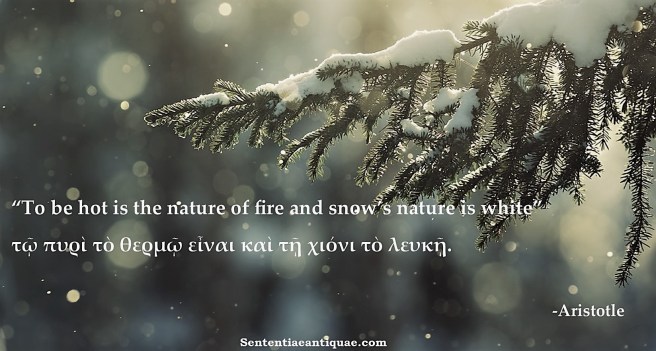
Snowy Mountain

Snow istotle

Kidnapping and Theft

Antiphanes, fr. 75 (=Athenaeus 490a)

“But I will tell you clearly:
If you know anything about the kidnapping of my child,
You need to tell me quickly before you’re hanged.”

ἀλλ᾿ ἐγὼ σαφῶς φράσω·
τῆς ἁρπαγῆς τοῦ παιδὸς εἰ ξύνοισθά τι,
ταχέως λέγειν χρὴ πρὶν κρέμασθαι.

Philo, On the Special Laws 339 (Full Greek text on the Scaife Viewer)

“The penalty for kidnapping and enslaving those from another country should be whatever the court will charge, but for those who kidnap and enslave their own people the penalty should be death without any appeal. For these people are your relatives, neighbors not far off from blood at a greater distance”

δίκη δ᾿ ἔστω κατὰ μὲν τῶν ἑτεροεθνεῖς ἀνδραποδισαμένων, ἣν ἂν τιμήσηται τὸ δικαστήριον, κατὰ δὲ τῶν τοὺς ὁμοφύλους πρὸς τῷ ἀνδραποδίσασθαι καὶ πεπρακότων θάνατος ἀπαραίτητος· ἤδη γὰρ οὗτοί γε συγγενεῖς εἰσιν οὐ πόρρω τῶν ἀφ᾿ αἵματος κατὰ μείζονα περιγραφὴν γειτνιῶντες.

Euripides, Children of Herakles 813–817 (Full text on the Scaife Viewer)

“This man who does not respect the people who listen to his words
Nor feel shame at his own cowardice when he’s a general,
Does not dare to come near a brave spear
But he’s the worst. Does a man like this
Come here to enslave the children of Herakles?”

ὁ δ᾿ οὔτε τοὺς κλύοντας αἰδεσθεὶς λόγων
οὔτ᾿ αὐτὸς αὑτοῦ δειλίαν στρατηγὸς ὢν
ἐλθεῖν ἐτόλμησ᾿ ἐγγὺς ἀλκίμου δορός,
ἀλλ᾿ ἦν κάκιστος· εἶτα τοιοῦτος γεγὼς
τοὺς Ἡρακλείους ἦλθε δουλώσων γόνους;

kidnap
From Woodhouse Greek-English Dictionary

Let’s Talk About Sweat, Baby

sweating profusely” sudans multum, Fronto

“much sweat was pouring down” πολὺς δ’ ἐξέρρεεν ἱδρὼς, Quintus Smyrnaeus

Aristotle, Problems 2, 866b10 (Problems Concerning Sweat) Selections

“Why does head sweat not stink or at least stink less than that from the body? Is it because the top of the head is well aired?”

Διὰ τί ὁ ἱδρὼς ἐκ τῆς κεφαλῆς ἢ οὐκ ὄζει ἢ ἧττον | τοῦ ἐκ τοῦ σώματος; ἢ ὅτι εὔπνους ὁ τῆς κεφαλῆς τόπος

“Why does the face sweat most of all?”

Διὰ τί ἱδροῦσι μάλιστα τὰ πρόσωπα;

“Why do our backs sweat more than our fronts?”

Διὰ τί ἱδροῦμεν τὸν νῶτον μᾶλλον ἢ τὰ πρόσθεν;

“Why do we sweat less while we are toiling than when we stop?”

Διὰ τί ἧττον ἱδροῦσιν ἐν αὐτῷ τῷ πονεῖν ἢ ἀνέντες;

Hippocrates, Prorrhetic 1.39 (Full Greek text on the Scaife Viewer)

“To sweat acutely, especially with an unpleasant perspiration over the head, is bad; even more so if it comes with dark urine. Difficult breathing in these patients is bad” 
 
Οἱ ἐφιδρῶντες καὶ μάλιστα κεφαλὴν ἐν ὀξέσιν ὑποδύσφοροι, κακόν, ἄλλως τε καὶ ἐπ᾿ οὔροισι μέλασι, καὶ τὸ θολερὸν πνεῦμα ἐν τούτοισι κακόν.
 
Hippocrates, Coan Prenotions 561 (Full Greek text on the Scaife Viewer)
 
“The best sweat is one that breaks a fever on the necessary day, but one that brings relief is also useful. A cold sweat developing only around the head and neck is not good and also indicates limited time and danger.”
 
Ἱδρὼς ἄριστος μὲν ὁ λύων τὸν πυρετὸν ἐν ἡμέρῃ κρισίμῳ, χρήσιμος δὲ καὶ ὁ κουφίζων· ὁ δὲ ψυχρὸς καὶ μοῦνον περὶ κεφαλὴν καὶ τράχηλον γινόμενος, φλαῦρος, καὶ γὰρ χρόνον καὶ κίνδυνον σημαίνει.
 

Hated By the People, Plotted Against by Friends

Diodorus Siculus, The Library of History 37.22a (Full text available on LacusCurtius)

“Sertorius, when he noticed that the uprising among the indigenous people was overwhelming, turned nasty to his allies: he accused some and had them killed; others he threw into prison; but he liquidated the wealth of the richest men. Even though he acquired a great deal of gold and silver this way, he did not put any of it into the public treasury for the war effort, instead he hoarded it for himself. He didn’t use it to pay the soldiers either or even share some of it with his commanders.

When it came to capital cases, he did not consult the council or advisers, but had hearings in private and gave judgments after serving as the solitary judge. He did not consider his commanders worthy of invitations to his banquets and demonstrated no beneficence to his friends. As he was generally driven mad by the worsening state of his own rule, he acted tyrannically toward everyone: he was hated by the people and conspired against by his friends.”

Ὅτι ὁ Σερτώριος θεωρῶν ἀκατάσχετον οὖσαν τὴν ὁρμὴν τῶν ἐγχωρίων πικρῶς προσεφέρετο τοῖς συμμάχοις, καὶ τοὺς μὲν καταιτιώμενος ἀπέκτεινεν, τοὺς δὲ εἰς φυλακὴν παρεδίδου, τῶν δὲ εὐπορωτάτων ἐδήμευε τὰς οὐσίας. πολὺν δὲ ἄργυρον καὶ χρυσὸν ἀθροίσας οὐκ εἰς τὸ κοινὸν τοῦ πολέμου ταμιεῖον κατετίθετο, ἀλλ᾿ ἰδίᾳ ἐθησαύριζεν· οὔτε τοῖς στρατιώταις ἐχορήγει τὰς μισθοφορίας, οὔτε τοῖς ἡγεμόσι μετεδίδου τούτων, οὔτε τὰς κεφαλικὰς κρίσεις μετὰ συνεδρίου καὶ συμβούλων ἐποιεῖτο, διακούων δὲ ἰδίᾳ καὶ μόνον κριτὴν ἑαυτὸν ἀποδείξας ἐποιεῖτο τὰς ἀποφάσεις· εἴς τε τὰ σύνδειπνα τοὺς ἡγεμόνας οὐκ ἠξίου παραλαμβάνειν, οὐδὲ φιλανθρωπίας οὐδεμιᾶς μετεδίδου τοῖς φίλοις. καθόλου δὲ διὰ τὴν ἐπὶ τὸ χεῖρον ἐπίδοσιν τῆς περὶ αὐτὸν ἐξουσίας ἀποθηριωθεὶς τυραννικῶς ἅπασιν προσεφέρετο. καὶ ἐμισήθη μὲν ὑπὸ τοῦ πλήθους, ἐπεβουλεύθη δὲ ὑπὸ τῶν φίλων.

Quintus Sertorius by Gerard van der Kuijl