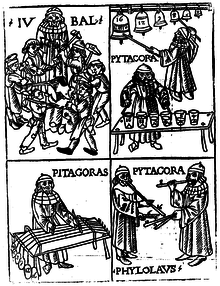
No Butchers for Pythagoras

Porphyry, Life of Pythagoras,  7

“Eudoxus, in the seventh book of his Description of the Earth, says that in addition to such purity, he (Pythagoras) was so eager to avoid things related to murder that he not only abstained from eating animals, but also would not even associate with butchers or hunters.”

πλὴν τοσαύτῃ γε ἁγνείᾳ φησὶν Εὔδοξος ἐν τῇ ἑβδόμῃ
τῆς γῆς περιόδου κεχρῆσθαι καὶ τῇ περὶ τοὺς φόνους
φυγῇ καὶ τῶν φονευόντων, ὡς μὴ μόνον τῶν ἐμψύχων
ἀπέχεσθαι, ἀλλὰ καὶ μαγείροις καὶ θηράτορσι μηδέ-
ποτε πλησιάζειν.

Two Fragments on Thoughts and Men

Phocylides, Fr. 11

“Many men seem to be of sound mind simply because they walk
Around normally, even though they are really empty-headed”

Πολλοί τοι δοκέουσι σαόφρονες ἔμμεναι ἄνδρες
σὺν κόσμωι στείχοντες, ἐλαφρόν<ο>οί περ ἐόντες.

Diogenes Laertius, 9.20

“Xenophanes said that most things fall short of thought. He also said that we should engage with tyrants as little or as sweetly as possible.”

῎Εφη δὲ καὶ τὰ πολλὰ ἥσσω νοῦ εἶναι. καὶ τοῖς τυράννοις ἐντυγχάνειν ἢ ὡς ἥκιστα ἢ ὡς ἥδιστα.


On Bribery and Interpreting Poetry

Plutarch, How to Read Poetry (32e-33a)

“The bee, naturally, finds in the strongest smelling flowers–even among the roughest thorns–the smoothest, most edible honey; in the same way children, who are nourished on poems correctly, will learn somehow to extract something useful—even something profitable–from poems containing poor or contemptible behavior. For, as an example, Agamemnon stands at first glance as contemptible because he releases a man from the army for a bribe, that wealthy man who graced him with the gift of the mare Aithê (Il. 23.297)

““A gift so they he would not follow him to windy Troy
But would enjoy staying at home, since Zeus had given him / great wealth”

But he did well, as Aristotle says, to prefer a good horse to a man of this type. For a coward and a man made weak by wealth and leisure isn’t worth a dog or an ass.”

῾Η μὲν οὖν μέλιττα φυσικῶς ἐν τοῖς δριμυτάτοις ἄνθεσι καὶ ταῖς τραχυτάταις ἀκάνθαις ἐξανευρίσκει τὸ λειότατον μέλι καὶ χρηστικώτατον, οἱ δὲ παῖδες, ἂν ὀρθῶς ἐντρέφωνται τοῖς ποιήμασιν, καὶ ἀπὸ τῶν φαύλους καὶ ἀτόπους ὑποψίας ἐχόντων ἕλκειν τι χρήσιμον ἁμωσγέπως μαθήσονται καὶ ὠφέλιμον. αὐτίκα γοῦν ὕποπτός ἐστιν ὁ ᾿Αγαμέμνων ὡς διὰ δωροδοκίαν ἀφεὶς τῆς στρατείας τὸν πλούσιον ἐκεῖνον τὸν τὴν Αἴθην χαρισάμενον αὐτῷ

δῶρ’, ἵνα μή οἱ ἕποιθ’ ὑπὸ ῎Ιλιον ἠνεμόεσσαν
ἀλλ’ αὐτοῦ τέρποιτο μένων· μέγα γάρ οἱ ἔδωκεν
Ζεὺς ἄφενος.

ὀρθῶς δέ γ’ ἐποίησεν, ὡς ᾿Αριστοτέλης φησίν, ἵππον ἀγαθὴν ἀνθρώπου τοιούτου προτιμήσας· οὐδὲ γὰρ κυνὸς ἀντάξιος οὐδ’ ὄνου μὰ Δία δειλὸς ἀνὴρ καὶ ἄναλκις, ὑπὸ πλούτου καὶ μαλακίας διερρυηκώς.

Image result for Ancient Greek horse vase

The Latin title of this poem is quomodo adulescens poetas audire debeat for the Greek title ΠΩΣ ΔΕΙ ΤΟΝ ΝΕΟΝ ΠΟΙΗΜΑΤΩΝ ΑΚΟΥΕΙΝ. The emphasis on how the young should read poetry is usually lost and probably for good enough reasons since the basic reflections on reading are not only for the young. But, caveat lector, this is not a textbook for children!

Richard Porson, Devotee to Dionysus

“Soon after the late Professor Porson returned from a visit to the Continent, at a party where he happened to be present, a gentleman solicited a sketch of his journey. Porson immediately gave the following extemporaneous one:

‘I went to Frankfurt and got drunk,
With that most learned professor, Brunck.
I went to Worts and got more drunken
With that more learned professor, Ruhnken.’”

-Facetiae Cantabrigienses (London: William Cole, 1825), p.4

“What Should Seem True Cannot”: Euripides on Alternative Facts

Euripides, fr. 439

“Alas! I wish facts had a voice for people
So that clever speakers would be nothing.
Now instead men with turning tongues steal away
The truest things: and what should seem true cannot.”

φεῦ φεῦ, τὸ μὴ τὰ πράγματ’ ἀνθρώποις ἔχειν
φωνήν, ἵν’ ἦσαν μηδὲν οἱ δεινοὶ λέγειν.
νῦν δ’ εὐτρόχοισι στόμασι τἀληθέστατα
κλέπτουσιν, ὥστε μὴ δοκεῖν ἃ χρὴ δοκεῖν

Image result for Theseus Ancient Greek

This is from Euripides’ lost Hippolytus Veiled, a play in which the deception of Theseus results in the death of his son. His words sound idealist and almost noble, but as the story goes his wife Phaedra lies about sexual advances from her stepson Hippolytus and Theseus curses him. One of Theseus’ interlocutors replies (fr. 440):

“Theseus, I advise you that this is best, if you think through it:
Don’t ever believe that you hear the truth from a woman.”

Θησεῦ, παραινῶ σοὶ τὸ λῷστον, εἰ φρονεῖς,
γυναικὶ πείθου μηδὲ τἀληθῆ κλύων.

Nope. Not very nice, Euripides.

Ancient Alternative Facts, Part 3: On Our Affection for (Tales of) Suffering

[This is the third post on Dio’s Oration II, “On the Fact That Troy Was Never Sacked”. Go here for the first]

Dio Chrysostom, Oration 11

“For I think that the Argives themselves would not wish for the matters concerning Thyestes, Atreus and the descendants of Pelops to have been any different, but would be severely angry if someone were to undermine the myths of tragedy, claiming that Thyestes never committed adultery with Atreus wife, nor did the other kill his brother’s children, cut them up, and set them out as feast for Thyestes, and that Orestes never killed his mother with his own hand. If someone said all of these things, they would take it harshly as if they were slandered.

I imagine that things would go the same among the Thebans, if someone were to decleare that their misfortunes were lies, that Oedipus never killed his father nor had sex with his mother, nor then blinded himself, and that his children didn’t die in front of the wall at each other’s hands, and the Sphinx never came and ate their children. No! instead, they take pleasure in hearing that the Sphinx came and ate their children, sent to them because of Hera’s anger, that Laios was killed by his own son, and Oedipus did these things and wandered blind after suffering,, or how the children of previous king of theirs and founder of the city, Amphion,by Artemis and Apollo because they were the most beautiful men. They endure musicians and poets singing these things in their presence at the theater and they make contests for them, whoever can sing or play the most stinging tales about them. Yet they would expel a man who claimed these things did not happen. The majority has gone so far into madness that their obsession governs them completely. For they desire that there be the most stories about them—and it does not matter to them what kind of story it is. Generally, men are not willing to suffer terrible things because of cowardice, because they fear death and pain. But they really value being mentioned as if they suffered.”

Image result for Ancient Greek oedipus at colonus vasw

αὐτοὺς γὰρ οἶμαι τοὺς ᾿Αργείους μὴ ἂν ἐθέλειν ἄλλως γεγονέναι τὰ περὶ τὸν Θυέστην καὶ τὸν ᾿Ατρέα καὶ τοὺς Πελοπίδας, ἀλλ’ ἄχθεσθαι σφόδρα, ἐάν τις ἐξελέγχῃ τοὺς μύθους τῶν τραγῳδῶν, λέγων ὅτι οὔτε Θυέστης ἐμοίχευσε τὴν τοῦ ᾿Ατρέως οὔτε ἐκεῖνος ἀπέκτεινε τοὺς τοῦ ἀδελφοῦ παῖδας οὐδὲ κατακόψας εἱστίασε τὸν Θυέστην οὔτε ᾿Ορέστης αὐτόχειρ ἐγένετο τῆς μητρός. ἅπαντα ταῦτα εἰ λέγοι τις, χαλεπῶς ἂν φέροιεν ὡς λοιδορούμενοι.

τὸ δὲ αὐτὸ τοῦτο κἂν Θηβαίους οἶμαι παθεῖν, εἴ τις τὰ παρ’ αὐτοῖς ἀτυχήματα ψευδῆ ἀποφαίνοι, καὶ οὔτε τὸν πατέρα Οἰδίπουν ἀποκτείναντα οὔτε τῇ μητρὶ συγγενόμενον οὔθ’ ἑαυτὸν τυφλώσαντα οὔτε τοὺς παῖδας αὐτοῦ πρὸ τοῦ τείχους ἀποθανόντας ὑπ’ ἀλλήλων, οὔθ’ ὡς ἡ Σφὶγξ ἀφικομένη κατεσθίοι τὰ τέκνα αὐτῶν, ἀλλὰ τοὐναντίον ἥδονται ἀκούοντες καὶ τὴν Σφίγγα ἐπιπεμφθεῖσαν αὐτοῖς διὰ χόλον ῞Ηρας καὶ τὸν Λάϊον ὑπὸ τοῦ υἱέος ἀναιρεθέντα καὶ τὸν Οἰδίπουν ταῦτα ποιήσαντα καὶ παθόντα τυφλὸν ἀλᾶσθαι, καὶ πρότερον ἄλλου βασιλέως αὐτῶν καὶ τῆς πόλεως οἰκιστοῦ, ᾿Αμφίονος, τοὺς παῖδας, ἀνθρώπων καλλίστους γενομένους, κατατοξευθῆναι ὑπὸ ᾿Απόλλωνος καὶ ᾿Αρτέμιδος· καὶ ταῦτα καὶ αὐλούντων καὶ ᾀδόντων ἀνέχονται παρ’ αὑτοῖς ἐν τῷ θεάτρῳ, καὶ τιθέασιν ἆθλα περὶ τούτων, ὃς ἂν οἰκτρότατα εἴπῃ περὶ αὐτῶν ἢ αὐλήσῃ· τὸν δὲ εἰπόντα ὡς οὐ γέγονεν οὐδὲν αὐτῶν ἐκβάλλουσιν. εἰς τοῦτο μανίας οἱ πολλοὶ ἐληλύθασι καὶ οὕτω πάνυ ὁ τῦφος αὐτῶν κεκράτηκεν. ἐπιθυμοῦσι γὰρ ὡς πλεῖστον ὑπὲρ αὐτῶν γίγνεσθαι λόγον· ὁποῖον δέ τινα, οὐθὲν μέλει αὐτοῖς. ὅλως δὲ πάσχειν μὲν οὐ θέλουσι τὰ δεινὰ  διὰ δειλίαν, φοβούμενοι τούς τε θανάτους καὶ τὰς ἀλγηδόνας· ὡς δὲ παθόντες μνημονεύεσθαι περὶ πολλοῦ ποιοῦνται.

Ancient Alternative Facts, Part 2: On the Corruption of Fame

[This is the second post on Dio’s Oration, “On the Fact That Troy Was Never Sacked”. Go here for the first]

Dio Chrysostom, Oration 11

“I would not even be surprised, Trojan men, that you believed Homer was more trustworthy when he told the harshest lies about you than me when I told that troth—since you believe him to be a divine man and wise and you have taught your children epic right from the beginning, even though he has only curses for your city, and untrue ones at that. But you wouldn’t accept that I describe things as they are and have been, because I am many years younger than Homer. Certainly, most people say that time is also the best judge of affairs, and, whenever they hear something after a long time, they disbelieve it for this very reason.

If I were dare to speak against Homer among the Argives and to show in addition that his poetry was false concerning the greatest matters, chances are they would be rightfully angry with me and expel me from the city if I appeared to be erasing and cleansing their fame. But it is right that you have some gratitude towards me and listen eagerly. I have stood in defense of you ancestors. I say at the outset to you that these stories have by necessity already been recited y others and that many have learned them. Some of those men will not understand them; others will pretend to discount them, even though they do not, and still others will try to refute them, especially, I think, those ill-fated sophists. But I know clearly that they will not be pleasing to you. For most men have their minds corrupted by fame to the extent that they would prefer to be infamous for the greatest failures rather than be unknown and suffer no evil.”

Tartarus - the deep abyss that is used as a dungeon of torment and suffering for the wicked and as the prison for the Titans

οὐκ ἂν οὖν θαυμάσαιμι καὶ ὑμᾶς, ἄνδρες ᾿Ιλιεῖς, εἰ πιστότερον ἡγήσασθαι ῞Ομηρον τὰ χαλεπώτατα ψευσάμενον καθ’ ὑμῶν ἢ ἐμὲ τἀληθῆ λέγοντα, κἀκεῖνον μὲν ὑπολαβεῖν θεῖον ἄνδρα καὶ σοφόν, καὶ τοὺς παῖδας εὐθὺς ἐξ ἀρχῆς τὰ ἔπη διδάσκειν οὐθὲν ἄλλο ἢ κατάρας ἔχοντα κατὰ τῆς πόλεως, καὶ ταύτας οὐκ ἀληθεῖς, ἐμοῦ δὲ μὴ ἀνέχοισθε τὰ ὄντα καὶ γενόμενα λέγοντος, ὅτι πολλοῖς ἔτεσιν ὕστερον ῾Ομήρου γέγονα. καίτοι φασὶ μὲν οἱ πολλοὶ τὸν χρόνον τῶν πραγμάτων * καὶ κριτὴν ἄριστον εἶναι, ὅτι δ’ ἂν ἀκούωσι μετὰ πολὺν χρόνον, διὰ τοῦτο ἄπιστον νομίζουσιν. εἰ μὲν οὖν παρ’ ᾿Αργείοις ἐτόλμων ἀντιλέγειν ῾Ομήρῳ, καὶ τὴν ποίησιν αὐτοῦ δεικνύναι ψευδῆ περὶ τὰ μέγιστα, τυχὸν ἂν εἰκότως ἤχθοντό μοι καὶτῆς πόλεως ἐξέβαλλον εἰ τὴν παρ’ ἐκείνων δόξαν ἐφαινόμην ἀφανίζων καὶ καθαιρῶν· ὑμᾶς δὲ δίκαιόν ἐστί μοι χάριν εἰδέναι καὶ ἀκροᾶσθαι προθύμως· ὑπὲρ γὰρ τῶν ὑμετέρων προγόνων ἐσπούδακα. προλέγω δὲ ὑμῖν ὅτι τοὺς λόγους τούτους ἀνάγκη καὶ  παρ’ ἑτέροις ῥηθῆναι καὶ πολλοὺς πυθέσθαι· τούτων δὲ οἱ μέν τινες οὐ συνήσουσιν, οἱ δὲ προσποιήσονται καταφρονεῖν, οὐ καταφρονοῦντες αὐτῶν, οἱ δέ τινες ἐπιχειρήσουσιν ἐξελέγχειν, [μάλιστα δὲ οἶμαι τοὺς κακοδαίμονας σοφιστάς.] ἐγὼ δὲ ἐπίσταμαι σαφῶς ὅτι οὐδὲ ὑμῖν πρὸς ἡδονὴν ἔσονται. οἱ γὰρ πλεῖστοι τῶν ἀνθρώπων οὕτως ἄγαν εἰσὶν ὑπὸ δόξης διεφθαρμένοι τὰς ψυχὰς ὥστε μᾶλλον ἐπιθυμοῦσι περιβόητοι εἶναι ἐπὶ τοῖς μεγίστοις ἀτυχήμασιν ἢ μηδὲν κακὸν ἔχοντες ἀγνοεῖσθαι.

Richard Porson, the Devil, and the Vanity of Ornamental Learning

“Porson was once travelling in a stage-coach, when a young Oxonian, fresh from college, was amusing the ladies with a variety of small talk, to which he added a quotation, as he said, from Sophocles. A Greek quotation, and in a stage-coach too, roused our professor, who, in a dog-sleep, was slumbering in one corner of the vehicle. Rubbing his eyes, ‘I think, young gentleman,’ said Porson, ‘you just now favoured us with a quotation from Sophocles; I don’t happen to recollect it there.’ ‘Oh? Sir,’ replied the Oxonian, ‘the quotation is word for word as I repeated it, and in Sophocles too; but I suspect, Sir, it is some time since you were at college.’ Porson, applying his hand to his great coat, took out a small pocket edition of Sophocles, and handed it to our tyro, saying he should be much obliged if he would show him the passage in that little book. Having rummaged the pages for some time, ‘Upon second thoughts,’ said the Oxonian, ‘I now recollect ’tis in Euripides.’—’Then,’ said the professor, putting his hand into his pocket, and handing him a similar edition of that author, ‘perhaps you will be so good as to find it for me in that little book.’—He returned again to his task, but with no better success, muttering to himself—’Curse me if ever I quote Greek again in a coach.’ The ladies tittered: at last, ‘Bless me, Sir,’ said he, ‘how dull I am! I recollect now,—yes, yes, I perfectly remember, the passage is in Aeschylus.’ This inexorable professor applied again to his inexhaustable pocket, and was in the act of handing an Aeschylus to the astonished freshman, when he vociferated—’Stop the coach,—hollo,—coachman let me out, I say,—instantly let me out; there’s a fellow here has got the whole Bodleian Library in his pocket; let me out, I say—let me out, he must be Porson or the Devil!’”

-Facetiae Cantabrigienses pp 133-4, (London: William Cole, 1825)

Ancient Alternative Facts, Part 1: Dio On Learning

Dio Chrysostom, Oration 11 (“On the Fact that Troy Was Never Sacked”)

“I know with some certainly that it is hard to teach all people, but easy to deceive them. And if they learn anything, they scarcely learn it from the few who do really know, while they are easily deceived by many who know nothing, and not only by others, but by themselves too. For the truth is bitter and unpleasant to the ignorant; a lie, however, is sweet and appealing. In the same way, I suppose, light is unpleasant for those with diseased eyes to see, while the darkness is harmless and dear, even if they cannot see. Or, how else would lies often be stronger than the truth, unless they prevailed because of pleasure? Although it is hard to teach, as I was saying, it is harder in every way to re-teach when people have heard lies for a long time and, even worse, when they have not been alone in their delusion, but their fathers, grandfathers and nearly every forebear has been deceived with them.

For it is not easy to take a false belief from them, not even if someone should refute it completely. Similarly, I imagine that, when children have been raised with superstitious beliefs, it is hard for someone to speak the truth later regarding the very things they would not have accepted if someone had just told them in the beginning. This impulse is so strong that many prefer wicked things and agree that they belong to them properly, if they have previously believed so, instead of good things they hear later on.”

Image result for Trojan Horse ancient Greek

Οἶδα μὲν ἔγωγε σχεδὸν ὅτι διδάσκειν μὲν ἀνθρώπους ἅπαντας χαλεπόν ἐστιν, ἐξαπατᾶν δὲ ῥᾴδιον. καὶ μανθάνουσι μὲν μόγις, ἐάν τι καὶ μάθωσι, παρ’ ὀλίγων τῶν εἰδότων, ἐξαπατῶνται δὲ  τάχιστα ὑπὸ πολλῶν τῶν οὐκ εἰδότων, καὶ οὐ μόνον γε ὑπὸ τῶν ἄλλων, ἀλλὰ καὶ αὐτοὶ ὑφ’ αὑτῶν. τὸ μὲν γὰρ ἀληθὲς πικρόν ἐστι καὶ ἀηδὲς τοῖς ἀνοήτοις, τὸ δὲ ψεῦδος γλυκὺ καὶ προσηνές. ὥσπερ οἶμαι καὶ τοῖς νοσοῦσι τὰ ὄμματα τὸ μὲν φῶς ἀνιαρὸν ὁρᾶν, τὸ δὲ σκότος ἄλυπον καὶ φίλον, οὐκ ἐῶν βλέπειν. ἢ πῶς ἂν ἴσχυε τὰ ψεύδη πολλάκις πλέον τῶν ἀληθῶν, εἰ μὴ δι’ ἡδονὴν ἐνίκα;

χαλεποῦ δέ, ὡς ἔφην, ὄντος τοῦ διδάσκειν, τῷ παντὶ χαλεπώτερον τὸ  μεταδιδάσκειν, ἄλλως τε ὅταν πολύν τινες χρόνον ὦσι τὰ ψευδῆ ἀκηκοότες καὶ μὴ μόνον αὐτοὶ ἐξηπατημένοι, ἀλλὰ καὶ οἱ πατέρες αὐτῶν καὶ οἱ πάπποι καὶ σχεδὸν πάντες οἱ πρότερον. οὐ γάρ ἐστι ῥᾴδιον τούτων ἀφελέσθαι τὴν δόξαν, οὐδ’ ἂν πάνυ τις ἐξελέγχῃ. καθάπερ οἶμαι τῶν τὰ ὑποβολιμαῖα παιδάρια θρεψάντων χαλεπὸν ὕστερον ἀφελέσθαι τἀληθῆ λέγοντα ἅ γε ἐν ἀρχῇ, εἴ τις αὐτοῖς ἔφρασεν, οὐκ ἄν ποτε ἀνείλοντο. οὕτω δὲ τοῦτο ἰσχυρόν ἐστιν ὥστε πολλοὶ τὰ κακὰ μᾶλλον προσποιοῦνται καὶ ὁμολογοῦσι καθ’ αὑτῶν, ἂν ὦσι πεπεισμένοι πρότερον, ἢ τἀγαθὰ μετὰ χρόνον ἀκούοντες.


Yesterday, I polled twitter to select a sight-reading author for my graduate students. I didn’t like the answer, so I went against the communis opinio (only 18% for Dio!). It turned out well.

Baby Steps Toward Greek

John Stuart Mill, Autobiography:

“A man who, in his own practice, so vigorously acted up to the principle of losing no time, was likely to adhere to the same rule in the instruction of his pupil. I have no remembrance of the time when I began to learn Greek; I have been told that it was when I was three years old. My earliest recollection on the subject, is that of committing to memory what my father termed vocables, being lists of common Greek words, with their signification in English, which he wrote out for me on cards. Of grammar, until some years later, I learnt no more than the inflections of the nouns and verbs, but, after a course of vocables, proceeded at once to translation; and I faintly remember going through Aesop’s Fables, the first Greek book which I read. The Anabasis, which I remember better, was the second. I learnt no Latin until my eighth year. At that time I had read, under my father’s tuition, a number of Greek prose authors, among whom I remember the whole of Herodotus, and of Xenophon’s Cyropaedia and Memorials of Socrates; some of the lives of the philosophers by Diogenes Laertius; part of Lucian, and Isocrates ad Demonicum and Ad Nicoclem. I also read, in 1813, the first six dialogues (in the common arrangement) of Plato, from the Euthyphron to the Theoctetus inclusive: which last dialogue, I venture to think, would have been better omitted, as it was totally impossible I should understand it. But my father, in all his teaching, demanded of me not only the utmost that I could do, but much that I could by no possibility have done. What he was himself willing to undergo for the sake of my instruction, may be judged from the fact, that I went through the whole process of preparing my Greek lessons in the same room and at the same table at which he was writing: and as in those days Greek and English lexicons were not, and I could make no more use of a Greek and Latin lexicon than could be made without having yet begun to learn Latin, I was forced to have recourse to him for the meaning of every word which I did not know. This incessant interruption, he, one of the most impatient of men, submitted to, and wrote under that interruption several volumes of his History and all else that he had to write during those years.”