Baby Steps Toward Greek

John Stuart Mill, Autobiography:

“A man who, in his own practice, so vigorously acted up to the principle of losing no time, was likely to adhere to the same rule in the instruction of his pupil. I have no remembrance of the time when I began to learn Greek; I have been told that it was when I was three years old. My earliest recollection on the subject, is that of committing to memory what my father termed vocables, being lists of common Greek words, with their signification in English, which he wrote out for me on cards. Of grammar, until some years later, I learnt no more than the inflections of the nouns and verbs, but, after a course of vocables, proceeded at once to translation; and I faintly remember going through Aesop’s Fables, the first Greek book which I read. The Anabasis, which I remember better, was the second. I learnt no Latin until my eighth year. At that time I had read, under my father’s tuition, a number of Greek prose authors, among whom I remember the whole of Herodotus, and of Xenophon’s Cyropaedia and Memorials of Socrates; some of the lives of the philosophers by Diogenes Laertius; part of Lucian, and Isocrates ad Demonicum and Ad Nicoclem. I also read, in 1813, the first six dialogues (in the common arrangement) of Plato, from the Euthyphron to the Theoctetus inclusive: which last dialogue, I venture to think, would have been better omitted, as it was totally impossible I should understand it. But my father, in all his teaching, demanded of me not only the utmost that I could do, but much that I could by no possibility have done. What he was himself willing to undergo for the sake of my instruction, may be judged from the fact, that I went through the whole process of preparing my Greek lessons in the same room and at the same table at which he was writing: and as in those days Greek and English lexicons were not, and I could make no more use of a Greek and Latin lexicon than could be made without having yet begun to learn Latin, I was forced to have recourse to him for the meaning of every word which I did not know. This incessant interruption, he, one of the most impatient of men, submitted to, and wrote under that interruption several volumes of his History and all else that he had to write during those years.”

Awkward Correspondence on Paternity: Alexander and Olympias

Aulus Gellius, Attic Nights 13.iv

A transcript of a letter from Alexander to his mother Olympias; and what Olympias wrote back to him.

“In the majority of the records of the deeds of Alexander and rather recently in the book of Marcus Varro, which is called “Orestes” or “On Insanity”, we find that Olympias, the wife of Philipp, most cleverly replied to her son. For, when he wrote to his mother, “King Alexander, the son of Zeus Ammon, sends his greetings to his mother Olympias”, she said “My son, hush! lest you defame me or incriminate me before Juno! She will certainly allot me some great harm once you have confessed in your letters that I am her husband’s adultress.” This courtesy from a wise and prudent woman to a boastful son moderately and elegantly warned him that his puffed-up belief, which he had inflated from great victories, the charms of praise and from successes beyond belief–the idea that he was the offspring of Zeus–ought to be abandoned.”

Descripta Alexandri ad matrem Olympiadem epistula; et quid Olympias festive ei rescripserit.

In plerisque monumentis rerum ab Alexandro gestarum et paulo ante in libro M. Varronis, qui inscriptus est Orestes vel de insania, Olympiadem Philippi uxorem festivissime rescripsisse legimus Alexandro filio. 2 Nam cum is ad matrem ita scripsisset: “Rex Alexander Iovis Hammonis filius Olympiadi matri salutem dicit”, Olympias ei rescripsit ad hanc sententiam: “Amabo”, inquit “mi fili, quiescas neque deferas me neque criminere adversum Iunonem; malum mihi prorsum illa magnum dabit, cum tu me litteris tuis paelicem esse illi confiteris”. 3 Ea mulieris scitae atque prudentis erga ferocem filium comitas sensim et comiter admonuisse eum visa est deponendam esse opinionem vanam, quam ille ingentibus victoriis et adulantium blandimentis et rebus supra fidem prosperis inbiberat, genitum esse sese de Iove.

More Crazy Etymology!

Plato, Cratylus 399c

“Here is what the word human (anthropos) means: no other animals examine, consider, or observe closely those things which they have seen, but a human, as soon as he has seen something – that is, “opope” – he observes closely and considers that which he has seen (opopen). Therefore, humans alone of all animals rightly deserve the name “anthropos”, because they observe closely what they have seen (anathron ha opope).”

σημαίνει τοῦτο τὸ ὄνομα ὁ ‘ἄνθρωπος’ ὅτι τὰ μὲν ἄλλα θηρία ὧν ὁρᾷ οὐδὲν ἐπισκοπεῖ οὐδὲ ἀναλογίζεται οὐδὲ ἀναθρεῖ, ὁ δὲ ἄνθρωπος ἅμα ἑώρακεν—τοῦτο δ᾽ ἐστὶ τὸ ‘ὄπωπε’ —καὶ ἀναθρεῖ καὶ λογίζεται τοῦτο ὃ ὄπωπεν. ἐντεῦθεν δὴ μόνον τῶν θηρίων ὀρθῶς ὁ ἄνθρωπος ‘ἄνθρωπος’ ὠνομάσθη, ἀναθρῶν ἃ ὄπωπε

Rejoicing Over the Destruction of Literature

George Orwell, As I Please – July 7, 1944:

“When the Caliph Omar destroyed the libraries of Alexandria he is supposed to have kept the public baths warm for eighteen days with burning manuscripts, and great numbers of tragedies by Euripides and others are said to have perished, quite irrecoverably. I remember that when I read about this as a boy it simply filled me with enthusiastic approval. It was so many less words to look up in the dictionary — that was how I saw it. For, though I am only forty-one, I am old enough to have been educated at a time when Latin and Greek were only escapable with great difficulty, while ‘English’ was hardly regarded as a school subject at all.

Classical education is going down the drain at last, but even now there must be far more adults who have been flogged through the entire extant works of Aeschylus, Sophocles, Euripides, Aristophanes, Vergil, Horace and various other Latin and Greek authors than have read the English masterpieces of the eighteenth century. People pay lip service to Fielding and the rest of them, of course, but they don’t read them, as you can discover by making a few inquiries among your friends.”

Do We Still Believe Anecdotes Reveal a Man’s True Nature?

Eunapius, Lives of the Philosophers and Sophists (Introduction, 453)

“Xenophon the philosopher, the only philosopher who blessed philosophy in both word and deed (in respect to words he still exists in letters and writes of moral excellence; and he was the best in deeds, and through his examples he fathered generals. Alexander, I suggest, would not have been great if not for Xenophon), Xenophon says that it is necessary to record the minor deeds of serious men.”

Ξενοφῶν ὁ φιλόσοφος, ἀνὴρ μόνος ἐξ ἁπάντων φιλοσόφων ἐν λόγοις τε καὶ ἔργοις φιλοσοφίαν κοσμήσας (τὰ μὲν ἐς λόγους ἔστι τε ἐν γράμμασι καὶ ἠθικὴν ἀρετὴν γράφει, τὰ δὲ ἐν πράξεσί τε ἦν ἄριστος, ἀλλὰ καὶ ἐγέννα στρατηγοὺς τοῖς ὑποδείγμασιν• ὁ γοῦν μέγας ᾿Αλέξανδρος οὐκ ἂν ἐγένετο μέγας, εἰ μὴ Ξενοφῶν) καὶ τὰ πάρεργά φησι δεῖν τῶν σπουδαίων ἀνδρῶν ἀναγράφειν.

Speaking of Alexander, the sentiment of this passage reminds me of what Plutarch says in his Life of Alexander.

Plutarch Life of Alexander 1. 2-3

“A brief deed or comment or even some joke often shows the imprint of a man’s character more than battles of a thousand corpses, the greatest campaigns or sieges of cities.”

ἀλλὰ πρᾶγμα βραχὺ πολλάκις καὶ ῥῆμα καὶ παιδιά τις ἔμφασιν ἤθους ἐποίησε μᾶλλον ἢ μάχαι μυριόνεκροι καὶ παρατάξεις αἱ μέγισται καὶ πολιορκίαι πόλεων.

Monday Tearing You Apart? Let Love Put You Back Together


Empedocles fr. 17.23-33

“Come, listen to my stories: for learning will certainly improve your thoughts.
As I said before when I declared the outline of my speeches,
I will speak a two-fold tale. Once, first, the one alone grew
Out of many and then in turn it grew apart into many from one.
Fire, and Water, and Earth and the invincible peak of Air,
Ruinous strife as well, separate from these, equal to every one,
And Love was among them, equal as well in length and breadth.
Keep Love central in your mind, don’t sit with eyes in a stupor.
She is known to be innate to mortal bodies,
She causes them to think of love and complete acts of peace,
Whether we call her Happiness or Aphrodite as a nickname….”

Image result for Ancient Greek love vase

ἀλλ’ ἄγε μύθων κλῦθι· μάθη γάρ τοι φρένας αὔξει·
ὡς γὰρ καὶ πρὶν ἔειπα πιφαύσκων πείρατα μύθων,
δίπλ’ ἐρέω· τοτὲ μὲν γὰρ ἓν ηὐξήθη μόνον εἶναι
ἐκ πλεόνων, τοτὲ δ’ αὖ διέφυ πλέον’ ἐξ ἑνὸς εἶναι,
πῦρ καὶ ὕδωρ καὶ γαῖα καὶ ἠέρος ἄπλετον ὕψος,
Νεῖκός τ’ οὐλόμενον δίχα τῶν, ἀτάλαντον ἁπάντηι,
καὶ Φιλότης ἐν τοῖσιν, ἴση μῆκός τε πλάτος τε·
τὴν σὺ νόωι δέρκευ, μηδ’ ὄμμασιν ἧσο τεθηπώς·
ἥτις καὶ θνητοῖσι νομίζεται ἔμφυτος ἄρθροις,
τῆι τε φίλα φρονέουσι καὶ ἄρθμια ἔργα τελοῦσι,
Γηθοσύνην καλέοντες ἐπώνυμον ἠδ’ ᾿Αφροδίτην·

Orestes the Mountaineer

Plato, Cratylus, 394e

“Similarly so, my dear Hermogenes, it seems likely that the name of Orestes is properly founded, whether it be some chance which gave him his name, or some poet, who wished by that appellation to mark out the brutality, furor, and rugged mountain-man spirit (OREINON) of his nature.”

Carl Rahr, Orestes Pursued by the Furies

῞Ωσπερ γε καὶ ὁ “᾿Ορέστης,” ὦ ῾Ερμόγενες, κινδυνεύει ὀρθῶς ἔχειν, εἴτε τις τύχη ἔθετο αὐτῷ τὸ ὄνομα εἴτε καὶ ποιητής τις, τὸ θηριῶδες τῆς φύσεως καὶ τὸ ἄγριον αὐτοῦ
καὶ τὸ ὀρεινὸν ἐνδεικνύμενος τῷ ὀνόματι.

What Did the Greeks Call “Tongue Twisters?”

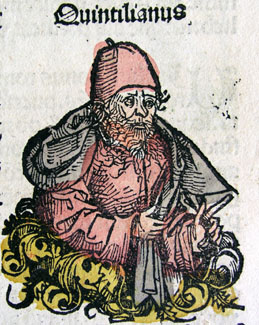
Quintilian, Institutio Oratoria 1.1.37

“It would not be out of place to demand from children of this age, in order to exercise the mouth and make speech more expressive, that they rapidly pronounce certain names and verses of a rather contrived difficulty, owing to the concatenation of many syllables which clash together and produce a sort of rocky sound. The Greeks called these χαλινοί (bridles).

Non alienum fuerit exigere ab his aetatibus, quo sit absolutius os et expressior sermo, ut nomina quaedam versusque adfectatae difficultatis ex pluribus et asperrime coeuntibus inter se syllabis catenatos et veluti confragosos quam citatissime volvant (χαλινοί Graece vocantur)

Greek to Make a Man Puke

“The false quantities made by scholars would furnish a curious list. When Joshua Barnes desired his wife to devote her fortune to the publication of his edition of Homer, and at last persuaded her to do so by assuring her that the Iliad was written by Solomon, in the joy of his heart he composed some Greek hexameters. One of these he began with εὐπρᾰγίης which Bentley said was ‘ enough to make a man spew.’ (Ribbeck lately complained that Madvig’s emendations of the Latin dramatists had the like effect on him, nauseam adferunt.)”

Hugh E.P. Platt, A Last Ramble in the Classics (Oxford: B.H. Blackwell, 1906), pp. 153-154

What Good Is Speech? Hesiod on A Good King

Palaiophron’s post on the words of Piccolomini reminded me of a passage from the other end of Classical Antiquity, the opening of Hesiod’s Theogony, where the poet, somewhat unexpectedly, digresses on the importance of poetic speech to kings:

Theogony, 80-93:

[Kalliope] is the Muse who attends to kings and singers.
Whomever of the god-raised Kings the daughters of great Zeus
Honor and look upon when he is born,
On his tongue they pour sweet dew
And gentle words flow out of his mouth. Then the people
All look upon him as he judges the laws
With straight decisions. He speaks confidently
And quickly resolves a conflict with skill.
For this reason, kings are intelligent, so that they
May effect retributive actions in the assembly when men are harmed,
And with ease as they persuade everyone with gentle words.
When he walks into the contest ground people propitiate him
Like a god with gentle reverence, and he stands out among the assembled.
Such is the gift of the muses for men.

ἡ γὰρ καὶ βασιλεῦσιν ἅμ’ αἰδοίοισιν ὀπηδεῖ.
ὅντινα τιμήσουσι Διὸς κοῦραι μεγάλοιο
γεινόμενόν τε ἴδωσι διοτρεφέων βασιλήων,
τῷ μὲν ἐπὶ γλώσσῃ γλυκερὴν χείουσιν ἐέρσην,
τοῦ δ’ ἔπε’ ἐκ στόματος ῥεῖ μείλιχα· οἱ δέ νυ λαοὶ
πάντες ἐς αὐτὸν ὁρῶσι διακρίνοντα θέμιστας
ἰθείῃσι δίκῃσιν· ὁ δ’ ἀσφαλέως ἀγορεύων
αἶψά τι καὶ μέγα νεῖκος ἐπισταμένως κατέπαυσε·
τούνεκα γὰρ βασιλῆες ἐχέφρονες, οὕνεκα λαοῖς
βλαπτομένοις ἀγορῆφι μετάτροπα ἔργα τελεῦσι
ῥηιδίως, μαλακοῖσι παραιφάμενοι ἐπέεσσιν·
ἐρχόμενον δ’ ἀν’ ἀγῶνα θεὸν ὣς ἱλάσκονται
αἰδοῖ μειλιχίῃ, μετὰ δὲ πρέπει ἀγρομένοισι.
τοίη Μουσάων ἱερὴ δόσις ἀνθρώποισιν.

Whatever one’s political leanings, the ideals for a leader in this passage resonate in almost any era–that a leader should use speech to resolve conflicts (rather than create them), to use speech with justice in mind, and, through both, to create a safer, more unified public.


Image result for ancient greek orator vase