Homer and the Language of the Gods

Dio Chrysostom, Oration 11. 22

“To these claims, [Homer] has added nearly a capstone: for, in order that we might be uncertain how he came to understand the gods, he implies that he apparently knows the language of the gods, and that it is not the same as ours: they do not use the same words we do for every individual things. He indicates this, for example, for some bird, whom he claims the gods call chalkis while men call it kumindis. The same difference applies to a place in front of the city which men call the Bateia but gods call the Grave of Murinê. In telling us about the river, he says the gods don’t call it Skamandros but instead Xanthus, as he himself has already dubbed it in his verses, as if it were not only possible for him to mix the various dialects of the Greeks, now using Aiolic, now Doric, then Ionic, but he can also use the divine language too!

I’ve said these things as I have not as an accusation, but because Homer was the boldest of all humans in his lies and dared nothing less nor swore less by his lying than in speaking the truth. In this light nothing of what have examined seems incredible or untrustworthy; instead they are small and human lies in comparison to massive, divine ones.”


τούτοις δὲ ἐπέθηκε τὸν κολοφῶνα σχεδόν· ἵνα γὰρ μὴ ἀπορῶμεν ὅπως ξυνίει τῶν θεῶν, οὕτως διαλέγεται ἡμῖν σχεδὸν ὡς ἔμπειρος τῆς τῶν θεῶν γλώττης, καὶ ὅτι οὐχ ἡ αὐτή ἐστι τῇ ἡμετέρᾳ οὐδὲ τὰ αὐτὰ ὀνόματα ἐφ᾿ ἑκάστῳ λέγουσιν ἅπερ καὶ ἡμεῖς. ἐνδείκνυται δὲ ταῦτα ἐπὶ ὀρνέου τινός, ὅ φησι τοὺς μὲν θεοὺς χαλκίδα καλεῖν, τοὺς δὲ ἀνθρώπους κύμινδιν, καὶ ἐπὶ τόπου τινὸς πρὸς τῆς πόλεως, ὃν τοὺς μὲν ἀνθρώπους Βατίειαν ὀνομάζειν, τοὺς δὲ θεοὺς Σῆμα Μυρίνης. περὶ δὲ τοῦ ποταμοῦ φράσας ἡμῖν ὅτι οὐ Σκάμανδρος, ἀλλὰ Ξάνθος λέγοιτο παρὰ τοῖς θεοῖς, αὐτὸς οὕτως ἤδη ἐν τοῖς ἔπεσιν ὀνομάζει, ὡς οὐ μόνον ἐξὸν αὐτῷ τὰς ἄλλας γλώττας μιγνύειν τὰς τῶν Ἑλλήνων, καὶ ποτὲ μὲν αἰολίζειν, ποτὲ δὲ δωρίζειν, ποτὲ δὲ ἰάζειν, ἀλλὰ καὶ διαστὶ διαλέγεσθαι. ταῦτα δέ μοι εἴρηται, ὥσπερ δὴ ἔφην, οὐ κατηγορίας ἕνεκεν, ἀλλ᾿ ὅτι ἀνδρειότατος ἀνθρώπων ἦν πρὸς τὸ ψεῦδος Ὅμηρος καὶ οὐθὲν ἧττον ἐθάρρει καὶ ἐσεμνύνετο ἐπὶ τῷ ψεύδεσθαι ἢ τῷ τἀληθῆ λέγειν. οὕτω γὰρ σκοποῦσιν οὐδὲν ἔτι φαίνεται παράδοξον οὐδὲ ἄπιστον τῶν ὑπ᾿ ἐμοῦ δεικνυμένων, ἀλλὰ σμικρὰ καὶ ἀνθρώπεια ψεύσματα πρὸς θεῖα καὶ μεγάλα


Yes. There are articles about this phenomenon:


Ann Suter. “Language of Gods and Language of Men: The Case of Paris/Alexandros.” Lexis 7-8 (1991) 13-25.

Presocratic Principles on a Sunday

WATER

Thales, fr. 20
“Water is the beginning and the end of everything.”

[οὕτος ἔφη] ἀρχὴν τοῦ παντὸς εἶναι καὶ τέλος τὸ ὕδωρ

AIR

Diogenes of Apollonia (D. L. 9.57)

“Diogenes believed these things: that the first principle is air, there are endless universes and empty space.”

᾿Εδόκει δὲ αὐτῷ τάδε· στοιχεῖον εἶναι τὸν ἀέρα, κόσμους ἀπείρους καὶ κενὸν ἄπειρον·

Anaximenes, Diog. 2.3

“He said that the first principle was the air and the boundless. And that the stars did not move under the earth, but around it.”

οὗτος ἀρχὴν ἀέρα εἶπεν καὶ τὸ ἄπειρον. κινεῖσθαι δὲ τὰ ἄστρα οὐχ ὑπὸ γῆν, ἀλλὰ περὶ γῆν.

Anaximander, Test. 10.3

“the boundless contains the origin of all creation and destruction.”

… τὸ ἄπειρον φάναι τὴν πᾶσαν αἰτίαν ἔχειν τῆς τοῦ παντὸς γενέσεώς τε καὶ φθορᾶς

FIRE

Heraclitus, fr. 30

“This world, which no god or man ever made, the same world to all, it always was, is and will be an ever-living fire with some measures kindled and others going out.”

κόσμον τόνδε, τὸν αὐτὸν ἁπάντων, οὔτε τις θεῶν οὐτε ἀνθρώπων ἐποίησεν, ἀλλ’ ἦν ἀεὶ καὶ ἔστιν καὶ ἔσται πῦρ ἀείζωον, ἁπτόμενον μέτρα καὶ ἀποσβεννύμενον μέτρα

Heraclitus, fr. 76

“Fire creates the death of earth; air creates the death of fire; water creates the death of air; earth the death of water.”

ζῆι πῦρ τὸν γῆς θάνατον καὶ ἀὴρ ζῆι τὸν πυρὸς θάνατον, ὕδωρ ζῆι τὸν ἀέρος
θάνατον, γῆ τὸν ὕδατος.

EARTH

Parmenides (Diogenes 9.21-23)

“He declared first that the world was spherical and in the center [of everything]. And he said there were two principle elements, fire and earth, and that the first acted like a craftsman and the second like material.”

πρῶτος δὲ οὗτος τὴν γῆν ἀπέφαινε σφαιροειδῆ καὶ ἐν μέσωι κεῖσθαι. δύο τε εἶναι στοιχεῖα, πῦρ καὶ γῆν, καὶ τὸ μὲν δημιουργοῦ τάξιν ἔχειν, τὴν δὲ ὕλης. (22)

Four-From-Into-One

Empedocles, fr. 17.25-27

I will speak a two-fold tale. Once, first, the one alone grew
Out of many and then in turn it grew apart into many from one.
Fire, and Water, and Earth and the invincible peak of Air,

δίπλ’ ἐρέω· τοτὲ μὲν γὰρ ἓν ηὐξήθη μόνον εἶναι
ἐκ πλεόνων, τοτὲ δ’ αὖ διέφυ πλέον’ ἐξ ἑνὸς εἶναι,
πῦρ καὶ ὕδωρ καὶ γαῖα καὶ ἠέρος ἄπλετον ὕψος,

Bonus Round

Heraclitus, fr. 53
“War is father and king of everything”

Πόλεμος πάντων μὲν πατήρ ἐστι, πάντων δὲ βασιλεύς

Sing it, Mr.Byrne

Korinthian Women and the Plot Against Medea

Two passages from the Scholia to Euripides’ Medea explain why Euripides told the story he did and what the ‘real’ facts were behind it.

Schol. B ad. Eur. Med. 9.1-11

“There’s a story from the philosophers that is much repeated—one Parmeniskos also offers—that Euripides changed the murder of the children to Medea because he accepted five talents from the Korinthians. [He claims] that the children of Medea were killed by the Korinthians because they were angry over her ruling the city and they wanted there to be an end of her ruling in Korinth, because it was her paternal [right]. For this reason he changed the [responsibility] to Medea. Hippus presents [accounts] about her residency in Korinth, as does Hellanikos. Eumelos and Simonides report that Medeia ruled Korinth. In his work called On Isthmian Affairs, Mousaios reports that Medeia was immortal, and he explains this also in his work on The Festivals of Hera Akraia.”

πολυάϊκός τις λόγος φέρεται τῶν φιλοσόφων, ὃν καὶ Παρμενίσκος ἐκτίθησιν, ὡς ἄρα πέντε τάλαντα λαβὼν παρὰ Κορινθίων Εὐριπίδης μεταγάγοι τὴν σφαγὴν τῶν παίδων ἐπὶ τὴν Μήδειαν. ἀποσφαγῆναι γὰρ τοὺς παῖδας Μηδείας ὑπὸ Κορινθίων παροξυνθέντων ἐπὶ τῷ βασιλεύειν αὐτὴν θέλειν διὰ τὸ τὴν Κόρινθον πατρῴαν αὐτῆς λῆξιν εἶναι· ὃ μετήγαγεν ἐπὶ Μήδειαν. περὶ δὲ τῆς εἰς Κόρινθον μετοικήσεως ῞Ιππυς [frg. 3] ἐκτίθεται καὶ ῾Ελλάνικος [frg. 34]. ὅτι δὲ βεβασίλευκε τῆς Κορίνθου ἡ Μήδεια, Εὔμηλος [frg. 3] ἱστορεῖ καὶ Σιμωνίδης [frg. 48]· ὅτι δὲ καὶ ἀθάνατος ἦν ἡ Μήδεια, Μουσαῖος ἐν τῷ περὶ ᾿Ισθμίων [FHG IV p. 518a] ἱστορεῖ, ἅμα καὶ περὶ τῶν τῆς ᾿Ακραίας ῞Ηρας ἑορτῶν ἐκτιθείς: —B

Schol. B ad Eur. Med. 264.1-11

“Parmeniskos writes the following for this line: “Because the Korinthian women did not want to be ruled by a barbaric, potion-pouring woman, they conspired against her and [planned] to kill her children, seven boys and seven girls. [Euripides says that she only had two]. They fled, pursued, into the temple of Hera Akraia and they stayed there. But even then the Korinthians did not hold back: they slaughtered all of them at the altar. Then a plague fell over the city, and many bodies were perishing because of a sickness. They received an oracle that the god must be propitiated for the hunt of Medeia’s children.  This is why each year during the appointed time seven girls and boys from the noblest families return to the precinct of the goddess and appease their rage—and the anger of the goddess on their behalf—with sacrifices.”

Παρμενίσκος γράφει κατὰ λέξιν οὕτως· ‘ταῖς δὲ Κορινθίαις οὐ βουλομέναις ὑπὸ βαρβάρου καὶ φαρμακίδος γυναικὸς ἄρχεσθαι αὐτῇ τε ἐπιβουλεῦσαι καὶ τὰ τέκνα αὐτῆς ἀνελεῖν, ἑπτὰ μὲν ἄρσενα, ἑπτὰ δὲ θήλεα. [Εὐριπίδης δὲ δυσὶ μόνοις φησὶν αὐτὴν κεχρῆσθαι.] ταῦτα δὲ διωκόμενα καταφυγεῖν εἰς τὸ τῆς ᾿Ακραίας ῞Ηρας ἱερὸν καὶ ἐπὶ τὸ ἱερὸν καθίσαι. Κορινθίους δὲ αὐτῶν οὐδὲ οὕτως ἀπέχεσθαι, ἀλλ’ ἐπὶ τοῦ βωμοῦ πάντα ταῦτα ἀποσφάξαι. λοιμοῦ δὲ γενομένου εἰς τὴν πόλιν πολλὰ σώματα ὑπὸ τῆς νόσου διαφθείρεσθαι. μαντευομένοις δὲ αὐτοῖς χρησμῳδῆσαι τὸν θεὸν ἱλάσκεσθαι τὸ τῶν Μηδείας τέκνων ἄγος. ὅθεν Κορινθίοις μέχρι τῶν καιρῶν τῶν καθ’ ἡμᾶς καθ’ ἕκαστον ἐνιαυτὸν ἑπτὰ κούρους καὶ ἑπτὰ κούρας τῶν ἐπισημοτάτων ἀνδρῶν ἐναπενιαυτίζειν ἐν τῷ τῆς θεᾶς τεμένει καὶ μετὰ θυσιῶν ἱλάσκεσθαι τὴν ἐκείνων μῆνιν  καὶ τὴν δι’ ἐκείνους γενομένην τῆς θεᾶς ὀργήν’.

Image result for Medea vase
Alternative facts on vases

Dioscorides’ Advice for Expectant Couples

Dioscorides (Greek Anthology 5.54)

“Never go to bed at night with your pregnant wife and lie face-to-face, delighting in child-bearing Aphrodite. There will be a large swell between you, and it will be no small labor as you are rocked and she is rowed. Rather, turn yourself over, and enjoy her rosy rump, thinking that your wife is the masculine Aphrodite.”

Μήποτε γαστροβαρῆ πρὸς σὸν λέχος ἀντιπρόσωπον
παιδογόνῳ κλίνῃς Κύπριδι τερπόμενος.
μεσσόθι γὰρ μέγα κῦμα καὶ οὐκ ὀλίγος πόνος ἔσται
τῆς μὲν ἐρεσσομένης, σοῦ δὲ σαλευομένου.
ἀλλὰ πάλιν στρέψας ῥοδοειδέι τέρπεο πυγῇ,
τὴν ἄλοχον νομίσας ἀρσενόπαιδα Κύπριν.

A Tranquil Life of Poverty and Seclusion

J.E. Sandys, A History of Classical Scholarship Vol. 1:

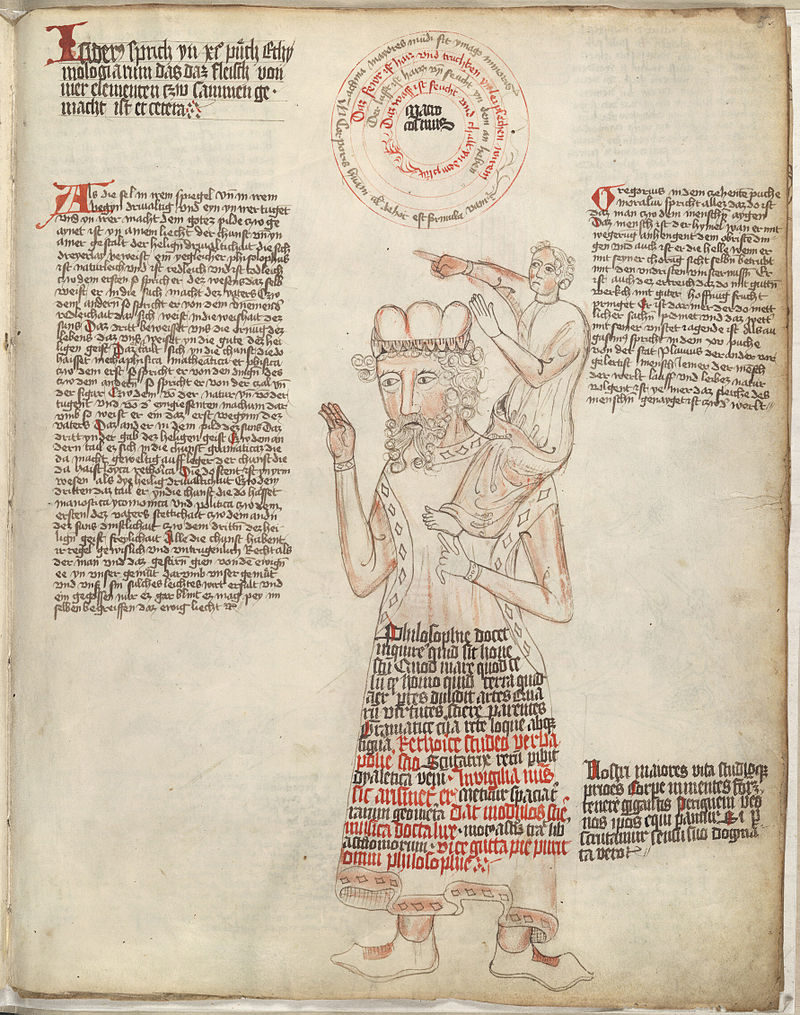
“Bernard of Chartres (d. c. 1126), William of Conches (d. 1154) and Adelard of Bath {fl. 1130) held a Platonism modified by Christianity, while they maintained the authority of Aristotle with regard to our knowledge of the world of sense.’ In comparison with the ancients, we stand (says Bernard, of himself and his contemporaries) like dwarfs on the shoulders of giants’. Bernard, ‘the most perfect Platonist of his age’, was a believer in the essential harmony of Plato and Aristotle. He looked on learning as the fruit of humble and patient research, pursued through a tranquil life of poverty and seclusion from public affairs’. The fame of his School of Classical Scholarship, and the story of his method, still live in the pages of John of Salisbury.”

The Worst Form of Arrogance

Petrarch, Secretum 4.12 (Augustine speaking)

“Insulting other people is by far a more importunate type of arrogance than elevating yourself beyond your merits; I would have much preferred that you talked everyone else up (though you placed yourself ahead of them) than that you arrogantly took up the shield of humility after stomping  everyone under your heel.”

Multo quidem importunius superbie genus est alios deprimere quam se ipsum debito magis attollere; longeque maluissem ceteros magnificares, te quanquam ceteris anteferres, quam calcatis omnibus ex alieno superbissime tibi clipeum humilitatis assumeres.

Medea’s Magic Was Really a Spa Treatment

Yesterday we posted some varying accounts on Medea’s power over rejuvenation. Here’s another alternative account.

Palaephatus, On Unbelievable Things

Palaephatus was a Hellenistic mythographer who tried to rationalize archaic myths by attributing their fantastic aspects to exaggeration and linguistic confusion.

“People say that Medeia used to make old men young by boiling them, but she didn’t actually make anyone young. Whomever she boiled, she killed. Something like this did happen. Medeia was the first to introduce the use of a red and black flower. She used it to make old men change from gray to dark again: for she dyed their white hair and changed it to black and red. She [also] was the first to discover that a hot bath was useful for people. She used a hot bath to treat those who wanted it, but not out in the open—so that none of the doctors would learn about it—and after she gave them a bath, she made them swear not to tell anyone. The name [people gave] to this warm bath was “parboiling” [parepsêsis]. Because people who took warm baths felt lighter and healthier afterwards, those who saw her cauldron and fire, were convinced that she boiled men. But Pelias, who was an old and weak, died during his bath. This is where the myth comes from.”


῾Η Μήδεια φασὶ <μὲ>ν ὡς ἀφέψουσα τοὺς πρεσβυτέρους νέους ἐποίει, οὐδένα δὲ δείκνυται νέον ποιήσασα· ὃν δὲ ἥψησε πάντως ἀπέκτεινεν. ἐγένετο δέ τι τοιοῦτον. Μήδεια πρώτη ἐφεῦρεν ἄνθος τὸ πυρρὸν καὶ τὸ μέλαν. τοὺς οὖν γέροντας ἐκ πολιῶν μέλανας <καὶ πυρροὺς> ἐποίει φαίνεσθαι· βάπτουσα γὰρ αὐτοὺς τὰς λευκὰς τρίχας εἰς μελαίνας  καὶ πυρρὰς μετέβαλεν. *** πυρίαν πρώτη Μήδεια ἐφεῦρεν ἀνθρώποις ὄφελος. ἐπυρία οὖν τοὺς βουλομένους, οὐκ ἐν τῷ προφανεῖ, ἵνα μή τις μάθῃ τῶν ἰατρῶν, πυριῶσα δὲ ὥρκου μηδενὶ μηνύειν. ὄνομα δὲἦν τῷ πυριάματι παρέψησις. ὥσπερ οὖν καὶ κουφότεροι καὶ ὑγιεινότεροι ἐγίνοντο οἱ ἄνθρωποι πυριώμενοι. ἐκ δὴ τούτου, ὁρῶντες παρ’ αὐτῇ λέβητας καὶ πῦρ, ἐπείσθησαν ὡς ἕψει τοὺς ἀνθρώπους. ὁ δὲ Πελίας, ἄνθρωπος γέρων καὶ ἀσθενής, πυριώμενος ἀπέθανεν. ἐντεῦθεν ὁ μῦθος.

Image result for Medea Pelias
Just a bath, nothing to fear.

The Fable of the Exploding Frog

Phaedrus 1.24 The Exploding Frog

A poor man, when he tries to imitate the powerful, dies.
Once in a meadow a frog saw a bull
Whose great size exerted on her such a pull
That she inflated her wrinkled skin and asked
Her children whether she was bigger than that.
They denied it and she puffed herself out self again
But when she asked who was bigger, they said “him”.
Finally angry, she didn’t want to blow it,
She puffed again and her body exploded.”

frog

I.24. Rana Rupta

Inops, potentem dum vult imitari, perit.
In prato quondam rana conspexit bovem,
et tacta invidia tantae magnitudinis
rugosam inflavit pellem. Tum natos suos
interrogavit an bove esset latior.
Illi negarunt. Rursus intendit cutem
maiore nisu, et simili quaesivit modo,
quis maior esset. Illi dixerunt “bovem”.
Novissime indignata, dum vult validius
inflare sese, rupto iacuit corpore.

The Catiline of America

Alexander Hamilton to Oliver Wolcott (December 16, 1800)

“He is bankrupt beyond redemption except by the plunder of his country. His public principles have no other spring or aim than his own aggrandisement per fas et nefas. If he can, he will certainly disturb our institutions to secure to himself permanent power and with it wealth. He is truly the Cataline [sic] of America—& if I may credit Major Wilcocks, he has held very vindictive language respecting his opponents.”

Classics Teachers and The HistoryMakers

Note: See other posts about the HistoryMakers Project here, here, here, and here.

Stories about Latin, Greek, and Classics teachers frequently occur among the references to Classics we have found in the HistoryMakers archive. Interviewees from a wide array of backgrounds situate these teachers in narratives of their formative education and as influential mentors.

Of course, praise for Latin teachers and the commonly cited benefits of learning Latin appear, as Marie Johnson-Calloway, a painter and art professor, describes:

“And I never could understand why we learned Latin, but I will defy anybody to question my grammar now, because she taught grammar, English grammar, through teaching Latin to us.  And she was just an outstanding teacher.  My Latin teacher, after her, was also outstanding.  I had a lot of teachers who I thought were excellent.  And they introduced us to things that our children nowadays don’t get.  And we learned these classic things, and you know, you don’t forget them.”

Johnson-Calloway_Marie_wm.png
Marie Johnson-Calloway ©TheHistoryMakers


Historian Lonnie Bunch relates a more particular experience when he talks about Howard University’s history program, influenced in part by a Howard professor in Classics, Frank Snowden:

“What I learned about was, first of all, I learned not just–this is what Howard was good at, I didn’t just learn black history.  And while I learned those things, I also learned new lenses of understanding history, that it wasn’t black history and white history, but that rather there were lenses of black life that illuminate all aspects of the American past… So I learned a lot of that kind of thing.  And I also learned, candidly, because there was a lot of work that was being done by Frank Snowden on the black presence in the ancient world of Greece and Rome, you began to suddenly ask different questions.  Why wasn’t that ever discussed?  Why don’t we know that history?  So it really just stimulated this sort of real interest in learning about the past for me.”

Bunch_Lonnie_wm.png
Lonnie Bunch ©TheHistoryMakers


Citations:

Marie Johnson-Calloway (The HistoryMakers A2005.083), interview by Loretta Henry, 03/29/2005, The HistoryMakers Digital Archive. Session 1, tape 2, story 2, Marie Johnson-Calloway describes influential teachers at Frederick Douglass High School in Baltimore, Maryland. http://brandeis.thehistorymakers.com/iCoreClient.html#/&i=277167

Lonnie Bunch (The HistoryMakers A2003.212), interview by Julieanna Richardson, 09/05/2003, The HistoryMakers Digital Archive. Session 1, tape 3, story 10, Lonnie Bunch discusses Howard University’s history department in the early 1970s. http://brandeis.thehistorymakers.com/iCoreClient.html#/&i=16942